Tag: Property Marketing

  • Vacant vs. Staged Homes: Why Empty Houses Struggle to Sell in Dallas

    You’ve done the hard work. You packed, hired the movers, and gave the floors one last polish. The place is spotless and officially on the market. Then the days turn into weeks, and you catch yourself asking the same question every seller asks at some point: why isn’t it selling?

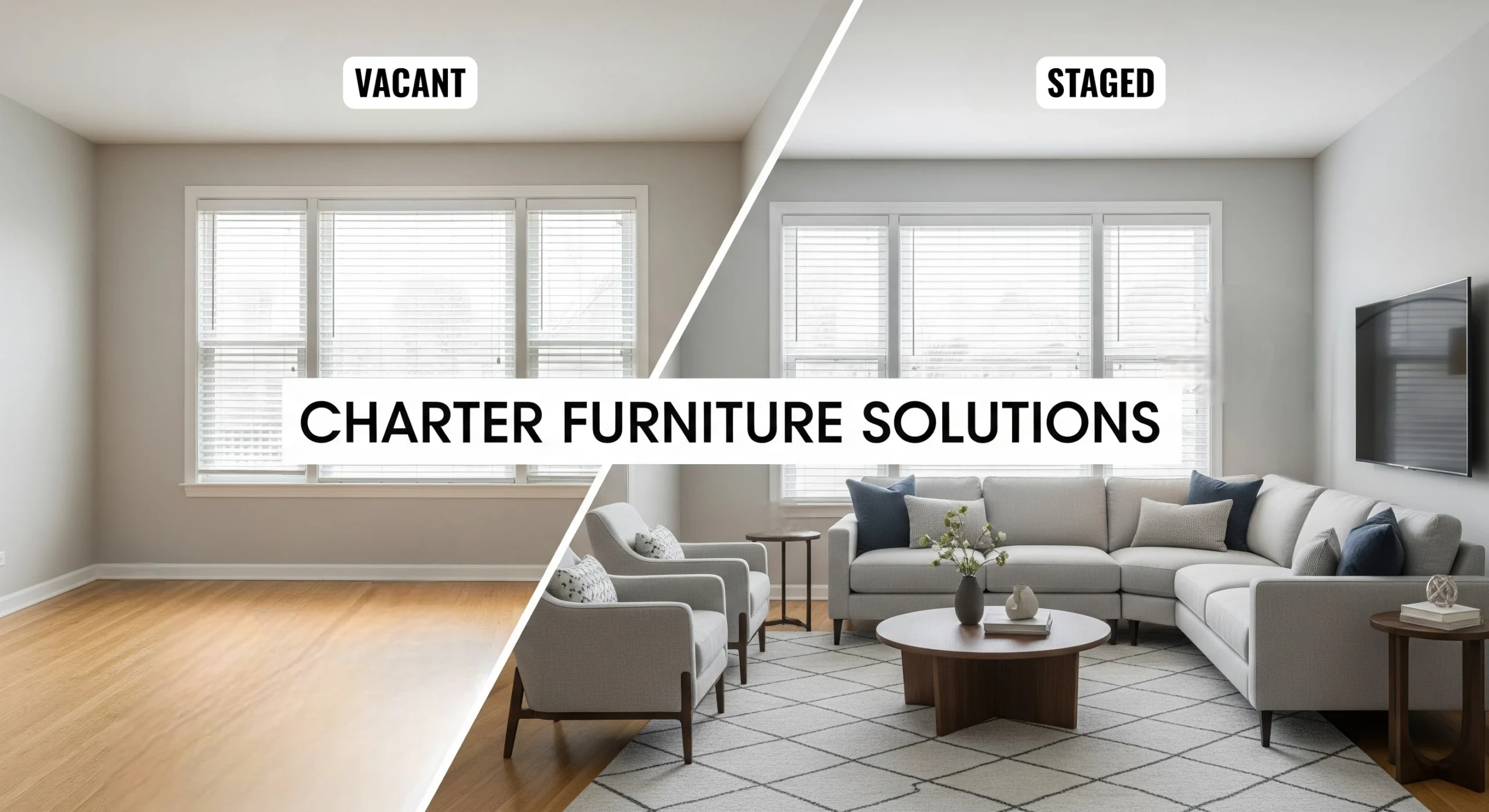
    In a competitive Dallas–Fort Worth market, a vacant home faces an uphill climb. An empty property isn’t just missing furniture. It’s missing context, warmth, and the emotional pull that turns a casual tour into a serious offer.

    What Buyers Actually See in a Vacant Home

    It feels cold instead of welcoming and that matters, because a home is where real life happens. When rooms are empty, most buyers struggle to picture birthday dinners at the table, a lazy Sunday on the sofa, or that first morning coffee in the sun. According to a report by the National Association of Realtors (NAR), 83% of buyers’ agents said home staging made it easier for a buyer to visualize the property as their future home.

    Scale and layout are hard to judge. Is that living room sectional going to overwhelm the space? Will a king bed plus nightstands fit comfortably in the primary? Without furniture as a reference point, buyers underestimate room size or, worse, assume their pieces won’t work. When you stage, you define traffic flow, seating zones, and function at a glance. The rooms that matter most are clear too: living room first, then primary bedroom and kitchen.

    How Professional Staging Changes the Story
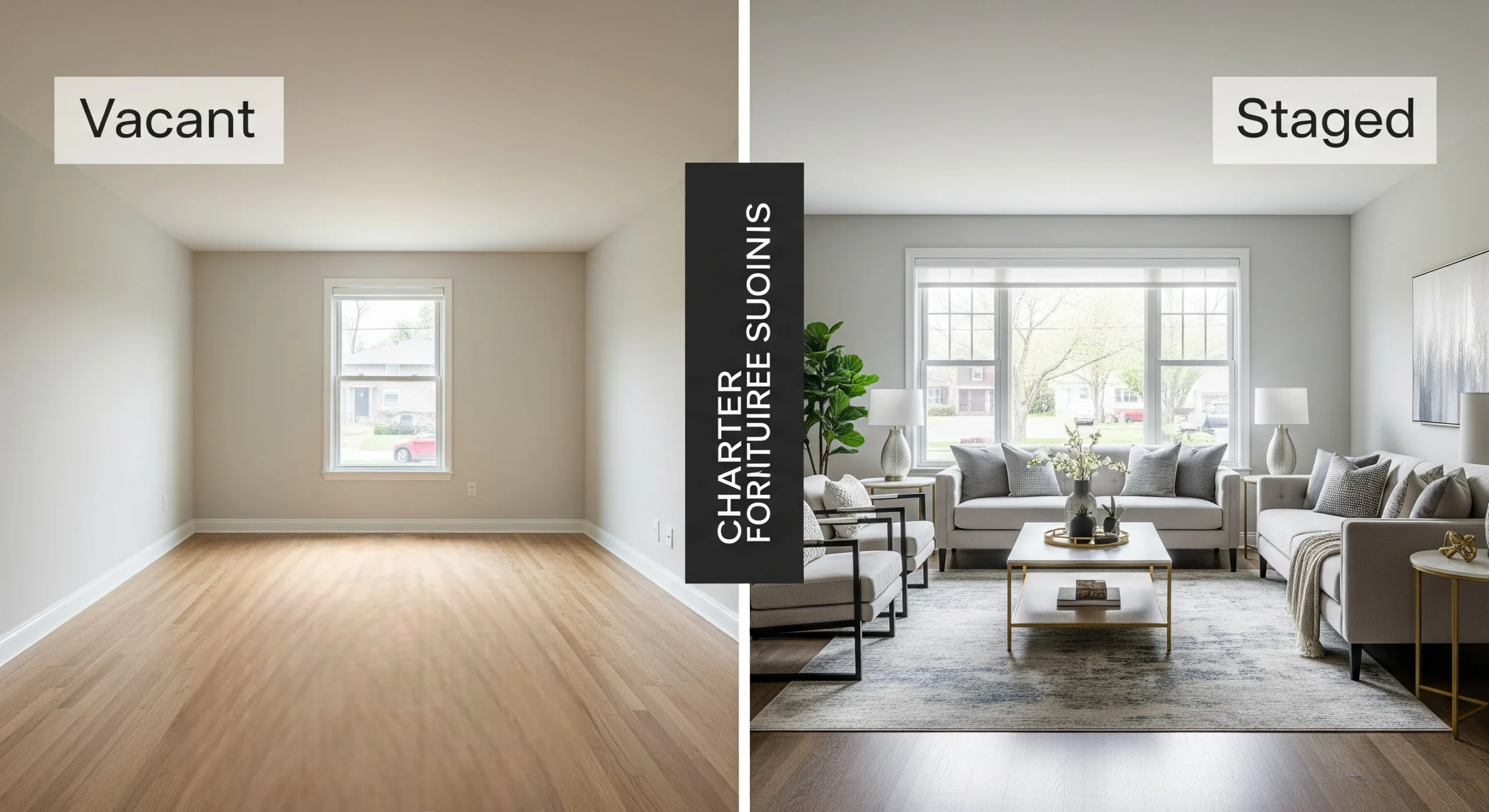
    When done right, professional home staging is more than decorating for pretty photos, it’s smart marketing that helps buyers see the full potential of your home. The goal is to help buyers connect quickly and confidently so they can write a strong offer and get to closing day without second-guessing.

    • Purpose for every space.
      A tailored sofa and two chairs show an easy conversation area. A simple dining setup hints at family meals and holidays. A calm, uncluttered primary suggests a retreat you’ll look forward to every night.
    • Features take center stage.
      Good staging draws the eye to natural light, ceiling height, fireplaces, and sightlines.
    • Fewer objections at the final walk-through.
      When spaces feel complete and functional throughout the listing period, buyers arrive at inspections and the walk-through with fewer doubts and fewer “what if” questions.

    With more than 40 years furnishing spaces across DFW, Charter Furniture Solutions understands how to speak to local buyers so your listing shows well at photos, at showings, and right up to the closing table.

    The Cost of Waiting on a Vacant Listing
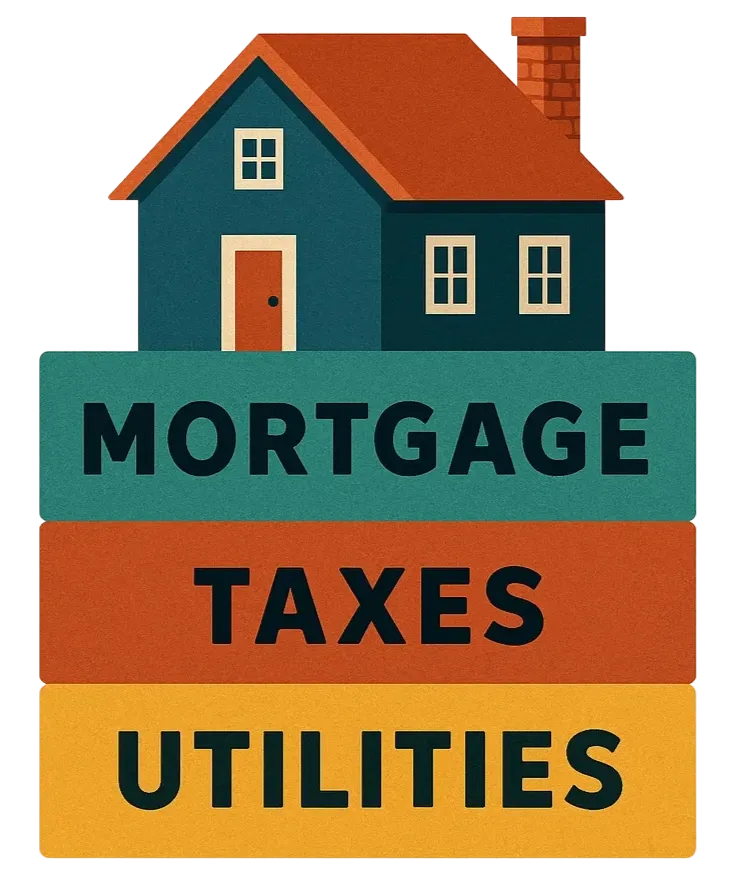
    Time on the market always comes at a cost. While you wait, you’re still carrying the mortgage, property taxes, insurance, utilities, and possibly HOA dues. If momentum stalls, price reductions and seller concessions start to feel like the only way out.

    Professional staging generally costs less than most sellers expect. Nationally, the median cost for a staging service is around $1,500, while broader projects can range depending on size and scope.

    In practical terms, a modest price cut often exceeds the total staging bill. Staging can be the smarter way to protect your net proceeds and avoid multiple reductions just to chase buyer interest.

    Do Staged Homes Sell Faster and For More?

    Yes. Current market data shows clear performance gains for professionally staged homes. Nearly half of listing agents saw reduced time on market when the home was staged, and 29% of agents reported offers that were 1% to 10% higher than comparable unstaged homes. That pricing bump can translate to tens of thousands of dollars, often more than covering the staging fee and your carrying costs while the home is on the market.

    Why Sellers in Dallas Choose Charter Furniture Solutions

    You want a turnkey plan that saves time and feels easy. That’s their specialty.

    • Free on-site consultation.
      They walk the property, review your timeline, and prioritize rooms that influence offers.
    • Curated, on-trend furniture and décor.
      Their warehouse of furniture, art, rugs, and accessories is ready to install, so your listing hits the market fast and photo-ready.
    • Designer-led installation.
      They handle layout, styling, and details that read well both online and in person.
    • Flexible 60-day packages.
      You get the right term for your listing window, with options to extend as needed.
    • A cleaner path to closing.
      Strong first impressions can mean better showings, fewer objections after inspection, and a smoother path to the closing documents.

    Ready to Unlock Your Home’s Best Showing?

    Don’t let empty rooms work against you. If you want buyers to feel something the moment they walk in, give them a space they can actually imagine living in.

    Contact Charter Furniture Solutions to schedule your complimentary home staging consultation. They’ll help you position your property to sell faster and for the best possible price.

  • Why Selling Your Dallas Home Before the Holidays in Fall 2025 Makes Sense

    Why Selling Your Dallas Home Before the Holidays in Fall 2025 Makes Sense

    In real estate, timing can make a big difference. For homeowners in Dallas, the fall of 2025 is shaping up to be one of the better moments to put a house on the market. A lot of sellers wait until spring or summer, but listing before the holidays can actually give you a stronger position.

    Selling in the fall connects you with buyers who are motivated to close quickly and gives you a chance to start the new year without carrying extra financial weight. Having a Dallas top real estate agent who understands the fall market means you won’t have to guess at pricing or marketing. You’ll be set up for stronger offers now and a cleaner break heading into the new year.

    The Dallas Market in the Fall

    By the time fall rolls around, Dallas has a very different feel compared to the busy spring rush. Families that didn’t move over the summer are often still looking, hoping to get settled before the school year is too far along. At the same time, people relocating for jobs in Dallas’ growing tech, health care, and finance sectors usually want to close before year-end, since many new roles start in January. That combination keeps demand steady, and sellers benefit from buyers who aren’t just browsing, but they’re ready to act.

    The season itself helps too. Dallas in the fall is mild and comfortable, which makes weekend showings more enjoyable and gives outdoor spaces like patios and pools a chance to shine. Buyers can picture themselves using those areas without the distraction of triple-digit summer heat, and that can make a home feel more inviting.

    How Buyers Think Before the Holidays

    By October, buyers in Dallas usually have a clear reason for still being in the market. Parents want to get their kids settled before winter break, and people relocating for new jobs often need to be under contract before the year ends. These aren’t casual browsers, they’re buyers on a deadline.

    The season itself adds another layer. Most families would rather enjoy Thanksgiving and Christmas without the hassle of packing boxes, so many push hard to wrap up a purchase in the fall. Sellers who list at this time benefit from that urgency, since buyers are motivated to make decisions quickly instead of dragging out the process.

    Finances can also be part of the equation. Some buyers want the tax advantages of closing before December 31, especially when it comes to mortgage interest deductions. For that group, waiting until January isn’t an option, and they’re often more flexible in negotiations to make sure the deal gets done before year-end.

    Reduced Competition Among Sellers

    One of the biggest advantages of selling in the fall is that you’re not competing with a flood of listings. In North Texas, many homeowners wait until spring to put their houses up for sale, and when that happens buyers have plenty of choices. More choices for them usually means less leverage for you.

    A fall listing works differently. With fewer homes on the market, your property can grab attention more easily. Buyers who are ready to move don’t have as many places to choose from, so they’re more likely to focus on yours and make an offer without stalling. In Dallas suburbs where inventory tends to swing with the seasons, that lighter competition can give sellers a clear edge.

    Fall Curb Appeal Can Help You Sell

    Fall has a way of showing Dallas homes at their best. The heat has finally eased, the air is clearer, and neighborhoods lined with older trees start to show more color. Even a simple cleanup, such as fresh mulch, trimmed hedges, or a few plants by the front door, can make a house stand out to buyers driving by.

    The season also helps indoors. Softer light and cooler evenings make it easy to create a warm, comfortable feel with small touches like neutral décor or a cozy staging setup. Buyers walking through in October or November often respond to that atmosphere, because it lines up with the way people want to feel heading into the holidays.

    Financial Benefits of Selling Before Year-End

    Selling your house in the fall means you don’t carry it into the slow winter months. You avoid paying another round of property taxes, utilities, and maybe even two mortgages at once if you’ve already bought your next place. That extra breathing room lets you start January in a stronger position, whether you’re planning to upgrade, downsize, or simply move closer to family.

    For some sellers, the timing also lines up well with buyers who want to close before December 31 for tax purposes. When both sides have a reason to move quickly, deals often come together faster and with less back-and-forth.

    Why Selling Now Can Be Better Than Waiting for Spring

    A lot of homeowners in Dallas figure they’ll wait for the spring rush, but that move can backfire. By the time March rolls around, there are more houses on the market, and buyers have plenty of choices. Even if interest rates dip, you’re competing with a bigger crowd, and that can make it harder to stand out.

    Listing in the fall flips that script. Inventory is lighter, buyers who are still shopping are usually serious, and you get to close before prices shift again in the spring. In many cases, acting now simply means less guesswork and a cleaner path forward.

    Conclusion

    Selling in the fall gives Dallas homeowners an advantage that spring can’t always match. Buyers who are still out shopping before the holidays are usually serious, and with fewer listings on the market, your home has a better chance to stand out.

    If you’re ready to move, this is the time to get your house in shape and show it at its best. Start with a home appraisal checklist to be sure you’re pricing right and highlighting your home’s strongest features. A solid listing in October or November connects you with motivated buyers and makes the whole transition easier, without trying to juggle showings and holiday chaos at the same time.

  • How Real Estate Video Tours Are Transforming the Dallas Home-Buying Experience

    The Dallas housing market is one of the most dynamic in the United States, where demand for homes remains strong and competition keeps buyers on their toes. In the past, people searching for a home would depend on photos, written listings, or scheduling in-person showings to get a feel for a property. Now the process looks very different. With the help of an AI real estate video tour editor, video tours are giving buyers a way to explore homes in a more complete and convenient way, while giving sellers a stronger tool to present their property to the market.

    This shift is especially noticeable in Dallas, a city known for its tech-driven lifestyle and fast pace. Buyers want options that save time, reduce the stress of driving across town for multiple showings, and provide a clear sense of what living in a home would be like. Video tours are filling that gap by making the first stage of house hunting more efficient and far more engaging.

    Why Video Tours Matter in Dallas Real Estate

    Dallas has no shortage of variety when it comes to housing. From luxury estates in Highland Park to more budget-friendly homes in areas like Plano and Frisco, the market offers something for nearly every buyer. With so many options, people often want to compare several homes before deciding which ones are worth seeing in person. Video tours make that possible by giving you a true sense of a property’s layout, size, and key features without leaving your couch.

    A video tour goes beyond what still photos can capture. You get to follow the flow of the rooms, notice how natural light fills the space, and understand how the home connects as a whole. By the time you decide to schedule a showing, you already know if the house fits what you’re looking for.

    For sellers and agents, this means showcasing homes to a larger pool of buyers and attracting people who are more serious about making an offer. That saves everyone time, and it makes the process of buying and selling in a busy market like Dallas a lot smoother.

    The Role of AI in Real Estate Video Tours

    A few years ago, if you wanted a professional video tour, you had to bring in a videographer, wait for edits, and pay a premium for the finished product. That process often slowed down how quickly a home could hit the market. Today, newer editing tools powered by artificial intelligence, such as the AI real estate video tour editor, are cutting that timeline down. Instead of relying on days of post-production, agents can now produce a polished tour in a fraction of the time.

    With these tools, it’s possible to:

    • Keep transitions smooth so the walk-through feels like a natural tour
    • Add short notes or captions that point out important features buyers care about
    • Brighten the lighting and sharpen the colors so each room looks its best
    • Create different versions of the same video for websites, social media, or MLS listings

    For Dallas agents, this means listings can be live faster and still look professional, which is critical in a market where homes move quickly. Even without a large marketing budget, you can present your property in a way that helps buyers picture themselves living there.

    Meeting the Needs of Modern Homebuyers

    Today’s homebuyers start their search with more information at their fingertips than ever before. Most begin online, scrolling through listings and expecting more than a handful of photos. They want an experience that feels interactive and complete. In a competitive market like Dallas, where homes can move quickly, video tours often make the difference between a property that gets attention and one that doesn’t.

    Here’s what makes video tours so helpful:

    • Convenience: You can explore homes from anywhere, whether you’re already in Dallas or planning a move from another state.
    • Time savings: Instead of driving to ten different showings, you can narrow your options down to the top three or four before stepping inside.
    • Confidence: A virtual walk-through helps you see that the home matches the listing, which cuts down on wasted trips.

    For buyers relocating to Dallas, video tours are especially valuable. Being able to evaluate homes without frequent travel gives you the clarity you need to make decisions faster, even from miles away.

    How Agents Are Using Video Tours

    More and more Dallas agents are weaving video tours into their everyday marketing. They’re showing up in several places buyers are already looking:

    • MLS listings: Adding video helps a property stand out and gives buyers a better feel for the home.
    • Social media platforms: Short clips on Instagram, Facebook, and TikTok reach buyers where they spend much of their time, especially younger buyers entering the market.
    • Email campaigns: Curated video tours delivered to inboxes keep potential buyers engaged and informed.
    • Virtual open houses: Live video walkthroughs let agents answer questions in real time, giving buyers an interactive way to explore from home.

    With the help of modern editing tools, agents don’t need a production crew to create professional-looking videos. This shift is leveling the playing field, giving independent agents a way to compete with larger firms while keeping their marketing fresh and effective.

    The Impact on Sellers

    For homeowners ready to put their property on the market, video tours can be a game changer. Listings that feature a professional-quality video often draw more views and stronger engagement than those relying on photos alone. In a fast-moving market like Dallas, that added attention can mean quicker sales and, in many cases, stronger offers.

    There’s also a practical benefit. Video tours help filter out casual browsers and bring in more serious buyers. By the time someone schedules an in-person showing, they’ve already seen the flow of the home online and know it could be the right fit. That leads to fewer showings overall, but a higher chance that each visit ends with an offer.

    The Future of Real Estate Tours

    Technology in real estate doesn’t stand still, and video is set to play an even bigger role in the years ahead. Buyers may soon have the option to customize what they see in a tour, choosing which rooms or features matter most to them. Virtual reality headsets could take that a step further, giving people the chance to explore a home as if they were standing inside it.

    AI is also expected to add more interactive elements. Instead of a simple walk-through, a future video tour might show how the lights dim automatically at night, or how the thermostat adjusts to keep the home comfortable. These touches can help buyers picture daily life in the space before they ever visit.

    Dallas has always been a city that embraces growth and new ideas. For agents and sellers here, keeping up with these tools won’t just be a nice extra. It will be part of how you stay competitive in a market that moves quickly and rewards innovation.

    Tips for Buyers, Sellers and Agents Using Video Tours

    Video tours can be a powerful tool in Dallas, but they work best when you know how to use them. Here are a few practical tips:

    • For buyers: Watch each tour more than once. Pay close attention to details you might miss the first time, like closet space, natural light, or how the rooms connect. If something isn’t clear, don’t be shy about asking the agent for extra footage or a live virtual walk-through.
    • For sellers: Treat the video tour like an in-person showing. Stage your home carefully, keep the rooms clean and uncluttered, and highlight features that set your property apart. A well-prepared home makes a stronger impression on screen.
    • For agents: Use editing tools to polish your videos so they feel professional and easy to follow. Even with a modest budget, a clean edit and good flow can make a listing stand out in a crowded market.

    Final Thoughts

    Buying a home in Dallas doesn’t look the same as it did a few years ago. Instead of spending entire weekends driving from one open house to the next, many buyers now start with a video tour on their laptop or phone. For a lot of families here, that means less time on the road and more time focusing on homes that truly fit their needs.

    Sellers benefit too. A strong video, powered by AI real estate video tour editors, can put their property in front of more eyes and attract buyers who are already serious before they ever walk through the door. Agents also gain an edge by using modern tools to share listings in ways that feel current and accessible.

    Looking ahead, it’s clear that video isn’t going away. If anything, it’s becoming part of the standard playbook for real estate in Dallas. The technology will continue to improve, but the main takeaway is simple: video tours help everyone involved feel more confident and better prepared when it comes time to make a decision.

  • Why Cultural and Musical Events Are the Secret Weapon in Real Estate Marketing

    A real estate agent and a couple in a house
    Image Source: freepik.com

    Posting an online listing, sending out flyers, or making a few phone calls used to be enough to get attention on a property. These tools still work, but today’s buyers expect more. They’re not just comparing numbers on a sheet. They want something that feels personal, something that makes them remember the house long after they leave.

    That’s where cultural and musical events come in. An open house with live music, local food, or an art showcase can turn a standard showing into an experience. Instead of buyers walking through quietly and leaving after a few minutes, they stay longer, connect with the space, and picture what life there could feel like. These moments make a property memorable in a crowded market.

    Why Events Matter in Real Estate Marketing

    Flyers and online photos can show a house in its best light, but they rarely capture what it’s like to actually be inside. A glossy brochure might highlight the hardwood floors, yet it won’t tell a buyer how the place feels on a Saturday afternoon with people gathered in the kitchen.

    You’ve probably seen it happen before: buyers walk into an open house, glance around, nod politely, and slip out a few minutes later. They don’t connect with the space, and by the end of the day that house blends in with all the others they toured.

    An event changes that rhythm. Maybe it’s a small jazz group with talented jazz band performers playing in the living room, or a tasting table with regional dishes set up in the dining area. Suddenly the house feels alive. People linger. They chat, laugh, and picture themselves hosting their own friends there. Those little moments, hearing music in the background or tasting food at the kitchen counter give buyers something to remember when they talk about the home later.

    According to Newsweek, Dallas is experiencing a surge in homes for sale. Market prices have also dropped. It becomes more challenging to attract the right buyer. That’s when events can help you rise above the competition.

    In a busy market, where buyers see one property after another, the homes that stand out are the ones that leave an impression. An event gives them that impression, not through sales talk, but through a feeling they carry with them after they walk out the door.

    Cultural Events as Community Builders

    Every neighborhood carries its own rhythm. Sometimes it’s the corner diner that’s been around forever, sometimes it’s the muralist painting on a brick wall, or the weekend market that draws families together. When you fold that character into an open house, you’re essentially using experiential marketing, the property feels less like a listing and more like a place people already know.

    Picture walking through a showing where a local baker offers samples in the kitchen, while a guitarist plays on the porch. Guests linger, not just to look at rooms, but to talk with neighbors and soak in the atmosphere. They’re not only seeing a house, they’re getting a taste of daily life.

    That kind of experience is hard to forget. Long after the brochures are tossed, buyers will remember the sound of music drifting through the rooms, the smell of fresh bread, or the casual chat with a neighborhood artist. It feels real, and it makes the house harder to shake from their minds.

    Musical Events: Rhythm Adds Appeal

    Step into a typical open house and the first thing you notice is often the silence. Footsteps echo in empty rooms, conversations stay hushed, and within minutes people are back out the door. Nothing about it lingers.

    Now add music. A soft piano in the living room, a jazz trio in the backyard, or even a simple playlist that matches the vibe of the home. The atmosphere changes instantly. Guests stay longer, they talk more freely, and the house feels less like a product on display and more like a place where life happens.

    Music has a way of shaping memory. Buyers may forget the exact square footage, but they’ll remember the sound of a saxophone filling the hallway, or how a lively song in the kitchen made them smile. Those impressions stick far better than numbers on a sheet.

    Different styles can highlight different moods. Classical strings add a touch of elegance, acoustic guitar brings warmth, and upbeat jazz encourages energy and conversation. Choosing the right sound isn’t about background noise—it’s about letting buyers feel something real while they’re in the space.

    Planning Event-Driven Property Marketing

    Good events don’t just happen by accident. To really make an impression, you need a clear plan that matches the property and the people you want to reach.

    Know your buyers

    A condo near a university attracts a different crowd than a home in a retirement community. Think about who’s most likely to walk through the door and tailor the experience to them. A young couple might enjoy a lively local band, while a more upscale audience may respond better to a string quartet or a wine tasting.

    Work with local talent

    Musicians, artists, and chefs from the area bring authenticity to the event. They also help draw in guests who already follow their work. Partnering with community talent adds credibility and makes the event feel connected, not staged.

    Pick the right time

    The schedule matters. Weekend afternoons tend to work best for families, while evening events may attract professionals who stop by after work. Seasonal touches also make a difference—think holiday carols in December or outdoor acoustic sets in the summer.

    Plan the flow

    A successful event feels smooth, not crowded or chaotic. Make sure people can move easily from room to room, that food and drinks are placed where they invite conversation, and that the music complements rather than overwhelms the space. Comfort keeps guests around longer, which means more time for them to imagine themselves living there.

    Wrapping Up

    Selling homes has never been just about square footage or countertops. Buyers want something they can connect with. That’s why more agents are turning open houses into small experiences—whether it’s live music in the living room or a tasting table in the kitchen.

    These touches don’t have to be complicated. A local band, a few dishes from a neighborhood restaurant, or an artist showing their work can make a simple tour feel different. Guests stay longer, talk more, and walk away remembering the house instead of blending it with the others they saw that week.

    The goal is simple: help people imagine what life might feel like in that home. Cultural and musical events are just one way to make that picture a little clearer.

  • How Content Marketing Builds Real Estate Brands That Sell

    10003

    In an age where information is at every buyer’s fingertips, real estate marketing is no longer just about showcasing properties, it’s about building a brand, telling a story, and earning trust before you ever meet your next client.

    While visuals like professional photography and 3D virtual tours are essential, they only represent one piece of the puzzle. What sets great agents, brokers, and developers apart in today’s hyper-competitive market is their ability to connect through content.

    Why Content Marketing Matters More Than Ever in Real Estate

    When buyers and investors research a property, they’re also researching you. They want to know:

    • Are you knowledgeable about the local market?
    • Do you understand their lifestyle or investment goals?
    • Can you help them make smarter decisions?

    Content marketing gives you a chance to answer all of these questions before they even ask.

    Instead of just pushing listings, you’re providing value. And value builds loyalty, shares, referrals, and ultimately, sales.

    The Shift from Sales Pitch to Thought Leadership

    Ten years ago, real estate advertising focused on newspaper spreads and open houses. Today, your reputation is shaped by what you publish online:

    • Blog articles about neighborhood trends
    • Market update videos on YouTube
    • Instagram reels with design inspiration
    • LinkedIn posts with investment insights

    This content shapes how people see your brand, whether you’re a trusted advisor, a local expert, or a developer with a vision.

    Building a Real Estate Content Strategy That Works

    Let’s break down the steps to building an effective real estate content strategy:

    1. Define Your Niche and Ideal Client

    Before writing a single article, clarify who you’re talking to:

    • First-time homebuyers?
    • Luxury property investors?
    • Commercial tenants?
    • Relocation families?

    Each audience is looking for something different. Speak their language, solve their problems, and tailor your tone to match their expectations.

    2. Choose the Right Content Formats

    Not everyone consumes content the same way. A successful content strategy should combine:

    • Blog posts: Long-form articles that improve SEO and establish authority.
    • Short-form videos: Instagram Reels, TikToks, or YouTube Shorts that offer fast tips or behind-the-scenes glimpses.
    • Infographics and charts: Especially useful for market reports or renovation timelines.
    • Newsletters: Regular updates keep leads warm and position you as a consistent source of insight.

    3. Topics That Drive Engagement

    Some high-performing real estate content ideas include:

    • “Top 5 Mistakes First-Time Buyers Make (And How to Avoid Them)”
    • “How to Time Your Home Sale with Market Trends”
    • “What $500,000 Gets You in 3 Different Neighborhoods”
    • “The ROI of Kitchen Renovations Before Selling”
    • “Monthly Market Update: What You Need to Know”

    These are not just filler posts. They help your audience make decisions—with your help.

    How Branding Strengthens Your Real Estate Marketing

    Publishing great content consistently creates a brand narrative. Over time, your audience comes to associate you with certain values, expertise, and experiences.

    Brand Positioning in Practice:

    Content TypeBrand Message Conveyed
    Weekly blog on local zoning law changes“I’m informed, reliable, and investor-friendly.”
    Instagram photos of mid-century interiors“I understand style and what’s trending.”
    YouTube series on real estate tax tips“I speak the language of high-net-worth buyers.”

    Your branding doesn’t live in your logo. It lives in the consistent voice, perspective, and depth of the content you share.

    Tools and Platforms to Support Your Strategy

    You don’t need a full production studio or a team of writers to start strong. Here’s what helps:

    • Canva: For branded visuals and infographics
    • Google Trends / AnswerThePublic: For finding popular real estate questions
    • ChatGPT / Grammarly: For drafting and polishing posts
    • Buffer or Later: For scheduling content on social media
    • WordPress / Webflow: For managing your blog or content hub
    • Mailchimp / Substack: For building your email list

    If you’re working in-house or alone, start small and stay consistent. One article per week and three social posts per week is a great baseline.

    Real-World Example: Building a Brand through Content

    Let’s look at a hypothetical agent Andre, who specializes in selling historic homes in Dallas.

    Andre builds his real estate marketing around:

    • A blog called “The Kocher Team”
    • Weekly TikToks about architectural history and renovation
    • Free downloadable PDFs like “How to Finance a Historic Home”
    • Collaborations with local designers for home-staging content

    Over time, Andre begins to incorporate interactive media. For one popular post about renovating antebellum homes, she included a photo series plus a digital reconstruction using a LiDAR camera to show original vs. restored layouts. This not only showcased her authority, but made the content shareable and visually compelling.

    10008

    How This Strategy Complements Visual Tools Like 3D Tours

    Content marketing doesn’t replace real estate photography or 3D virtual tours it amplifies them.

    For example:

    • A blog post on “5 Features That Sell Luxury Condos Faster” could embed a 3D virtual tour as a case study.
    10030
    • A YouTube video showing “Before and After Home Staging” builds curiosity, and the link leads to the full virtual tour.
    • A newsletter about neighborhood growth can include a call-to-action to view new listings with full photo galleries and virtual walkthroughs.

    Realsee and other platforms that offer immersive visual experiences can be positioned within your content to support your story. Instead of simply saying “Look at this house,” you’re saying “Let me walk you through this lifestyle—and here’s the 3D proof.”

    Metrics That Matter

    How do you know your content marketing is working? Track:

    • Website traffic from blog articles
    • Time-on-page for long-form content
    • Lead form completions
    • Social shares and comments
    • Email list growth
    • Keyword rankings (SEO)

    Over time, you’ll see your content drive more qualified inbound leads and make your sales process smoother.

    Final Thoughts

    Great real estate brands aren’t built overnight but they are built online.

    If you want to win in 2025 and beyond, think beyond listings. Think beyond images. Build a content machine that supports your authority, tells your brand story, and creates consistent, authentic value. Because in the end, people don’t just buy property. They buy trust. And content is how you earn it.

  • 5 Real Estate Photography Mistakes to Avoid for Better Listings

    Photography comes from Greek, with ‘photos’ meaning light and ‘grapho’ meaning to write or paint with light. Since photography is all about capturing images using light through a camera, it’s really important in real estate, especially when you’re trying to sell a home.

    With high-quality photos, the best features of a house for sale will look appealing to potential buyers. Unfortunately, there are still many real estate agents and homeowners who aren’t great at using cameras to take high-quality property photos. To solve this problem, affordable product photography services are now widely available, making it easier and more budget-friendly to get professional-looking images.

    Remember, if you take bad photos of the house you’re trying to sell, don’t expect buyers to be interested—and the house probably won’t sell quickly.

    That’s why many real estate agents bring in professional photographers to make property photos look more appealing and high-quality.

    But what are the biggest mistakes people make when taking pictures of homes, even with pricey lenses?

    Here are some common mistakes that pro real estate photographers often notice in property photos on real estate websites.

    1. Poor Lighting Conditions

    Lighting can make or break a photo. Too much light can wash out a room, while too little light can make it look dark and blurry. A lot of beginners don’t use lighting properly when taking pictures.

    Most landscape photographers shoot during the day, especially in the morning or evening, when the natural light looks best. Good lighting helps draw attention to the features you want to highlight, making the space look more appealing.

    2. Ignoring Clutter

    Professional photographers can’t stand a messy home. If a room is cluttered, the photos will look cramped and unappealing, even if the space is actually big and nice. Cables, accessories, and other small items can get in the way and make it hard to get a good angle, so they should be moved out of sight to keep the photos looking clean.

    Usually, before a photo shoot, the photographer will ask the homeowner to tidy up both the inside and outside of the house. This helps the photos turn out better and draws buyers’ attention to important features like the room design, hardwood floors, or big windows with great views.

    3. Using Low-Resolution Images

    Image quality matters a lot in real estate photography. If you upload low-resolution photos, they’ll look blurry and won’t accurately show what the house really looks like. In fact, the home might even seem less appealing than it does in person. High-quality photos let potential buyers see all the details clearly, from the kitchen countertops to the type of flooring.

    4. Bad Angles and Composition

    The angle and composition of a photo have a big impact on how a room looks. A common mistake is taking pictures from a spot that’s too cramped or from the wrong angle, which can make the room look awkward or leave out important details.

    It’s better to take photos from an angle that shows as much of the room as possible, like from behind a doorway. Avoid shooting straight-on at objects, since that can make the image look off-balance. If you have one, use a tripod to keep your shots steady and professional. Good composition makes your photos look more appealing.

    5. Ignoring Editing and Retouching

    Most people think photos will look perfect straight out of the camera, but editing and retouching are essential. If skipped, photos might end up looking dull or unremarkable. Simple adjustments like increasing brightness, contrast, and sharpness can make a big difference and give photos a polished, professional feel.

    Retouching also helps straighten crooked lines, eliminate distracting shadows, and adjust colors in real estate photography. The end result is a clear, accurate image that presents the property in the best possible light.

    Conclusion

    Professional real estate photography helps properties sell faster and for a better price. Many affordable services can handle everything from staging to editing. High-quality photos quickly attract buyers and make a strong first impression. Investing in great photography is one of the best ways to get a listing noticed.

  • How to Use Local Data to Market a Property Effectively

    Source: freepik.com

    Selling a home used to be all about quality photos and a strong listing description. That used to be enough—we thought so, too. But things have changed. Today, buyers and renters want more than just an attractive listing: They’re asking questions: What’s the neighborhood like? Are there good schools nearby? What’s planned for the area in the future? The key to answering those questions? Local insights. But how does that actually work? That’s where we come in.

    Understanding Local Data and Why It Matters

    What are the things to look for in local data? It gives you real insight into what life in a neighborhood is like, real estate conditions, crime rates, local amenities, and upcoming infrastructure projects.

    Just think about it—if a home’s in a top school district, that’s a huge plus for families. For investors, it’s all about areas on the rise—especially spots with new businesses or better transport on the way. Even small stuff like being near a park, gym, or grocery store can totally change how someone sees a place.

    If you’re looking for an easy way to list your property and reach potential buyers, check out Locanto’s real estate services. Data-driven insights + the right platform = the perfect match.

    Where to Find Local Data

    The key is knowing what to ignore and what to highlight—only use the info that makes your property more attractive. By now, you get it: local data matters. The good news? You don’t have to spend a dime to get it. It’s free, reliable, and out there—you just need to know where to look.

    Check government sites for census stats, local news for neighborhood updates, and real estate platforms for pricing trends. City planning pages often share new development plans, and social media groups can give you real, on-the-ground insights.

    Source: freepik.com

    How to Use Local Data in Property Marketing

    Local data is one of the most underrated tools in property marketing. Used right, it can turn a basic listing into a buyer magnet. Here’s how to make it work for you.

    Creating Targeted Listings with Relevant Data

    Instead of using generic phrases like “Great neighborhood!” or “Close to everything!” you need to get specific if you want to stand out. For example:

    • Don’t just say “near schools”; name the actual school and mention its rating.
    • If the area has seen a rise in property values, share the percentage increase over the past year.
    • Highlight new developments: “A new shopping center is opening just a mile away, making daily errands more convenient.”

    Using Neighborhood Trends to Set the Right Price

    Pricing a home is a balancing act—too high and you scare off buyers, too low and you’re leaving money on the table. That’s where local data comes in.

    Let’s say most homes in the area sell within 30 days. If yours is still sitting after 90, that’s a clear sign something’s off—probably the price. For sellers, this kind of info helps set realistic expectations. For buyers, it shows how quickly they need to move in a hot market.

    If similar homes are selling fast at a certain price, that’s your benchmark. If demand’s high and supply’s low, you might even have room to price a little higher. But if everything’s sitting, it might be time to adjust. Data doesn’t just guide the price—it helps everyone stay grounded and on the same page.

    Showcasing Lifestyle and Amenities

    Buyers and renters aren’t just looking for a place to live—they’re looking for a lifestyle that fits their everyday life. Whether it’s quiet suburbs, vibrant city life, or family-friendly neighborhoods, local data helps show what life there really feels like.

    That’s why it’s important to highlight what makes the area special. For example, if the neighborhood has walking paths, you might say:

    • “Only a five-minute walk to the farmer’s market and cozy, local coffee shops.”
    • “Quick access to scenic jogging trails and parks—perfect for outdoor lovers.”
    • “A peaceful, family-friendly neighborhood with top-rated schools and playgrounds just around the corner.”

    The goal is to help buyers picture themselves living there.

    Using Heatmaps and Visual Data

    Not everyone wants to sift through a bunch of stats—people are way more visual. So, why not use something like heatmaps? They can show things like crime rates, school ratings, or even price trends in a way that’s way easier to digest. For example, if a neighborhood has been steadily appreciating, a simple chart can make that info way more digestible.

    Instead of just saying the crime rate is low, why not show a heatmap with the real numbers? I mean, it’d be awesome if every neighborhood had zero crime, but that’s probably a little too much to ask, right?

    Leveraging Social Proof and Community Insights

    The best marketing is word of mouth. Listen to locals talk, because real testimonials from residents can paint an honest picture. Many things can be revealed—whether it’s about the kind of neighbors around, the quality of local schools, or if the area is walkable—these details help buyers imagine themselves living in the neighborhood. Even reviews from local coffee shops or stores can add to the story.

    Timing Your Sale Based on Market Data

    Real estate trends change throughout the year, so knowing when to make your move is key. Neighborhood-specific insights can help you in deciding when to sell. If residences in your neighborhood have historically sold faster in spring and summer, listing in January just won’t be your best option. And in case mortgage interest rates increase, you can promote urgency by motivating buyers to lock in at current rates while they increase further.

    Optimizing Online Ads with Hyperlocal Targeting

    You don’t have to advertise in every location just be selective. With Facebook and Google, you can target by location, age, even interests. Selling in an area near a state university? Target professors and parents. Got a high-end listing? Target high-income buyers. The more specific you are, the faster you’ll find the right match.

    Using Local Data to Attract Investors

    Investors care about the numbers—rental yield, appreciation, vacancy rates. Share that data, and your property becomes a lot more attractive.

    • “This neighborhood has seen a solid 7% annual increase in rental prices.”
    • “The average rental occupancy rate here is a strong 95%, making it a prime spot for landlords.”
    • “Plus, with new developments on the horizon, property values are expected to rise in the next five years.”

    Solid data turns a listing into a smart investment. Buyers want proof, and data sells.

    Source: freepik.com

    Data-Driven Marketing on the Move

    We always teach kids to pay attention to what’s around them.Now it’s time to take your own advice. Sure, a stunning kitchen grabs people’s attention. But closing the deal is about the full package: a great neighborhood, nearby parks, local favorites—it’s the lifestyle. Real local insights bring that story to life, turning your listing from decent to standout.