Category: DFW Real Estate News

  • Making $50K? You Can’t Even Access 9% of Homes for Sale

    Many Americans still can’t afford to buy a home. Home sales are up nearly 20% from a year ago, but overall sales remain well below pre-pandemic levels—underscoring the nation’s ongoing affordability crisis.

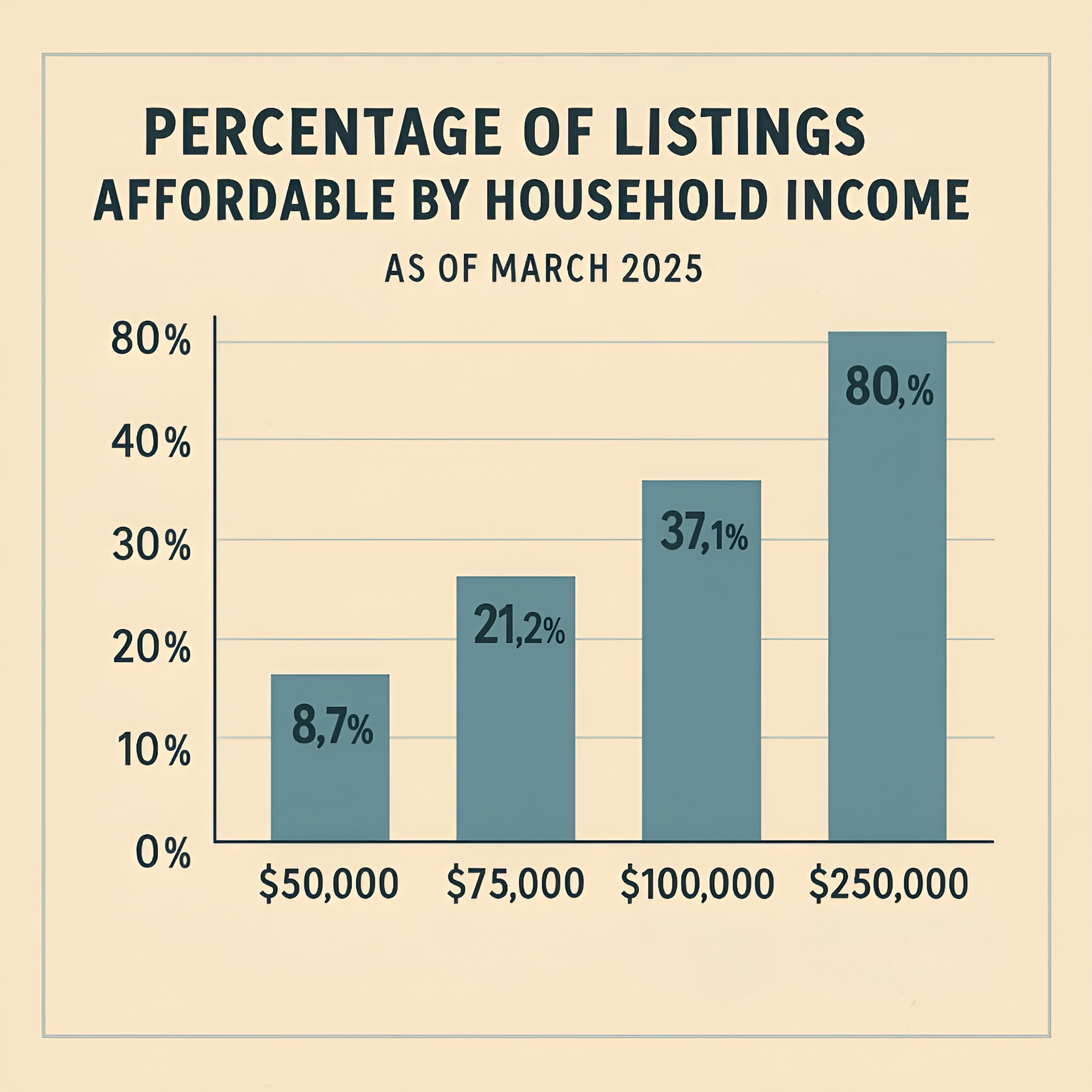
    As of March 2025, lower-income households earning $50,000 annually could afford just 8.7% of available listings—down from 9.4% a year prior. The market would need an additional 367,000 homes priced below $170,000 to achieve a balanced supply.

    Households earning $75,000 a year could afford just 21.2% of homes on the market, up slightly from 20.8% in March 2024. Despite this marginal improvement, the affordability gap continues to widen. Before the pandemic, this group could afford nearly 49% of homes for sale. To reach a balanced market, they would need access to 48.1% of listings, which means about 416,000 more homes priced up to $255,000 are needed.

    Meanwhile, households earning $100,000 or more can afford 37.1% of listings, up slightly from 36.9% a year ago. However, this remains far below the 64.7% they could afford in 2019. Achieving equilibrium would require about 364,000 additional homes priced below $340,000.

    In contrast, households earning $250,000 or more can afford at least 80% of homes for sale, highlighting a sharp disparity in affordability among income groups.
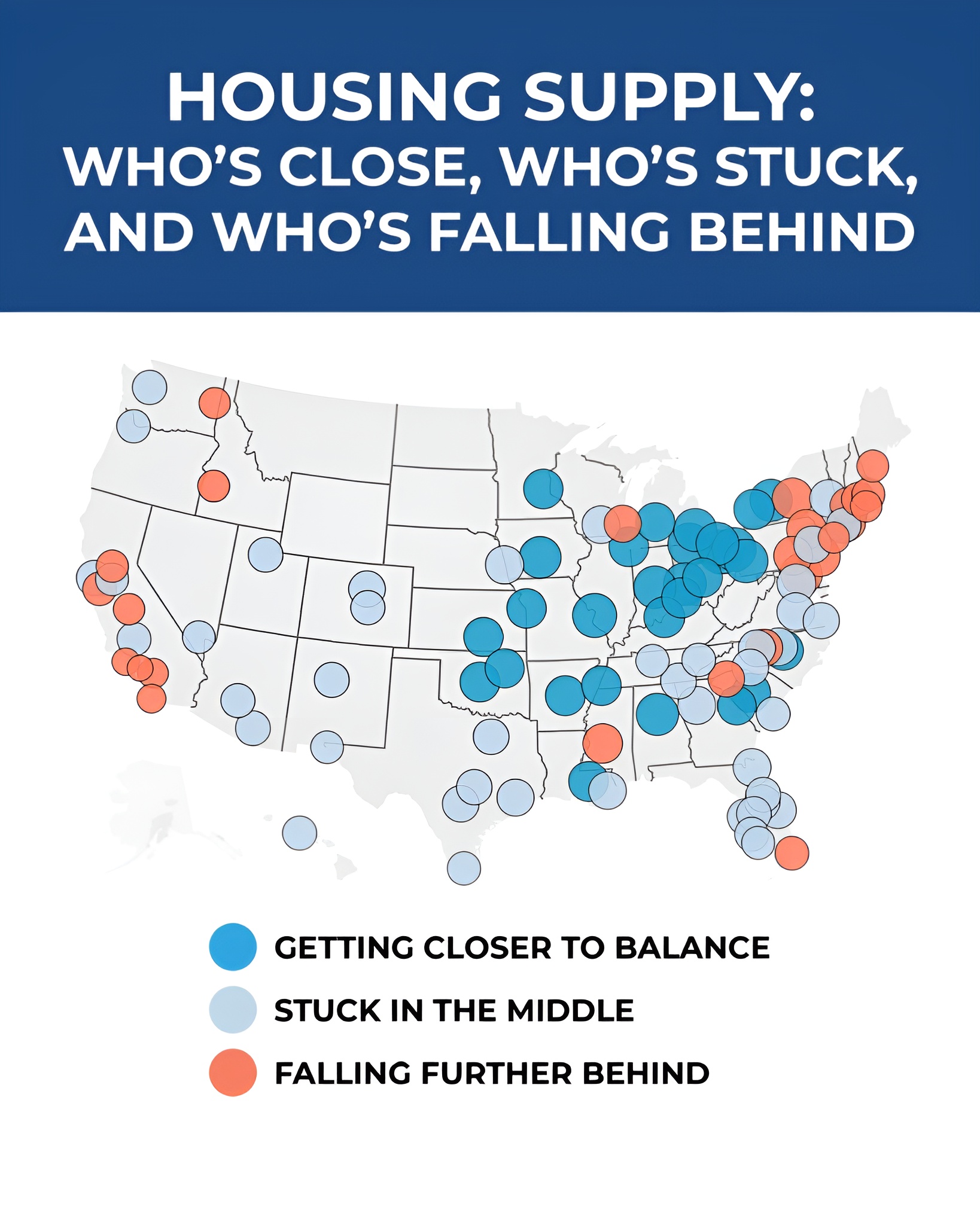
    Nationally, the number of homes for sale increased nearly 20% from March 2024 to March 2025. While this is a positive sign, total inventory remains well below pre-pandemic levels. About 30% of the nation’s 100 largest metropolitan areas now fall into the “Areas Getting Closer to Balance” category, where housing affordability has improved for all income levels. Cities including Akron (Ohio), St. Louis (Missouri), Youngstown (Ohio), Pittsburgh (Pennsylvania), Raleigh (North Carolina), Des Moines (Iowa), and Grand Rapids (Michigan) are beginning to see more balanced markets.

    Meanwhile, 44% of metropolitan areas are categorized as “Areas Stuck in the Middle,” where supply and demand remain out of sync. Some cities, such as Seattle and Washington, D.C., are making progress, with affordability increasing by 4 percentage points, but the gap remains significant.

    Likewise, Austin, Texas; Salt Lake City, Utah; and Denver, Colorado, have all made significant progress, with average affordability gains of 20 percentage points. San Francisco, California, has already surpassed pre-pandemic affordability levels.

    Alarmingly, 26% of metropolitan areas are now classified as “Areas Falling Further Behind,” meaning affordability in these regions is getting worse. Major cities like Los Angeles and San Diego, California; New York, New York; and Spokane, Washington, are among the hardest hit by the shortage of affordable housing.
    Source: NAR.realtor

    At the state level, Iowa, Ohio, Indiana, Illinois, and West Virginia continue to lead in housing market balance. In these states, households earning $75,000 still have access to more than 45% of available homes. By contrast, states such as Montana, Idaho, California, and Massachusetts—despite increasing inventory—still face significant challenges in achieving market balance.

    The housing market is at a turning point, with more homes coming onto the market and middle-income earners beginning to see an increase in supply. However, the gap remains wide—especially for first-time homebuyers. Meanwhile, Danielle Hale, chief economist at Realtor.com, notes that although the number of affordable homes is rising, progress has been uneven and is largely concentrated in the Midwest and South.

    Homeownership is increasingly out of reach for low- and middle-income households. Building smaller, more affordable homes could help narrow the gap. While some regions are showing signs of improvement, the national housing market still needs time to achieve true parity and affordability for all income groups.
  • Forney’s Rapid Growth and the FM 548 Road Improvement Project

    Forney, Texas – Forney is experiencing significant growth in both housing and business development. More than 25,000 home lots are planned in the area, and the population is expected to exceed 100,000 within the next five years—making Forney an increasingly attractive destination for both residential and commercial developers. Nationally, it ranks among the fastest-growing cities, and when you visit, it’s easy to see why. From new neighborhoods to expanding roads, the city is undergoing a rapid transformation.

    Between July 2022 and July 2023, Forney recorded a population growth rate of 10.4%. By 2025, the population is projected to reach approximately 43,196, with the city currently growing at an annual rate of about 9.82%.

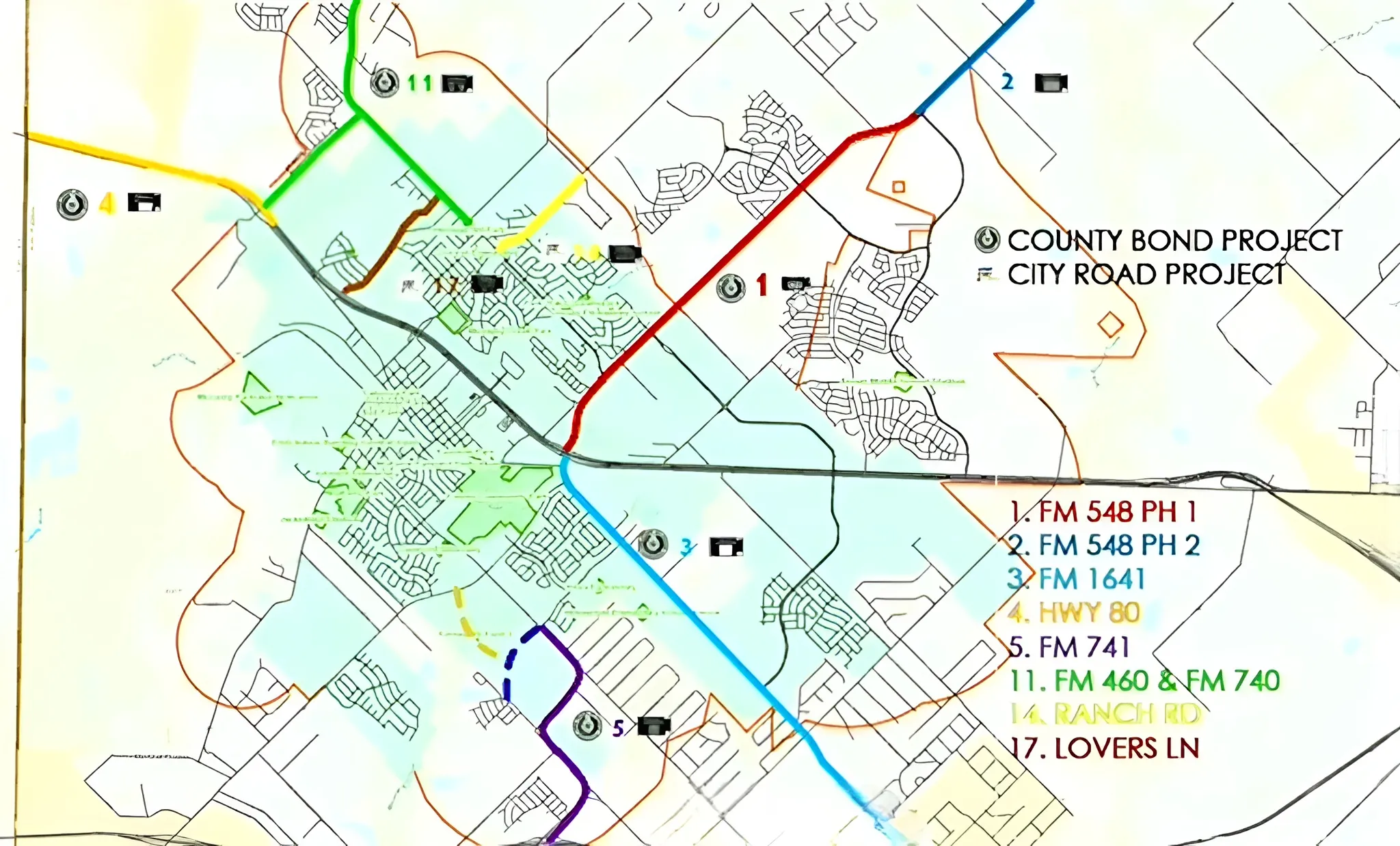
    As part of this growth, Granite Construction has been awarded a major infrastructure project by the Texas Department of Transportation (TxDOT). The scope of work includes reconstructing and widening FM 548—from a two-lane rural road into a six-lane urban thoroughfare—which will significantly improve traffic flow and safety for both residents and commuters. Construction is scheduled to begin in July 2025, with an anticipated completion date in March 2027.

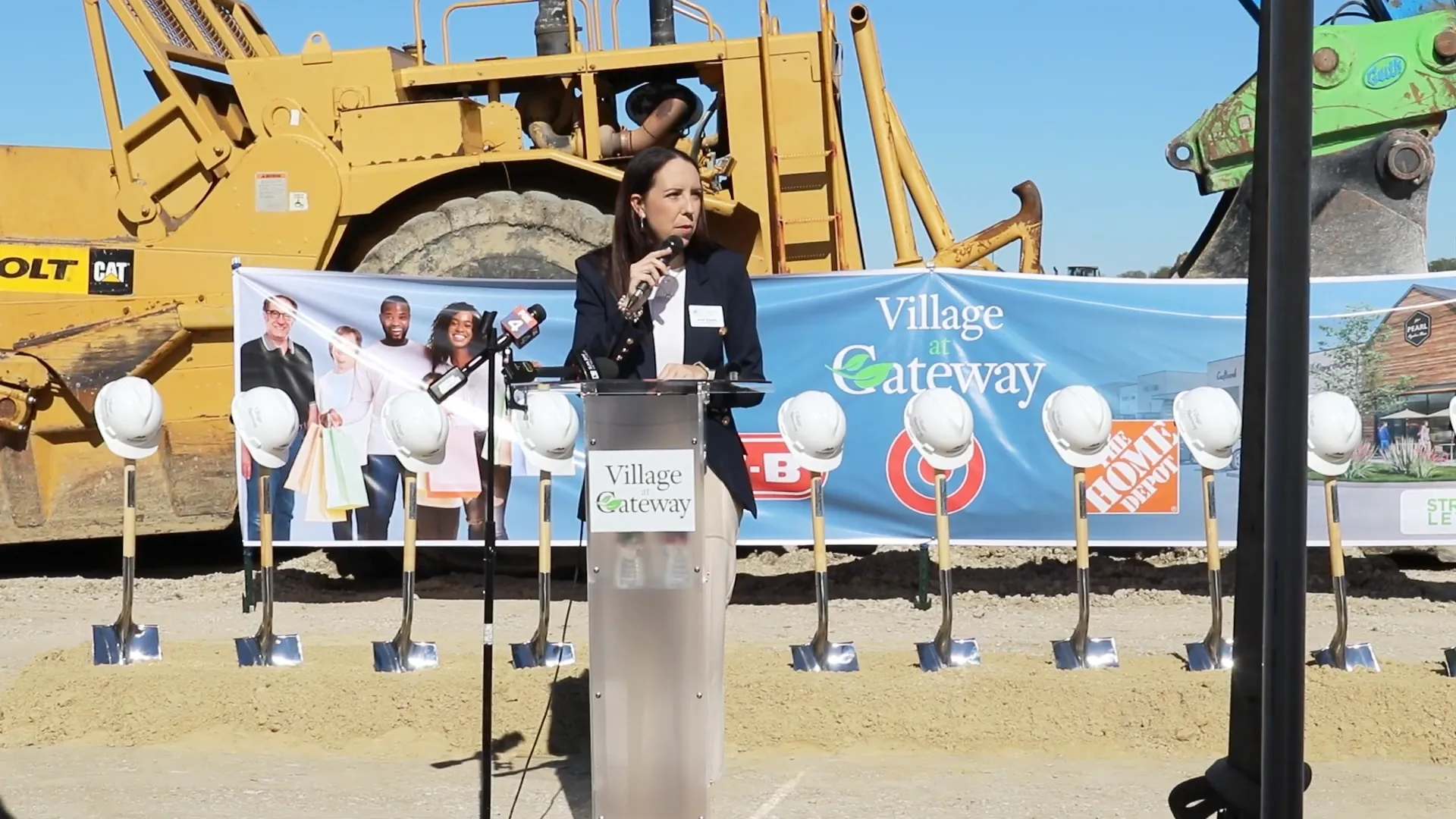
    Interestingly, The Village at Gateway, located in Forney, was recently awarded “Best Retail Development of the Year” by D CEO. The Village at Gateway has been an exciting development since its groundbreaking in 2020. It is a 120-acre residential and retail center that is planned to be a regional destination for shopping, services, and dining. With over 500,000 square feet of retail space, The Village at Gateway is already attracting interest from both residential and corporate tenants looking to expand their businesses in the area. The Village at Gateway is also partnering with major retailers such as Target, Home Depot, and H-E-B. The presence of these well-known brands is a strong indicator of growth in the surrounding area and adds to the appeal for residents seeking improved shopping options.

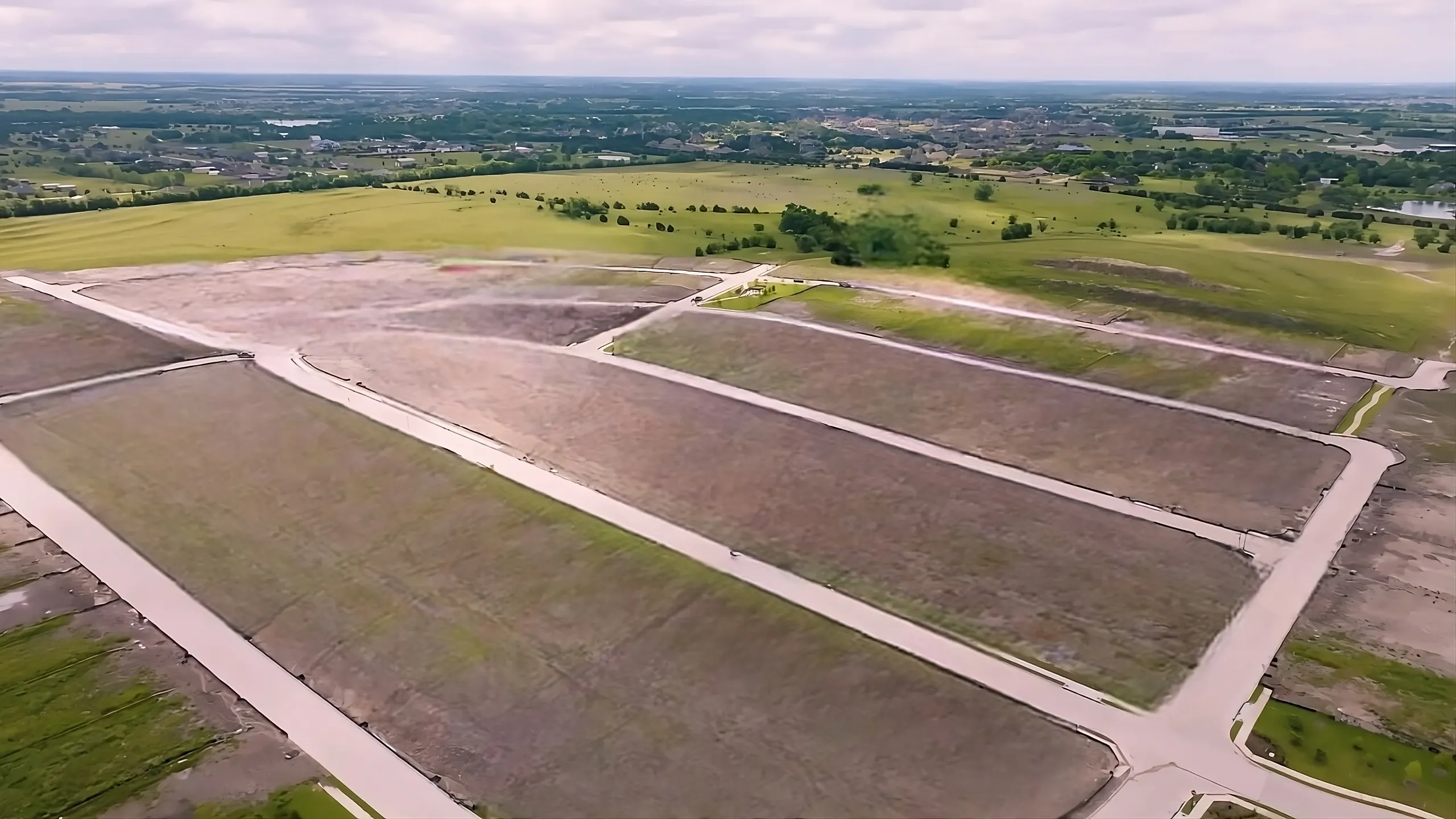
    One of the major projects currently underway is a community called Meraki, which will bring 2700 new homes by 2035. The development plan also includes a Forney ISD elementary school, a civic center, and a designated commercial area aimed at expanding the community’s infrastructure.

    Additionally, Tractor Supply Company—a retailer specializing in farm, ranch, and pet supplies—is planning to open a new 25,000 square foot store on FM 1641. Construction is expected to begin in May 2025 and be completed by December 2025. This project underscores the significant growth potential in Forney’s retail sector.

    Residents frequently praise Forney’s quiet atmosphere, diversity, and community-oriented lifestyle. Parks such as Forney Community Park, equipped with splash pads, playgrounds, and baseball fields, enhance the city’s family-friendly reputation. Fitness enthusiasts frequent Texas Fitness, a local gym known as a community staple. Additionally, Planet Fitness is expected to open soon, further expanding local recreational offerings.

    However, Forney’s challenge with traffic congestion—particularly during peak commuting hours—has become a significant concern for residents. Without traffic, a trip from Forney to downtown Dallas typically takes around 35 minutes. Yet during rush hour, this commute can extend beyond an hour, highlighting infrastructure gaps that city leaders are actively working to address.

    The interconnectedness between Forney and its neighboring community, Heartland, a smaller town located immediately adjacent to the city, is notable. Residents of Heartland often rely on Forney for shopping and entertainment. Although stores like Target and Tom Thumb are planned to open closer to Heartland, residents currently face longer drives—typically around 10 minutes—to access essential amenities.

    Recently, Forney hosted a community event showcasing city machinery, including bulldozers, excavators, police vehicles, and fire trucks. This event allowed local children and families to engage directly with city workers and equipment, underscoring the city’s efforts to maintain a close-knit community atmosphere.

    Local dining options also reflect the community’s diversity and growth. Popular eateries include Dillas, known for specialty quesadillas; Mix It Up, a newer establishment gaining positive local reviews; and Pizza Milan, a favorite among pizza lovers in the area.

    For those considering relocation to the broader Dallas-Fort Worth (DFW) area but unsure if Forney matches their preferences, We suggests exploring other communities experiencing similar growth. Mansfield, Heath, Rockwall, Royse City, and Celina all offer appealing alternatives, each with unique characteristics and amenities. Rockwall and Heath, located near Lake Ray Hubbard, boast vibrant communities and scenic surroundings. Royse City, just outside Rockwall, similarly enjoys a boom in growth and infrastructure development.

    Ultimately, whether newcomers choose Forney or another thriving suburb, Dallas itself remains a compelling option for those seeking urban conveniences and cultural vibrancy. Dallas offers shopping, city life, culture—whatever you might need. It’s always a solid choice for those interested in those amenities.

    As Forney continues its trajectory of growth, residents and city planners alike face the ongoing challenge of balancing development with quality of life. With careful planning and community engagement, Forney aims to remain a welcoming, diverse, and thriving place to call home.

  • Rockwall Sees Surge in Housing and Commercial Development

    Rockwall, Texas — Once a quiet suburb on the eastern edge of the Dallas-Fort Worth metroplex, Rockwall is now making headlines for its rapid growth and major residential and commercial developments.

    Over the past few months, builders have broken ground on more than a thousand new homes. New communities such as Winding Creek, Quail Hollow, and The Homestead feature everything from cozy three-bedroom homes to spacious luxury models, complete with pools, parks, and trails. Even established neighborhoods such as The Highlands, Nelson Lake, and Somerset Park are adding new phases, as families and young professionals flock here in search of affordable space and good schools.

    It’s not just housing that’s booming. The Rockwall Economic Development Corporation (REDC) has been busy lining up new employers and manufacturing is starting to take off. Xerxes Manufacturing is putting up a brand-new plant, and Ballard Power Systems is eyeing a massive gigafactory in Rockwall Technology Park—moves that speak volumes about the city’s appeal to advanced-tech firms.

    Retailers are also taking note. With its expanding trade area and high purchasing power, Rockwall has attracted the attention of national brands. Recent expansions by grocery giant H-E-B and home furnishings retailer IKEA underscore the city’s growing reputation as a retail destination.

    Behind the scenes, REDC’s strategy has been simple: attract solid investment, support local businesses and make sure growth stays sustainable. City leaders believe that by investing in roads, schools and parks today, Rockwall can handle tomorrow’s population surge without losing the small-town feel people love.

    With new housing and commercial growth accelerating, local leaders and developers are confident that smart planning and steady investment will help the city grow without losing its identity.

  • BREAKING: Tornado Warning Issued for Anderson and Henderson Counties

    Dallas, Texas — Residents across Anderson and Henderson counties found themselves on high alert Tuesday afternoon as the National Weather Service (NWS) issued a tornado warning effective until 2:00 p.m. The warning, prompted by radar-indicated rotation and reports of severe weather moving through North Texas, prompted local officials to urge immediate action.

    The NWS recommends residents in the affected areas remain indoors, avoid windows, and monitor local news or NOAA Weather Radio for updates. Those in mobile homes or temporary structures are advised to seek more substantial shelter immediately.

    As of press time, there have been no confirmed tornado touchdowns, but authorities stress that the situation remains fluid. Emergency crews are standing by to respond to any reports of damage or injury.

    • Area Affected: North Anderson County and southeastern Henderson County.
    • Warning Duration: Until 2 p.m.
    • Source: The National Weather Service in Fort Worth.
    • Severity: The severe thunderstorm is capable of producing a tornado.
    • Location: Near Frankston, 18 miles southeast of Athens.
    • Movement: Moving northeast at 50 mph.
    • Recommendations: Residents are advised to take shelter indoors and avoid windows.
    • Authorities: Local emergency management teams have been mobilized
  • Survey Reveals: TV Shows Have Homebuyers Expecting Open Houses With Popcorn and Plot Twists

    DALLAS, TX — The National Association of REALTORS® (NAR) Research Group just released a new report based on their 2025 survey. It looks at how home staging is affecting real estate deals from both the buyer’s and seller’s point of view. The study also digs into how TV shows are shaping what buyers expect, along with other trends in the home buying process. The findings come from 1,266 REALTORS® who responded out of nearly 50,000 surveyed, giving a response rate of just 2.5% and a margin of error of ±2.75%.

    For years, home staging has been touted as a secret weapon for sellers. Now, hard numbers back up its reputation. According to NAR’s findings, a striking 60% of buyers’ agents said staging affects most buyers’ perceptions of a home “most of the time,” while an additional 26% said it sways buyers, albeit not always. Only a small minority 12% believed staging had no impact at all.

    Staging isn’t just about pretty pillows and fresh flowers,” explained Dr. Jessica Lautz, NAR’s Deputy Chief Economist. “It’s about helping people see themselves living in that space. Our research shows 83% of buyers’ agents agree—it makes it easier for buyers to visualize a property as their future home.”

    Source: nar.realtor

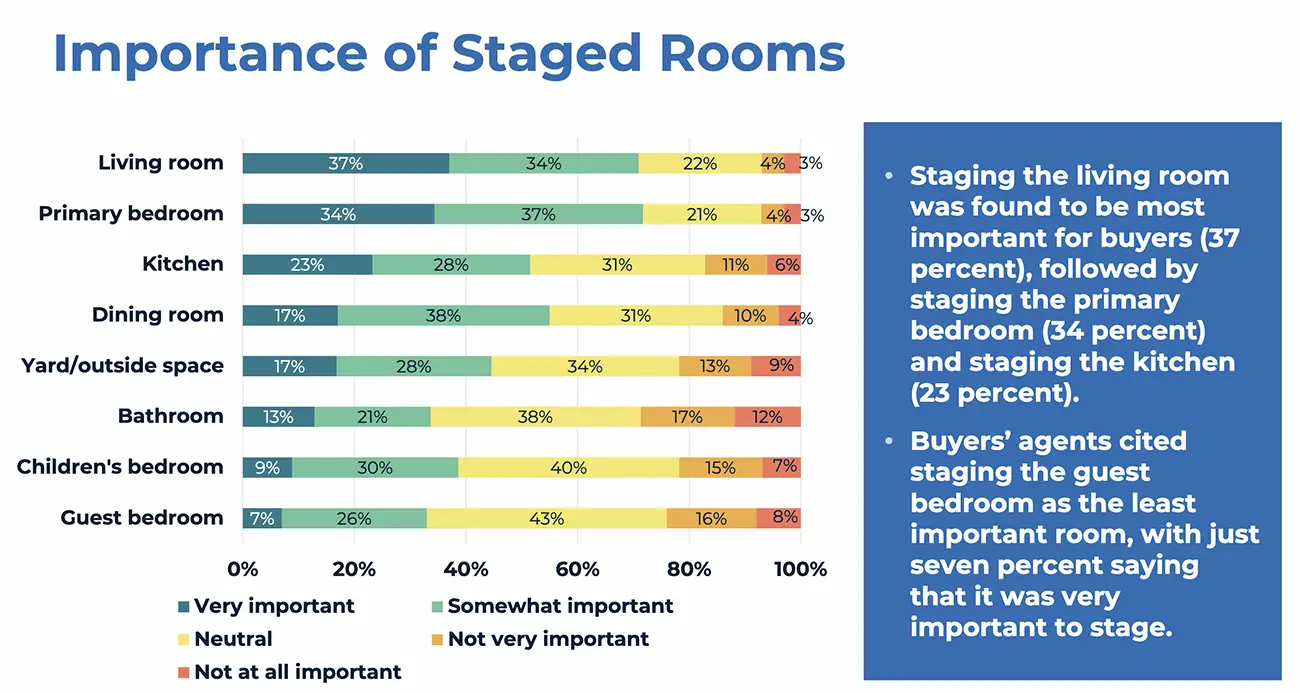
    When it comes to which rooms matter most, the hierarchy is clear. The living room tops the list, with 37% of agents calling it the most important space to stage, followed by the primary bedroom (34%) and the kitchen (23%). Guest bedrooms and children’s rooms, by contrast, barely register.

    The impact is financial too. 17% of buyers’ agents reported that staging nudged offers up by 1–5% compared to similar unstaged homes. While 41% saw no effect on price, the potential upside is enough to keep sellers investing.

    On the seller’s side, the commitment to staging varies. Just 21% of sellers’ agents said they stage every listing, while 10% reserve staging for hard-to-sell homes. A majority—51%—prefer to recommend decluttering or minor repairs rather than full-scale staging. For those who do stage, the median spend is $1,500 with a professional service, but drops to $500 when agents roll up their own sleeves.

    Quality of design and price are the top factors when picking a staging company,” noted Brandi Snowden, NAR’s Director of Member and Consumer Survey Research. “It’s a business decision, not just an aesthetic one.”

    Staging can even help homes sell faster. Thirty percent of sellers’ agents noted a slight decrease in days on market for staged homes, and 19% reported a significant drop. Only a handful (4%) saw staging actually slow down a sale.

    TV Shows and Family: The New Influencers

    But it’s not just fresh paint and throw blankets shaping buyer behavior. The media—especially home-buying TV shows—now wields outsized influence. Nearly half (48%) of agents said their clients expected homes to look “like they were staged on TV,” and 58% reported buyers were disappointed when reality fell short.

    “TV has set a standard that’s often unattainable,” admitted one survey respondent. “Buyers come in with expectations that just don’t match the real world.” In fact, 73% of agents said TV shows had impacted their business by setting unrealistic or heightened expectations.

    Yet, despite the media’s sway, 77% of agents say they aren’t influenced to stage homes exactly as seen on TV. “We have to balance what sells with what’s feasible,” said another agent. “Not every home can—or should—look like a set.”

    Family dynamics also play a growing role. A median of 23% of buyers brought non-purchasing family members to viewings, and 40% consulted family during the process, even if relatives wouldn’t live in the home. “It’s a multigenerational decision for many,” Lautz observed.

    Buyers are also coming to the table with clear ideas—79% know where they want to live, and 76% have an ideal home in mind before starting their search. But the process itself remains daunting: 42% expect it to be difficult, and 38% find it even harder than they imagined.

    Other Noteworthy Findings:

    • 27% of agents report that more buyers are planning to flip homes, and 42% say there’s an increase in those looking to remodel.
    • 61% of buyers don’t have a set number of homes in mind, but for those who do, the median is eight in-person showings and 20 virtual tours.
    • 55% of agents say buyers’ expectations around how many homes they’ll see before buying are aligned with market realities.

    Staging remains a powerful tool—especially for the living room, bedroom, and kitchen—but today’s buyers are also guided by television, family, and a growing desire for customization. For REALTORS®, the challenge is clear: bridge the gap between fantasy and reality, one open house at a time.

  • DallasNow Is Live: Changing Permitting and Planning in Dallas

    The City of Dallas took a significant leap into the digital age on Monday with the official launch of DallasNow, a comprehensive land-management system designed to streamline the city’s permitting, zoning, and inspection processes. City officials say the new platform will not only expedite development projects but also bring unprecedented transparency to a system long criticized for its opacity and sluggishness.

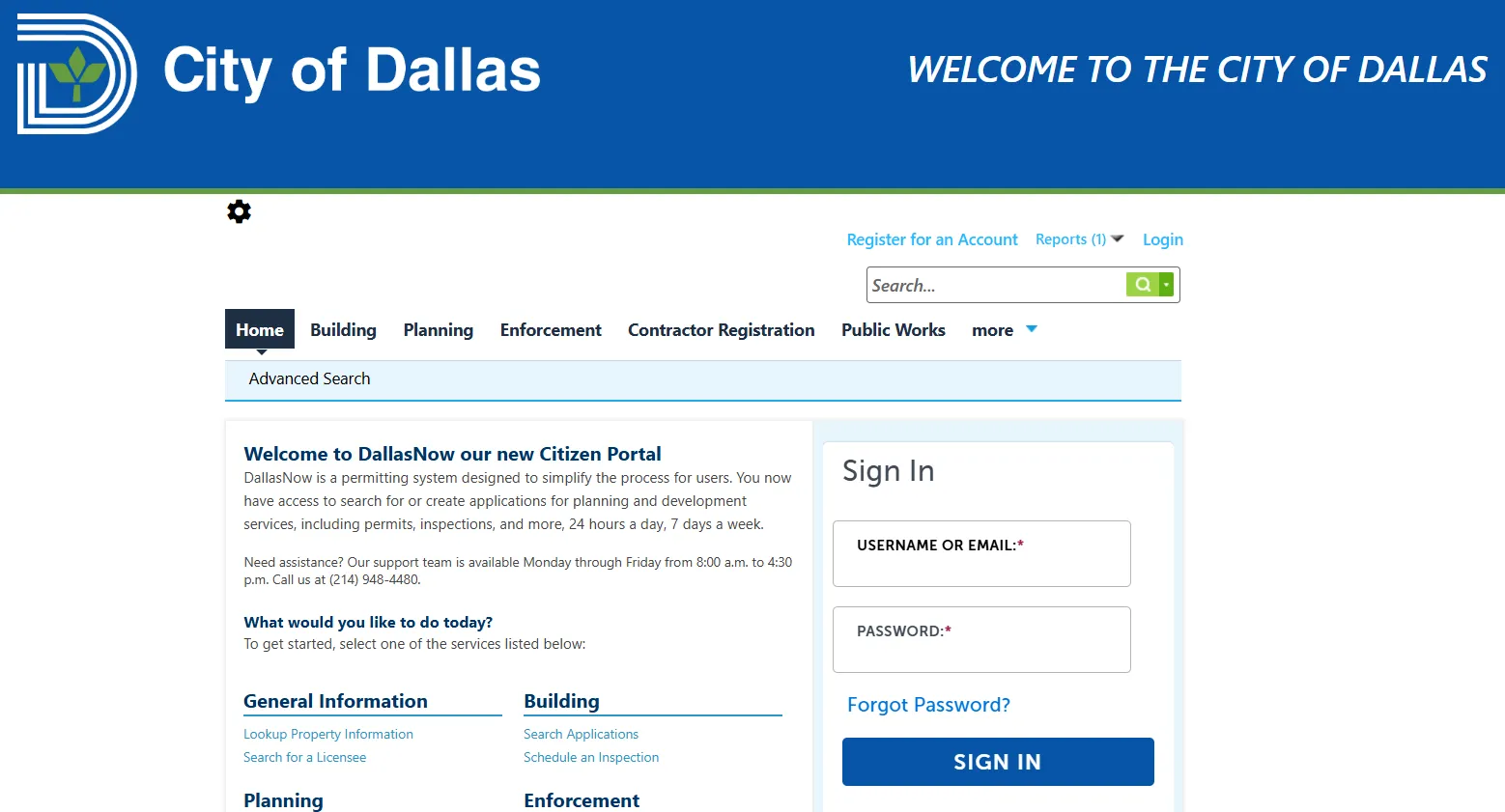
    Starting May 5, 2025, developers, business owners, and residents seeking permits or zoning changes will interact with city planning and development services through DallasNow—a unified online portal that replaces a patchwork of legacy systems.

    “DallasNow is more than just a new website—it’s a transformation in how we serve our community,” said Planning and Urban Design Director Maria Hernandez at a press conference Monday morning. “For too long, our permitting process has been a source of frustration. With this platform, we’re making it easier for everyone to do business with the City of Dallas.”

    The city’s previous permitting system, a mix of paper records and outdated digital tools, often led to delays and confusion. Developers sometimes waited weeks for updates, while residents struggled to track the progress of their applications.

    One of DallasNow’s most touted features is its real-time tracking capability. Applicants can now log in to see exactly where their project stands, read comments from city staff, and receive instant notifications about permit statuses and upcoming inspections.

    “Before, it felt like sending your application into a black hole,” said local architect James Lee, who previewed the system during a pilot phase. “Now, I can see who’s reviewing my plans and what steps remain. It’s a game-changer.”

    The platform also itemizes fees and provides electronic records of all transactions, a move city leaders say will help curb confusion and foster trust.

    “This is about meeting people where they are—in the digital world,” said City Manager T.C. Broadnax. “We’re eliminating unnecessary trips to City Hall and making government more accessible.”

    Technical Terms Explained:

    • Permitting: The process by which individuals or companies obtain official approval from the city to undertake construction, renovation, or certain business activities.
    • Zoning: Regulations that determine how land within the city can be used, such as residential, commercial, or industrial purposes.
    • Inspections: Official examinations conducted by city staff to ensure that construction or other activities comply with safety codes and regulations.
    • Land-management system: Software that integrates various city functions related to land use, making it easier to manage applications, track progress, and communicate with stakeholders.

    While DallasNow represents a substantial investment—city officials declined to specify the total cost—they argue that the benefits far outweigh the expense. “This is an investment in Dallas’s future,” Hernandez said. “We’re building a city that’s easier to navigate, not just for developers, but for every resident.”

    The rollout is not without its challenges. City staff have undergone extensive training, and a dedicated help desk is fielding questions as users navigate the new system. So far, early feedback has been largely positive.

    “Change is never easy, but this is the right direction,” Lee said. “It’s about time Dallas caught up with the times.”

    With DallasNow, city leaders hope to set a new standard for municipal transparency and efficiency—one that, if successful, could serve as a model for cities nationwide.

    DallasNow offers numerous benefits including streamlined processing with a unified cloud-based system that improves workflows for application submissions, reviews, and inspections. It enhances public transparency allowing users to submit applications, track status, and manage inspections online in real-time with instant email notifications.

    The cloud platform provides 24/7 access, online payment options, and user-friendly navigation. DallasNow will be accessible to City of Dallas customers who need to set up an account.

    Click HERE or the image above to access DallasNow

    For more information, please visit https://dallascityhall.com/departments/sustainabledevelopment/Pages/DallasNow.aspx or call the Call Center at (214) 948-4480.

  • Developers Bet Big on Build-to-Rent Townhomes in North Texas, Launching Lewisville’s Frontera Shores

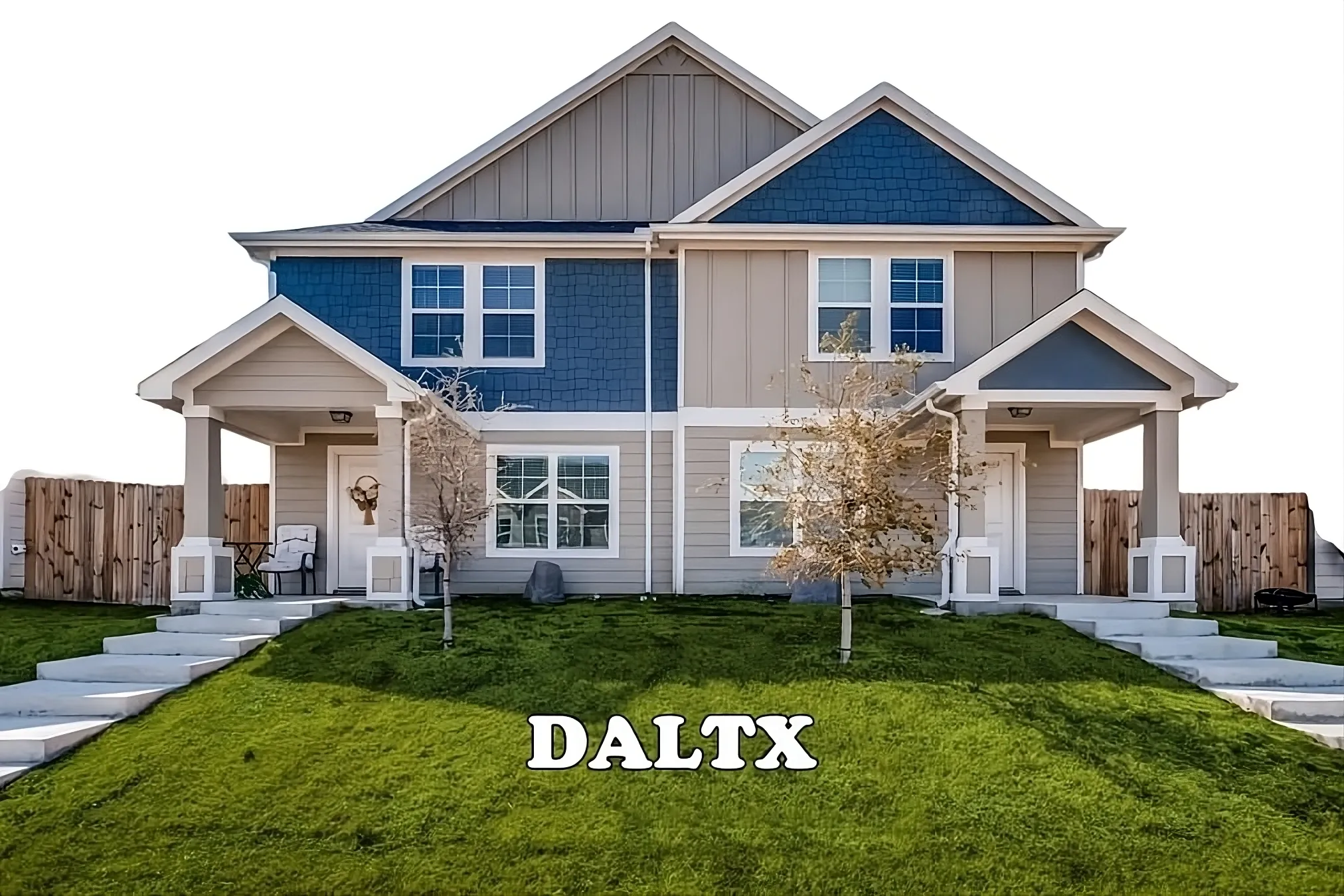
    A Townhouse Built by Wan Bridge

    LEWISVILLE, Texas — As the housing market continues to shift in North Texas, two big developers are working together to launch new rental townhomes, starting with a large project in Lewisville.

    Houston-based Wan Bridge, a leader in build-to-rent developments, is partnering with Centurion American Development Group, a prolific North Texas land developer, to roll out multiple rental home communities across the Dallas-Fort Worth metroplex. Their inaugural venture, Frontera Shores Townhomes, is planned for a 35.8-acre site near Interstate 35E, in what the companies describe as “the northern gateway to Lewisville.”

    The master-planned community will eventually comprise 201 townhomes, with construction slated to break ground as early as July or August. The first homes are expected to be ready for tenants by the third quarter, and full buildout is anticipated by December 2026.

    For Ting Qiao, co-founder and CEO of Wan Bridge, the decision to plant roots in Lewisville was as much about data as it was about demographics. “Lewisville stands out for its strong school district and strategic location,” Qiao said in an interview. “We see a gap in supply here, especially for families and professionals who want more space than an apartment offers, but aren’t ready or able to buy.”

    Qiao noted that his team relies on artificial intelligence to forecast rental trends in the area—a nod to the increasingly tech-driven nature of modern real estate. “We’re really excited about the projected returns and how fast the homes are getting leased,” he added. “Even though the numbers don’t pencil out for every project in today’s market, this one is a compelling opportunity.”

    The DFW region has emerged as a hotbed for build-to-rent communities, as high mortgage rates and surging home prices lock out many would-be buyers. Developers like Wan Bridge and Centurion American are betting that demand for quality rental homes will remain robust, particularly as families seek alternatives to dense apartment living.

    Frontera Shores will offer two-, three-, and four-bedroom townhomes, catering to a range of household sizes. Residents can expect amenities such as walking trails, green spaces, a private dog park, and a resort-style pool—a suite of features designed to rival the comforts of traditional homeownership.

    Rents for Wan Bridge’s existing communities start at $2,700 a month in Denton and $2,400 in Austin, according to the company’s website. While pricing for Frontera Shores has yet to be finalized, Qiao suggested it will be competitive within the submarket.

    Mehrdad Moayedi, president and CEO of Centurion American, described the partnership as a natural fit. “Wan Bridge’s established model and commitment to excellence align seamlessly with our vision to deliver premier luxury rental communities,” Moayedi said in a statement. Centurion American, which has developed more than 100,000 single-family lots across North Texas, recently expanded its holdings with an 82-acre purchase near Sherman.

    Scaling Back, But Moving Forward

    The partnership comes at a time of recalibration for Wan Bridge. The company recently revised its five-year goal from 30,000 to 12,500 build-to-rent homes in Texas by 2030, citing investor caution amid economic uncertainty and slower rent growth. “We need to scale back because there’s market uncertainty, and pretty much all the capital in today’s situation is on the sideline,” Qiao acknowledged. “But this new partnership is already factored into our updated numbers. Without it, our targets would be even lower.”

    Looking ahead, Wan Bridge and Centurion American envision Frontera Shores as the first of as many as ten similar projects across DFW, potentially adding more than 1,000 rental homes to the region’s inventory.

    For now, all eyes are on Lewisville, where the first shovels will soon hit the ground—a tangible sign that, for North Texas renters, new options are on the horizon.

  • Jury to Decide Fate of $200 Million Pepper Square Redevelopment Amid Neighborhood Legal Battle

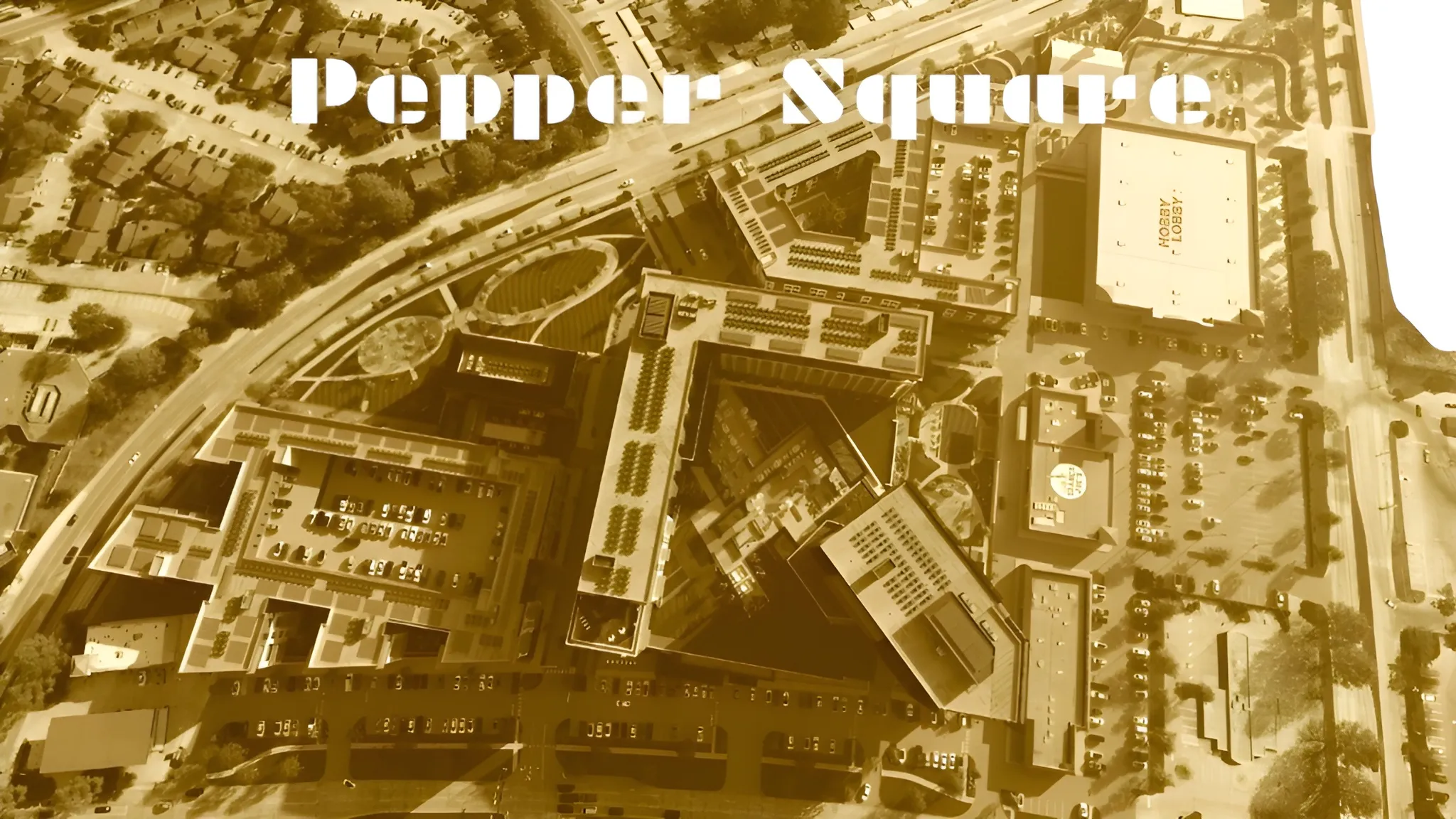
    DALLAS — A high-stakes legal showdown is set for October as a North Dallas neighborhood association takes its fight against the $200 million Pepper Square redevelopment to a jury, marking a pivotal moment in a long-running dispute over the future of the 15.5-acre site at Preston and Belt Line Roads.

    On Friday, Judge Martin Hoffman of the 68th District Court scheduled a jury trial for October 6, granting the Save Pepper Square Neighborhood Association its day in court to challenge the city’s approval of the controversial rezoning. At the heart of the lawsuit: allegations of “illegal spot zoning” and accusations that Dallas city officials are disregarding their own comprehensive land use plans.

    “We’re very happy,” said Matt Bach, who leads the neighborhood association. “I think we’ve always had a strong argument, and the case had its merits, but you never know what the judge is going to think. Now, a jury of our peers will have the chance to weigh in.”

    The legal wrangling has put the brakes on Henry S. Miller Co.’s ambitious plans to transform the aging strip center into a mixed-use hub featuring nearly 900 apartments and at least 35,000 square feet of retail. While supporters tout the project as a much-needed revitalization for a dated commercial corner, neighbors have repeatedly voiced concerns about density, traffic, and the erosion of their suburban character.

    Despite the Dallas City Council’s vote in March to rezone the property, the neighborhood association swiftly mobilized—raising more than $75,000 to bankroll legal efforts and securing a temporary restraining order last month that halted any groundbreaking. The group contends that the rezoning constitutes “spot zoning,” a practice where a small parcel is singled out for a use inconsistent with the surrounding area, which is generally prohibited under Texas law.

    “It’s about the fact that what Henry S. Miller is trying to build does not fit with the character of our neighborhood,” Bach explained. “We’re not against development, but this is about following the rules and respecting the community.”

    Some community leaders, including former District 11 Councilman Lee Kleinman, have called for Pepper Square to be designated as a Planned Development District to ensure more robust community engagement and tailored zoning regulations.

    Under a tentative agreement approved by Judge Hoffman, the developer has agreed not to begin construction until after the October trial, while the neighborhood association has pledged not to seek further injunctions in the interim. Both sides say the arrangement is reasonable, if only a temporary truce.

    “We think there is a case for spot zoning, and the court allowing this trial is going to let us prove it—and let a jury hear it,” said Austin Smith, lead attorney for the association and a partner at Steckler Wayne & Love PLLC. “We’re preparing for trial and confident in our position.”

    For now, the fate of Pepper Square hangs in the balance. As legal teams prepare for a fall courtroom battle, the case has become a flashpoint in Dallas’ ongoing debate over growth, zoning, and neighborhood preservation.

    “We’re confident a jury will see this for what it is,” Bach said. “This is about more than just one project—it’s about the future of our community.”

  • Insurance Emerging as Home-Sale Dealbreaker Across the U.S.

    While homeownership has always come with its challenges, real estate agents are now facing even greater obstacles as skyrocketing homeowners insurance costs make closing deals more difficult.

    Nearly 47% of agents surveyed reported experiencing more problems with home insurance during transactions over the past year compared to the previous one, based on Redfin Corp.’s 2025 Industry Survey.

    Some Regions Have a Tougher Insurance Market

    California and Florida are really feeling the impact. In California, about half of the agents surveyed said they’ve had a lot more trouble with homeowners insurance, and another 25% said things have gotten a bit worse compared to last year. Down in Florida, where hurricanes are common, 41.5% of agents said that insurance issues have gotten a lot worse, and 31.4% said they’re seeing a bit more trouble than before.

    Insurers have suffered hundreds of billions of dollars in losses in California due to wildfires at the beginning of the year, while Florida has seen comparable claims from recent storm damage.

    To help homeowners affected by the Los Angeles wildfires, California enacted a one-year ban this year preventing insurers from canceling or refusing to renew policies, after many homeowners were dropped in the months prior to the disaster.

    Florida also experienced a wave of insurers leaving the state last year after a series of hurricanes and a recent study found that up to 20% of Florida homeowners may now be uninsured. The rising frequency and intensity of hurricanes has caused homeowners insurance premiums in Florida to soar to nearly five times the national average, mainly due to the increased risk of climate-related disasters, according to Devonta Davis of the Tampa Bay Business Journal.

    This problem isn’t just happening in Florida. Across the country, a survey by ValuePenguin, an insurance company owned by LendingTree, found that two-thirds of homeowners saw their insurance premiums go up in 2024. Even more concerning, 25% of homeowners said their insurance company dropped them, which is up from 19% last year.

    Other states are also raising red flags, with worries about rising insurance costs and nonrenewals growing in Maine, Colorado, and Arizona.

    Homeowners in Texas—especially around Dallas—are facing their own set of challenges. With all the hailstorms and tornadoes lately, insurance claims have shot up, which means many insurers are hiking up premiums or becoming much pickier about whom they’ll cover.

    Local real estate agents say more deals are falling through because buyers can’t find affordable coverage, and a few insurers have even pulled out of the Texas market. That’s left a lot of Dallas homeowners worried about rising costs and the possibility of losing their insurance, just like what’s happening in other high-risk states.

    A lot of homeowners are making some tough choices to get by: 34% say they’ve cut their home insurance coverage to save money, and 31% have even thought about dropping it altogether. On top of that, half of homeowners are now worried their homes might not be insurable in the future, and 75% think rates will keep going up in 2025.

    Industry Consolidation Means Disasters Have a Broader Insurance Impact

    Years of consolidation in the reinsurance sector—basically insurance for insurance companies—have left just a few providers covering the entire country. When these companies take big losses from catastrophic disasters, it affects how they price coverage across all their policies the following year.

    A 2024 working paper from the University of Pennsylvania and the University of Wisconsin School of Business found that average premiums had already jumped about 33% from 2020 to 2023—or 13% after inflation—according to Medici’s earlier reporting.

    The pandemic has really turned the real estate market upside down, with 63% of lenders saying it’s gotten tougher to get home insurance. Buyers are now paying a lot more attention to climate risks, especially with all the extreme weather and flooding lately.

    Home prices have shot up too, with the median price jumping 35% from $327,100 in 2019 to $442,600 in 2022. Insurance companies have raised rates, stopped taking on new customers in risky areas, and even dropped some existing ones, making home insurance tougher to get and a lot more expensive. All of this has caused home prices to level off in 2024.

  • Aerolane Sets Up Headquarters at Fort Worth Alliance Airport

    Aerolane, a fresh face in aviation, is setting up shop at Perot Field Fort Worth Alliance Airport in the northern reaches of Fort Worth. They’re all about making air cargo more efficient with their cool new towed cargo glider technology, which promises to cut costs in air transportation.

    Right now, Aerolane is working on getting the necessary FAA certification to tweak aircraft designs. They’re moving into a 10,000-square-foot space at Alliance where they’ll also be putting together a custom aircraft designed specifically for their glider technology.

    Todd Graetz, CEO and co-founder of Aerolane, describes their technology as a “sky train,” where existing aircraft are modified to tow gliders, akin to a train with a locomotive and cars or a truck hauling trailers. They’ll kick things off with current planes and, once everything’s running smoothly, transition to custom-built cargo gliders tailored to different aircraft types.

    Chris Ash, who leads aviation business development at Hillwood and Perot Field, is confident in Aerolane’s promising future. He believes their innovative approach could significantly impact transportation and mobility, positioning them as a transformative force in the industry.

    Handling close to 2.5 billion pounds of cargo every year, Perot Field Fort Worth Alliance Airport is a major hub in the logistics industry. It’s a hub for innovation, hosting companies like Wing to test delivery drones in its Mobility Innovation Zone. Plus, AllianceTexas, Hillwood’s massive 27,000-acre development that includes Perot Field, made a whopping $10.21 billion impact last year.

    Graetz is excited about the choice of Alliance for their headquarters, thanks to the plentiful space for expansion. They’ve already secured their first major client, a well-known cargo airline, which plans to start using their technology by year’s end. Graetz foresees Aerolane increasing its team to roughly 50 staff members at Alliance as they scale up their activities.

    Chris Ash also pointed out that AllianceTexas is home to over 570 companies, mostly logistics and distribution centers. Hillwood aims to foster a thriving ecosystem that boosts air mobility and logistics. He sees Aerolane’s innovations as potentially transformative for companies transporting goods through the skies.