DALLAS — Halperin Park represents the city’s promise to the community to transform the space above I-35E into open space for Southern Dallas and Oak Cliff residents. Designed with input from the community, the park includes expansive lawns, a performance space, shaded gathering areas, play areas, water features, and views of downtown Dallas. However, to get there, many visitors arriving on foot still have to cross a busy road.
This new deck park spans Interstate 35E near the Dallas Zoo. It aims to reconnect historic Oak Cliff, a community divided by highway construction in the 1950s. The park opened to the public in May 2026 after years of planning, fundraising, and public-private partnership.
Lou Ann Sims, a Tenth Street resident, said the park “brings people together.” Another resident, Kenneth Thomas, said he was glad he had lived long enough to see the east and west sides of the neighborhood reconnected.
The problem is not inside the park. It is just outside it.
At the park’s northern end, near South Ewing Avenue, there are painted crosswalks and traffic signals. But many visitors cross farther south, near the park entrance at Lancaster Road, where there is no crosswalk or traffic light. That is where the danger is: when the light at Ewing turns green, vehicles coming off I-35E speed past the park, putting pedestrians at risk.
The city is working with the Dallas Zoo and the Southern Gateway Public Green Foundation on longer-term pedestrian-safety and access improvements near South Lancaster Road and 12th Street. The Dallas City Council also approved up to $8 million to help complete the first phase of the plaza at Halperin Park.
However, as of this writing, the problem remains unresolved. Local residents hope the city will address the pedestrian-safety issue at Halperin Park. The concern is especially clear when Halperin is compared with Klyde Warren Park, Dallas’ first deck park. Klyde Warren sits in the middle of downtown, where pedestrians move through a more established street grid with traffic lights and marked crossings. Halperin Park, by contrast, spans I-35E and sits beside a busy freeway service road, making access more difficult for people arriving on foot.
A park meant to bring people together has to begin before the gate. Dallas does not need to wait for a tragedy to treat Halperin’s access problem as urgent.
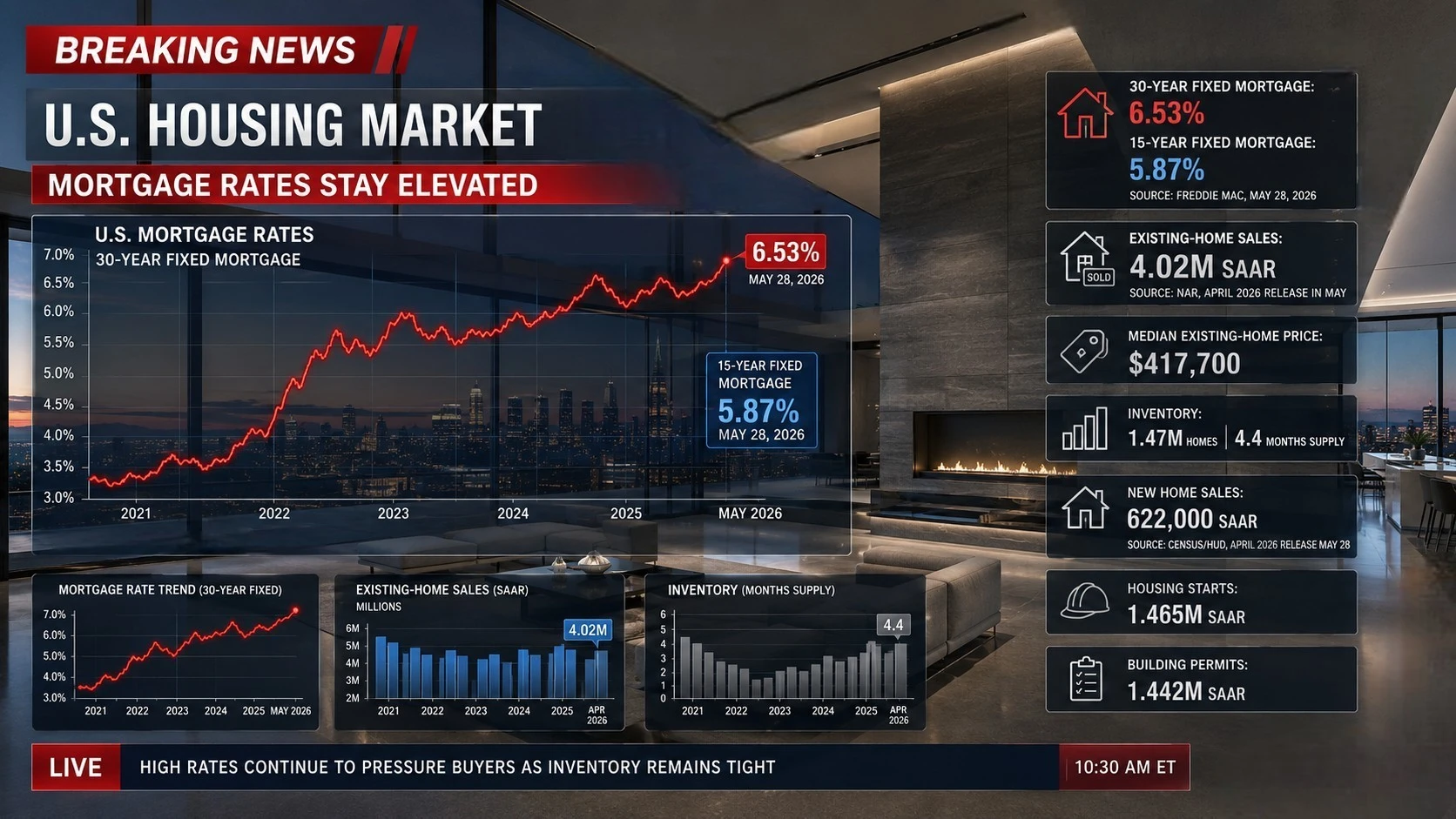
Mortgage rates have climbed to their highest level in nine months, adding fresh pressure to an already strained U.S. housing market. The average rate on a 30-year fixed mortgage rose to 6.53% as of May 28, 2026, while the average 15-year fixed rate increased to 5.87%.
The pressure is starting to show up in mortgage demand, especially among homeowners looking to refinance. Mortgage applications fell 8.5% in the week ending May 22, as the average contract rate for a standard 30-year fixed loan rose to 6.65%. Refinance applications dropped 18%, while purchase applications slipped just 0.4%, suggesting buyers have pulled back only slightly even as borrowing costs have moved higher.
Inflation remains one of the main forces keeping mortgage rates elevated. The Consumer Price Index rose 3.8% in the 12 months ending in April, with energy prices up 17.9% and gasoline prices surging 28.4%.
The current economic uncertainty is being fueled by the U.S.-Israeli military operation against Iran launched on February 28, 2026. The U.S. Energy Information Administration said global oil markets are facing heightened volatility because of the de facto closure of the Strait of Hormuz, a key transit route that carried nearly 20% of global oil supply before the conflict.
That leaves the Federal Reserve in a difficult position. In April, policymakers kept the federal funds rate target range at 3.5% to 3.75% and reiterated their commitment to bringing inflation back to the Fed’s 2% goal.
For the housing market, the Fed’s stance cuts both ways. Higher interest rates can help slow inflation, but they also make monthly mortgage payments more expensive and push some would-be buyers to the sidelines. Lower rates would improve affordability and could bring more buyers back into the market, but they could also risk adding more fuel to inflation.
The latest housing data points to a market under pressure, but not one in free fall. Existing-home sales rose just 0.2% in April. Inventory increased to 1.47 million homes, equal to a 4.4-month supply, while the median existing-home sales price rose 0.9% from a year earlier to $417,700.
Listings are also building. Realtor.com reported that active listings rose 4.6% year over year in April, while the national median list price fell 1.4% to $425,000. Price cuts are becoming more common as well, with 16.7% of active listings seeing reductions. Those cuts were more widespread in the South and West than in the Midwest and Northeast.
Redfin’s data showed a similar pattern. The brokerage reported that 35.4% of U.S. home sellers cut their asking prices in April. In San Antonio, Austin, Phoenix, and Dallas, more than half of sellers lowered their prices.
Concerns about a housing market crash have not gone away, but the current data still do not suggest a repeat of 2008. ATTOM reported that 42,430 U.S. properties had a foreclosure filing in April, up 18% from a year earlier. Even so, foreclosure activity remained well below pre-pandemic levels.
Homeowner equity is also cooling, though it remains relatively strong at the national level. In the first quarter, 43.3% of mortgaged homes were equity-rich, while 3.2% were seriously underwater, meaning the loan balance was at least 25% higher than the property’s estimated market value.
Taken together, the data points to a housing market that is becoming more fragile, especially in parts of the South and West where inventory is rising and price cuts are spreading. But for now, the stress looks more like a gradual correction than the start of a nationwide collapse.
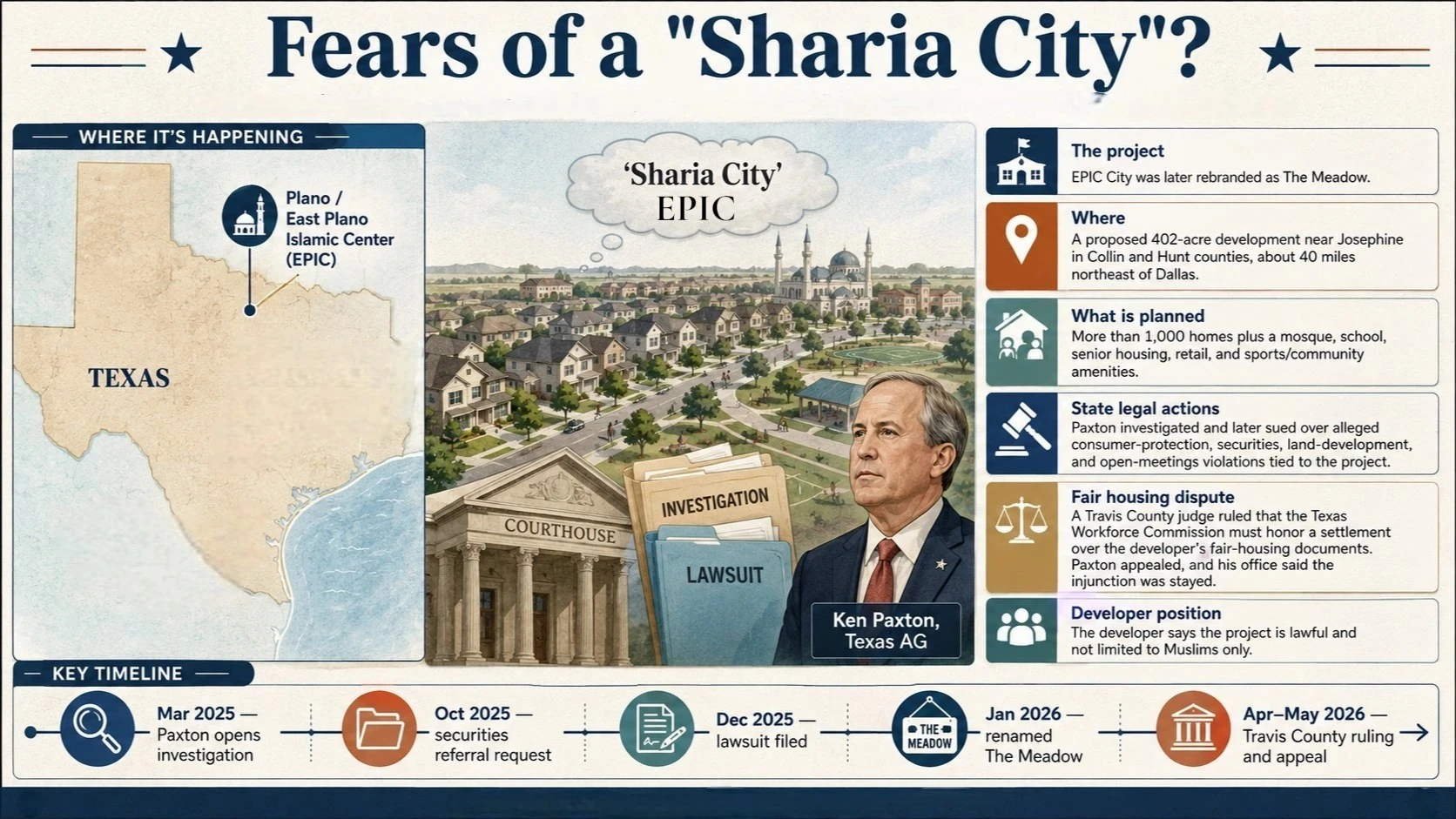
A planned 402-acre community near Dallas tied to the East Plano Islamic Center is back in legal limbo after Texas Attorney General Ken Paxton appealed a Travis County judge’s order that would have forced the Texas Workforce Commission to act on the developer’s fair housing documents. The appeal to the Fifteenth Court of Appeals paused the temporary injunction, blocking what had been an early courtroom win for Community Capital Partners, the developer behind The Meadow, formerly known as EPIC City.
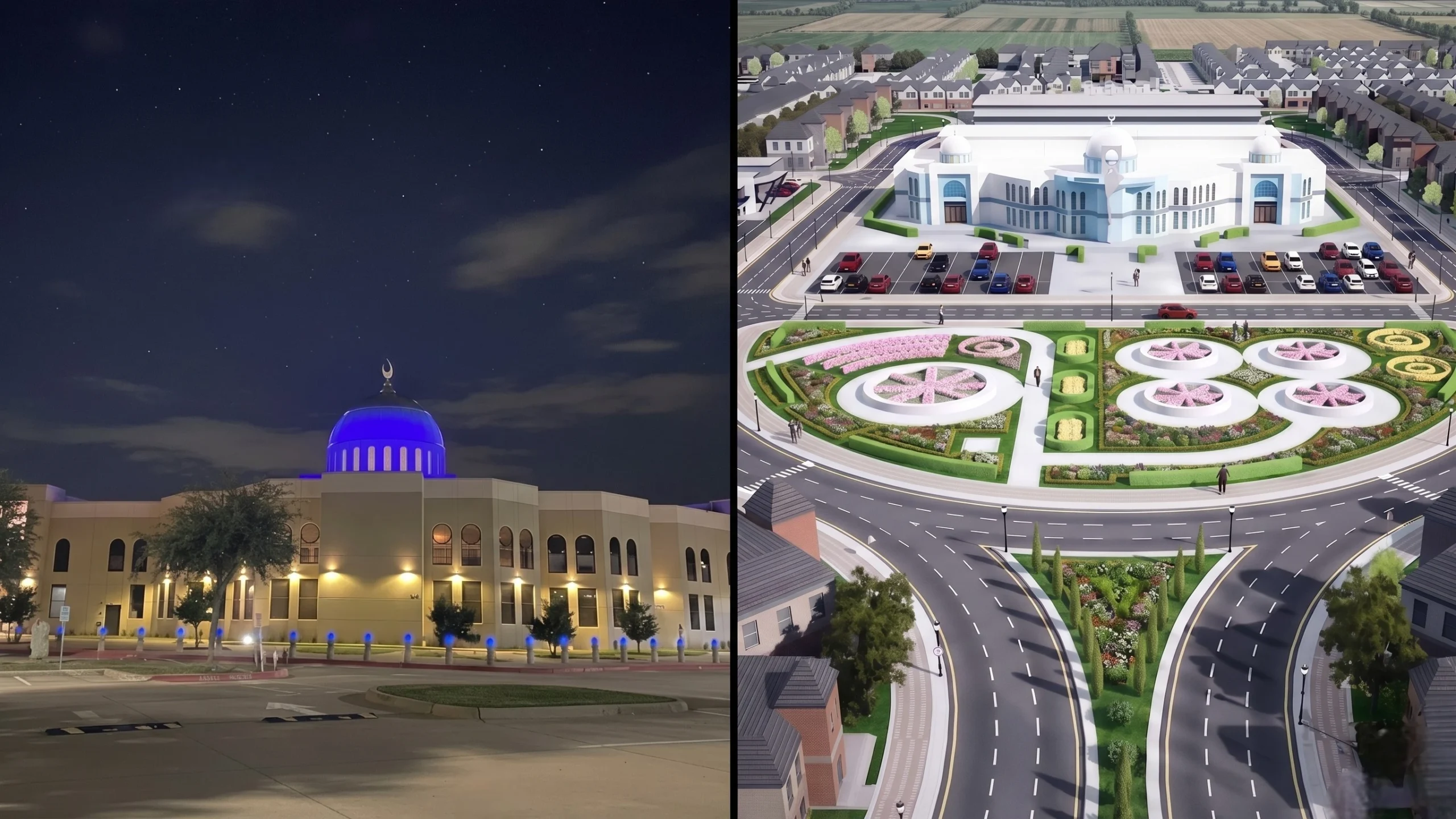
The Meadow is planned for unincorporated land in Collin and Hunt counties near Josephine, about 40 miles northeast of Dallas, with more than 1,000 single- and multifamily homes, a mosque, a K-12 faith-based school, senior housing, commercial space, sports facilities and a community college. To Texas officials, the project raises fair housing red flags. To the developers, the state’s campaign looks like a coordinated effort to punish a Muslim-associated project before it is built.
The legal hook is the Fair Housing Act and its Texas counterpart, which bar discrimination in selling, renting or advertising housing based on religion, national origin and other protected traits. State officials have argued that early marketing suggested a Muslim-only community. The developers have denied that, saying the project will be open and compliant with state and federal law.
Judge Laurie Eiserloh’s April 28 order did not clear The Meadow of discrimination claims. It found that the developers had shown a probable right to relief and ordered TWC to act within 14 days on submitted marketing materials, policies and related documents, either by approving them or issuing written, objective reasons for rejecting them. The order was narrow: it required process, not a final ruling on whether discriminatory housing practices occurred.
At the center of the dispute is a September 2025 conciliation agreement between TWC and Community Capital Partners. That agreement required fair housing training, revised marketing materials, written policies barring religious and national-origin discrimination, and submission of those materials to TWC for review and approval. The developers sued after saying the agency took their documents but failed to review or respond to them.
Paxton’s office framed the court order as an attempt to force TWC to “unlawfully approve” fair housing documents while a federal HUD investigation remains active. HUD launched that investigation in February, saying it was examining allegations of religious and national-origin discrimination tied to The Meadow’s marketing, financing structure and sales process. The developers got a different result from the Justice Department in June 2025, when DOJ closed a civil rights investigation without filing charges after Community Capital Partners affirmed that all would be welcome in any future development.
The project is also boxed in by land-use and utility fights. In March, Paxton secured a temporary injunction against Double R Municipal Utility District No. 2A, which had been tied to water and wastewater service for the development. Hunt County also disapproved a preliminary plat application for The Meadow on March 24, citing engineering, wastewater, water-service and administrative deficiencies, while stating that its decision was not based on religion, national origin, intended residents or unrelated litigation.
The policy question now is bigger than The Meadow. Texas has every right to enforce fair housing, securities, utility and platting laws. But those tools become legally and politically combustible when wrapped in rhetoric about “Sharia cities” and religious suspicion. The principle is simple. Prove actual violations, apply the same rules to everyone, and don’t let public safety or civil rights become a selective veto over who gets to build a neighborhood.
A Dallas homebuilder is testing whether crypto can help with the cost of waiting for a new home. MegPrime, a payments platform tied to Megatel Homes, said it launched its app on April 15 and is offering buyers up to $15,000 in monthly token-based rewards while their new homes are being built. Megatel is the first builder using this program.
Buyers who route their current rent or mortgage payments through the MegPrime app can receive $1,500 a month in MPP tokens during construction, up to a $15,000 maximum program cap.
The company is focusing the offer on the period between contract signing and move-in. This is a time when buyers are often still paying to live somewhere else with little financial upside.
What stands out about the rollout is the regulatory clearance behind it. On January 15, the SEC’s Division of Corporation Finance said it would not recommend enforcement action if MegPrime offers and sells the tokens the way the company described. This allows them to operate without registering them under Section 5 of the Securities Act or as a class of equity securities under Section 12(g) of the Exchange Act.
However, that is not the same thing as a broad federal blessing for crypto in housing. The SEC said its position was based on the specific facts in MegPrime’s submission and warned that different facts could produce a different result. The agency also said the letter reflects only the staff’s enforcement position and is not a sweeping legal conclusion.
MegPrime’s lawyers told the SEC the token is meant to function as a consumer rewards and payments tool rather than an investment product. In the filing, they said holders would not get dividends, profit rights, or an ownership stake. Instead, they described a system built around spending, payments, and rewards tied to everyday household costs.
The policy bet here is pretty clear. If housing is getting harder to afford, builders are going to look for new ways to subsidize the waiting period before closing. The real test is whether buyers see this as usable money or just extra hassle wrapped in crypto language. If it feels easy, other builders may copy it. If it feels complicated, it probably stays a niche incentive.
PLANO, Texas — The $1 billion redevelopment of the former Collin Creek Mall has entered its first visible phase, with 130 homes now occupied on the 100-acre site, according to a Feb. 4 update from developer Centurion American.
The developer reported 402 lots had been delivered to builders, with another 98 expected by the end of the first quarter.
The broader vision for Collin Creek is far larger than the housing now on the ground. Project materials describe a walkable mixed-use district featuring roughly 500 attached single-family residences, 2,300 multifamily units, 300 independent-living residences, 8.9 acres of parks, 1.6 miles of trails, 340,000 square feet of retail and restaurant space, and a 200-room hotel.
For now, however, housing is the clearest sign of progress. Connect CRE reported in February that 412 apartment units were still awaiting permits, while construction moved forward on the retail portion of the project, underscoring that much of the redevelopment remains in the buildout stage.
The homebuilding is led by Ashton Woods, DRB Homes and Mattamy Homes. Current listings show modern two- and three-story townhomes with open-concept layouts and two-car garages, though pricing and floor plans vary by builder. Ashton Woods is marketing three- and four-bedroom homes starting around $470,000, while DRB is offering at least one quick move-in, two-bedroom home at $469,690.
Project materials place Collin Creek in Plano ISD, noting the development is being built around future city-owned parks, 1.6 miles of walking trails, and a shared amenity space with a pool.
City records show Plano bought 3.3 acres near the site in 2021 to help connect the Chisholm Trail and expand access for culvert work, a sign that the public-space portion of the project is being shaped by city action alongside private development.
Plano backed the redevelopment early with public financing tied to infrastructure. A 2019 development agreement stated the city would help fund public improvements and a major drainage-culvert renovation. In 2020, the city approved an interlocal agreement including a $15 million grant and a $15 million loan for the project. Later actions relied on tax-increment and public-improvement-district financing to support the infrastructure work.
The redevelopment reflects a broader push in built-out suburbs to replace failing malls with housing, public space and new commercial activity rather than allowing growth to sprawl farther outward.
At Collin Creek, early housing numbers prove the project has moved beyond the planning stage. But as of April 1, 2026, the larger test remains ahead: whether the apartments, retail, hotel and public spaces arrive on pace to turn the former mall site into the mixed-use district promised.
Dallas-Fort Worth metroplex — TXRE bought Arlington Interlink during the post-pandemic office freeze, renovated it, raised rents and pushed occupancy to 95 percent before selling the building to Hielan Real Estate.
Dallas-based TXRE Properties has sold Arlington Interlink, a north Arlington office property it bought during the post-pandemic office freeze and nearly filled to capacity. The buyer is Hielan Real Estate. The price was not disclosed. TXRE said occupancy rose from 36% to 95% before the sale, and asking rents climbed from $16 to $24 per square foot.
TXRE’s play was simple. Buy a distressed office asset, spend money on it, and lease it to tenants that still need physical space. The roughly 80,000-square-foot property at 1701 E. Lamar Blvd. sits just off Interstate 30 and State Highway 360, near Arlington’s Entertainment District.
TXRE announced in 2022 that it had acquired the building and would reposition it as Arlington Interlink. Current marketing materials describe a renovated, late-1990s asset with upgraded common areas, on-site management and ample parking.
One tenant helps explain why the turnaround worked. In 2024, Munich-based Sportec Solutions established its U.S. headquarters in the building. Arlington officials said the move came with a $1 million performance grant through the Arlington Economic Development Corporation and was expected to create 17 jobs. Sportec, which supplies live match data and video assistant referee services, now lists Arlington Interlink as its U.S. address.
The Sportec move also highlights a local economic strategy. Arlington officials backed the headquarters with public incentive money, and the building sits in a corridor shaped by sports, hospitality and regional access. That combination points to a clear local strategy, use targeted incentives to widen the area’s economic base beyond game-day traffic.
Supporters argue this is exactly how local economic development should work by pulling in jobs and anchoring a high-value tenant in an office market many investors are still wary of. Critics might argue the public return is narrower than it looks, and that the same dollars might go farther in transit, housing or workforce development. Both sides have a valid point.
The deal also highlights a stark reality about the DFW office market, showing that the sector has not fully recovered. It proves that certain buildings can still succeed if the fundamentals are in place, like highway access, fresh capital, realistic scale, ample parking, and tenants with a practical reason to be there. This is a much more realistic scenario in a region where some Arlington office properties still face distress and Dallas leans heavily into office conversions to clear out excess supply.
For the buyer, this looks like a bet on one renovated asset with momentum, not a broad bet on the overall office market. For Arlington, it is another test of whether public incentives, the draw of the entertainment district, and private redevelopment can keep aging suburban office stock economically useful in a market that is still picking winners and losers.
The Grand Hyatt DFW is located directly inside Terminal D at Dallas/Fort Worth International Airport
DALLAS — The Grand Hyatt hotel inside Dallas Fort Worth International Airport has completed a $34 million renovation that adds guest rooms and expands meeting space, an upgrade the company and airport officials framed as part of a broader push to keep pace with the region’s growth and a wave of new construction at one of the nation’s busiest aviation hubs.
The hotel, connected to Terminal D, now has 315 rooms, up from 298, Hyatt and airport leaders said as they marked the project’s debut on Feb. 11. The renovation also reworked event and conference areas, including what the hotel described as 20,000 square feet of updated meeting and event space and a renovated 6,600-square-foot ballroom.
Jeff Babcock, the hotel’s general manager, said the renovation’s biggest operational shift was on the ninth floor, where previously underused space has been converted into corporate-focused meeting areas. The changes include a new Flight Deck meeting room with views of Terminal D’s runway and a DFW Board Room designed for 18 attendees, also oriented toward the airfield.
“The ninth floor was dormant,” Mr. Babcock said, adding that the additions were intended to serve business travelers and local companies looking for meeting space with immediate airport access.
In a statement, Ripton Melhado, Hyatt’s vice president of field operations, said the renovation aimed to offer “more refined accommodations” for domestic and international travelers while modernizing conference and event spaces and updating the hotel’s culinary options.
Airport leaders used the reopening as a moment to underscore DFW’s pitch to airlines, businesses and convention planners: that the airport is not simply a place to pass through, but an economic front door for North Texas. Chris McLaughlin, DFW’s chief executive, said in a statement that the revamped property would remain a premier destination in the region and reflect a “commitment to excellence” as DFW serves what he described as a growing global community.
Beyond the meeting areas, the renovation rebuilt the fitness center on the first floor, maintaining its prior scale, Mr. Babcock said. The lobby was redesigned with more flexible seating, and first-floor meeting space was enhanced. The hotel’s Grand Met restaurant and lounge also received updates intended to increase seating capacity and introduce a new global fusion concept.
Hyatt said the renovation was announced last May, with construction beginning in July. The hotel remained open throughout the project, Mr. Babcock said. Design One Studio served as the architectural firm.
The Grand Hyatt at DFW opened in July 2005, and Hyatt Hotels Corporation, based in Chicago, now operates three properties at the airport, including a Hyatt Regency and a Hyatt Place DFW.
The timing of the renovation is notable less for the new carpet and conference rooms than for the construction boom surrounding it. DFW is in the middle of a $9 billion capital improvement program known as DFW Forward, which calls for renovating Terminal C, adding five gates to Terminal A and building a new Terminal F.
American Airlines, whose headquarters are in Fort Worth and which has long treated DFW as its principal hub, is also expanding at the airport. The airline is pursuing an expansion tied to Terminal F, a project it has said would make DFW the largest single-carrier hub in the United States. The scope grew last year when American announced a $4 billion investment that the company said would double the terminal to 31 gates.
During the company’s January earnings call, American’s chief executive, Robert Isom, said the airline planned to add new satellite facilities in Terminals A and C and move to what he described as a 13-bank operation, which is an approach to scheduling flights in concentrated waves to accommodate a growing local market. Reliability, he said, would be central to serving one of the country’s fastest-growing metropolitan areas. He also said American was approaching 100,000 daily customers at DFW.
Taken together, the hotel’s renovation and the airport’s broader buildout illustrate a familiar dynamic in public infrastructure: large transportation assets rarely operate as standalone utilities. They anchor a wider ecosystem of private investment, including hotels, restaurants, meeting space and logistics services, that both benefits from and reinforces public spending on capacity.
For airport operators and regional leaders, the pitch is straightforward. Expanded terminals and gate capacity can attract additional service, which can help sustain corporate relocations, tourism and convention business. A renovated on-airport hotel, especially one with substantial meeting space, effectively turns layovers and travel days into usable work time, lowering the friction for companies that rely on frequent travel or want to hold events without adding an extra commute into the city.
But the same ecosystem raises policy questions that airports increasingly confront as they behave like small cities. When capital plans scale into the billions, the public interest is often defined not just by passenger convenience, but by how growth is managed: congestion on access roads, pressure on surrounding neighborhoods, environmental impacts, and whether the economic gains are broadly shared.
In practical terms, the debate is less about whether an airport should modernize and more about how to balance rapid expansion with accountability, resilience and long-term flexibility in an industry that can shift quickly with economic cycles and changes in business travel habits.
For now, DFW and Hyatt are betting that the fundamentals in North Texas, including population growth, corporate presence and the airport’s role as a national connector, will keep demand strong. The newly finished Grand Hyatt, with more rooms and a runway-facing “Flight Deck” built for board meetings, is positioned as one more piece of that broader bet.
The Crescent Office. Image courtesy of crescent.com
Crescent Real Estate has closed a new $241.5 million investment fund to target commercial property deals, leaning heavily into high-end office real estate even as fundraising across private markets remains under pressure.
The Fort Worth based firm’s latest investment vehicle, GP Invitation Fund IV, came in just under its $250 million target, according to the Dallas Business Journal. A federal securities filing shows the fund was structured for a $250 million offering and had reported $207.36 million sold to 43 investors as of Dec. 19, 2025. This suggests the bulk of the capital was in place heading into year-end, as regulatory disclosures often lag behind final closes.
The timing is significant. Global private equity fundraising fell for a third straight year in 2025, sliding 12.7% to $480.29 billion from $551.16 billion in 2024, according to S&P Global Market Intelligence. Additionally, fewer funds launched in 2025 than the year prior.
A concentrated bet on “flight towards quality” assets
While Crescent’s mandate is broad which involves spanning office, hospitality, and multifamily sectors, its recent moves show where it sees the clearest upside being trophy office space in prime submarkets.
The firm reports a portfolio totaling more than $16 billion in investments, including 67 million square feet of office space, 10,100 multifamily units, and 9,300 hotel keys with these figures based on its existing portfolio as of February 2025.
That scale is now being deployed within a very specific geography
In Uptown Dallas, Crescent has been snapping up marquee office towers. In late 2025, the company bought the 19 story office building at 2100 McKinney Avenue which is an Uptown property with prominent CBRE signage acquired using $170.4 million in financing, according to The Real Deal’s review of deed records. The deal closed Dec. 17.
A few months earlier, Crescent acquired Texas Capital Center at 2000 McKinney Avenue representing one of the biggest office trades in the Dallas and Fort Worth market in 2025. The 21 story, roughly 457,000 square foot tower is anchored by Texas Capital Bank, which has a lease running through 2040.
Fort Worth is becoming a new office hub taking shape as Crescent is also building at home, where in April 2025, the firm broke ground on “Crescent Offices West,” a 170,000-square-foot office building at its Fort Worth campus that it says will be anchored by JPMorganChase and open in 2027.
That project isn’t just a real estate play because it’s part of a broader shift in how business districts form in fast growing Sun Belt metros. When a major employer anchors a high-end building outside a traditional downtown core, it acts as a magnet for other tenants, restaurants, and services.
For city leaders, that’s a win if it expands the tax base however it also raises hard questions about what happens to older office stock and legacy central business districts.
The policy backdrop: interest rates, downtown strategy, and what comes next
Here’s the bigger picture noting that commercial real estate doesn’t move in a vacuum. The Federal Reserve’s pandemic era low rate environment helped fuel dealmaking and fundraising, and the higher rate era that followed has reshaped the math by compressing values, tightening lending, and making investors far pickier.
That’s where public policy quietly enters the story as follows.
Monetary policy sets the cost of capital. Higher rates don’t just slow transactions but they also create market dislocation thereby offering windows where well capitalized buyers can negotiate better pricing especially on assets that still have strong tenants and long leases.
Local policy determines whether downtowns rebound or stagnate. Cities can influence office outcomes through zoning flexibility, permitting speed, transit access, and incentives for conversions of obsolete buildings. If capital flows mainly to “best in class” properties in prime districts, the policy challenge becomes managing the obsolete inventory meaning aging buildings that can no longer compete on amenities, efficiency, or location.
Economic development becomes a tug of war. Fort Worth and Dallas like many large metros are competing submarkets inside one regional economy. When investment and leasing momentum cluster in specific nodes such as Uptown Dallas or the Cultural District area in Fort Worth then public sector decisions around infrastructure and placemaking can accelerate that clustering.
None of that guarantees Crescent’s strategy will pay off. But it explains why a firm can be bullish on trophy office while much of the broader office market still looks shaky since the office sector is increasingly bifurcated meaning it is split between premium buildings with strong tenancy prospects, and everything else.
For Crescent, Fund IV signals that its investors believe this divergence is real furthermore that the firm can keep finding deals on the right side of it.
DALLAS — Dallas Area Rapid Transit will receive $25 million in state funding to help build the next segment of the Cotton Belt Trail, a planned shared-use path that will run alongside DART’s newly opened Silver Line and expand walking and biking access across North Texas.
The North Central Texas Council of Governments’ Regional Transportation Council announced the award on December 18, and said the Texas Transportation Commission approved the grant to support construction of phase three of the Cotton Belt Trail. The money will be issued through the Transportation Alternatives Set-Aside Program, part of a statewide push to expand “active transportation” options like sidewalks and bike lanes.
DART’s funding is included in a broader $55 million package for North Texas projects aimed at improving mobility and expanding trail connections. The Transportation Commission is also directing $30 million to six other trail projects across the Metroplex, including the Trinity Forest Spine Trail and the Midtown Dallas Shared Use Trail.
Supporters have promoted the Cotton Belt Trail as a 26-mile east-to-west corridor stretching from Plano to Dallas / Fort Worth International Airport, tracking the route of the Silver Line, which opened Oct. 25. Backers say the trail is designed to link multiple communities and give riders a safer option to bike or walk between stations and nearby destinations, an approach transit agencies nationwide are using more often to strengthen “first-mile, last-mile” connections.
Work is already underway on phase two, which focuses on an 11-mile section from western Addison to the Shiloh Road Station in Plano. The newly funded third phase is expected to extend walking and biking access into Addison, downtown Carrollton, and Cypress Waters, while tying into three stops along the Silver Line.
Kevin Kokes, a program manager for the North Central Texas Council of Governments’ Land Use and Mobility Options team, welcomed the state’s support in a statement. “By improving connections to employment, housing, schools and recreational opportunities, these projects help build a stronger, more accessible future for everyone,” he said.
Construction on phase three is scheduled to begin by mid-2027. Transportation officials say the next steps include finalizing plans and getting the project ready ahead of the planned start date.
Former Sanger-Harris building, Valley View Center, Dallas
Dallas – After more than a decade of false starts, redevelopment of the former Valley View Mall site in Dallas is finally underway. On Friday, developers broke ground on a roughly $85 million mixed-use project that will serve as the anchor for the long-planned Dallas Midtown district.
The first phase, called Premier at Midtown, will rise on about four acres at the southwest corner of Dillbeck Lane and Preston Road. The six-story building will feature 296 apartments above as much as 26,000 square feet of ground-floor retail, kicking off the broader Dallas Midtown vision, according to Scott Beck, president of Beck Ventures. The average unit will be about 865 square feet, with rents around $1,800 a month.
Dallas-based Anthem Development is leading the project in partnership with Beck Ventures and Prime Life Technologies America, a joint venture between Toyota Motor Corporation and Panasonic Holdings Corporation. NexBank is providing financing, Cross Architects designed the building, and Anthem’s construction arm will handle the general contracting.
Beck and his partners celebrated the milestone with a ceremonial groundbreaking Friday that featured speeches and the traditional dirt toss, along with new renderings of the luxury apartment building and its street-level retail. They expect to pull permits within the next 45 to 60 days. Construction is projected to take about two and a half years, with the first residents expected to move in by early 2028, Beck said.
“After 12 years of planning, patience, setbacks and perseverance, we are breaking ground on our very first project that will officially begin the rebirth of this district,” Beck told attendees. He added, “This time is definitely different,” nodding to the site’s history of stalled plans.
The stakes stretch far beyond a single apartment building. Beck Ventures first unveiled plans more than 10 years ago to transform the 110-acre Valley View Center site at Preston Road and LBJ Freeway into Dallas Midtown. The vision is a multibillion-dollar mixed-use destination with roughly 1.5 million square feet of retail, restaurants, residential units, office towers, and a hotel-condo tower. In 2013, the city created a 450-acre development zone covering Valley View and the nearby Galleria Dallas to support that vision.
Yet the sweeping redevelopment stalled. Beck has blamed the slow progress in part on the city’s failure to install a needed sewer line, saying that a $36 million city incentive package tied to the project eventually expired as construction never got going. City representatives did not immediately respond to his comments when asked by DALTX Real Estate Team.
Meanwhile, the mall sat decaying. Valley View went dark in 2015, with only an AMC theater operating at the largely abandoned complex at LBJ and Preston until early 2022. The structure was finally demolished in 2023 after a series of fires at the vacant site, including one that left two Dallas firefighters injured.
Premier at Midtown represents only a small slice of the Valley View property, and the future of the remaining acreage is still up in the air. Beck’s firm joined with Seritage Growth Properties and fitness operator Life Time Inc. at the end of 2024 to market the entire site in hopes of drawing additional development partners. Beck has not disclosed which parties have made offers but said the goal is to secure collaborators to develop the rest of the land.
Plans for a larger, multibillion-dollar mix of retail, dining, residential, office space, and more remain on the table, though how and when that full build-out will come together is unclear. “There are other groups out there that are very interested in working with us,” Beck said, describing ongoing talks but offering few specifics.
One lingering question is whether professional sports could become part of the site’s future. Beck would not confirm whether representatives of the Dallas Mavericks are exploring the area for a potential new NBA arena, but he suggested the surrounding district would be suitable for a major venue. “The table is set to make a deal like that happen,” he said.
For now, the focus is on turning years of renderings and promises into visible construction. The broader Dallas Midtown redevelopment is projected at around $4 billion, and Friday’s groundbreaking marked the first real step toward replacing the long-vacant mall with dense, urban-style development. After years of stalled momentum, cranes and concrete at Valley View may finally signal that Dallas Midtown is moving from concept into reality.
Valley View Center (1973)
Below is a timeline of Valley View Center Mall from its opening through 2025