Pet owners often prefer not to leave their furry friends behind when they must travel. However, they may have no other choice. When the only option is to board the pet, they want to ensure they choose the right facility.
Fortunately, dogs often enjoy pet boarding services. Cats aren’t always as accommodating. The right boarding facility will do everything possible to ensure each pet has an enjoyable stay rather than a stressful one. With the proper care, the pet will return to the owner happy and healthy.
Choosing a Boarding Facility
Choosing a boarding facility isn’t as easy as selecting a hotel for humans. The most significant distinction is in the level of care provided to the pets. A reputable facility needs to know more about the animal to ensure their boarding services will be a good fit.
The facility staff must understand the pet’s medical history, play style, food preferences, and other vital information. With this information, the staff can ensure the pet receives the care it needs to thrive and enjoy its time away from its owners. What information should an owner share about their pet before boarding them at a facility?
Temperament
Pets have temperaments, just as people do. Some pets are happy and enjoy meeting new people. Others dislike anything new. Pet owners must understand their pet’s temperament and determine the best setting for the animal. A pet that struggles in new environments requires a boarding facility that is patient and understanding of its needs. Fear-aggressive pets are more likely to bite, not because they are bad, but because they are scared.
Boarding facilities require this information so they can determine whether to board the pet or recommend alternative options. An experienced professional can help most pets adjust to a new environment and maintain their happiness and health. However, this process takes time, so an owner should board the pet overnight a few times before they leave for an extended period.
Health and Age
Boarding facilities need to know a pet’s health and age before the owner leaves them for an extended period. Health problems become more common as pets age, and the facility must be prepared for them. Visit the pet’s vet before boarding the animal to confirm it is safe to do so, and share the result of this checkup with the boarding facility.
Provide the facility with a contact number for the owner, a backup number for someone who can make medical decisions for the pet in case the owner is unreachable, and the vet’s office number. Never board a pet without having someone to make immediate decisions if they become ill or injured. Failing to do so could cause the pet unnecessary suffering, and no pet owner wants that. It’s also beneficial to have a healthcare directive for your pet, and the vet and caregiver should have a copy of this document.
Boarding facility owners and employees are passionate about the animals in their care. They prioritize the physical and emotional health of every animal that stays with them. Pet owners can help by communicating with the staff about the care of their animal while they are away. More information is always best, as it allows the staff to maintain the animal’s routine, enabling them to enjoy their time in new surroundings. When the owner returns, the animal will be ready to return home but eager for their next stay in the facility.
Across Dallas County, public housing agencies help connect people with housing they can actually afford. If you’re a landlord, these agencies can be a reliable way to keep units filled. If you’re a tenant, they can help you stay housed—even when rent prices keep climbing.
Most people know about Section 8, but fewer understand how it works behind the scenes. Local PHAs manage that program and others like it. They handle the paperwork, run the waitlists, and make sure properties meet inspection standards. Each city in Dallas County is served by a different PHA, and the rules vary depending on where you live or where your rental property is located.
If you’re thinking about signing up as a landlord or applying for help as a renter, it’s worth knowing which agency covers your area. You’ll want to check waitlist status, deadlines, and which forms you need. Some PHAs are open for applications year-round, others are not.
One tool that helps with this is Section 8 Search. It’s a good starting point if you need to look up contact info, waitlist openings, or which housing authorities serve your zip code.
How Section 8 Vouchers Work in Dallas County
Section 8, officially known as the Housing Choice Voucher program, is the main rental assistance option run by public housing agencies across Dallas County. It’s designed to help low-income families rent homes in the private market, not just in public housing units.
If a family qualifies, they get a voucher that covers part of their rent. They can use it at any property that meets basic health and safety standards. In most cases, tenants pay around 30% of their adjusted income, and the housing agency pays the rest, up to a set limit that depends on unit size and local rent prices.
For landlords, joining the program means two things: consistent rent payments from the housing agency and a wider pool of prospective tenants. The subsidy portion is paid directly to you each month. Tenants pay their share just like in any other lease. Units need to pass a Housing Quality Standards (HQS) inspection and stay in good condition to remain eligible.
Because funding is limited, voucher availability is based on a waiting list. Families often wait a long time before they can use one. That’s why it’s important for both tenants and landlords to understand how the process works, from the initial application to the final lease approval.
Why More Landlords Are Signing On
Renting through a local PHA, especially under the Section 8 program, gives property owners a few steady advantages. The most obvious? Consistent rent. Housing agencies send their share of the payment straight to you every month, usually right on time.
There’s also less risk of long vacancies. Tenants with vouchers are always searching, and many stay in place once they’ve settled in. That kind of stability can be hard to find, especially if your property sits in a high-turnover area.
Some PHAs go even further by offering perks to landlords who join the program. You might see things like quicker inspections, help with security deposits, or even a bonus for signing up. These extras make it easier to get started and easier to stay in.
What Your Property Needs to Qualify
To rent through a housing voucher program, your property has to meet basic health and safety standards. That includes having working plumbing and electrical, safe heating and cooling, and no major issues with the roof, foundation, or structure. Inspectors from the local housing agency will check the unit before a tenant moves in and again each year after that.
If something doesn’t pass, you’ll need to fix it before the lease can start. Once the unit’s approved, it has to stay in livable condition to remain eligible.
There are also limits on how much rent you can charge. Each housing agency sets a “payment standard” based on the size of the unit and average rents in the area. You can’t go above that number, and you can’t charge side fees that wouldn’t apply to a non-voucher tenant.
Leases have to follow fair housing rules, just like any other rental. The same terms apply for everyone, whether rent is assisted or not.
Tenant Eligibility and Application Process
Not every family qualifies for rental assistance. PHAs look at household income, and most programs are reserved for families earning less than half of the area’s median income. The lower the income, the higher the priority. Some PHAs also give preference to people with disabilities, veterans, or those living in unsafe or overcrowded housing.
To apply, families submit financial and household information to the local housing agency. Because demand almost always outweighs funding, most PHAs keep waitlists. Getting on a list doesn’t guarantee quick help, it could take months or even longer.
Once a family is approved and receives a voucher, they usually have between 60 and 120 days to find a rental that qualifies. The home has to meet inspection standards, and the landlord has to be enrolled in the program.
Families aren’t limited to one neighborhood, either. They can use their voucher anywhere the PHA serves, and in many cases, they can move to a different city or county altogether. That flexibility, called portability. Lets families look for homes in areas with stronger schools, safer streets, or better access to work.
Where to Find Help and Stay Up to Date
If you’re trying to figure out which housing agency covers your area or whether a waitlist is open, it helps to have everything in one place. That’s where Section 8 in Texas comes in. It’s a practical resource that pulls together information from PHAs across the country, including all the ones that serve different parts of Dallas County.
On the site, you can check which agency covers your zip code, see which programs they offer, and find out if they’re accepting new applications. Each listing includes contact info and links to the agency’s site, so you can get forms or ask questions directly.
If you’re looking specifically for housing assistance in Texas, the site also has a statewide guide that breaks things down by region. It’s a solid place to start if you’re comparing options or thinking about moving to a different part of the state.
Waitlists open and close all the time, and program rules can shift. Section 8 Search tracks those changes and posts updates regularly, useful whether you’re a tenant looking for help or a landlord trying to stay current on policy.
Staying Informed About Program Changes
Housing programs don’t stay the same for long. Federal rules shift, local market pressures grow, and community needs evolve. For both landlords and tenants, keeping up with those changes can make a big difference, whether you’re trying to stay eligible, avoid delays, or make smart choices about where to rent or invest.
One way to stay in the loop is through resources that track updates as they happen. The Section 8 information blog covers new program details, landlord tips, policy shifts, and broader housing trends, all in one place. It’s a useful read if you want to understand how changes might affect your unit, your tenants, or your waitlist status.
Knowing what’s ahead helps you stay flexible. Maybe that means learning how to adjust your lease terms, budget for repairs, or plan for inspection changes. And if you’re a tenant, it might help you catch new opportunities—like short-term openings, relocation programs, or updated voucher limits.
If you want broader context on the housing issues facing Texas, there’s also plenty of information out there on how cities are approaching affordability, sustainability, and rising costs. It’s all connected—and the more you know, the better decisions you’ll make.
Next Steps for Landlords and Tenants
If you’re renting in Dallas County, whether as a property owner or a tenant. It pays to understand how local housing agencies operate. Knowing how the programs work, what’s required, and where to find accurate information can help you make decisions that work in the long run.
Start by finding out which PHA covers your area. Learn what programs they offer, how their waitlists work, and what they look for in eligible properties or applicants. Tools like Section 8 Search make that easier by bringing all those details into one place.
Whether you’re applying for assistance or thinking about joining as a landlord, staying informed puts you in a stronger position. The more you know going in, the smoother the process will be and the better your chances of finding something that fits your needs.
Author : Kristina Moiseenko
The Section 8 Search Team is dedicated to helping individuals and families navigate the complexities of affordable housing through the Section 8 Housing Choice Voucher Program. Our mission centers on simplifying the housing search process by providing comprehensive, nationwide access to rental properties, waiting list information, and essential resources for voucher holders across the United States.
Shipping container homes are showing up more often in Texas, especially around cities like Dallas, where new development is moving fast. These homes aren’t just affordable; they’re also tough and have a look that appeals to buyers who want something a little different. And as more people look for smart ways to own a home, more sellers are jumping in with container-based options.
But before you decide to go this route, there are a few things worth checking out. From local zoning rules to what types of shipping containers in Dallas are usually sold, it helps to get a clearer picture. You’ll also want to know what kind of builds make the most sense and how container homes compare to traditional houses when it comes to costs, permits, and upkeep
1. What Are Shipping Container Homes?
Shipping container homes are exactly what they sound like—houses built from the same steel containers used to haul cargo across oceans. Most come in 20- or 40-foot lengths and get transformed into livable spaces with insulation, plumbing, electrical systems, and windows. You’ll find everything from simple one-container studios to larger builds that combine multiple units into two-story layouts or full-sized homes.
2. Are Container Homes Legal in Texas?
The rules depend on where you plan to build. Texas doesn’t ban container homes, but every city and county has its own zoning laws. In places like Dallas, your container home has to meet International Residential Code (IRC) standards and follow local regulations about foundation type, exterior finish, and where the home sits on the lot. Meanwhile, some rural counties might give you more flexibility, especially if the property isn’t inside city limits.
3. Why Container Homes Appeal to Texas Buyers
Lower Cost to Get Started
One of the biggest draws is price. Shipping containers are much cheaper than most traditional building materials, which makes them a smart option for first-time buyers, DIY enthusiasts, or anyone trying to keep upfront costs in check.
Tough in Texas Weather
These things were built to ride out storms at sea, so with the right prep, like sealing, insulation, and a solid foundation. They stand up well to Texas heat, wind, and rain.
Faster to Build
Since the structure already exists, a container home can be built much quicker than a stick-built house. If you’re trying to move in sooner rather than later, that shorter timeline can be a huge plu
Eco-Conscious Living
Using repurposed containers cuts down on construction waste. And if you add solar panels, rain collection systems, or efficient cooling setups, you can create a space that’s both smart and sustainable.
Easy to Customize
You can keep it simple with a single-container layout or get creative by stacking and joining multiple units. Whether you’re after clean modern lines or something more rustic and laid-back, there’s room to design around your lifestyle and budget.
4. What to Watch Out For: Common Challenges with Container Homes
Keeping it Cool (or Warm)
Texas summers can be brutal. Without the right insulation, your container can feel more like a toaster oven than a house. And in winter, it’ll lose heat just as fast. High-quality insulation and a smart HVAC setup are essential if you want your space to stay comfortable year-round.
Not a Lot of Room to Stretch Out
A standard 40-foot container gives you just over 300 square feet. That’s tight if you’re planning to live there full-time. To make it work, many owners combine two or more containers, which adds to both the space and the cost.
Cutting Steel Isn’t Simple
Every window or door you want to add means slicing through solid metal. That takes special tools, skilled labor, and added structural reinforcement to make sure the home stays safe and that can drive up your build budget
Financing Can Be a Hurdle
Not every lender is comfortable financing something that doesn’t look like a traditional house. If you’re going off-grid or building something totally custom, getting a mortgage or insurance policy may take more work—and in some cases, higher rates.
Ongoing Upkeep
Steel is tough, but not invincible. Without proper sealing and maintenance, rust can become a problem, especially in humid or rainy parts of Texas. Keeping your home in shape might mean occasional touch-ups, re-coating, or spot repairs.
Resale May Take Time
Because container homes are still a niche option, you might not find a buyer right away when it’s time to sell. Some appraisers and buyers may not know how to value the home properly, which can slow down the process or affect pricing. Still, interest is growing, especially among buyers looking for affordable or sustainable alternatives.
Final Thoughts
Container homes in Texas aren’t just about being different, they’re a solid option for folks who want to keep things affordable, functional, and a little more personal. These homes have become popular for good reason: they’re quicker to build, easier on the budget, and they offer a chance to create something that really reflects your style. Of course, they do take some effort to get right. From permits to design, there’s a bit of a learning curve, but for many, it’s a challenge worth taking on.
You’ll need to think through zoning rules, insulation needs, financing challenges, and the possibility that resale might take a little longer than expected. These homes are still outside the mainstream, and that means a bit more prep work on your part.
If you’re ready to take the next step, it helps to talk to your local planning office early, find a builder who knows their way around container construction, and make sure your financing and insurance are lined up from the start. With the right team and a solid plan, you can build a home that stands out, not just because of how it looks, but because it works for how you live in Texas.
How materials are stored often gets overlooked, but it affects a lot. Concrete mix won’t stay usable if it’s left exposed too long. Moisture, dust, or careless stacking can ruin a batch before it ever gets mixed. Taking a few simple steps early on keeps things in order and avoids waste later.
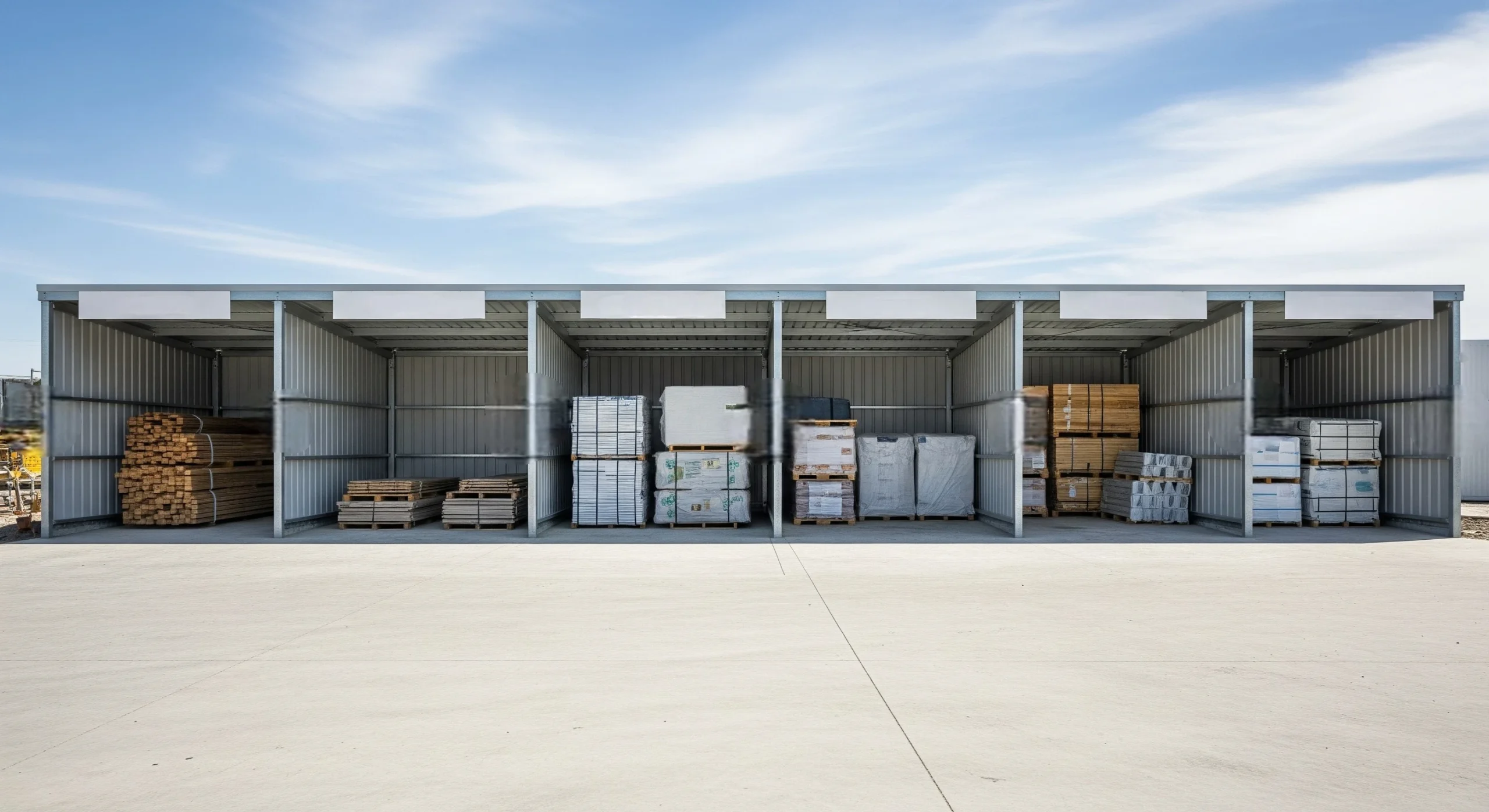
Concrete materials need to be kept in a dry, sheltered space. Elevating them on platforms or pallets helps protect against ground moisture. Cement bags should not be stacked more than eight layers high. Aggregates must be separated by size and placed on a firm, well-drained surface to avoid contamination.
This general guidance serves as a starting point, but storage needs can vary depending on the type of material and local climate. Being familiar with the specific handling requirements of each component and taking steps to shield them from environmental exposure can help keep their condition stable and extend usability.
How Do Different Weather Conditions Affect Concrete Material Storage?
Hot weather can ruin cement if storage isn’t handled carefully. Humidity and heat speed up the hardening process, even before use. It’s best to keep cement in a space that gets air circulation. In places with high humidity, using a dehumidifier might be worth considering. For aggregate piles, throw a light-colored tarp over them to reflect sunlight and slow down moisture loss.
When temperatures drop, freezing becomes a bigger threat. Aggregates should stay above freezing—use heating if needed. Cement bags must be kept dry at all times. In cold, damp air, even a little moisture can make the powder clump or set too early.
What Are the Specific Storage Requirements for Each Concrete Component?
Portland cement is the most sensitive and needs the most attention. It should be placed inside a weatherproof building, with the floor raised so no moisture seeps in from below. The room needs airflow, but without drafts that might push damp air toward the bags. Use older stock first to keep anything from sitting too long.
Aggregates work best when stored on a solid surface that drains well. Keep the sizes apart using strong barriers so they don’t mix. It helps if the area has a bit of a slope, so water doesn’t pool. Avoid using the bottom layer, it often picks up dirt from the ground.
Admixtures have their own needs. Liquid types should stay sealed and out of direct heat or cold. Most will keep well between 50 and 86 degrees Fahrenheit, but always check the label.
How Long Can You Store Concrete Materials Before They Degrade?
If kept dry and sealed, Portland cement usually stays usable for up to six months. Even so, some strength may be lost over time. Past that point, it’s safer to run a quality check before using it for anything that needs high performance. In silos, cement generally holds up for about three months.
Ready-mix concrete doesn’t last nearly as long. Once it’s mixed, there’s a window of around 90 minutes before it starts setting. Aggregates are more forgiving. As long as they stay clean and covered, they can sit in storage for a long time. It’s still good practice to inspect them now and then for debris or changes in size distribution.
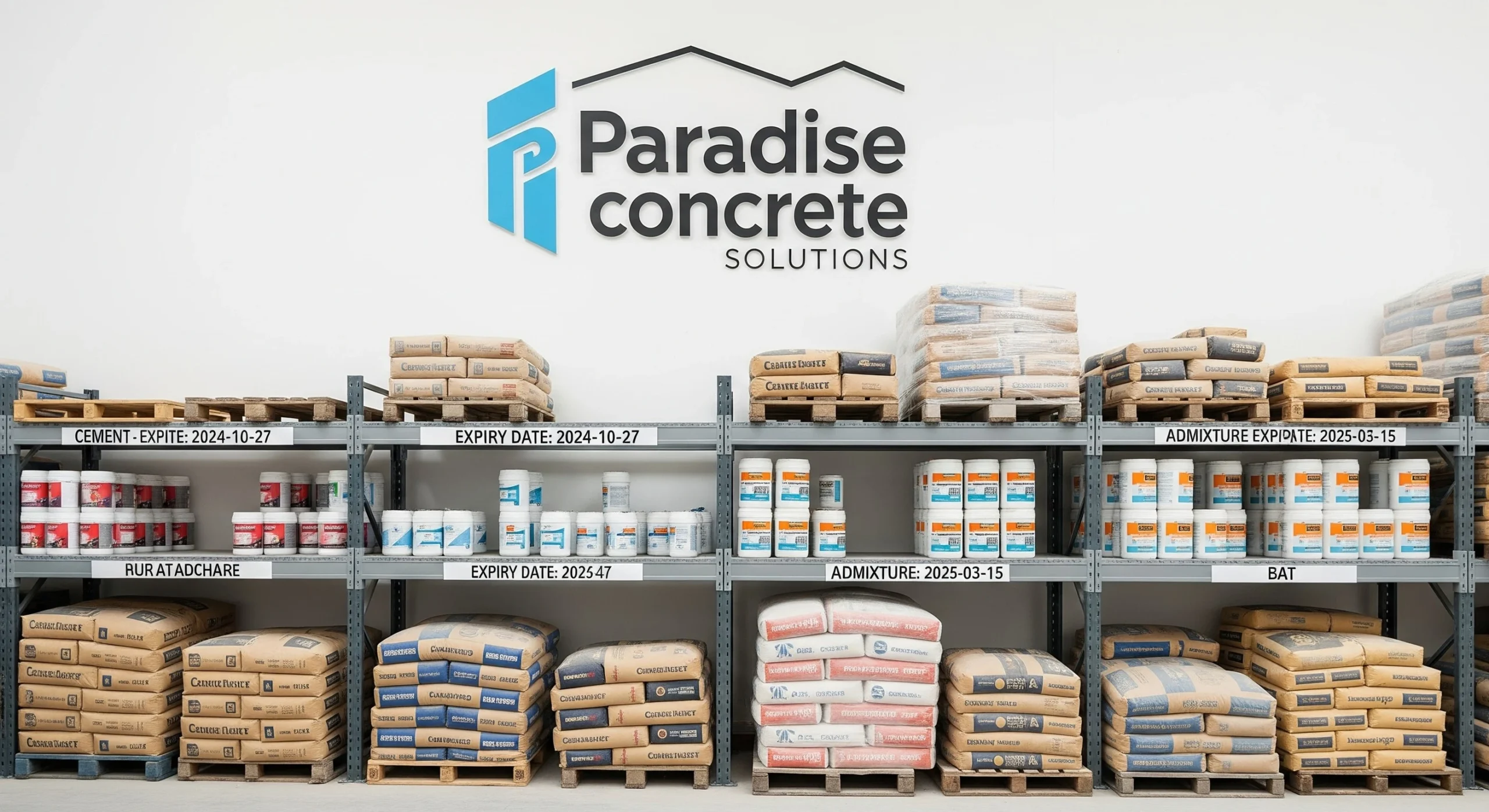
Admixtures don’t all age the same way. Most have a shelf life between six months and a year, depending on how they’re stored. Always check manufacturer recommendations and expiration dates provided by your concrete supply company, as using expired admixtures can significantly impact concrete performance.
What Are the Signs That Concrete Materials Have Been Improperly Stored?
Cement that has taken on moisture often clumps or forms hard spots inside the bag. Even if only part of it feels solid, it’s safer to toss the whole bag, since its performance won’t be reliable. A noticeable increase in weight can also be a clue that moisture has gotten in. Bags stored correctly should weigh the same as when first delivered.
For aggregates, warning signs include odd colors, organic debris, or an unusual amount of dust. If finer and coarser particles have started to separate, it usually means the pile wasn’t handled or protected well. Pools of water or soft ground around the storage area can also be a problem, moisture in the mix will be harder to control if the material absorbs too much from the ground.
What Safety Measures Should Be Followed When Storing Concrete Materials?
Cement dust can irritate skin, eyes, and lungs, so personal protection needs to be close at hand—gloves, masks, goggles. Don’t rely on signs alone. Keep ventilation running well, especially in enclosed sheds where dust builds up fast. If any admixtures are stored nearby, check the label. Some types are flammable and need fire extinguishers placed within reach, not just mounted near the door.
Stacking needs attention too. Lay bags in a cross pattern and keep the stacks low enough to avoid tipping. Damaged or moist bags don’t belong in storage. With silos, inspect walls and discharge systems on a schedule. Fix leaks early and clean dust traps before they clog.
Storage areas aren’t walkways. Only staff handling materials should go in, and they need space to move loads without tripping. Loose cement, wet sand, or spilled admixture can create slippery ground fast, so sweeping needs to happen regularly, not just at the end of the day.
Taking Action: Your Next Storage Steps
Before bringing in more material or starting the next pour, take a few minutes to check your current storage setup. Walk through the area and look closely at how cement is stacked, whether aggregates are kept clean and separate, and if moisture has found its way into any corner. Watch for soft ground, puddles, or damaged bags, anything that might lead to waste or delays later.
Use the points in this guide as a reference, not a rulebook. Adjust them to fit your site, your weather, and the way your team works. Fix what’s urgent, then tighten up the rest over time. A few small corrections now can save entire batches later.
Buying a home in Texas today looks very different from just a few years ago. With rising home prices, shorter sales cycles, and a tech-savvy generation of buyers entering the market, traditional payment methods are no longer meeting the demands of modern buyers. This article explores the smart payment tools that are changing how Texans buy homes.
Why Payment Flexibility Matters in the Texas Market
Homebuyers in Texas already have access to a wide range of payment options. They range from conventional bank loans and mobile escrow transfers to emerging tools such as digital wallets and cryptocurrency.
Below are the key reasons payment flexibility plays such a critical role in the current Texas housing landscape.
Rising Property Values and Buyer Expectations
Home prices across Texas have increased significantly over the past few years, with major cities like Austin, Dallas, and San Antonio experiencing some of the steepest spikes due to high demand, limited inventory, and ongoing population growth. This growth puts pressure on buyers to access larger sums quickly, whether for earnest money, down payments, or closing costs. Flexible payment options help buyers move quickly when needed.
Supporting Diverse Buyer Profiles
Texas attracts diverse homebuyers, from first-time homeowners to remote tech workers and out-of-state investors. Each group brings its own financial situation and preferences. Some may rely on government-backed loans or down payment assistance programs, while others may use crypto assets, private lending, or digital banking platforms. Flexible payment systems cater to these diverse profiles, enabling buyers to engage with the market in ways that reflect their resources and financial planning strategies.
Key Technologies and Tools Powering Smarter Homebuyer Payments
Escrow Payment Portals
Title companies or escrow services manage these online systems. They allow buyers to transfer earnest money, down payments, or closing funds directly to an escrow account. Instead of writing checks or initiating manual wires through a bank branch, buyers can log into a secure portal, confirm transaction details, and complete payments from home.
These platforms also provide payment confirmations and clear timeframes, reducing the risk of delays or miscommunication between agents, lenders, and closing teams. In a state like Texas, where transactions often move quickly, being able to send funds immediately while maintaining proper documentation helps keep the deal on track.
Mobile Wire Transfer Services
Mobile wire transfer services enable buyers to complete time-sensitive payments without being tied to a physical bank location. These tools are often offered through mobile banking apps or fintech platforms and support the transfer of large amounts, like closing funds or final balances within a matter of hours. In competitive Texas markets where sellers may accept backup offers, a delay in payment can jeopardize a buyer’s position.
Mobile wire services provide real-time tracking and fraud prevention features such as identity verification and two-factor authentication. Buyers can also initiate transfers outside of banking hours or while traveling, which adds convenience and helps them meet strict contract deadlines. This level of accessibility is helpful in fast-paced urban centers like Austin or Dallas.
Digital Wallet Payments
Homebuyers can pay for smaller transaction-related costs, such as home inspections, property appraisals, or service deposits for things like pest control, surveys, or staging using digital wallets. Apps like Apple Pay, Google Pay, PayPal, and Zelle enable immediate fund transfers using only a phone number or email.
For homebuyers in Texas working with multiple service providers, the ability to pay securely and quickly improves communication and prevents administrative delays. These tools play a key role in managing the supporting costs of the purchase process, although they are unsuitable for escrow or closing payments due to transaction size limits.
Cryptocurrency Payment Gateways
Homebuyers who hold cryptocurrency can use specialized payment gateways to convert digital assets into U.S. dollars and transfer the funds to a title company or escrow provider. It’s a practical way to use crypto for real estate without going through the usual liquidation steps.
In some cases, sellers may accept cryptocurrency directly, depending on the transaction structure and compliance requirements. These gateways often include features such as identity verification, transaction tracking, and secure currency conversion, helping buyers complete payments safely.
Multi-Source Payment Platforms
Homebuyers can combine funds from several accounts or payment methods into a single transaction. For instance, they can pull from checking accounts, savings, credit cards, or digital wallets instead of relying on one bank account or waiting for transfers between financial institutions.
The platform pulls everything together and sends the full payment to the escrow company or title office. This solution helps buyers who face bank transfer limits or need to make large payments within a short timeframe.
Real-Time Payment (RTP) Networks
These networks allow banks to transfer money instantly between accounts, even outside normal business hours. RTP ensures the funds move and settle within seconds unlike traditional wire transfers or ACH payments that may take hours or days. For buyers working with tight contract timelines or late-day deadlines, this speed and certainty can prevent last-minute disruptions and keep the transaction on track.
Conclusion
Smart payment solutions are helping homebuyers in Texas complete real estate transactions more efficiently and with fewer delays. These solutions give buyers more control over how they send, schedule, and confirm payments during the transaction process. With faster transfers and more flexible options, buyers can meet deadlines without unnecessary delays. These systems also reduce the risk of fraud and confusion during high-value transactions.
Relocation is never an easy job. Most times, it’s a multi-step affair: packing, moving, interim storage, and lastly, settling. If one is moving into a new house or moving a company, the details easily get confused in a hurry without expert assistance. In such a situation, having a moving business that also provides secure storage is not just advantageous—it’s astute.
A moving and storage company gives a single stop solution to make the entire move as hassle-free as possible. Rather than being forced to deal with independent vendors for storage and transportation, customers are treated to the same company at every stage. Such kind of overall assistance reduces chances for delay, miscommunication, or damage normally that result from services being broken across various companies.
One Team, One Process
The greatest benefit of keeping moving and storage within a single location is continuity of operations. From the initial packed box to the last delivery, the same individuals are responsible for all phases of the operation. This prevents unnecessary handling of property and keeps accountable agents clearly responsible. The client doesn’t need to concern himself with coordinating separate pickup and drop-off times, combining packing levels among carriers, or having to ask whose number to call if things go wrong. With a single provider, logistics is a seamless transition, not a jigsaw puzzle.
Unlike conventional self-storage facilities, storage from professional movers is intended to be an add-on to the moving process itself. The move from home or office to storage occurs in one continuous flow, frequently in the same truck and on the same day. Additionally, these units are more secure than what is available to the public. Units can be climate-controlled, regularly monitored 24/7, and attended to by professionals who understand how to care for delicate items and valuable belongings. The extra care is particularly well worth it for extended storage or even very sensitive items such as electronics, artwork, or antique furniture.
Flexibility for Unexpected Turns
Not everything goes according to plan. A close may fall through, the work may be behind schedule, or a new employment opportunity might involve unplanned travel. Flexibility is needed in such circumstances.
Businesses that provide storage and moving solutions enable customers to make changes without derailing the entire process. Storage temporarily offers a cushioning that provides individuals and organizations with time to adjust to new schedules—without resorting to scrambles for last-minute storage and avoidable repeated relocation.
Financial and Logistical Efficiency
Selecting a bundled services provider is also cost-effective. Most moving and storage service providers have discounted prices if customers choose to avail themselves of both services compared to contracting two separate providers. Above all, it prevents double-handling merchandise, lowering labor expense and potential damage caused by accidents.
It is also easier to bill and invoice. One provider means no duplicated contracts, conflicting policies, or lethargic third parties’ reactions. It’s all managed by one group in the middle, so budgets and communications are much easier.
Perfect for Both Residential and Business Relocations
For homeowners, secure storage can be an off-season room in which to keep possessions when selling a house or downsizing to a smaller home. For corporations, it can be short-term, as with renovation, relocation, or seasonal closure. In both situations, the additional convenience of working with one firm that moves and stores simultaneously saves headache and makes the whole process easier.
Simplicity is all that counts when life is in motion. Having a moving and storage company do all stages of the process means nothing gets lost along the way. Improved protection, savings, flexibility, and packaged service make it a smart option for anyone who wants a hassle-free and secure moving experience.
Solar panel roofs are becoming a popular option for homeowners in Texas due to the state’s abundant sunlight. They offer a way to reduce electricity bills and increase home value but also involve upfront costs and maintenance considerations.
The key to deciding if solar panels make sense in Texas lies in weighing their long-term savings against installation expenses and potential limitations like weather and roof orientation. Understanding both the advantages and drawbacks can help homeowners make an informed choice.
This article explores the primary pros and cons of solar panel roofs specific to Texas weather, energy policies, and market factors. It aims to provide clear facts that assist readers in deciding whether solar technology fits their needs.
Benefits of Solar Panel Roofs in Texas
Solar panel roofs in Texas offer clear financial advantages, reduce environmental impact, and provide access to government incentives. They can also boost property values by making homes more energy-efficient and modern.
Energy Cost Savings
According to expert solar panel installers in Dallas from Metro Express Solar, Texas receives abundant sunlight year-round, making solar panels highly efficient in generating electricity. Homeowners can significantly reduce their monthly electricity bills by producing their own power.
Net metering programs in Texas allow users to sell unused energy back to the grid, further lowering overall energy costs. This can lead to potential savings of 50% to 70% on utility bills, depending on system size and energy use.
Installing solar panels also provides price stability by reducing dependence on fluctuating utility rates. Over time, savings often cover the initial installation cost, creating long-term financial benefits.
Environmental Impact
Solar energy produces zero emissions during operation, helping reduce a home’s carbon footprint. Texas, being a large energy consumer with heavy fossil fuel use, benefits from increased solar adoption to lower greenhouse gas emissions.
Using solar panels helps decrease reliance on nonrenewable energy sources such as coal and natural gas. This contributes to cleaner air and water quality by reducing pollutants commonly associated with fossil fuel power plants.
Solar power also conserves water resources, as it requires minimal water for maintenance compared to traditional power generation methods. This is particularly important given Texas’ periodic drought conditions.
State and Federal Incentives
Texas homeowners can take advantage of various incentives to offset solar panel installation costs. The federal solar Investment Tax Credit (ITC) allows for a 30% tax credit on system costs through 2032.
At the state level, there is no state income tax, which means no state tax rebate, but utility companies may offer rebates or performance-based incentives to encourage adoption. These vary by provider and location within Texas.
Additional perks include exemptions from local property taxes on added home value from solar systems. Some cities also provide streamlined permitting processes to reduce upfront barriers.
Increased Property Value
Solar panel roofs increase a home’s market appeal by lowering future energy expenses for buyers. Studies show that homes with solar installations typically sell faster and at higher prices than comparable non-solar homes.
The premium on resale value often ranges from 3% to 5%, reflecting the energy savings and environmental benefits perceived by buyers. This is especially relevant in Texas markets experiencing growing demand for sustainable housing.
Solar panels also signal modern upgrades and energy independence, both attractive features to homebuyers in the state. Properly maintained systems can remain efficient for 25 years or more, adding lasting value.
Drawbacks of Solar Panel Roofs in Texas
Solar panel roofs involve significant financial investment upfront and require evaluation of local weather patterns. Additionally, not all roofs are suited to support the added weight and structural demands of solar installations.
Upfront Installation Costs
The initial expense for purchasing and installing solar panels in Texas can be high. Costs typically range from $15,000 to $30,000 before incentives. This amount covers the panels, inverters, mounting hardware, and labor.
Although federal tax credits and some state incentives may reduce costs by up to 30%, the out-of-pocket investment remains substantial. Homeowners with limited budgets may find the upfront price a barrier, especially if they lack access to financing options.
Maintenance, replacement parts, and possible upgrades add to long-term expenses. The payback period can stretch beyond 7–10 years depending on energy savings and system size, which might not suit all buyers.
Performance Variability Due to Weather
Texas climate features intense sun but also includes storms, hail, and severe weather events. Solar panels perform best in direct sunlight, but cloud cover and dust storms can reduce efficiency.
Hail, frequent in some Texas regions, can physically damage panels despite durable designs. Regular cleaning is necessary to remove dirt and debris, particularly in dry, dusty environments, adding to upkeep efforts.
Heat also decreases efficiency; extreme summer temperatures often exceed optimal operating ranges. This means energy production may dip when demand is highest, affecting overall returns.
Roof Compatibility and Structural Limitations
Not all roofs in Texas can support solar panels. Factors like roof age, material, pitch, and orientation affect eligibility. Older roofs may need repairs or replacement before installation.
Materials such as wood shakes or slate are less suited for mounting hardware, which can increase installation complexity and costs. Roofs facing north or shaded by trees produce less energy, limiting system effectiveness.
Structural integrity is critical as panels add weight and wind load. A professional inspection is required to confirm the roof can safely bear the system, potentially leading to additional reinforcement expenses.
Additional Considerations for Texas Homeowners
Texas homeowners must navigate specific regulations, upkeep demands, and installation choices when considering solar panels. These factors can significantly affect the system’s cost-effectiveness and durability over time.
Local Regulations and Permits
Texas has varied local regulations that impact solar panel installation. Homeowners should check city and county zoning laws, which may limit panel placement or require certain aesthetic standards.
Permit requirements differ widely. Many areas in Texas mandate electrical and building permits before installation. Failing to secure these can result in fines or costly modifications.
Net metering policies are crucial. Texas utilities offer different compensation rates for excess energy, so understanding local programs helps maximize savings.
Maintenance and Longevity
Solar panels generally require minimal maintenance but should be inspected annually. Texas weather, especially dust, pollen, and occasional hail, can reduce efficiency if panels are not cleaned.
Roof condition plays a role. Panels installed on aging roofs may need removal for repairs, increasing maintenance costs. Homeowners should ensure the roof is in good shape before installation.
Monitoring systems are recommended. They provide real-time performance data, allowing quick identification of issues such as shading or panel malfunctions.
Choosing a Qualified Installer
Selecting an experienced installer is critical in Texas due to unique climate and regulatory conditions. Look for licensed and insured professionals with positive local reviews.
Installers should offer warranties on both equipment and labor. Warranties typically cover 10-25 years for panels and 5-10 years for installation work.
Request detailed quotes including system size, expected output, and timeline. A transparent installer will provide a clear contract and assist with permit applications.
Dallas is growing. From new residential neighborhoods to sprawling commercial complexes and expanding transportation networks, construction projects are reshaping the skyline and the suburbs alike. With this rapid pace of development, project managers, city planners, and developers are under increasing pressure to deliver efficient, cost-effective, and sustainable outcomes. To meet this demand, many in the industry are turning to a modern solution that’s already transforming sectors like agriculture and logistics: satellite imagery.
The use of satellite data in urban planning is not just about getting a bird’s eye view. The most recent satellite maps for visualisation and analysis allow professionals to zoom into the finer details, observing land shifts, tracking seasonal vegetation changes, and detecting early signs of environmental stress. This level of real-time awareness supports better decision-making at every step of a construction project, from early feasibility studies to long-term asset maintenance.
Satellite Data in the Construction Industry
The use of satellite imagery in construction is no longer a futuristic concept. Today, it’s a practical tool that offers detailed, real-time insights into the land, infrastructure, and environmental factors that influence how projects unfold. High-resolution images from satellites orbiting Earth provide an expansive view of terrain, land use changes, water bodies, vegetation, and even soil conditions. This technology allows teams to visualize conditions over time, monitor progress, and spot potential issues early, without needing to set foot on the ground.
Across the construction lifecycle, satellite imagery fills critical information gaps. It provides near-instantaneous updates on weather-related disruptions, offers validation for materials planning, and serves as a powerful tool in regulatory compliance. As cities like Dallas continue to expand into environmentally complex zones, the role of this data becomes even more important.
Why Use Satellite Imagery in Construction in Dallas
Dallas’s construction environment is as dynamic as it is diverse. From revitalizing historic neighborhoods in Oak Cliff to expanding industrial parks near the outskirts, developers must navigate a range of zoning, environmental, and logistical considerations. Here is where the latest satellite imagery becomes a powerful asset.
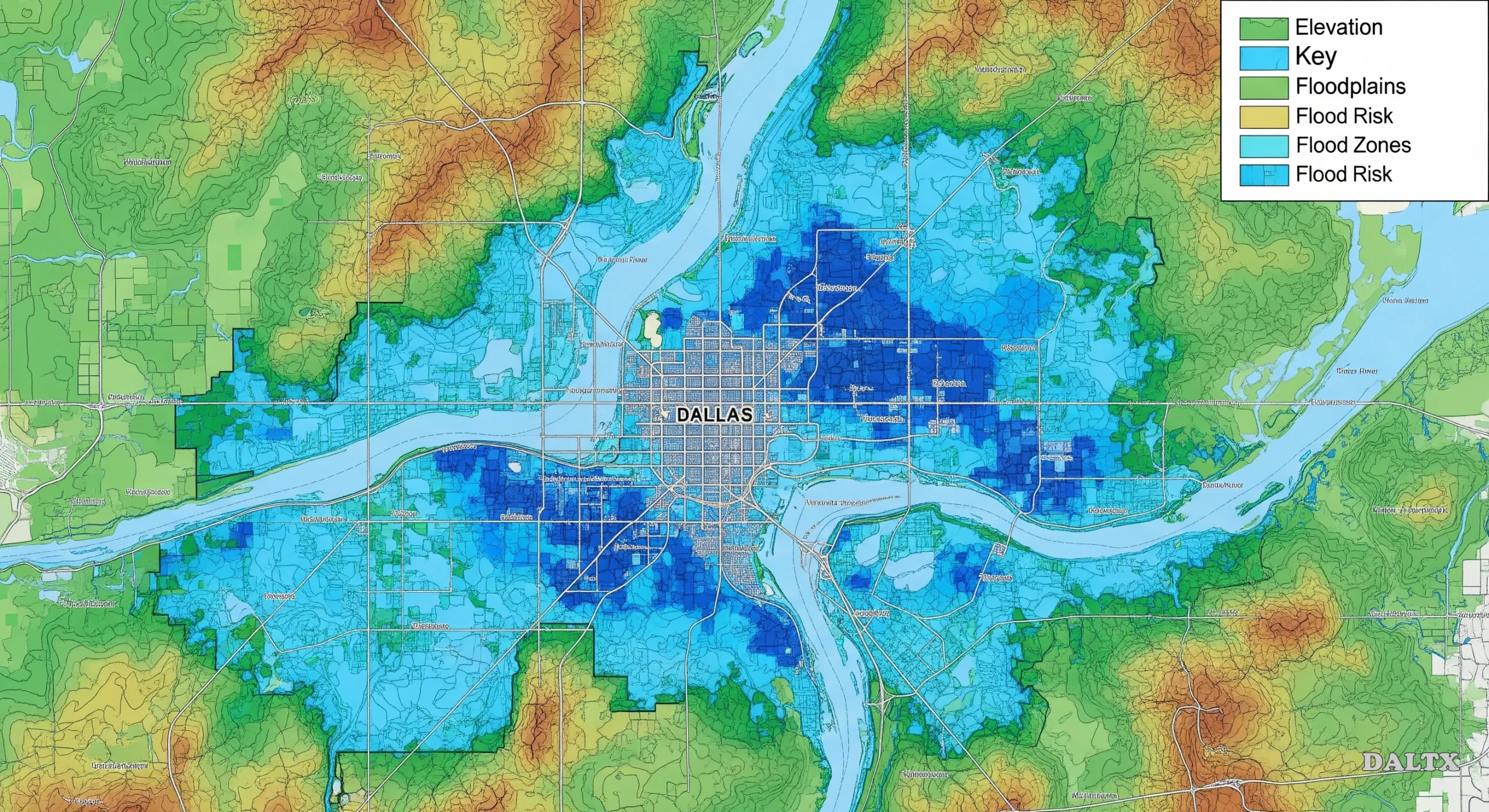
The city’s variable topography and fast-changing land use patterns make traditional survey methods expensive and sometimes outdated by the time data is processed. Satellite imagery provides a faster and more flexible alternative. For instance, high-resolution images can help detect subtle elevation changes, flood-prone zones, or land movement, which are all essential in planning foundation work and drainage systems.
For example, in California, NASA and the Jet Propulsion Laboratory use satellite‑based InSAR to track land subsidence in cities like Los Angeles and the San Joaquin Valley. These systems can detect ground settlement as small as a few millimeters well before visible damage occurs, alerting engineers to areas at risk of infrastructure failure or increased flood vulnerability. Adopting similar satellite‑guided monitoring in Dallas could help local construction and planning teams detect uneven soil movement, assess drainage system needs, and anticipate foundation stress across development zones, especially in flood‑prone or rapidly urbanizing areas.
Moreover, Dallas is no stranger to extreme weather events. Access to updated satellite images allows teams to assess storm damage, monitor soil saturation levels, or identify regions where runoff could pose a problem for construction timelines. These images also offer visual proof for insurance claims, environmental compliance, and internal audits.
One emerging trend is using imagery to analyze pre-construction site conditions during different times of the year. In a city with hot summers, unpredictable rainfall, and rapid vegetation growth, the ability to assess long-term patterns through recent satellite images of earth adds significant predictive value. It enables developers to plan around seasonal challenges instead of reacting to them.
How Satellite Data Can Benefit Everyone in the Dallas Construction Industry
The advantages of satellite data stretch across the entire construction pipeline, especially in a rapidly evolving urban hub like Dallas.
Project managers and developers benefit from being able to scope out land parcels more accurately. Before purchasing a site, they can use recent satellite images of Earth to evaluate how the land has been used historically and how it integrates into existing infrastructure. This avoids surprises later and provides a clearer picture of the project’s feasibility.
Urban planners and architects can use satellite imagery to understand surrounding land use, population density, and green space distribution. In Dallas, where new developments often border older residential zones, this information ensures harmonious integration with existing communities.
Contractors and engineers can track progress using time-lapsed satellite images. Rather than relying solely on drones or manual inspections, they can verify milestones, detect anomalies like unexpected earth movement, and adjust resource planning accordingly. This is particularly helpful on Dallas’s larger construction sites, where multiple teams may be working simultaneously across large areas.
Environmental consultants also gain a significant advantage. Satellite imagery helps them track changes in vegetation, monitor erosion, and ensure compliance with local environmental regulations. In Dallas, where construction near Trinity River and other ecologically sensitive areas is common, this capability is essential.
Even investors and stakeholders appreciate the transparency that comes with using the latest satellite images. Regularly updated views of construction sites can be shared in reports, offering visual confirmation of progress and helping build trust in project management.
Beyond individual projects, satellite data also supports city-wide infrastructure planning. For example, identifying urban heat islands or inefficient traffic corridors using satellite insights can guide more resilient public works projects. Over time, this could influence how Dallas evolves, balancing its booming growth with environmental responsibility and long-term livability.
The Future of Satellite Imagery in Dallas Construction
Looking ahead, the role of satellite imagery in Dallas construction is only expected to grow. As more providers offer the latest free satellite imagery, access is becoming democratized. This levels the playing field, allowing smaller firms and municipal departments to use the same data once reserved for large-scale enterprises.
Artificial intelligence is also enhancing the interpretation of satellite data, making it easier to detect patterns, predict risks, and streamline workflows. With the continued urbanization of Dallas and an increasing focus on climate resilience, smart, data-driven planning will be essential.
In the near future, satellite-guided construction will likely become standard practice. From improving the accuracy of site assessments to reducing delays caused by environmental unpredictability, the integration of satellite data offers Dallas a smarter path forward. Embracing these tools today means building a city that is not only modern but also prepared for the challenges of tomorrow.
Home prices across Texas have been moving steadily upward. In cities like Houston, Austin, and Dallas, working families are spending more just to stay close to jobs, schools, or transit. Local governments have tried to respond, with zoning changes, higher density projects, and tax credits, but those efforts take time and rarely scale fast enough.
At the same time, federal housing support is now at risk. Budget proposals for 2025 include cuts to several programs that fund rent vouchers and income-restricted units. If approved, those reductions won’t play out on paper, they’ll show up in waitlists, delayed repairs, and people losing the housing they already have.
The State of Housing Affordability in Texas
In cities like Dallas, Austin, and Houston, the shortage of affordable housing isn’t a future problem, it’s already here. In Dallas, the current gap between available rental units and what low-income renters need has passed 33,000. In Houston, close to half of all renters are spending more than 30 percent of their income just to stay housed.
Wages in many industries haven’t kept pace. The gap between housing costs and what people earn is no longer a slow drift, it’s a fixed reality in much of the state. One legislator described it simply: it’s hard to talk about affordable housing if no one can afford a home.
Outside the cities, the pressure isn’t any lighter. Smaller towns face different constraints, fewer properties, older stock, and limited local funding. Families looking for something clean, safe, and within reach often find nothing close. For some, that means pulling children out of school midyear. For others, it means leaving behind a home they’ve lived in for decades or driving long distances to jobs that don’t pay enough to move closer.
How Section 8 Helps Bridge the Gap
Section 8 housing vouchers are one of the few tools that connect low-income renters to the private market. In Texas, they’re managed by local housing authorities and reach families, seniors, and people with disabilities in cities and rural towns alike.
The program doesn’t just keep people housed, it also helps stabilize neighborhoods. Landlords rely on the regular payments to maintain their properties. In places like San Antonio and El Paso, that consistency matters. Section 8 isn’t a full solution, but it fills a space that few other programs can reach.
Federal cuts in 2025 could change that. A smaller program means fewer vouchers and longer waitlists. For people already struggling to hold on to housing, the result won’t be gradual, it will be felt quickly.
The federal budget proposal for 2025 outlines reductions across a number of domestic programs, and housing assistance appears to be among them. Even partial cuts to the Housing Choice Voucher Program could leave tens of thousands of households without rental support. Texas, already among the states with the lowest access to affordable housing, could feel the impact quickly.
Waitlists for vouchers in cities like Austin, Dallas, and Brownsville already stretch for years. If funding drops, most agencies would have to stop new enrollments, and families already waiting might find themselves pushed further down the list or dropped entirely.
Without rental help, families at the edge of eviction could slip into shelters, or leave their communities altogether. That shift doesn’t happen in isolation. Cities and nonprofit organizations would face more pressure to expand emergency housing, legal support, and outreach. In smaller cities with limited resources, the need could outpace capacity.
There’s also the landlord side. Many private owners accept vouchers as part of their business model. But if payments become unreliable or delayed, some may opt out of the program. In tight markets like Fort Worth, Lubbock, and Corpus Christi, that would make finding a unit even harder for voucher holders.
Local Efforts Can’t Do It Alone
Across Texas, cities have taken their own steps to deal with housing shortages. In Dallas, officials are looking at smaller lot sizes to make it easier to build more than one unit on a single property. Austin passed changes to let homeowners add multiple units where only one was allowed before.
Other cities are trying different angles. Houston and San Antonio have tested ways to speed up the permitting process. El Paso is working with developers to add affordable homes into mixed-income buildings, aiming to avoid clustering poverty in a single location.
These approaches reflect how cities are trying to respond with what they have. But the need keeps growing. Local rules can help, but they don’t cover what federal funding supports, especially when it comes to volume. Building takes time, and the backlog isn’t getting shorter.
What Can Be Done?
While the full scope of the 2025 budget cuts is still under negotiation, housing advocates are urging local leaders to speak up and prepare. Here are a few priorities taking shape:
State advocacy: Texas leaders can lobby federal counterparts to maintain or expand HUD funding, especially for vouchers and housing assistance.
Municipal planning: Cities may need to adjust bond packages and development strategies to fill anticipated gaps.
Community support: Landlords, nonprofits, and tenant coalitions can work together to identify at-risk renters and intervene early.
The impact of federal housing budget reductions extends far beyond policy; it shapes whether local efforts will succeed or stall.
In the long term, Texas may also need to consider creating a state-level rental assistance fund that can backstop federal gaps. By diversifying the sources of affordable housing support, the state can build more resilience into a system that is currently too vulnerable to federal whims.
A Tipping Point for Texas?
Texas stands at a housing crossroads. The state’s economic success continues to attract new residents, but that growth is outpacing affordability in nearly every major metro. Federal funding plays a quiet but essential role in holding that balance together.
Without it, the fragile system that keeps many Texans housed could falter and that would ripple far beyond the households most directly affected.
The workforce housing shortage could hamper local economies, especially in service industries and public sector jobs. Communities increasingly price out educators, healthcare workers, and first responders who serve them.
Without solutions, talent loss and workforce instability could accelerate. For now, eyes are on Washington. But households across Texas, from urban apartment towers to rural rental homes, will feel the decisions the most.
The time to talk about sustainability isn’t after the cuts come; it’s now.
By confronting the affordability crisis from multiple angles. Protecting vital funding streams, Texas can move toward a housing future that is not only livable but also equitable and enduring.
If you own a property in a neighborhood with an active Homeowners’ Association, it’s your responsibility to communicate the rules to your tenants.HOA policies don’t just apply to property owners since they also apply to residents who rent homes in the area.
However, sometimes policies on noise level, pets, or parking can feel unnecessarily restrictive or even outdated.As a result, your tenants may have frustrations with their living conditions in your rentals.In such a scenario, can tenants request changes to the HOA rental management rules? It depends.This article will go over the steps you can take and the key things to think about before moving forward.
How Can Tenants Be Involved in Requesting Changes to HOA Rental Management Rules?
Understand the Governing Documents
Before you try to make any changes, it’s important to really understand your lease and the HOA’s rules and bylaws. This helps avoid misunderstandings about what your tenants are responsible for, so you don’t end up fighting a battle you don’t need to.
For example, a renter might get upset thinking the HOA doesn’t allow pets, when the rules actually make exceptions for small pets with current vaccinations. Once you know the exact rule, if it still seems unfair or causes problems, look at the bylaws to see how changes can be made. Most HOAs include a section on how to create or update rules, often through a homeowners’ or board vote. That’s why Bay Property Management Group Philadelphia HOA Management recommends checking your contract first before deciding your next move.
Attend HOA Meetings
Source: istockphoto.com
Give tenants the opportunity to mention their grievances to the board by taking them to the HOA meetings. If allowed, such spaces can be the perfect place for renters to present a well-reasoned explanation on why the rules need to change and offer possible solutions. It would also help if you could add how the problem affects other residents, and not just you
For instance, a renter might be frustrated that the HOA’s parking policy isn’t considerate to residents with disabilities, making it harder for them to get around. By sharing examples and ideas to improve the rule, you can help everyone in the community enjoy a better quality of life.
Communicate Concerns with HOA
Besides going to meetings, it’s also a good idea to send a formal letter or email to the HOA board so they’ll follow up on your request. It’s not enough for them just to sympathize, you’ll want to make sure they actually take action, so there are no misunderstandings later on.
Be clear and respectful in your communication. Using specific examples can really help highlight problems the board might not even be aware of.
If other residents also want to change the rule, think about starting a petition and collecting as many signatures as possible. This shows there’s broad concern and makes it clear that others support your case. If your HOA allows rule changes through votes, you can also talk to other homeowners and board members about how the change could benefit the whole community.
Collaborate with your Landlord
For any tenant looking to make a change in their HOA, your landlord should be your first point of contact. Some homeowners’ associations only deal with property owners, which means your landlord has to stand in for you to submit letters or petitions. It’s also easier to effect change when you have a unified front, because the property owner would be in a better position to win the support of the board and other tenants.
On the other hand, when landlords agree to collaborate with their renters to make their stay more conducive, it increases tenant satisfaction rates and reduces tenant turnover. After all, some renters would prefer to transfer places or change HOA management instead of dealing with the rigorous process of advocating for changes.
Important Considerations for Landlords and Tenants
Landlord and Tenant Responsibilities
Understanding your role as a landlord, including tenants, can help you approach HOA rule changes with more tact. For instance, landlords are direct HOA members, and the burden of following the rules and regulations of the community falls on them. That means it would be best to use them as the primary conduit for information between the HOA and its tenants.
In comparison, while tenants aren’t HOA members, they are contractually bound by their lease agreement to follow the rules, and should alert the property owner if a policy is greatly inconvenient. Rather than flaunting the rules or attempting to bypass them on their own, renters should communicate their frustration with their landlords for a resolution to HOA-related issues.
Focusing on Constructive Solutions
If you encounter an HOA rule that’s unfair, to ensure peace and a positive outcome, it’s better to opt for a constructive solution. Most policies have some logic behind them, and scrapping a rule you don’t like could have unintended consequences. As a result, it would be best to keep an open mind during meetings for solutions that solve the problem without creating unintended ripple effects.
For example, instead of saying, “The guest parking rule is too strict,” you could propose a new rule that extends the limit from 24 hours to 72 hours with sufficient notice. This approach shows a genuine desire to find a workable and considerate solution for everyone, and is more likely to receive a pass than get shot down.
Conclusion
It’s essential for tenants and landlords to collaborate if they aim to change some HOA policies. If it’s a problem that affects other tenants, consider starting a petition and writing a formal letter airing your grievances with possible solutions to the HOA management.
Think of it as dealing with problems in a collaborative manner, with the help of your landlord and your HOA board to meet and make amends if possible.