Category: Blog

  • How Automations Add Value to High-Rise Properties

    Managing a high-rise is no small job. In one building you may have apartments, offices, retail shops, gyms, and parking all stacked together. Every day, the property team has to keep people safe, make sure the elevators run, manage energy costs, and respond when something breaks — all while trying to keep residents and tenants happy.

    That’s where automation shows its value. Think of a lobby with keyless entry, parking levels with motion-sensor lighting, or a heating and cooling system that adjusts itself when spaces are empty. When those pieces are connected, you cut down on wasted energy, reduce service calls, and give people a smoother experience from the front door to their unit.

    For owners and investors, the payoff is just as clear. A building that runs efficiently is less expensive to operate, easier to maintain, and more attractive to the market. For residents and tenants, it feels safer and more comfortable. In the end, automation helps the property team manage the day-to-day work while raising the overall appeal of the building.

    1. Building Access and Security Systems

    High-rises need to stay open for the right people and closed off to everyone else. That’s where modern access systems step in. Residents can use a key card, fingerprint scan, or even a video intercom to let in guests without calling security every time. It feels smoother for people who live there and safer for the property overall.

    For the management team, connected systems add another layer of control. Entry logs can be pulled up in seconds, unusual activity can trigger an alert, and security staff can unlock or lock doors from a remote station. You don’t need guards at every single entrance anymore, the system keeps track for you. And if an incident comes up later, there’s already a digital record to review.

    2. Energy Management and Sustainability

    If you’ve ever looked at a utility report for a high-rise, you’ll see heating, cooling, and lighting eating up most of the costs. That’s why more properties are leaning on smart energy controls. The system can lower the air conditioning on an empty floor, dim the lights in hallways at midnight, or adjust the temperature when the weather shifts. Little things like that add up quickly on the monthly bill.

    But the impact goes further than savings. Many cities now push green standards, and high-rises that meet them can stand out in the market. Owners see the benefit in higher property values, while residents enjoy knowing their building is not only comfortable but also lighter on the environment.

    3. Smart Maintenance Scheduling

    Waiting until something breaks almost always costs more in the long run. In a high-rise, that might look like an elevator stuck during the morning rush or an air conditioner quitting on a sweltering afternoon. Breakdowns like that can throw off the entire building’s routine and cost a lot more to repair in a rush.

    Predictive maintenance helps avoid the scramble. Sensors pick up early signs, maybe a pump starts to shake, or a motor runs a little hotter than normal. Those small signals give the team a chance to fix the problem before it becomes a full shutdown. On top of that, scheduling software keeps things moving. Repairs can be lined up, parts ordered, and tasks assigned without anyone juggling spreadsheets or stacks of paperwork.

    A repair ticket can be created automatically, parts can be ordered on time, and the job assigned to the right technician without anyone juggling paperwork. The result is less downtime for residents and longer life for critical systems like pumps, air conditioning units, and elevators.

    4. Amenity and Space Booking Systems

    High-rises today often come with extras, such as a gym, a pool, maybe a lounge or meeting room. The challenge is making sure everyone gets fair use without the hassle of sign-up sheets or back-and-forth with staff. A booking app solves a lot of that. Residents can grab a time slot from their phone, see what’s available, and get a quick reminder so they don’t lose their spot.

    Tie that system into the building’s access controls and it gets even smoother. Doors unlock only for the person who booked and only during their reserved hours. It keeps the space secure, avoids double use, and saves the management team from dealing with disputes.

    5. Automated Parcel Management

    E-commerce growth has turned parcel management into one of the busiest operations in high-rise buildings. Manual logging is time-consuming, error-prone, and costly. Based on data from this parcel cost-benefit comparison, manual logging for just 100 parcels per day can require over 40 staff hours per week, equating to thousands of dollars in annual labour costs.

    By implementing the use of efficient parcel management software, properties can automate logging, send instant collection notifications, and maintain a digital audit trail. This can cut processing time per parcel from minutes to seconds. Over a year, the labour savings and reduced lost-package claims can translate into significant ROI.

    For example:

    MethodAverage Time per ParcelLabour Cost per 100 Parcels/Day
    Manual logging2–3 minutes~40 staff hours/week
    Automated loggingUnder 15 seconds~5 staff hours/week

    Automation in the mailroom also improves resident satisfaction, as tenants can collect parcels 24/7 through secure lockers or attended desks with streamlined processes.

    6. Integrated Communication Platforms

    Clear communication is one of the cornerstones of managing a high-rise. Automated platforms make it easier by sending alerts to residents instantly, whether it’s a maintenance notice, a security update, or an emergency. Messages can go out by text, email, or app notification so nobody misses the news.

    The same system also works the other way around. Residents can log service requests or share feedback directly through the platform, which means less risk of messages being overlooked and faster response times from the management team.

    7. Waste and Recycling Management

    Handling waste in a tall building is a constant challenge. Some properties now use automated collection systems that move trash and recyclables through sealed chutes or vacuum tubes to a central area. This setup cuts down on manual hauling, keeps common spaces cleaner, and improves hygiene.

    Sensors can also track how full bins are, so collections happen only when needed. That saves on labor, reduces unnecessary trips, and helps buildings hit their recycling and sustainability goals.

    8. Parking and Vehicle Access Automation

    Parking is often limited in high-rises, and managing it fairly can be tricky. Automated systems help by using sensors and license plate recognition to control entry, monitor occupancy, and direct drivers to open spots.

    In mixed-use buildings, the system can allocate spaces dynamically. For example, office tenants may use more spots during the day, while residents need them at night. Smart allocation ensures the garage is used efficiently without wasting space.

    9. Data Analytics for Strategic Decisions

    Every system in a high-rise leaves behind a trail of numbers, from how often the elevators run, to when the gym is packed, to the flow of package deliveries each day. Looked at separately, the data doesn’t say much. But once it’s pulled together, it shows clear patterns. Maybe the fitness room is busiest before work, or maybe deliveries pile up on Mondays more than any other day.

    For managers, this kind of insight is practical. It helps decide where the budget should go, how staff shifts are arranged, and which upgrades make the most sense. If one lounge sits empty most of the week while the coworking area is crowded, it may be time to rethink the space. Instead of guessing, decisions are backed by real use from the people who live and work in the building.

    Implementation Considerations

    Rolling out automation requires strategic planning:

    • Assess needs and pain points: Identify where automation will have the greatest impact.
    • Select integrated platforms: Choose solutions that can connect with existing building systems.
    • Pilot before scaling: Test systems in one section or department to refine processes.
    • Train staff and residents: Ensure everyone understands how to use the systems effectively.
    • Monitor and adapt: Use performance data to make ongoing improvements.
    StepPurpose
    Needs assessmentIdentify high-impact automation areas
    Platform selectionEnsure compatibility and scalability
    Pilot projectMinimise risk before full rollout
    TrainingBoost adoption and correct use
    Continuous monitoringKeep systems efficient over time

    Final Thought

    Running a high-rise has never been simple, and the rise of automation shows why many buildings are rethinking their approach. A lobby door that unlocks with a scan, lights that dim when a floor is empty, or a parcel system that keeps track of hundreds of daily deliveries, each piece makes life a little easier for the people who live and work there.

    For management, the benefit is just as clear. Fewer emergencies to respond to, lower utility bills, and better use of staff time all feed back into the long-term health of the property. And for residents, it adds up to something more basic: a building that feels safe, comfortable, and convenient.

    High-rises that start building these systems in today aren’t just modernizing. They’re shaping what city living will look like in the years ahead.


  • Why SEO Matters for Your Real Estate Website

    Image Source: freepik.com

    If you’re in real estate, you already know how competitive the market can be. The challenge isn’t just having a website, it’s making sure people can actually find it when they search for homes or agents online. Many realtors lose valuable opportunities simply because their sites don’t appear on the first few pages of Google. When that happens, potential buyers and sellers often connect with another agent instead.

    Search engine optimization (SEO) changes that. By improving how your site shows up in search results, you can draw in people who are actively looking for homes in your area or ready to list their property. A well-optimized website doesn’t just increase traffic, it brings you the right kind of traffic. With stronger visibility, you’ll have more qualified leads, more inquiries, and ultimately more closed deals.

    How SEO Boosts Visibility for Real Estate Websites

    Most home searches start online. In fact, that more than 97% of buyers used the internet at some point during their home search in 2025. That means if your website doesn’t show up in Google results, you’re missing the first and often the most important, chance to connect with new clients.

    The role of SEO is to put your business in front of people who are already looking. Say someone types “2-bedroom condo in Dallas” or “best realtor in Phoenix.” If your website is optimized with the right mix of keywords and local content, you stand a much better chance of appearing in those searches. The result isn’t just more clicks, but more qualified leads, people who are serious about buying or selling.

    Local SEO makes an even bigger difference for agents. Real estate is inherently tied to neighborhoods and zip codes. When your site is optimized for terms like “homes near Dallas Park” or “Orlando townhouse for sale,” you’re targeting buyers and sellers who are ready to act in those exact areas. That’s a level of precision traditional advertising can’t easily match.

    There’s also the trust factor. Studies consistently show that users gravitate toward the first few results on Google. We’ve found that organic search drives over half of all website traffic across industries. For real estate professionals, ranking high doesn’t just increase visibility, it signals authority. People tend to assume that if Google places you at the top, you must be a credible choice.

    Key SEO Techniques for Real Estate Websites

    To make your real estate website stand out, you’ll need more than just listings and photos. A strong SEO strategy combines several techniques that work together to bring in more visitors and convert them into clients. Here are a few core areas to focus on:

    Keyword Optimization

    People don’t just search “real estate”, they type phrases like “5-bedroom home in Dallas” or “condos near Miami Beach.” By weaving these location-based keywords into your site, you make sure it shows up when buyers and sellers are actively searching. The closer your keywords match their intent, the higher your chances of ranking and attracting qualified leads.

    Backlink Building

    Search engines look at backlinks as a vote of confidence. If reputable sites point to your content, Google sees your website as more trustworthy. For realtors, guest posting on real estate blogs, being featured in local news articles, or partnering with community organizations are all smart ways to earn those quality links. Each one strengthens your authority and helps boost rankings.

    Content Marketing

    Real estate is all about information of market trends, neighborhood insights, home buying tips. Publishing blogs, detailed property descriptions, and local guides gives visitors what they need while also feeding search engines fresh, keyword-rich content. Consistent publishing builds long-term credibility. Think of it as showing up to every open house, you may not see results overnight, but over time the exposure pays off.

    User-Friendly Layouts

    Your website design affects SEO more than most people realize. Clear menus, fast load times, and pages that make sense to the user keep people from bouncing off your site. Search engines notice that behavior and reward it. If you want inspiration, many real estate web design firms showcase examples of high-converting layouts built specifically for agents. You can see the portfolio of realtor web design by Red Spot Design.

    Mobile Optimization

    More than half of real estate searches now happen on smartphones. If your site doesn’t adapt well to smaller screens, you risk losing clients before they even see your listings. A responsive design ensures your photos load quickly, maps display correctly, and contact buttons are easy to tap, all small details that improve engagement and rankings.

    SEO isn’t a one-time task; it’s an ongoing effort. By consistently updating your strategy, monitoring your performance, and adjusting to changes in search behavior, you’ll keep your site visible to the right audience and ahead of your competition.

  • The Transformative Role of AI in Market Research

    In business today, data is everywhere. It guides strategy, shapes decisions, and influences how entire industries move forward. A small family shop, a large multinational, even local government offices, each depends on the right information to stay on track. In market research, data can reveal what customers are drawn to, how they make decisions, and which trends are gaining momentum. Those details give business owners and managers the chance to improve what they offer and how they operate.

    The challenge is that there’s simply too much information for old research methods to handle well. You can only sift through so many spreadsheets before the process slows down or key details slip through the cracks. That’s where Artificial Intelligence has stepped in. More companies are investing in AI tools that can scan massive datasets in seconds, spot patterns others might miss, and deliver insights that are ready to act on. Some use it to understand their audience better, others to track brand health in real time, and many to get a clearer picture of what’s likely coming next.

    In the next sections, we’ll dig into how AI is changing the way market research works, and why adding it to your own toolkit might be one of the smartest business moves you make this year.

    a computer generated image of the letter a
    Image Source: unsplash.com

    How AI Is Used in Market Research

    In market research, Artificial Intelligence is applied to specific tasks such as gathering information from multiple sources, cleaning the data, and organizing it for deeper analysis.

    It also supports activities like monitoring social media sentiment, refining customer segments in real time, and generating reports that highlight market trends. These tools allow researchers to shift their time from manual processing to strategic planning

    Automating Repetitive Tasks

    Artificial Intelligence serves two main purposes in market research:

    1. Enhancing data analysis by uncovering complex trends and patterns that might not be immediately visible to human analysts.
    2. Supporting personalized engagement by enabling tailored marketing campaigns, targeted recommendations, and customized customer experiences.

    AI makes processes like social media monitoring and survey analysis faster and more accurate. These tasks often require significant time and resources, but AI can quickly scan massive datasets, identify meaningful patterns, and produce results that are ready for action.

    It also improves data collection through virtual assistants and AI-powered chatbots that interact with respondents in real time, asking relevant questions and creating a more personalized experience. With repetitive work handled automatically, marketing teams can devote more energy to strategy, planning, and execution.

    Conducting Predictive Analysis

    AI in market research can take piles of old sales reports, mix them with what’s happening in real time, and use predictive analysis to turn that into a forecast for what’s likely next. It might pick up on a slow but steady climb in interest for a certain product, or spot that demand for another will taper off as the season changes.

    When a business sees that kind of signal, it can do something with it. Shift stock, roll out a promotion earlier, or adjust pricing. A clothing retailer, for example, could bring in a spring line a few weeks ahead if the data shows shoppers will start looking for it sooner.

    These forecasts also help shape how companies talk to customers. Offers, emails, and product suggestions can feel like they arrive at just the right moment, which keeps people engaged and coming back.

    Using Natural Language Processing (NLP)

    Natural language processing, or NLP, lets AI market research tools make sense of open-ended survey responses and turn them into something you can measure. Instead of reading through every comment by hand, the software can scan thousands of answers and find the patterns in them.

    This used to take a research team days or even weeks. Now, it can happen almost instantly. The same tools can run sentiment checks, picking up on whether people feel positive, negative, or neutral and then group those results into detailed customer profiles.

    Some in the industry expect this to go even further. Around 40% of researchers think AI will be able to explain survey results as clearly as a human within the next decade, which is one reason more companies are bringing NLP into their marketing workflow.

    Performing Market Research

    AI is changing the way marketing teams approach research, handling tasks that once took days in just a fraction of the time. Here are a few examples of what it can do almost instantly:

    • Analyze trends and suggest new research topics worth exploring.
    • Identify target audiences by looking at demographics and other key data.
    • Spot major competitors and study how they are approaching the market.
    • Predict outcomes to help refine strategies before launch.
    • Visualize data so teams can see trends and gaps more clearly.
    • Free up time for marketers to focus on creative and strategic work.

    That said, AI works best as a support tool, not a stand-in for human expertise. Every recommendation still needs review from a specialist who can weigh context and apply judgment, two things AI doesn’t do well. Market research often depends on subtle insights and emotional intelligence, which is why many businesses pair AI tools with experienced professionals.

    For companies that want extra support, working with a dedicated research agency can be a smart move. Firms like Savanta offer guidance backed by powerful data and have office locations across Europe, making it easier to connect with a team and get reliable input for better decisions.

    Benefits and Challenges of AI in Market Research

    AI has changed how some research tasks get done. In many cases, it means faster work, fewer mistakes, and a chance to do more with less.

    • Speed and efficiency: AI can process data in real time, cutting the time needed to generate actionable insights down to minutes. For example, assessing audience sentiment across social media can be done almost instantly, letting teams act on trends right away instead of sorting through posts manually.
    • Reduced human error: Algorithms can help remove mistakes that often occur with manual data entry. They also detect anomalies and prevent outliers from distorting results, which improves the reliability of findings.
    • Cost-effectiveness: Traditional research methods like large-scale surveys and focus groups can be expensive. AI tools reduce some of these costs by automating parts of the process and using existing digital data sources.
    • Scalability: As a company grows, AI can adapt to handle larger datasets or new geographic markets. This makes it easier to expand into different industries or regions while maintaining a consistent level of insight.

    Alongside these strengths, there are important considerations. AI models can still carry bias, so data that influences major business decisions should be reviewed by experienced researchers. Privacy is another key factor, collecting and analyzing consumer information must follow regulations such as GDPR.

    Striking the right balance between efficiency and responsible data use is an ongoing task, and it starts with reviewing the quality and scope of the information being fed into AI systems.

    The Bottom Line

    AI is becoming part of everyday market research. It speeds things up, trims costs, and can grow with the needs of a business. It also helps cut down on errors while giving teams a clearer view of how customers are behaving right now.

    It’s still just one piece of the puzzle. Pairing it with the judgment and experience of people on your team is what turns those insights into better decisions and stronger results.

  • 5 Most Dangerous Neighborhoods in Dallas

    Dallas is a dynamic and diverse city in Texas, known for its booming economy, rich cultural scene, and iconic skyline. From arts and sports to business and education, the city attracts people from all walks of life seeking opportunity and excitement. 

    However, like many major cities, Dallas also has areas that struggle with higher crime rates. Some neighborhoods face ongoing challenges related to theft, burglary, and violent crime. These factors lead many to label them as the worst neighborhoods in Dallas. In this article, we’ll explore five such areas and what contributes to their reputation for being more dangerous than others. 

    1. South Dallas 

    South Dallas is situated just southeast of downtown. It is one of the city’s oldest areas, rich in history, but it also faces significant crime challenges. Many residents struggle with poverty, and the local schools and infrastructure are not well funded. 

    South Dallas experiences some of the highest violent crime rates in the city. Residents report assaults and robberies more frequently than in other neighborhoods. Drug activity and gang presence are significant concerns in this area. Recent reports indicate that the crime rate here is more than twice the city average. 

    2. Cedar Crest 

    Cedar Crest is an area that faces significant crime issues. It is located near South Dallas and struggles with a high poverty rate, poor infrastructure, and a lack of job opportunities. These challenges often contribute to higher crime rates. 

    In Cedar Crest, property crimes, such as home break-ins and car thefts, are frequent. Violence, including domestic abuse and gun-related offenses, is also prevalent. Local leaders and police have initiated projects to improve the area and enhance safety, but it remains one of the more dangerous neighborhoods in Dallas. 

    3. South Boulevard-Park Row Historic District 

    This neighborhood may be “historic,” but it is not entirely peaceful. While the area features beautiful old homes, it also faces challenges with crime. Many houses are vacant or in disrepair, which can attract illegal activity. 

    Crime reports indicate an increase in both property and violent crimes over the past five years. While some streets remain quiet, others are notorious for drug use and gang activity. the neighborhood is a mix of historic charm and safety concerns, prompting calls for stronger safety measures.

    4. Northwest Dallas (Near Bachman Lake) 

    Northwest Dallas is a vibrant area that includes a variety of homes, shops, and restaurants. However, certain parts have experienced rising crime rates, particularly around Bachman Lake. Car thefts and drug-related offenses are significant issues in this area. 

    Police patrol this area more frequently now, but crime remains a problem. Residents report incidents of break-ins, fights, and even shootings. This part of town has many apartment buildings, some of which are poorly maintained. This lack of upkeep can allow crime to go unnoticed. 

    5. Vickery Meadow (Five Points

    Vickery Meadow, also known as Five Points, is a densely populated area in northeast Dallas. It has a large and diverse community. Many residents live in small living spaces, and poverty is a major concern. 

    This neighborhood experiences high rates of theft, assaults, and domestic violence. Police reports indicate ongoing issues with drugs and gangs. Due to the high population density and limited resources, keeping the area safe is challenging. Although the city has made efforts to assist, the area continues to face significant obstacles. 

    What Makes a Neighborhood Dangerous?

    Several factors can contribute to higher crime rates in a neighborhood. These include poverty, substandard housing, a lack of job opportunities, and fewer police patrols. Experts assess both violent crimes, such as shootings and assaults, and property crimes like theft and vandalism, to determine the level of danger in an area. It’s important to note that not every street in these neighborhoods is unsafe, and many residents are actively working to improve their communities. 

    The Final Say

    While Dallas has many great neighborhoods, some areas experience more crime and safety issues. Understanding these areas and their challenges can help people stay safer.

  • Smart Ways to Save Time When Shipping a Car

    Moving a car from one place to another can take up more time than expected, especially in a state like Texas. Long distances, route planning, and scheduling all play a role.

    The process goes faster when you’re working with a carrier who handles this kind of job every day. They’ll walk you through what’s needed, keep things moving, and help you avoid common delays.

    If you’re shipping in or out of Texas, look for a team that knows the area. Texas Car Shipping Experts coordinate every step, so you’re not chasing down updates or second-guessing arrival times.

    Research and Planning

    Before choosing a shipping service, take time to look into how car shipping works. You don’t need to be an expert, but it helps to understand your options. Most carriers offer open and enclosed transport. Open carriers cost less and are fine for everyday vehicles. If you’re moving something classic or high-end, enclosed shipping gives it more protection.

    Planning ahead also makes a difference. If you book early, you’re more likely to get the dates you want, and it can cost less. Things tend to back up during the summer or around holidays. Last-minute requests usually mean fewer choices and higher prices.

    Selecting the Right Service

    Look for a company that people actually trust. Not the ones with the flashiest websites, but the ones that show up when they say they will, and deliver without hassle. Go through reviews and see what people say after the job is done. You’ll spot patterns, both good and bad.

    Make sure they’re registered, and that their insurance is in place. If something goes wrong in transit, you want to know you’re covered. It’s not about ticking boxes, it’s about avoiding surprises later.

    Get a few quotes and compare what’s included. Don’t just look at the price. The lowest one might skip things you’ll end up needing. The best choice is usually the one that’s steady, fair, and responsive when you call.

    Preparing the Vehicle

    Before the carrier arrives, give the car a full wash. This isn’t just about cleanliness. A clean surface helps you spot scratches, dents, or scuffs that were already there. Take a few photos from different angles, including the bumpers and wheels. If anything comes up later, you’ll want a clear record of the condition before it was picked up.

    Take out your personal items. Most shipping companies won’t move a car with stuff inside. It’s part safety, part liability. Loose items can shift during transport, and insurance doesn’t usually cover anything that’s not part of the vehicle.

    Understanding the Process

    If you’ve never shipped a car before, the steps can feel a little unfamiliar at first. The driver will usually do a walkaround before loading. They’ll check the condition of the car, mark anything they see, and ask you to look it over and sign. That part matters, it avoids confusion later if there’s any question about damage. According to the Federal Motor Carrier Safety Administration, proper documentation and inspection procedures are essential for safe vehicle transport.

    Ask how long the delivery’s going to take. Some routes are quick, others aren’t. Getting a ballpark helps you plan your schedule on the other end, especially if you need the car right away. Things don’t always land on the exact day, but you’ll at least know what to expect.

    Communication Is Key

    Stay in touch with the carrier once your booking is confirmed. Give them the right contact info, and keep your phone handy while the car is in transit. If they offer tracking, use it—it’s the easiest way to check progress without needing to call.

    If something comes up along the way, quick communication makes it easier to sort out. A delayed pickup, a change in the route, anything like that, it’s better when both sides respond fast. Good communication goes a long way toward building trust and making sure everything stays on track.

    Insurance Considerations

    Before your car gets picked up, ask the carrier what their insurance covers. Get a copy of the policy or have them explain it in plain terms. You’ll want to know what’s included and where the gaps are, just in case something goes wrong.

    Some people add extra coverage for more peace of mind, especially if they’re shipping a high-value car. It’s not required, but for certain vehicles, the added cost is worth it. Either way, make sure the coverage fits the risk. Once the car’s in transit, it’s out of your hands, insurance is what keeps it protected.

    Receiving the Vehicle

    When the car shows up, take a few minutes to look it over. Compare its condition with the notes and photos you took before pickup. If you spot anything new, such as scratches, dents, anything out of place. Mention it right away so it gets documented while the carrier is still there.

    Try to be there in person for the delivery. If that’s not possible, have someone you trust handle it. The handoff is the last part of the process, and it’s where most misunderstandings get cleared up or avoided altogether.

    Conclusion

    Shipping a car doesn’t need to be complicated. Most of it comes down to choosing the right service, preparing the vehicle, and staying in touch. The details include things like getting photos beforehand, checking your coverage, and being present when the car arrives. When the planning is solid, everything else tends to go smoothly.

  • 5 Major Construction Risks And What to Do About Them

    Let’s say your bid gets accepted, the subs are lined up, and you’re ready to kick off the project. But then a soil report throws up red flags. Or your framing crew pulls out at the last minute. Or material prices jump 12% overnight.

    None of these are one-off surprises. These are the construction risks that creep in quietly or hit all at once – costing you time, money, and control if you’re not ready often. From missed quantities to permit delays, these are the issues that separate the jobs that finish strong from the ones that spiral.

    The good news? Most risks are predictable if you know where to look. Something as simple as investing in better preconstruction workflows – like using Most risks are predictable if you know where to look. Something as simple as investing in better preconstruction workflows – like using construction takeoff software to tighten up estimates – can make a big difference.

    In this post, we’ll walk through five of the biggest threats contractors face and how to tackle them before they blow up your timeline or margin.

    Top 5 Biggest Construction Project Risks

    1. Financial Risks

    Cost overruns, tight cash flow, and sudden price swings in materials are common financial pressures that can impact every phase of your project. Even a minor miss during estimating can snowball into schedule delays or budget shortfalls.

    What causes it:

    • Takeoff errors or gaps in scope
    • Poor planning around cash flow
    • Price changes in materials or labor after bid submission

    How to manage it:

    Start with accurate, well-organized takeoffs to set a realistic baseline. When you use takeoff tools designed for civil or multi-trade scopes, it’s easier to avoid missing quantities and reduce rework later.

    Keep a close eye on actual costs as the job moves forward—comparing regularly against your estimates. And don’t forget to build in a contingency buffer to help absorb unexpected pricing jumps.

    If you’re handling general contractor estimates across multiple trades, make sure each scope is clearly defined. When scope boundaries get blurred, it’s only a matter of time before costs begin creeping past what was planned.

    2. Labor Shortages

    Skilled labor is harder to find and keep. With retirements rising and fewer new trades entering the field, most teams are stretched thin.

    What this causes:

    • Delays in scheduling
    • Quality issues from undertrained workers
    • Increased costs from last-minute outsourcing

    How to tackle it:

    • Cross-train internal crews to be more flexible
    • Use software and prefab options to reduce labor intensity
    • Partner with trade schools or unions to build a hiring pipeline

    3. Documentation Gaps

    Mismanaged documents lead to misaligned teams, compliance issues, and legal trouble. Especially on larger jobs, even a small contract or submittal error can cost thousands.

    Common documentation issues:

    • Ambiguous or outdated contracts
    • Untracked drawing revisions
    • Incomplete permit records

    How to stay ahead:

    • Store all drawings, takeoffs, and RFIs in a centralized system
    • Use version-controlled tools for plans and revisions
    • Review contracts thoroughly and keep scope terms clear

    Whether you’re working in civil, commercial, or residential scopes, documentation errors are one of the most preventable risks.

    4. Safety Incidents

    Construction remains one of the most dangerous industries. Falls, electrocution, and caught-in-between hazards still top OSHA’s list year after year.

    Why it matters:

    • Injuries slow down production
    • Safety fines and insurance hikes impact margins
    • One incident can damage your reputation

    How to mitigate:

    • Make safety training regular, not a one-time box check
    • Do site audits weekly, not just when problems occur
    • Ensure safety protocols are job-specific and actually followed

    Good project managers know: schedule risk starts where safety lapses begin.

    5. Environmental and Site Risks

    Unstable soil, buried utilities, or weather swings can all cause delays and scope changes mid-project.

    Where this shows up:

    • Delayed starts from permit or soil test issues
    • Mid-job design changes due to site surprises
    • Weather delays pushing back critical path work

    How to handle it:

    • Start with a full geotech and site assessment
    • Build float into your schedule for weather risk
    • Coordinate early with civil engineers and utility locators

    Final Thoughts

    Risk is an inherent part of every jobsite. You can’t dodge it completely, but you can build smarter ways to stay ahead of it.

    The most successful teams are the ones who dig deep on takeoffs, tighten up scope early, and keep their budgets flexible enough to absorb the unexpected. Most importantly, they don’t wait for problems to show up before reacting.

  • Leaving Your Pet? Here’s What to Look for in a Boarding Facility

    Pet owners often prefer not to leave their furry friends behind when they must travel. However, they may have no other choice. When the only option is to board the pet, they want to ensure they choose the right facility.

    Fortunately, dogs often enjoy pet boarding services. Cats aren’t always as accommodating. The right boarding facility will do everything possible to ensure each pet has an enjoyable stay rather than a stressful one. With the proper care, the pet will return to the owner happy and healthy.

    Choosing a Boarding Facility

    Choosing a boarding facility isn’t as easy as selecting a hotel for humans. The most significant distinction is in the level of care provided to the pets. A reputable facility needs to know more about the animal to ensure their boarding services will be a good fit.

    The facility staff must understand the pet’s medical history, play style, food preferences, and other vital information. With this information, the staff can ensure the pet receives the care it needs to thrive and enjoy its time away from its owners. What information should an owner share about their pet before boarding them at a facility?

    Temperament

    Pets have temperaments, just as people do. Some pets are happy and enjoy meeting new people. Others dislike anything new. Pet owners must understand their pet’s temperament and determine the best setting for the animal. A pet that struggles in new environments requires a boarding facility that is patient and understanding of its needs. Fear-aggressive pets are more likely to bite, not because they are bad, but because they are scared.

    Boarding facilities require this information so they can determine whether to board the pet or recommend alternative options. An experienced professional can help most pets adjust to a new environment and maintain their happiness and health. However, this process takes time, so an owner should board the pet overnight a few times before they leave for an extended period.

    Health and Age

    Boarding facilities need to know a pet’s health and age before the owner leaves them for an extended period. Health problems become more common as pets age, and the facility must be prepared for them. Visit the pet’s vet before boarding the animal to confirm it is safe to do so, and share the result of this checkup with the boarding facility.

    Provide the facility with a contact number for the owner, a backup number for someone who can make medical decisions for the pet in case the owner is unreachable, and the vet’s office number. Never board a pet without having someone to make immediate decisions if they become ill or injured. Failing to do so could cause the pet unnecessary suffering, and no pet owner wants that. It’s also beneficial to have a healthcare directive for your pet, and the vet and caregiver should have a copy of this document.

    Boarding facility owners and employees are passionate about the animals in their care. They prioritize the physical and emotional health of every animal that stays with them. Pet owners can help by communicating with the staff about the care of their animal while they are away. More information is always best, as it allows the staff to maintain the animal’s routine, enabling them to enjoy their time in new surroundings. When the owner returns, the animal will be ready to return home but eager for their next stay in the facility.

  • Dallas County PHAs Explained: What Landlords and Tenants Need to Know

    Across Dallas County, public housing agencies help connect people with housing they can actually afford. If you’re a landlord, these agencies can be a reliable way to keep units filled. If you’re a tenant, they can help you stay housed—even when rent prices keep climbing.

    Most people know about Section 8, but fewer understand how it works behind the scenes. Local PHAs manage that program and others like it. They handle the paperwork, run the waitlists, and make sure properties meet inspection standards. Each city in Dallas County is served by a different PHA, and the rules vary depending on where you live or where your rental property is located.

    If you’re thinking about signing up as a landlord or applying for help as a renter, it’s worth knowing which agency covers your area. You’ll want to check waitlist status, deadlines, and which forms you need. Some PHAs are open for applications year-round, others are not.

    One tool that helps with this is Section 8 Search. It’s a good starting point if you need to look up contact info, waitlist openings, or which housing authorities serve your zip code.

    How Section 8 Vouchers Work in Dallas County

    Section 8, officially known as the Housing Choice Voucher program, is the main rental assistance option run by public housing agencies across Dallas County. It’s designed to help low-income families rent homes in the private market, not just in public housing units.

    If a family qualifies, they get a voucher that covers part of their rent. They can use it at any property that meets basic health and safety standards. In most cases, tenants pay around 30% of their adjusted income, and the housing agency pays the rest, up to a set limit that depends on unit size and local rent prices.

    For landlords, joining the program means two things: consistent rent payments from the housing agency and a wider pool of prospective tenants. The subsidy portion is paid directly to you each month. Tenants pay their share just like in any other lease. Units need to pass a Housing Quality Standards (HQS) inspection and stay in good condition to remain eligible.

    Because funding is limited, voucher availability is based on a waiting list. Families often wait a long time before they can use one. That’s why it’s important for both tenants and landlords to understand how the process works, from the initial application to the final lease approval.

    Why More Landlords Are Signing On

    Renting through a local PHA, especially under the Section 8 program, gives property owners a few steady advantages. The most obvious? Consistent rent. Housing agencies send their share of the payment straight to you every month, usually right on time.

    There’s also less risk of long vacancies. Tenants with vouchers are always searching, and many stay in place once they’ve settled in. That kind of stability can be hard to find, especially if your property sits in a high-turnover area.

    Some PHAs go even further by offering perks to landlords who join the program. You might see things like quicker inspections, help with security deposits, or even a bonus for signing up. These extras make it easier to get started and easier to stay in.

    What Your Property Needs to Qualify

    To rent through a housing voucher program, your property has to meet basic health and safety standards. That includes having working plumbing and electrical, safe heating and cooling, and no major issues with the roof, foundation, or structure. Inspectors from the local housing agency will check the unit before a tenant moves in and again each year after that.

    If something doesn’t pass, you’ll need to fix it before the lease can start. Once the unit’s approved, it has to stay in livable condition to remain eligible.

    There are also limits on how much rent you can charge. Each housing agency sets a “payment standard” based on the size of the unit and average rents in the area. You can’t go above that number, and you can’t charge side fees that wouldn’t apply to a non-voucher tenant.

    Leases have to follow fair housing rules, just like any other rental. The same terms apply for everyone, whether rent is assisted or not.

    Tenant Eligibility and Application Process

    Not every family qualifies for rental assistance. PHAs look at household income, and most programs are reserved for families earning less than half of the area’s median income. The lower the income, the higher the priority. Some PHAs also give preference to people with disabilities, veterans, or those living in unsafe or overcrowded housing.

    To apply, families submit financial and household information to the local housing agency. Because demand almost always outweighs funding, most PHAs keep waitlists. Getting on a list doesn’t guarantee quick help, it could take months or even longer.

    Once a family is approved and receives a voucher, they usually have between 60 and 120 days to find a rental that qualifies. The home has to meet inspection standards, and the landlord has to be enrolled in the program.

    Families aren’t limited to one neighborhood, either. They can use their voucher anywhere the PHA serves, and in many cases, they can move to a different city or county altogether. That flexibility, called portability. Lets families look for homes in areas with stronger schools, safer streets, or better access to work.

    Where to Find Help and Stay Up to Date

    If you’re trying to figure out which housing agency covers your area or whether a waitlist is open, it helps to have everything in one place. That’s where Section 8 in Texas comes in. It’s a practical resource that pulls together information from PHAs across the country, including all the ones that serve different parts of Dallas County.

    On the site, you can check which agency covers your zip code, see which programs they offer, and find out if they’re accepting new applications. Each listing includes contact info and links to the agency’s site, so you can get forms or ask questions directly.

    If you’re looking specifically for housing assistance in Texas, the site also has a statewide guide that breaks things down by region. It’s a solid place to start if you’re comparing options or thinking about moving to a different part of the state.

    Waitlists open and close all the time, and program rules can shift. Section 8 Search tracks those changes and posts updates regularly, useful whether you’re a tenant looking for help or a landlord trying to stay current on policy.

    Staying Informed About Program Changes

    Housing programs don’t stay the same for long. Federal rules shift, local market pressures grow, and community needs evolve. For both landlords and tenants, keeping up with those changes can make a big difference, whether you’re trying to stay eligible, avoid delays, or make smart choices about where to rent or invest.

    One way to stay in the loop is through resources that track updates as they happen. The Section 8 information blog covers new program details, landlord tips, policy shifts, and broader housing trends, all in one place. It’s a useful read if you want to understand how changes might affect your unit, your tenants, or your waitlist status.

    Knowing what’s ahead helps you stay flexible. Maybe that means learning how to adjust your lease terms, budget for repairs, or plan for inspection changes. And if you’re a tenant, it might help you catch new opportunities—like short-term openings, relocation programs, or updated voucher limits.

    If you want broader context on the housing issues facing Texas, there’s also plenty of information out there on how cities are approaching affordability, sustainability, and rising costs. It’s all connected—and the more you know, the better decisions you’ll make.

    Next Steps for Landlords and Tenants

    If you’re renting in Dallas County, whether as a property owner or a tenant. It pays to understand how local housing agencies operate. Knowing how the programs work, what’s required, and where to find accurate information can help you make decisions that work in the long run.

    Start by finding out which PHA covers your area. Learn what programs they offer, how their waitlists work, and what they look for in eligible properties or applicants. Tools like Section 8 Search make that easier by bringing all those details into one place.

    Whether you’re applying for assistance or thinking about joining as a landlord, staying informed puts you in a stronger position. The more you know going in, the smoother the process will be and the better your chances of finding something that fits your needs.

    Author : Kristina Moiseenko

    The Section 8 Search Team is dedicated to helping individuals and families navigate the complexities of affordable housing through the Section 8 Housing Choice Voucher Program. Our mission centers on simplifying the housing search process by providing comprehensive, nationwide access to rental properties, waiting list information, and essential resources for voucher holders across the United States.
  • What You Need to Know Before Buying a Shipping Container Home in Texas

    Shipping container homes are showing up more often in Texas, especially around cities like Dallas, where new development is moving fast. These homes aren’t just affordable; they’re also tough and have a look that appeals to buyers who want something a little different. And as more people look for smart ways to own a home, more sellers are jumping in with container-based options.

    But before you decide to go this route, there are a few things worth checking out. From local zoning rules to what types of shipping containers in Dallas are usually sold, it helps to get a clearer picture. You’ll also want to know what kind of builds make the most sense and how container homes compare to traditional houses when it comes to costs, permits, and upkeep

    1. What Are Shipping Container Homes?

    Shipping container homes are exactly what they sound like—houses built from the same steel containers used to haul cargo across oceans. Most come in 20- or 40-foot lengths and get transformed into livable spaces with insulation, plumbing, electrical systems, and windows. You’ll find everything from simple one-container studios to larger builds that combine multiple units into two-story layouts or full-sized homes.

    2. Are Container Homes Legal in Texas?

    The rules depend on where you plan to build. Texas doesn’t ban container homes, but every city and county has its own zoning laws. In places like Dallas, your container home has to meet International Residential Code (IRC) standards and follow local regulations about foundation type, exterior finish, and where the home sits on the lot. Meanwhile, some rural counties might give you more flexibility, especially if the property isn’t inside city limits.

    3. Why Container Homes Appeal to Texas Buyers

    Lower Cost to Get Started

    One of the biggest draws is price. Shipping containers are much cheaper than most traditional building materials, which makes them a smart option for first-time buyers, DIY enthusiasts, or anyone trying to keep upfront costs in check.

    Tough in Texas Weather

    These things were built to ride out storms at sea, so with the right prep, like sealing, insulation, and a solid foundation. They stand up well to Texas heat, wind, and rain.

    Faster to Build

    Since the structure already exists, a container home can be built much quicker than a stick-built house. If you’re trying to move in sooner rather than later, that shorter timeline can be a huge plu

    Eco-Conscious Living

    Using repurposed containers cuts down on construction waste. And if you add solar panels, rain collection systems, or efficient cooling setups, you can create a space that’s both smart and sustainable.

    Easy to Customize

    You can keep it simple with a single-container layout or get creative by stacking and joining multiple units. Whether you’re after clean modern lines or something more rustic and laid-back, there’s room to design around your lifestyle and budget.

    4. What to Watch Out For: Common Challenges with Container Homes

    Keeping it Cool (or Warm)

    Texas summers can be brutal. Without the right insulation, your container can feel more like a toaster oven than a house. And in winter, it’ll lose heat just as fast. High-quality insulation and a smart HVAC setup are essential if you want your space to stay comfortable year-round.

    Not a Lot of Room to Stretch Out

    A standard 40-foot container gives you just over 300 square feet. That’s tight if you’re planning to live there full-time. To make it work, many owners combine two or more containers, which adds to both the space and the cost.

    Cutting Steel Isn’t Simple

    Every window or door you want to add means slicing through solid metal. That takes special tools, skilled labor, and added structural reinforcement to make sure the home stays safe and that can drive up your build budget

    Financing Can Be a Hurdle

    Not every lender is comfortable financing something that doesn’t look like a traditional house. If you’re going off-grid or building something totally custom, getting a mortgage or insurance policy may take more work—and in some cases, higher rates.

    Ongoing Upkeep

    Steel is tough, but not invincible. Without proper sealing and maintenance, rust can become a problem, especially in humid or rainy parts of Texas. Keeping your home in shape might mean occasional touch-ups, re-coating, or spot repairs.

    Resale May Take Time

    Because container homes are still a niche option, you might not find a buyer right away when it’s time to sell. Some appraisers and buyers may not know how to value the home properly, which can slow down the process or affect pricing. Still, interest is growing, especially among buyers looking for affordable or sustainable alternatives.

    Final Thoughts

    Container homes in Texas aren’t just about being different, they’re a solid option for folks who want to keep things affordable, functional, and a little more personal. These homes have become popular for good reason: they’re quicker to build, easier on the budget, and they offer a chance to create something that really reflects your style. Of course, they do take some effort to get right. From permits to design, there’s a bit of a learning curve, but for many, it’s a challenge worth taking on.

    You’ll need to think through zoning rules, insulation needs, financing challenges, and the possibility that resale might take a little longer than expected. These homes are still outside the mainstream, and that means a bit more prep work on your part.

    If you’re ready to take the next step, it helps to talk to your local planning office early, find a builder who knows their way around container construction, and make sure your financing and insurance are lined up from the start. With the right team and a solid plan, you can build a home that stands out, not just because of how it looks, but because it works for how you live in Texas.

  • What Are The Best Practices For Storing Concrete Materials?

    How materials are stored often gets overlooked, but it affects a lot. Concrete mix won’t stay usable if it’s left exposed too long. Moisture, dust, or careless stacking can ruin a batch before it ever gets mixed. Taking a few simple steps early on keeps things in order and avoids waste later.

    Concrete materials need to be kept in a dry, sheltered space. Elevating them on platforms or pallets helps protect against ground moisture. Cement bags should not be stacked more than eight layers high. Aggregates must be separated by size and placed on a firm, well-drained surface to avoid contamination.

    This general guidance serves as a starting point, but storage needs can vary depending on the type of material and local climate. Being familiar with the specific handling requirements of each component and taking steps to shield them from environmental exposure can help keep their condition stable and extend usability.

    How Do Different Weather Conditions Affect Concrete Material Storage?

    Hot weather can ruin cement if storage isn’t handled carefully. Humidity and heat speed up the hardening process, even before use. It’s best to keep cement in a space that gets air circulation. In places with high humidity, using a dehumidifier might be worth considering. For aggregate piles, throw a light-colored tarp over them to reflect sunlight and slow down moisture loss.

    When temperatures drop, freezing becomes a bigger threat. Aggregates should stay above freezing—use heating if needed. Cement bags must be kept dry at all times. In cold, damp air, even a little moisture can make the powder clump or set too early.

    What Are the Specific Storage Requirements for Each Concrete Component?

    Portland cement is the most sensitive and needs the most attention. It should be placed inside a weatherproof building, with the floor raised so no moisture seeps in from below. The room needs airflow, but without drafts that might push damp air toward the bags. Use older stock first to keep anything from sitting too long.

    Aggregates work best when stored on a solid surface that drains well. Keep the sizes apart using strong barriers so they don’t mix. It helps if the area has a bit of a slope, so water doesn’t pool. Avoid using the bottom layer, it often picks up dirt from the ground.

    Admixtures have their own needs. Liquid types should stay sealed and out of direct heat or cold. Most will keep well between 50 and 86 degrees Fahrenheit, but always check the label.

    How Long Can You Store Concrete Materials Before They Degrade?

    If kept dry and sealed, Portland cement usually stays usable for up to six months. Even so, some strength may be lost over time. Past that point, it’s safer to run a quality check before using it for anything that needs high performance. In silos, cement generally holds up for about three months.

    Ready-mix concrete doesn’t last nearly as long. Once it’s mixed, there’s a window of around 90 minutes before it starts setting. Aggregates are more forgiving. As long as they stay clean and covered, they can sit in storage for a long time. It’s still good practice to inspect them now and then for debris or changes in size distribution.

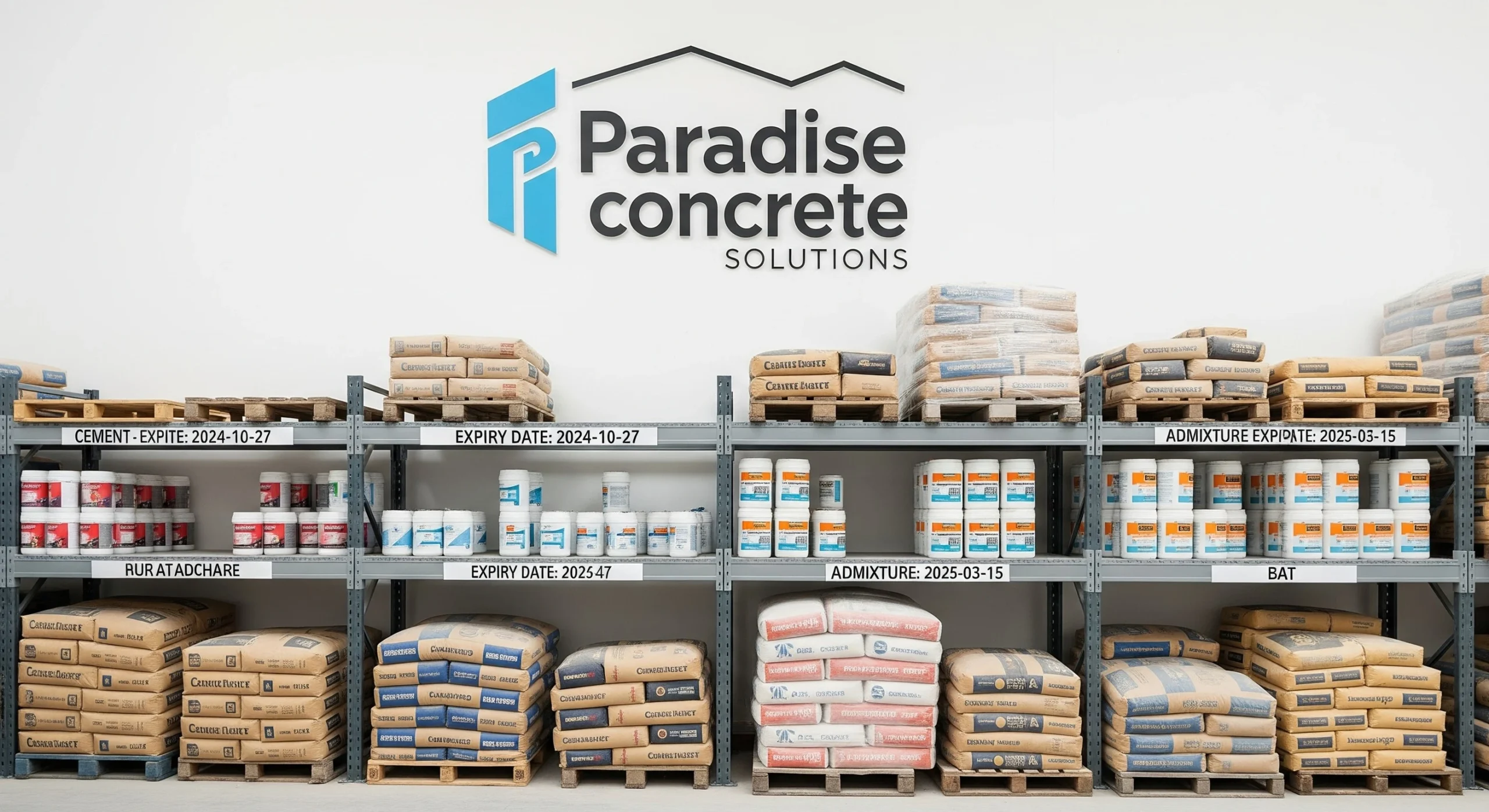
    Admixtures don’t all age the same way. Most have a shelf life between six months and a year, depending on how they’re stored. Always check manufacturer recommendations and expiration dates provided by your concrete supply company, as using expired admixtures can significantly impact concrete performance.

    What Are the Signs That Concrete Materials Have Been Improperly Stored?

    Cement that has taken on moisture often clumps or forms hard spots inside the bag. Even if only part of it feels solid, it’s safer to toss the whole bag, since its performance won’t be reliable. A noticeable increase in weight can also be a clue that moisture has gotten in. Bags stored correctly should weigh the same as when first delivered.

    For aggregates, warning signs include odd colors, organic debris, or an unusual amount of dust. If finer and coarser particles have started to separate, it usually means the pile wasn’t handled or protected well. Pools of water or soft ground around the storage area can also be a problem, moisture in the mix will be harder to control if the material absorbs too much from the ground.

    What Safety Measures Should Be Followed When Storing Concrete Materials?

    Cement dust can irritate skin, eyes, and lungs, so personal protection needs to be close at hand—gloves, masks, goggles. Don’t rely on signs alone. Keep ventilation running well, especially in enclosed sheds where dust builds up fast. If any admixtures are stored nearby, check the label. Some types are flammable and need fire extinguishers placed within reach, not just mounted near the door.

    Stacking needs attention too. Lay bags in a cross pattern and keep the stacks low enough to avoid tipping. Damaged or moist bags don’t belong in storage. With silos, inspect walls and discharge systems on a schedule. Fix leaks early and clean dust traps before they clog.

    Storage areas aren’t walkways. Only staff handling materials should go in, and they need space to move loads without tripping. Loose cement, wet sand, or spilled admixture can create slippery ground fast, so sweeping needs to happen regularly, not just at the end of the day.

    Taking Action: Your Next Storage Steps

    Before bringing in more material or starting the next pour, take a few minutes to check your current storage setup. Walk through the area and look closely at how cement is stacked, whether aggregates are kept clean and separate, and if moisture has found its way into any corner. Watch for soft ground, puddles, or damaged bags, anything that might lead to waste or delays later.

    Use the points in this guide as a reference, not a rulebook. Adjust them to fit your site, your weather, and the way your team works. Fix what’s urgent, then tighten up the rest over time. A few small corrections now can save entire batches later.