Category: Blog

  • Selling the Family Home After Retirement: A Guide for Seniors

    The family home is more than just a place to live; it can represent achievement, your most significant financial asset, and a repository of memories. Selling it after retirement requires extra scrutiny because your income is likely to have shifted to a more passive stream. You’ll want to evaluate financial and personal factors to be sure you’ll still meet your retirement plans and lifestyle needs.

    Source: Freepic.com

    For guidance on navigating this transition wisely, you may find helpful insights in this retirement tips article. Why is it so critical? Because a selling decision made after retirement typically has less of a ‘do-over’ option than one made earlier in life.

    What Are the Major Benefits of Selling Your Family Home? 

    You may consider selling your home for one or more of the following reasons:

    Unlocking Home Equity for Retirement Funding  

    The most compelling reason for selling could be unlocking the considerable equity built up over years of ownership. (It often represents 47–89% of retired seniors’ net worth.) Converting equity into cash could significantly increase your income, fund unexpected healthcare costs, or create a cushion for surprise expenses. One option would be to invest the freed-up capital in a diversified portfolio that generates steady income streams while preserving the principal. 

    Reducing Monthly Housing Expenses  

    Large-family homes come with hefty ongoing costs that can strain a fixed retirement income. Property taxes, insurance premiums, utility bills, and maintenance can consume over 30% of your budget. Selling can reduce monthly obligations and free up funds for healthcare, travel, or other priorities by downsizing to a more manageable home.  

    Eliminating Maintenance Responsibilities and Physical Demands 

    Maintaining a large property becomes more challenging and expensive as we age. Burdensome roof repairs, HVAC maintenance, lawn care, and general upkeep can vanish when you sell – a blessing for seniors with mobility issues or health concerns – freeing up more time for what you enjoy.

    Geographic Flexibility and Lifestyle Changes

    Selling your home gives you the freedom to relocate in a way that better suits your retirement lifestyle. You might move closer to family, choose a warmer climate, or settle in a community tailored to active seniors. It also offers the chance to lower living costs and find a home that’s more manageable and aligned with your health, social, and personal needs.

    What Are Some Key Concerns and Potential Drawbacks?

    Selling may not be entirely positive. Consider these factors: 

    Emotional and Psychological Impact  

    The family home may be where children took their first steps and where you celebrated holidays and life milestones. Walking away could trigger feelings of regret, loss, grief, or anxiety about the future, especially if the decision feels rushed or forced by circumstances rather than by choice. 

    Loss of Familiar Community Connections 

    Many years in a home can foster deep community roots: established relationships with neighbors, healthcare providers, local businesses, and religious congregations. Selling can mean severing those relationships and starting over, which can be hard if you rely heavily on those support networks. 

    Market Timing and Financial Risks 

    Poor timing or inadequate planning can diminish the financial benefits of selling. Market downturns may mean accepting a lower sale price. In addition, selling costs can consume as much as 10–15% of the sale price through closing costs, realtor commissions, required repairs, staging, and moving expenses.

    Potential Tax Implications 

    Selling your primary residence grants you a $250,000 capital gains exclusion as an individual ($500,000 as a married couple), but more substantial appreciation might create tax consequences. You also could give up mortgage interest and property tax deductions that provided tax benefits, increasing your overall tax liability. 

    What Are Some Critical Decision-Making Factors?

    Here are some actionable takeaways: 

    Financial Analysis and Cash Flow Assessment 

    Before deciding to sell, conduct comprehensive financial analyses comparing your present housing costs with projected expenses in your new living circumstances. Beyond monthly savings, consider the investment potential of unlocked equity. When invested within your risk tolerance, calculate whether proceeds could generate sufficient income to offset new living costs while maintaining your desired lifestyle. 

    Health and Mobility Considerations 

    Estimate your health needs today and in the future. Are mobility issues developing or likely to emerge? If so, homes with stairs could become dangerous or impractical. Can you modify your current home to accommodate aging in place, or would it be more sensible to move to a more accessible property? 

    Family Dynamics and Legacy Planning 

    Family homes can hold significant meaning for adult children or grandchildren, so discuss your intentions with family members. They may prefer to keep the property as a legacy asset or vacation home. Alternatively, they may fully support your decision to liquidate and enjoy the proceeds during your lifetime. Clear communications are key. 

    Researching Alternative Housing Options 

    Explore alternative living arrangements thoroughly before deciding to sell. New housing options are continually being created as the population ages. Consider active adult communities, condominiums, rental options, retirement villages, or even tiny living. Visit potential locations often and in various seasons to help find what truly meets your needs and preferences. 

    Timing and Market Conditions 

    Track real estate conditions at current and future locations. Work with professionals to determine your optimal timing for selling and buying. Factor in selling seasons, market trends, and your timeline. Don’t let external pressures rush your decision – and don’t delay unnecessarily if conditions are favorable.

    Conclusion

    Selling your family home in retirement is a major decision that goes beyond finances and touches on lifestyle, health, and emotional well-being. While it can offer meaningful benefits like financial freedom and simplified living, it’s important to weigh those against potential drawbacks. With careful planning and honest reflection on your needs and goals, you can make a choice that supports a fulfilling and secure retirement.


  • Condos As An Entry Point To Real Estate Investing

    Entering the real estate market can feel like navigating a maze, especially for first-time investors seeking a balance between profitability, practicality, and lower risk. Often overlooked in favor of single-family homes or commercial property, condominiums provide a more accessible starting point with lower upfront costs, easier maintenance, and access to high-demand locations.

    Photo by allPhoto Bangkok on Unsplash

    Yet within the broader condo category lies an often more profitable subset: luxury condominiums. High-end units can deliver premium rental yields, capital appreciation, and prestige that attracts discerning tenants or buyers.

    The Value Proposition Of Luxury Condominiums

    Luxury condominiums stand apart as a class of their own—designed not just for comfort but as vehicles of status, exclusivity, and solid returns in select markets.

    High Demand In Prime Locations

    Luxury condos are typically located in prime urban centers, waterfronts, or prestigious enclaves—places where land scarcity boosts value. In cities like Miami, Toronto, New York, and Dubai, these properties remain in high demand among international buyers and high-income tenants. 

    This persistent demand contributes to lower vacancy rates and stronger rental income. For new investors, acquiring a one-bedroom luxury unit in a rising neighborhood may cost less than a detached home while still offering excellent cash flow potential.

    Amenities That Justify Premium Pricing

    From rooftop pools and concierge services to spa facilities, co-working spaces, and biometric security systems, luxury condos justify their elevated pricing by offering a complete lifestyle. 

    These amenities not only attract renters, but also help maintain strong resale value and reduce seasonal vacancy—offering long-term advantages for investors in cities with year-round demand.

    Entry Flexibility For Investors

    Many luxury condos are available in buildings that allow short-term rentals or extended stays, letting investors experiment with different rental strategies—from monthly executive leases to Airbnb-style bookings. 

    This flexibility is particularly valuable in uncertain markets, where the ability to pivot rental models can protect income streams. Some developments even offer rental programs managed by in-house teams, reducing the burden for remote or first-time investors.

    Why Condos Are A Practical Starting Investment

    Not every investor starts with a luxury unit. While high-end condos offer prestige and strong returns, standard condominiums remain a more accessible first step, combining lower costs with long-term growth opportunities.

    Lower Cost Of Entry Compared To Other Property Types

    In most markets, condominiums are significantly more affordable than detached homes or multifamily buildings. For instance, in metro areas like Dallas or Houston, condos can cost 20–40% less than similarly located houses. 

    This makes them attractive to younger investors with limited capital or those seeking to diversify existing portfolios with minimal risk exposure. Lower down payments and shared maintenance expenses via homeowner association (HOA) fees allow new entrants to get started without the overhead of traditional property ownership.

    Streamlined Maintenance Responsibilities

    HOAs handle major exterior maintenance, landscaping, and often include services like trash removal, snow clearing, and even building insurance. While HOA fees can be high, they eliminate the hassle and cost of managing multiple service providers. 

    For a first-time investor, this simplicity removes many of the day-to-day burdens that come with self-managed properties, allowing focus on tenant satisfaction and rental returns.

    Built-In Community Regulations Reduce Risk

    Condos typically come with community guidelines and financial rules that create a more stable environment. These covenants limit undesirable behavior, help preserve property values, and may even restrict the number of rental units per building—ensuring a balanced mix of owners and tenants. 

    This creates a more predictable environment for income and appreciation. In markets like Vancouver and Singapore, strict condo rules have actually helped prevent rental market crashes during economic downturns.

    Risks To Watch For When Investing In Condos

    Despite their appeal, condos aren’t a risk-free investment. First-time buyers should be vigilant about several key factors.

    HOA Health And Special Assessments

    While HOAs simplify ownership in many ways, they’re not without risk. Poor management, rising fees, or surprise assessments can significantly affect returns. HOA fees can eat into returns, especially if they increase over time or are mismanaged.

    Investors should carefully review the HOA’s financials, reserve funds, and history of special assessments, unexpected charges for large repairs or upgrades like elevator replacements or roof fixes. A poorly funded HOA can destabilize your investment or even lead to legal disputes between owners.

    Rental Restrictions

    Some condominiums limit or prohibit rentals entirely. Others allow rentals only after the owner has occupied the unit for a certain period, which can delay returns. Before purchasing, it’s essential to understand the community’s rental policy. 

    Failing to do so could result in an asset you can’t legally monetize. Look for “investor-friendly” buildings—those with a transparent rental policy and a significant percentage of investor-owned units.

    Market Liquidity And Resale Challenges

    Condos, particularly in overbuilt markets, can be harder to resell quickly compared to freehold homes. Units within large developments may also compete with identical floor plans and layouts, making it harder to differentiate your property. 

    When considering resale, buyers should factor in not just the unit’s features but also the building’s reputation, location trends, and upcoming developments in the area.

    Photo by Francesca Tosolini on Unsplash

    Tips For Maximizing ROI On A Condo Investment

    Understanding how to extract the most value from a condo investment will separate casual speculators from serious portfolio builders.

    Target Buildings With High Owner-Occupancy Rates

    Buildings with a high percentage of owner-occupied units tend to be better maintained and experience less tenant turnover. This can reduce wear and tear and attract better renters. Lenders also favor these buildings, which can be critical if you plan to refinance or use equity for future investments.

    Optimize The Rental Strategy For The Location

    In urban areas near universities or hospitals, long-term rentals may perform better. In tourist-heavy locations like coastal cities or ski towns, short-term rentals may yield higher income despite greater management complexity. 

    Understanding the neighborhood’s demographics, transit options, and economic drivers will help you select the right unit and tailor your rental approach accordingly.

    Buy Into Emerging Neighborhoods

    The best ROI often comes not from the most glamorous zip codes but from the ones gaining momentum. Look for signs of gentrification: new cafes, transit lines, infrastructure upgrades, or school district improvements.

     A condo bought in an emerging area can appreciate rapidly while still being affordable. Investors who get in early benefit from rising rents and resale prices driven by neighborhood transformation.

    Photo by Nadine E on Unsplash

    Endnote

    When chosen wisely, condominiums offer more than just a way in. They provide a path toward long-term wealth, reliable income, and a portfolio that grows with you. For many investors, they’re not the end goal, but the beginning of something much bigger.

  • How to Use Postalytics and Buy Mailing Lists for Smarter Direct Mail Campaigns

    Everything lives on a screen now. So when something shows up in the mail, something printed, something you can actually hold, it catches people off guard in the best way. No noise. No push. Just there. And sometimes, that’s all it takes. Not shouting. Just thoughtful. That’s what makes direct mail feel fresh again. And when the design looks good, you buy mailing lists that actually match your audience, and Postalytics handles the behind-the-scenes work, suddenly the whole thing runs smoother than expected and looks better too.

    Why Direct Mail Still Works

    Direct mail may seem outdated, but its effectiveness speaks for itself:

    • Up to 90% of direct mail is opened, compared to about 20% of emails.
    • It’s tangible and memorable, engaging multiple senses.
    • Consumers trust physical mail more than digital ads or unsolicited emails.

    But to make the most of direct mail, businesses need to embrace tools that offer automation, personalization, and performance tracking, all of which are available through Postalytics.

    What Is Postalytics?

    Postalytics is a modern direct mail automation platform that brings traditional print campaigns into the digital age. It enables marketers to:

    • Create and launch direct mail campaigns from a web-based dashboard.
    • Personalize mail with variable data and design.
    • Automate mailings based on customer behavior or CRM triggers.
    • Track delivery status and engagement using tools like pURLs and QR codes.

    With Postalytics, direct mail becomes as agile and measurable as email marketing, but is often even more engaging.

    The Role of Mailing Lists in Direct Mail Success

    Even the most compelling postcard design won’t deliver results if it’s sent to the wrong audience. That’s why high-quality mailing lists are essential.

    Being able to buy mailing lists tailored to your target market ensures your campaign reaches real potential customers, not just random addresses.

    When purchasing a list, you can typically filter by:

    • Geographic area (ZIP code, radius, etc.)
    • Age, gender, and income
    • Homeownership status
    • Buying behavior or industry (for B2B campaigns)

    Postalytics integrates list-buying directly into its platform, so you can seamlessly purchase, upload, and launch—all in one place.

    Step-by-Step: How to Use Postalytics and Buy Mailing Lists

    Let’s walk through how to set up a smart direct mail campaign using Postalytics and targeted mailing lists:

    1. Define Your Target Audience

    Before buying a list or designing your campaign, identify your ideal audience. Are you reaching out to homeowners, young professionals, or small business owners? Create a customer persona to guide your criteria.

    2. Buy Mailing Lists

    Within Postalytics, you can easily purchase mailing lists that align with your customer profile. The platform partners with trusted data providers so you can:

    • Select by demographics and location
    • Target consumers or businesses
    • Ensure the data is current and CASS-certified for deliverability

    Lists can be purchased for one-time use or licensed for multiple campaigns, depending on your needs.

    3. Create and Personalize Your Mailpiece

    Postalytics offers easy-to-use design tools and templates so you can create engaging mailers. You can:

    • Customize content using merge fields (name, company, location)
    • Include unique tracking codes or pURLs
    • A/B test different messages or offers

    4. Automate and Schedule Delivery

    Use the Postalytics dashboard to schedule your mailing or trigger it based on specific actions (like a new CRM lead). The platform handles printing, postage, and mailing, all done automatically.

    5. Track and Analyze Results

    One of Postalytics’ smartest features is its tracking system. You’ll be able to see:

    • When your mail is delivered
    • When recipients visit your personalized landing pages
    • Which offers or messages perform best

    Use these insights to refine future campaigns and increase ROI.

    Tips for Smarter Campaigns

    • Segment Your List: Break your list into smaller groups to send more personalized messages.
    • Use pURLs or QR Codes: These make it easy to track engagement and lead recipients to personalized landing pages.
    • Test Different Offers: Run A/B tests to determine which message or incentive performs best.
    • Combine with Digital Retargeting: Reinforce your message with follow-up emails or online ads.

    Why Postalytics + Mailing Lists = Smarter Marketing

    The real power lies in combining these tools:

    • Postalytics streamlines automation, design, and tracking.
    • Mailing lists help you reach audiences you don’t yet have access to, making large-scale customer acquisition possible.

    Together, they eliminate the guesswork of traditional campaigns and deliver precision, accountability, and results.

    Final Thoughts

    Smart direct mail doesn’t have to be hard. You can automate and personalize campaigns at scale with Postalytics. And with targeted mailing lists, you extend your reach and boost your conversions.

    If you’re ready to cut through the digital noise with messages that land—literally—start your next campaign with Postalytics and a data-driven mailing list. It’s a smarter, more measurable way to do direct mail.

  • Why Understanding Real Estate Law Gives You a Major Advantage

    Real estate deals aren’t just about location, curb appeal, or financing. At their core, they’re legal transactions that can unravel fast without a basic understanding of property law. Whether you’re buying your first home, managing rentals, investing in properties, or simply curious about the real estate world, knowing the legal principles that govern land ownership gives you an edge.

    Across the United States, real estate laws vary widely, but they all influence how property is bought, sold, and managed. From contract clauses to title disputes, understanding these rules can help prevent costly errors and legal complications. Learning how the legal side of real estate works puts you in a stronger position to make smart, informed decisions.

    How Law School Subjects Apply to Real Estate

    Some of the most practical real estate knowledge comes straight from subjects taught in law school. Getting familiar with legal topics like property law, contracts, and land use can give aspiring homeowners, investors, or real estate professionals a clearer picture of how transactions really work.

    This overlap between legal education and real estate isn’t just academic. For example, knowing what adverse possession means can help you understand boundary disputes or how long-term use of land affects ownership. Similarly, contract law concepts can help you spot red flags before signing a lease or purchase agreement.

    Legal principles show up in nearly every real estate deal. Basic legal real estate knowledge acts as a safeguard, not just a checklist, to help you navigate key terms and timelines with confidence. Knowing how contingencies work, what to expect in escrow, and when to exercise inspection rights can help you avoid surprises and negotiate from a stronger position.

    Unique Challenges in State-Specific Property Laws

    Every state has its own property laws and quirks, and understanding these can give you a significant advantage. From homestead exemptions to zoning laws and water rights, the legal framework around real estate shapes how property is used and transferred. Even just knowing when to ask questions can help you avoid trouble.

    In some states, local governments have broad powers when it comes to eminent domain or land development. These rules can impact everything from rural land purchases to commercial investments in growing cities. By learning what protections exist, you can better assess risks and opportunities in any given area.

    Title insurance is another part of real estate that deserves attention. It protects buyers and lenders from issues like undisclosed liens or disputes over ownership. Understanding how to read a title commitment might seem technical, but it can help prevent unexpected delays or legal conflicts.

    Building a Smarter Real Estate Skillset

    You don’t need to become a lawyer to improve your understanding of real estate law. Anyone can start building knowledge by exploring legal topics that directly affect property ownership and investment. This awareness can help you spot potential issues early and avoid making decisions you’ll regret.

    Legal knowledge also helps with communication. Whether you’re working with agents, lenders, contractors, or attorneys, being able to speak their language shows professionalism and builds trust. In multi-party transactions, that clarity can make a big difference.

    Even basic awareness of liability and risk can change how you approach renovations, rentals, or resale. Knowing the legal implications of things like safety codes, tenant rights, or HOA restrictions means you’re less likely to face disputes or fines down the line.

    Why Legal Awareness Builds Confidence

    In fast-moving real estate markets, being legally informed can help you act quickly and avoid bad deals. It’s not just about being savvy—it’s about being prepared. The more you understand, the more confidently you can navigate transactions and partnerships.

    Legal knowledge also builds credibility. Whether you’re a first-time buyer, casual landlord, or seasoned investor, showing you understand the legal side of things reassures clients, lenders, and partners. It tells people you’ve done your homework and take your responsibilities seriously.

    Even a basic legal vocabulary can offer long-term benefits. It helps you avoid costly mistakes, communicate more clearly, and handle documents with greater care. These skills grow over time and compound with experience.

    Staying Informed and Getting Ahead

    You don’t need a law degree to gain a legal edge in real estate. Plenty of courses, books, and online articles break down the fundamentals. By learning just a little more about how real estate law works, you can set yourself up for better results.

    As laws evolve and markets shift, staying informed is a competitive advantage. Whether you’re exploring your first property or managing a growing portfolio, legal literacy gives you the tools to protect your interests.

    In the end, legal knowledge doesn’t replace a trusted agent, lawyer, or title officer, but it makes you a stronger buyer, seller, or investor. And in real estate, that knowledge pays off again and again.

  • Top Furniture Trends for Young Families Buying Their First Home

    Starting fresh in a first home often means more than unpacking boxes. It’s a new chapter filled with big ideas, changing routines, and a blank canvas ready to be made a home. For young families, the real goal lies in shaping a home that feels warm, works well, and grows gracefully alongside its people. Furniture becomes part of that foundation—supporting childhood milestones, shared meals, spontaneous dance parties, and quiet evenings that stretch into memories.

    The most relevant furniture trends right now revolve around flexibility, endurance, and thoughtful design, all of which are key for modern households managing space, time, and budget with equal care.

    Multifunctional, Space-Saving, and Storage-Smart

    Smaller homes are becoming more common, with nearly 60 percent of first-time buyers choosing compact footprints. Every inch counts, and furniture that serves more than one purpose is no longer just convenient—it’s essential. Think dining tables that expand, sofas with hidden compartments, and beds with built-in storage help maximize space without adding clutter.

    L-designed bunk bed bring smart use of corners into shared kids’ rooms, creating space below for reading, storage, or play. Modular benches and lift-top coffee tables add even more function without compromising style.

    Durable Materials That Go the Distance

    The best family furniture works hard behind the scenes. Solid hardwood continues to shine for its strength and timeless appeal. It holds up beautifully over the years and can even be refinished for a second life. Metal accents are being used more often for added structure and a modern edge.

    Finishes that resist scratches and clean easily are gaining ground, especially in high-use areas. Pieces with reinforced joints and tough coatings help maintain a polished look, even in homes with pets, playdates, and everyday activity.

    Comfy Meets Stylish in the Living Room

    Living rooms see everything from game nights to naps, so seating needs to feel good and wear well. Sectionals in performance fabrics like chenille and velvet hit the sweet spot between cozy and durable. They bring texture, color, and comfort into the heart of the home.

    Modular sofas continue to gain popularity for their adaptability. These flexible seating systems can shift with the layout, accommodate extra guests, or even double as temporary beds. They reflect how modern families use their space—fluid, informal, and always changing.

    Designed for Open-Plan Living

    Modern layouts often blend kitchen, dining, and lounge areas into one open space, so furniture must help define function without interrupting flow. Lightweight poufs, nesting tables, and rolling carts allow a space to transition quickly from play to meals to hosting.

    Repeating materials and color palettes across these open zones keeps everything feeling cohesive. Clean-lined furniture with slender legs preserves a sense of airiness while still offering comfort and practicality.

    Sustainable Choices with Staying Power

    Today’s families are thinking long term. Furniture made from responsibly sourced wood, recycled metals, and non-toxic finishes is now in high demand. Recent data shows more than 75 percent of buyers prefer eco-conscious options, with many willing to pay more for them.

    Timeless designs that outlast fleeting trends help reduce waste and support sustainability. Vintage pieces and reclaimed materials add character while honoring the values behind a more mindful approach to consumption.

    Personalized Touches That Evolve with the Family

    Homes reflect the lives happening inside them. Neutral base tones paired with layered textures, bold art, and greenery help families shape spaces that feel personal and flexible. Interchangeable covers and modular units allow easy updates without major overhauls.

    Rounded corners, soft edges, and child-safe materials are becoming go-to choices, creating spaces that feel open and inviting without compromising style.

    Laying the Groundwork for a Well-Furnished Home

    The moving process itself can influence how furniture choices take shape. A smooth transition sets the tone for thoughtful space planning. Hiring moving professionals and partnering with reliable movers helps protect key pieces and allows more focus on turning an empty house into something meaningful.

    Final Thoughts

    Furnishing a first family home is about more than aesthetics. It’s a balancing act between comfort, function, and longevity. Today’s most influential trends point toward smart storage, sustainable materials, and adaptable pieces like the modern bunk bed that evolve with the family. Each choice becomes part of a bigger story—one built on togetherness, creativity, and a space designed to grow alongside the people who call it home.

  • How Black Peel and Stick Wallpaper is a Realtor’s Secret Weapon for Modern Listing Photos

    Real estate photography has become the dealmaker. The average buyer makes a decision within seconds of seeing a listing, and with nearly all searches starting online, that first image carries serious weight.

    In this visually driven landscape, staging is no longer an optional touch-up. It has become the difference between overlooked and bookmarked.

    Black peel and stick wallpaper has become a quiet favorite in the world of staging, turning blank walls into bold moments that show beautifully online, all without the mess or the price tag.

    Fast Visual Transformation with Minimal Investment

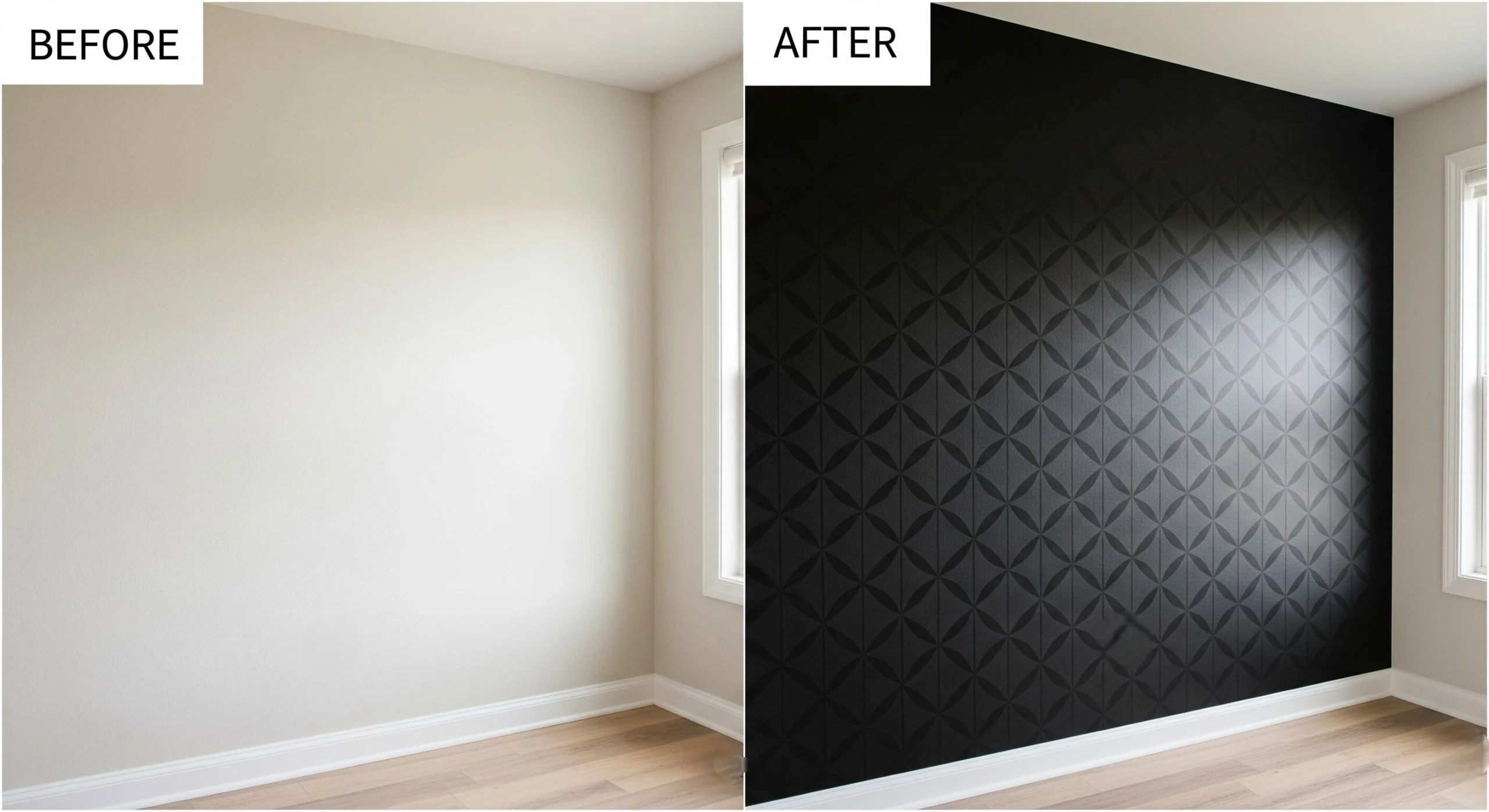
    There is something magical about watching a flat, beige wall turn into a moody focal point in the span of an afternoon. Black wallpaper peel and stick skips the drop cloths, the fumes, and the need to call in backup. It goes up with minimal tools and comes down clean, which makes it especially useful when working under tight deadlines.

    Based on estimates, standard interior painting averages around $1,600 per home, while peel and stick options often clock in at under $100. That difference adds up fast for agents juggling multiple listings or staging on a budget, and the impact still delivers.

    Creating Focus and Contrast in Listing Photos

    A dark, dramatic wall acts like a visual exclamation mark in a room. It sets the tone and anchors everything else in the shot, from the white trim to the mid-century credenza to the linen drapes catching afternoon light. That kind of contrast reads instantly on screen, especially on platforms like Zillow or Redfin, where dozens of listings compete for attention.

    Homes with professionally staged photos often sell significantly faster and attract stronger offers. High-contrast imagery builds visual clarity, and visual clarity builds interest.

    Design Benefits of Black in Interior Spaces

    Black has long carried an association with elegance and structure. It absorbs light, which adds weight and balance to a space. When paired with natural textures like wood or brass, the result feels grounded rather than stark.

    Black walls have consistently ranked among the most favored interior choices in condos and urban homes every year, particularly in spaces with minimalist structures and bold finishes. Incorporating this element into a listing tends to create a stronger connection with current design preferences, reflecting what many buyers are already bookmarking for future inspiration.

    Smart Staging Without Overcommitting

    Not every listing needs a full makeover. Sometimes one targeted change can shift the entire energy of a space. Peel and stick wallpaper offers that kind of flexibility. It works as an accent behind a bed, in a hallway, or within a dining nook that needs more presence.

    Accent walls tend to photograph especially well, creating natural focal points that help buyers mentally map out a room’s function. Even in oddly shaped spaces, this solution fits in easily, making it ideal for listings that need a boost without a full remodel.

    Versatile Use Across Layouts and Styles

    From alcoves to entryways, from plain living rooms to small powder baths, this wallpaper adapts easily to different shapes and surfaces. As one of the most flexible wallpapers for walls, It defines spaces without overwhelming them, creating visual flow that translates well on camera. Whether used in modern builds or older homes, black accents help create rhythm and establish hierarchy in how rooms are experienced.

    In photography, the result is added depth and clarity. For in-person showings, it builds atmosphere that feels intentional from the moment someone steps inside.

    Helping Buyers Connect Emotionally

    Sellers tend to love anything that makes staging feel noncommittal. Peel and stick wallpaper comes down in minutes without leaving marks, dents, or regrets. This makes it a win for owners who want staging magic without painting over everything later.

    The flexibility to change the look of a room for photography, open houses, or follow-up showings keeps the property fresh without chipping away at its original condition. That kind of low-risk, high-impact trick becomes part of the toolkit for agents who stage regularly.

    Simple Removal That Maintains Flexibility

    Peel and stick wallpaper was designed with reversibility in mind. Once staging is complete, the material comes off without scraping, sanding, or repainting. That ease of use makes it especially appealing in occupied homes or situations where listings change frequently. Rooms can be refreshed quickly without altering the underlying finishes.

    For sellers who want the benefits of staging without permanent changes, this becomes a reliable option that keeps the process smooth.

    Real Results from Realtors

    In several high-volume real estate markets, agents have consistently seen results by adding black peel and stick wallpaper to their staging playbook. A dated condo with limited architectural charm gained new energy with a single dark wall behind the living room sofa.

    The listing’s engagement doubled within days, leading to a full-price offer. In another example, a mid-century kitchen felt more unified after a black accent was applied behind open shelving, tying together older cabinetry with newer hardware.

    These simple updates shifted both the photography and buyer response, and that kind of movement matters in a fast-paced market.

    Final Thoughts

    Black peel and stick wallpaper brings versatility, efficiency, and elevated design to staging. It offers an easy way to highlight space, introduce visual clarity, and build stronger connections between listings and potential buyers.

    As real estate continues to rely on digital impressions and fast decisions, tools that can transform a room within hours are more valuable than ever. For agents seeking results without complication, this material brings style that works and flexibility that lasts.

  • Modern Window Treatment Trends for Stylish Homes in 2025

    Blinds and curtains might seem like small details, but they can completely transform a room. In today’s homes, window treatments have become essential elements of interior design. More homeowners are considering how curtains, blinds, and shades enhance the overall look and feel of their spaces. This year’s trends blend style with practicality, creating clean, beautiful, and inviting interiors.

    Let’s explore the most popular window treatment ideas defining stylish homes in 2025.

    Smart Choices: Sustainability and Standout Materials

    Sustainability is playing a bigger role in home design, and window treatments are no exception. Many homeowners now opt for eco-friendly materials like organic linen, bamboo, and recycled fabrics. These choices are good for the environment and bring a natural, stylish touch to interiors.

    More treatments now feature biodegradable fibers and low-VOC dyes. Some brands are even using recycled plastics to create durable and attractive fabrics. This growing shift toward sustainable materials reflects a broader desire for homes that are both beautiful and eco-conscious.

    A Smart Upgrade: Smart Motorized Shades and Blinds

    Technology is deeply integrated into modern homes, and window treatments are evolving alongside it. Smart motorized shades and blinds are changing how we manage light, privacy, and energy use. These treatments sync with smart home systems, allowing control through voice commands, apps, or automated schedules.

    By 2025, motorized shades are quieter, more energy-efficient, and better looking than ever. Many models integrate with Google Home, Alexa, or Apple HomeKit, making adjustments effortless. Some even use AI to learn your routines and adjust automatically, combining convenience with energy savings.

    Stylish and Attractive: Soft Neutrals and Artistic Prints

    Artistic prints and subtle patterns are making a comeback. Geometric designs, watercolor motifs, and nature-inspired prints are showing up on curtains, shades, and even motorized blinds. These patterns add character without taking over the room.

    Paired with a trending color palette of soft neutrals and earthy tones—like beige, taupe, warm gray, and muted green—they create a calm yet stylish aesthetic. This year’s focus is on combining bold prints with timeless design for a look that feels both modern and grounded.

    Layered Window Treatments for Depth and Texture

    Layering is a big trend in 2025, adding both style and functionality to rooms. Sheer curtains combined with heavier drapes or woven wood shades help manage light, privacy, and insulation. Sheer fabrics soften sunlight while keeping rooms bright and airy.

    When paired with blackout drapes or Roman shades, these layers create a flexible setup that adapts throughout the day. Textured materials like bouclé, velvet, and jute are also trending, offering warmth and visual depth to modern interiors.

    Neat and Clean: Minimalist and Streamlined Designs

    Minimalist window designs are popular in 2025, focusing on clean lines and simple, elegant looks. Roller shades, panel tracks, and sheer drapes in soft, neutral colors create a tidy and modern feel—perfect for contemporary homes.

    Flush-mounted shades, which fit inside the window frame, are especially trendy for their seamless look. These designs are great for homes that value simplicity and practicality. The focus is on high-quality materials and precise stitching, making even the simplest styles look refined and stylish.

    Personal Touches: Custom and Unique Window Treatments

    In 2025, personalization is a major trend in window treatments. Homeowners want options that match their specific needs and tastes—custom sizes, exclusive fabrics, and handcrafted details.

    Custom designs allow people to create truly unique looks. Think floor-to-ceiling drapes, hand-painted blinds, or motorized shades with one-of-a-kind prints. Designers and artisans are working together to craft one-of-a-kind pieces that express personal style and enhance a home’s character. Custom treatments add a tailored touch that seamlessly fits your home’s design.

    Return of the Skylight Shades

    Skylight shades are making a comeback, updated with modern materials and sleek finishes. These window coverings combine form and function, making them ideal for various rooms in stylish homes.

    Skylight shades made with textured fabrics, light-diffusing materials, or advanced thermal layers are in high demand. They offer energy efficiency, a soft appearance, and a cozy atmosphere. Their neat design looks discreet when open and provides full coverage when closed—delivering both comfort and style.

    Organic and Stylish: Natural Wood and Woven Window Shades

    Natural wood and woven shades are in high demand as the organic modern trend continues to rise. Materials like bamboo, rattan, and grasscloth add warmth and depth while maintaining a clean, modern aesthetic.

    Woven wood shades offer varying levels of light control and privacy. They pair well with both soft and bold palettes, making them a timeless choice for elegant interiors. In 2025, we’ll see more innovative designs that blend wood with fabric or metal for a fresh, unique twist.

    Modern Window Solutions: Blackout and Light-Filtering

    Blackout and light-filtering window treatments are evolving to meet modern needs around wellness and comfort. New blackout fabrics can block nearly all light while still offering a soft, luxurious look.

    Some blackout curtains now include thermal insulation to help regulate indoor temperatures and reduce energy costs. Light-filtering options have also advanced, with materials that gently diffuse sunlight to create a cozy, welcoming glow ideal for bedrooms, home theaters, or workspaces.

    Sleek and Shiny: Metallic and Glossy Finishes

    Metallic and high-gloss finishes are trending in 2025, adding a chic touch to any space. Gold, brass, and chrome accents on curtain rods, blinds, and shutters elevate the overall design. Glossy finishes on Venetian blinds and shutters create a polished, contemporary look that fits both residential and upscale commercial interiors.

    These reflective surfaces help bounce natural light around the room, making it feel brighter and more spacious.

    Biophilic Design: Nature-Inspired Window Treatments

    Biophilic design which emphasizes our connection to nature, continues to shape window treatment trends. Leaf-patterned sheers and botanical-printed shades bring the outdoors in. Large, uncovered windows are loved for their clear views and openness.

    When privacy is needed, retractable screens or light, sheer drapes are popular options that preserve the view while offering a soft layer of coverage. These designs beautifully blend function with a love of nature.

    Conclusion

    Window treatment trends in 2025 are all about blending innovation, sustainability, and personal style. From smart motorized shades to custom eco-friendly fabrics, today’s options offer both form and function. With the right choices, window treatments can elevate your home’s aesthetic while supporting your lifestyle and values. Keego Blinds has the perfect window solutions to help you style your space just the way you like it.

  • Solar-Powered Water Pump for Irrigation: The Definitive Guide

    A solar-powered water pump provides a steady water supply without the need for grid electricity or diesel fuel. Solar panels convert sunlight into electricity, which powers pumps that move water from wells, ponds, or other sources. Operating costs can drop as low as two cents per thousand gallons, saving farms significantly over time. It also fits naturally into daytime watering schedules, since solar output tends to peak when crops need water most.

    These systems now cover everything from small garden beds to wide-acre farms. Daily water output can reach between 500 and more than 10,000 gallons, depending on system size and setup. With proper upkeep, these systems run reliably for decades, making them a strong choice for both off-grid locations and rural operations.

    How Solar-Powered Water Pumps Work for Irrigation

    Solar irrigation systems work by converting sunlight into electricity that powers water pumps to deliver water from your source to where it’s needed. Here’s how the complete system operates:

    Basic System Operation

    Solar pumps follow the sun. Here’s when they work hardest and why that matters.

    Solar Panel Array: Solar panels convert sunlight into DC electricity that powers the water pump. The solar array size determines how much water you can pump daily – larger arrays pump more water and can operate pumps with higher horsepower requirements.

    Pump Controller: Most solar water pump systems include a pump controller that regulates power flow from solar panels to the pump.

    Water Delivery: The pump moves water from your source (well, pond, stream) through pipes or hoses to irrigation areas. Many systems include storage tanks that fill during sunny periods and provide water during cloudy times or for evening irrigation.

    System Components and Integration

    Every solar-powered pump relies on a few core parts. Get these right, and the rest falls into place.

    • A solar panel array (typically 12V, 24V, or 48V systems).
    • A surface or submersible pump.
    • An MPPT pump controller.
    • An optional storage tank for water pressure and timing.
    • Pipes and lines to distribute water where it’s needed.

    For complete irrigation solutions, a quality solar-powered water pump system includes all necessary components designed to work together efficiently.

    Most solar pumps turn on automatically when sunlight hits the panels and shut off as light fades. The strongest output usually happens from late morning to mid-afternoon. Around 60 to 80 percent of daily water volume is delivered between 10 AM and 4 PM, when solar power is at its peak.

    According to the International Water Management Institute, “Solar-powered irrigation systems can reduce pumping costs by 70-90% compared to diesel generators while providing more reliable water access in remote areas.”

    Water Storage and Distribution

    Some setups store water, others send it straight to the field. Both work, depending on the flow. Storage tanks make it possible to collect water during sunny hours and use it whenever needed. They also help maintain steady pressure for sprinkler systems or drip irrigation, so the pump doesn’t need to stay on the entire time. This setup adds flexibility and reduces wear on equipment.

    In some cases, water is pumped straight to the fields without storage. That works best for flood irrigation or when watering times naturally line up with solar production during the day.

    Types of Solar Water Pumps for Irrigation Systems

    Choosing the right pump type depends on your water source depth, daily water needs, and irrigation system requirements:

    Surface Pumps vs Submersible Pumps

    Pump TypeBest ForWater SourceAdvantagesDisadvantages
    Surface PumpsShallow wells, ponds, streams0-25 feet deepEasy maintenance, lower costLimited suction depth
    Submersible PumpsDeep wells25-500+ feet deepHigher pressure, more reliableHarder to service, higher cost

    Solar Well Pump Systems

    • Shallow Well Pumps: Surface-mounted solar well pumps work great for wells up to 25 feet deep. These pumps are easier to install and maintain since all components stay above ground.
    • Deep Well Solar Pumps: Submersible solar well pumps handle deep wells from 50 to 500+ feet. These systems can deliver higher water pressure and flow rates needed for larger irrigation projects.


    • Solar Well Pump Kits: Complete solar well pump kits include everything needed for installation – solar panels, pump, controller, and mounting hardware. Kits simplify system design and ensure component compatibility.

    Getting the Right Flow

    • Gallons Per Minute (GPM): Solar irrigation pumps range from 1-2 GPM for small gardens to 20+ GPM for large agricultural applications. Higher GPM pumps need more solar panel wattage and larger controllers.
    • Daily Water Output: Calculate daily pumping capacity by multiplying the GPM rating by hours of peak sun. A 5 GPM pump with 6 hours of peak sun delivers about 1,800 gallons daily.
    • Pressure Requirements: Consider water pressure needs for your irrigation system. Drip irrigation needs 15-30 PSI, while sprinkler systems typically require 30-60 PSI for proper operation.

    Popular Solar Pump Applications

    Agricultural Irrigation: Large-scale crop irrigation using solar pumps ranging from 1-20 HP for fields from 10 to 500+ acres.

    Livestock Watering: Smaller solar pump systems (0.5-3 HP) provide reliable water for cattle, sheep, and other livestock in remote pastures.

    Garden and Residential: Small solar pump kits (100-500 watts) for garden irrigation, pond circulation, and residential water features.

    Pool Circulation: Solar pool pumps provide energy-efficient circulation and filtration for swimming pools, reducing electric bills significantly.

    Benefits of Solar Irrigation Pump Systems

    Cutting fuel costs is just the start. Over time, a well-planned solar irrigation system can return more than it costs to install.

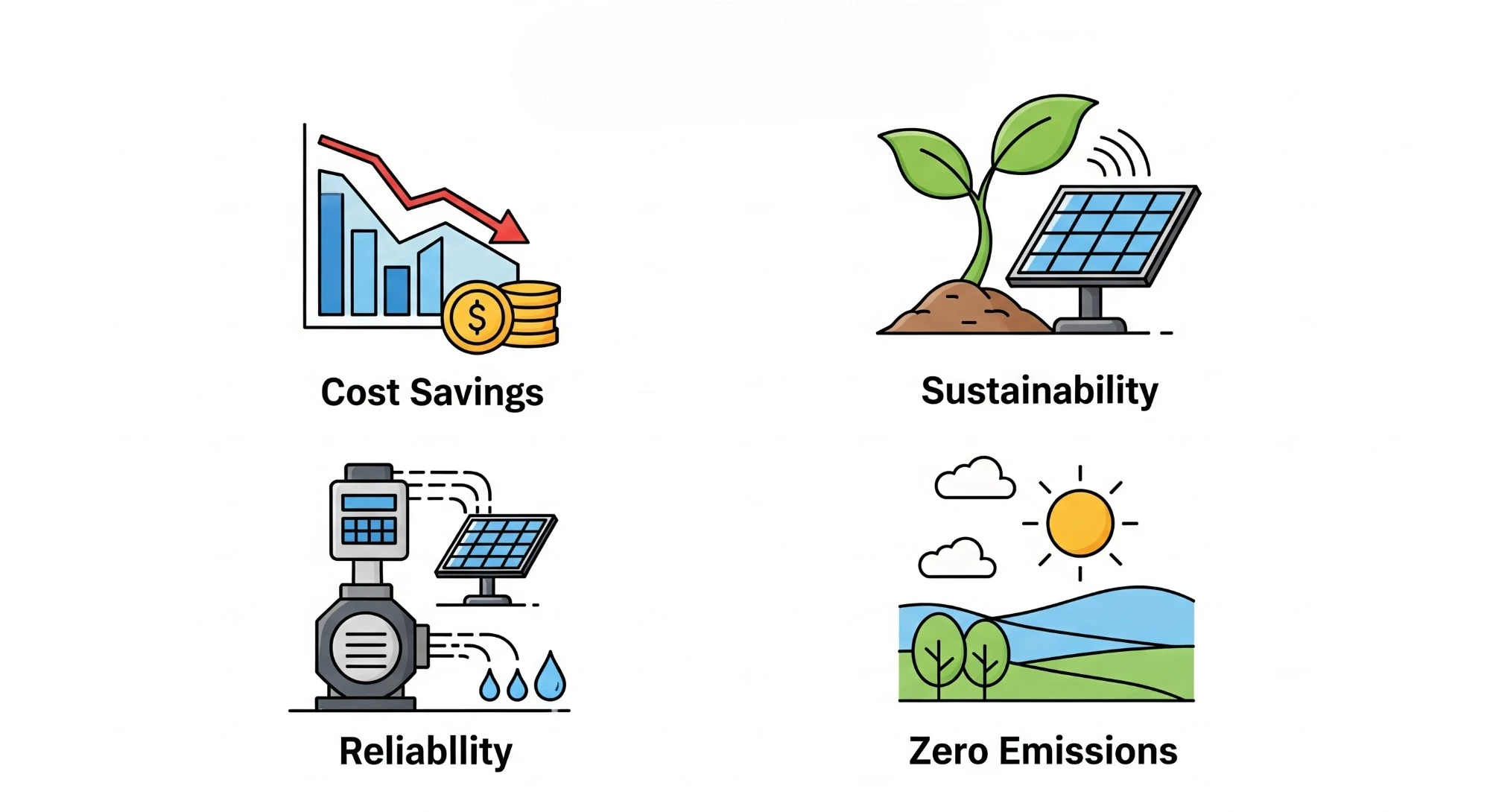
    1. Cost Savings and Economics

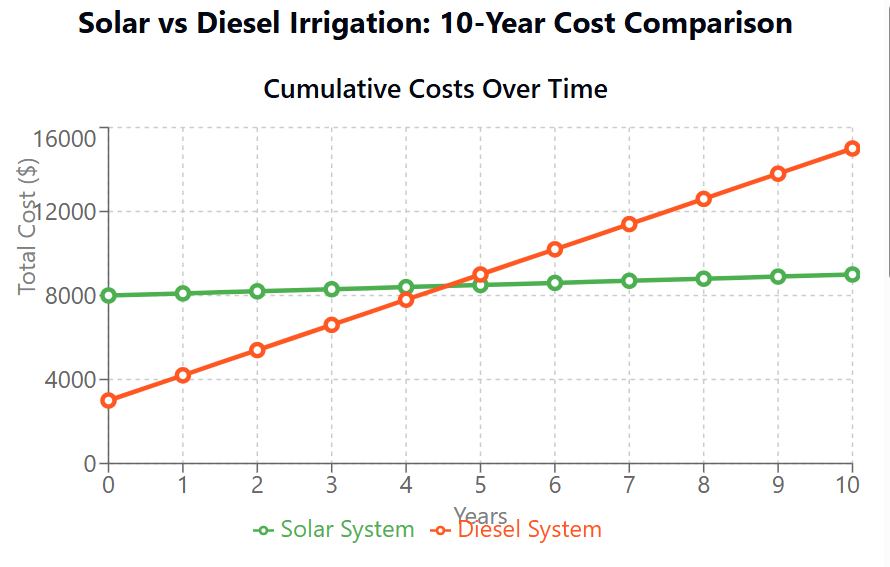
    • Fuel Cost Elimination: Solar pumps eliminate diesel fuel costs that can range from $0.10-$0.30 per 1,000 gallons pumped. Over 20 years, fuel savings often exceed the initial system cost.
    • Low Operating Costs: After installation, solar water pump systems operate essentially free. No fuel purchases, minimal maintenance, and a 25+ year system life provide an excellent return on investment.
    • Grid Independence: Solar irrigation systems work in remote places without power lines. This opens up land use possibilities and eliminates monthly electric bills for irrigation.

    The Food and Agriculture Organization reports that “Solar-powered irrigation can reduce water pumping costs by up to 95% compared to diesel systems while improving food security in rural areas.”

    2. Environmental and Sustainability Benefits

    • Zero Emissions: Solar water pumps produce no emissions during operation, unlike diesel generators that contribute to air pollution and greenhouse gases.
    • Renewable Energy: Solar pumps use renewable energy that’s available anywhere with adequate sunlight. This supports sustainable agriculture and reduces dependence on fossil fuels.
    • Water Conservation: Many farmers using solar irrigation become more conscious of water use since they’re pumping with “free” solar energy. This often leads to more efficient irrigation practices.

    3. Reliability and Performance

    • Weather Independence: Solar pumps work reliably in most weather conditions. Even partly cloudy days provide enough power for pumping, and battery backup systems handle extended cloudy periods.
    • Low Maintenance: Solar irrigation systems have few moving parts and require minimal maintenance. Annual cleaning of solar panels and periodic pump inspection typically handle most maintenance needs.
    • Long Lifespan: Quality solar panels last 25+ years, pumps typically run 10-20 years, and controllers last 15+ years. This longevity provides decades of reliable water delivery.

    Installation and System Components

    Proper installation should ensure that your solar irrigation system runs perfectly:

    Solar Panel Array Sizing

    Wattage Requirements: Calculate solar panel needs based on pump power requirements and daily water goals. Most irrigation pumps need 100-2,000 watts of solar panels, depending on pump size and duty cycle.

    Panel Configuration: Solar panels can be wired in series (higher voltage) or parallel (higher current) depending on pump controller requirements. Most modern controllers accept wide voltage ranges for flexible panel configuration.

    Mounting Options: Ground-mounted systems are easier to install and maintain but require more space. Pole-mounted arrays save space and can be adjusted seasonally for optimal sun exposure.

    Pump Controllers and MPPT Technology

    Controller Functions: Solar pump controllers regulate power flow, protect pumps from damage, and often include features like dry-run protection, automatic start/stop, and system monitoring.

    MPPT Benefits: Maximum Power Point Tracking controllers extract 15-30% more power from solar panels compared to basic controllers. This increased efficiency means smaller solar arrays can power larger pumps.

    System Protection: Quality controllers protect against overvoltage, undervoltage, motor overload, and dry running. These features extend pump life and prevent costly damage.

    Storage and Distribution Systems

    Storage Tank Sizing: Size storage tanks for 1-3 days of irrigation water needs. Larger tanks provide more flexibility but cost more and require stronger support structures.

    Irrigation Distribution: Connect storage tanks to drip irrigation, sprinkler systems, or flood irrigation depending on crop needs. Include pressure tanks or booster pumps if needed for adequate water pressure.

    System Controls: Add timers, pressure switches, and float switches to automate irrigation scheduling and protect pumps from running dry.

    How to Choose the Right Solar Water Pump System for You

    Choosing the best solar irrigation system requires matching the pump capacity to your specific water needs and conditions:

    Long-Term Reliability and Maintenance

    1. Component Quality: Invest in quality components from reputable manufacturers. Cheap pumps or controllers often fail prematurely and cost more in the long term through replacements and lost productivity. For reliable solar irrigation equipment, The Solar Store provides quality pumps, controllers, and complete system packages all in one place, simplifying the process of getting the right setup for your irrigation needs.
    2. Maintenance Planning: Plan for routine maintenance, including annual solar panel cleaning, pump inspection, and controller checks. Budget for pump replacement every 10-15 years.
    3. System Monitoring: Consider systems with remote monitoring capabilities that alert you to problems via smartphone apps. Early problem detection prevents crop loss and expensive repairs.

    Sizing for Your Water Requirements

    1. Calculate Daily Water Needs: Determine the number of gallons per day your crops, livestock, or irrigation system require. Factor in seasonal variations and peak demand periods.
    2. Well and Water Source Assessment: Measure well depth, static water level, and recovery rate. Test water sources for flow capacity and seasonal variations that affect pump sizing.
    3. Solar Resource Evaluation: Use tools like NREL’s solar maps to assess your location’s solar resource. Areas with 4-6+ hours of peak sun daily work best for solar irrigation.

    System Costs and Return on Investment

    1. Initial Investment: Complete solar irrigation systems typically cost $3,000-$15,000+ depending on pump size, solar array, and installation complexity. Larger systems often provide better cost per gallon pumped.
    2. Payback Period: Most solar irrigation systems pay for themselves within 3-7 years through eliminated fuel costs. Systems in areas with expensive diesel fuel or high electric rates pay back faster.
    3. Financing Options: Many areas offer grants, rebates, or low-interest loans for renewable energy irrigation systems. Research local incentives before purchasing equipment.

    What Makes Solar Pumps Worth It

    Solar-powered irrigation provides a reliable way to move water where it’s needed without relying on the grid or paying for diesel. It’s a good fit for places where the sun shines and water demand rises during the day.

    The technology has come far. It now supports everything from small gardens to full-scale farms. With the right setup, a system like this can run for decades with little maintenance and nearly no running cost.

    Consider solar irrigation if you need reliable water in remote locations, for cutting energy bills, or for switching to a cleaner, more sustainable water solution.

    Frequently Asked Questions

    1. How much water can a solar-powered pump deliver daily? Solar pump output depends on pump size and solar array capacity. Small systems pump 500-2,000 gallons daily, while larger agricultural systems can pump 10,000+ gallons per day.
    2. Do solar water pumps work on cloudy days? Yes, solar pumps work on cloudy days but at reduced capacity. Most systems pump 20-40% of normal output on overcast days. Battery backup systems provide full pumping during extended cloudy periods.
    3. How much does a solar irrigation system cost? Complete solar irrigation systems cost $3,000-$15,000+ depending on pump size, solar array, and installation requirements. Small garden systems start around $1,500 while large agricultural systems can exceed $25,000.
    4. What maintenance do solar water pumps require? Solar pumps need minimal maintenance – annual solar panel cleaning, periodic pump inspection, and controller checks. Most pumps run 10-20 years before needing replacement.
    5. Can solar pumps provide enough pressure for sprinkler irrigation? Yes, properly sized solar pumps can provide 60+ PSI needed for sprinkler systems. Submersible pumps typically provide higher pressure than surface pumps.
  • Understanding Property Division in Family Law Cases

    The Centers for Disease Control and Prevention (CDC) estimates that the probability of a first marriage among women aged 15-44 ending in divorce within the first 10 years was approximately 36% in 2022.

    CDC.gov

    When a couple decides to separate or divorce, aside from child custody, spousal support, or child support, one of the hardest parts is dividing what they own. This can include homes, cars, money, and even debt. 

    Family law guides how these things are divided. It looks at who owns what, when the property was bought, and what the law says about sharing. It is also a good idea to consult a property division attorney who can help you get a better outcome. 

    Whether you were married for a few years or many, it’s important to understand your rights and options once you decide to end your marriage.

    Defining Marital Property and Separate Property

    Clearly understanding the differences between marital property and separate property will allow one to appropriately handle the division of assets in a family law case.

    Marital property generally refers to assets and debts acquired during the marriage, regardless of whose name is on the title. It could be anything from homes, cars, or retirement accounts to joint debts.

    On the other hand, separate property refers to the assets you owned before your marriage, as well as gifts and inheritances that you received individually.

    Understanding these terms is important because courts usually divide property acquired during the marriage equitably, while separate property typically stays with its original owner.

    Pascagoula family lawyer J. Tyler Cox says the outcome of many family cases will have long-term effects that can impact finances, personal relationships, and the future, making it critical to have a compassionate and skilled family lawyer on your side.

    Approaches to Property Division: Equitable Distribution vs. Community Property

    Understanding the difference between marital and separate property lays the foundation for how property might be divided in a divorce.

    There are basically two property division approaches: equitable distribution and community property. Equitable distribution states consider a fair, though not necessarily equal division of property, taking into account factors like direct financial contribution and length of marriage.

    In comparison, community property jurisdictions generally view all property acquired during the marriage as being jointly owned and hence divide it in half during divorce proceedings.

    This distinction affects your negotiations relating to asset division. Knowing which approach your state uses will help formulate your strategy in property division in your divorce proceedings.

    Factors Influencing Property Division Decisions

    While several factors come into play, certain main ones influence property division decisions during divorce.

    The length of your marriage affects how you and your spouse divide assets. Longer marriages usually lead to an equal distribution.

    Each party’s financial standing, both present and future income capacity, is looked into. Courts attempt to guarantee that both parties of the marriage should be in a position to maintain a reasonable standard of living after divorce.

    The court will look at the nature of contributions made by each party to the marriage. Contributions can be financial or non-financial. For instance, staying at home and raising children is a recognized contribution.

    Debts created during marriage are also looked into, as they must also be divided along with the assets.

    The Role of Prenuptial and Postnuptial Agreements

    Prenuptial and postnuptial agreements can be vital in a divorce, especially if they define asset ownership ahead of time.

    These agreements attempt to establish what belongs to whom, thereby nullifying the possibility of future disputes. A prenuptial agreement is used before a marriage, and a postnuptial one comes after the wedding.

    Both contracts may set out how the parties intend to deal with assets, debts, and, in some cases, spousal support if their marriage terminates. Having these agreements in place will save time, money, and, more importantly, emotional strain during the divorce process.

    They set forth a clear basis for both parties to acknowledge their rights and responsibilities to come to an amicable conclusion.

    Handling the Property Division Process: Tips for Success

    Approach property division with a clear plan and a calm mindset during your divorce. Collect financial documents, including bank statements, tax returns, and any property deeds. Once you are aware of exactly what you own, you can begin making decisions.

    Sit down with a mediator who can help guide the discussions and lessen tensions. There will always be room for compromise, so more flexibility on your part will often yield the best results. 

    Think long term about your needs and goals. Don’t let emotions drive your decisions. Check in with a family law attorney to ensure that you know your rights and your responsibilities. Being prepared and having the right mindset can help you handle this difficult phase of your life.

  • Why These Texas Neighborhoods Are Known for Safety and Community

    So you’re thinking about moving to Texas or maybe you’re already here and looking for a safer place to call home? Yeah, Texas is amazing for so many reasons – the space, the opportunities, that welcoming neighborly vibe, but let’s be real, safety is probably at the top of your list when you’re house hunting.

    Texas has been this huge magnet for people seeking more space, better opportunities, and that strong sense of community that’s getting harder to find these days. But whether you’re relocating with kids or maybe downsizing for retirement, knowing you’ll actually feel secure in your neighborhood really matters.

    From quiet suburbs where kids can ride bikes worry-free, to close-knit urban pockets where neighbors actually know each other’s names, some Texas neighborhoods just stand out for their low crime rates and genuinely welcoming atmosphere.

    Many people wonder, is Fort Worth Texas safe? Honestly, it’s a great question that applies to lots of Texas cities. Let’s break down how major Texas areas actually measure up when it comes to safety and community.

    West University Place (Houston Area)

    West University Place is known for its tight-knit community. If you’ve got kids, this is the kind of neighborhood where you’ll actually feel good about them walking to school.

    The crime stats are very low for being in a major metro area, and that’s partly because of how involved residents are with neighborhood watch programs. People here actually pay attention to what’s going on around them.

    It’s super family-friendly and walkable, plus you get all the benefits of being close to Houston’s amenities and job opportunities without having to deal with the constant noise and chaos of city living.

    The whole vibe is more like a small town that happens to be near a big city, which is really the best of both worlds for a lot of families.

    Trophy Club (Dallas-Fort Worth Area)

    Trophy Club is one of those master-planned communities that actually got it right. They have some of the lowest crime rates in all of North Texas, which is saying something in such a big metro area.

    Residents get top-rated schools, genuinely quiet streets where you can hear birds instead of traffic, and there’s always something going on with the community calendar if you want to get involved.

    It’s super popular with professionals who need to commute to Dallas or Fort Worth for work but want that suburban peace and quiet when they come home. The commute’s manageable, but home feels like a totally different world.

    The whole community was designed with families in mind, so everything from the parks to the shopping areas just makes sense for people with kids.

    Great Hills (Austin)

    Great Hills is definitely on the upscale side, but it’s also peaceful with really well-maintained parks and strong HOA support that actually helps, rather than nagging you about grass height.

    It’s a favorite among families and professionals who want safety without giving up easy access to Austin. It’s only a 20-minute drive to downtown but your neighborhood feels totally separate from city craziness.

    The violent crime rates are low and people take pride in keeping their properties looking good, which helps keep home values high and attracts the kind of neighbors you actually want.

    Austin’s job market is also booming, so you get career opportunities without sacrificing a safe, quiet home life.

    Alamo Heights (San Antonio)

    Alamo Heights has this historic and charming feel with a police department that’s actually well-staffed and residents who are genuinely engaged in keeping their community safe.

    The schools are excellent and there’s this strong sense of civic pride that shows up in how people take care of their properties and look out for each other. It’s not just about individual safety – it’s about community safety.

    You get this nice mix of walkability and suburban quiet, plus you’re really close to downtown San Antonio when you want restaurants, entertainment, or cultural stuff.

    The area feels well-established, where families have been living there for generations, which creates stability and that small-town atmosphere even though you’re in a major city.

    The Woodlands (North of Houston)

    The Woodlands is like a model of what master-planned living should be. They have private security, tons of parks, and popular community events.

    Crime stays low because of active community policing, neighbors who actually know each other and pay attention to what’s happening around them.

    It’s ideal for families, retirees, or truthfully anyone who wants that resort-style peace without having to actually live at a resort. Everything’s designed to be beautiful and functional.

    The planning really shows – you can walk or bike to most things you need, there are green spaces everywhere, and it genuinely feels like a place designed for people to live well.

    Canyon Creek (Richardson/Plano Area)

    Canyon Creek sits right between some of the best school districts in Texas and major tech job hubs, so you get great education and career opportunities in one package.

    Crime’s rarely an issue here. The homes have character, and the family-friendly amenities actually get used.

    It’s become really popular because of this balance of affordability, safety, and access to Dallas. You’re not paying premium prices for safety – you’re getting it as part of a well-planned community.

    The tech corridor proximity means lots of educated professionals live here, which tends to create stable, engaged neighborhoods where people invest in the community long-term.

    Fort Worth’s Safer Pockets

    So, is Fort Worth, Texas, safe? Well, like any big city, it really depends on the neighborhood you’re talking about. Fort Worth as a whole isn’t unsafe, but some areas are definitely better than others.

    Areas like Tanglewood, Heritage, and the Overton Park area consistently rank high for both safety and school quality. These aren’t just safe – they’re places where families actually thrive.

    These communities offer a slower pace than downtown Fort Worth, regular community events that bring neighbors together, and visible policing that makes people feel secure without being intrusive.

    The key with Fort Worth is doing your research on specific neighborhoods instead of just looking at city-wide statistics, because there’s a huge variation between different areas.

    Conclusion

    Safety and community really do go hand in hand, and Texas offers plenty of both if you know where to look and do your homework before choosing a neighborhood.

    Whether you’re eyeing the suburbs around Houston or checking out some of the hidden gems around Fort Worth and Dallas, these neighborhoods prove that you can absolutely have peace of mind without giving up convenience, good schools, or that community charm that makes a place feel like home.