A planned 402-acre community near Dallas tied to the East Plano Islamic Center is back in legal limbo after Texas Attorney General Ken Paxton appealed a Travis County judge’s order that would have forced the Texas Workforce Commission to act on the developer’s fair housing documents. The appeal to the Fifteenth Court of Appeals paused the temporary injunction, blocking what had been an early courtroom win for Community Capital Partners, the developer behind The Meadow, formerly known as EPIC City.
The Meadow is planned for unincorporated land in Collin and Hunt counties near Josephine, about 40 miles northeast of Dallas, with more than 1,000 single- and multifamily homes, a mosque, a K-12 faith-based school, senior housing, commercial space, sports facilities and a community college. To Texas officials, the project raises fair housing red flags. To the developers, the state’s campaign looks like a coordinated effort to punish a Muslim-associated project before it is built.
The legal hook is the Fair Housing Act and its Texas counterpart, which bar discrimination in selling, renting or advertising housing based on religion, national origin and other protected traits. State officials have argued that early marketing suggested a Muslim-only community. The developers have denied that, saying the project will be open and compliant with state and federal law.
Judge Laurie Eiserloh’s April 28 order did not clear The Meadow of discrimination claims. It found that the developers had shown a probable right to relief and ordered TWC to act within 14 days on submitted marketing materials, policies and related documents, either by approving them or issuing written, objective reasons for rejecting them. The order was narrow: it required process, not a final ruling on whether discriminatory housing practices occurred.
At the center of the dispute is a September 2025 conciliation agreement between TWC and Community Capital Partners. That agreement required fair housing training, revised marketing materials, written policies barring religious and national-origin discrimination, and submission of those materials to TWC for review and approval. The developers sued after saying the agency took their documents but failed to review or respond to them.
Paxton’s office framed the court order as an attempt to force TWC to “unlawfully approve” fair housing documents while a federal HUD investigation remains active. HUD launched that investigation in February, saying it was examining allegations of religious and national-origin discrimination tied to The Meadow’s marketing, financing structure and sales process. The developers got a different result from the Justice Department in June 2025, when DOJ closed a civil rights investigation without filing charges after Community Capital Partners affirmed that all would be welcome in any future development.
The project is also boxed in by land-use and utility fights. In March, Paxton secured a temporary injunction against Double R Municipal Utility District No. 2A, which had been tied to water and wastewater service for the development. Hunt County also disapproved a preliminary plat application for The Meadow on March 24, citing engineering, wastewater, water-service and administrative deficiencies, while stating that its decision was not based on religion, national origin, intended residents or unrelated litigation.
The policy question now is bigger than The Meadow. Texas has every right to enforce fair housing, securities, utility and platting laws. But those tools become legally and politically combustible when wrapped in rhetoric about “Sharia cities” and religious suspicion. The principle is simple. Prove actual violations, apply the same rules to everyone, and don’t let public safety or civil rights become a selective veto over who gets to build a neighborhood.
It’s already difficult enough to price a distressed property. Add a changing market, shifting interest rates, and buyer interest that changes every single month, and it becomes easy to see why many sellers in Milwaukee price their homes wrong. They base the price on the neighbor’s sale from eighteen months ago, add a little optimism, and then wonder why the property doesn’t move.
Distressed properties don’t follow move-in ready pricing rules. The buyer pool is smaller, financing is tighter, and in a market with plenty of inventory, even small defects get magnified. Price the house incorrectly, and it just sits. Price drops become visible to everyone, and the final sale price often ends up much lower than where realistic pricing would have put it from the start.
Getting this right matters more in Wisconsin than in many other markets because of the diverse housing stock. A distressed bungalow in Bay View, a fire-damaged duplex in Riverwest, and a hoarder home in West Allis each need a different pricing strategy, even if all of them are technically considered distressed.
Start With What the Property Is Today
One of the biggest pricing mistakes is treating a distressed property like a regular house and simply applying a quick discount. Sellers go on Zillow, find the average sale price in the neighborhood, subtract 15 percent, and assume that is the right price. That almost never works.
Distressed properties should be priced against other distressed sales, not fully renovated homes. For example, if your property needs a new roof, updated mechanicals, and cosmetic work, your real competition is other unrenovated homes, bank-owned listings, estate sales, and investor specials. It is not the flipped three-bedroom two blocks away that sold for $385,000 last month.
Look for recent sales of homes in similar condition within a half-mile radius. Pay attention to what investors actually paid, not the original list prices. In Milwaukee, investor purchase prices are often 30 to 45 percent below renovated comps once repair costs, holding time, and investor profit are included. That is where your pricing should realistically land.
Factor in Real Repair Costs, Not Optimistic Estimates
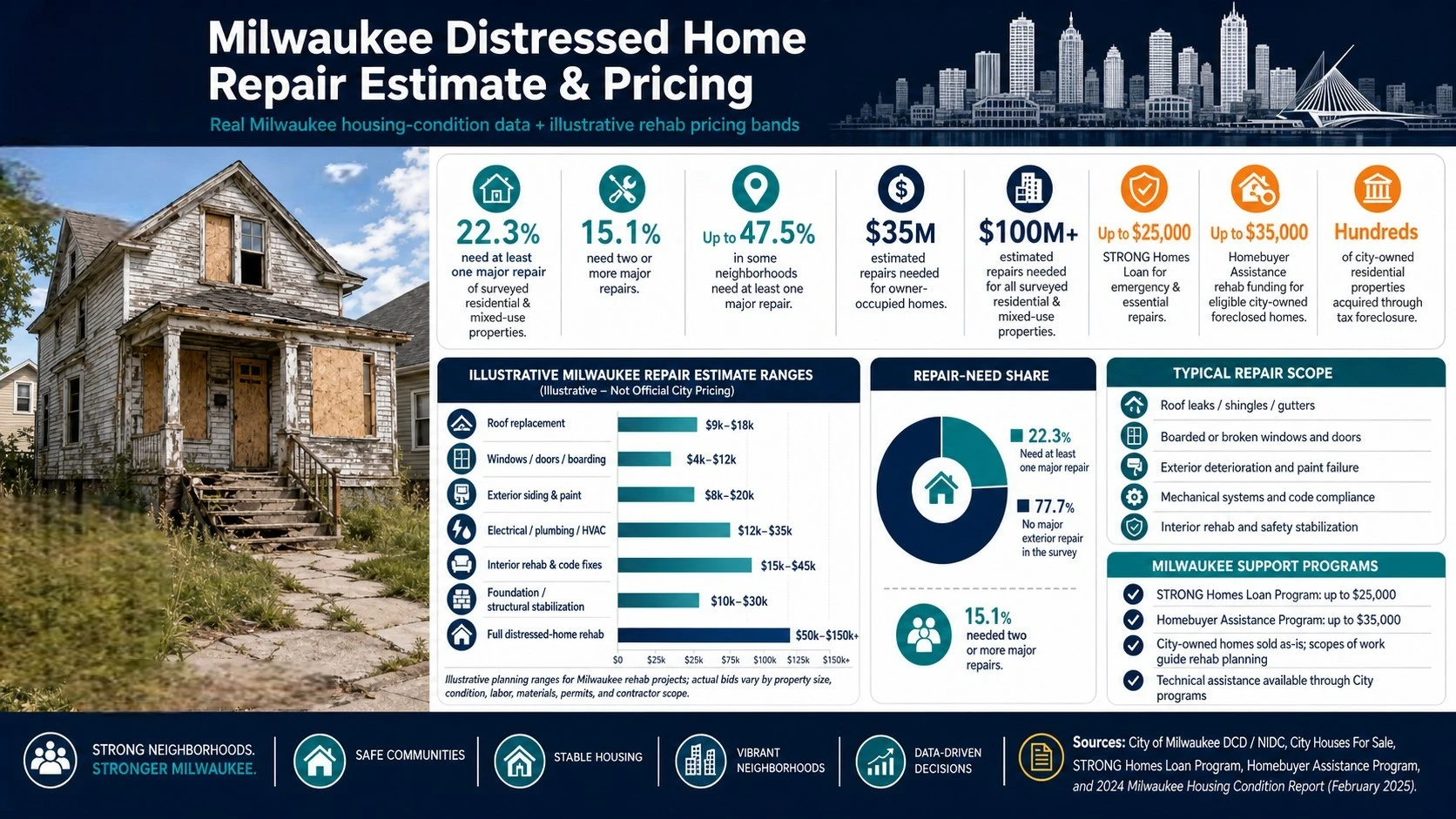
Sellers almost always underestimate repair costs. A roof in Milwaukee is no longer $6,000. Depending on the size and complexity, it can run anywhere from $12,000 to $18,000. A full mechanical update, including a furnace, water heater, and new electrical panel, can cost $15,000 to $25,000 before you even get to the drywall. Kitchen and bathroom renovations, even basic ones, can add tens of thousands of dollars.
To price a distressed property correctly, you have to subtract the full, realistic cost of getting it ready to sell. Then you also have to account for the buyer’s margin. Investors do not take on major rehab work for free. An investor looking at a $60,000 renovation needs room to make money from the project, not just cover the cost of repairs.
This is where many sellers let emotion take over and end up losing money. Maybe the house belonged to their parents. Maybe they lived there for thirty years. Maybe they remember what it cost to remodel the kitchen in 2006. None of that matters to the market. The market looks at condition, not history.
Read the Current Market, Not Last Year’s Market
Markets change fast, and distressed properties are usually affected first. When interest rates rise, fewer buyers are willing to finance a project home because rehab loans and construction financing become more expensive along with traditional mortgages. When inventory increases, buyers have more choices and become less willing to overlook problems. When investor activity slows, the price floor for distressed homes drops.
Do not base your price on the market from when you first thought about selling. Focus on what is happening right now. Look at days on market for similar properties. If distressed homes in your neighborhood are sitting for 60 to 90 days even after price reductions, buyers are hesitant. If they are selling in under 30 days, demand is still strong.
Also watch Milwaukee-specific signals. City reassessment cycles, tax levy changes, and neighborhood-level investor activity can all affect the price floor. Tax-delinquent homes, probate homes, and homes with condemnation orders follow their own pricing logic, and that logic rarely lines up with general market trends.
When a Traditional Listing Doesn’t Make Sense
Sometimes, even an accurately priced distressed property will not perform well on the open market. If the property has major issues like code violations, ongoing water intrusion, hoarding, fire damage, or foundation problems, a traditional listing can turn into a frustrating process. You end up with a house that is not ready, inspections it cannot pass, and financing hurdles most buyers cannot get past.
In those cases, your realistic buyer pool is usually limited to cash investors anyway. Going directly to them can sometimes leave you with more money than listing publicly. You avoid the cycle of listing, delisting, and cutting the price, which can hurt the property’s perceived value. Carrying costs stop adding up, and the sale can close in weeks instead of months.
Many homeowners in Milwaukee who face this situation end up working with a Milwaukee-based company that buys distressed properties directly. This approach removes much of the pricing uncertainty because the offer is based on the property’s current condition and current market data. It is not the right fit for every distressed property, but when the cost of getting a house market-ready would eat up most of the upside, it can produce a better net result than the traditional route.
The Bottom Line
Pricing a distressed property correctly means setting a price based on its real competition. That means comparing it to other distressed properties, subtracting realistic repair costs, accounting for the buyer’s margin, and paying attention to today’s market instead of last year’s trends. Sellers who approach this realistically are more likely to close. Sellers who anchor their price to renovated comps, underestimate repairs, or ignore market changes usually end up chasing the market down through multiple price cuts.
The hardest part is not the math. It is accepting the reality of the property. A distressed home is worth what a distressed-property buyer can pay, not what a perfect comparable home sold for. Once Milwaukee sellers understand that, pricing becomes much more straightforward.
A good dining table works hard in a family home. Between homework, craft projects, spilled drinks, and hot plates, the surface can start showing wear faster than you’d expect. A table protector may not sound exciting, but it can save your table from a lot of everyday damage.
Glass Table Protectors: Durable but Expensive
Tempered glass is the high-end choice, and it looks like one. It sits flat, wipes clean easily, and gives the table a sleek finish without hiding the surface underneath. It also handles heat well, so hot mugs and serving dishes usually aren’t a problem.
The main drawbacks are weight and price. A custom-cut glass top for a large dining table can be expensive, and if it chips or cracks, you’re usually replacing the whole piece. If you have young kids at home, the weight and risk of breakage are worth thinking through.
Clear Acrylic: The Best Middle Ground
Acrylic is a popular option for families who want a glass-like look without the heavy price tag or the breakage risk. Clear acrylic sheets lie flat over the table, so the wood grain or finish still shows through. They’re much lighter than glass and won’t shatter if they get bumped.
Acrylic can scratch over time, especially if kids are using the table for homework, crafts, or play. You’ll also want to use trivets for hot dishes. Still, compared with PVC, acrylic is less likely to feel overly warm or discolor in direct sunlight, which makes it a better choice for bright rooms.
PVC Tablecloths: Budget-Friendly but Limited
PVC table protectors are usually the cheapest option, and they’re easy to find in most big-box stores. They’re waterproof, easy to wipe down, and available in plenty of patterns and sizes.
The downside is that PVC doesn’t breathe. In a warm room or direct sunlight, the surface can feel uncomfortably warm, and over time it may yellow or turn tacky. It can also sit unevenly on the table. For short-term use, PVC is fine. As a long-term solution for a table you care about, though, it usually doesn’t hold up as well.
Traditional Tablecloths: More Style Than Protection
Fabric tablecloths have been protecting tables for centuries, and they’re not going anywhere. A good-quality tablecloth can make a room feel warmer and more finished, and there are endless styles to choose from.
The practical downsides are pretty clear. Fabric absorbs spills instead of repelling them, and frequent washing can get old fast. Felt-backed tablecloths offer more protection than standard fabric, but they still won’t handle wet paint, craft glue, or a spilled glass of juice the way a solid surface protector will.
If looks matter most and your table doesn’t get heavy daily use, a tablecloth still makes sense. But if kids are eating, drawing, and doing homework at the table every day, you’ll probably want something more durable.
What to Consider Before You Buy
Before choosing a protector, think about how your table is used.
Heat exposure: Glass handles heat best. Acrylic is fine with trivets, while fabric and PVC offer less protection.
Scratch resistance: Glass is the strongest option here. Acrylic can scratch, but it’s also cheaper to replace.
Budget: PVC and fabric are the most affordable. Acrylic sits in the middle, while glass is usually the most expensive.
Appearance: If you want the tabletop to show, glass or acrylic are the best choices. PVC and fabric will cover the surface completely.
Weight and safety: Acrylic is the lightest solid option, which can be a big plus in homes with young children.
The Bottom Line
For most family homes, acrylic offers the best mix of practicality, price, and appearance. Glass is a great choice if your budget allows and you don’t have young children around. PVC and fabric can still be useful, but they’re usually better for occasional use than everyday protection.
In the end, the right choice depends on your table, your household, and how much daily wear the surface needs to handle.
Many Nebraska homeowners are choosing alternatives to traditional real estate agents, especially options that focus on speed, simplicity, and fewer delays.
If you’re looking to sell a house fast Nebraska, understanding alternatives like cash buyers, investor purchases, and as-is sales can make the process much easier to manage. This guide walks you through the timelines, costs, risks, and practical steps for navigating the 2026 Nebraska housing market.
The Traditional Nebraska Home-Selling Process
A traditional home sale in Nebraska follows a structured but often time-consuming path. It typically involves real estate agents, public listings, frequent showings, inspections, and waiting for a buyer’s mortgage approval.
The standard selling process usually looks like this:
Hiring a real estate agent
Preparing and staging the property
Listing the home on the MLS
Hosting showings and open houses
Negotiating buyer offers
Waiting for bank mortgage approvals
Navigating home inspections and making requested repairs
Finalizing the closing paperwork
Keep in mind: In major Nebraska cities like Omaha and Lincoln, an average traditional sale takes anywhere from 30 to 90 days. That timeline can stretch even further if financing falls through or inspection issues come up.
Naturally, this timeline rarely works for homeowners searching for “sell my house fast Nebraska” solutions.
Why Homeowners Are Skipping Realtors in Nebraska
More sellers are bypassing agents in favor of direct-selling methods. This shift is usually driven by urgent deadlines or financial constraints, not just personal preference.
The most common reasons to skip the realtor include:
High commission fees, which can take 5 to 6 percent of the sale price
Expensive, unexpected repair demands after a home inspection
Delays caused by strict buyer financing
The stress of a deal falling through at the last minute
Urgent relocation or sudden financial pressure
These issues often push homeowners toward alternatives like local property investors and companies advertising “we buy houses in Nebraska.”
In many time-sensitive situations, cash sales are a practical choice when a guaranteed, fast closing matters more than maximum market exposure.
Best Ways to Sell a House Fast Without a Realtor
If you want to secure a fast home sale in Nebraska without an agent, you have a few effective options.
Cash Home Buyers in Nebraska
Cash buyers are one of the most common solutions for homeowners looking for a quick, straightforward sale.
Here’s how it works:
Cash home buyers purchase properties directly, without relying on bank financing. These companies typically:
Provide a cash offer within 24 to 48 hours
Buy homes in their current condition
Handle the closing paperwork
Fund the transaction in a matter of days
The biggest advantages of using cash buyers include zero realtor commissions, no required repairs, a fast closing window of 7 to 21 days, and far less paperwork. It’s a strong option if you want to sell a house fast without a realtor in Nebraska.
Selling a House “As-Is” to Property Investors
Selling “as-is” means the property is sold in its current condition. You don’t have to make repairs or cosmetic upgrades before closing.
This strategy can be especially useful for:
Older or severely damaged homes
Vacant inherited properties
Homes that need major structural renovations
Distressed properties facing foreclosure
Local investors will evaluate the property’s location, estimated repair costs, current market demand, and potential resale value before making a cash offer. Because it removes weeks of prep work, an as-is sale can be a practical choice for homeowners who need to move quickly.
Step-by-Step Guide to Selling a House Fast in Nebraska
When speed is your top priority, following a structured approach keeps the sale moving smoothly:
Step 1: Evaluate the property. Take an honest look at your home’s condition, location, and estimated market value.
Step 2: Request multiple cash offers. Contact verified local buyers or companies offering house-selling services without a realtor in Nebraska.
Step 3: Compare every offer carefully. Don’t just focus on the highest number. Review the estimated closing speed, which fees are covered, and the fine print in the contract.
Step 4: Accept the strongest offer. Choose the deal that gives you the best net benefit and fits your timeline.
Step 5: Close the transaction. Most cash transactions close within 7 to 21 days through a licensed local title company.
How the Cash Offer Process Works
Understanding how the process works can give you more confidence when dealing with direct buyers.
A typical cash transaction follows a simple timeline:
A brief property walk-through or virtual evaluation
The official cash offer submission
Seller review and formal acceptance
Signing the initial purchase agreement
Clearing the title verification process
Final closing and direct payment transfer
Note: Reputable buyers always use licensed title companies to help ensure a legal, secure transfer of funds.
The Costs You Avoid Without a Realtor
One of the biggest advantages of a direct sale is the reduction in out-of-pocket expenses.
Expense Type
Traditional Sale
Cash Buyer Sale
Realtor Commissions
5% to 6% of the sale price
Zero cost
Repairs and Renovations
Often required
Not required
Standard Closing Costs
Typically split between parties
Usually covered by the buyer
Listing and Marketing Fees
Often required
Zero cost
This financial breakdown shows why many owners choose to sell their house as-is in Nebraska. It can help remove major upfront costs and simplify the process.
Timeline: How Fast Does a House Actually Sell?
Closing speeds vary depending on how you choose to sell.
Here is what you can expect:
Traditional realtor listing: 30 to 90 days or more
FSBO, or For Sale By Owner: 30 to 60 days
Cash home buyers in Nebraska: 7 to 21 days
When time is limited, a cash buyer is usually the fastest route to the closing table.
Nebraska Home Selling Guide for 2026: Market Overview
The Nebraska housing market in 2026 remains stable, though conditions can vary by county.
Current market trends show:
Strong demand in major hubs like Omaha and Lincoln
Slower movement for outdated or older properties
Higher buyer expectations for turnkey, move-in-ready homes
An active cash investor presence across the state
These conditions help explain why searches for “how to sell a house fast in Nebraska” continue to rise.
Risks to Watch Out For Before Selling
Direct cash sales can be convenient, but you still need to protect yourself.
Watch for these potential red flags:
Offers that seem far below fair market value
Unverified buyers with little track record or local presence
High-pressure sales tactics pushing you to sign immediately
Confusing or overly complicated contract terms
To stay protected, compare at least two or three cash offers, require the use of a licensed local title company, read every page of the closing documents, and walk away from any deal that feels rushed. Clear communication and transparency are strong signs of a reliable buyer.
The True Benefits of a Fast Home Sale in Nebraska
Working with a direct buyer can offer several advantages:
Faster access to your property’s equity
Less stress from showings and negotiations
No responsibility for home repairs before closing
A simpler paperwork process
More control over your move-out timeline
These benefits show why the local market for “we buy houses Nebraska” companies continues to grow.
Conclusion
Selling a home without a realtor in Nebraska is not only possible; it is also common in 2026. Whether you choose a cash buyer, an investor, or an as-is transaction, each method offers different advantages based on your property’s condition and your timeline.
When speed and simplicity are your top priorities, cash buyers remain one of the most practical solutions for achieving a fast home sale in Nebraska.
Frequently Asked Questions
How fast does a house sell in Nebraska?
Most cash home sales in Nebraska close within 7 to 21 days, depending on the property’s condition and the buyer. Traditional sales usually take longer because they involve bank financing, home inspections, and negotiations.
Is it legal to sell a house without a realtor in Nebraska?
Yes. You have the legal right to sell your property without a real estate agent, whether you choose the For Sale By Owner route or sell directly to a cash buyer. The process still requires the proper legal documentation and a licensed title company to handle the final closing.
Do cash buyers in Nebraska offer fair market value?
Cash buyers typically offer slightly below retail market value. In exchange, they provide speed, convenience, and take on the responsibility for repairs. The trade-off is a faster, more predictable closing with fewer upfront costs, rather than waiting longer for the highest possible asking price.
What does it mean to sell a house as-is?
Selling a property as-is means you make no repairs or cosmetic upgrades before selling the home. The buyer agrees to take the property in its current condition and factors the estimated repair costs into the cash offer.
Are closing costs covered in a cash offer?
In most cases, reputable cash buyers cover standard closing costs to keep the transaction simple for the seller. However, contract terms can vary, so always review the paperwork carefully before accepting an offer.
Over the past decade, Phoenix has quietly transformed from a seasonal snowbird retreat into a year-round standout for luxury vacation rentals. Driven by a strong local economy, expanding infrastructure, and over 300 days of sunshine, the market now consistently attracts high-net-worth tourists, traveling executives, and upscale travelers.
For real estate investors, this shift presents a unique opportunity to capitalize on a region with solid property fundamentals, not just seasonal tourism swings.
Year-Round Tourism And A Warm Climate
Unlike markets that rely heavily on summer or winter spikes, Phoenix benefits from sustained, year-round demand. The warm desert climate naturally draws travelers from colder regions during the winter, helping push premium nightly rates higher.
Spring and fall maintain this momentum, bringing in visitors for golf tournaments, wellness retreats, and outdoor recreation. This steady flow of visitors can support strong occupancy rates and more predictable revenue for property owners.
A Strong Real Estate Market For Investors
As a real estate market, Phoenix delivers steady appreciation alongside conditions that work well for investors. Compared to saturated, high-barrier coastal cities like Los Angeles or Miami, the Valley offers a much more accessible entry point for luxury investments.
The combination of reasonable acquisition costs and strong yield potential appeals to both new and institutional investors looking to scale their portfolios.
Population And Economic Growth
Expanding corporate relocations and a growing local population further support property values. With more professionals moving to the area for lifestyle upgrades and employment, the need for high-end, short-term accommodations continues to grow.
Together, corporate travel and luxury tourism create a resilient investment environment built for long-term stability.
The Appeal To High-End Travelers
Today’s affluent travelers prioritize privacy, space, and experiential stays over traditional hotel suites. Phoenix delivers that, offering a wide range of homes with modern architecture and dramatic desert backdrops.
High-end guests expect premium amenities, including resort-style pools, expansive outdoor kitchens, and seamless indoor-outdoor living spaces. Homes built around this lifestyle tend to see more frequent bookings and stronger nightly rates.
Strategic Location And Accessibility
Easy access plays a major role in the area’s global appeal. Phoenix Sky Harbor International Airport provides strong flight connections to major domestic and international hubs, encouraging repeat visits and frequent weekend getaways.
The city’s proximity to upscale destinations like Scottsdale and Sedona also positions it as an ideal home base for trips around Arizona, driving further lodging demand.
Why Lifestyle And Experience Matter
For many travelers, the stay matters as much as the destination, and Phoenix strikes an ideal balance between high-energy activity and desert tranquility. The area appeals to different types of guests, offering vibrant dining districts, luxury retail, championship golf courses, and premier spa facilities.
By attracting everyone from corporate retreats to couples and families, property owners can diversify their marketing approach and avoid leaning on just one type of traveler.
Learning From Successful Luxury Rentals
Success in luxury Phoenix vacation rentals requires a clear understanding of what performs well right now. Top-tier listings in Phoenix set a high standard, heavily emphasizing open-air layouts, distinctive design, and highly curated guest experiences.
Investors who study and adopt these standards can quickly position their properties to compete effectively at the top end of the market.
A Favorable Regulatory Environment
While many major metropolitan areas have tightened short-term rental restrictions, Phoenix maintains a relatively favorable regulatory landscape for income properties.
The rules in place are manageable, allowing operators to scale their businesses with less red tape. Still, staying compliant with local zoning guidelines remains crucial to protecting the investment over the long term.
Using Technology To Manage Rentals
Managing a luxury portfolio is now much easier with technology. Property management systems, dynamic pricing software, and smart home automation allow investors to run operations efficiently from anywhere.
Features like keyless entry, smart climate control, and integrated security not only simplify turnover but also improve the guest experience. Using data-driven pricing helps owners adjust rates around real-time market demand and local events.
Long-Term Growth And Future Outlook
The outlook for Phoenix as a luxury rental hub remains strong. Ongoing municipal investments in urban development and tourism infrastructure continue to boost the city’s profile. As remote work makes longer stays more common, travelers increasingly seek spacious, premium properties that can accommodate both business and leisure with ease.
Ultimately, Phoenix provides a rare blend of high demand, solid real estate fundamentals, and exceptional lifestyle appeal. Thriving in this market means going beyond simply buying a house; it requires delivering a hospitality-driven experience that meets the expectations of today’s luxury guests. For investors committed to quality design and strategic location, the Phoenix market presents a strong long-term opportunity.
Soundproof curtains seem like an easy fix, and sometimes, they really do help. But they usually don’t work the way you might think. Instead of blocking out all the noise, they cut down on echo and muffle the sounds coming in.
Knowing exactly what they can and can’t do will save you a lot of time.
What to Expect from Soundproof Curtains
These curtains can make a real difference in a room, but it helps to understand how they actually function. While they won’t give you total silence, they mainly reduce echo and soften the way sound bounces around. This alone makes conversations clearer and less strained, especially in rooms with a lot of hard floors or bare walls.
When it comes to outside noise, you need to keep your expectations realistic. These curtains can muffle traffic sounds or a neighbor’s lawnmower, but they won’t completely silence them. It feels more like turning the volume down a few notches rather than hitting the mute button, which is still incredibly helpful for daily life.
This is exactly what acoustic curtains are made to do. They use dense materials that soak up sound waves instead of stopping them cold. Because of this, they work best when you want to make a room feel cozier and quieter, rather than trying to soundproof a room completely.
If you know this going in, you’ll probably be happy with the results. They won’t replace heavy-duty soundproofing, but they do offer an affordable and easy way to improve your space. For a lot of people, that slight drop in noise is exactly what they need.
Why Curtains Can’t Block Every Sound
Sound always finds a way through the smallest cracks, and curtains can’t fix that. Gaps around your windows, baseboards, and curtain rods let noise slip right in. Even if you buy the best fabric on the market, those weak spots limit how well your curtains work.
The main issue is the lack of mass. True soundproofing requires heavy, dense barriers like drywall or specialized acoustic panels. Curtains just don’t have the weight to stop sound waves in their tracks, which is why their impact is limited.
Your windows are usually the biggest problem. Glass lets sound through much easier than an insulated wall, so even a premium curtain has to work overtime to make up for that. If you have thin, single-pane windows, the curtain is only fighting half the battle.
Low-frequency sounds are even tougher to beat. Heavy bass from loud music or rumbling trucks passes right through most materials, and fabric struggles to absorb it. That’s why you might still feel or hear a low rumble even after hanging heavy acoustic drapes.
When Soundproof Curtains Are Worth It
If outside noise is a nuisance but not overwhelming, soundproof curtains are a great choice. If you live near a busy road, they can take the edge off passing cars and make your home feel much more peaceful without a major renovation.
They are also perfect for a home office. When you need to focus or jump on a video call, even a slight drop in background noise helps you stay focused. It’s not about achieving dead silence. It’s about making the room less distracting.
Bedrooms are another great spot for them. A quieter room helps you fall asleep faster, especially if street noise usually wakes you up. Just a small drop in volume can make your bedroom feel much more relaxing at night.
Renters love these curtains for an obvious reason. Since you don’t have to tear down walls or make permanent changes, you can upgrade your space without losing your security deposit. It’s a fast, practical fix when you want a quieter apartment but can’t commit to major construction.
How to Choose the Best Soundproof Curtains
Not all soundproof curtains are created equal, and the material makes all the difference. Heavy, multi-layered fabrics soak up more sound, making them much better at cutting down echoes and muffling street noise.
Size matters more than you might think. Curtains that run from the ceiling all the way to the floor give you a much larger surface area to catch the sound. This setup cuts down on echoes and stops noise from sneaking through bare spots on the wall.
You also need to look at how much the curtain overlaps your window frame. Extending the fabric past the edges prevents sound from slipping in through the sides. If your curtains barely cover the glass, even the thickest fabric won’t do much good.
Finally, check the weave of the fabric. Tightly woven materials do a much better job of blocking and absorbing sound than light, airy textiles. Finding the right mix of weight and a tight weave will give you the best results.
How to Hang Soundproof Curtains the Right Way
How you hang your curtains is just as important as the curtains themselves. Just throwing them over a window won’t help much if there are huge gaps around the edges. For the best sound reduction, you need to cover the entire window area.
Always go bigger than the window frame. By hanging the curtains wider and taller than the window, you build a solid barrier that stops noise from creeping in through the top and sides.
Pinning down the sides makes a surprisingly big difference. Even a tiny gap lets sound pour into the room, defeating the purpose of the curtains. Using velcro strips or magnetic tape to seal the edges to the wall can seriously boost their performance.
Don’t skimp on the curtain rod, either. Heavy acoustic curtains need solid support, and a cheap rod will bow in the middle or pull out of the drywall. Make sure you use heavy-duty anchors so everything stays exactly where it should.
Other Ways to Quiet Your Room
Soundproof curtains work best when you pair them with a few other easy fixes. Sticking weatherstripping around your window frames blocks the noise that sneaks through tiny cracks, giving your curtains a head start.
Window inserts are another great upgrade. By adding an extra layer of glass or acrylic over your existing window, they help block a significant amount of sound before it ever reaches the fabric. Using both inserts and curtains gives you a much quieter room.
Don’t forget to add soft touches inside the room. Thick rugs, carpet, and plush couches absorb sound and reduce echoes, making the room feel noticeably quieter. It’s an easy way to improve the acoustics without thinking too hard about it.
Finally, check the gap under your door. Sound doesn’t just come from outside. A simple draft stopper can block out a noisy hallway or loud roommates. When you seal up all these little entry points, the whole room feels much more peaceful.
The Bottom Line
Soundproof curtains won’t turn your home into a recording studio, but they will make a noticeable difference. They eliminate annoying echoes, soften outside noise, and make any room feel a lot more relaxing. When you mix them with a few other quick fixes like weatherstripping or a thick rug, the results are even better. Ultimately, they’re a smart, easy upgrade for your home. Just keep your expectations realistic.
As a restaurant owner, you might have an incredible menu, top-tier service, and a stunning interior design. But if your guests have to shout across the table to hear each other, they aren’t coming back. You can control the acoustics by mixing the right materials, tweaking your floor plan, and making a few strategic upgrades to turn a chaotic dining room into a space people actually want to spend time in.
How Sound Moves Through a Property
Sound can move, bounce, and build depending on the surfaces it hits. When you walk into a loud restaurant at night, you aren’t just hearing people talking. You’re hearing their voices ricochet off drywall, concrete, and hardwood floors. Understanding this behavior helps you stop guessing and start making targeted improvements.
Hard surfaces are the main culprits. Materials like glass, polished concrete, subway tile, and exposed metal look fantastic on a property listing, but they absorb absolutely nothing. They bounce sound right back into the room. If your property features a modern minimalist or industrial design, you have to counter those hard finishes with elements that absorb the excess noise.
Vaulted ceilings create a great open feel, but they give sound waves more room to travel and echo. Conversely, low ceilings can trap noise and make a crowded room feel overwhelming. It ultimately depends on how sound waves travel and where they land.
Before spending money on materials, locate your worst noise traps. These are usually right next to the kitchen doors, the main bar, or wide-open seating areas. Walk the floor during a busy shift and listen.
Choose the Right Acoustic Materials
Your design materials have to do more than look good. They need to handle sound. In high-traffic commercial spaces, you want surfaces that soak up noise rather than reflect it. You don’t need to build a soundproof bunker, but you do need to be smart about what you put on the walls.
Wall treatments easily cut down on echo without ruining your aesthetic. For example, you can incorporate fabric wall panels into decorative sections, which allows you to reduce echo while still maintaining a polished look. They blend right in when you match them to your brand’s color palette.
You can reduce noise by soundproofing the ceiling. Hanging acoustic baffles or suspended ceiling clouds catch sound waves before they bounce across the room. These work incredibly well in open-concept layouts or industrial warehouse conversions where sound typically runs wild.
Never underestimate softer elements like heavy window drapery, upholstered booth seating, or thick table linens. These might seem like minor interior design choices, but they consistently drive down the room’s overall volume. Layering these soft textures stops sound from endlessly bouncing around the room.
Optimizing Your Layout and Floor Plan
Your floor plan directly impacts how loud a room gets. If your tables are crammed together to maximize capacity, conversations will overlap. Guests end up talking louder to hear each other, which amplifies the whole room.
Optimize room acoustics by increasing the space between tables. Strategic seating arrangements can significantly reduce noise levels in confined areas.
Furniture also works as a natural sound barrier. High-backed booths, room dividers, and open shelving units break up the path of sound. Instead of letting noise shoot straight across the dining room, these pieces scatter it, making the space feel instantly calmer.
Keep your loud zones separated. Bars and espresso stations generate constant noise. Don’t place them right next to dining tables. A slight layout shift to separate the high-action areas from the quiet zones keeps the atmosphere balanced.
Tackling Mechanical Noise
When noise goes up, it has to come down. Leaving a ceiling bare creates an echo chamber that amplifies every dropped fork and loud talker in the building.
Installing acoustic ceiling tiles is the solution. These tiles can cover hard surfaces and instantly eliminate echoes. A wide selection of modern commercial tiles with clean, architectural finishes keeps your restaurant venue looking stylish.
For open ceilings with exposed beams, combining pendant lights with acoustic baffles is a key strategy. The lights provide essential illumination, while the panels effectively trap airborne sound.
Pinpoint the source of mechanical noise. Whether a low, constant hum is coming from an HVAC unit, an open air duct, or a high-powered exhaust fan, servicing or isolating these units will significantly reduce noise levels.
Quieting Floors and Heavy Foot Traffic
Hard flooring is a major culprit for noise. Wood floors, poured concrete, and ceramic tiles reflect every single footstep and scraped chair. By the busy lunch hour, all those small sounds compound to create an overwhelming cacophony
You don’t need to cover the entire floor with carpet to fix the noise. Simply placing a thick rug under a large table or in the main lobby does wonders for sound absorption, instantly dampening the harsh echoes from hard floors.
Acoustic underlayment is your best long-term investment. These hidden foam or rubber layers sit right under your luxury vinyl or engineered wood to absorb vibrations before they hit the air. Guests will never see it, but they will definitely feel the difference.
The Bottom Line
Fixing bad acoustics doesn’t require tearing the place down. It just takes a basic understanding of how sound travels and a few smart material upgrades. When you mix sound-absorbing textures with a strategic floor plan, the results happen overnight. Guests stay longer, spend more, and actually enjoy the atmosphere. Ultimately, upgrading your acoustics isn’t just about turning down the volume. It is about protecting the value and appeal of your commercial property.
A pier and beam foundation is a construction method used to elevate a house structure above ground level using vertical support piers and horizontal beams as the main load-bearing system. This setup keeps the floor from sitting directly on the soil or a concrete slab, instead placing it above an open space known as a crawlspace.
A crawlspace is a shallow, narrow space beneath the ground floor of a house built above the soil. It provides access to the underside of the home for structural inspections, plumbing repairs, electrical wiring, HVAC systems, and other utilities. The height of a crawlspace can vary depending on the home’s design, the age of the building, and local construction standards. Typically, it’s built just high enough for a person to enter and carry out inspections or repairs.
The pier and beam system was commonly used in homes across the United States in the 1950s, including in areas like Dallas and North Texas, before slab-on-grade foundations became the standard due to post–World War II demands for faster and more cost-efficient construction. While many homes today use slab foundations, plenty of people still choose pier and beam for custom builds, historic renovations, and properties that need easy access to utilities beneath the floor.
The main difference between the two is that a slab-on-grade foundation is a shallow system made of reinforced concrete poured directly on the ground, while a pier and beam foundation transfers the building load through the floor framing to the main beams, then down to the support piers and the soil beneath.
This pier and beam foundation system works well in areas like Dallas and North Texas, where expansive clay soil is common. Clay tends to swell when it holds moisture and shrink when it dries out. These shifts in soil volume can cause a foundation to move, settle, tilt, or become uneven. That’s why pier and beam is often preferred—it’s easier to inspect and repair since everything is accessible through the crawlspace.
Why Pier and Beam is Common in Dallas and North Texas
The pier and beam system is a traditional construction method widely used in wood-frame homes and low-rise buildings in the United States. It’s commonly chosen because the construction is relatively straightforward, the materials are easy to source, and it works well for homes that need airflow and utility access beneath the floor.
In the Dallas–Fort Worth area, pier and beam foundations are commonly found in older homes in neighborhoods like East Dallas, Oak Cliff, Lakewood, Bishop Arts, older parts of Highland Park, and other historic areas. Many of these homes were built in the early to mid-20th century, when pier and beam was still a standard foundation method for residential construction.
One reason the pier and beam system is still used today is that many areas in North Texas have expansive clay soil that’s highly sensitive to moisture levels. During rainy periods, the soil absorbs water and expands. In long, dry summers, it loses moisture, shrinks, and can crack. In contrast, homes built on slab foundations can experience cracking or uneven settling of the concrete when the soil shifts. This cycle repeats year after year and can put significant stress on a home’s foundation.
That’s why the pier and beam system is still used today. Even so, it requires consistent maintenance, especially when it comes to drainage, moisture control, and the condition of the wood components beneath the house.
How a Pier and Beam Foundation Works
A pier and beam foundation consists of several main components that support the structure, including piers, beams, joists, the subfloor, and the crawlspace.
Here is a breakdown of the core components:
Piers are vertical support columns that serve as the main load-bearing points of the foundation. They can be made from poured concrete, concrete blocks, brick, steel, or helical pier systems. In older homes around Dallas, it’s still common to find piers made of brick or concrete blocks. Today, contractors typically use concrete piers, steel piers, or helical piers for foundation repairs, depending on soil conditions, structural design, and the level of damage.
Piers usually rest on footings, concrete pads, or deeper, more stable soil layers to help distribute the building’s load more evenly and provide better support.
Beams are the main horizontal members installed on top of the piers. They are typically made from heavy timber, although in some cases they may be reinforced with steel or other materials. Beams carry the load from the floors and walls of the house and transfer it down to the piers.
Joists are smaller floor framing members installed across the beams. They support the subfloor, which is the base layer of the home’s flooring system. If the joists weaken, sag, or begin to rot, the floor can feel uneven, sloped, or overly bouncy when walked on.
The subfloor is the base layer of flooring installed on top of the joists. It’s the surface where finished flooring like hardwood, vinyl, tile, or carpet is placed. The condition of the subfloor is heavily influenced by the strength of the joists and the moisture levels in the crawlspace.
As for the crawlspace, as mentioned earlier, it’s the open space beneath the house and a defining feature of a pier and beam foundation. This area often becomes a source of problems if it’s damp, poorly ventilated, exposed to rainwater intrusion, or lacks proper moisture protection.
Here’s the load path in a pier and beam foundation system:
Because of this, the overall strength of the system depends heavily on how well the wood framing, the piers, and the underlying soil conditions all work together.
Below, we’ll take a deeper look at how the pier and beam foundation system works.
How a Pier and Beam Foundation Works
The mechanism of a pier and beam foundation depends on the way the floor framing, main beams, support piers, and supporting soil work together. This foundation transfers the building load to specific support points, rather than across the entire ground surface. When there is load on the floor, that load is carried by the joists, then transferred to the beams. From the beams, the load moves down to the piers, and finally to the footings or the soil beneath them.
The downside is that if the soil beneath one of the piers shrinks or loses its bearing capacity, that pier can settle. As a result, the floor above it may also drop. This often leads to uneven floors, doors that won’t close properly, windows that stick, or cracks forming in interior walls.
On the other hand, when the soil expands from absorbing moisture, a pier can be pushed upward. This can cause one side of the house to lift while another side stays in place or even settles. This condition is known as differential movement, or uneven foundation movement.
No need to worry—this can be corrected by readjusting the support points. Contractors typically use jacks to slowly lift the affected area of the house, then add shims between the pier and the beam. This process is known as shimming or reshimming.
If the existing piers are damaged, leaning, settled, or no longer able to support the load, they can be replaced or supplemented with new ones. If beams or joists are compromised due to moisture, termites, or wood rot, those components need to be reinforced or replaced.
In most cases, improving drainage is also necessary to address the root cause and prevent the foundation movement from happening again. Poor drainage is also one of the main causes of damage in pier and beam foundations. Water from the roof, yard, or downspouts that drains toward the house can end up entering the crawlspace. If left unchecked, the soil beneath the home can become overly saturated, causing piers to shift and the wood structure to start deteriorating.
In short, the strength of a pier and beam system depends on how all its components work together. If one part weakens, the entire foundation can become unbalanced.
Signs Your Pier and Beam Foundation Needs Repair:
Over time, soil movement and moisture can take a toll on your foundation. If you notice any of the following signs, it’s time to call a professional: Doors and windows that stick or won’t close properly. Uneven, sagging, or bouncy floors. Cracks in the drywall, especially around door frames and windows. Musty odors or visible dampness coming from the crawlspace.
How to Repair a Pier and Beam Foundation
Proper repair starts with identifying the root cause of the problem. Not every sloped floor means you need new piers, and not every crack indicates a total foundation failure. That’s why an initial inspection is critical before deciding on the right repair approach.
Here are some common pier and beam foundation issues and how to fix them:
The most common repair is shimming, or reshimming. In this process, contractors place thin plates (usually steel or another hard material) between the pier and the beam. This is to close the gaps and bring the floor back to level where it has settled. Shimming works for minor adjustments, but it won’t fix the issue if the real cause is ongoing soil movement or poor drainage.
If the home has experienced significant settling, leveling may be needed. This involves slowly lifting the house at specific points using jacks. Once the floor is brought back to the correct position, the contractor will install shims, reinforce the beams, or add new piers. The leveling process has to be done carefully to avoid putting too much stress on the walls, flooring, plumbing, or other structural components.
If the existing piers are no longer in good condition, then pier replacement or pier addition is needed. Old piers can be replaced with concrete piers, steel piers, or helical piers. Contractors typically use concrete piers, while steel or helical piers are chosen when deeper support, higher load capacity, or better performance in certain soil conditions is required. The choice of pier type is usually based on inspection results and structural needs, not just cost.
If the damage is in the wood components, repairs may involve beam replacement, joist repair, or sistering. Sistering is a method where a new joist or beam is installed alongside the existing one to reinforce the structure without having to remove the entire original piece. This approach is often used when part of the joist is still in decent condition but needs additional support.
If the root of the problem is water, then foundation repair needs to go hand in hand with drainage correction. This can include installing a French drain, adjusting the grading around the house, extending downspouts, adding a sump pump, or redirecting water flow away from the structure. Without fixing the drainage, even a leveled foundation can start moving again as the soil moisture changes.
If the issue is caused by moisture, then crawlspace encapsulation may be needed. This system seals off the crawlspace using a vapor barrier and protective materials to reduce moisture coming up from the soil. Encapsulation helps keep the wood dry and lowers the risk of mold, musty odors, wood rot, and excess humidity.
Before making any pier and beam repairs, you need to look at the foundation system as a whole. If you’re not sure what you’re looking at, it’s best to consult an experienced contractor.
Estimated Cost of Pier and Beam Repair
The cost of pier and beam repair can vary widely depending on your location, the size of the home, the level of damage, crawlspace access, the number of affected piers, the condition of the wood beams, the type of piers used, and whether there are drainage or moisture issues.
The cost ranges below generally apply to the Dallas area.
In Dallas, for minor repairs like reshimming and basic leveling, costs typically start around $2,000. These types of repairs are usually done when the floor has a slight slope, there are small gaps between the pier and beam, or doors are starting to stick. The cost can go lower or higher depending on how many areas need adjustment and how easy it is to access the crawlspace.
For more extensive leveling, the cost can increase since more areas of the house need to be lifted and adjusted. In Dallas, this type of work typically runs around $5,000-$10,000. If the job involves multiple rooms, many support points, or a structure that has been shifting for a long time, the process will take longer and cost more.
For pier addition or replacement, the cost depends heavily on the type of pier used. Concrete piers are usually the more affordable option, typically ranging from $300 to $800 per pier in Dallas. Steel piers generally run about $1,000 to $2,000 each, while helical piers are usually around $1,500 and $3,000 or more. Steel and helical piers tend to cost more because of differences in materials, installation depth, methods, and load capacity. That’s why the cost per pier can vary quite a bit depending on the type used.
For beam replacement, the cost depends on the length of the beam, the condition of the crawlspace, how easy it is to access, and whether other areas are affected. If the beam is damaged due to wood rot or termites, the cost can increase since the joists, subfloor, or other framing components may also need repair.
Drainage repairs such as installing a French drain, adding surface drains, regrading the yard, or extending downspouts can also add to the overall cost. However, this work is often essential since water is one of the main causes of pier and beam foundation problems.
In Dallas, a French drain typically costs around $25–$35 per linear foot, including excavation labor, perforated pipe, and gravel. Surface drain systems usually run about $2,200–$3,800, depending on the number of catch basins and how complex the layout is. Regrading generally costs around $1,100–$3,300 for an average yard, or roughly $1 to $2 per square foot.
For crawlspace encapsulation, the cost depends on the size of the home, the condition of the crawlspace, the type of vapor barrier used, whether a dehumidifier is needed, and the overall moisture control system installed. In Dallas, contractors typically charge around $3 to $7 per square foot.
For major repairs, the total cost of pier and beam work in Dallas can reach tens of thousands of dollars, especially if the damage involves multiple piers, main beams, joists, drainage issues, and severe moisture problems. For new construction using a pier and beam system, foundation costs are typically based on the size of the home, structural design, soil conditions, engineering requirements, materials, and overall construction complexity.
Note:For a more detailed cost breakdown, it’s best to speak with an experienced foundation contractor in your area. Make sure you choose someone with a strong reputation, proven experience, and a track record you can trust.
Pier and beam foundations need regular maintenance. You want to make sure rainwater drains away from the foundation. Gutters should be working properly, downspouts shouldn’t discharge water right next to the house, and the soil grading should slope away from the structure. Water pooling around the foundation can make the soil unstable and increase the risk of pier movement.
The crawlspace should also be checked on a regular basis. Make sure the area under the house stays dry, has no musty smell, no standing water, and no signs of termites or wood rot. The vapor barrier should be kept in good condition so ground moisture doesn’t rise into the wood structure.
During the summer, be careful when using a foundation watering system so water doesn’t end up entering the crawlspace.
With proper maintenance, good water management, and repairs that address the root cause, a pier and beam system can be a strong, flexible, and long-lasting foundation. Regular checks also help make sure the soil, moisture levels, wood components, and support points stay stable and solid.
Buying or selling real estate is often treated as a financial decision first. People look at price, timing, market conditions, and financing. These things matter, but they’re not the whole picture. Real estate transactions also affect ownership rights, family interests, and long-term control over assets.
For Calgary homeowners, families, and real estate investors, estate planning helps you look beyond the transaction and prepare for what happens before, during, and after a property changes hands.
1. Property Decisions Should Match Your Broader Legal Plan
A home, rental unit, or commercial property doesn’t exist apart from the rest of your estate. It becomes part of what you own and what others may one day inherit or manage. Speaking with Estate Lawyers Calgary before a purchase or sale can help make sure the transaction supports your long-term goals under Alberta law.
A real estate move may affect your will, enduring power of attorney, personal directive, ownership structure, tax planning, and broader beneficiary strategy. If those pieces aren’t aligned, one transaction can create serious confusion down the road.
For example, buying a second property, selling a longtime family home, or transferring ownership to a spouse or child may seem simple at first. But each decision can affect how your estate is managed later, who has authority to act, and whether your family clearly understands your intentions.
2. Avoid Probate Delays That Can Derail a Sale
Probate can tie up a property at the worst possible time. If a Calgary property owner dies during a sale, the transaction may be delayed until the personal representative receives proper authority, such as a grant of probate where required. Buyers can back out, lenders can withdraw approvals, and even a simple refinance can become impossible.
Updating your will, naming backup executors, and keeping your executor’s contact information current can reduce the chance that a time-sensitive deal gets stuck in probate court. It is also important to make sure the person named in your estate plan understands what property you own and where key documents are kept.
3. Selling Real Estate Can Shift the Balance of Your Estate
A sale does more than turn a physical asset into cash. It can shift the value of an estate and change how assets are distributed later. For example, one property may have been intended for one child, while other assets were meant to balance things fairly. Once the property is sold, that original plan may no longer work.
The same issue can come up when someone sells a longtime family home. Selling a principal residence, rental property, or commercial property can also affect tax planning in Canada. A principal residence may qualify for Canada’s principal residence exemption, while rental, investment, mixed-use, or commercial properties may create capital gains issues. This is another reason to review both estate planning and tax planning before selling.
Estate planning helps you update your intentions before a sale creates tension, confusion, or unequal outcomes. It gives you a chance to decide whether sale proceeds should be divided, reinvested, gifted, held in trust, or used for another purpose.
4. Your Ownership Structure Affects What Happens Later
Many buyers focus on getting approved and closing the deal. Far fewer stop to ask how the title should be held. You need to consider whether the property should be owned in your own name, jointly, through a trust, or under another legal structure. That decision can affect inheritance, creditor exposure, tax planning, and future control.
For example, property owned as joint tenants may pass differently than property owned as tenants-in-common. In Alberta, joint tenancy generally includes a right of survivorship, while a tenant-in-common’s share may form part of that person’s estate. These differences matter when planning who should receive the property, who should control it, and whether the property may need to pass through the estate.
The right structure depends on your goals and family situation. Estate planning helps answer that question early, before the paperwork becomes harder to unwind.
5. Estate Planning Helps Prevent Family Disputes
Real estate often has emotional value. A family home can hold memories tied to parents, childhood, and major life events. Property can quickly become a source of conflict when instructions are unclear.
One heir may want to keep it, another may want to sell it, and someone else may have lived there or paid for repairs. Without a written plan, these issues can easily get personal. Estate planning creates clear written instructions for whether the property should be sold, transferred, rented, or divided. This clarity helps families avoid disputes.
The Bottom Line
A property transaction in Calgary can shape far more than a bank balance. It can affect inheritance, control, family relationships, and future legal decisions. This is why estate planning shouldn’t be left until after the deal closes.
When you plan early, you make property decisions with more clarity and fewer risks. A transaction may solve an immediate need, but a solid estate plan can help protect your assets for the future.
For married homeowners in Calgary and across Alberta, dower rights can also affect a real estate transaction. If a family home is registered in one spouse’s name only, the non-owner spouse may still need to provide consent before the property can be sold, mortgaged, leased, or transferred.
This is an important issue under Alberta’s Dower Act. A sale may look straightforward on paper, but if the proper consent is missing, the transaction can face delays or legal complications.
That is why estate planning and real estate planning should work together. Married couples should review not only who is on title, but also how the property fits into the family’s broader estate plan. This can help avoid surprises during a sale, refinance, transfer, or estate administration process.
For years, buying a beautiful rug meant accepting a trade-off. You could have style or practicality, but rarely both. Gorgeous hand-knotted rugs often needed professional cleaning and careful handling. Large rugs were difficult to source, expensive to ship, and nearly impossible to return. When washable rugs were an option, they often looked like cheap mats made for a laundry room, not a living room.
Boutique Rugs solves these everyday rug-buying problems. Its machine washable rug collection proves that easy care and great design can go hand in hand. Its area rug range shows that quality and variety can coexist at accessible price points. And its extra large rug collection solves a common design problem: finding a beautifully designed rug in the right oversized dimensions without having to compromise.
Backed by free shipping and a 60-day return window, Boutique Rugs proves that buying a rug online can feel as good as living with one.
Machine Washable Rugs That Make Decorating Easier
The machine washable rug is one of the most significant innovations in home textiles of the past decade and also one of the most misunderstood. Many shoppers still associate washable rugs with thin, plasticky mats that flatten after a few months and look nothing like the product photo. Boutique Rugs’ washable rug collection is built to change that perception.
These are real rugs with a more substantial feel, proper pile, and enough weight to look polished in a finished room. The difference is in the construction. The fibers and weave structures are made to hold up through repeated wash cycles without easily shrinking, fading, losing shape, or losing texture. The result is a rug that can still look fresh after multiple washes when cared for properly.
For families with young children, a washable rug in the playroom or living area means that crayon marks, juice spills, and muddy footprints are not ruined rugs. They are just another load of laundry. For pet owners, a washable rug means you don’t have to choose between a stylish home and your pets. For renters who need to move frequently, a washable rug that can be cleaned and reused in a new space is far more practical than one that requires specialist care.
High-traffic areas benefit particularly from washable rugs. Entryways, kitchen floors, and dining areas are all spots where a beautiful rug adds style, but daily foot traffic makes maintenance a real concern. Boutique Rugs’ washable collection covers all these bases with designs ranging from geometric neutrals that complement any interior palette to bolder patterns that make a visual statement.
A rug that can be properly cleaned every few months can help retain its color, texture, and shape better than one that collects dirt deep in its fibers for years. From a long-term value perspective, a quality washable rug is often the more economical choice, not just the more convenient one.
Area Rugs That Pull a Room Together
At the center of Boutique Rugs is its area rug collection. This range is so broad and thoughtfully assembled that it feels more like a curated design resource. Whether a shopper arrives with a clear vision or no idea where to start, the collection provides both the options and the context to make a confident decision.
The variety of materials on offer is one of the collection’s greatest strengths. Wool rugs bring natural resilience, temperature regulation, and the classic feel of a fiber that has been prized by rug makers for centuries. Jute rugs introduce organic texture and an earthy warmth that complements natural interiors. Synthetics offer durability, stain resistance, and the ability to achieve color and pattern effects that natural fibers cannot match at the same price point. Shoppers are not forced to choose one material type and settle. The breadth of the collection makes it possible to find the right balance of material, design, and budget for any given space.
The collection ranges from restrained and minimal solid colors, simple geometric grids, and tone-on-tone textures to richly decorative options. These include traditional Persian and oriental patterns, intricate floral motifs, and expressive abstract designs. Color-specific browsing options make it easy to shop around an existing palette.
You can find gray rugs for cool, contemporary interiors, cream and beige for warm, layered aesthetics, black and white for graphic, high-contrast schemes, and colorful options for rooms designed to make a bold statement.
The handmade rug category within the collection deserves special mention. Each handmade rug carries the unique touch of the artisan, showing subtle variations in pile height, slight asymmetries in pattern, and a depth of texture that machine production simply cannot replicate. For buyers who want a rug that is a true statement piece, the handmade selection represents a meaningful step up.
Large Area Rugs for Big Rooms That Need Balance
Finding a beautiful rug in an extra-large format that can anchor an open-plan living space, a great room, or a large dining area is a different challenge entirely. Most retailers stock a narrow selection of oversized rugs, often in limited patterns and at prices that rise quickly as sizes get larger.
Boutique Rugs has built its extra large rug collection to solve this exact issue. The selection of oversized and extra large area rugs covers the formats that large rooms actually require, including 9×12 rugs for substantial living and dining areas, and even larger options for truly expansive spaces. The collection is not a handful of token large-format pieces. It is a proper range with the same design variety, material quality, and style coverage as the standard area rug collection.
A rug that is too small for its space is one of the most common decorating mistakes in larger rooms. It floats in the middle of the floor, making furniture arrangements feel disconnected and the room feel unsettled. An appropriately scaled large area rug pulls a seating group together, anchors a dining space, and gives the room itself a visual structure that makes it feel deliberately designed rather than accidentally assembled.
Because extra-large rugs take up so much visual space, pattern and color matter even more. A large geometric rug becomes the main visual element in a room. A large neutral-toned rug becomes the foundation everything else builds upon. The Boutique Rugs extra large collection includes options across both ends of this spectrum. You will find statement pieces with bold patterns and colors, and quieter foundational rugs in naturals, grays, and creams that serve as an elegant backdrop for other design decisions.
Shipping oversized rugs can come with significant freight charges when retailers pass on the full cost. Boutique Rugs’ free shipping policy applies across the collection, including extra-large formats. This is a meaningful advantage that makes the listed price closer to the actual price, regardless of the size being ordered.
Shopping Smarter with Boutique Rugs
Whether you are shopping for a washable mat or a massive area rug, the Boutique Rugs experience is built on a few core principles.
High Design for Every Budget
Great design isn’t treated as a luxury reserved for huge budgets. Whether a shopper is spending modestly on a machine-washable dining room rug or investing in an extra large handmade piece for a formal living space, the design standard remains high throughout the collection.
Clear Pricing and Flexible Returns
Free shipping means no hidden freight costs at checkout. A 60-day return window means a shopper can live with a rug and test it out in their actual space, in their actual lighting, alongside their actual furniture before committing fully.
Policies That Make Online Rug Shopping Easier
These policies are not just promotional perks. They reflect a retailer confident enough in its products to let customers take their time, and clear enough to make the return process straightforward when a rug does not ultimately fit.
The Right Rug for Every Room
The homes that feel genuinely well put together are not necessarily the most expensive ones. They are the ones where every decision, down to the rug on the floor, has been made with both intention and awareness of how the space will actually be used. If a beautiful rug can’t handle everyday family life, it’s the wrong rug.
An extra large rug that arrives with a shipping charge larger than expected is a budget problem before it is a design solution. A gorgeous area rug that cannot be returned if the scale or color is off is a gamble rather than a purchase.
Boutique Rugs builds its collections and its policies around the reality of how people actually live. It provides a collection that delivers on both the aesthetic and practical expectations of modern homeowners.