Author: gcuen

  • 3 Key Differences Between Return-of-Premium and No-Income-Proof Term Plans in India

    Most people shopping for term insurance in India end up confused by two specific policies: return-of-premium plans and term plans without income proof.

    They sound like they belong in the same conversation, but they actually serve completely different buyers.

    Understanding what separates them can save a lot of time and help you avoid choosing the wrong coverage.

    The Basics of Both Plan Types:

    A term plan with return of premium, commonly called TROP, works like a regular term plan with one major addition: if you outlive the policy term, the insurer refunds the base premiums you paid, usually excluding taxes, rider premiums, and any extra charges, depending on the policy terms. This keeps your family protected the entire time, while also giving you money back if you survive the policy term.

    A term plan without proof of income is designed for people who cannot provide standard income documents such as salary slips, Form 16, or income tax returns. This category often includes freelancers, daily wage workers, small informal business owners, and homemakers. These buyers have genuine insurance needs but fall outside the documentation requirements of standard plans.

    Both are valid products built for entirely different situations.

    Difference 1: What Problem Each Plan Actually Solves

    A return-of-premium term plan solves an emotional problem more than a financial one. The most common complaint about regular term insurance is paying premiums for 25 or 30 years and getting nothing back if you survive. Logically, the protection was there the whole time, but many people still feel like their money was wasted.

    TROP addresses that concern directly by returning those premiums at the end while keeping the family covered throughout the policy term. For someone who struggles with the idea of paying for something and receiving nothing in return, this structure makes it much easier to stay committed to the policy.

    A term plan without proof of income solves a documentation problem.

    Standard term plans require income proof because insurers use it to assess:

    • whether the premium is affordable for the applicant
    • what coverage amount is proportionate to their income
    • whether the application carries any risk of over-insurance.

    For salaried individuals, this is straightforward. Salary slips, Form 16, or three years of ITR usually meet these documentation requirements. But a large section of India’s working population does not fit that box.

    A carpenter earning ₹40,000 a month in cash, a private tutor with irregular income, or a small trader with no formal accounts still needs life insurance. Standard plans create a documentation barrier, while a term plan without income proof may be approved with alternative financial documents such as bank statements, CA-certified statements, asset proofs, credit history, or other insurer-approved documents.

    Difference 2: The Cost Structure Is Completely Different

    A return-of-premium term plan costs significantly more than a basic term plan. For the same coverage amount, age, and policy length, a TROP plan can cost significantly more than a plain term plan, sometimes 40% to 100% more or even higher, depending on the insurer, age, coverage amount, and policy term. On a ₹1 crore policy for a 30-year-old with a 30-year term, the difference can be an extra ₹600 to ₹900 every month.

    Over 30 years, that extra outflow adds up considerably. If that premium difference were invested in a mutual fund SIP instead, the amount built over the same period would likely exceed the total premium refund by a wide margin.

    TROP makes sense for buyers who know they will not separately invest the difference and value a guaranteed return over a potential one.

    A term plan without proof of income does not follow the standard premium structure in the same way. Premiums are assessed individually based on the coverage requested and the alternative documents submitted. In many cases, these plans offer lower coverage amounts because income cannot be verified with the same precision.

    The premium is not necessarily higher, but the available coverage limit is often lower than what is offered to a formally employed person with similar earning capacity.

    Difference 3: Who Should Actually Buy Each One

    This is the most important distinction and the one most buying guides rush past.

    A return-of-premium term plan suits:

    • Buyers who find it difficult to pay premiums for decades without any maturity benefit
    • Disciplined earners who want life coverage and a savings element combined into one product
    • Anyone who has already maxed out other investment avenues and values the TROP refund as a guaranteed and predictable return
    • Buyers who prefer simplicity over managing separate investments alongside a plain term plan

    A term plan without income proof suits:

    • Freelancers and self-employed individuals without regular documentation
    • Daily wage workers or those in the informal economy
    • Small business owners without formal profit and loss statements
    • Homemakers who want independent coverage and can show some financial standing through bank statements
    • Anyone who needs life coverage but faces difficulty with the documentation stage of standard plans

    One important detail about no-income-proof policies is that the absence of standard documents does not mean skipping financial verification entirely. Insurers still need some form of financial trail to complete underwriting.

    Bank statements showing regular transactions, asset declarations, and similar alternatives are typically accepted. The flexibility is in what documents qualify, not in removing the verification step altogether.

    Making the Right Choice for Your Situation

    If stable income and proper documents are available, the choice between a plain term plan and a TROP comes down to whether a guaranteed premium refund is worth paying 60% to 100% more every year for the same coverage.

    If standard income documents are unavailable or income is earned outside the formal economy, a standard term plan may not be accessible. For many buyers, a plan without proof of income is the only route to getting covered at all.

    Knowing which problem actually needs solving points you toward the right policy.

  • Moving to the City? These Health Supplements Can Help Your Pup Handle Urban Stress

    Image Source: shutterstock.com

    City living changes a dog’s daily environment in ways many parents don’t initially expect. Loud traffic, crowded sidewalks, smaller living spaces, and constant stimulation can affect canine behavior and physical health. Some dogs experience digestive upset, itchy skin, disrupted sleep, joint strain from pavement-heavy walks, or increased anxiety after moving into a busy urban setting.

    When relocating to the city with your pup, you need preventative wellness products that support long-term health rather than temporary symptom relief. Pup Labs, a Wilmington, Delaware-based direct-to-consumer dog supplement company, has built its product line around that demand. The company develops science-backed, vet-formulated supplements that address common canine health concerns related to stress, aging, dietary changes, and environmental exposure.

    The brand’s catalog includes digestive supplements, joint-support products, ear-care treatments, dental powders, urinary-health formulas, and wellness products designed for senior dogs. Instead of positioning supplements as quick solutions, they focus on preventative care and daily maintenance.

    Digestive Supplements Support Dogs Adjusting to Urban Life

    Many veterinarians link stress and environmental changes to digestive problems in dogs. A move into a city may disrupt feeding schedules, exercise routines, and sleep patterns, which can affect the gut microbiome.

    Pup Labs places digestive health at the center of its supplement strategy through products such as K9 Belly Bliss, Tummy Essentials, and probiotic formulas designed to support gut balance. The company describes gut health as an important part of immune function and nervous system regulation in dogs.

    Veterinary research supports the growing interest in canine probiotics. Veterinarians at True Animal Vet have also identified probiotics as useful tools for supporting digestion and the immune system.

    Look for digestive supplements from https://puplabs.com/ if you notice changes in appetite, loose stools, or sensitivity linked to stressful transitions. Instead of waiting for recurring problems to escalate, use these preventive gut-health products as part of a daily wellness routine.

    Joint Support Products Address the Demands of City Walking

    Dogs living in cities often spend more time walking on concrete and pavement than dogs in suburban or rural areas. Repetitive impact on hard surfaces may increase discomfort in aging dogs or breeds already prone to mobility issues.

    Pup Labs offers joint support supplements such as Freedom Joint Drops and glucosamine-based formulas designed to support mobility and flexibility. These products target joint stiffness and support movement rather than masking temporary discomfort.

    Veterinarians frequently recommend glucosamine, chondroitin, MSM, omega-3 fatty acids, and UC-II collagen for joint support. The World Small Animal Veterinary Association identifies UC-II supplements as a useful option for osteoarthritis management because of their immune-modulating properties.

    Dr. Frye from Cornell University has also stated that joint supplements supported by veterinary literature may help slow the progression of osteoarthritis in dogs.

    This category continues to grow as pet owners focus more attention on long-term mobility. Senior dogs living in apartments or urban neighborhoods often face additional physical strain from stairs, elevators, and long walks on sidewalks.

    Ear and Skin Supplements Help Dogs Handle Environmental Irritants

    Cities expose dogs to pollutants, allergens, dust, and environmental irritants that can contribute to scratching, inflamed skin, and chronic ear discomfort. Indoor heating systems and seasonal changes in air quality may also affect sensitive dogs.

    Pup Labs developed K9 Ear Clear to support ear hygiene and reduce irritation associated with wax buildup and itching. According to the company, the formula uses MCT oil, olive oil, and plant-based ingredients to help dissolve earwax while maintaining cleaner ears.

    The company manufactures the supplement in Florida using ingredients cultivated in the United States. Pup Labs recommends daily application during periods of active irritation, followed by maintenance use several times per week.

    The formula adjusts dosage recommendations based on a dog’s weight. Dogs over 20 pounds receive one full dropper per ear, while smaller dogs receive half a dropper.

    Veterinary experts continue discussing the role of nutritional support in skin and coat health. Dr. Sylvia Berns of Sploot Veterinary Care states that omega-3 fatty acids may reduce inflammation and strengthen the skin barrier in allergy-prone dogs.

    The American Veterinary Medical Association also identifies fatty acid supplementation as a common strategy for supporting the skin, coat, and joints.

    Dental Supplements Have Become Part of Preventive Pet Care

    Dental care has become a growing concern for urban pet owners, especially for dogs who spend more time indoors and have fewer opportunities for natural chewing.

    Pup Labs offers dental powders and oral hygiene supplements designed for routine use. The company positions these products as part of a preventative care routine that supports cleaner teeth and reduced tartar buildup.

    According to industry research, periodontal disease affects roughly 80 percent of dogs by age three. Veterinary organizations increasingly encourage preventative oral care because dental disease may contribute to broader systemic health problems.

    The Veterinary Oral Health Council recognizes clinically tested products that reduce plaque and tartar accumulation. Dr. Fraser Hale, DVM, FAVD, DAVDC, has noted that certain VOHC-tested additives achieved plaque reduction rates of up to 78 percent without significant side effects.

    Educational Content Strengthens the Brand’s Wellness Approach

    Pup Labs combines its supplement catalog with educational resources on canine wellness topics, including digestive health, tartar buildup, urinary support, weight management, and aging.

    The company’s products are reviewed by a veterinary expert, Dr. Randy Aronson, to support the scientific basis. This approach reflects a broader shift within the pet wellness industry as consumers increasingly research ingredients, formulations, and preventative care options before purchasing supplements.

    Rather than focusing solely on individual symptoms, the brand encourages dog owners to consider long-term wellness habits. That message aligns with the growing demand for condition-specific supplements that support dogs as they adapt to changing environments and lifestyles.

    Conclusion

    As more people relocate to urban areas with pets, demand for preventive canine wellness products is likely to continue rising. Pup Labs fits into that market by offering targeted supplements for digestive health, joint support, ear and skin irritation, dental care, and senior dog wellness. 

    For dogs adjusting to traffic, crowds, pavement-heavy walks, and new household routines, these product categories address several common stress-related health concerns. The company’s emphasis on vet-formulated products, educational content, and direct-to-consumer access gives pet owners a clearer framework for comparing supplement options as part of a broader wellness plan.

    References (APA 7th Edition)

    • American Veterinary Medical Association. (n.d.). Supplements and nutraceuticals for pets. 
    • Cornell University College of Veterinary Medicine. (n.d.). Osteoarthritis and joint supplements in dogs. 
    • Fraser Hale, DVM, FAVD, DAVDC. (n.d.). Veterinary Oral Health Council guidance on plaque reduction products. Veterinary Oral Health Council.
    • Sploot Veterinary Care. (n.d.). Omega-3 fatty acids and canine skin health.
    • True Animal Vet. (n.d.). Digestive probiotics for dogs and immune support.
    • Veterinary Oral Health Council. (n.d.). Accepted products for plaque and tartar control in dogs.

    World Small Animal Veterinary Association. (n.d.). Nutritional guidelines and joint support recommendations.

  • How to Build a Profitable Long-Distance Real Estate Portfolio From Dallas

    The Dallas-Fort Worth housing market has seen major growth over the past decade. For many homeowners, that boom has created a lot of equity. But as local prices stabilize and competition remains tough, many Dallas residents are looking for ways to grow their wealth outside North Texas.

    Investing beyond your backyard can help reduce risk and open the door to new opportunities. Just as many locals buy out-of-state vacation homes, smart investors are taking it a step further. They’re building long-distance real estate portfolios across state lines—and even overseas—to strengthen their long-term finances.

    Why You Need Local Experts in Markets You Don’t Know

    While the financial benefits of branching out are clear, buying property thousands of miles away comes with real challenges. You can’t just drive down the street to inspect a foundation, get a feel for the neighborhood, or interview a property manager in person. That distance makes it essential to have trusted professionals on the ground.

    For example, if you’re targeting a strong overseas market like Australia, navigating local property laws, state stamp duties, and neighborhood-level market trends requires specialized knowledge. In these situations, partnering with a dedicated investment buyers agent is crucial.

    Unlike a traditional real estate agent who represents the seller, a buyer’s agent works strictly for you. They can help find strong off-market deals, evaluate property conditions, and negotiate the best purchase price. This helps protect your money and lower your risk, even when you’re investing from the other side of the world.

    Why Dallas Investors Are Looking Outside Texas

    Relying on a single metro area leaves your wealth exposed to local economic shifts, property tax hikes, and regulatory changes. Expanding your search lets you tap into markets with different economic cycles, better rental yields, and strong appreciation potential.

    According to the National Association of Realtors, buying property abroad is a growing strategy for U.S. buyers looking to diversify. By investing internationally—whether in a growing Australian city or another stable global market—you can hedge against domestic economic shifts while securing high-quality physical assets.

    How to Launch Your Long-Distance Strategy

    Building a profitable long-distance portfolio doesn’t happen by accident. It requires a shift from a hands-on landlord approach to a more strategic, business-minded approach. If you’re ready to use your Dallas equity for out-of-state or international assets, follow these steps:

    • Define your investment goals: Decide whether you want high rental yields for monthly cash flow or long-term appreciation in premium neighborhoods. Your main goal will shape which cities you target.
    • Build a reliable team: Long-distance investing is a team sport. Before making offers, build a network of local tax advisors, property managers, and real estate attorneys who understand local laws.
    • Do your own homework: While local representation is vital, you still need to research the market yourself. Use 3D virtual tours, neighborhood mapping tools, and digital listings to get familiar with the target area from your Texas home.
    • Organize financing early: Securing a mortgage for an out-of-state or international property is very different from buying a local Dallas home. Speak with specialized lenders early to understand currency exchange risks, down payment requirements, and interest rates before you shop.

    Managing Your Portfolio From Afar

    Once you buy a long-distance property, keeping it profitable depends on strong communication. Set up regular check-ins with your property manager to review tenant satisfaction, routine maintenance, and monthly income statements.

    Treat your out-of-state and international investments with the same level of care as your local Dallas properties. By building a reliable network of experts and staying informed on market trends, you can build lasting wealth well beyond the borders of the Lone Star State.

  • Roofing SEO Agency in Texas

    A roofing SEO company shouldn’t act like a basic content mill or a dashboard vendor. Instead, it should be a growth partner that understands how roofing revenue is actually generated.

    Roofing contractors don’t win simply by getting more clicks. You win because more of the right people contact you, your team responds well, and those conversations turn into booked work.

    That distinction matters because roofing has unique constraints. Your crew capacity is fixed. Weather shifts demand. Some jobs are profitable while others drain time and resources. So, a roofing SEO agency proves its value when it aligns marketing with operations and keeps both moving in the same direction.

    Why does roofing SEO in Texas matter even if you already get referrals

    Referrals are powerful, but they are uneven. Some months bring plenty of leads, while others are completely quiet. Meanwhile, competitors do not wait for word-of-mouth to do its job. They build predictable demand and capture the calls that would have gone to whoever was recommended.

    Since homeowners often need quick solutions to property damage, ranking at the top of search results is essential. Roofing SEO Company in Texas reduces uncertainty by helping you build a dependable project pipeline. That visibility helps you protect margins by improving lead quality. As a result, you spend less time chasing low-fit inquiries and more time quoting work that matches your crew and pricing.

    Understanding Roofing Economics First

    A serious roofing SEO agency does not start with trendy tactics. It starts with understanding what you actually want to sell and what you can realistically handle. Otherwise, more leads can become a problem, not a win.

    At the start, the best partners ask questions that tie directly to revenue:

    • Which job types produce your best margins?
    • Which jobs cause schedule chaos even when they look good on paper?
    • How does seasonality affect your close rate and crew utilization?
    • What does your average ticket size look like across different services?
    • Where do you want to expand, and what areas do you prefer to avoid?

    Once they know that, they can steer your demand. If you do not define your ideal mix, the market defines it for you, and the market does not care about your profitability.

    Roofing Keywords That Drive Revenue in Texas

    Here is where most contractors get burned. They see traffic or rankings in a report, but they cannot tie them to actual revenue. Because that link is missing, they cannot tell what is working, and they cannot make smart decisions.

    A roofing SEO partner should fix that quickly by building measurements you can trust. The goal is to establish your website as a local authority so that it can rank for roofing keywords that attract high-intent buyers. Every inquiry should have a source, and every booked job should be attributable to that source.

    In a clean setup, they will typically implement:

    • Call tracking that identifies where calls originated
    • Form tracking that captures the path to submission
    • Pipeline tracking inside your CRM so leads do not disappear
    • Revenue reporting that shows cost per booked job, not just cost per lead

    Once that is in place, the conversation changes. You stop debating opinions and start looking at numbers. Then you can scale what works and cut what does not.

    Improving the Post-Lead Experience

    Roofing growth is rarely limited by visibility alone. It is often limited by response time, follow-up discipline, and the clarity of the first conversation. That is why a roofing SEO agency should care about your intake workflow, not just your marketing.

    Because customers often contact multiple roofers, your process must win the first hour, not the first week.

    A strong partner will help you tighten these operational levers:

    • How fast calls are answered or returned.
    • How quickly estimates get scheduled.
    • How follow-ups are triggered when a prospect goes quiet.
    • How leads are routed to the right person, every time.
    • How qualification happens to avoid wasted site visits.

    This is not sales training in the abstract. It is conversion mechanics. When you improve the mechanics, you can get more revenue from the same level of demand.

    Sharpening Your Positioning to Avoid Vague Claims

    Most roofing companies sound identical online. Everyone claims quality. Everyone claims experience. Everyone claims fast service. The problem is that none of those claims differentiate you, so the customer falls back to price or convenience.

    A roofing SEO agency should help you position the business around specifics that buyers care about. That could be documentation and process, cleanliness and site protection, warranty handling, communication speed, or specialty capability. The point is not to invent a persona. The point is to articulate what you already do well, in a way customers recognize.

    In a steady month, positioning work can include:

    • Refining your service promise so it is specific and believable.
    • Standardizing estimate language so your quotes feel consistent.
    • Improving the way you present proof so it looks organized.
    • Aligning your messaging across your channels so nothing contradicts.

    Once positioning improves, lead quality usually improves too, because better-fit prospects self-select.

    Running a Competitive Analysis That Actually Works

    Competitive analysis is not about copying a competitor’s wording. It is about understanding why they win certain jobs and why they lose others. Then, you use that information to build an advantage that fits your business.

    A roofing SEO agency should look at your market and answer practical questions:

    • Which competitors are winning higher-ticket jobs and why?
    • Which competitors attract low-quality leads, and how do they create that pattern?
    • What do buyers in your area seem to value based on common questions and complaints?
    • Where are the gaps in the market that you can own with clarity and process?

    This prevents wasted months on the wrong angle. Instead, you build a plan around what the market is already rewarding.

    How to Choose the Right Roofing SEO Agency Without Guessing

    Selection should feel like procurement, not hope. You need a partner who can explain the plan, the measurements, and the operating rhythm clearly.

    Ask questions that force specificity:

    • How will you connect marketing activity to booked jobs and revenue?
    • What will you change in the first 30 days, and why will those changes come first?
    • How will you improve response and follow-up performance if leads are being lost?
    • Which metrics will you report monthly that reflect business outcomes?
    • How will you adapt if lead quality drops or close rates slip?
    • Do you know how to use roofing directories effectively?

    Then watch how they answer. A strong roofing SEO agency speaks in clear steps and measurable outcomes. A weak one hides behind jargon and promises.

    Red Flags That Usually Cost Roofing Companies Money

    Some warning signs show up repeatedly. If you see them early, you avoid months of frustration.

    • They report only traffic and rankings, without lead and revenue linkage.
    • They cannot explain how tracking will be implemented and verified.
    • They avoid discussing response time and follow-up, as if it is not their job.
    • They promise results without asking about your capacity or job mix.
    • They talk about the quantity of leads without discussing the quality.

    What You Should Expect Over a Realistic Timeline

    A roofing SEO agency should set expectations that match roofing reality. Early wins often show up as cleaner tracking, clearer positioning, and better conversion from the leads you already receive. After that, pipeline growth becomes easier to measure and easier to scale because the system is no longer a black box.

    Over time, the goal is straightforward. You want predictable inquiries, predictable scheduling, and predictable revenue impact. That is what a good roofing SEO agency is meant to deliver: not a pile of marketing outputs, but a business outcome you can see on the calendar and in the numbers.

  • A New Era for Dallas Property Management: Technology and Accountability

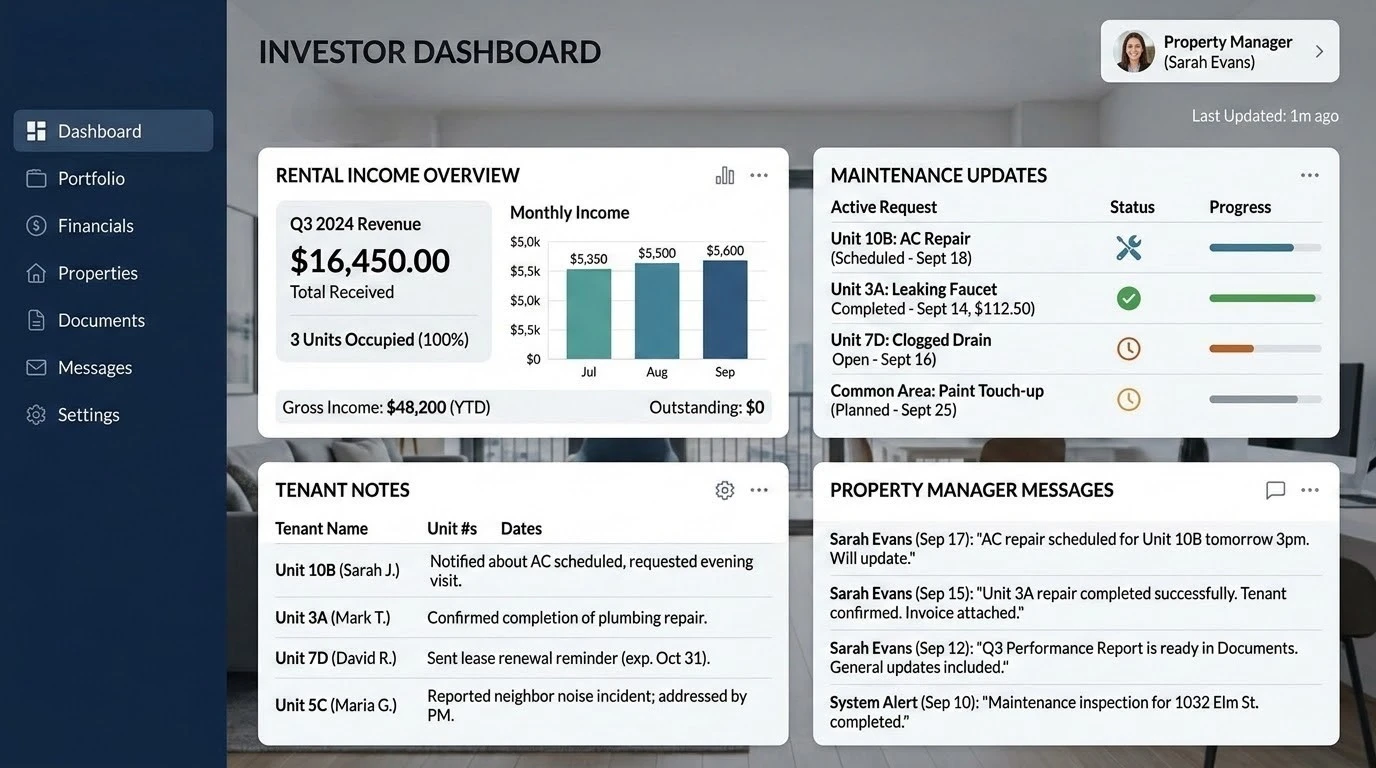
    By May 2026, the “passive” landlord model no longer works. High rental inventory, rising tenant expectations, and major legislative changes across Texas mean managing a Dallas-Fort Worth rental property now requires far more hands-on attention than it did just a few years ago.

    For North Texas investors, property management is now driven by technology, efficiency, legal compliance, and the tenant experience.

    Here is how the landscape has changed in 2026, and what Dallas-area landlords need to do to stay profitable.

    1. The Senate Bill 38 Changes

    Senate Bill 38 is one of the most significant legal changes affecting Texas landlords this year. Effective January 1, 2026, the law changes several parts of the state’s eviction process for cases filed on or after that date.

    Possession Takes Priority

    Eviction courts now focus more narrowly on possession rights. Claims that used to be bundled into eviction cases, such as damages or other disputes, generally need to be handled separately. This helps streamline the eviction process, but it also makes accurate documentation much more important.

    No More “Free” Appeals

    Under SB 38, tenants who appeal an eviction must continue depositing rent into the court registry during the appeal process. If payments are missed, the court may issue a writ of possession without another hearing. This makes it harder for occupants to delay the process without staying current on rent.

    Faster Service Timelines

    The law also tightens service timelines. A sheriff or constable must make a diligent effort to serve the citation and petition within five business days after the petition is filed. A writ of possession must also be served no later than the fifth business day after it is issued.

    What This Means for Landlords

    SB 38 can help landlords regain possession more efficiently, but it also raises the bar for compliance. Courts can still reject or delay a case if the lease file is incomplete, the rent ledger is inaccurate, notices are not delivered properly, or electronic communication terms are unclear. In 2026, clean and defensible documentation is essential.

    2. The Shift Toward AI-Driven Property Management

    Property management is moving from reactive to more predictive. Leading property management companies are using AI-driven systems to improve efficiency, reduce risk, and lower operating costs.

    Predictive Maintenance

    AI platforms can now analyze HVAC age, service history, maintenance frequency, water heater performance, and vendor repair data. These systems help identify equipment that may fail before it causes major damage. Replacing a failing water heater before it ruptures, for example, can prevent flooring damage, mold issues, and costly insurance claims.

    Smarter Tenant Screening

    Traditional screening focused heavily on credit scores. Today’s systems look at a wider set of signals, including rent-to-income consistency, employment stability, payment history trends, and prior rental patterns. The goal is not just to get someone in the door. It is to identify renters who are more likely to stay long term and reduce turnover costs.

    3. Competing in a High-Inventory Market

    Dallas-Fort Worth saw a major wave of multifamily and build-to-rent development in recent years. As a result, the region entered 2026 with elevated rental inventory and stronger competition for tenants.

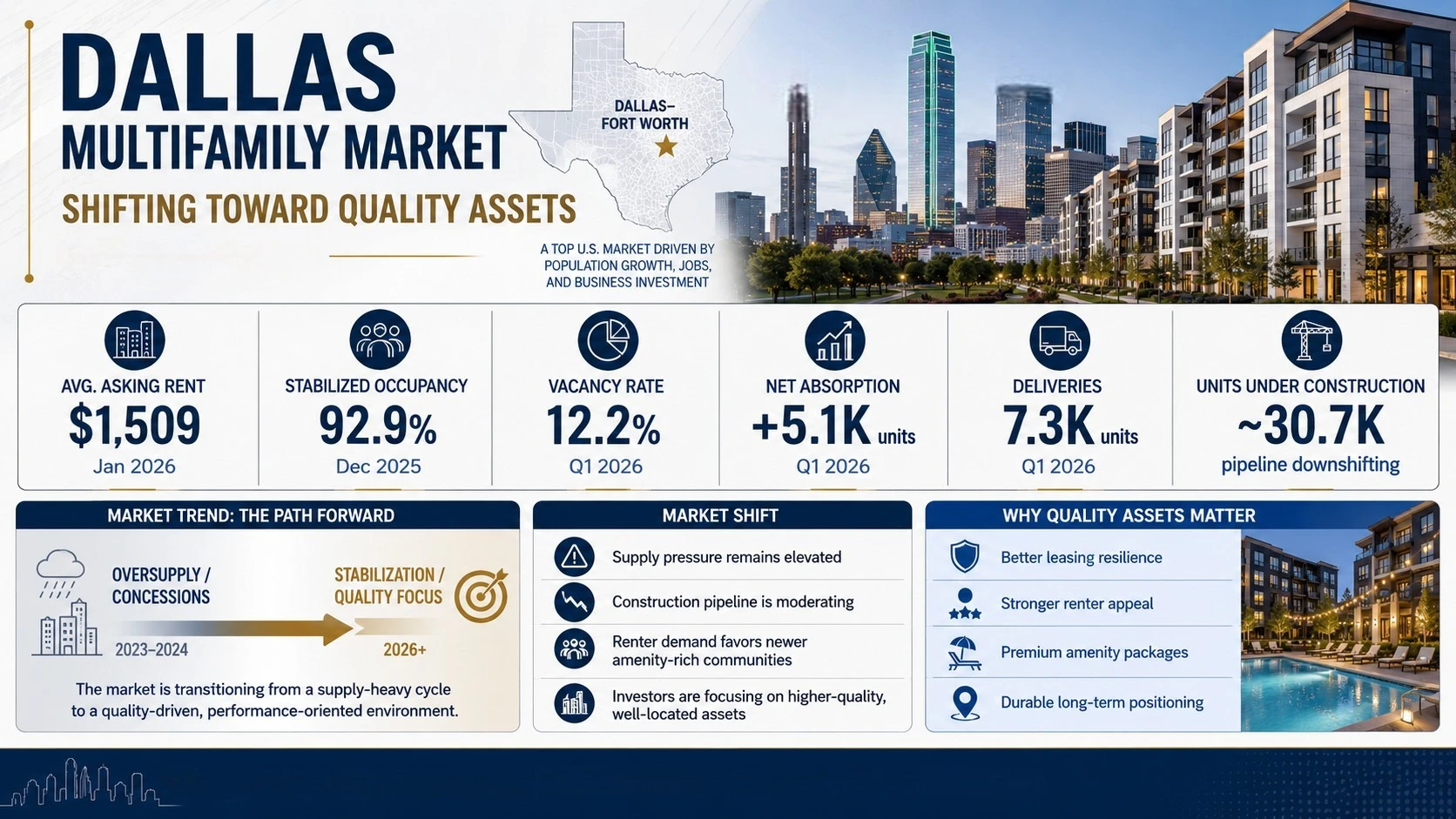
    Realtor.com reported that the DFW rental market remained renter-friendly, with the vacancy rate rising from 8.9% in 2024 to 10.5% in 2025. Other multifamily market reports have placed DFW multifamily vacancy closer to 12% in early 2026.

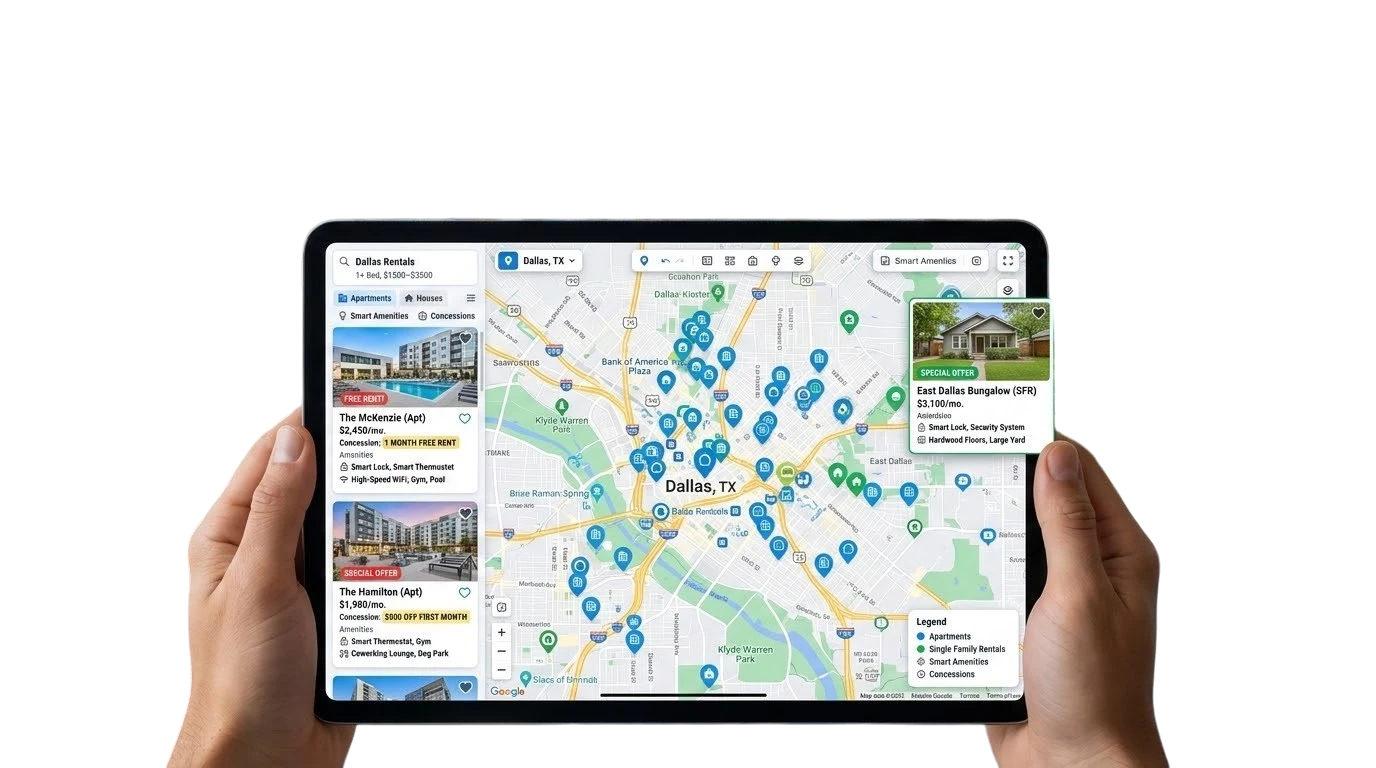
    That means single-family landlords are no longer competing only against other rental homes. They are also competing with institutional operators, luxury apartment communities, and build-to-rent communities offering concessions, reduced deposits, and amenity packages.

    Why Convenience Matters

    Successful landlords stand out by offering convenience. Features driving leasing activity right now include smart thermostats, keyless entry, high-speed internet readiness, dedicated work-from-home spaces, and online maintenance portals. Modern renters care about convenience and technology almost as much as square footage.

    4. Maintenance Is Now a Marketing Tool

    Prospective renters are more selective than ever. Small issues like leaky faucets, cracked screens, dirty HVAC vents, or peeling paint can quickly turn renters away. In today’s market, maintenance is part of your marketing strategy.

    Leading property managers are taking a higher-touch approach to maintenance, with faster response times, stronger vendor accountability, and clearer communication. Tenants increasingly expect hotel-style responsiveness, and meeting that expectation can directly affect tenant retention and online reputation.

    5. The Financial Outlook for 2026

    Although rent growth has slowed in parts of Dallas-Fort Worth, long-term fundamentals remain solid. The region continues to benefit from population growth, job creation, and strong demand for professionally managed housing.

    For investors focused on yield rather than rapid appreciation, submarkets such as Garland, Richardson, Irving, and parts of Arlington may still offer attractive opportunities. The key is accurate pricing, strong maintenance, and disciplined operations.

    2026 Average Monthly Rent Snapshot

    Property TypeAverage Monthly RentMarket Trend
    Studio$1,245–$1,350Stable to softening
    1 Bedroom$1,350–$1,413Softening
    2 Bedroom$1,849–$1,948Competitive
    3 Bedroom$2,214–$2,600Stronger demand

    While some luxury multifamily properties are still dealing with temporary softness from oversupply, demand for well-maintained single-family rentals remains resilient. This is especially true for homes in strong school districts, with functional layouts and professional management.

    Final Thoughts for Dallas Landlords

    Property management in 2026 is driven by systems, technology, accountability, and operational consistency. The most successful landlords price accurately, respond quickly, maintain properties proactively, and prioritize the tenant experience.

    Rental investing in Dallas-Fort Worth now depends on operating like a professional housing provider, not a casual property owner. For investors willing to adapt, the long-term opportunities across North Texas remain strong.

  • Texas Multifamily Real Estate in 2026

    When it comes to Texas real estate, Dallas and Austin usually get most of the attention. If a major sale makes headlines, it’s probably happening in one of those two metros. But the latest LoopNet report on 2026’s top multifamily markets suggests it may be time to broaden that focus.

    While national headlines often spotlight Washington, D.C., and Las Vegas, Texas investors should pay close attention to the affordability rankings. Out of the 50 largest U.S. cities, two Texas markets stand out as lower-cost entry points.

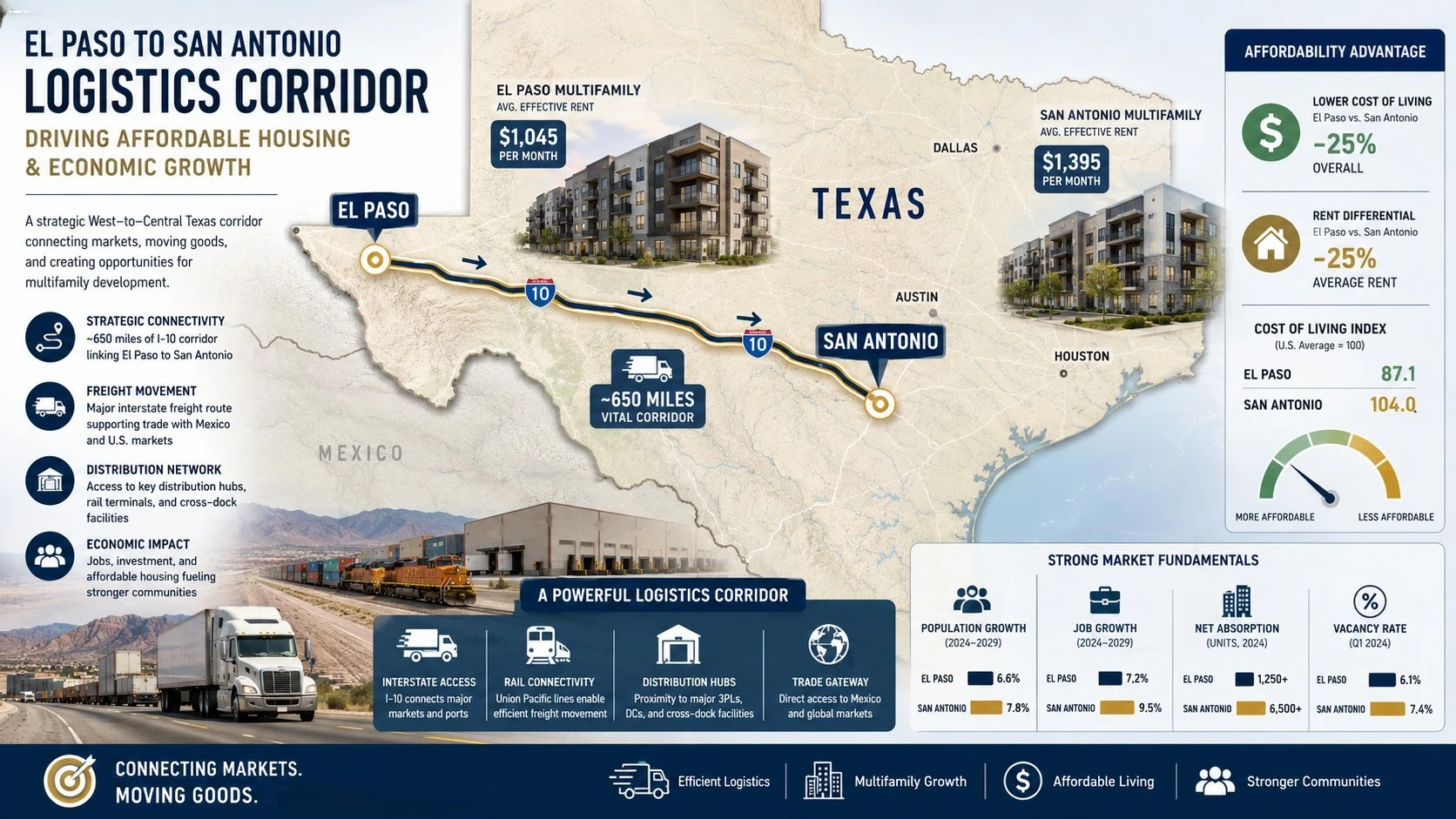
    Top Entry Points: El Paso and San Antonio

    LoopNet’s study weighed cap rates, property taxes, inventory, and lifestyle factors to compare investment potential. While yield-chasers may still look to Detroit for double-digit cap rates, investors looking for steady Texas markets and lower operating costs should keep El Paso and San Antonio on the radar.

    El Paso claimed the top national spot for affordability, with an average multifamily listing price of $631,250. This is not just a low-price land play. It is also tied to cross-border trade, logistics, and the broader nearshoring story. While uncertainty around trade policy remains a factor, El Paso is still well positioned to serve the workforce connected to the border’s logistics and industrial corridors.

    For a North Texas investor used to million-dollar teardowns in Preston Hollow, securing a cash-flowing asset for under $700,000 is hard to ignore.

    San Antonio also landed in the top five for affordability, with an average asking price of $1.29 million. San Antonio’s appeal goes beyond price. Projects like the $65 million Mira at the Pearl show continued investment in walkable, mixed-use neighborhoods, even as investors need to watch vacancy and concessions closely.

    The city offers big-city perks at a clear discount compared with Austin, though investors still need to underwrite vacancy and concessions carefully.

    The Dallas Shift: From Bargain Market to Quality Play

    So, with more affordable options in El Paso and San Antonio, is Dallas losing its edge?

    Not really. The era of cheap DFW real estate is mostly over, but 2026 data shows Dallas becoming a more mature market where location, asset quality, and tenant profile matter more than bargain pricing.

    The DFW metroplex still benefits from strong renter demand, but the market is also working through a large supply wave. Developers are not just building units. They are competing harder to fill them. Data shows that cities with strong lifestyle metrics, including easy park access and James Beard-recognized dining, tend to have stronger renter appeal. That is where Dallas still has an edge.

    With Harold Simmons Park moving forward and the continued draw of neighborhoods like Bishop Arts, these amenities can help support demand even as supply stays elevated. Dallas is no longer a simple value play. In 2026, it is better viewed as a quality-focused market for investors who want long-term appreciation and higher-income tenants.

    The 2026 Supply Reset

    One of the clearest takeaways from current market data is the supply reset. Pandemic-era construction created a heavy wave of deliveries in 2024 and 2025, but that pipeline is starting to thin.

    Completions are dropping. The U.S. is expected to see fewer new multifamily deliveries in 2026 as construction starts slow and the under-construction pipeline shrinks.

    Concessions are still in play. Austin and Dallas have seen heavy rent concessions, including six to eight weeks of free rent in many Texas submarkets. If demand keeps catching up and supply keeps cooling, those deals could become less common.

    The window to buy into a softer market may not stay open forever. With fewer new units delivering, well-located Class B and C assets in San Antonio and El Paso could see stronger rent growth in 2027 and 2028, especially if investors buy at a disciplined basis today.

    Portfolio Diversification for North Texas Investors

    For North Texas investors, this data points to a practical diversification strategy.

    Even if you are priced out of your local 8-plex market, San Antonio and El Paso offer a way to stay under familiar Texas regulations while chasing better yield-on-cost. In El Paso, cap rates can still run meaningfully higher than what most investors see in the Dallas urban core.

    Property taxes remain a hot topic. They may be higher than Denver’s 0.44%, but the lack of state income tax and broad inventory still make Texas attractive for many investors compared with coastal markets like Boston or San Francisco.

    In El Paso specifically, multifamily real estate is closely tied to the industrial and logistics story. Targeting assets near last-mile distribution centers and employment corridors is a smart place to start in 2026.

    The Long View on Texas Real Estate

    There is plenty of upside in Texas multifamily, but the best move depends on your strategy. If you want stability, strong tenant demand, and exposure to a major Sun Belt market, Dallas is the clear choice. If you want to scale your portfolio cost-effectively, it is worth looking closely at El Paso and San Antonio.

    For investors, the story comes down to basis, cash flow, and demand.. Based on the 2026 data, the future of Texas multifamily still looks strong, but the better story is its range. Dallas, San Antonio, and El Paso give investors very different ways to play the same state.

  • How Everyday Renovations Can Change Your Financial Future

    Home renovations are often viewed as simple lifestyle upgrades. A brighter kitchen, more storage, or a modern bathroom can certainly improve daily comfort. But beyond looks and convenience, strategic renovations can also shape your long-term financial future in meaningful ways.

    A well-maintained and updated home tends to hold its value better over time. Thoughtful improvements can increase property value, reduce ongoing expenses, and strengthen your overall financial stability. The key is understanding which upgrades create lasting returns instead of just chasing short-lived trends.

    Not every renovation requires a massive budget. Everyday improvements, done steadily and with a clear purpose, can have a surprisingly strong financial impact.

    Over time, these projects can help you build equity, lower utility costs, and create more flexibility for future goals.

    Using Renovations as a Financial Strategy

    Many people think of investing only in stocks, retirement accounts, or businesses. Yet a home is often one of the largest financial assets a person owns. Improving that asset can be a practical and steady way to support long-term wealth building.

    Unlike luxury spending, strategic renovations often serve multiple purposes at once. They improve function, protect the home’s structure, and increase market appeal. Even modest upgrades can contribute to a higher resale value when done carefully.

    For example, replacing aging windows may reduce heating and cooling costs. Updating worn flooring can improve durability and attract future buyers. Improving curb appeal may create a stronger first impression that directly impacts market value.

    The real difference comes down to intention. Renovations focused purely on personal taste may not always generate strong returns. Improvements that enhance efficiency, livability, and maintenance tend to provide better financial outcomes over time.

    Energy Efficiency Leads to Ongoing Savings

    One of the most overlooked financial benefits of home renovations is reduced monthly spending. Energy-efficient upgrades can lower utility bills year after year, creating savings that add up over time.

    Simple projects can make a noticeable difference:

    • Adding insulation
    • Installing energy-efficient windows
    • Replacing outdated appliances
    • Upgrading HVAC systems
    • Switching to LED lighting

    These upgrades cut down on energy waste while making your home more comfortable. According to the U.S. Department of Energy, energy-efficient upgrades can significantly cut household energy consumption and lower annual costs.

    Lower monthly bills free up cash flow. That extra breathing room can help you save more aggressively, pay down debt, or plan for future financial goals.

    While smaller utility bills may not feel dramatic at first, the long-term effect becomes substantial over several years.

    Routine Maintenance Prevents Expensive Setbacks

    Preventive renovations are not always exciting. A roof replacement rarely generates the same enthusiasm as a kitchen remodel. Still, maintenance-focused improvements often protect homeowners from much larger financial burdens later.

    Ignoring small problems can lead to major structural damage. Water leaks, aging electrical systems, or foundation issues tend to worsen over time. Repair costs usually increase the longer these problems go unaddressed.

    Taking care of maintenance early helps you:

    • Avoid emergency repair expenses
    • Preserve home value
    • Reduce insurance risks
    • Improve long-term property durability

    A well-maintained property also performs better during resale evaluations and inspections. Buyers often pay closer attention to signs of proper upkeep than just decorative finishes.

    Financial stability is not built only through growth. It’s also built by reducing preventable losses.

    Kitchen and Bathroom Upgrades Deliver Strong Returns

    Certain renovation areas consistently influence resale value more than others. Kitchens and bathrooms remain among the most financially impactful spaces in a home.

    That doesn’t mean you need an expensive luxury remodel. In many cases, moderate updates produce stronger returns than overly customized renovations.

    Practical improvements may include:

    Kitchen Improvements

    • Replacing outdated countertops
    • Installing modern cabinet hardware
    • Updating lighting fixtures
    • Adding energy-efficient appliances
    • Improving storage functionality

    Bathroom Improvements

    • Replacing worn fixtures
    • Updating tile surfaces
    • Improving ventilation
    • Installing water-efficient features
    • Enhancing lighting and mirrors

    According to the National Association of Realtors, kitchen and bathroom improvements continue to rank among the most desirable updates for buyers.

    Clean, functional, and modern spaces tend to appeal to a wider range of buyers while helping homeowners enjoy the space right now.

    Building Home Equity With Smart Renovations

    Every meaningful improvement has the potential to contribute to home equity growth. As a property’s value increases and mortgage balances decrease over time, you gain greater financial flexibility.

    This built-up equity can become an important financial tool later in life. Some homeowners use accumulated value to fund additional renovations, consolidate higher-interest debt, or cover major life expenses through a home equity loan when appropriate for their financial situation.

    Not every renovation increases equity equally. Projects with broad appeal and practical function generally offer stronger returns than highly personalized upgrades. Expanding usable living space, improving energy efficiency, and maintaining structural quality often contribute positively to long-term value.

    Equity growth is rarely instant. It develops gradually through consistent maintenance, responsible ownership, and strategic improvement decisions.

    Curb Appeal Influences Property Value More Than You Might Realize

    Exterior improvements are frequently underestimated, but first impressions can strongly affect perceived value.

    A neglected exterior may discourage buyers before they even enter the home. On the other hand, simple curb appeal improvements can make a property feel well cared for and inviting.

    High-impact exterior projects often include:

    • Fresh exterior paint
    • Landscaping improvements
    • Updated front doors
    • Pressure washing surfaces
    • Improved outdoor lighting
    • Driveway or walkway repairs

    These projects are often less expensive than major interior renovations but can still provide meaningful value. In competitive housing markets, visual presentation matters.

    Even homeowners with no immediate plans to sell can benefit. A well-maintained exterior helps preserve the home’s condition while supporting neighborhood value standards.

    Functional Space Adds Real Financial Potential

    Modern buyers often prioritize functionality over sheer size. Homes that use space efficiently tend to attract stronger interest and broader appeal.

    Renovations that improve usability may include:

    • Multipurpose Living Areas: Flexible rooms that function as offices, guest spaces, or workout areas appeal to changing lifestyle needs.
    • Storage Enhancements: Built-in shelving, pantry upgrades, and organized closets increase convenience and reduce clutter.
    • Finished Basements or Attics: Unused square footage can become valuable living space when renovated properly.
    • Outdoor Living Areas: Decks, patios, and usable backyard spaces can expand functional living areas without major structural additions.

    The way a home functions can directly influence its perceived value. Buyers increasingly look for practical layouts that support everyday life efficiently.

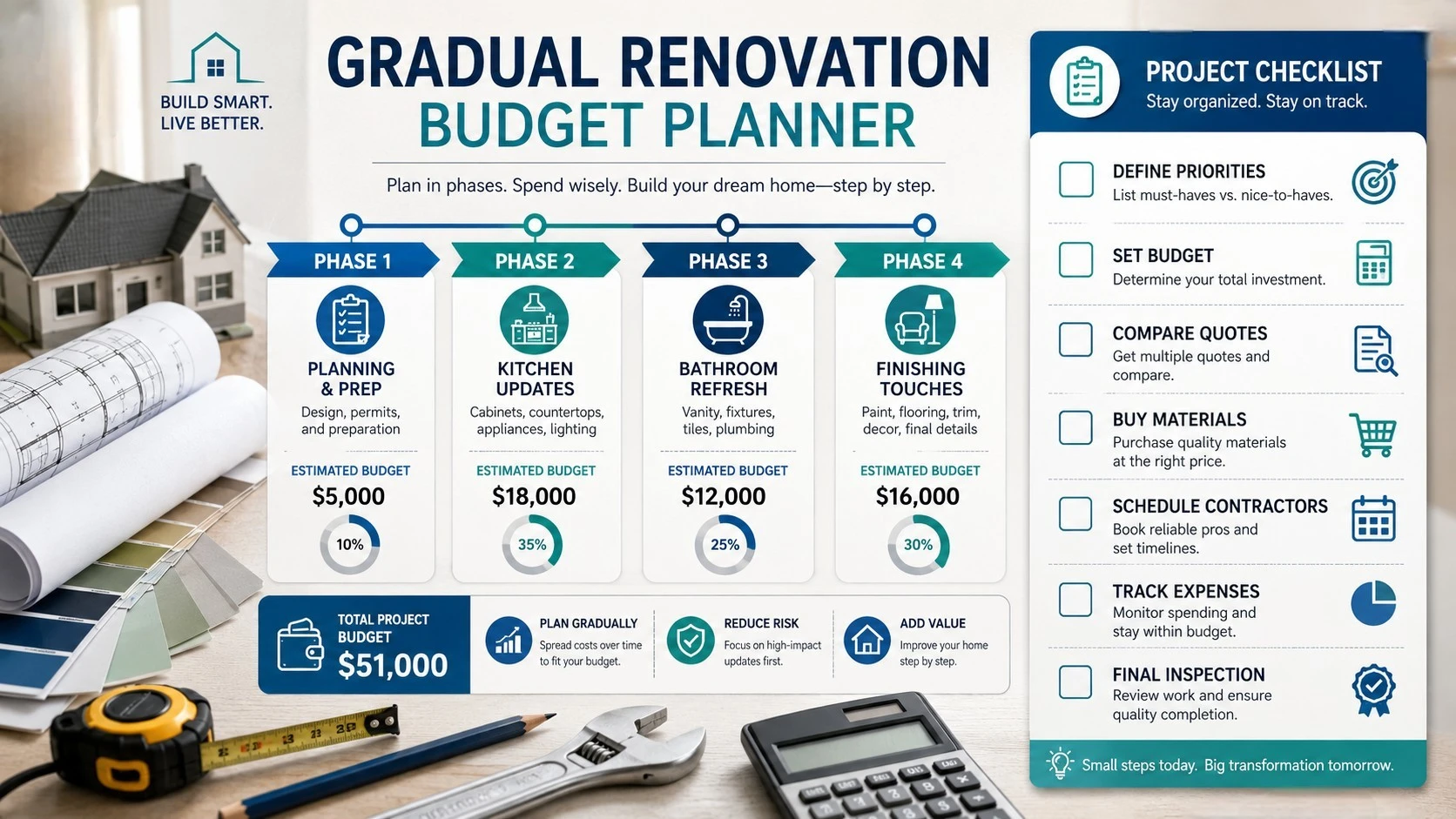
    Renovating Gradually Reduces Financial Pressure

    Large-scale renovations are not always necessary. In fact, phased improvements are often financially smarter for many homeowners.

    Taking on smaller projects over time may help you:

    • Avoid excessive debt
    • Plan upgrades more carefully
    • Adjust budgets gradually
    • Prioritize high-return improvements
    • Reduce renovation-related stress

    A gradual approach also allows you to evaluate market conditions and changing needs before committing to larger expenses.

    Financial progress rarely happens overnight. Consistent improvements, even modest ones, often produce more sustainable long-term outcomes.

    The Emotional and Financial Connection

    A home affects more than just your finances. Comfortable, functional living spaces can improve your overall quality of life, reduce stress, and create a greater sense of stability.

    That emotional connection often supports better financial habits as well. People tend to take better care of spaces they value, and they may also become more intentional about long-term planning when they view their home as a lasting investment rather than a temporary expense.

    Renovations that improve organization, efficiency, and comfort can indirectly support productivity and financial confidence. While these benefits are harder to measure numerically, they still matter.

    A home that works well for everyday life often supports stronger decision-making in other areas, too.

    The Bottom Line

    Everyday renovations are about more than appearance. When approached strategically, they can become part of a broader financial plan that supports stability, efficiency, and long-term value growth.

    Small improvements made consistently over time often create meaningful results. Lower utility costs, reduced maintenance risks, increased property value, and growing equity can all contribute to a stronger financial future.

    The most effective renovations are usually practical rather than flashy. They focus on durability, functionality, and long-term performance instead of short-term trends.

    Over time, those steady improvements can transform not only a home but also the financial opportunities connected to it.

  • Evaluating Distressed Properties in Tuscaloosa

    Cash home buyers in major cities have it relatively easy. There’s a constant flow of comparable sales, a deep bench of contractors, and enough buyer demand that almost any flipped or rented property will move. But once you step outside those metros and look at local Alabama markets, the math changes in ways that catch a lot of investors off guard.

    Cities like Tuscaloosa aren’t sleepy markets, but they aren’t Dallas, either. Buying distressed property here requires a different evaluation process. The cash buyers who make money consistently in these areas have learned to adjust their approach.

    Here’s what actually happens when an experienced buyer pulls up to a tired single-family home.

    Finding the Right After-Repair Value (ARV)

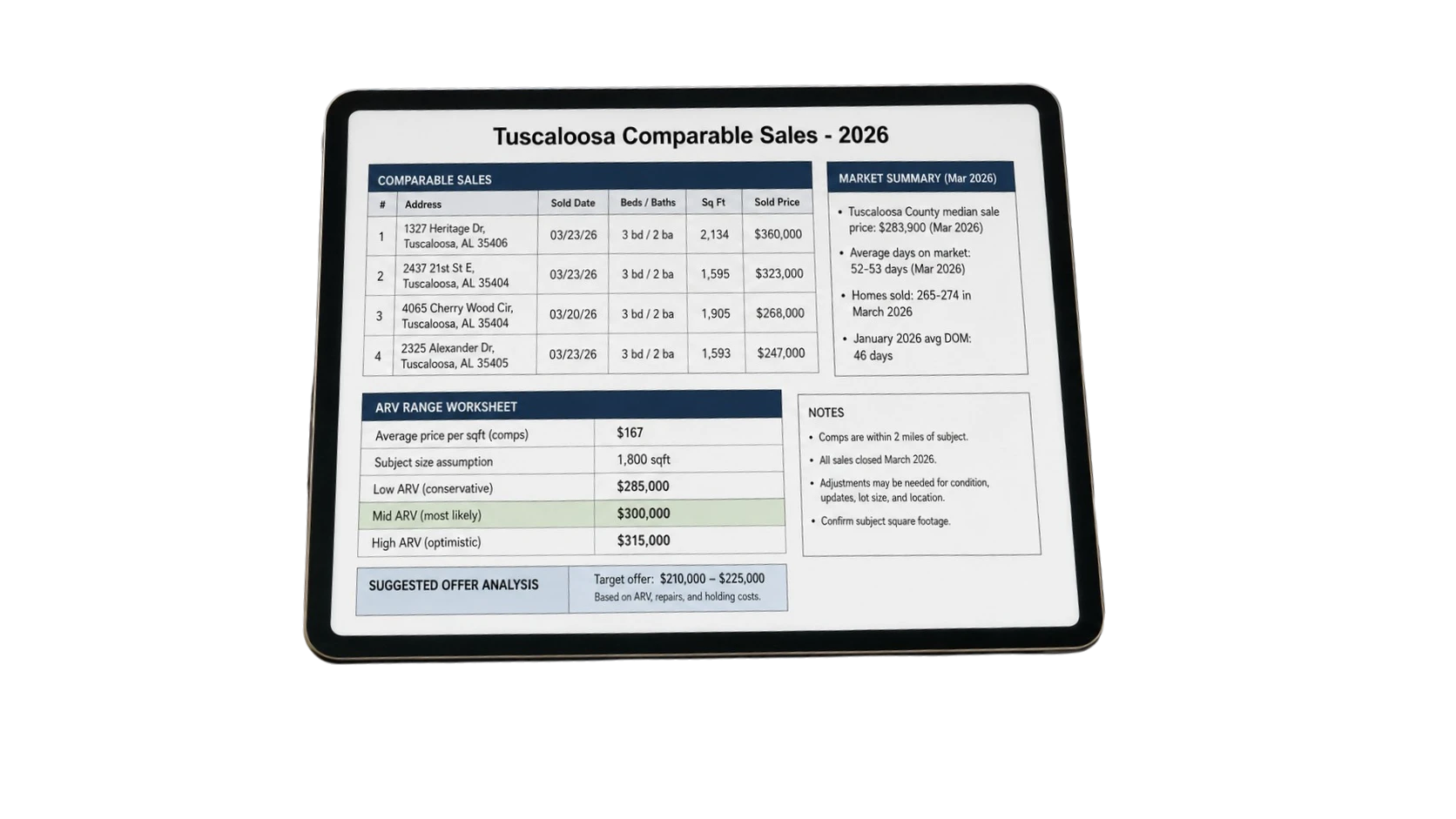
    you can pull six or eight closed sales within half a mile that perfectly match the subject property’s bed count, bath count, square footage, and condition. In a local market, you might find two—and one of them likely sold to a relative for $40,000 under market value.

    This is the first place inexperienced buyers go wrong. They treat thin comp sets the same way they treat a stack of clean Atlanta data, leading to an after-repair value that is wishful thinking at best.

    Seasoned cash buyers learn to expand their search radius carefully. They weigh comps by recency rather than just proximity and discount sales that look like outliers. They also pay close attention to days on market (DOM) for renovated properties. A flipped house in Tuscaloosa or Northport that sat for 110 days tells a very different story than the exact same house selling in 18 days.

    The buyers who consistently profit in these markets use a range rather than a point estimate. Instead of insisting a house will sell for $185,000 after repairs, they set a realistic range of $170,000 to $195,000, and build their offer off the bottom of that range. That cushion is what keeps them from getting burned when a deal goes sideways.

    Estimating Repairs with Local Alabama Contractors

    In a city like Houston or Dallas, an investor can call 50 different contractors and get a roof bid by tomorrow. In Tuscaloosa, you might know three reliable general contractors, and two of them are booked for the next four months.

    That limited labor pool affects two big things:

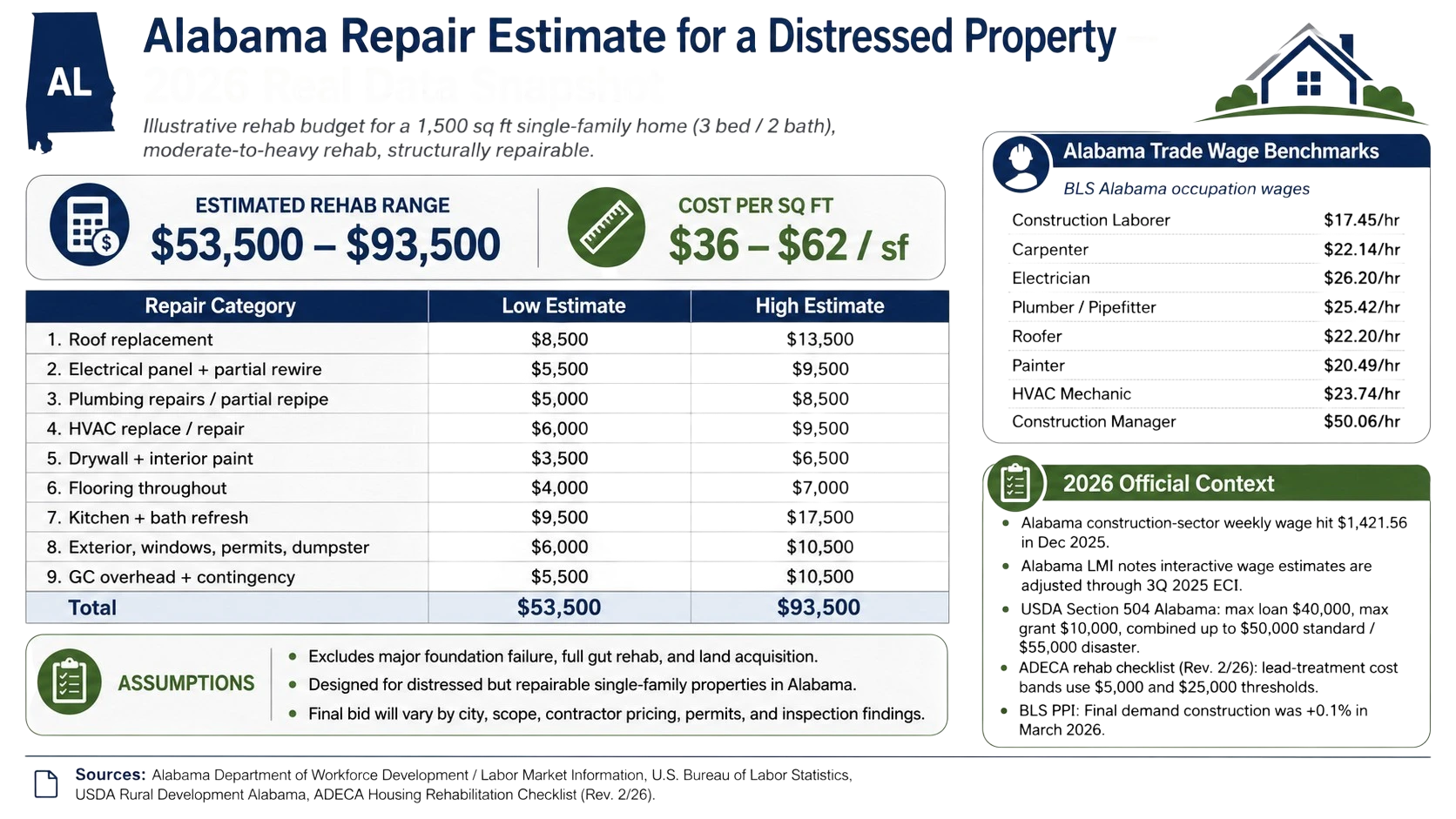
    • Costs: Repair costs in local markets aren’t always cheaper than in major metros. Material prices are roughly the same everywhere, and labor in tight Alabama markets can actually run higher because there isn’t as much competition.
    • Timelines: Project schedules stretch out. A renovation that takes six weeks in Birmingham might take 14 in a surrounding neighborhood because subcontractors only show up on Tuesdays and Thursdays.

    Smart cash buyers build padding into both of these numbers. They estimate repairs on the high side, add a 15% to 20% contingency for surprises, and factor extra months of holding costs into their underwriting. A cheap-looking deal that pencils at $25,000 in repairs and a two-month hold often morphs into a $38,000 project and a five-month hold, until the spread is gone.

    Experienced buyers also walk the property differently. They don’t just check for visible cosmetic issues. They crawl under the house, inspect the electrical panel, look for signs of water intrusion in the attic, and test whether the HVAC actually cycles.

    How Local Demand Patterns Drive the Offer

    A distressed property in a major metro almost always has an exit strategy. Worst case, you wholesale it. Second worst, you rent it. The market is deep enough that something will work.

    Outside major metros, exit strategies are narrower and heavily dependent on micro-conditions. A three-bedroom ranch in the college town of Tuscaloosa has a very different buyer pool than the same house 30 miles away in a county seat with a declining population.

    Companies like the cash home buyers in Tuscaloosa who actually live and work in these markets understand which neighborhoods are appreciating because of university expansion, which subdivisions appeal to young families relocating for jobs, and which streets have buyer demand that simply doesn’t exist two blocks over.

    That kind of local pattern recognition is hard to replicate from a spreadsheet. It’s exactly why out-of-state investors attempting to buy remotely in Alabama often underperform compared to local buyers, who know that a single elementary school redistricting decision can swing property values 15% on a specific street.

    When evaluating a distressed property, smart buyers ask: Who is the realistic end buyer, and how many of them exist in this specific submarket right now? If the target is an FHA buyer between $180,000 and $220,000 with decent credit, investors need to know if that buyer pool is shrinking or growing. If it’s shrinking, the offer comes down, regardless of what the comps say.

    Pricing in Local Market Risks

    The biggest difference between metro and non-metro evaluations comes down to how cash buyers handle risk. In a deep market, if your renovation runs long or the buyer pool softens, you drop the price by 2% and the property still sells. In a local market, those same conditions can mean the property sits untouched for six months.

    Experienced buyers price this risk upfront. They run their numbers with a bigger downside case, model what happens if they are forced to rent the property for a year, and only move forward if the deal still works under those stressed assumptions. As a result, their offers are often a lower percentage of the asking value than what a comparable metro buyer might offer. This isn’t out of greed; it’s because the downside scenarios are genuinely more painful.

    Insurance and tax situations carry more weight here, too. A fire-damaged home in Tuscaloosa County might face higher future insurance costs or be hard to insure at all. A property in a flood-prone neighborhood near the Black Warrior River might require flood insurance that cuts into rental returns. These aren’t necessarily deal-killers, but they must be priced into the initial offer rather than discovered after closing.

    Selling Your Tuscaloosa Home for Cash

    Cash buyers who consistently win outside major metros aren’t smarter than their big-city counterparts, they are just more disciplined about acknowledging what they don’t know and pricing accordingly. They rely on conservative ARV ranges, padded repair estimates, realistic timelines, and risk-adjusted offers that reflect the realities of narrower exit options.

    For homeowners selling distressed property in Tuscaloosa, that matters. The cash offer you receive isn’t arbitrary. It comes from a specific calculation around comps, repairs, holding costs, and the real difficulty of moving the property after the work is done. Understanding that math helps you evaluate whether a specific offer is fair, a lowball, or actually pretty reasonable given the risks the buyer is taking on.

  • Murphy Bed Safety Tips: What Every Homeowner Should Know

    Murphy beds are a smart space-saving solution. But like any piece of furniture, they also have a few safety basics you shouldn’t ignore.

    Whether you’ve had one for years or are considering buying one, knowing how to use it safely can make a real difference. A few simple habits can prevent accidents and keep your bed working smoothly for years.

    Why Murphy Bed Safety Matters

    Most people assume Murphy bed safety is straightforward. It isn’t always.

    These wall beds store neatly against the wall, which means they rely on moving parts, hinges, and sometimes heavy hardware to operate. When something goes wrong, it usually happens fast. A poorly maintained bed can tip, fall, or trap someone unexpectedly. Murphy beds aren’t dangerous by nature, but the basics still matter. A safe Murphy bed comes down to how it’s installed and how it’s used.

    Top Murphy Bed Safety Tips for Homeowners

    Follow the Murphy Bed Installation Process

    A Murphy bed that isn’t anchored correctly is a safety risk from day one. These beds are designed to be practical and space-efficient, but only when they’re set up properly.

    • Always mount the unit into wall studs, not just drywall.
    • Use the hardware that comes with the bed, not substitutes.
    • If you’re not confident doing it yourself, hire a professional.
    • Double-check all bolts and anchors before using the bed for the first time.

    Proper installation is what separates a safe bed from a hazard. Don’t rush it.

    Check Your Hardware Regularly

    Even a well-installed Murphy bed needs a quick check every now and then. Hinges loosen, springs wear out, and pistons can lose tension over time.

    Set a reminder every few months to:

    • Tighten any loose screws or bolts.
    • Inspect the piston or spring mechanism for signs of wear.
    • Look for cracks or warping in the frame.
    • Make sure the locking mechanism still engages properly.

    Catching a small issue early is much easier than dealing with a big one later.

    Choose a High-Quality Bed From the Start

    Not all Murphy beds are made the same. Cheaper units often use thinner materials and weaker hardware, which can become a safety issue over time.

    Brands like Lori Beds specialize in custom Murphy beds made with sturdy hardware and easy-to-use mechanisms. Whether you’re furnishing a studio apartment or a guest room, their wall beds are crafted to maximize floor space without cutting corners on safety or build quality. Investing in a solid bed upfront is almost always cheaper than dealing with repairs or replacements later.

    Make Sure Everyone Knows How to Use It

    This is especially important if you have kids or older family members at home. A Murphy bed isn’t complicated, but it does need to be handled the right way.

    Make sure everyone knows to:

    • Never yank the bed down quickly. Lower it slowly and carefully.
    • Keep hands and feet clear of the hinges when opening or closing.
    • Wait until the bed is fully lowered before climbing on.
    • Always engage the lock when the bed is upright.

    A quick five-minute walkthrough can prevent a lot of unnecessary accidents. These small steps are what keep Murphy beds safe in everyday use.

    Keep Weight Limits in Mind

    Every Murphy bed has a maximum weight capacity. Going over that limit puts stress on the frame and the wall mount, which can lead to structural failure over time.

    • Check the manufacturer’s specs for your specific model.
    • Don’t store heavy items inside the bed cabinet.
    • If two people are sleeping on it, make sure the combined weight is within range.

    This rule is easy to overlook, but it matters more than most people realize.

    Fold the Bed Up When Not in Use

    Murphy beds are designed to store upright against the wall.

    Leaving yours down for long periods can:

    • Put unnecessary strain on the mounting system.
    • Take up valuable space in smaller rooms.
    • Accelerate wear on the lifting mechanism.

    Get in the habit of folding it up each morning. It takes less than a minute.

    A Note on Horizontal Murphy Beds

    Horizontal Murphy beds fold down sideways instead of vertically. They’re popular in rooms with low ceilings, but they come with their own set of considerations. Make sure the wall it’s attached to can support the mount, and always check that the locking system is secure before use. The same installation rules apply.

    Final Thoughts

    Murphy beds are practical, space-saving, and genuinely useful in the right home. But they work best when you treat them with proper care.

    Follow the Murphy bed safety tips above, do occasional maintenance checks, and make sure everyone in the house knows how to use it properly. A well-installed Murphy bed made with quality materials can serve a household for years without major issues.

  • How Plumbing Services Can Improve Property Value in Georgetown

    In Georgetown’s competitive real estate market, the difference between a property that sells quickly and one that lingers often comes down to details most buyers never see until something goes wrong. Plumbing systems, hidden behind walls and beneath floors, are one of the most overlooked factors in a home’s value and appeal.

    Good plumbing does more than prevent costly leaks. It shows buyers that a property has been cared for, helps avoid surprises during the inspection, and eases concerns about aging systems. For Georgetown homeowners and investors, maintaining your plumbing isn’t just about avoiding problems. It’s about giving your property an edge in a market where buyers have options.

    Here is how local plumbing professionals can help you protect and increase your home’s value, from routine upkeep to upgrades that can deliver a solid return on investment.

    Why Local Georgetown Plumbing Expertise Matters

    Georgetown’s location in Central Texas brings specific plumbing challenges that require local knowledge. The area’s hard water, with its high mineral content from the Edwards Aquifer, can accelerate fixture wear and tear and pipe scaling. Seasonal temperature swings, while mild compared with northern climates, still cause pipes to expand and contract, adding stress to plumbing connections.

    Local plumbers offer several clear advantages:

    • Local code knowledge: Georgetown follows specific amendments to the International Plumbing Code, and local plumbers navigate these requirements daily, ensuring work passes inspection without delays.
    • Water quality expertise: Understanding how Central Texas water chemistry affects different pipe materials and fixtures allows for better material selection and preventive maintenance.
    • Faster response times: When a water heater fails or a pipe bursts, every hour matters. Local contractors can typically respond within hours instead of days, minimizing water damage and repair costs.
    • Community accountability: In a community the size of Georgetown, reputation matters. Local plumbers maintain quality standards because their business depends on community trust.

    Core Services That Protect Your Property Value

    Professional plumbing services in Georgetown go well beyond emergency repairs. The services that can do the most for your home’s value include:

    • Leak detection and repair: Modern leak detection technology can find hidden water loss before it causes structural damage. Even minor leaks can waste thousands of gallons a year and create conditions for mold growth that can derail a home sale.
    • Repiping and updating infrastructure: Properties built before 1990 often contain galvanized steel pipes prone to corrosion, or polybutylene pipes known for premature failure. Updating your system with PEX or copper removes these risks.
    • Drain system maintenance: Professional hydro-jetting removes accumulated scale and debris that can slow drainage and create backup risks. This preventive service extends the life of your system and helps prevent emergencies during showings or inspections.
    • Water heater upgrades: Whether you’re repairing an existing unit or upgrading to a tankless system, proper water heater maintenance ensures consistent performance while reducing energy costs, a selling point increasingly important to buyers.

    These services address the kinds of risk factors that professional home inspectors flag during real estate transactions. Properties with documented maintenance records and recent upgrades can give sellers stronger leverage in negotiations.

    The Maintenance Advantage: Prevention Is Key

    The National Association of Home Builders estimates that plumbing systems have varying lifespans depending on materials and maintenance quality. Regular professional maintenance can extend those timelines while providing documentation that reassures buyers and appraisers.

    Routine maintenance offers practical benefits:

    • Cost savings: Annual inspections typically cost $150 to $300 but can identify issues that would cost thousands to repair after failure. The return on investment becomes obvious when a $200 inspection prevents a $5,000 water damage claim.
    • System longevity: Properly maintained water heaters often last 12 to 15 years versus 8 to 10 for neglected units. Similar extensions apply to fixtures, pipes, and drainage systems.
    • Sustained efficiency: Scale buildup and small leaks can reduce system efficiency by 15% to 30% over time. Regular maintenance helps preserve performance and keeps utility costs predictable.
    • Lower insurance rates: Some insurers may offer premium reductions for properties with documented maintenance programs, and your claims history directly affects both insurability and rates.
    • Better negotiation leverage: Sellers with maintenance records negotiate from a stronger position, while buyers facing deferred maintenance typically demand concessions or walk away entirely.

    For Georgetown property owners, building a relationship with a reliable service provider—whether through Quality Cooling Heating & Plumbing’s plumbing division, creates a documented maintenance history that adds credibility during real estate transactions.

    High-Impact Upgrades: Kitchens and Bathrooms

    Real estate professionals consistently identify kitchens and bathrooms as the rooms that most influence buyer decisions and property values. While cosmetic updates catch the eye, the underlying plumbing determines whether those updates function reliably.

    Smart plumbing upgrades in these spaces include:

    • Modernizing fixtures: Replacing builder-grade faucets, showerheads, and sinks with mid-range contemporary fixtures typically costs $800 to $2,000 per bathroom but can return 70% to 100% of your investment while making spaces feel updated.
    • Water efficiency: Low-flow toilets, aerated faucets, and efficient showerheads reduce water use by 30% to 50% without sacrificing performance. These upgrades appeal to environmentally conscious buyers and reduce operating costs.
    • Supply line replacement: Upgrading from old galvanized lines or deteriorated copper supply lines to PEX eliminates corrosion risks and improves water pressure, a common complaint in older Georgetown homes.
    • Smart home integrations: Leak detection systems, automatic shutoff valves, and smart water monitors provide both convenience and protection. These systems appeal to tech-savvy buyers and can reduce insurance premiums.

    According to Remodeling Magazine’s Cost vs. Value Report, bathroom remodels that include plumbing updates can return 60% to 70% of their cost in increased home value, with higher returns in competitive markets like Georgetown where buyer expectations run high.

    How to Choose the Right Plumbing Contractor

    The quality of plumbing work directly affects both immediate functionality and long-term property value. Selecting a contractor requires more diligence than simply comparing quotes.

    When hiring a plumber, look for:

    • Licensing and insurance: Texas requires plumbers to be licensed, and reputable contractors carry both liability insurance and workers’ compensation coverage. Ask for proof and verify coverage directly with insurers.
    • Specialized experience: General plumbing skills are not the same as expertise in specific areas like repiping, water heater installation, or fixture upgrades. Match the contractor’s experience to your project requirements.
    • Quality references: Request references from projects similar in scope and age. Recent reviews matter more than volume, and patterns in feedback reveal more than individual complaints.
    • Transparent estimates: A detailed written estimate that itemizes materials, labor, and timelines demonstrates professionalism. Vague quotes or pressure for immediate decisions signal potential problems.
    • Clear communication: Contractors who respond promptly, explain options clearly, and document agreements in writing typically deliver better outcomes than those who rely on verbal understandings.

    For property owners planning renovations or addressing deferred maintenance, investing time in contractor selection pays off through better work quality, fewer scheduling issues, and stronger final results.

    Practical Maintenance Tips for Property Owners

    While complex plumbing work requires professional expertise, property owners can handle routine maintenance tasks that prevent common problems and extend the life of their system.

    Effective DIY maintenance includes:

    • Drain care: Monthly treatments with enzyme-based cleaners can help prevent buildup without the pipe damage caused by chemical drain cleaners. For slow drains, a baking soda-and-vinegar treatment followed by hot water can often clear minor clogs.
    • Faucet repairs: Dripping faucets waste water and signal worn washers or cartridges. Most faucet repairs require only basic tools and replacement parts available at hardware stores.
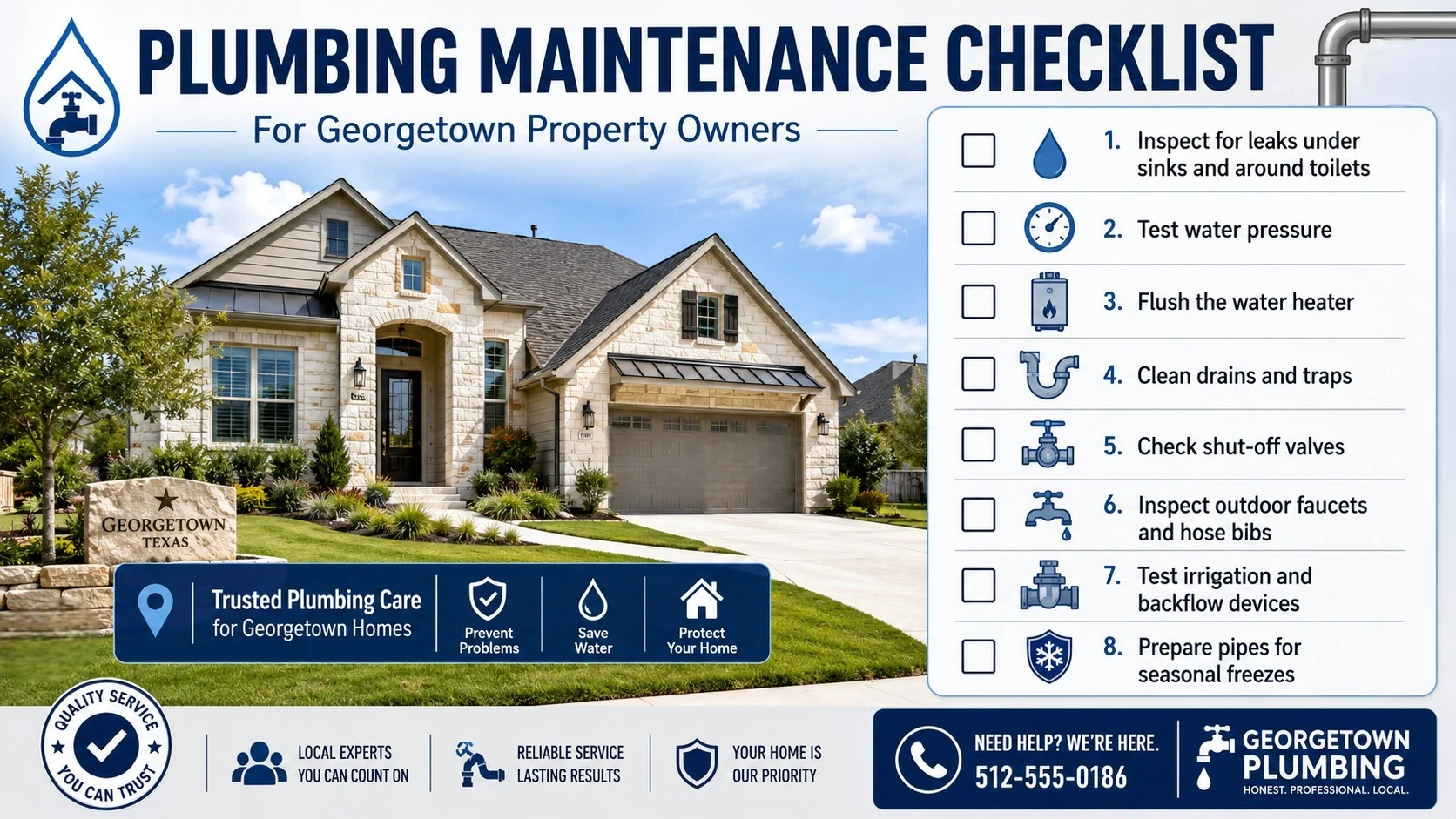
    • Toilet maintenance: Running toilets typically need a flapper replacement, a simple fix that stops water waste. Testing with food coloring in the tank reveals leaks that are not obvious right away. To learn more, check out this detailed checklist.
    • Aerator cleaning: Mineral deposits reduce water pressure and flow. Removing and soaking aerators in vinegar dissolves buildup and restores performance.
    • Water heater flushing: Annual sediment flushing extends a water heater’s life and maintains efficiency. This straightforward process requires only a garden hose and basic instructions.

    These maintenance tasks, while simple, demonstrate property care and prevent minor issues from escalating into expensive repairs.

    Plumbing Is an Investment

    Georgetown’s real estate market rewards properties that combine aesthetic appeal with functional reliability. Plumbing systems, while largely invisible, are a significant component of that reliability equation.

    Professional plumbing services deliver value in a few key ways. They prevent major leaks that damage property and disrupt sales, create documentation that reassures buyers and appraisers, and enable upgrades that make daily life better. They also help maintain an efficient system, reducing operating costs, which is a major selling point for value-conscious buyers.

    For property owners focused on long-term value, establishing a relationship with qualified local plumbers isn’t an expense. It’s a strategic investment in asset protection. Whether you’re addressing immediate needs or planning upgrades, professional plumbing services provide the foundation for a property that performs reliably and can command a stronger price in Georgetown’s competitive market.