Tag: UAE Property

  • Abu Dhabi vs. Dubai: Where to Invest in a Villa in 2026

    Choosing between a villa in Dubai or Abu Dhabi in 2026? It all comes down to your game plan. Dubai is the go-to if you want an easy exit strategy later on and want to tap into that massive Airbnb crowd. Abu Dhabi, though, gives you way more house for your money, less stress about overbuilding, and makes for a rock-solid, buy-and-hold investment. Definitely weigh your options before writing that check.

    Dubai recorded more than 45,000 home sales just in the first quarter of 2026, and Abu Dhabi is breaking records, too. Both markets are hot, but they play by different rules right now.

    Quick Cash vs. Long-Term Growth
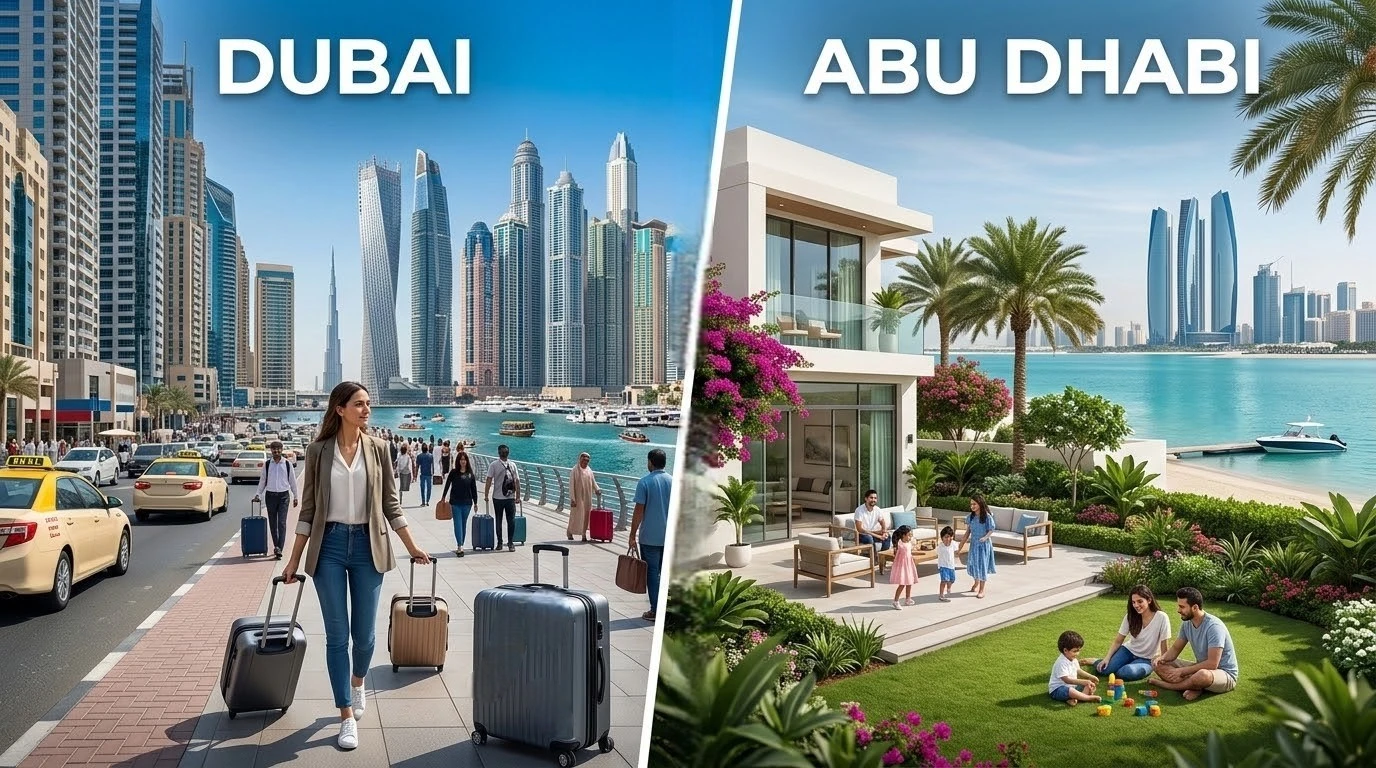
    Basically, UAE buyers fall into two camps. If your main focus is keeping your property rented out constantly, flipping it easily when you’re ready, and keeping your cash moving—Dubai is the place you want to look at first. If you want a family home, more space for the budget, and a steadier hold strategy, Abu Dhabi deserves a serious look.

    Both cities offer strong infrastructure, but their real estate cycles do not move in lockstep. The real question is whether you are prioritizing rental income and exit flexibility, or long-term equity growth and lifestyle value.

    Looking toward 2026, Dubai is facing a larger delivery pipeline after a heavy launch cycle, although construction delays may soften the timing of actual handovers. CBRE notes that after more than 35,000 units were delivered in 2025, Dubai’s 2026 completion pipeline is expected to rise sharply, while logistics and construction-cost pressures may delay some new supply.

    That matters because more inventory can create localized pressure on rents and pricing. Abu Dhabi’s pipeline is smaller by comparison and more back-loaded, with villas representing a smaller share of upcoming supply. That may help support pricing in select.

    Market Snapshot: Pricing, Yields, and Supply
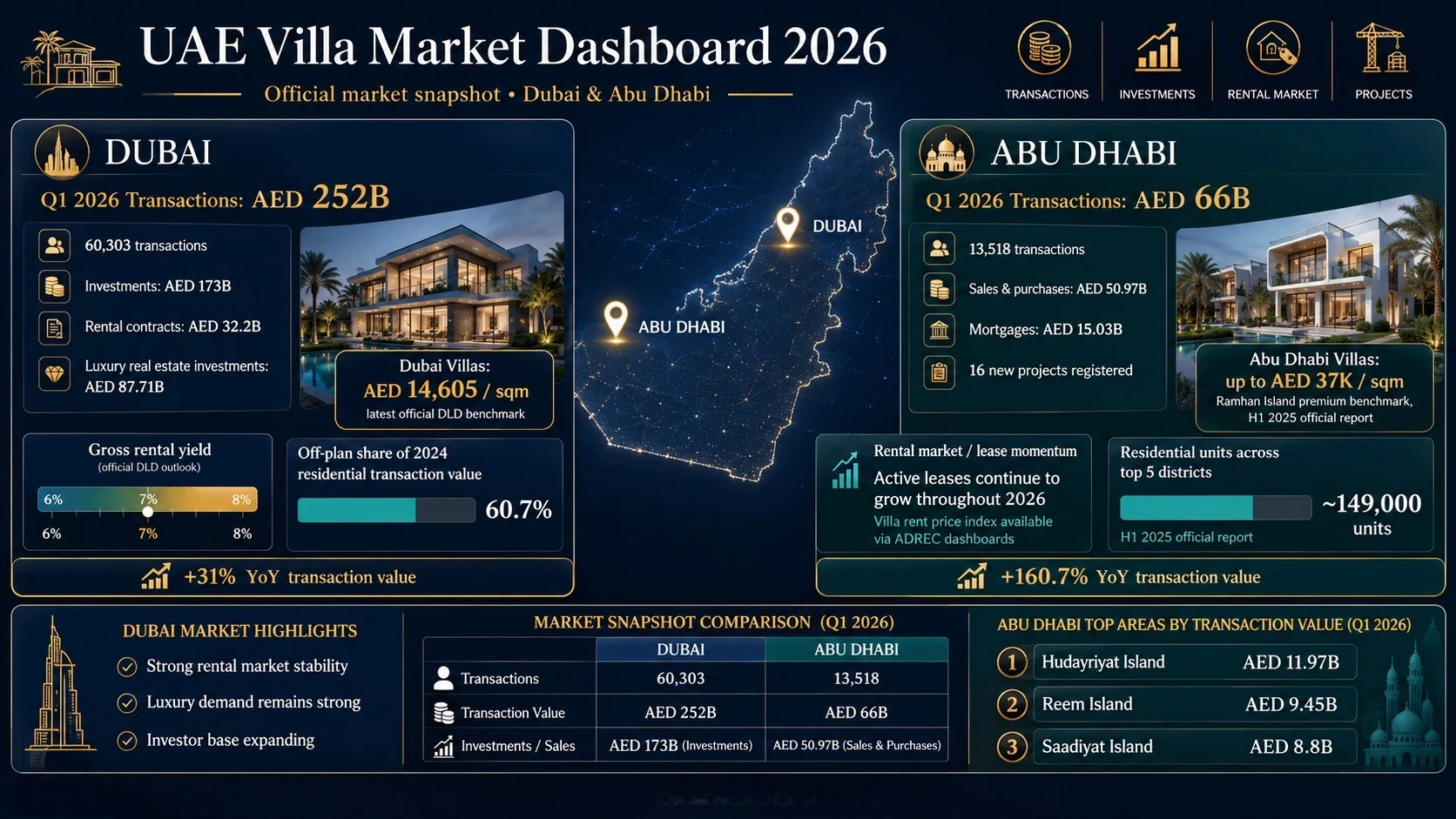
    Villas in Dubai are still way more expensive because everyone wants to live there. The demand is massive, and it’s much easier to sell your place quickly if you ever need to. On the flip side, Abu Dhabi is catching the eye of buyers looking for a solid deal. When it comes down to square footage, neighborhood vibes, and overall lifestyle, your dollar just stretches a lot further there.

    That said, the gap depends heavily on the exact community, developer, property age, and whether the unit is ready or off-plan.

    Gross rental yields vary widely by community. Dubai’s villa market can deliver strong income in high-demand areas, but yields are not uniform and can be squeezed by higher entry prices, service charges, and new supply. In early 2026, rent prices in Dubai started to cool down. CBRE noted that villa rents have basically stayed the same recently.

    Abu Dhabi’s villa yields can also be competitive. Bayut’s H1 2025 data showed villa ROIs of 6.34% in Al Reef, 6.17% in Al Raha Gardens, and 6.09% in Al Raha Beach.

    The 2026 supply picture is the key swing factor. Dubai has more inventory risk because of its larger development cycle, while Abu Dhabi’s delivery pace appears more controlled. Cavendish Maxwell estimated that Abu Dhabi’s actual 2026 completions may land closer to 6,500–9,000 units, below the headline projection of around 15,900 units.

    That kind of supply discipline can help limit near-term imbalance, although it does not.

    Abu Dhabi’s Premier Villa Communities
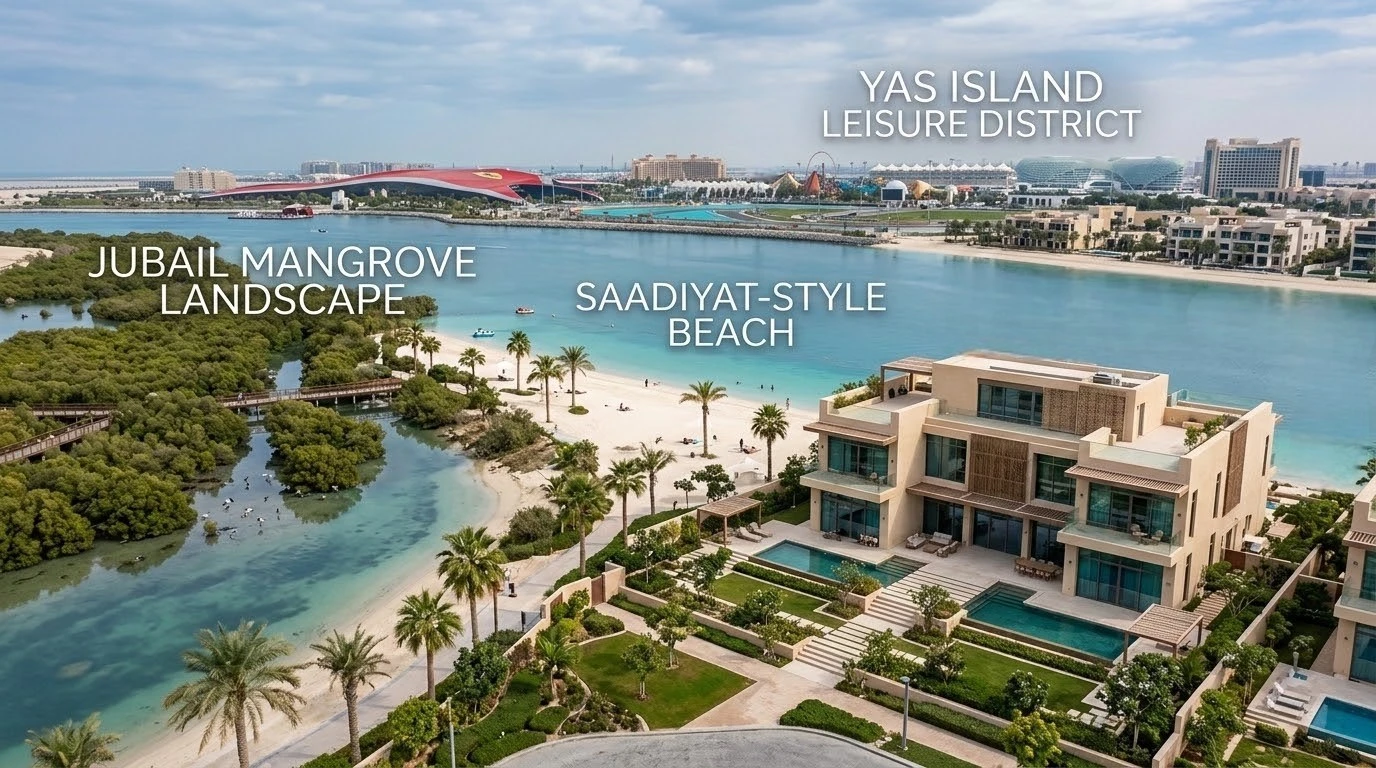
    Saadiyat Island

    Saadiyat is Abu Dhabi’s prime luxury villa destination, especially for buyers who want waterfront living, cultural proximity, and a prestige address. It is not the cheapest entry point, but it works for buyers who care about scarcity, lifestyle, and long-term capital preservation.

    Yas Island

    Yas is the lifestyle-driven option. It offers access to major entertainment, retail, hospitality, and family-focused attractions, while still often pricing below comparable Dubai trophy locations. For buyers who want a mix of end-user appeal and investment logic, Yas is one of Abu Dhabi’s most important communities to watch.

    Abu Dhabi’s 2026 supply pipeline is also heavily concentrated in Yas, Reem, and Saadiyat, which makes project selection especially important.

    Jubail Island

    Jubail Island is another remarkable community that blends luxury homes with protected natural surroundings. This neighborhood spans 4,000 hectares of mangrove forests and coastal estuaries. Residents enjoy a nature-oriented lifestyle with facilities like a beach club, marinas, and expansive parks. If you plan to buy villas in Abu Dhabi, Jubail Island provides a unique sanctuary just minutes from the city center. It is an ideal location for those who value wellness and serene living environments.

    Dubai’s High-Demand Villa Locations
    Dubai Hills Estate

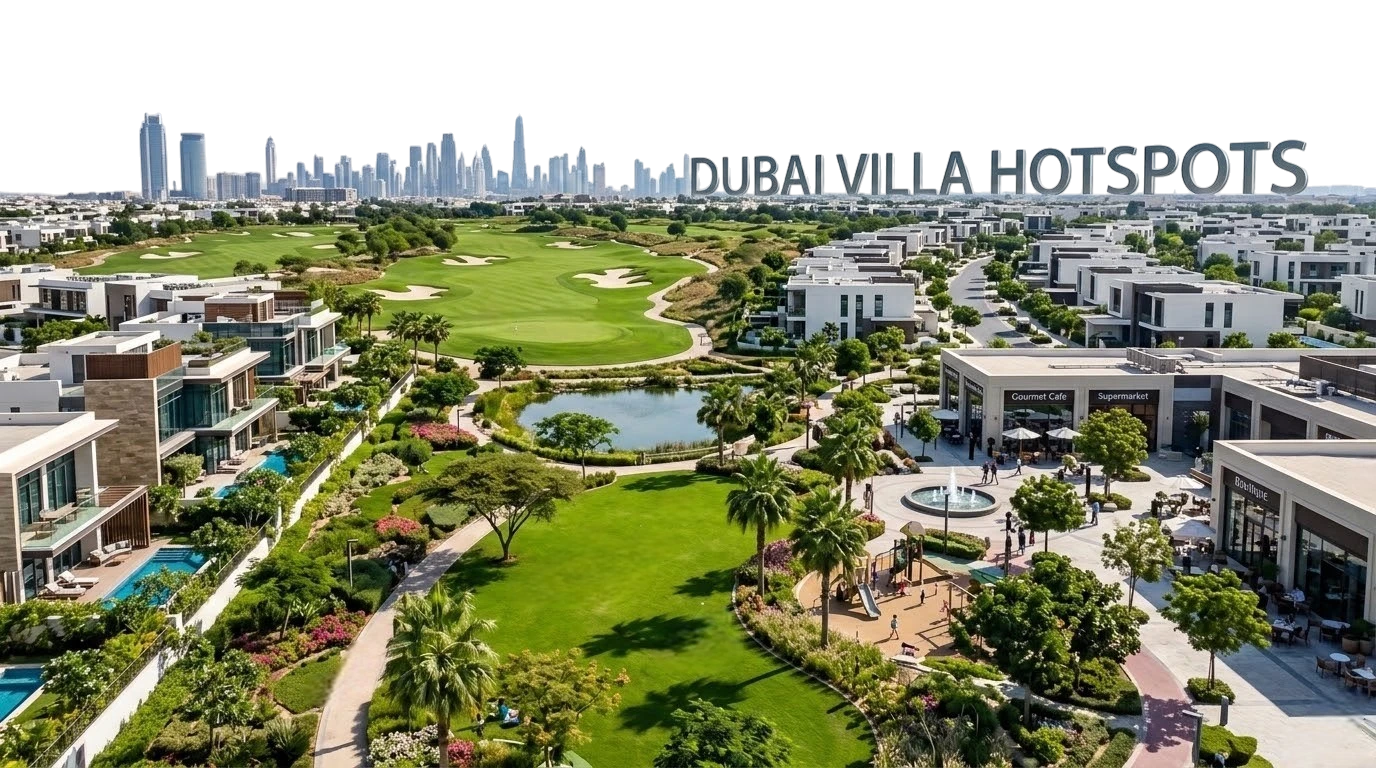
    Dubai Hills remains one of Dubai’s strongest family-focused villa communities. It has a major park, Dubai Hills Mall, and an 18-hole championship golf course, all of which support tenant demand and resale appeal. Bayut’s 2025 rental data also ranked Dubai Hills Estate as the top choice for luxury villa rentals in Dubai.

    Arabian Ranches and Tilal Al Ghaf

    These are both hugely popular, family-friendly neighborhoods that expats absolutely love, whether they’re renting or looking for a place to call their own. Arabian Ranches is well-established with a proven track record, so you know exactly what you’re getting. Tilal Al Ghaf might be the new kid on the block, but it’s already making waves thanks to its awesome layout, great schools, and killer amenities.

    If you’re a landlord, don’t just get blinded by the high rental price tag. You should find reliable tenants who actually want to renew their leases, while keeping an eye on everyday upkeep and those sneaky HOA-style fees.

    Matching the Market to Your Strategy
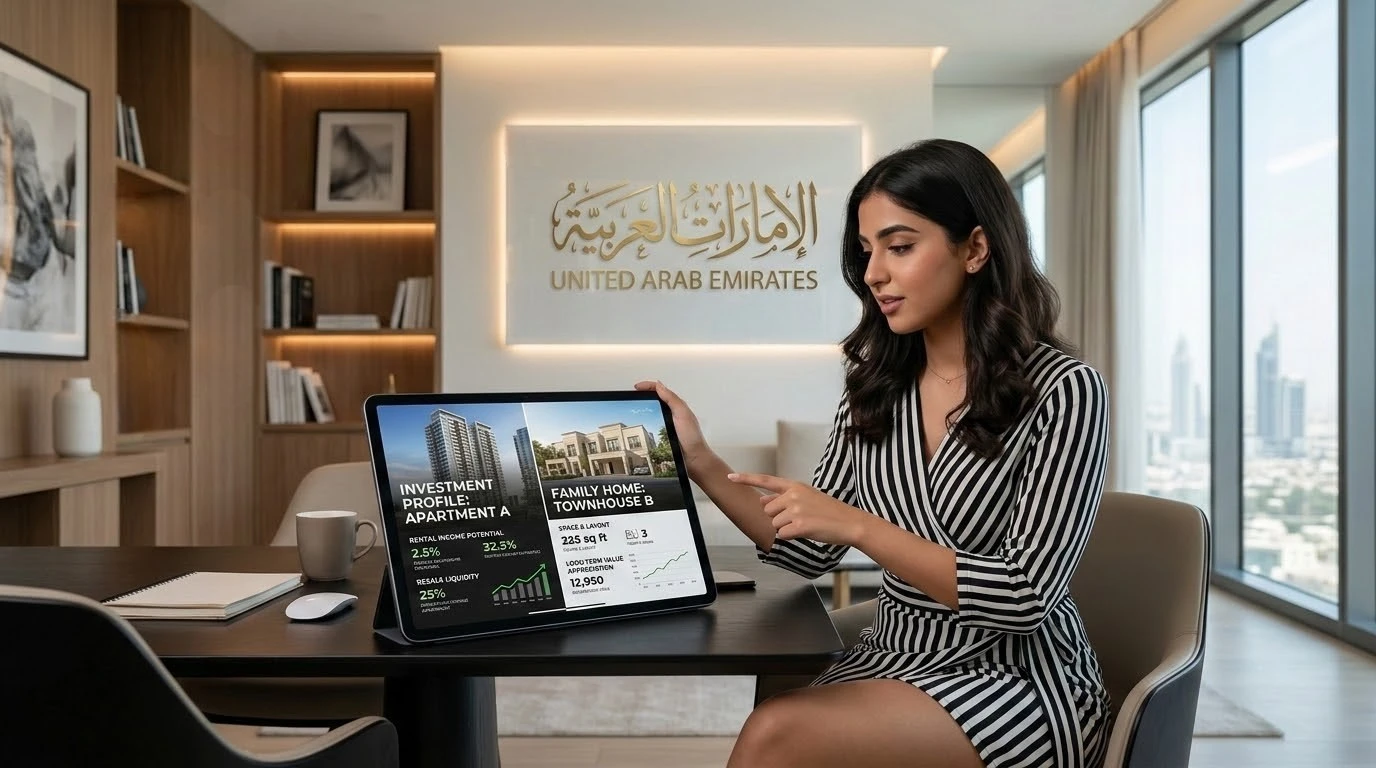
    If your model depends on rental income and a faster exit, Dubai is still the more liquid market. It has a larger buyer pool, a deeper rental base, and stronger visibility with international investors. But buyers should avoid assuming that every Dubai villa will outperform. With more supply coming through, performance is likely to become more community-specific and more dependent on developer quality, handover timing, and realistic pricing.

    If you’re moving with your family or you’re a buy-and-hold investor, Abu Dhabi might just be the smarter play. Villa prices there jumped 12.2% year-over-year in 2025, mostly driven by low inventory and real homebuyers actually wanting to settle down. Meanwhile, citywide rents ticked up about 5.5%. Sure, it’s not a crazy rent spike, but it points to a rock-solid market without all the wild flipping hype.

    Luxury buyers have strong options in both emirates. Dubai dominates global visibility with areas like Palm Jumeirah, Emirates Hills, and Jumeirah Bay. Abu Dhabi counters with quieter, lower-density waterfront communities such as Saadiyat and Jubail.

    You definitely get way more room for your budget in Abu Dhabi’s average and upper-tier neighborhoods. But if you want to be able to flip it or sell it fast later, Dubai is the way to go.

    Smart Moves Before You Sign

    Do not skip the due diligence. Compare the master developer’s delivery record, escrow protections, realistic handover dates, service charges, and resale data for the exact sub-community. If you are buying off-plan, do not model returns on the advertised handover date alone; build in a delay buffer.

    Closing costs are a major difference. Dubai’s property sale registration fee is widely treated as a 4% cost of the property value, while DARI lists Abu Dhabi freehold ownership sale fees at 2% of the sale price. That difference can materially change your net ROI, especially on higher-ticket villas.

    Visa planning also matters. The UAE’s Golden Visa route for real estate investors currently requires property ownership valued at no less than AED 2 million. Before you sign, confirm the latest eligibility rules, whether the specific property qualifies, and what documents are required through official channels or a qualified advisor.

    Finally, walk the neighborhood before you buy. Visit at different times of day, check school routes, traffic, nearby construction, and actual community occupancy. Hire a local broker who knows the micro-market, then ask for a Comparative Market Analysis for the exact street, villa type, plot size, and handover status.

    That keeps emotion out of the deal and protects your downside.

    Making Your Final Decision

    Dubai offers liquidity, rental depth, and a larger international buyer pool. Meanwhile Abu Dhabi offers a strong lifestyle case, comparatively lower entry points in many segments, and a more measured supply profile.

    Run the comps, price in the 2026 supply pipeline, and calculate your full transaction costs before making a move. If you strip out the hype and focus on net returns, liquidity, and livability, you will be in a much stronger position to choose the right villa market for 2026.

  • What Is Real Estate Crowdfunding and How Does It Work in the UAE?

    Source: linkedin.com

    The UAE’s property landscape has gone through a noticeable shift. For a long time, getting into real estate here meant needing a lot of capital and, in many cases, connections. But that’s changing. With the rise of licensed crowdfunding platforms and a more flexible investment model, people now have a way to enter the market without having to buy a full property on their own.

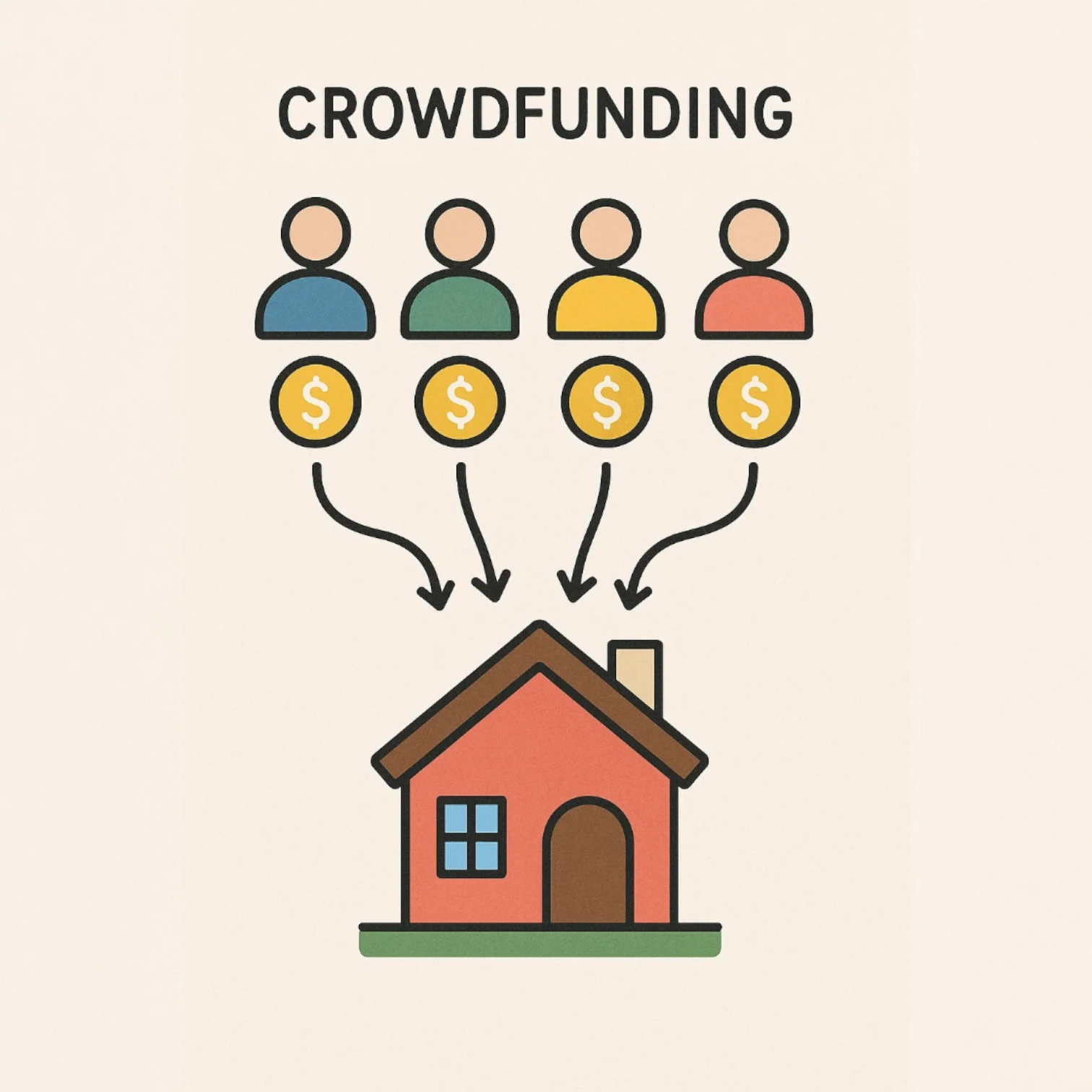
    This setup allows multiple investors to contribute smaller amounts toward the purchase of high-value properties—residential or commercial. In return, they each get a share of the returns, whether that’s rental income or gains from a future sale. Some platforms let you start with as little as AED 1,000, which puts ownership of premium UAE real estate within reach for a much wider group of people.

    Real estate crowdfunding doesn’t replace traditional ownership, but it gives you an alternative, one that’s passive, lower-risk, and managed professionally. And because the platforms are regulated, there are safeguards in place to protect your money and keep the process transparent from start to finish.

    If you’re looking for a way to build long-term wealth through real estate, and want something more flexible than buying a unit outright, this model might be worth a closer look.

    Understanding Real Estate Crowdfunding in the UAE

    In simple terms, real estate crowdfunding gives you a way to invest in property without having to buy the whole thing yourself. Instead, a group of investors, maybe dozens or even hundreds, pool their money together to purchase a property, and each one owns a small portion.

    You won’t be getting the keys to a front door, but your name will still be tied to the investment. That’s because your share is recorded through a structure set up specifically for this purpose.

    Once a property is fully funded, the platform usually forms a Special Purpose Vehicle, often called an SPV. This legal entity is what actually holds the property title.

    All of this happens through platforms that are regulated locally. In the UAE, that means oversight from authorities like the Dubai Land Department or the DFSA, depending on where the platform is based. So while you may never set foot in the unit, your share and your rights are protected.

    What makes this model appealing for a lot of people is how hands-off it is. You’re not the one dealing with tenants, calling plumbers, or collecting rent checks. The platform does all of that. Your job, really, is to choose the property, make the investment, and track how it performs. Everything else runs in the background.

    How the Crowdfunding Process Works

    Source: coretitle.com
    1. Platform Onboarding
      You begin by signing up on a regulated real estate crowdfunding platform. This includes submitting your identity and financial documentation for KYC and AML compliance. The platform will also assess your risk profile to match you with suitable investments.
    2. Property Listings and Investment
      Once approved, you can browse investment opportunities across different asset types, luxury villas, branded residences, commercial towers, and more. Each listing includes a detailed breakdown of the property, rental yield projections, location analytics, and legal documents.
    3. Special Purpose Vehicle (SPV) Formation
      When enough capital is raised, the platform sets up an SPV to purchase the property. This legal entity holds the title, ensuring transparency and safeguarding your ownership rights.
    4. Returns and Portfolio Management
      As a shareholder in the SPV, you’ll receive quarterly or annual income distributions, depending on the platform’s model. You’ll also be able to monitor your portfolio’s performance through a dashboard showing earnings, occupancy rates, and property value trends.
    5. Exit Options
      Some platforms offer secondary markets where you can resell your shares before the investment term ends, giving you greater flexibility than traditional real estate investing.

    Key Benefits of Crowdfunded Real Estate in the UAE

    • Lower Entry Point: Buying into Dubai’s real estate scene used to mean setting aside a large chunk of money. For most people, that just wasn’t realistic. But crowdfunding changes that. You don’t need to come in with hundreds of thousands, some platforms let you start with just a few thousand dirhams. It’s a way to get in early, even if your budget is modest, and gradually grow your exposure as you go.
    • Portfolio Diversification: Instead of putting all your money into one unit in one location, this model lets you spread things out. You could have a small share in a luxury apartment downtown, part of a commercial property near the marina, and maybe even a short-term rental somewhere more tourist-focused. That kind of variety helps reduce risk if one sector or area cools down.
    • Professional Oversight: You don’t need to be a landlord, and you won’t be managing tenants or chasing rent. That’s handled by the platform, along with property maintenance, legal paperwork, and financial reporting. It’s a passive setup, which makes it a lot easier to stay invested without turning it into a second job.
    • Regulatory Safeguards: Since platforms are licensed and work under UAE regulations, you’re not just handing over your money blindly. There are rules in place, around transparency, data, and reporting, that are meant to keep things fair and clear. You’ll get updates on performance and know exactly where your money’s tied up.
    • Improved Liquidity: Traditional real estate often means waiting years for a sale before you see any returns. Some crowdfunding platforms now give you an option to exit earlier by selling your shares to another investor. It’s not guaranteed or instant, but it’s a welcome option if you want more flexibility with your timeline.

    Legal and Regulatory Considerations

    Real estate crowdfunding in the UAE operates under a robust legal framework:

    • Platform Licensing: All platforms must be licensed by the DFSA or similar bodies and undergo regular audits.
    • Escrow and SPV Use: Your funds go into escrow and are only released once the investment target is met. The SPV model ensures your share of ownership is clearly defined.
    • Ongoing Reporting: Platforms are required to provide regular updates on investment performance, financials, and property health.

    This framework ensures that your interests as an investor are protected while supporting a transparent market environment.

    The Future of Real Estate Crowdfunding in the UAE

    Source: metavsummit.com

    The sector is evolving rapidly, with three key trends driving growth:

    • Smart Technology Integration: Platforms are leveraging AI, blockchain, and predictive analytics to identify high-performing properties, automate operations, and enhance transparency.
    • Wider Market Access: The UAE is attracting more international investors seeking exposure to high-yielding Middle Eastern assets. As a result, crowdfunding platforms are expanding their portfolios across Dubai, Abu Dhabi, Sharjah, and Ras Al Khaimah.
    • Regulatory Innovation: Authorities are actively updating policies to encourage fintech innovation while ensuring investor security. Expect new frameworks that support tokenization, secondary markets, and cross-border investing.

    Getting Started with Real Estate Crowdfunding

    Thinking about getting into real estate crowdfunding? Start by checking out a few platforms, not just the first one you see. You’ll want to make sure they’re licensed to operate in the UAE, of course, but also take a look at how long they’ve been around. If a platform’s been through a few market cycles and still going strong, that usually tells you something..

    A solid track record goes a long way in giving you peace of mind before you commit your money. Dig into how they work, how transparent their fee structure is, and whether the dashboard makes it easy for you to keep an eye on your money.

    What you’re doing here isn’t just buying into a property, it’s positioning yourself to earn from one of the most active real estate markets in the region. The added benefit? You’re doing it without the typical headaches that come with being a landlord.

    And since many of these platforms are designed to make onboarding easy, your entry point might be lower than you expect. With the right research and a bit of planning, you could be just a few clicks away from starting your first investment and laying the groundwork for longer-term growth.