Tag: Texas Investors

  • Texas Multifamily Real Estate in 2026

    When it comes to Texas real estate, Dallas and Austin usually get most of the attention. If a major sale makes headlines, it’s probably happening in one of those two metros. But the latest LoopNet report on 2026’s top multifamily markets suggests it may be time to broaden that focus.

    While national headlines often spotlight Washington, D.C., and Las Vegas, Texas investors should pay close attention to the affordability rankings. Out of the 50 largest U.S. cities, two Texas markets stand out as lower-cost entry points.

    Top Entry Points: El Paso and San Antonio
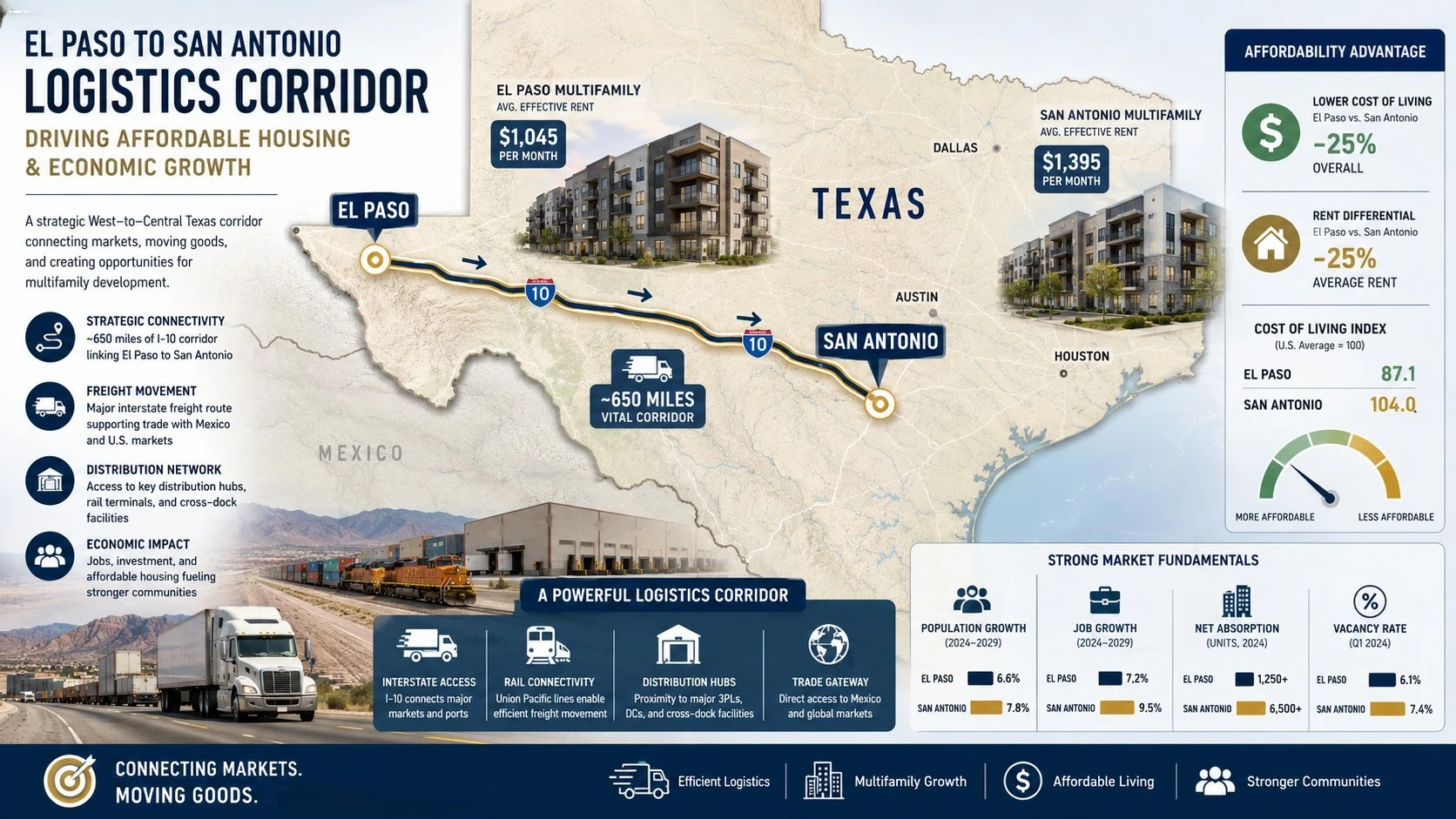
    LoopNet’s study weighed cap rates, property taxes, inventory, and lifestyle factors to compare investment potential. While yield-chasers may still look to Detroit for double-digit cap rates, investors looking for steady Texas markets and lower operating costs should keep El Paso and San Antonio on the radar.

    El Paso claimed the top national spot for affordability, with an average multifamily listing price of $631,250. This is not just a low-price land play. It is also tied to cross-border trade, logistics, and the broader nearshoring story. While uncertainty around trade policy remains a factor, El Paso is still well positioned to serve the workforce connected to the border’s logistics and industrial corridors.

    For a North Texas investor used to million-dollar teardowns in Preston Hollow, securing a cash-flowing asset for under $700,000 is hard to ignore.

    San Antonio also landed in the top five for affordability, with an average asking price of $1.29 million. San Antonio’s appeal goes beyond price. Projects like the $65 million Mira at the Pearl show continued investment in walkable, mixed-use neighborhoods, even as investors need to watch vacancy and concessions closely.

    The city offers big-city perks at a clear discount compared with Austin, though investors still need to underwrite vacancy and concessions carefully.

    The Dallas Shift: From Bargain Market to Quality Play
    So, with more affordable options in El Paso and San Antonio, is Dallas losing its edge?

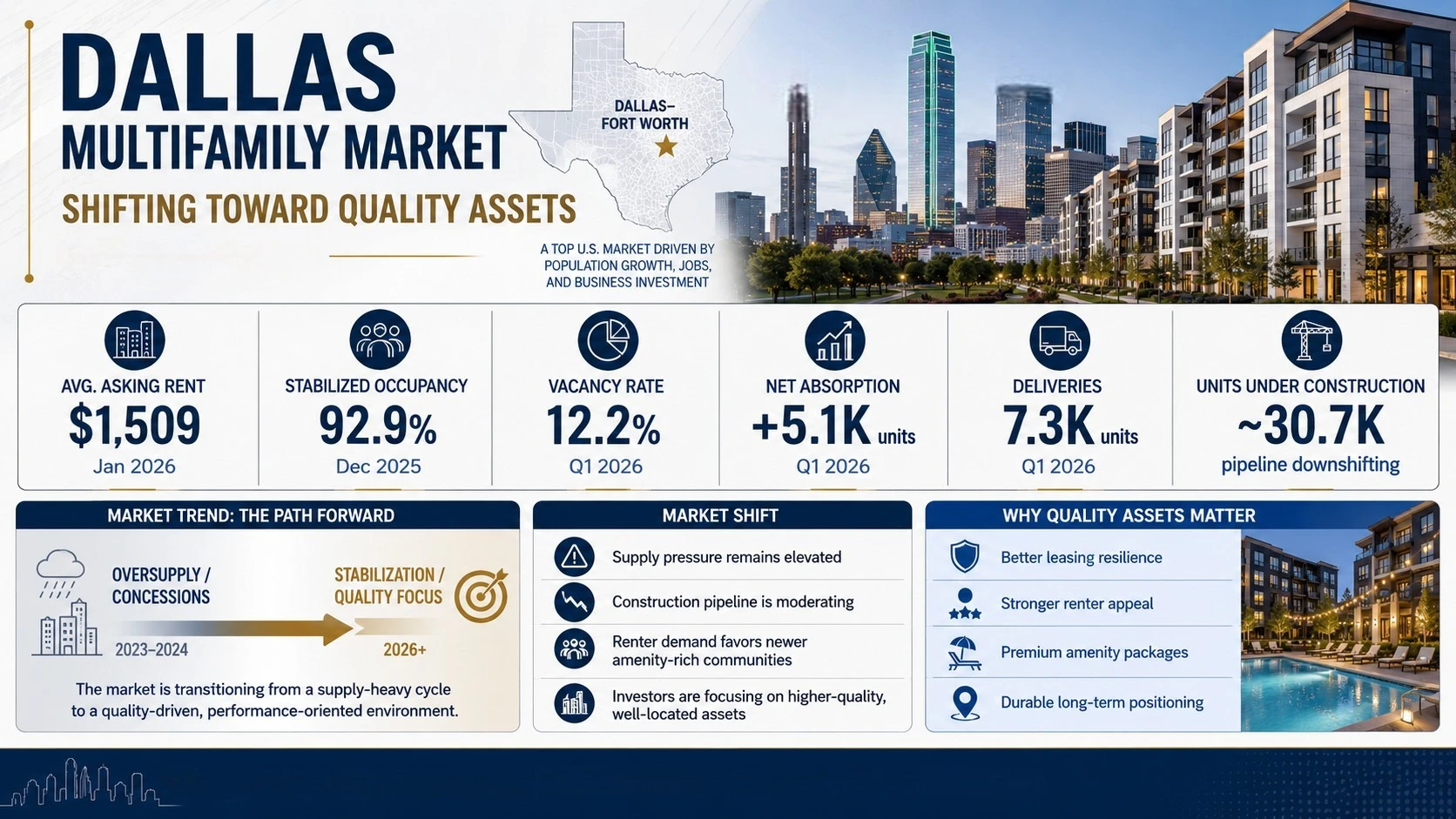
    Not really. The era of cheap DFW real estate is mostly over, but 2026 data shows Dallas becoming a more mature market where location, asset quality, and tenant profile matter more than bargain pricing.

    The DFW metroplex still benefits from strong renter demand, but the market is also working through a large supply wave. Developers are not just building units. They are competing harder to fill them. Data shows that cities with strong lifestyle metrics, including easy park access and James Beard-recognized dining, tend to have stronger renter appeal. That is where Dallas still has an edge.

    With Harold Simmons Park moving forward and the continued draw of neighborhoods like Bishop Arts, these amenities can help support demand even as supply stays elevated. Dallas is no longer a simple value play. In 2026, it is better viewed as a quality-focused market for investors who want long-term appreciation and higher-income tenants.

    The 2026 Supply Reset
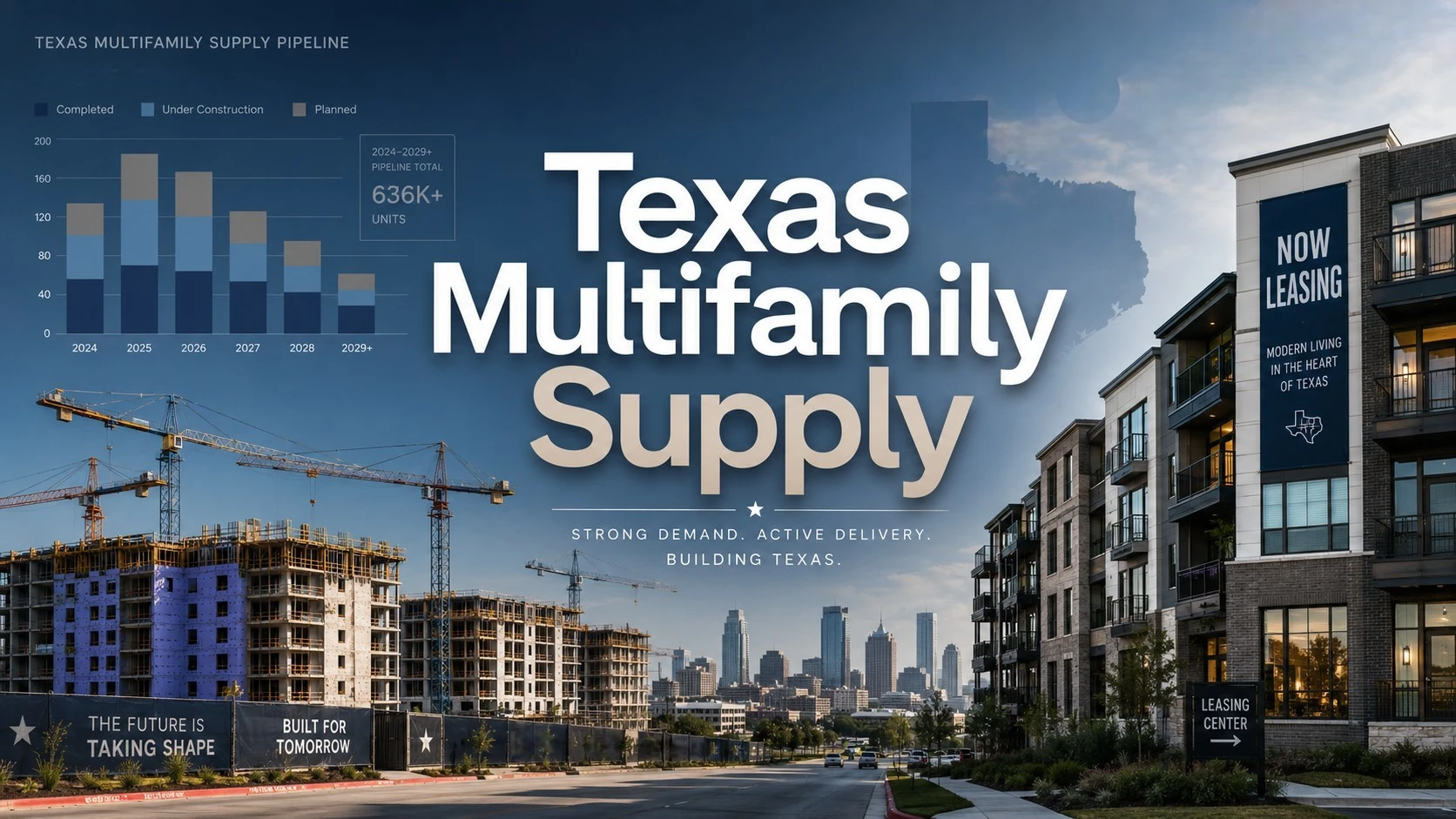
    One of the clearest takeaways from current market data is the supply reset. Pandemic-era construction created a heavy wave of deliveries in 2024 and 2025, but that pipeline is starting to thin.

    Completions are dropping. The U.S. is expected to see fewer new multifamily deliveries in 2026 as construction starts slow and the under-construction pipeline shrinks.

    Concessions are still in play. Austin and Dallas have seen heavy rent concessions, including six to eight weeks of free rent in many Texas submarkets. If demand keeps catching up and supply keeps cooling, those deals could become less common.

    The window to buy into a softer market may not stay open forever. With fewer new units delivering, well-located Class B and C assets in San Antonio and El Paso could see stronger rent growth in 2027 and 2028, especially if investors buy at a disciplined basis today.

    Portfolio Diversification for North Texas Investors
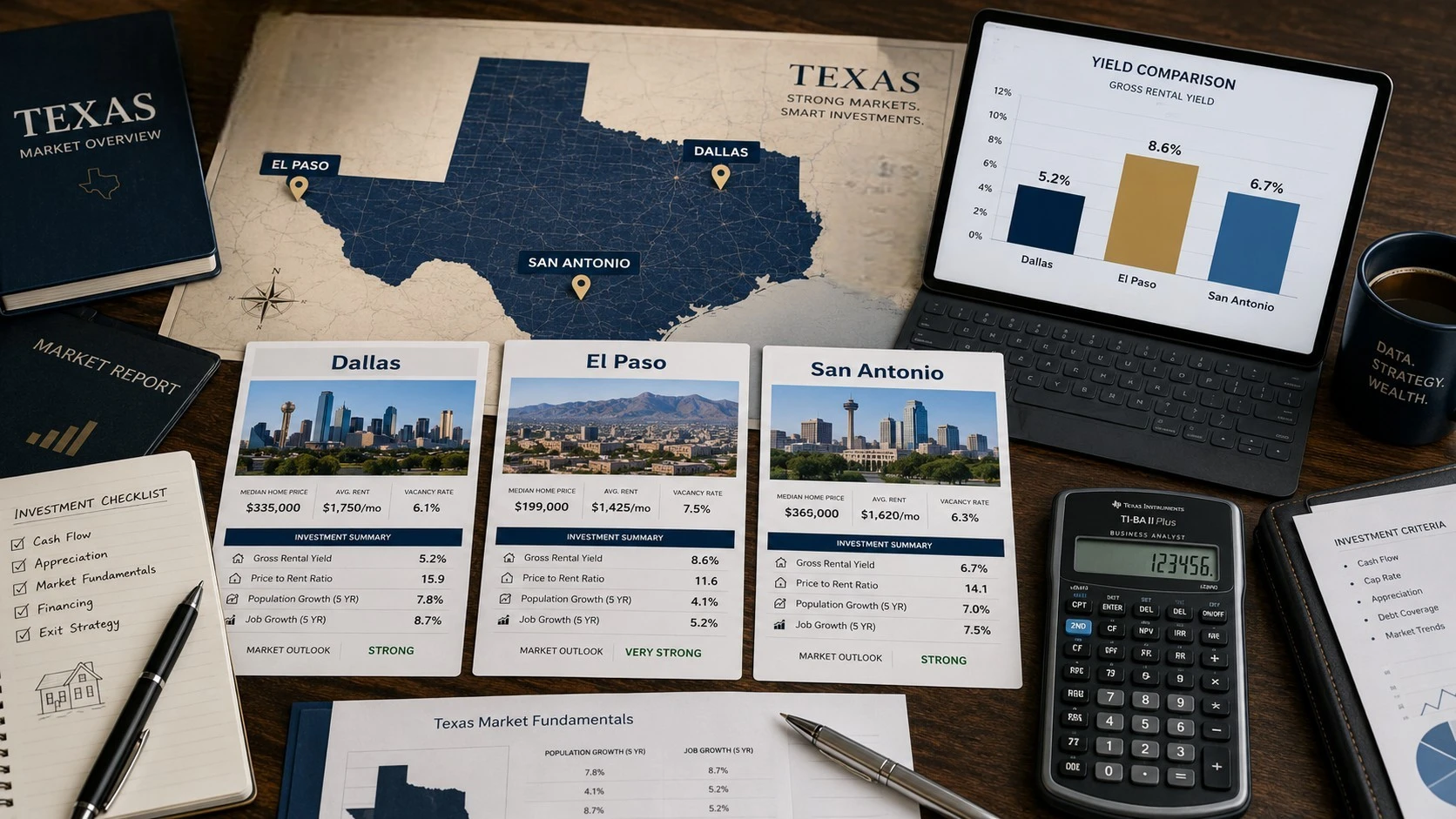
    For North Texas investors, this data points to a practical diversification strategy.

    Even if you are priced out of your local 8-plex market, San Antonio and El Paso offer a way to stay under familiar Texas regulations while chasing better yield-on-cost. In El Paso, cap rates can still run meaningfully higher than what most investors see in the Dallas urban core.

    Property taxes remain a hot topic. They may be higher than Denver’s 0.44%, but the lack of state income tax and broad inventory still make Texas attractive for many investors compared with coastal markets like Boston or San Francisco.

    In El Paso specifically, multifamily real estate is closely tied to the industrial and logistics story. Targeting assets near last-mile distribution centers and employment corridors is a smart place to start in 2026.

    The Long View on Texas Real Estate

    There is plenty of upside in Texas multifamily, but the best move depends on your strategy. If you want stability, strong tenant demand, and exposure to a major Sun Belt market, Dallas is the clear choice. If you want to scale your portfolio cost-effectively, it is worth looking closely at El Paso and San Antonio.

    For investors, the story comes down to basis, cash flow, and demand.. Based on the 2026 data, the future of Texas multifamily still looks strong, but the better story is its range. Dallas, San Antonio, and El Paso give investors very different ways to play the same state.

  • Global Real Estate Markets Texans Should Watch in 2025

    For years, Texas has been a magnet for real estate investors. Dallas, Austin, and Houston in particular have seen fast growth thanks to new jobs, steady migration, and strong housing demand. That momentum has rewarded local investors, but it’s also pushed property prices higher and put more pressure on rental yields.

    Because of that, more Texans are starting to scan the map outside the state. Global diversification isn’t just talk anymore. It’s becoming a useful way to spread risk and find places where housing markets are still affordable and have room to grow.

    If you’re keeping an eye on what’s next, here are a few international hotspots worth following in 2025 and beyond.

    1. Mexico’s Riviera Maya

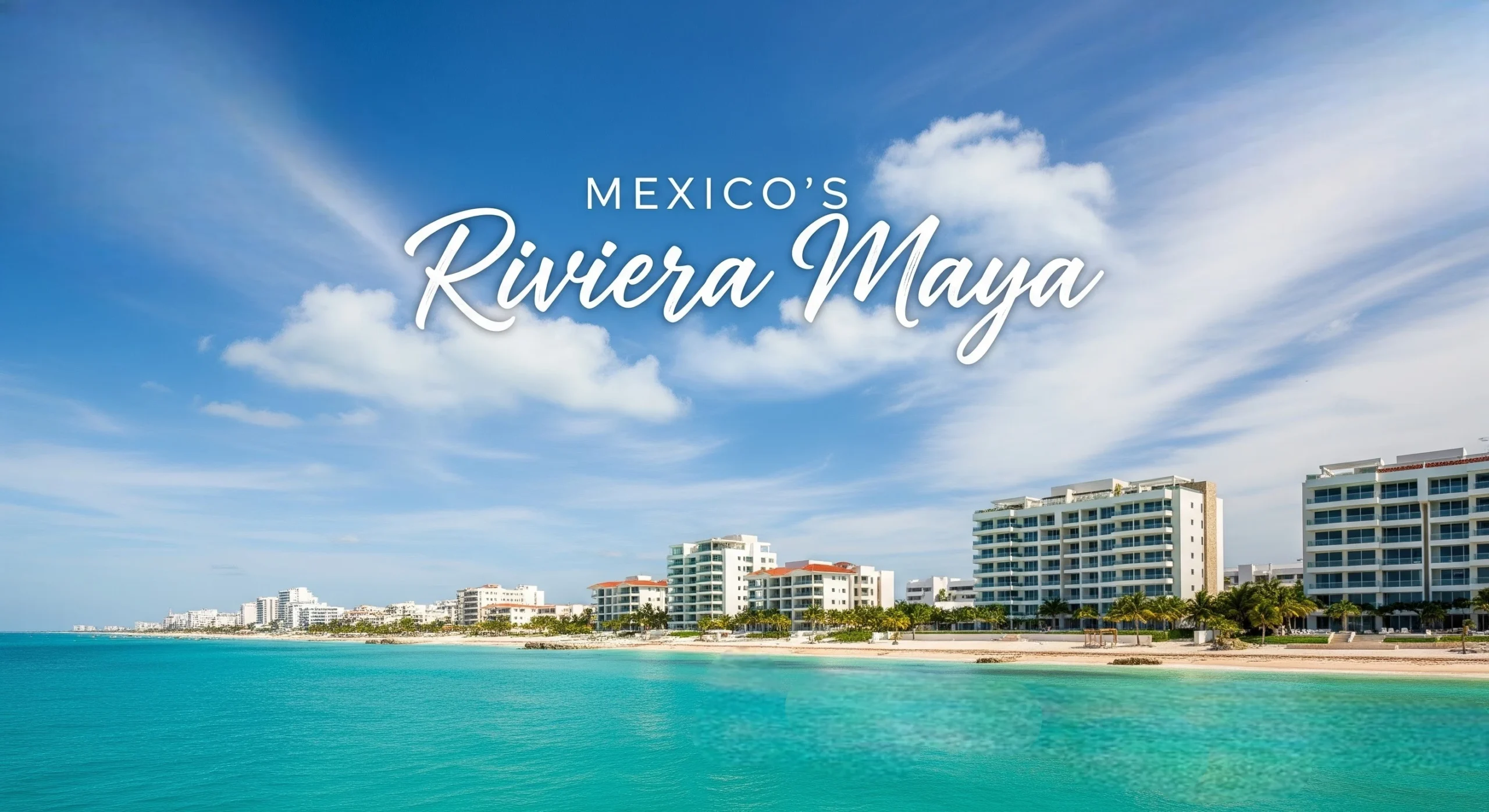
    The Riviera Maya is one of the most convenient international markets to explore. Cities like Playa del Carmen, Tulum, and Cancun draw millions of visitors each year, making the region one of the busiest tourist corridors in Latin America. That steady flow of travelers has turned the area into a strong short-term rental market, where properties often perform well on platforms like Airbnb.

    Homes and condos here are still priced lower than in most major U.S. cities, yet the demand keeps climbing as Mexico’s tourism industry continues to rebound. In some cases, the rental yields in Playa del Carmen or Tulum can even outpace what you’ll find in Texas metros.

    The close distance is a major plus. You can get from Dallas to Cancun in just a couple of hours, which makes it much easier to manage a property, check in on renovations, or simply use the home yourself when you want a quick getaway.

    2. Portugal’s Algarve Coast

    On Portugal’s southern edge, the Algarve has quietly become one of Europe’s favorite places to buy a home. The area gets more than 300 days of sunshine a year, and towns like Lagos, Albufeira, and Faro are filled with cafés, golf courses, and a steady stream of visitors. About 4 million tourists come through each year, which keeps the short-term rental market active even outside of the summer season.

    For Texans, the appeal goes beyond the beaches. Property prices are still well below what you’d expect in France, Spain, or coastal U.S. cities, yet the quality of life is high. Portugal also makes it easier to stay long term with visas like the D7, which is popular with retirees who have steady income.

    Buying in the Algarve often feels like getting a seaside home at a discount. If you’ve been priced out of places like Miami or San Diego, you’ll notice how much further your money goes here while still enjoying a safe and stable environment.

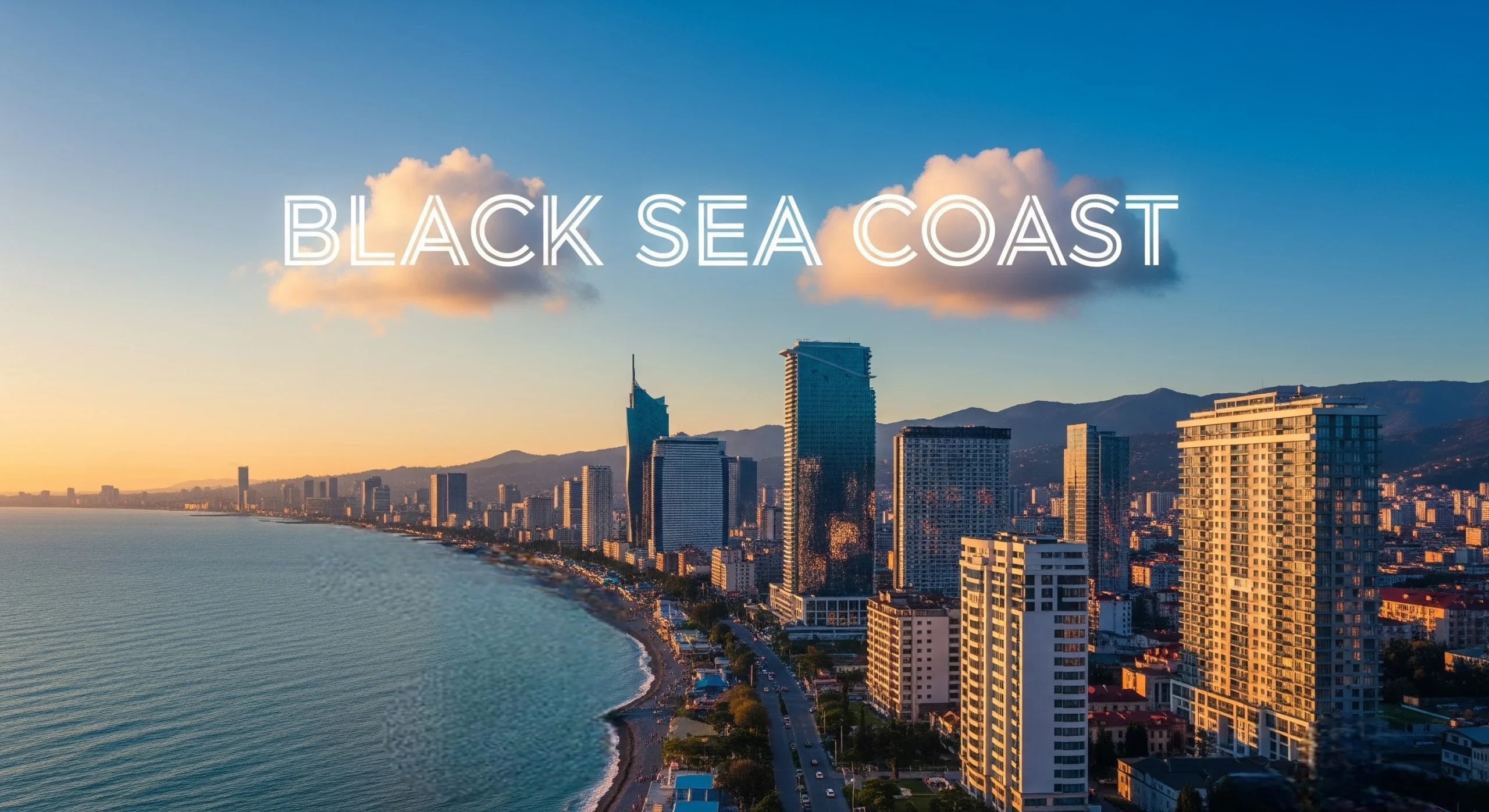
    3. Batumi, Georgia (Black Sea Coast)

    Batumi, a resort city on the Black Sea, has quickly shifted from an overlooked destination to one of the more active emerging markets in Eastern Europe. Tourism has taken off, with visitors arriving from across Europe, the Middle East, and Central Asia. That flow of travelers has fueled interest in vacation rentals and pushed more investors to take a closer look at the city’s Real Estate Batumi market.

    Apartments in Batumi often start at prices that are far below what you’d pay in the U.S., sometimes at levels that wouldn’t even cover a down payment in Texas. What makes it even more appealing is how easy it is for foreigners to buy property outright, with little bureaucracy compared to many other countries.

    Rental yields can be strong, especially in the busy summer months when the city’s beaches and casinos are at full capacity. For Texans who want a low-cost entry point into international real estate, Batumi offers a mix of affordability, rental demand, and straightforward ownership rules that’s hard to find elsewhere.

    4. Colombia’s Medellín

    Medellín has gone through one of the biggest makeovers in Latin America. What was once a city with a difficult past is now known for its mild “eternal spring” weather, modern metro system, and hillside cable cars that connect neighborhoods across the valley. That change has drawn in a steady flow of expats, retirees, and digital nomads who now call the city home.

    Housing is still a bargain compared with the U.S. You can find a new apartment in a central neighborhood for what would barely buy you a starter condo in Dallas. At the same time, rental demand is climbing—both from travelers who stay a few weeks and from locals looking for long-term leases.

    For Texans used to investing in rental-heavy markets, Medellín feels familiar in many ways. The big difference is that the entry cost is much lower, and owning a place here adds a layer of global diversification that’s hard to get back home.

    5. Vietnam’s Da Nang

    On Vietnam’s central coast, Da Nang has been drawing more attention every year. The city is known for long stretches of beach and a skyline that keeps changing as new hotels, offices, and residential towers go up. With more than a million residents and a growing reputation as a hub for tech outsourcing, Da Nang attracts both leisure travelers and multinational companies setting up operations in Southeast Asia.

    The Vietnamese government has made a point of encouraging outside investment, and developers have responded with large-scale projects along the waterfront and near the international airport. Buying property here as a foreigner does involve more paperwork compared with places like Georgia or Portugal, but once you understand the system, you’ll find a market that still has plenty of room to grow.

    Why You Should Think Globally

    Looking abroad also helps spread your risk. If demand in Texas cools, income from a condo in Batumi or an apartment in Medellín can help balance things out. In addition, many countries pair property ownership with residency programs, giving you access to new lifestyle options, health care systems, and in some cases, favorable tax treatment.

    By mixing your investments with select international properties, you give yourself more ways to grow wealth while enjoying the flexibility that comes with having a footprint in more than one market.

    Key Takeaways for Investors

    • Affordability opens doors. In many of these emerging markets, you can buy a property outright for less than what a 20% down payment would cost on a home in Dallas or Austin. That lower entry cost gives Texans more flexibility to diversify globally without tying up too much capital.
    • Accessibility counts. Markets close to Texas, like Mexico’s Riviera Maya, make it easy to check in on a property with just a short flight. More distant options, such as Portugal’s Algarve or Georgia’s Black Sea coast, may take more planning but often bring stronger long-term upside.
    • Tourism drives income. Coastal cities including Batumi, Da Nang, and the Algarve thrive on steady visitor traffic. That demand supports short-term rental yields and helps keep occupancy rates high.

    Final Thoughts

    Today it’s possible to own a beach condo in Mexico for less than what you’d put down on a starter home in Texas. In Portugal’s Algarve, you’ll find an easygoing lifestyle mixed with steady rental demand. And in Batumi, Georgia, prices are still so low that many buyers are surprised when they see the numbers.

    The point is simple: looking abroad gives you options. Maybe you want a second home by the water, maybe you’re after higher rental yields, or maybe you just want to spread your investments across more than one market. Whatever the reason, paying attention to global hotspots now can put you ahead of the curve later.