Tag: Tax Planning

  • Surviving Tax Season in Houston: Expert Advice on Preparation, Planning, and Finding the Right CPA

    Tax season in Houston often looks simple because Texas doesn’t have a state income tax. In reality, filing can still be time-consuming. Most households and business owners deal with federal deadlines, self-employment taxes, investment income, and mortgage paperwork.

    Managing tax season usually requires preparation months before April, not last-minute filing. A CPA who understands federal rules and Houston-specific considerations can help reduce mistakes and keep more money in your pocket. Firms like The Rascon CPA Firm work with Houston residents and business owners on these issues every year.

    This guide is for residents who want to stay organized, plan earlier, and work with a CPA who understands their needs.

    Get Organized Before Tax Season Arrives

    The easiest way to reduce stress is to prepare early and keep consistent records throughout the year.

    Gather the Essential Documents

    Create a folder for the current tax year and add documents as they arrive instead of scrambling at the last minute. Most filers will need a combination of these items:

    • W-2 forms for employee income
    • 1099 forms for contract work, interest income, dividends and brokerage accounts
    • 1098 forms for mortgage interest or student loan interest
    • Records showing charitable donations
    • Receipts and invoices for business income or side work
    • Health insurance forms (if applicable)
    • Last year’s tax return to help identify carryovers and recurring issues

    Don’t Overlook These Details

    These items are often missed, yet they are usually what slows down filing or triggers extra questions from your CPA.

    • Major life changes such as marriage, divorce, having a child, moving or buying a home
    • New rental properties or short-term rental income
    • Any out-of-state income, even if you live and work in Texas
    • A short explanation of large financial events such as selling stock, selling a home or taking money out of retirement accounts

    Understand Deadlines and Extensions

    For most individuals, the federal tax deadline is April 15 unless it falls on a weekend or holiday. Partnerships and S corporations are generally due by March 15.

    An extension gives you more time to file the paperwork, but it doesn’t grant more time to pay. If you owe taxes, payment is still due by the original deadline to reduce penalties and interest.

    Clean Bookkeeping Simplifies the Process

    If you own a business, run a side gig or manage rental property, your tax return is only as good as your records.

    Keep Your Books Clean All Year

    Trying to reconstruct a full year of transactions in March often leads to errors. A simple monthly routine can prevent most problems:

    • Reconcile bank and credit card accounts
    • Categorize expenses the same way every month
    • Keep personal and business spending separate
    • Save receipts for large purchases and anything that might need an explanation later

    QuickBooks Helps, But Only If Set Up Correctly

    QuickBooks is widely used by Houston small businesses because it’s easy to share with a bookkeeper or CPA. A QuickBooks ProAdvisor can help with setup, training and monthly maintenance so your reports stay accurate. When your books are organized, your CPA can focus on tax strategy rather than cleanup.

    Strategic Tax Planning Drives Savings

    Filing concludes the process, but planning is what actually impacts your tax liability.

    Key Deductions and Credits

    Depending on your situation, you may qualify for the following:

    • Home office deductions (if you meet IRS guidelines)
    • Vehicle deductions using mileage or actual expenses
    • The Qualified Business Income (QBI) deduction for eligible business owners
    • Energy-related credits for certain home improvements

    The biggest mistake is guessing. Accurate tracking and proper documentation ensure these deductions stand up to scrutiny.

    Stay on Top of Estimated Taxes

    If you earn income without withholding, quarterly estimated payments help prevent penalties. Many Houston professionals in real estate, oil and gas, health care and consulting get caught off guard because income can change throughout the year.

    Use Retirement Contributions Strategically

    Contributing to retirement accounts can lower taxable income while helping you build long-term savings. Options may include traditional IRAs, 401(k) plans or SEP IRAs for business owners.

    Time Income and Expenses Strategically

    Some business owners manage taxable income by timing invoices or prepaying legitimate expenses. A CPA can explain what is allowed, what helps and what creates risk with the IRS.

    How To Find The Right CPA In Houston

    A good CPA does more than just file forms; they help you make smarter financial decisions.

    Define Your Needs

    Be clear about what kind of help you are looking for:

    • A basic return with a W-2 and a primary residence
    • A return with rental property, investments or multiple income streams
    • Business tax preparation with ongoing planning
    • Help responding to IRS notices or resolving back taxes

    Use Referrals and Credible Directories

    Referrals from people in similar situations are often the most reliable. You can also search the Texas Society of CPAs or the IRS directory of credentialed preparers.

    Verify licensing and experience

    Confirm the CPA is in good standing with the Texas State Board of Public Accountancy. Then ask this critical question “Do you have experience with clients in my situation?”

    In Houston, industry experience matters. Real estate, oil and gas, medical practices and service businesses all have specific tax nuances.

    Evaluate Communication and Process

    During your first conversation, watch for the following:

    • Clear explanations without excessive jargon
    • A defined checklist of required documents
    • A realistic timeline
    • Secure document upload options
    • Transparent pricing with no surprises

    If the process feels disorganized now, it will likely get worse during peak season.

    A Simple Tax Timeline

    • January: Start your file, update bookkeeping and collect early tax forms
    • February: Schedule your CPA if your return is complex or business-related
    • March: Business owners aim to finalize returns before the mid-March deadline
    • Early April: Individuals file, confirm payments and save copies of everything

    Tax season doesn’t have to feel like a yearly emergency. Staying organized, keeping clean records, and working with a CPA who understands your needs can help you file with confidence and avoid costly mistakes.

  • What Are the Processes Involved in Estate Planning, and How Does It Benefit You?

    Image Source: Facebook.com

    Washington State is home to a diverse population, a strong real estate market, and a growing number of family-owned businesses and professionals. With many residents holding property, investments, and long-term financial goals, estate planning plays an important role in protecting assets across generations.

    Estate planning is more than just writing a will. It is a practical set of steps that helps protect what you own, lower avoidable taxes, reduce the chance of family disputes, and make sure your wishes are handled the way you intended. Whether you own a home, have children, have retirement savings, or run a small business, estate planning helps secure your assets and your loved ones’ future.

    It also gives you control over medical decisions, financial management, and property distribution at times when you might not be able to make decisions yourself. Because Washington has its own probate rules and estate laws, a plan that works in one state may not fit another. Understanding how estate planning works, and why it matters, can help you make timely decisions that safeguard your legacy, including how much an estate will cost in Washington State and the factors that influence pricing.

    1. What Does Estate Planning Actually Include?

    Estate planning in the U.S. typically involves creating a set of legal documents that detail how your assets should be handled if you pass away or become incapacitated. These documents often include:

    • Last Will and Testament: Outlines who receives your assets and names guardians for minor children.
    • Living Trust, also called a revocable trust: Helps certain assets avoid probate, which can speed up distribution and keep details private.
    • Durable Power of Attorney: Names someone to handle financial matters if you cannot.
    • Healthcare Proxy and Living Will: Covers medical decisions and names someone to speak with doctors on your behalf.
    • Beneficiary Designations: Directs who receives assets tied to accounts like life insurance and retirement plans.

    Together, these documents guide how your legal, medical, and financial matters are handled under U.S. state law.

    2. How Do You Start the Estate Planning Process?

    The first step is usually inventorying your assets. This includes real estate, savings accounts, vehicles, digital assets, personal property, and business interests. Many Americans are surprised by how much they own once everything is written down.

    Next, you evaluate your beneficiaries, such as a spouse, children, other dependents, or charitable organizations.

    Then you choose the people who will carry out your plan:

    • Executor: Handles the tasks in your will.
    • Trustee: Manages trust assets based on the terms you set.
    • Healthcare agent and financial agent: Make decisions for you if needed.

    Once you have the basics in place, you can work with an estate planning attorney to prepare documents that meet your state’s rules, since estate law differs across states, including places like California, Texas, New York, and Florida.

    3. Why Is Creating a Will Not Enough?

    Many people assume a will alone is sufficient, but in the U.S., a will usually goes through probate. Probate is a court process that can take months, and sometimes longer, depending on your state and the complexity of the estate. It can also become public record and add costs that reduce what beneficiaries receive.

    This is why many Americans choose a revocable living trust. A trust may:

    • Avoid probate for assets titled to the trust
    • Make it easier for loved ones to access assets sooner
    • Keep details more private than probate
    • Support management of assets if you become incapacitated
    • Reduce complications if you own property in more than one state

    A will is still useful, but a trust can add another layer of protection.

    4. How Do Taxes Impact Your Estate Plan in the U.S.?

    Taxes can affect estate planning, especially for higher-value estates. The federal estate tax applies only to very large estates, but some states also have estate or inheritance taxes. Examples include Maryland and New York, and Washington has its own estate tax rules as well.

    Estate planning can help manage tax exposure through tools such as:

    • Trusts
    • Lifetime gifting
    • Charitable giving
    • Retirement account planning, including IRAs and 401(k)s

    A well-built plan can help reduce unnecessary tax costs so more of your estate goes where you want it to go.

    5. What Happens If You Become Medically Incapacitated?

    Estate planning is not only about what happens after death. It also protects your choices if you cannot speak for yourself. A living will can spell out medical preferences, such as end-of-life care and organ donation. A healthcare proxy names someone who can make medical decisions for you.

    In the U.S., hospitals generally follow these documents, which can reduce confusion and help prevent disagreements during stressful situations.

    6. How Does Estate Planning Protect Families with Children?

    For parents of minors, estate planning is especially important. It allows you to:

    • Name a legal guardian
    • Set aside money for education through a trust
    • Plan for long-term care if a child has special needs
    • Avoid leaving guardianship decisions entirely to the court

    Without a plan, the court may decide who raises your children and how assets are managed. Most parents prefer to make those choices themselves.

    7. What Are the Overall Benefits of Estate Planning for You?

    Proper estate planning can give you:

    • More control over your assets and medical choices
    • Fewer probate delays
    • Lower legal and administrative costs
    • More financial security for your family
    • A clearer plan for emergencies and incapacity
    • Peace of mind that your wishes are documented

    It turns uncertainty into a plan and helps keep your legacy intact.

  • The Best 10 Dallas Accounting Services for 2025

    Dallas has become one of the most dynamic financial hubs in the United States. From Fortune 500 headquarters to high-growth startups, the city’s economy depends on expert accounting services that do far more than bookkeeping. Today’s Dallas accounting firms deliver strategic financial insight, regulatory guidance, and support for digital transformation that help organizations to scale successfully.

    Whether you’re a mid-sized business needing tax planning or a fast-growing tech company preparing for an audit, the right accounting partner can help you protect assets, optimize operations, and ensure you stay compliant.

    Why Businesses in Dallas Rely on Professional Accounting Services

    The competitive Texas business climate demands more than annual tax prep. Companies require year-round insight into liquidity, compliance, and financial forecasting.

    Partnering with a Dallas accounting firm provides:

    • Compliance Assurance: Proactive management of federal, state, and international regulations.
    • Strategic Tax Optimization: Structuring entities to minimize liabilities and maximize profitability.
    • Audit Accuracy: Providing transparent, defensible financial reporting.
    • Data-Driven Advisory: Using analytics that support M&A decisions, valuations, and budgeting.
    • Scalability: Offering technology-enabled systems that evolve alongside business growth.

    What to Look for in a Dallas Accounting Partner

    The right accounting firm acts as both a compliance guardian and a growth partner.

    When evaluating firms, consider:

    • Industry Expertise: Look for deep experience in your specific sector, whether manufacturing, healthcare, or technology.
    • Comprehensive Services: Ensure they offer audit, tax, assurance, valuation, forensic, and advisory services all under one roof.
    • Tech Integration: Prioritize cloud accounting, ERP integration, and automation to improve efficiency and data accuracy.
    • Client Accessibility: Confirm direct partner involvement and responsive communication.
    • Proven Results: Ask for client testimonials, awards, and measurable success metrics.

    Top 10 Dallas Accounting Firms

    Below are the leading accounting firms in Dallas for 2026, chosen for their track records, client service, and forward-thinking solutions.

    1. Bennett Thrasher

    Bennett Thrasher ranks among the premier accounting and advisory firms serving Dallas and beyond. It has built a reputation for combining financial precision with long-term strategic partnerships.The firm’s collaborative approach sets it apart.

    Bennett Thrasher professionals work closely with management teams to tailor accounting strategies that improve operational decision-making. Their tech-forward audit methods and real-time dashboards provide clear, usable insights

    Core Services include:

    • Comprehensive audit and assurance engagements.
    • Federal, state, and international tax planning.
    • Transaction and valuation advisory for M&A.
    • Risk management and internal control consulting.
    • Family office and high-net-worth services.

    2. Forvis Mazars

    The merger of Forvis and Mazars created a global leader in audit, tax, and consulting. Its Dallas branch delivers the agility of a regional firm backed by international reach across 90+ countries.

    Core Services include:

    • Global audit and assurance.
    • Corporate and individual tax compliance.
    • ESG and sustainability advisory.
    • Transfer pricing and international structuring.
    • Outsourced accounting and digital transformation.

    3. Whitley Penn

    Headquartered in Texas, Whitley Penn has become a household name in accounting and consulting across the Southwest. Its Dallas office provides deep expertise across audit, tax, and financial advisory.

    Core Services include:

    • Audit, assurance, and risk evaluation.
    • Federal, state, and local tax planning.
    • Business valuation and transaction consulting.
    • IT audit and cybersecurity assurance.
    • Outsourced CFO and controllership services.

    4. BDO Alliance

    BDO Alliance USA is a global network connecting independent CPA firms with shared standards of quality and innovation. The Dallas office leverages BDO’s extensive international infrastructure.

    Core Services include:

    • Audits for public, private, and nonprofit organizations.
    • Global and domestic tax services.
    • Forensic accounting and litigation support.
    • ESG compliance and sustainability frameworks.
    • Risk and cybersecurity management.

    5. Armanino LLP

    Armanino LLP is one of the most technologically advanced accounting and consulting firms in the country. Its Dallas office highlights the firm’s forward-thinking approach, blending data science with traditional accounting disciplines.

    Core Services include:

    • Tax, audit, and assurance solutions.
    • Business management and outsourced finance.
    • ESG reporting and compliance.
    • ERP implementation and automation consulting.
    • Performance analytics and strategic planning.

    6. Gurian CPA, PLLC

    Based in Dallas, Gurian CPA, PLLC has carved a niche as a trusted accounting partner for small and mid-sized businesses. Its strength lies in personalized attention and practical financial guidance.

    Core Services include:

    • Corporate and individual tax preparation.
    • Bookkeeping and QuickBooks Online setup.
    • Payroll, compliance, and financial reporting.
    • Audit representation before the IRS.
    • Profitability and growth advisory.

    7. Accountant Ally

    Accountant Ally brings a modern, technology-centric approach to small-business accounting. The firm operates primarily through cloud platforms, offering efficiency and flexibility for distributed teams.

    Core Services include:

    • Bookkeeping, payroll, and financial reporting.
    • Virtual CFO and strategic cash-flow planning.
    • Tax filing and compliance.
    • Cloud integration (QuickBooks, Xero, Gusto).
    • Monthly performance dashboards.

    8. Lane Gorman Trubitt (LGT)

    Lane Gorman Trubitt, founded in 1950, is among Dallas’s most respected independent accounting firms. Its decades-long legacy shows its commitment to professionalism and community trust.

    Core Services include:

    • Audits and reviews for private entities and nonprofits.
    • Business and personal tax consulting.
    • Litigation support and valuation analysis.
    • IT and cybersecurity advisory.
    • Wealth management and estate planning.

    9. Weaver

    Weaver is a Texas-born accounting firm with national recognition. Its Dallas office provides full-spectrum assurance, tax, and advisory solutions supported by a robust technology infrastructure.

    Core Services include:

    • Financial statement audit and internal controls.
    • Federal and multi-state tax planning.
    • Risk advisory and compliance consulting.
    • Energy and manufacturing industry specialization.
    • Digital transformation and SOC reporting.

    10. EisnerAmper Dallas

    EisnerAmper’s Dallas office represents one of the nation’s top advisory and CPA firms, with strong expertise across technology, finance, and private equity sectors.

    Core Services include:

    • Assurance and advisory for public and private entities.
    • Business valuation and transaction support.
    • Tax structuring and global compliance.
    • Family office and wealth preservation services.
    • Financial analytics and outsourcing.

      How Accounting is Changing in Dallas

      Accounting firms in Dallas are becoming strategic advisors. Automation has simplified bookkeeping, freeing professionals to focus on interpreting data, identifying risk, and helping shape corporate strategy.

      Key trends include:

      • AI and Predictive Analytics: Enabling real-time forecasting.
      • Cybersecurity Assurance: Accounting is now intersecting with data governance.
      • ESG and Sustainability Audits: Measuring environmental and social impact.
      • Cloud Collaboration: Remote advisory for distributed teams.
      • Financial Transformation: Integration of ERP, CRM, and BI tools.

      These innovations make Dallas accounting firms vital partners for improving both day-to-day operations and long-term competitiveness.

      Getting the Most from Your Accounting Partnership

      Engage Early: Involve your accounting firm in strategic planning, not just year-end reporting.

      • Leverage Automation: Use cloud dashboards for real-time updates.
      • Request Benchmarking Reports: Compare your metrics against industry peers.
      • Plan for Tax Year-Round: Implement quarterly reviews to avoid surprises.
      • Communicate Consistently: Schedule regular check-ins for consistent alignment.

      This kind of active collaboration ensures that your accounting relationship evolves into a strategic partnership that yields measurable financial improvements.

      Whether you’re handling expansion, a tech upgrade, or new funding, a trusted accounting partner delivers more than compliance. They deliver clarity and confidence.

      Dallas continues to grow as a powerhouse for finance and innovation, and these accounting firms stand ready to guide that growth with skill, insight, and real-world value.

    1. How a Wills and Trusts Lawyer Can Help You Protect Your Estate

      A wills and trusts lawyer is a professional who makes sure your estate plans are clear and legally sound. They help draft tailored wills and trusts, protect assets, minimize taxes, and may even help you avoid costly probate. A will designates how property is distributed after death, while a trust offers greater flexibility, allowing you to control asset distribution with specific conditions.

      In places like Connecticut and California, many law firms specialize in estate planning, elder law, and Medicaid. A solid attorney will make sure your legal documents are in order and your intentions are crystal clear. They can also spare your family from confusion and disputes after you’re gone. If you want to safeguard what you’ve built and make things easier for your loved ones, it’s worth speaking with someone who truly understands the process.

      The 2024 survey from Caring shows that only 24% of Americans currently have a will, which is a noticeable drop compared to the 33% recorded in 2022.

      According to a Naugatuck wills and trusts lawyer, there are several benefits to having a will, and adults should work with a lawyer to ensure it’s legally valid. A will makes the probate process faster, simpler, and less expensive for their loved ones and simplifies the transfer of assets to your intended beneficiaries.

      You can also donate to charities you care about. In addition, it guarantees that your chosen guardians for your minor children or loved ones with special needs are legally recognized and follow through on your plans.

      It’s important to have experienced lawyers draft your will and other estate planning documents so your wishes are legally binding and your loved ones are protected.

      Understanding Wills and Trusts: Key Differences

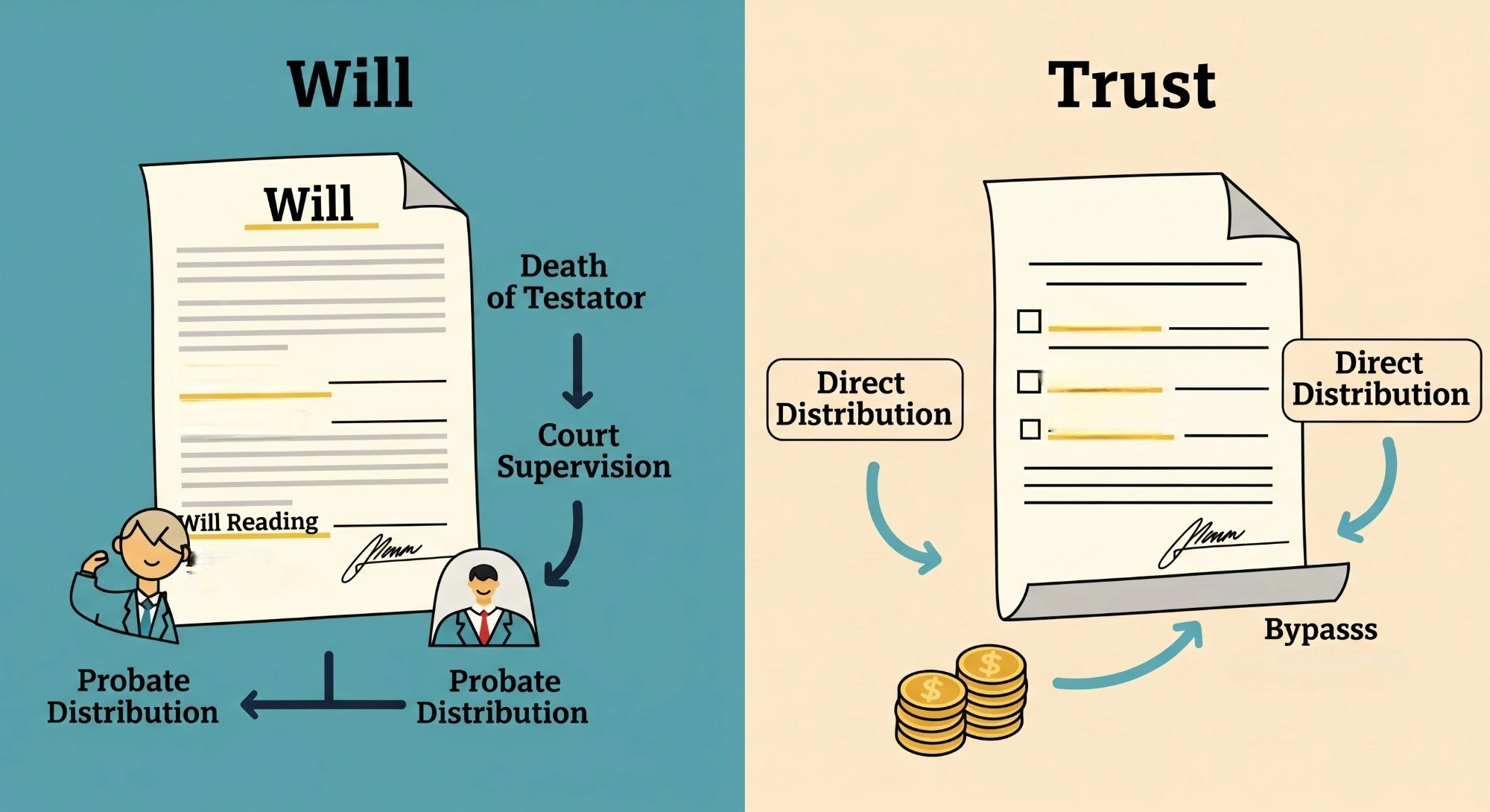
      It’s important to understand the fundamental differences between a will and a trust for estate administration. A will is a legal document specifying how your assets are to be distributed upon your death. A will must go through probate, a court-supervised process that can be lengthy and is a matter of public record.

      On the other hand, a trust is a private way to manage assets. Because the assets are transferred into the trust during your lifetime, probate can be avoided. Trusts are also used to manage assets for beneficiaries who may not be ready to receive an inheritance immediately.

      Setting special terms for distributions allows you to exert greater control over how your assets are used. Understanding the differences helps you choose what works best for your estate.

      The Importance of Tailored Estate Planning

      Customized estate planning allows you to address your specific property, family dynamics, and long-term objectives.

      For example, you may have special considerations regarding the care of your children or the protection of your business. Working with an experienced wills and trusts lawyer helps ensure your plan reflects your values and intentions, allowing your legacy to be honored.

      Another benefit of tailored estate planning is the ability to appoint someone to act on your behalf if you become incapacitated. According to a Upland Durable Power of Attorney Lawyer, certain actions, such as selling stocks, listing your home for sale, accessing your bank accounts, and applying for insurance benefits, might require your agent’s authorization.

      Minimizing Taxes and Avoiding Probate

      When planning your estate, it’s crucial to address potential tax liabilities and the probate process, as both can diminish your estate’s value.

      A skilled wills and trusts lawyer can help you navigate these challenges. Your attorney can help you set up trusts, which are a great way to reduce your estate’s taxable value and keep it out of the public probate process.

      Lifetime gifts and charitable donations can also serve as effective strategies for tax reduction. Furthermore, a lawyer will guide you in creating legal structures that ensure a smooth and timely transfer of assets, allowing your beneficiaries to receive their inheritance without unnecessary delays. Proper planning protects and preserves the value of your estate for the people you care about.

      Ensuring Your Wishes Are Honored

      A clear and thorough estate plan is essential to ensure your wishes are carried out after you pass away. Legal experts work to ensure your assets go exactly to the people you love. They can also help you set up trusts, which offer extra protection and tailored benefits for your beneficiaries.

      It is critical to regularly review and update these documents to reflect significant life changes, such as a marriage or the birth of a child. A well-drafted plan, created with an experienced attorney, also helps ensure that potential legal challenges will not interfere with your final intentions.

      Choosing the Right Estate Planning Lawyer for Your Needs

      To find the right estate planning lawyer for your specific situation, begin by analyzing your individual needs. Do you need assistance drafting a will, establishing a trust, or navigating complicated estate laws? Focus your search on local attorneys who specialize in estate planning and thoroughly vet their qualifications.

      Read online client reviews and testimonials to gauge what past clients have to say about the lawyer’s performance and professionalism. Set up initial consultations to discuss your circumstances and ask about their experience, fee structure, and overall approach. A good lawyer will communicate clearly and listen attentively to your concerns.

      Ultimately, trust your instincts. Find a lawyer who makes you feel comfortable and confident; this partnership is key to your peace of mind. The right lawyer will protect your estate and ensure your wishes are carried out.