Tag: Sustainable Communities

  • How Water Systems Secretly Shape Property Values

    When you’re shopping for a home, you think about schools, curb appeal, and neighborhood character. But one thing that’s easy to miss, and yet makes a huge difference in property values, is the infrastructure that supplies clean water and handles wastewater.

    Reliable water systems are essential for thriving communities. They don’t just keep taps flowing and toilets flushing; they influence everything from home prices to how fast new neighborhoods get built. In booming areas, particularly around major hubs like Houston, Austin, and Dallas-Fort Worth, the availability of infrastructure can determine whether a project gets built at all. As builders move farther into suburban and semi-rural areas, the link between infrastructure and property values is impossible to ignore.

    The Hidden Deal-Breaker

    Real estate agents talk about location, location, location. But while it’s a top selling point, if an area lacks reliable infrastructure, its value takes a hit. For example, neighborhoods that deal with recurring boil-water notices or chronic low pressure often see slower appreciation and longer days on the market.

    According to the Environmental Protection Agency (EPA), modern water and wastewater infrastructure is tied directly to public health and economic growth. When systems are solid and well-maintained, they reduce contamination risks, protect groundwater, and limit service disruptions. Stable infrastructure gives developers, lenders, and homeowners peace of mind that they are making a sound investment that will increase in value.

    On the flip side, when water or wastewater systems are overextended, aging, or nonexistent, it can put the brakes on new housing projects and commercial growth. Developers may face months or even years waiting for utility connections or plant expansions. These delays result in mounting costs that just sit on the books. When these properties eventually go on the market, those costs get passed on to buyers and tenants.

    The Utility Bottleneck

    You see this happen all the time in Texas. Cities such as Houston and Dallas are expanding at a record pace, and while new homes and commercial projects seem to appear overnight, the infrastructure to support them often plays catch-up.

    Traditional centralized wastewater systems take forever to plan and build. Extending sewer lines and upgrading treatment plants is an expensive, slow process. Smaller towns and private developers often face a gap where land is ready for development but utilities aren’t available.

    This gap slows growth and can hurt property values before a project even begins. A new neighborhood without utility connections may sit in limbo for years. Investors are often hesitant to back stalled projects, local governments lose tax revenue, and potential homeowners look elsewhere.

    This issue is also showing up in fast-growing regions nationwide, including parts of Florida, Arizona, Colorado, and the Carolinas.

    A Faster Solution: Decentralized Systems

    The good news is that there are solutions to help developers get around these bottlenecks. When municipal utilities aren’t available, developers can use temporary treatment systems to keep construction on schedule.

    These modular, decentralized treatment plants are designed to serve communities before permanent utilities are in place. Because they are prefabricated, they can be up and running fast, often in a matter of months rather than years, allowing development to begin while municipalities work on longer-term utility expansion.

    These systems meet all state and federal rules, treating wastewater safely and efficiently to prevent environmental contamination and protect public health.

    For developers, this saves time and keeps the project moving. For municipalities, it helps the town grow responsibly. And for property owners, it offers peace of mind that their investment is supported by solid infrastructure.

    Smart Infrastructure Protects Your Home’s Value

    Water and wastewater infrastructure may not be visible, but it has a huge impact on property values. Reliability builds trust, attracts investment, and reduces the risk of costly disruptions. Neighborhoods with dependable water service and robust sanitation tend to hold higher property values.

    A well-maintained wastewater system also protects natural resources such as rivers, lakes, and aquifers, features that directly influence a neighborhood’s desirability. No homeowner wants to worry about flooding, sewer overflows, or contaminated groundwater. Reliable systems ensure that these risks remain low, protecting the local environment and public health.

    By contrast, when infrastructure fails or lags behind, property values can decline quickly. Even a single wastewater overflow event or boil-water notice can affect how a neighborhood is perceived and how much buyers are willing to pay to live there.

    [wpchtmlp id=522896]

    The Future Is Decentralized

    As communities expand, decentralized wastewater systems are becoming key to smart infrastructure planning. Unlike traditional centralized plants, modular systems can scale with demand, expanding as new homes and businesses come online.

    These systems offer short-term solutions and can be designed to support water reuse, helping communities recycle treated water for irrigation. This helps conserve and protect local freshwater supplies, making the community more eco-friendly.

    Infrastructure Is an Investment

    Whether you’re a homeowner, developer, or municipal official, one thing is clear: Infrastructure isn’t just a monthly bill. It’s an investment in property values and community well-being.

    Decentralized solutions are keeping communities growing safely, sustainably, and with confidence that investments are protected from the ground up.

  • The Hidden Obstacle Behind North Texas Development Timelines

    In a competitive real estate market, project delays often come down to one issue: utility readiness. New modular wastewater systems, including compact MBR-based plants, are helping developers stay on schedule while protecting local waterways and aquifers. It’s a smarter, cleaner way to keep pace with growth in Texas.

    Texas is one of the fastest-growing states in the country, with 12.6 million new housing units added between 2022 and 2023 and four towns and cities among the top five fastest-growing in the United States. However, while the demand for housing and commercial properties in areas such as the Dallas-Fort Worth metroplex shows no signs of slowing down, developers often face a hurdle that can throw off the project schedule. 

    But for developers, this demand creates a unique hurdle. When municipal water and wastewater systems are tapped out or unavailable, building permits stall. You can have the strongest market demand in the world, but without capacity, your development isn’t moving forward.

    Why Wastewater Capacity Has Become a Critical Issue

    The Dallas-Fort Worth region adds more than 150,000 new residents per year, with 177,922 moving in between 2023 and 2024 alone. While that influx drives potential revenue, it puts immense strain on municipal utilities that simply weren’t built to handle this velocity of growth.

    Even after you secure zoning and land-use approvals, you might discover that tying into existing infrastructure requires an expansion that hasn’t even broken ground yet. Centralized plant upgrades are massive civil engineering projects that require years of capital planning, permitting, and construction.

    City planners and utility districts are working hard to reach new developments, but centralized plant upgrades require years of engineering, approvals, and capital planning. For developers on tight schedules, that bottleneck can cause projects to stall and affect profitability for developers, housing for desperate tenants and homeowners, and economic growth for the region.

    Modular Treatment: The Practical Workaround

    To keep projects moving, savvy developers are turning to modular, decentralized water infrastructure installed directly on-site. These compact wastewater treatment systems have a small footprint yet incorporate modern technology such as membrane bioreactors (MBR) for optimal efficiency. MBR technology produces exceptionally high-quality effluent that meets or exceeds U.S. Environmental Protection Agency and Texas Commission on Environmental Quality (TCEQ) standards.

    [wpchtmlp id=522720]

    The modular design makes them easy to scale up as demand increases. Developers can start with a small system that meets immediate needs and have the flexibility to increase capacity simply by adding modules. This makes them particularly useful for phased developments.

    Because these compact systems are pre-engineered and factory-built, they can be rapidly deployed, typically within months rather than years. And because they’re located near the communities they serve, there is no need for extensive civil works or lengthy pipelines, saving time and money.

    For master-planned communities, build-to-rent neighborhoods, mixed-use developments, and large industrial campuses, these modular, decentralized systems effectively unlock land that would otherwise sit idle until utility connections became available.

    Why MBR Systems Fit the North Texas Market

    In fast-growing regions like North Texas, MBR systems offer several advantages.

    • Superior effluent quality: The output is clean enough to support water reuse for irrigation, protecting local groundwater and aiding sustainability goals.
    • Compact footprint: Requires limited space, freeing up land for revenue-generating uses.
    • Scalability: Modular design facilitates phased development, matching treatment capacity to absorption rates.
    • Rapid deployment: These plants enable fast installation, keeping projects aligned with financing and construction schedules.

    While modular, decentralized treatment plants provide a quick workaround when utility connections are not available, developers are increasingly viewing these systems not as temporary fixes but as reliable infrastructure that can be integrated into municipal connections when they become available.

    Keeping Pace with Growth While Protecting Local Resources

    Ultimately, growth in North Texas has to be supported by infrastructure that moves as fast as the market does. Modern wastewater systems allow you to maintain momentum during periods of high demand, giving municipalities the breathing room they need to plan for the long term.

    In this market, planning is everything. By integrating scalable wastewater solutions like MBR into your early development strategy, you ensure that utility readiness is one box you can check off with confidence.

  • Best Developers for First-Time Buyers in Abu Dhabi

    Best Developers for First-Time Buyers in Abu Dhabi

    Image Source: pinterest.com

    Abu Dhabi has quickly become one of the region’s most talked-about housing markets, and for good reason. The city offers a mix of properties that work for different budgets, from high-rise apartments in the city center to quiet homes along the waterfront. For first-time buyers, it’s an opportunity to step into ownership in a place that feels both modern and full of long-term promise.

    Buying your first home isn’t just about picking a neighborhood you like. It’s also about knowing who’s building it. A dependable developer makes the entire process easier, such as clear timelines, solid construction, and follow-up support after you move in. That kind of backing helps you feel confident that your new place isn’t just a home you’ll enjoy now but an investment that will hold value as the city grows.

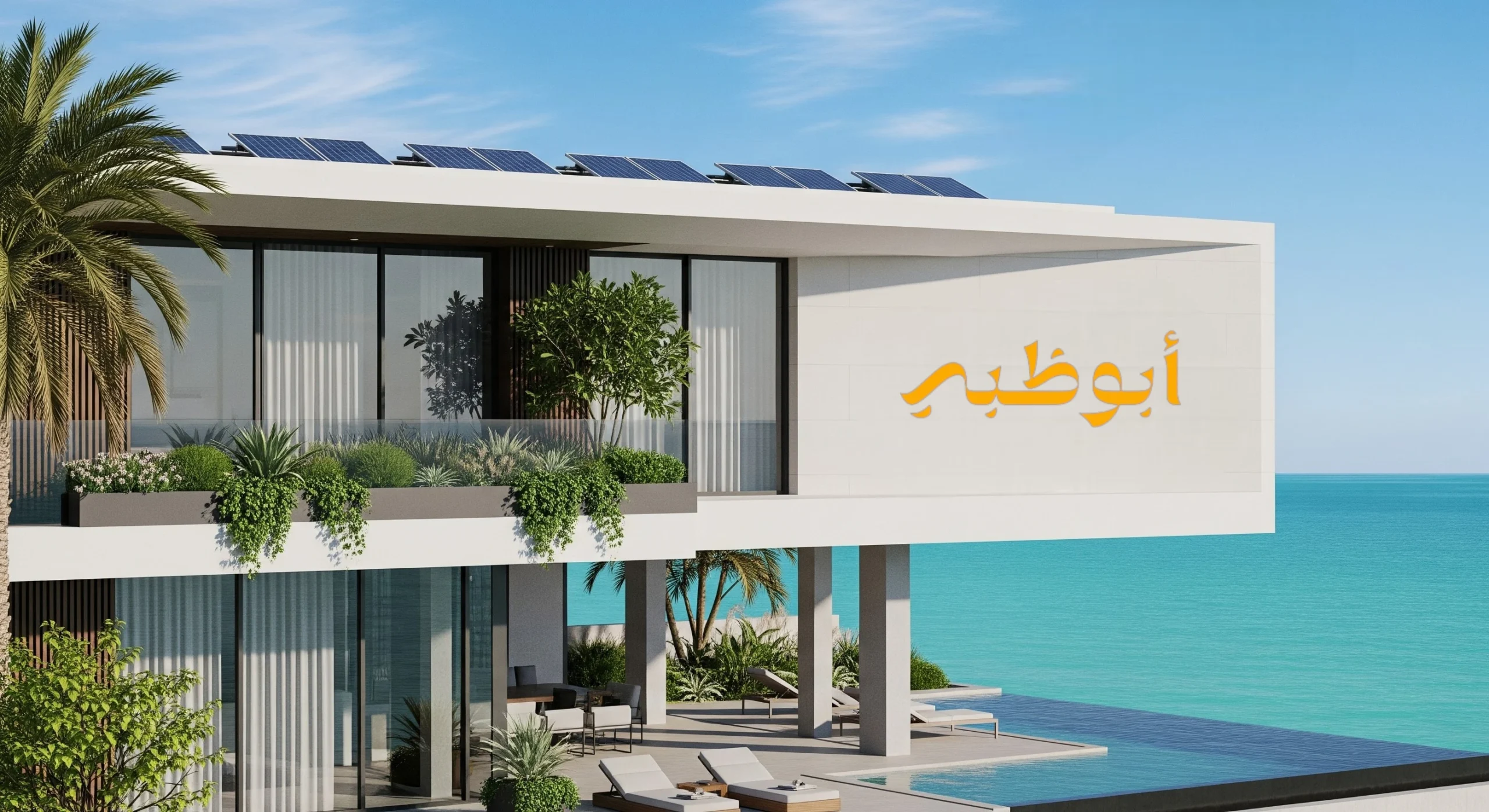
    In the pages ahead, we’ll look at some of the developers that first-time buyers in Abu Dhabi can count on. One of the standouts is Lead Development, a firm that has been shaping some of the capital’s most notable communities. From their luxury projects to their emphasis on sustainable design, they’re setting a tone for what premium living in Abu Dhabi can look like.

    Lead Development: Pioneering Luxury and Sustainability

    Since its establishment in 2010, Lead Development has positioned itself as a visionary luxury real estate developer in Abu Dhabi. The company goes beyond traditional property development by creating sustainable, community-focused environments that appeal to discerning buyers seeking long-term value.

    More than a decade later, that philosophy shows up in neighborhoods that feel carefully planned rather than rushed. Walk through one of their waterfront properties and you’ll notice the blend of open public space with private residences. Buildings don’t just rise out of the ground; they’re framed by landscaped walkways, shaded seating areas, and community hubs that invite people to spend time outside their own front doors.

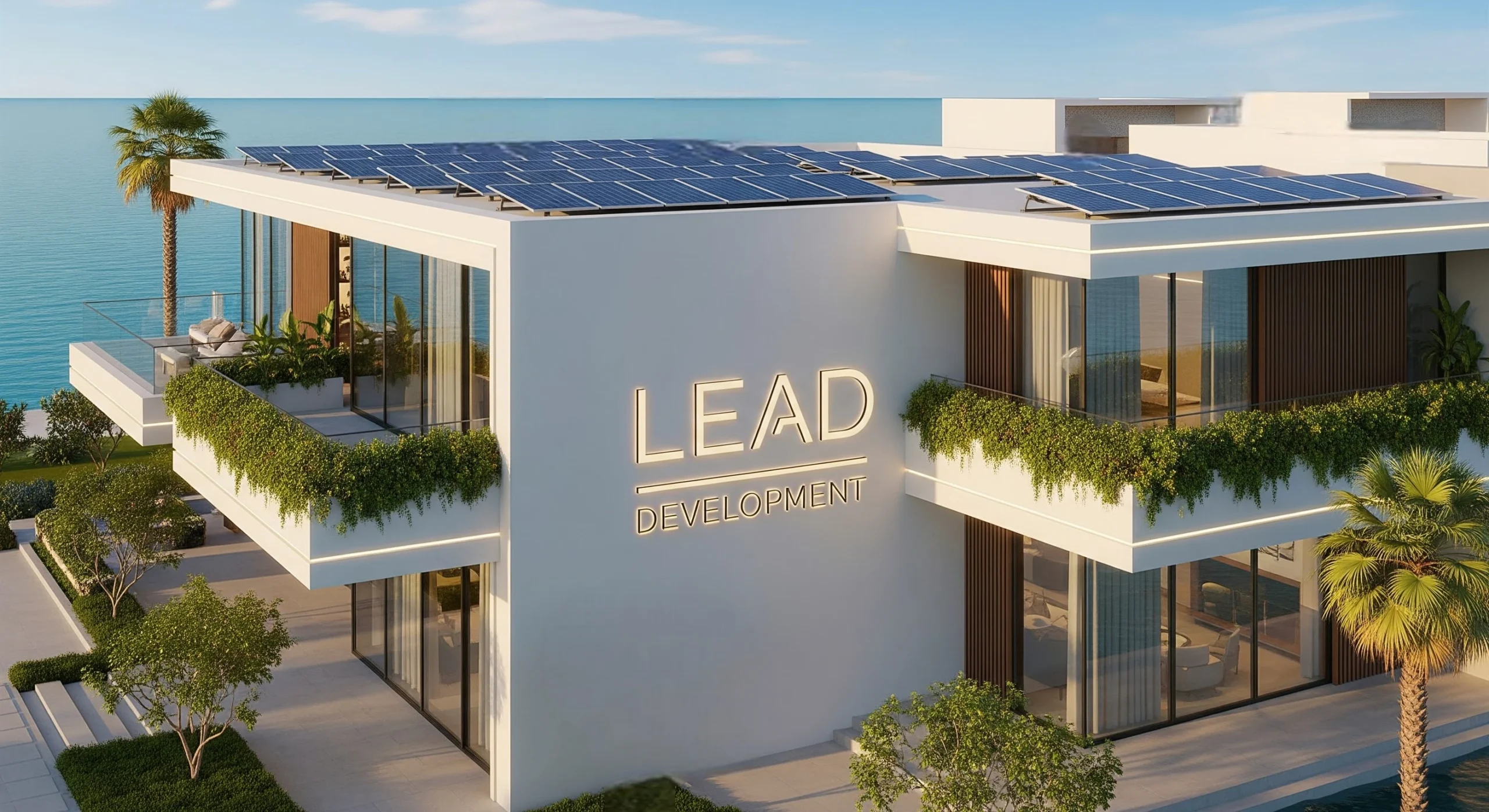
    The company’s portfolio, now valued at over AED 30 billion, reflects that same level of care. Each project carries a signature look such as clean lines, contemporary materials, and layouts that work for families as well as professionals, but also a respect for the natural environment. Solar integration, energy-efficient systems, and thoughtful site planning have become part of the brand’s identity, not afterthoughts.

    Key Strengths That Set Lead Development Apart

    Design that actually feels lived-in

    Walk into a Lead Development home and you notice small, practical things first: windows placed to catch morning light, a kitchen island that invites people to linger, nooks that work for work-from-home setups. Technology is present but unobtrusive — thermostats and lights you control from your phone, built-in chargers where you need them. The effect is simple: spaces that look great in photos and still make sense on a weekday morning.

    Sustainability woven into everyday life

    Here sustainability means fewer compromises. Rooftops ready for solar panels, low-flow fixtures in bathrooms, and landscaping chosen to cut irrigation needs. Those choices shave utility bills and make the apartments and villas feel fresher — cooler in summer, better ventilated. It’s not a headline item on a brochure. It’s the quiet stuff you live with, month after month.

    Neighborhoods that work, not just buildings that sell

    Lead Development plans with routines in mind. Imagine walking your dog past a small market, dropping a child at a nearby school, meeting friends for coffee without hopping in a car. Playgrounds, shaded paths, pocket parks and corner cafés are laid out so daily life happens inside the community. That’s what turns a glossy entrance lobby into a place where neighbors actually know each other.

    Flagship Project: Jubail Island

    On a quiet stretch of coastline between Yas Island and Saadiyat, Jubail Island is taking shape as one of Abu Dhabi’s most distinctive communities. Spread across 500 hectares, the master plan is intentionally low-density, more open space, fewer towers. So the island feels private while still connected to the city’s main cultural and entertainment districts.

    The landscape is what sets it apart. Mangrove forests hug the shoreline, and the development has been designed to preserve them. Walking trails cut through shaded groves, cycling paths wind along the water, and residents can launch a kayak straight from the community. At the same time, there are private beaches, a marina, and plans for wellness and leisure facilities that make it feel more like a resort than a residential district.

    For buyers looking for an entry point, Jubail Terraces offers a chance to live on the island without the multimillion-dirham price tag of a villa. Apartments here start around AED 1.1 million, with wide layouts, modern finishes, and balconies that look out toward the Arabian Gulf.

    Alternative Developers for First-Time Buyers in Abu Dhabi

    Image Source: pinterest.com

    Aldar Properties

    As the largest real estate developer in Abu Dhabi, Aldar Properties offers a wide selection of homes across master-planned destinations such as Yas Island, Al Raha Beach, and Al Reem Island. These neighborhoods have strong infrastructure, schools, health care, and retail already in place, which makes them practical for daily living. Aldar’s reputation for timely delivery, high-quality construction, and community management gives you peace of mind as a first-time buyer.

    Bloom Holding

    Bloom Holding creates contemporary communities with modern layouts and useful amenities. Projects like Bloom Gardens and Bloom Living combine green spaces, schools, and retail areas, so your essentials are close to home. The emphasis on thoughtful design and full-service planning makes Bloom a strong choice if you want a neighborhood that supports family life and long-term growth.

    Reportage Properties

    Reportage Properties focuses on affordability without sacrificing modern design. Their developments often feature sleek apartment buildings and townhouse communities in well-connected locations. Competitive pricing and flexible payment plans help lower the entry point for first-time buyers. At the same time, you still benefit from good construction standards and shared amenities like pools, gyms, and landscaped courtyards.

    Essential Tips for First-Time Buyers in Abu Dhabi

    Financing Options

    Banks in the UAE typically finance up to 85% of the property value for Emiratis and up to 75% for expatriates. Some developers also provide in-house payment plans, which can make the process more flexible. Before you commit, compare interest rates, fees, and repayment terms so your monthly payments fit your budget.

    Choosing the Right Location

    Your location should match both your lifestyle and long-term goals. Proximity to your workplace, schools, and health care can save you time, while areas with strong infrastructure usually hold value better. Communities such as Yas Island, Saadiyat Island, and Al Reem Island have shown consistent appreciation thanks to their central locations and large-scale amenities.

    Deciding on Property Type

    Apartments often come with lower upfront costs and easier maintenance, which is attractive to first-time buyers. Villas or townhouses, on the other hand, give you more privacy and outdoor space. Think about your family size, long-term needs, and how much upkeep you want to manage before choosing.

    Making Your Investment Decision in Abu Dhabi

    Image Source: pinterest.com

    Abu Dhabi offers a range of opportunities for first-time buyers, from premium developments by Lead Development to more accessible projects by Aldar, Bloom, and Reportage. Each company brings a different approach, so you can choose based on your budget, lifestyle, and long-term plans.

    To make your purchase successful, set a clear budget, explore multiple communities, and compare financing options. Walk through the properties in person, review payment schedules, and ask about ongoing service charges so you have a complete picture. With careful planning and the right developer partnership, your first home in Abu Dhabi can support both your lifestyle today and your financial goals for the future.