Tag: Relocation Guide

  • Moving from Florida to Dallas? Here’s How Your Homestead Benefits Compare

    Image Source: pixabay.com

    Thinking about trading beaches for brisket and moving from Florida to Dallas? You are in good company. Plenty of families make the jump for jobs, schools, and the no‑income‑tax combo both states offer. Before you pack the truck, it pays to get clear on how each state treats your primary residence.

    Florida and Texas both deliver strong homestead perks that lower your property tax bill and shield your home from most creditors, but the rules work a little differently in each place. Understanding those differences can help you plan your budget and avoid paperwork headaches.

    What Florida Offers: The Homestead Exemption You’re Leaving Behind

    Florida’s homestead package does two big things: it cuts your taxable value and limits how fast that value can climb.

    • Exemption amount
      The homestead exemption in Florida provides significant benefits that have likely been reducing your property tax bill for years, and for 2025, it can reduce taxable value by up to $50,722. The first $25,000 applies to all taxing authorities, including schools. The additional $25,722 applies only to non‑school taxes on the portion of assessed value between $50,000 and $75,722. Florida voters approved an annual inflation adjustment to that second slice beginning with 2025, which is why you see the $50,722 total this year.
    • Save Our Homes assessment cap
      Once you have the exemption, Florida’s Save Our Homes rule caps yearly increases in assessed value at the lesser of 3% or CPI, which helps keep long‑term property taxes in check when market values jump. You can also transfer up to $500,000 of your accumulated Save Our Homes benefit to a new Florida homestead if you move within the state and meet the timing rules.
    • Creditor protection
      Florida’s constitution protects unlimited home value from most creditors, subject to acreage limits: up to one‑half acre inside a municipality and 160 acres outside city limits. There are standard exceptions for things like your mortgage, property taxes, and contractor liens.

    If you have owned in Florida for years, that 3% cap likely created real savings over time. Just remember, portability only helps when you move within Florida, not when you move to Dallas.

    What Texas Brings to the Table: Your New Benefits in Dallas

    Texas structures relief differently, and many newcomers feel the savings quickly.

    • Exemption amount
      Every homeowner with a qualified residence homestead gets a $100,000 school district exemption off the top. Cities, counties, and special districts can also adopt local‑option exemptions (up to 20% of value, at least $5,000), which stack on top if offered where you live. Dallas County and local taxing units set these locally, so amounts vary by address.
    • Assessment cap
      Texas limits the appraised value increase on a residence homestead to 10% per year plus the value of new improvements, once your homestead is in place. This is less restrictive than Florida’s 3% cap, but it still prevents large, single‑year spikes from driving your tax bill.
    • Senior or disabled homeowner relief
      Starting the year you turn 65 or if you qualify as disabled, your school district taxes are “capped” at the amount you paid that first qualifying year, subject to adjustments that state law outlines. Many taxing units also offer extra exemptions for seniors and disabled homeowners.
    • Creditor protection and size limits
      Like Florida, Texas protects a homestead from most creditors. The protection is tied to land area rather than value: up to 10 acres in an urban area and up to 100 acres for a single adult or 200 acres for a family in rural areas. Mortgage, tax, and mechanic’s lien obligations remain exceptions.

    Note

    As of October 16, 2025, the statewide school‑tax homestead exemption is $100,000. Texas voters will decide in November 2025 whether to increase it to $140,000 (Proposition 13). Keep an eye on that ballot measure if you are closing late in the year.

    The Key Differences That Matter

    These two systems are generous, but they reward homeowners in different ways.

    • Assessment caps over time
      Florida’s 3% Save Our Homes cap is tighter than Texas’s 10% cap. If you plan to stay put for a long time, Florida’s cap tends to protect long‑run affordability more strongly as markets appreciate. Texas still caps increases, but the ceiling allows faster catch‑ups to market value.
    • Upfront savings versus long‑term savings
      Texas generally provides larger immediate tax relief through its $100,000 school exemption and any local options. Florida’s relief grows the longer you stay because of the Save Our Homes cap and, if you stay in Florida, portability when you move to another Florida homestead. Texas does not have portability, so each home you buy is reassessed and capped from that new baseline.
    • Creditor protection mechanics
      Both states protect your homestead from most creditors. Florida ties protection to unlimited value with acreage limits. Texas ties protection to acreage with no value limit. Either way, standard exceptions for mortgages, taxes, and authorized liens still apply.

    Making the Move: What You Need to Know

    When you establish your Dallas home as your residence homestead, timing and documents matter.

    • Establish residency the Texas way
      On Texas’s homestead application, the address on your Texas driver’s license or state ID must match the property address. Plan to update your ID quickly after closing. Some appraisal districts may also ask for a vehicle registration receipt or a utility bill that matches the homestead address.
    • Know your filing window
      File your homestead application with the Dallas Central Appraisal District (DCAD) by April 30 for that year’s tax savings. If you miss it, Texas allows late filing in many cases for up to two years after the delinquency date, which is typically February 1 of the following year. Also, Texas law now lets many buyers file in the same year they purchase.
    • Cancel Florida’s homestead
      Once you establish Texas as your permanent home, notify your former Florida county property appraiser to remove the Florida homestead. Claiming homestead in two states is illegal and can trigger penalties. Florida homestead applications and changes are handled at the county level and follow state deadlines.

    A quick checklist for your first month in Texas:

    1. Update your Texas driver’s license with your Dallas address.
    2. File the homestead application with DCAD.
    3. If you are 65 or older or disabled, apply for those additional exemptions and confirm your school tax ceiling.

    The Bottom Line

    Florida and Texas both treat homeowners well. Texas tends to deliver bigger day‑one exemptions, which many movers notice immediately. Florida excels at long‑term assessment limits that compound over time if you stay put. Your actual bill will still depend on your home’s value and local tax rates, but the net result is that many families find Dallas’s overall cost of living and job market compelling even after comparing homestead rules.

    If you are heading to Dallas, set a reminder for the April 30 homestead deadline, get your ID address updated, and file early. A little upfront organization makes sure you capture the Texas savings you are entitled to in your new home.


  • Smart Moves for Military Families: Relocation & Storage Tips in Dallas–Fort Worth

    For military families, relocation is often a way of life. Assignments change, new bases call, and the next move could be just around the corner. In fast-growing metro areas like Dallas–Fort Worth, where the real estate market is competitive and timelines can be tight, successfully managing a home sale or purchase while preparing for deployment or reassignment requires careful planning.

    Military families often face more than a typical relocation—unpredictable timelines, service members deployed during escrow, and the need for temporary housing during the transition. Having a solid plan can mean the difference between chaos and a smooth handoff.

    Here are the most important things to keep in mind when managing a move or home transition in DFW, especially with the unique challenges military life can bring.

    Start with a Realistic Timeline

    When you’re on military orders, the schedule isn’t always in your control. Still, building a flexible timeline on your end can help minimize stress. If you’re selling your home, connect with a real estate agent who understands PCS timelines and the VA loan process. If you’re buying, get pre-approved early and be clear on your buying window.

    Tips to stay on track:

    • Notify your command and obtain a copy of your orders as early as possible.
    • Research neighborhoods that match your family’s needs and budget before arrival.
    • Allow time for potential delays like appraisals, inspections, or document reviews.

    Choose an Agent Who Understands Military Moves

    Real estate agents experienced with military clients understand the urgency, unique financial tools, and time-sensitive paperwork that come with military life. Look for someone certified as a Military Relocation Professional (MRP) or with strong experience handling VA loans and tight timelines.

    Questions to ask potential agents:

    • How familiar are you with VA loan appraisals and inspection requirements?
    • Are you comfortable working with clients who may not be present for every step of the process?
    • What are your recommendations for temporary housing, storage options, or local schools?

    Consider Temporary Storage as Part of Your Plan

    In a perfect world, your move-out and move-in dates would line up. In reality, many military families face a gap between selling one home and accessing the next. Whether you’re relocating across the country or within DFW, short-term storage can help ease the transition.

    Storage facilities tailored to military families often provide month-to-month flexibility, climate-controlled units, and security features that give peace of mind. When choosing a facility, look for features that align with your situation, especially if you’ll be away from the area or unable to check in on your items.

    For example, many military families benefit from storage solutions that offer flexible timelines, secure access, and military discounts. These options are especially helpful if your new home won’t be ready right away or if you’re being deployed and need to leave your belongings in trusted hands.

    Build a Moving Binder or Digital Hub

    Military families often rely on structure and systems to stay organized during frequent transitions. One useful tool is a dedicated moving binder or digital hub where all documents, checklists, and key contacts live. Having everything in one place can streamline the process if you’re away for training or deployment during a home transition.

    Your moving hub should include:

    • Copies of PCS orders and housing paperwork.
    • Mortgage pre-approval, VA documents, or proof of funds.
    • Home inspection reports or repair estimates.
    • A list of utility providers, insurance policies, and contact information.
    • Digital copies of your storage rental agreement, if applicable.

    Make Room for the Unexpected

    Military moves often come with surprises, from last-minute orders to shifting closing dates. Even in a structured market like DFW real estate, flexibility is key. Having backup plans for housing, transportation, and storage helps you stay resilient when things change.

    Build extra time into your moving schedule and budget. If you’re working with tight timelines, communicate that clearly with your agent and lender. The more transparent you are, the better your real estate team can support you with speed and efficiency.

    Take Advantage of Local Support Networks

    Dallas–Fort Worth has a strong military presence and an active community of service members and veterans. From relocation assistance programs to veteran-owned service providers, a wide range of resources is available to help ease the burden of moving.

    Consider tapping into:

    • Local Facebook groups or military spouse networks
    • Installation, relocation of offices, or housing assistance teams
    • Real estate professionals who offer discounts for service members

    Knowing others have walked this path can be both comforting and strategic.

    Build a Move That Works for Your Family

    Whether you’re selling a longtime home or putting down new roots in Dallas–Fort Worth, the process doesn’t have to be overwhelming. With careful planning, trusted partnerships, and flexible storage options, your next move can be as structured as military life requires.

    Start early, communicate clearly, and give yourself some grace. The military may issue the orders, but how you move is still up to you.

  • Relocating? Sell Your Grandview Home Before Your Next Move

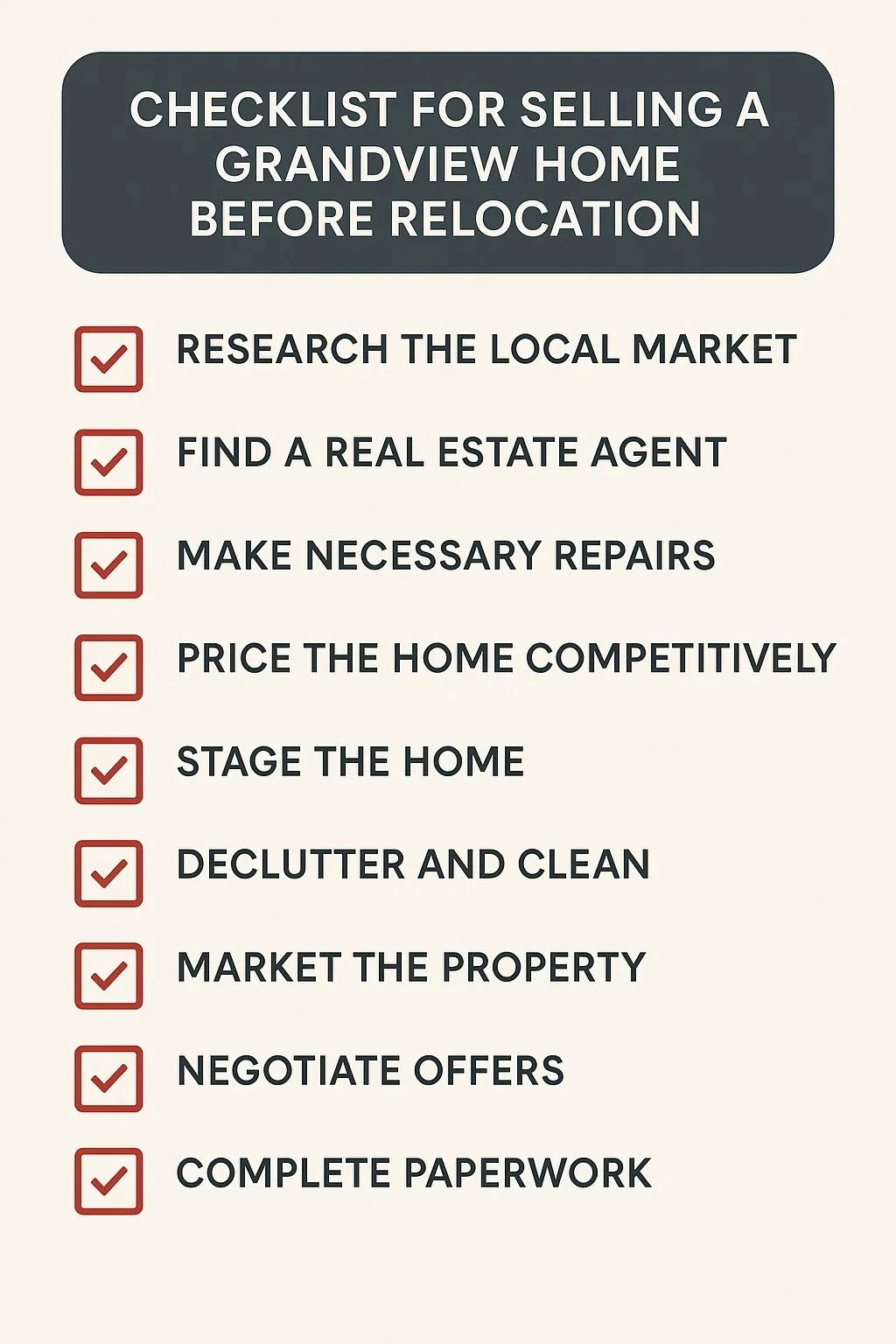
    Thinking about relocating soon? Before you pack up, let’s talk about selling your Grandview home. If you’re looking for guidance, check out this post on how to sell your home in Grandview for some helpful insights.

    Secure a Competitive Cash Offer

    Thinking about selling your Grandview home before relocating? A cash offer could be your ticket to a quick, stress-free sale. Let’s explore why.

    • Fast Closings: Cash offers often close in just one to two weeks, unlike traditional sales that drag on for a month or more.
    • Fewer Hurdles: With no lender involvement, you skip financing contingencies, reducing the risk of deals falling apart at the last minute.
    • Sell As-Is: Many cash buyers, like investors, buy homes as-is, so there’s no need to spend on repairs or staging.
    • Lower Closing Costs: Without a mortgage lender, you may avoid certain fees, although cash offers can be slightly below market value, something to weigh carefully.

    A cash offer might not be the highest bid, but the speed and simplicity can make it worth it.

    Speed Up Your Home Sale

    Relocating soon? A quick home sale can keep your move on track. Here are a few ways to speed things up:

    • Choose Cash Buyers: Cash buyers can close quickly, often in under two weeks with minimal delays.
    • Prep Ahead: Take care of minor repairs now so your home shines from day one on the market.
    • Stay Flexible: Work with buyers whose timeline aligns with yours to avoid juggling multiple moves.
    • Hire a Pro: Partner with a realtor experienced in fast sales to handle negotiations and paperwork efficiently.

    By focusing on these strategies, selling your home won’t slow down your relocation plans.

    Avoid Traditional Selling Hassles

    Selling your Grandview home the usual way can be stressful. Here’s how to skip the common headaches and save time:

    • Living in a Show-Ready Home: Keeping your home spotless at all times is exhausting. Buyers need to see a blank slate to picture themselves living there.
    • Repair Cost Recovery: Don’t expect to get back every dollar you spend on fixes—most sellers recoup only 60–70% of repair costs.
    • Lingering Listings: Homes lingering on the market raise red flags. Buyers might assume issues exist or push harder in negotiations, lowering your potential profit.
    • Agent Dependency Risks: Not all agents market aggressively. Stay involved, ask about their strategies, and consider supplementing with your own efforts to boost visibility.

    Take Action Right Now

    Ready to sell your Grandview home before moving? Don’t wait. Taking action now ensures you’re ahead of the game for a seamless transition.

    • Assess Your Timeline: Start by mapping out your relocation schedule. Knowing your deadlines helps prioritize tasks and decide if a quick cash sale fits best.
    • Gather Key Documents: Collect property records, deeds, and recent inspections. Having paperwork ready speeds up the process when a buyer shows serious interest.
    • Research Buyer Options: Look into cash buyers or investors alongside traditional routes. Compare offers to see which aligns with your speed and financial goals.
    • Consult a Professional: Reach out to a trusted realtor for advice. Their insights on the local market can guide your next steps with confidence.

    Create a Smooth Selling Strategy

    Planning to relocate means selling your Grandview home efficiently. Crafting a solid strategy now can prevent hiccups and keep things moving forward.

    • Define Your Goals: First, clarify what matters most—speed, profit, or ease. This focus helps shape every decision from pricing to choosing the right buyer.
    • Understand Market Trends: Check local Grandview sales data. Knowing if it’s a buyer’s or seller’s market informs whether to hold out for higher offers.
    • Plan for Flexibility: Be ready to adjust plans if offers don’t meet expectations. Having backup options, like a cash sale, keeps stress levels low.
    • Coordinate Moving Logistics: Align your sale with your move-out date. Coordinating timelines ensures you’re not juggling two homes or rushing at the last second.

    Ready Your Home for Buyers

    Before relocating, getting your Grandview home buyer-ready is crucial. A little prep goes a long way in making a strong impression.

    • Declutter Spaces: Clear out personal items and excess stuff. A clean slate helps buyers picture their life in your home.
    • Minor Fixes: Tackle small repairs like leaky faucets. These quick updates boost appeal without breaking your budget before the move.
    • Deep Cleaning: Scrub every corner to make it sparkle. A spotless home signals care and can sway buyers to act fast.
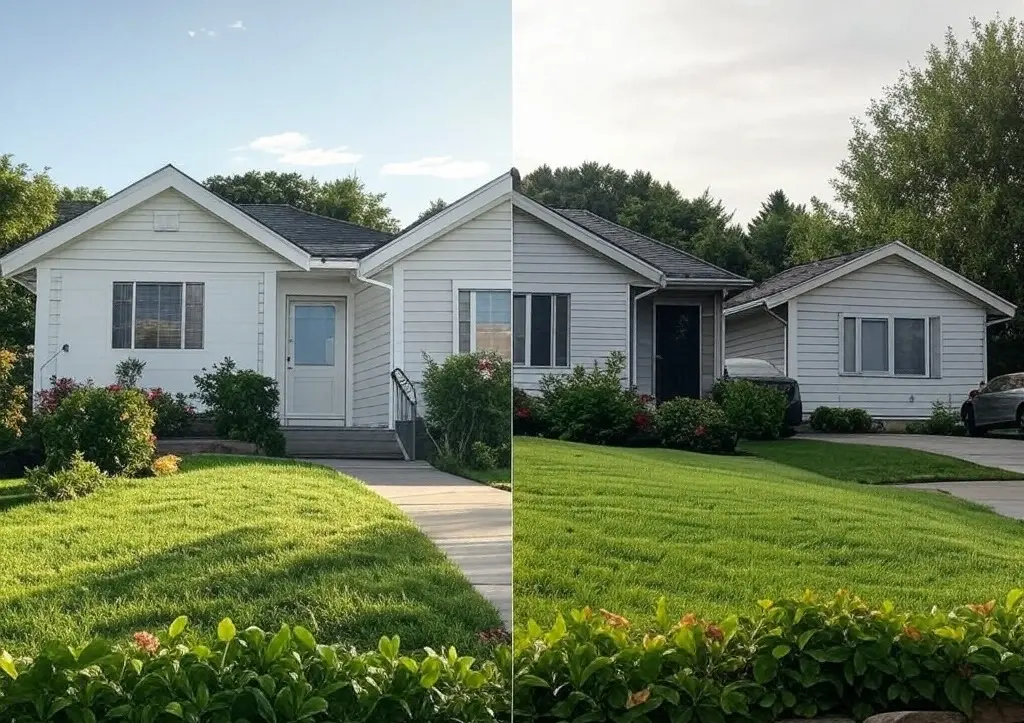
    • Curb Appeal: Spruce up the exterior with fresh paint or plants. First impressions start at the curb, so make it count.

    Putting in this effort now can attract serious offers quickly. A well-prepared home stands out, easing your path to relocation success.

    Set the Right Asking Price

    Pricing your Grandview home correctly is vital before relocating. Set it right to attract buyers without leaving money on the table.

    • Run a Market Analysis: Dive into a comparative market analysis (CMA). Look at recent sales nearby to gauge what buyers are willing to pay locally.
    • Get Professional Advice: Hiring an appraiser can provide clarity. Their expert valuation ensures your price reflects true market value, avoiding over or underpricing mishaps.
    • Factor in Relocation Needs: Think about your timeline. If speed is critical, a slightly lower price might draw quicker offers to match your moving schedule.
    • Stay Open to Adjustments: Be ready to tweak your price based on feedback. If showings are slow, a small drop could reignite buyer interest fast.

    For deeper insights on pricing, check out this guide from Zillow to refine your strategy further.

    Market Smart for a Quick Sale

    Want your Grandview home sold before relocating? Ramp up visibility with smart marketing to reach eager buyers and seal the deal.

    • Use Pro Photos:: Invest in professional photography. Great images capture attention online, showcasing your home’s best features to draw in potential buyers instantly.
    • List on Top Sites: List on sites like Zillow or Realtor.com. These platforms expose your home to millions, increasing the odds of a quick sale.
    • Promote on Social Media: Share your listing on Facebook and Instagram. Use targeted posts and hashtags to connect with local buyers browsing for homes daily.
    • Offer Virtual Tours: Offer 360-degree tours or video walkthroughs. These tools let distant buyers explore your space, widening your pool of potential offers.

    Moving Thoughts

    As you prepare to relocate, selling your Grandview home doesn’t have to be stressful. For expert guidance and support, explore trusted home solutions in Kansas City. Take the next step confidently, knowing you’ve got resources to ease your transition.

  • Things to Consider When Downsizing to a Smaller Property in Bellevue, WI

    Source: pexels.com

    Downsizing is a trend, but for many people, it’s more than that; it’s a smart decision. Whether you’re looking for a smaller house in Texas, Wisconsin or elsewhere in the United States, downsizing can help you save money and simplify your life. It’s all about making some tough choices and being creative with the space you have. But it might not apply to individuals residing in Bellevue, WI.

    Know What You Really Need

    Before you even start looking at listings, take a hard look at your stuff. We’re talking a real Marie Kondo-style assessment. A smaller home means less room for clutter. So, what’s essential? What do you use every single day? That dusty bread maker you haven’t touched in five years? Probably not making the cut.

    Think about your lifestyle, too. Are you dreaming of spending weekends hiking instead of mowing a huge lawn? Maybe a condo or townhouse with zero yard work is your jam. Or do you still want a little patch of green, just…less of it? Figure out what matters to you.

    Dealing with Big Stuff and Extra Wheels

    This is often the biggest headache with downsizing: what to do with all the stuff. That oversized sectional? The extra fridge in the garage? Your collection of vintage snowmobiles? A smaller home just won’t have room for it all.

    Get creative:

    • Sell or Donate: If it won’t fit, it’s gotta go. Facebook Marketplace, Craigslist, and local charities are your friends.
    • Double-Duty Furniture: Think storage ottomans, beds with drawers, and extendable dining tables. Every piece needs to earn its keep.
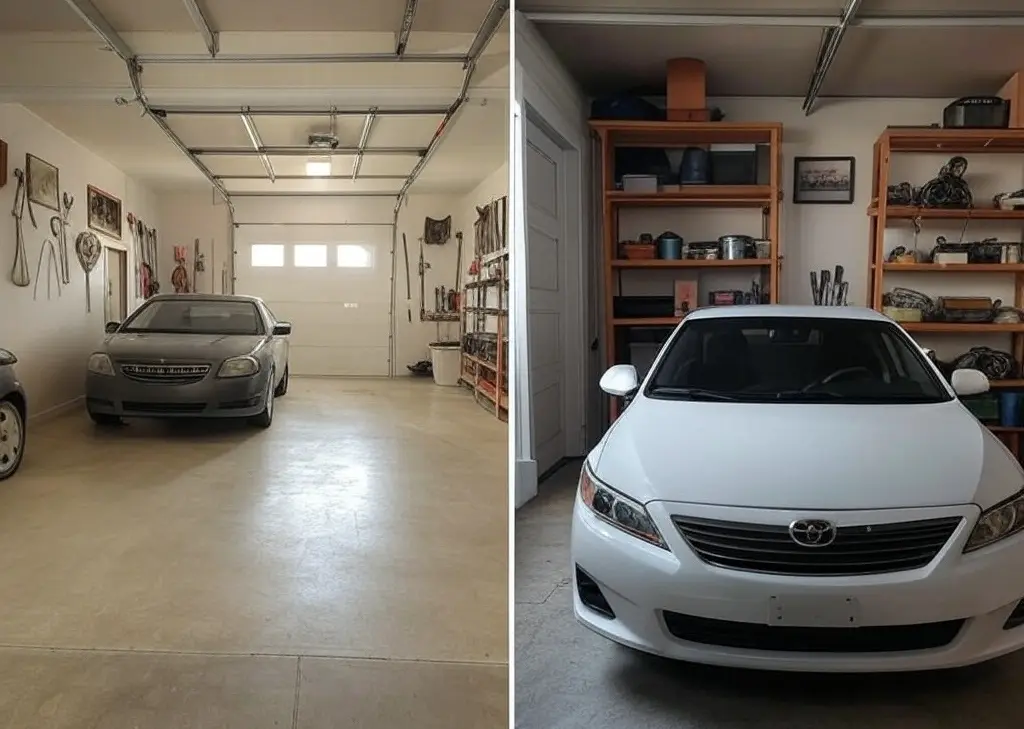
    • The Vehicle Situation: This is a big one, especially if you’re used to a sprawling suburban garage. If your new place has limited parking, you might need to make some tough choices. Do you really need all those cars, motorcycles, or that RV? Consider off-site storage. It might be worth the cost to keep that classic car or your boat without cluttering up your new driveway. Look for facilities in your region that offer car or boat storage.
    • A garage may solve some of these problems.

    For homeowners in Bellevue, If you’re looking for facilities offering car storage Bellevue has reliable options to keep vehicles safe while freeing up space at home. This allows homeowners to downsize without giving up important possessions.

    Storage Hacks and Smart Organizing

    Okay, so you’ve downsized your belongings. Now it’s time to make your smaller space work for you. Think vertical!

    • Shelves, Shelves, Shelves: Floor-to-ceiling shelving units are your best friend. Use them in living rooms, bedrooms, even the garage.
    • Wall-Mounted Everything: Get those organizers off the floor and onto the walls.
    • Hidden Storage: Ottomans with storage compartments, beds with built-in drawers – you get the idea.
    • Organize Your Closet: Custom closet systems can be a game-changer. Think double-hanging rods, adjustable shelves, and plenty of bins.
    • Label Everything: Clear bins with labels will save you so much time and frustration. Store seasonal items, keepsakes, and anything you don’t use regularly in less accessible spots (like high shelves or under the bed).
    • Rent for extra non-essentials.

    Embracing the Smaller-Home Lifestyle

    Living smaller isn’t just about square footage; it’s about a mindset shift. A smaller kitchen might mean streamlining your appliances (do you really need a stand mixer, a food processor, and a blender?). A smaller living room might mean choosing furniture that’s cozy but not overwhelming.

    The upside? Less cleaning! Less yard work! That means more time for the things you actually enjoy – traveling, hobbies, spending time with loved ones, or just relaxing.

    Entertaining might look a little different, too. Instead of huge holiday bashes, you might opt for smaller, more intimate gatherings. Get creative with outdoor spaces – a patio with comfy seating can be a great extension of your living area.

    The Emotional Side of Downsizing

    Let’s be honest: letting go of a home, especially one you’ve lived in for years, can be tough. It’s not just about the stuff; it’s about the memories.

    Don’t try to do it all at once. Start small. Go room by room. Keep the things that truly have sentimental value. Maybe pass down some heirlooms to family members. It’s okay to grieve the loss of space, but focus on the freedom you’re gaining.

    Make your new place feel like home. Hang your favorite pictures, display those treasured keepsakes, and arrange your furniture in a way that feels comfortable and inviting.

    The Financial Perks of Going Smaller

    Let’s talk money. Downsizing can be a serious win for your wallet.

    • Lower Utility Bills: Heating and cooling a smaller space is just plain cheaper.
    • Lower Property Taxes: This depends on your location, but often, a smaller home means lower taxes.
    • Cashing Out Equity: Selling a larger home can free up a significant chunk of cash. You can use that money to pay off debt, invest for retirement, travel, or even make some upgrades to your new, smaller place.
    • Mortgage-Free Living? For some, downsizing means ditching the mortgage altogether. Imagine the financial freedom!

    Downsizing: It’s More Than Just a Move

    Downsizing is all about getting rid of the stuff you don’t need and simplifying things a bit. Yes, it does take some effort and planning, but the rewards—in terms of financial freedom, a decrease in stress, and having more time for the activities you love. So take your time, be mindful, and enjoy your life.