Tag: Real Estate Investing

  • Real Estate: Definition, Types, How It Works, Investment, and Key Terms

    Real estate touches almost every part of our lives, from where we sleep, to how local schools get funded, to where businesses decide to grow. If you’re thinking about buying a home, adding a rental to your portfolio, or just trying to make sense of all the jargon, this guide breaks down the basics in plain English.

    We’ll walk through what real estate really is, the main types of properties, how a deal actually goes from offer to closing, some popular ways to invest (both hands-on and hands-off), and a quick glossary of terms you’ll run into again and again.

    What Is “Real Estate,” Exactly?

    Real estate refers to land and anything permanently attached to it including homes, buildings, improvements, and the rights that come with ownership.

    In everyday use, you’ll hear “real estate” and “real property” used interchangeably. (That’s different from personal property, like your car or furniture, which isn’t affixed to land.)

    Ownership typically includes a “bundle of rights,” such as the right to use, lease, sell, or improve the property within the limits of law and zoning. Those rights have value; how much value depends on location, local demand, condition, allowed uses, and broader economic forces like interest rates.

    Etymology & First Use:
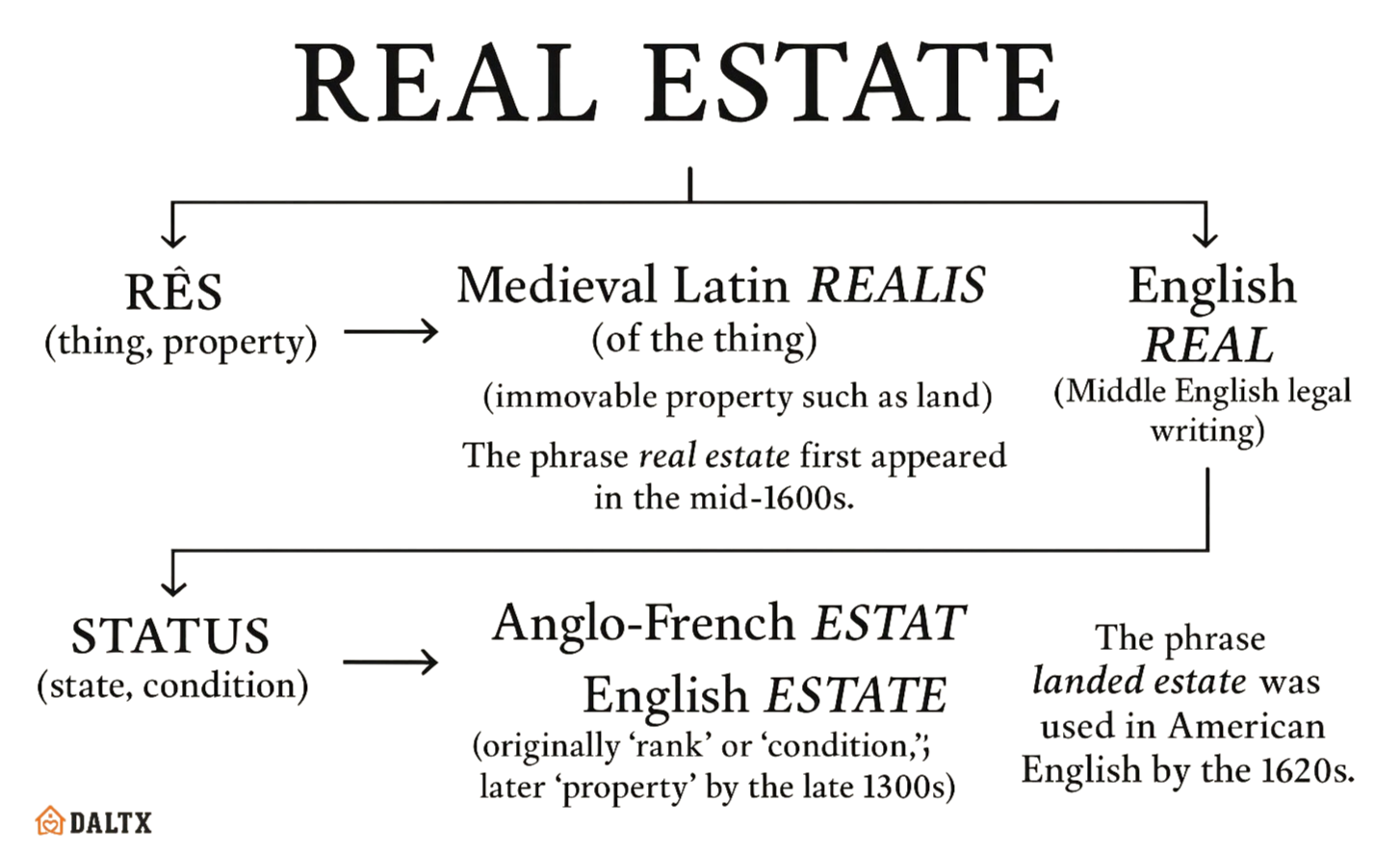
    • Real” comes from the Medieval Latin realis (“of the thing”), which itself comes from the Latin rēs (“thing” or “property”). In English legal writing dating back to Middle English, real referred to “things” in the legal sense, especially immovable property like land, as opposed to personal (movable) goods. The exact phrase real estate first appeared around the mid-1600s.1
    • Estate” comes from the Anglo-French estat, which comes from the Latin status meaning “state” or “condition.” In English, it originally meant “rank” or “condition,” and by the late 1300s, it also came to mean “property.” The phrase “landed estate” was already used in American English by the 1620s.2

    The earliest recorded use of “real estate” dates back to the mid-1600s. Merriam-Webster lists its first known use around 1642, while the Online Etymology Dictionary traces it to the 1660s. Either way, the term clearly entered English in the 1600s and has kept its legal tone ever since.3

    The Main Types of Real Estate

    Understanding the different categories helps you compare apples to apples when buying, investing, or analyzing the market.

    • Residential: Includes single-family homes, townhomes, condos, duplexes, triplexes, fourplexes, and manufactured homes.
    • Commercial: Covers offices, retail spaces, hotels, and other properties that mainly generate business income.
    • Industrial: Includes warehouses, distribution centers, manufacturing facilities, and flex spaces.
    • Land: Refers to raw land, infill lots, farmland, and parcels set aside for future development.
    • Special purpose & mixed‑use: Properties like self-storage facilities, medical and educational buildings, or developments that combine residential, retail, and office spaces.

    How Real Estate Really Works

    To understand real estate, it helps to start with what actually drives value in the market.

    What Actually Drives Property Value

    Three big levers influence property values:

    1. Location & land use: Zoning, school districts, commute times, and neighborhood amenities.
    2. Supply and demand: How many homes are for sale or lease versus the number of qualified buyers or tenants.
    3. Money & macroeconomics: Mortgage rates, employment, local growth, insurance costs, and property taxes.

    Who’s Involved When You Buy a Home

    • You and the seller
    • Real estate agents/brokers representing each side
    • A lender (if you’re financing) and an appraiser
    • A home inspector and sometimes specialists (e.g., roof, sewer)
    • A title/escrow company or real estate attorney (varies by countries and state)

    The Step-by-Step Purchase Timeline

    1. Budget and preapproval
      Get preapproved to understand how much home you can afford and to make your offer stronger.
    2. Home search & pricing
      Your agent will use comparable sales (comps) and a Comparative Market Analysis (CMA) to help you decide on a fair offer price.
    3. Offer, earnest money & contingencies
      Your written offer usually includes an earnest money deposit (typically around 1–3% of the purchase price) and contingencies for financing, appraisal, and inspection. The home inspection contingency gives you time to inspect the property and renegotiate or cancel if serious issues surface. This window is usually 7–10 days, as agreed in the contract.
    4. Appraisal & underwriting
      The lender orders an appraisal to confirm the property’s value. Meanwhile, underwriters review your income, assets, debts, and details about the property before final approval.
    5. Title search & escrow (two meanings)
      • Escrow in the transaction: A neutral third party holds funds and documents and coordinates closing once the title is cleared.
      • Escrow account for taxes/insurance: After you buy the home, many lenders collect part of your annual property taxes and homeowners insurance with each mortgage payment, then pay those bills for you. Some borrowers who qualify can request an escrow waiver and handle those lump-sum payments themselves, though eligibility, fees, and rules vary by lender, loan type, state law, and borrower profile.
    6. Closing
      You’ll sign the final documents, pay your closing costs and down payment, and get the keys once the transaction is officially recorded.

    Paying for Your Home and the Help That May Be Available

    • Conventional, FHA, VA, USDA and other mortgages are common choices. Some lenders and programs allow down payment assistance (DPA) through grants or second‑mortgage options (forgivable, deferred, or low‑interest), or matched‑savings programs, to help cover your down payment and/or closing costs. Many programs look for a minimum credit score (often ~620), income limits, and completion of a home buyer education course; specifics differ by state and program.
    • After you build equity, some owners tap a home equity line of credit (HELOC) for renovations or debt consolidation. Many HELOCs offer a draw period followed by a repayment period, and some lenders provide options to fix the rate on a portion of what you draw, useful when rates are rising. Remember: your home is collateral, so borrow carefully.

    Real Estate as an Investment

    Real estate can provide cash flow, appreciation, and potential tax benefits, but it also comes with market, maintenance, and regulatory risks.

    Here are common ways Americans invest, from hands‑on to fully passive.

    Hands-On Ways to Invest

    • Buy‑and‑hold rentals (single‑family or small multifamily)
      You purchase a property and rent it to long‑term tenants. Key metrics:
      • Net Operating Income (NOI) = rent & other income − operating expenses (excluding mortgage).
      • Cap rate = NOI ÷ purchase price.
      • Cash‑on‑cash return = annual pre‑tax cash flow ÷ total cash invested.
        Quick example: If rent is $2,200/month, annual gross rent is $26,400. After a 5% vacancy allowance ($1,320) and $8,000 in annual expenses, NOI is $17,080. On a $280,000 purchase, the cap rate is about 6.1%.
        If you buy a property with tenants in place, you’ll step into landlord duties immediately and must honor existing leases and local landlord‑tenant laws; rent control or “just cause” rules in some areas may limit rent increases or eviction without cause.
    • Short‑term rentals (STRs) / Airbnb
      STRs can earn a higher nightly rate than long‑term leases, but occupancy is less predictable and operating costs (furnishings, utilities, cleanings, property management) are higher. Expect more day‑to‑day involvement and be sure you understand local STR rules before you buy.
    • House hacking
      Live in one unit and rent out the others (or rooms) to offset the mortgage. It’s a popular on‑ramp to investing.
    • Fix‑and‑flip / BRRRR (Buy, Rehab, Rent, Refinance, Repeat)
      You add value through renovations. Success hinges on accurate ARV (after‑repair value) estimates, rehab budgets, holding cost assumptions, and a realistic timeline.
    • Foreclosures and REOs
      You can buy at auction (generally as‑is and often cash‑heavy) or purchase bank‑owned (REO) homes through agents after they don’t sell at auction. Preforeclosures and short sales are additional paths, though lender approvals can lengthen timelines. With any distressed property, insist on a careful inspection when possible and budget for repairs.
    • Tax lien investing
      Instead of buying the house, you may purchase a tax lien certificate when an owner falls behind on property taxes. The investor pays the delinquent taxes and then collects repayment (plus interest/penalties) from the owner, or in rare cases, by foreclosing if the owner doesn’t redeem in time. Rules, rates, and timelines vary widely by state, and due diligence is critical.
    • Partnerships and small syndications
      Partnering lets you combine cash, credit, skills, and time. It can also split profits and introduce differences in work styles, so set roles and expectations in writing. You’ll find potential partners via local investor clubs, online communities, crowdfunding platforms, and your professional network.

    More Passive or Low-Maintenance Options

    • REITs (Real Estate Investment Trusts)
      Public or private companies that own or finance real estate; investors buy shares and receive dividends.
    • MBS (Mortgage‑Backed Securities)
      Bonds backed by pools of mortgages; investors earn from borrowers’ payments. Like all bonds, MBS carry interest‑rate and credit risks.
    • Crowdfunding & real estate funds
      Platforms pool investor capital into specific projects or portfolios; read the fine print on fees, lockups, and sponsor track records.

    Financing and Managing Risk as an Investor

    • Financing: Investment properties often require larger down payments and stronger reserves than primary homes. If you’re buying a personal residence, down payment assistance may help you bridge the gap; confirm that your lender works with the program you’re targeting and review whether funds are a grant or a second loan (forgivable, deferred, or amortizing).
    • Due diligence: Use inspections, rent rolls, service records, and a title review to avoid surprises. If you waive the inspection contingency (common in auctions), build in a bigger repair budget.
    • Landlord‑tenant law & leases: Honor current leases when you buy a property with tenants; understand notice periods, just‑cause rules, and local limits on rent increases. Plan for vacancy and CapEx.
    • Operations & sustainability: Strategic “green” upgrades like energy-efficient HVAC systems, better insulation, solar, and water‑saving fixtures, can lower expenses and may qualify for energy‑efficient mortgage options or tax credits, depending on your loan and location.
    • Cash management: Decide whether to keep an escrow account for taxes/insurance or request an escrow waiver (if eligible) and save for those bills yourself; weigh convenience versus control and any waiver fees.
    • Capital for improvements: Some owners tap a HELOC to fund renovations; compare fixed‑rate locks versus variable draws and confirm fees and conversion rules before you borrow.

    Common Terms Every Buyer, Seller, and Investor Should Know

    [table id=3 /]

    Smart Upgrades: Sustainability and Resilience

    Green upgrades aren’t just about doing the right thing; they can also improve comfort and cut operating costs. Owners frequently pursue solar panels, high‑efficiency HVAC, better insulation/windows, or water‑saving systems.

    Depending on your loan type and where you live, energy‑efficient mortgage options and federal/state incentives may help pay for qualifying improvements.

    Bottom Line

    Learn the process, set a budget, and surround yourself with pros like your agent, lender, and inspector. If you’re planning to invest, it’s also smart to have a dependable contractor and property manager on your side. Go for the type of property and investment style that fit your timeline, how much risk you’re okay with, and what you want for cash flow.

    Once you’ve got a solid plan and you actually understand terms like escrow, contingencies, and NOI, you’ll feel way more confident making decisions in today’s housing market.

    1. Source: etymonline ↩︎
    2. Source: etymonline ↩︎
    3. Source: Merriam-Webster ↩︎

  • Best Picks for Students and Future Investors

    Best Picks for Students and Future Investors

    If you are a student right now, there’s a good chance that your wallet feels more like a thin brochure than a bulky novel. Between tuition, food, rent, and the occasional iced latte that feels “absolutely necessary for survival,” saving or investing money may sound like a far-off dream. But students are actually in the perfect position to start their journey as future investors. You’ve got time on your side, the ability to take small risks, and the luxury of learning before the stakes get higher.

    So, what exactly are the best picks for students who also want to think like future investors? Let’s break it down without making finance sound like rocket science.

    1. High-Yield Savings Accounts (HYSA): The Gateway to Investing

    If you’re starting out, your new best friend should be a high-yield savings account. Unlike your standard savings account that offers interest rates so low you can’t even buy a candy bar with the returns, HYSAs give you better rates, sometimes up to 4–5% annually.

    Why is this a big deal? Because as a student, you don’t want your emergency fund lying around in a low-yield account. A HYSA is liquid (you can withdraw anytime), safe (FDIC insured in the U.S.), and earns you a little something on the side. Think of it as your money doing yoga—it may not bulk up instantly, but it’s staying active.

    2. Index Funds and ETFs

    If you want to invest without tracking individual companies every day, index funds and ETFs (exchange-traded funds) are a simple option. Instead of buying one stock at a time, you buy into a fund that holds many companies at once.

    Take the S&P 500 ETF as an example. It follows 500 of the largest U.S. companies, giving you instant diversification. Over time, the S&P 500 has returned about 7%–10% a year on average. That’s far higher than the small fraction you earn in a savings account, which is why many long-term investors rely on these funds to grow wealth with less stress.

    3. Fractional Shares: Because Who Has $400 for One Stock?

    When you hear that one share of a big company (hello, Apple, Amazon, or Tesla) costs hundreds or even thousands of dollars, it can feel like investing is reserved for people who already own yachts. But fractional shares let you buy a “slice” of that stock with as little as $5 or $10.

    This is perfect for students. You get exposure to blue-chip companies without having to sell your textbooks on eBay. It’s like buying a single slice of pizza instead of the whole pie—affordable, and you still get to enjoy the taste.

    4. Retirement Accounts (Yes, Even in Your 20s)

    Retirement may feel like a galaxy far, far away, but opening a retirement account early is one of the smartest moves you can make. If you’re working part-time or interning, you may be eligible to open a Roth IRA.

    Here’s why this is gold: with a Roth IRA, you contribute after-tax dollars, and your money grows tax-free. That means decades later, when you’re chilling on a beach, your withdrawals won’t be taxed.

    5. Skill Investment

    Not all investments are about stocks and accounts. As a student, your skills are your biggest asset. Platforms like Coursera, Udemy, or even free YouTube channels can become your training ground.

    And here’s the fun part: investing in skills isn’t just about online courses. Even learning to manage real-life responsibilities like budgeting while renting student apartments in Austin or balancing part-time work while living in a student apartment in Boston teaches you financial discipline that will serve you for life.

    Think of it this way: a $50 online course that helps you land a $60,000 job later is the best ROI you’ll ever see.

    6. Avoiding the “Bad Picks” Trap

    Let’s be honest, students are often tempted by the wrong kind of investments: get-rich-quick schemes, meme coins, or whatever your roommate swears is “going to the moon.” While it’s okay to experiment with a small play fund (think of it as your fun-money allowance), don’t make these the foundation of your financial future.

    Long-term wealth is built on patience, not panic-buying because Twitter said so.

    Final Thoughts

    The best picks for students are practical, accessible, and designed to grow with you. You don’t need a huge bank balance to get started.

    The truth is, investing isn’t about being rich when you start, it’s about becoming rich because you started. And if you begin while you’re still a student, you’re already way ahead.

    Where Amber Comes In

    Amber helps you secure student accommodation of your choice on your study abroad journey. Amber has already helped over 80,000 students secure their homes abroad. Download the amber app from the Google Play Store or App Store to book an affordable home for your adventure.

    About the Author

    Kajol M is someone who’s passionate about sharing stories, ideas, and anything that sparks a little inspiration. When not writing, you’ll probably catch me buried in a book, playing an instrument, or getting lost in a playlist.

  • How Life Insurance Can Safeguard Your Texas Property Investment

    Texas real estate remains a high-reward but unpredictable market. In 2025 lawmakers proposed USD 51 billion in property‑tax relief, applauded now but flagged as unsustainable, suggesting future rate spikes. 

    Photo by Pete Alexopoulos on Unsplash

    Should an owner die during such swings, heirs may face soaring bills, impatient lenders, and probate delays. A well‑chosen life‑insurance policy supplies instant cash, secures equity, and keeps the investment plan intact regardless of politics or fate.

    Texas Risk Landscape For Property Owners

    Texas charges no income tax but hovers around a 1.68 percent effective property‑tax rate, one of the nation’s highest, and lawmakers revisit that rate almost yearly. 

    Relief bills depend on temporary surpluses, so rates could rebound within a single ownership cycle. Investors must therefore manage volatile carrying costs and bureaucratic delays simultaneously usually by looking for the right life insurance quotes.

    Mortgage Liability Protection

    Mortgage protection life insurance or a traditional term policy mirroring the amortizing loan, instantly extinguishes outstanding principal if the insured dies. 

    Picture an Austin short‑term‑rental worth USD 500,000 financed at 75 percent loan‑to‑value; a healthy thirty‑five‑year‑old can secure a twenty‑year level‑term policy for about USD 50 per month. When the claim pays, beneficiaries receive a lien‑free deed, allowing them to maintain cash flow, refinance on their schedule, or sell into a strong market rather than accept a probate‑forced discount.

    Because death‑benefit proceeds transfer tax‑free under current federal law, survivors keep every dollar, an advantage no “pay‑off‑the‑mortgage‑early” strategy can replicate.

    Preserving Ownership by Skipping Probate

    Texas classifies life‑insurance proceeds as nonprobate property, so benefits reach named beneficiaries without court supervision. 

    Checks often arrive within two weeks of claim approval, whereas wills may not be validated for months. Rapid liquidity lets heirs pay property taxes, renew insurance, and keep utilities active, preventing liens, code violations, or tenant departures that can devalue a property. The probate bypass also safeguards privacy, since neither the death‑benefit amount nor the beneficiary list enters public records.

    Covering Property Taxes And Capital Expenditures

    Even if rates stabilize, a USD 600,000 Houston duplex assessed at 2.2 percent commands about USD 13,200 in annual tax. Add hazard insurance, flood premiums, and an unexpected HVAC failure, and first‑year carrying costs can exceed USD 20,000. 

    A permanent life policy with USD 200,000 in cash value allows owners to borrow at around 5%. They can access USD 25,000 in days to fund urgent repairs, without bank approval, credit checks, or hard-money terms

    Policy loans accrue interest but allow flexible repayment, giving investors breathing room while preserving credit capacity for other deals.

    Equalizing Inheritance Among Heirs

    Life insurance solves the classic “one house, three children” dilemma. Instead of forcing siblings into joint management or a bargain‑price liquidation, the investor deeds the property to the heir willing to be a landlord and distributes equal cash through the death benefit to the others. 

    This preserves family harmony, honors the decedent’s investment thesis, and avoids realtor commissions that can consume six percent of sale proceeds. In a community‑property state like Texas, clearly nominating individual or trust beneficiaries sidesteps disputes over marital versus separate ownership stakes.

    Photo by Avi Werde on Unsplash

    Partnership Continuity And Buy‑sell Funding

    Multifamily syndications often involve several partners. A cross‑purchase or entity‑purchase arrangement backed by life insurance ensures surviving investors can buy the deceased member’s interest at a contractual valuation while the estate receives cash. 

    That mechanism prevents heirs from inheriting illiquid units they cannot influence and shields day‑to‑day operations from governance deadlock during refinancing or capital calls. Minority‑interest discounts, a frequent flashpoint in probate, become irrelevant because the price and funding are locked in long before tragedy strikes.

    Protecting Assets from Creditors & Claims

    Texas provides strong creditor protection for the death benefit, ensuring heirs receive the payout without interference. In many cases, it also shields the policy’s cash value while the insured is still alive.

    When litigation arises, whether a contractor injury, tenant discrimination claim, or personal liability suit—policy reserves remain unreachable, ensuring funds earmarked for mortgage payoff or estate equalisation stay intact. This layer complements LLC liability barriers and strengthens the overall asset‑protection posture of the portfolio.

    Choosing The Right Policy Type

    • Term Life: Pure leverage for debt windows up to thirty years and the least expensive premium per dollar of coverage.
    • Whole Life: Guaranteed cash value and dividends; suitable for building reserves.
    • Indexed Universal Life: Flexible, growth-linked coverage with access to tax-advantaged loans.
    • Survivorship Universal Life: Pays on the second death, ideal for married couples who need estate‑tax liquidity without duplicating premiums.

    Implementation Checklist For Texas Investors

    1. Catalogue every property’s mortgage balance, property‑tax liability, and five‑year capital‑expenditure forecast.
    2. Set death‑benefit targets as mortgage payoff plus five years of taxes, insurance, and contingency funds.
    3. Align beneficiary designations with wills, trusts, and operating agreements; update after each acquisition or refinance.
    4. Use an irrevocable life‑insurance trust when projected net worth approaches federal estate‑tax thresholds to keep proceeds outside the taxable estate.
    5. Pair LLC buy‑sell clauses with policy coverage; adjust amounts following capital calls or appreciations.
    6. Review policy performance and property assessments annually, especially after renovation or legislative tax changes.
    7. Store digital copies of policy documents alongside deeds and insurance binders, and share cloud access with executors and partners.
    8. Confirm at least one trusted person knows carrier contact details to file claims promptly.
    Photo by Carlos Delgado on Unsplash

    Wrapping Up

    Life insurance is not merely a safety net; it is a precision tool that fortifies a Texas property portfolio against both personal mortality and policy whiplash. It turns the unpredictability of Texas real estate into a foundation for continuity, giving heirs flexibility without the burden of sudden debt or forced sales. 

    In the state where everything is bigger—including tax bills—the savviest investors weave coverage into their acquisition checklist as deliberately as due‑diligence inspections, ensuring that the legacy of bold Texas investing survives the ultimate test of longevity for generations to come.

  • Condos As An Entry Point To Real Estate Investing

    Entering the real estate market can feel like navigating a maze, especially for first-time investors seeking a balance between profitability, practicality, and lower risk. Often overlooked in favor of single-family homes or commercial property, condominiums provide a more accessible starting point with lower upfront costs, easier maintenance, and access to high-demand locations.

    Photo by allPhoto Bangkok on Unsplash

    Yet within the broader condo category lies an often more profitable subset: luxury condominiums. High-end units can deliver premium rental yields, capital appreciation, and prestige that attracts discerning tenants or buyers.

    The Value Proposition Of Luxury Condominiums

    Luxury condominiums stand apart as a class of their own—designed not just for comfort but as vehicles of status, exclusivity, and solid returns in select markets.

    High Demand In Prime Locations

    Luxury condos are typically located in prime urban centers, waterfronts, or prestigious enclaves—places where land scarcity boosts value. In cities like Miami, Toronto, New York, and Dubai, these properties remain in high demand among international buyers and high-income tenants. 

    This persistent demand contributes to lower vacancy rates and stronger rental income. For new investors, acquiring a one-bedroom luxury unit in a rising neighborhood may cost less than a detached home while still offering excellent cash flow potential.

    Amenities That Justify Premium Pricing

    From rooftop pools and concierge services to spa facilities, co-working spaces, and biometric security systems, luxury condos justify their elevated pricing by offering a complete lifestyle. 

    These amenities not only attract renters, but also help maintain strong resale value and reduce seasonal vacancy—offering long-term advantages for investors in cities with year-round demand.

    Entry Flexibility For Investors

    Many luxury condos are available in buildings that allow short-term rentals or extended stays, letting investors experiment with different rental strategies—from monthly executive leases to Airbnb-style bookings. 

    This flexibility is particularly valuable in uncertain markets, where the ability to pivot rental models can protect income streams. Some developments even offer rental programs managed by in-house teams, reducing the burden for remote or first-time investors.

    Why Condos Are A Practical Starting Investment

    Not every investor starts with a luxury unit. While high-end condos offer prestige and strong returns, standard condominiums remain a more accessible first step, combining lower costs with long-term growth opportunities.

    Lower Cost Of Entry Compared To Other Property Types

    In most markets, condominiums are significantly more affordable than detached homes or multifamily buildings. For instance, in metro areas like Dallas or Houston, condos can cost 20–40% less than similarly located houses. 

    This makes them attractive to younger investors with limited capital or those seeking to diversify existing portfolios with minimal risk exposure. Lower down payments and shared maintenance expenses via homeowner association (HOA) fees allow new entrants to get started without the overhead of traditional property ownership.

    Streamlined Maintenance Responsibilities

    HOAs handle major exterior maintenance, landscaping, and often include services like trash removal, snow clearing, and even building insurance. While HOA fees can be high, they eliminate the hassle and cost of managing multiple service providers. 

    For a first-time investor, this simplicity removes many of the day-to-day burdens that come with self-managed properties, allowing focus on tenant satisfaction and rental returns.

    Built-In Community Regulations Reduce Risk

    Condos typically come with community guidelines and financial rules that create a more stable environment. These covenants limit undesirable behavior, help preserve property values, and may even restrict the number of rental units per building—ensuring a balanced mix of owners and tenants. 

    This creates a more predictable environment for income and appreciation. In markets like Vancouver and Singapore, strict condo rules have actually helped prevent rental market crashes during economic downturns.

    Risks To Watch For When Investing In Condos

    Despite their appeal, condos aren’t a risk-free investment. First-time buyers should be vigilant about several key factors.

    HOA Health And Special Assessments

    While HOAs simplify ownership in many ways, they’re not without risk. Poor management, rising fees, or surprise assessments can significantly affect returns. HOA fees can eat into returns, especially if they increase over time or are mismanaged.

    Investors should carefully review the HOA’s financials, reserve funds, and history of special assessments, unexpected charges for large repairs or upgrades like elevator replacements or roof fixes. A poorly funded HOA can destabilize your investment or even lead to legal disputes between owners.

    Rental Restrictions

    Some condominiums limit or prohibit rentals entirely. Others allow rentals only after the owner has occupied the unit for a certain period, which can delay returns. Before purchasing, it’s essential to understand the community’s rental policy. 

    Failing to do so could result in an asset you can’t legally monetize. Look for “investor-friendly” buildings—those with a transparent rental policy and a significant percentage of investor-owned units.

    Market Liquidity And Resale Challenges

    Condos, particularly in overbuilt markets, can be harder to resell quickly compared to freehold homes. Units within large developments may also compete with identical floor plans and layouts, making it harder to differentiate your property. 

    When considering resale, buyers should factor in not just the unit’s features but also the building’s reputation, location trends, and upcoming developments in the area.

    Photo by Francesca Tosolini on Unsplash

    Tips For Maximizing ROI On A Condo Investment

    Understanding how to extract the most value from a condo investment will separate casual speculators from serious portfolio builders.

    Target Buildings With High Owner-Occupancy Rates

    Buildings with a high percentage of owner-occupied units tend to be better maintained and experience less tenant turnover. This can reduce wear and tear and attract better renters. Lenders also favor these buildings, which can be critical if you plan to refinance or use equity for future investments.

    Optimize The Rental Strategy For The Location

    In urban areas near universities or hospitals, long-term rentals may perform better. In tourist-heavy locations like coastal cities or ski towns, short-term rentals may yield higher income despite greater management complexity. 

    Understanding the neighborhood’s demographics, transit options, and economic drivers will help you select the right unit and tailor your rental approach accordingly.

    Buy Into Emerging Neighborhoods

    The best ROI often comes not from the most glamorous zip codes but from the ones gaining momentum. Look for signs of gentrification: new cafes, transit lines, infrastructure upgrades, or school district improvements.

     A condo bought in an emerging area can appreciate rapidly while still being affordable. Investors who get in early benefit from rising rents and resale prices driven by neighborhood transformation.

    Photo by Nadine E on Unsplash

    Endnote

    When chosen wisely, condominiums offer more than just a way in. They provide a path toward long-term wealth, reliable income, and a portfolio that grows with you. For many investors, they’re not the end goal, but the beginning of something much bigger.

  • Calculating the True Cost: A Financial Guide to Downtown Austin Condo Ownership 2025

    Source: pexels.com

    Buying a condominium in downtown Austin provides more than just a prime address, it offers direct access to the city’s economic and cultural core. Yet from a financial standpoint, focusing solely on the purchase price or mortgage payment creates an incomplete picture. Long-term ownership requires a thorough understanding of all recurring costs, which must be factored into a comprehensive and realistic budget.

    With the Austin economy continuing its robust growth, fueled by job growth in sectors such as professional services, government, and healthcare, continues to elevate demand for downtown living. This upward pressure on desirability underscores the importance of proactive financial planning, ensuring buyers are equipped to make informed, long-term decisions in a competitive and evolving urban market.

    Beyond the Mortgage: Unpacking Additional Ownership Expenses

    While the mortgage is typically the most visible monthly obligation, it’s only one part of the overall ownership cost. Buyers must account for a range of recurring expenses that can materially affect their financial position. Ignoring these hidden costs not only threatens budget stability but can also diminish the long-term value and enjoyment of condo ownership.

    As of 2025, the median price for a condo or townhouse in downtown Austin ranges from approximately $425,000 to over $1 million. This compares to the median single-family home price of around $543,000 in Austin.

    Properties with premium amenities, modern finishes, or skyline views frequently command top-tier pricing. Investors and buyers must recognize that location and building features heavily influence acquisition cost, and in dense urban markets like Austin, those premiums are rarely negotiable..

    Property Taxes: A Significant Annual Obligation

    Property taxes represent a significant and often underestimated, annual expense for downtown Austin condo owners. These taxes are levied by multiple jurisdictions, including the City of Austin, Travis County, school districts, and other special taxing entities.

    Given the premium location, assessed property values are typically high, which directly translates into a larger tax obligation. Understanding how these taxes are calculated is essential for accurate long-term budgeting.

    Buyers must research current tax rates and understand Travis County’s property valuation methods. As the central authority for property appraisal and tax collection, Travis County plays a critical role in determining each condo’s assessed value—an input that directly impacts the total tax bill. A clear understanding of this process can help owners forecast future obligations more accurately.

    For the 2024–2025 tax year, Travis County adopted a property tax rate of $0.344445 per $100 of assessed value. This rate represents just one portion of a condo owner’s total tax obligation, which also includes levies from the City of Austin, local school districts, and any applicable special districts.

    Each of these rates compounds against the assessed value, making it essential for buyers to model the full tax burden, not just county-level figures.

    The City of Austin is currently gathering community feedback on the proposed 2026 General Obligation (GO) Bond Program, with a survey open through June 23, 2025, which will influence future property tax bills.

    Because tax obligations are subject to change based on public initiatives and budgetary decisions, owners should incorporate tax variability into their long-term financial models. Planning for rate adjustments ensures you’re not caught off guard by rising annual costs.

    Homeowners Insurance: Protecting Your Investment

    Homeowners insurance, specifically an HO-6 policy for condo owners, is a non-negotiable layer of protection that covers interior structures, personal property, and liability within your unit. While the condo association’s master policy typically insures the building exterior and common areas, your HO-6 policy fills the gap inside your four walls.

    Premiums can vary significantly based on the age of the building, location, coverage limits, and claims history, so it’s critical to shop policies strategically and account for this recurring cost in your overall budget.

    Monthly HOA Fees: Covering Shared Amenities and Services

    Monthly HOA fees are a standard component of condo ownership and should be treated as a core part of your housing expense, not an afterthought.

    These fees support the upkeep and management of shared amenities and common areas, from lobbies and gyms to elevators and landscaping. In downtown Austin, general HOA dues typically range from $200 to $1,000 per month, depending on the building’s scale and service level.

    In luxury high-rise buildings downtown, HOA fees can exceed $1,500 per month due to the cost of amenities like 24-hour concierge service, fitness centers, pools, and enhanced security. A portion of these fees typically goes toward a reserve fund, which covers major repairs and capital improvements not addressed in routine maintenance.

    Because HOA fees can represent a meaningful share of your monthly housing expense, buyers should conduct thorough due diligence on the association’s financials. This includes reviewing the annual budget, reserve fund strength, and any history of special assessments.

    A financially unstable HOA can lead to unexpected costs and long-term value erosion, risks that proactive buyers can avoid with proper review.

    Budgeting for Day-to-Day Living in Downtown Austin

    In addition to fixed ownership expenses, buyers must account for the everyday costs of living in a downtown Austin condo. These variable expenses, shaped by lifestyle choices, building systems, and unit size—can meaningfully impact your monthly cash flow.

    As Austin’s population and economic output continue to expand, so does demand on infrastructure and services, making accurate budgeting more important than ever for long-term financial stability.

    Utilities: Understanding Variable Costs

    Utility expenses in downtown Austin condos often include electricity, water, wastewater, internet, and occasionally gas. While certain costs may be covered by HOA fees, owners are typically responsible for electricity and internet. Understanding exactly which utilities are included in your HOA dues versus what you’ll pay out-of-pocket is critical for building an accurate monthly operating budget.

    As of 2025, the average monthly utility cost in Austin for a standard residence is around $170 for electricity, water, gas, and garbage collection. Electricity costs vary significantly based on unit size, window efficiency, HVAC system age, and usage. Austin’s hot summers can lead to higher air conditioning expenses.

    High-speed internet is a necessity, with various providers offering different packages. It’s wise to inquire about average utility costs from current residents or building management.

    Parking and Transportation: Navigating Urban Mobility

    Parking in downtown Austin can be a significant expense and a logistical consideration. Many condo purchases may include one or two deeded parking spots, but additional spots often come at a premium through purchase or monthly lease. Depending on location and amenities, monthly parking rates in downtown Austin can range from $40 to $1,800.

    Beyond personal vehicles, downtown Austin offers various transportation alternatives. The city is advancing its mobility vision through transit-oriented development, aiming to improve walkability, reduce congestion, and support more inclusive access to housing and public services.

    These initiatives enhance the livability of downtown and may influence long-term property values in areas with improved connectivity.

    Public transportation via Capital Metro, along with ride-sharing services, e-bikes, and scooters, provides flexible mobility options for downtown residents. These alternatives not only reduce dependence on personal vehicles but also align with the city’s broader efforts to create a more accessible and sustainable urban core.

    Factoring in Long-Term and Unexpected Costs

    A sound financial plan for downtown condo ownership must go beyond predictable monthly expenses. While HOA fees cover common areas, you’re solely responsible for everything inside your unit—and unexpected issues will happen. Setting aside capital for long-term maintenance and surprise repairs isn’t just prudent; it’s essential for avoiding costly disruptions and preserving asset value.

    Routine Maintenance and Repairs: Keeping Your Unit in Top Shape

    While your HOA maintains the building’s exterior and shared spaces, you’re fully responsible for everything inside your condo’s walls. That includes appliances, plumbing, electrical systems, flooring, and finishes—each of which has a limited lifespan and will eventually need service or replacement. Treating your unit like a long-term asset means budgeting not just for what breaks, but for what naturally wears out.

    Financial experts recommend reasonably setting aside at least 1 percent of the home’s value annually for maintenance and repairs. For a $500,000 condo, this could mean budgeting $5,000 per year–that’s roughly $417 per month.

    Special Assessments: Planning for the Unforeseen

    Special assessments are additional, often unexpected fees imposed by the HOA to cover major repairs or capital projects that exceed reserve fund capacity. These can result from unforeseen damage, deferred maintenance, or inadequate past budgeting.

    For buyers, reviewing the HOA’s financial statements, reserve study, and history of special assessments is a critical part of risk management, helping ensure you’re not blindsided by sudden, high-cost obligations.

    Crafting Your Comprehensive Condo Budget

    Building a comprehensive and realistic budget is one of the most important steps in preparing for downtown condo ownership. This means looking beyond surface-level costs and accounting for every financial variable, fixed and variable, recurring and occasional.

    A well-structured budget acts as your financial roadmap, helping you sustain your investment, absorb unexpected expenses, and maintain lifestyle flexibility without unnecessary stress.

    How a Trusted Local Partner Can Help Navigate Austin Condo Costs

    A knowledgeable real estate partner who recommends expert advice alongside a high-quality listing of Austin condos for sale is invaluable, bringing a deep understanding of expenses, market conditions, and building-specific nuances.

    An experienced agent can help you interpret HOA documents, evaluate historical cost trends, and account for all elements of ownership in your financial planning. Partnering with professionals who understand the market brings clarity and confidence to the buying process.

    A well-trained, locally focused team can deliver strategic insight that helps you make informed decisions and optimize your investment—whether you’re buying your first condo or expanding a portfolio.

  • How to Sell Your Mortgage Note in Texas: A Complete Guide

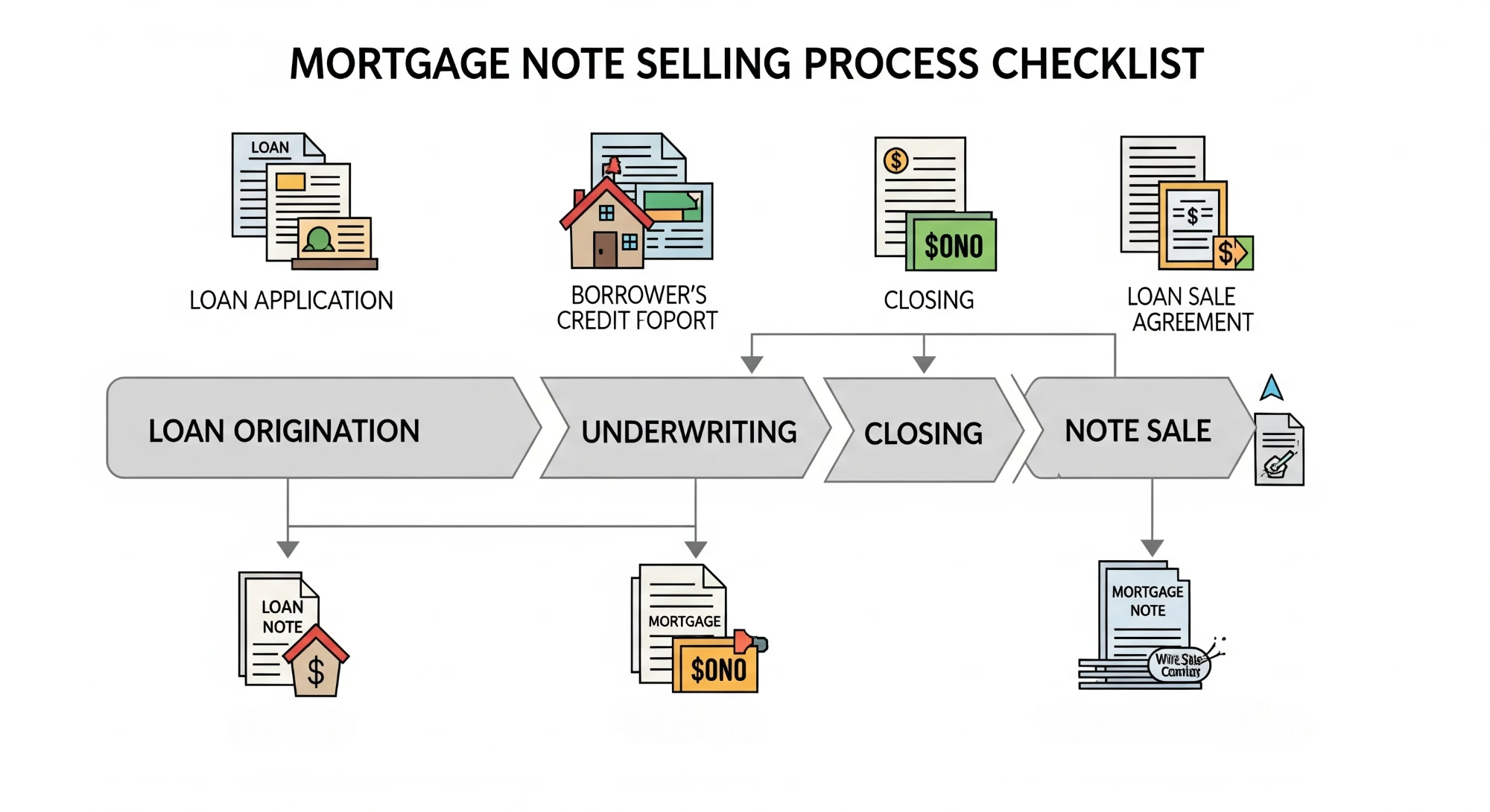
    Selling a mortgage note means transferring the loan to another party, who takes over collecting the payments. Homeowners and investors often choose to sell their notes to get quick cash, usually a lump sum between 65% and 95% of the note’s value, depending on the risk and market conditions.

    It’s important to have all the right documents ready and to understand what buyers are looking for, such as the borrower’s credit and the property’s location. You can sell the entire note or just a portion of it. It’s also important to consider whether the sale is recourse or non-recourse, since that affects your future financial obligations. In the end, this is a way to access quick cash while transferring the responsibility of collecting payments.

    Understanding Texas Mortgage Notes

    A mortgage note in Texas is a legal agreement between the borrower and the noteholder. The borrower agrees to repay the loan based on specific terms, while the noteholder has the right to collect payments and, if needed, start foreclosure proceedings.

    Texas uses both deeds of trust and traditional mortgages, so your note could be secured by either one. This mainly affects how foreclosure is handled if it ever becomes necessary, but it doesn’t impact your ability to sell the note. Strong real estate markets in Texas, especially in major cities, often lead to higher note values.

    Property values in Dallas suburbs vary by area:

    • Established neighborhoods like Richardson, Garland, and Irving tend to show steady appreciation.
    • High-growth areas such as Frisco, McKinney, and Allen often attract premium offers from note buyers.
    • Emerging markets like Celina and Prosper show strong potential but usually require more specialized evaluation.

    Why Sell Your Mortgage Note?

    Meeting immediate capital needs is one of the main reasons people choose to sell their mortgage notes, whether it’s to grow a business, pursue new investment opportunities, or cover unexpected expenses. Instead of waiting years to receive the full value of the note, you can get cash up front.

    Estate planning is another common reason for selling a mortgage note. Heirs often prefer liquid assets and want to avoid the hassle of managing ongoing payments. For example, a 78-year-old noteholder in Dallas might sell a $200,000 note simply to streamline their finances and spare family members from having to handle payment collections.

    Risk mitigation also motivates sales. Economic uncertainty, borrower employment changes, or property market shifts can make guaranteed cash more attractive than future payment streams. When a Texas mortgage note buyer purchases your note, they assume these risks.

    The Texas Note Selling Process

    Initial Evaluation

    Your note’s value depends on several factors:

    Payment history is the most important factor; consistent and on-time payments are a strong indicator of reliable income. Property value also matters significantly, especially in appreciating markets like Dallas-Fort Worth. Furthermore, interest rates directly affect pricing; notes carrying rates above current market levels often sell at a premium.

    A note originated three years ago at 8% interest holds more value today than one at 4%, simply because buyers receive higher returns. While borrower creditworthiness is less critical than payment history, it still influences the note’s value. Lastly, documentation quality is also crucial; complete files with recorded mortgages, title insurance, and detailed payment records significantly streamline transactions.

    Documentation Requirements

    Texas note sales require specific documentation. The original promissory note and the recorded mortgage or deed of trust form the absolute foundation. Additionally, payment records demonstrating a clear collection history are crucial for accurate pricing.

    Essential documents include:

    • Original promissory note and recorded mortgage/deed of trust
    • Complete payment history with dates and amounts
    • Property appraisal and title insurance policy
    • Borrower credit reports and income verification from origination
    • Property insurance policies and current tax records

    Additional documents might include any modification agreements or significant correspondence with borrowers. Ultimately, well-organized documentation not only accelerates the evaluation process but also frequently leads to better offers.

    Timeline and Closing

    Texas note sales typically close within 15 to 35 days. After submitting complete documentation, you can expect initial offers to arrive within 48 to 72 hours.

    Following this, due diligence commences, which includes a property appraisal and title examination. Appraisals in a major market like Dallas usually complete within one week. However, unique property characteristics in areas such as Southlake or Highland Park might require additional time. Similarly, rural properties located in counties outside major metropolitan areas may necessitate specialized appraisers, slightly extending these timelines.

    Closing for note transfers occurs through experienced title companies or attorneys familiar with these specific transactions. The process closely resembles traditional real estate closings, where all necessary documents are recorded, and funds are disbursed simultaneously.

    Understanding Texas Foreclosure Laws

    Texas’s foreclosure laws significantly impact note values and buyer confidence. The state permits both judicial and non-judicial foreclosures; however, non-judicial procedures overwhelmingly dominate due to their speed and cost efficiency.

    Non-Judicial Foreclosure Process

    The foreclosure process in Texas begins with a 20-day notice to the borrower, providing them an opportunity to cure any defaults. This relatively short cure period is highly beneficial to noteholders when compared to states that require longer notification periods.

    Following the cure period, lenders are required to post a notice of sale 21 days prior to the auction. These sales consistently occur on the first Tuesday of each month, typically between 10 AM and 4 PM, at the county courthouse.

    Key timeline benefits:

    • Total process typically concludes within 27 days
    • Among the fastest foreclosure procedures in the nation
    • Compare to judicial foreclosures in New York or Florida exceeding 18 months

    Foreclosure Costs and Recovery

    Texas foreclosure costs typically range from $1,200 to $3,500, positioning it as one of the most cost-effective states for enforcement. These relatively low costs translate to a higher net recovery for noteholders and, consequently, better pricing for notes secured by Texas properties.

    Furthermore, Texas permits deficiency judgments, which allow for the collection of any remaining balance after foreclosure sales. This right significantly strengthens note security, a particularly crucial aspect for notes with high loan-to-value (LTV) ratios. It’s important to note, however, that Texas provides no redemption rights after foreclosure sales; meaning, once the property is sold at auction, the borrower cannot reclaim it.

    Dallas Market Considerations

    Dallas represents Texas’s largest note market, characterized by diverse property types and strong economic fundamentals. The metroplex’s robust job growth, particularly within the technology and healthcare sectors, consistently supports property values and enhances borrower stability.

    Market characteristics by area:

    Different areas within Dallas County exhibit varying characteristics. For instance, notes secured by properties in established neighborhoods like Highland Park or University Park typically command premium pricing due to their stable values and affluent borrower demographics.

    Suburban markets, on the other hand, present distinct opportunities. Frisco’s rapid growth, for example, attracts note buyers seeking appreciation potential, while established areas like Richardson offer reliable stability. However, notes secured by properties in emerging areas such as Celina or Prosper might receive slightly lower pricing due to limited comparable sales data.

    Commercial notes secured by Dallas properties often outperform those in smaller Texas markets. The city’s diverse economy robustly supports various business types, ranging from small retail establishments in Deep Ellum to major corporate facilities in Las Colinas.

    Regional Comparisons

    While Dallas certainly dominates Texas note trading, other markets definitely offer unique opportunities.

    Houston’s energy-driven economy, for instance, creates distinct note characteristics, especially for commercial properties. Austin’s booming technology sector strongly supports residential note values, though it can also lead to more volatile pricing. San Antonio’s consistent growth provides steady note performance, while smaller markets such as Amarillo or Beaumont might require specialized buyers who are particularly familiar with local conditions.

    Dallas also benefits from having multiple note buyers operating locally, which fosters competitive pricing.

    Maximizing Your Note’s Value

    Several strategies can significantly improve your note’s sale price. First and foremost, maintaining detailed payment records unequivocally demonstrates reliability. Digital records showcasing consistent, on-time payments, especially during periods of economic stress (such as 2020-2021), will substantially boost buyer confidence.

    Property maintenance directly impacts the underlying collateral’s value. While you might not directly control a property’s upkeep, staying well-informed about neighborhood developments can certainly aid your timing decisions.

    Market timing considerations:

    • Rising rates can improve pricing for existing notes carrying higher interest rates
    • Falling rates might compress premiums
    • Consider partial sales for large notes exceeding $500,000
    • Selling a portion while retaining some payments provides immediate cash while maintaining income stream

    Choosing the Right Buyer

    Note buyers vary significantly in terms of their pricing, service, and overall reliability.

    Direct buyers, such as institutional funds, typically offer highly competitive pricing but may require more extensive documentation. Local buyers, conversely, might provide faster service, though potentially at the cost of lower offers. Experience with Texas properties is paramount; buyers familiar with local foreclosure laws, market conditions, and documentation requirements often facilitate smoother transactions and provide more competitive pricing.

    Closing ratios are a strong indicator of buyer reliability. Established buyers commonly close 90-95% of accepted offers, whereas newer entrants might exhibit lower success rates. Failed closings not only waste valuable time but also have the potential to cost money, especially if market conditions shift.

    Key Takeaways

    Selling mortgage notes in Texas offers noteholders efficient access to capital. The state’s favorable foreclosure laws, diverse economy, and robust real estate markets consistently support competitive note pricing.

    Achieving a successful sale, however, hinges on proper documentation, setting realistic expectations, and carefully selecting qualified buyers. Ultimately, Texas’s streamlined legal environment and well-established real estate infrastructure make note sales a relatively straightforward process when compared to many other states.

    For noteholders within the Dallas metroplex, abundant buyer options and strong property fundamentals create truly optimal selling conditions. Whether your note is secured by a suburban home in Plano or a commercial property in downtown Dallas, Texas undeniably offers one of the nation’s most efficient note markets.

    Ultimately, the decision to sell always depends on your individual circumstances. However, Texas noteholders significantly benefit from operating in a mature, highly competitive market that appropriately values their assets.

  • Property Management Mistakes to Avoid in Florida’s Competitive Rental Market

    Managing rental properties in a fast-moving, high-demand market like Florida can be incredibly rewarding, but also full of pitfalls for those who aren’t prepared. With rising rents, an influx of new residents, and increased competition, the stakes are higher than ever. A few missteps in your management approach can lead to costly consequences, from tenant turnover to legal trouble.

    Whether you’re a seasoned investor or a first-time landlord, here are the most common property management mistakes to avoid, and how to set your rental business up for long-term success.

    1. Poor Tenant Screening

    A property manager carefully reviewing tenant screening documents.

    It’s easy to rush when a unit’s sitting empty, especially in a hot market. But screening tenants too quickly is where many landlords go wrong. A single bad fit can lead to missed rent, damaged walls, or even costly evictions.

    Instead, slow down and do it right. Run background checks. Look at credit. Verify employment. Talk to past landlords. Yes, it takes time, but it’s time well spent. Finding the right tenant now is always better than dealing with the wrong one later.

    2. Ignoring Preventative Maintenance

    Technician performing routine maintenance on rental property.

    Putting off maintenance might seem harmless in the moment, but it usually ends up costing more—both in repairs and in tenant satisfaction. People notice when things are neglected, and that can be the difference between a lease renewal and a moving truck.

    Schedule regular inspections, create a seasonal maintenance checklist, and address small issues before they turn into major problems. Not only will this preserve the value of your property, but it will also build trust with tenants.

    3. Failing to Understand Local Laws and Regulations

    Florida has specific landlord-tenant laws that protect both parties, and failure to comply can result in fines or lawsuits. From security deposit handling to notice periods and fair housing requirements, you need to know the rules.

    What to do instead:
    Stay up to date on state and municipal regulations or hire MAGASI Management for a knowledgeable property management company that does. Legal missteps can be more than just inconvenient, they can be financially devastating.

    4. Overpricing or Underpricing Units 

    Setting the wrong rent can result in extended vacancies or lost revenue. It’s a delicate balance: set the rent too high, and you risk driving away potential tenants; set it too low, and you leave money on the table.

    To make informed decisions, conduct a thorough market analysis. Consider factors such as property size, amenities, location, and current rental rates of comparable units. While online tools provide useful data, local market knowledge often offers a significant advantage.

    5. Treating Property Management as Passive Income

    Landlord managing rental property with the help of a property management company.

    Yes, rental income can be passive, but only if the systems behind it are solid. Many landlords underestimate the time and attention it takes to manage leases, respond to tenant requests, and keep financials in order.

    If you’re managing on your own, build out processes and stay organized. If you’d rather be hands-off, hire a reliable property management company that can handle everything from rent collection to tenant communications.

    Final Thoughts

    Florida’s rental market is full of opportunity, but it rewards those who are proactive, knowledgeable, and detail-oriented. By avoiding these common property management mistakes, you’ll not only protect your investment but also enhance tenant satisfaction and maximize returns. Smart management isn’t just about keeping up, it’s about staying ahead.

  • 7 Smart Tips For Finding An Investment Property in North America

    Real estate can be a great way to build long-term wealth—if you know what you’re doing. Whether you’re eyeing your first rental or adding to a growing portfolio, picking the right property matters. North American markets, ranging from major cities like Toronto, Vancouver, New York, and Los Angeles to emerging mid-sized communities, offer a variety of opportunities, but also come with risks and complexities.

    So how do you avoid a money pit and find a place that actually fits your goals and your budget? Here are seven practical tips to help you make a smarter move.

    1. Define Your Investment Goals

    Before you even begin your property search, clearly define what you’re hoping to achieve. Are you looking for steady cash flow through monthly rent, long-term appreciation, or perhaps a fix-and-flip opportunity?

    Your goals will determine the type of property you should focus on:

    • Cash Flow: Multi-family homes or properties in high-rent-demand areas.
    • Appreciation: Up-and-coming neighborhoods with strong development potential.
    • Fix and Flip: Properties that are undervalued and need cosmetic or structural renovations.

    Understanding your “why” will help you stay focused and avoid making emotionally driven decisions.

    2. Research Local Markets

    Not all real estate markets are created equal. Look beyond your immediate neighborhoods or city and research various North American markets that align with your goals. Some key factors to evaluate include:

    • Population growth: Are more people moving in or moving out?
    • Jobs: Are new businesses popping up, or is the local economy slowing down?
    • Rental demand: Are units sitting empty, or getting snapped up fast?
    • Price-to-rent ratio: Does the rent actually justify the price tag?
    Source: news18.com

    Online tools like Zillow, Realtor.com, and regional MLS (Multiple Listing Service) platforms offer valuable data. Also, consider networking in investor forums or attending local real estate investment meetups to gather firsthand insights.

    3. Build a Reliable Team

    One of the most underrated but essential components of property investing is having a dependable team. Even if you’re experienced, having professionals in your corner can streamline the process and protect you from costly mistakes.

    Key team members might include:

    • A trusted realtor who understands investment properties, local zoning laws, and emerging neighbourhoods.
    • A mortgage broker who can offer flexible financing options.
    • A property manager, if you’re investing out of town or prefer hands-off management.
    • An attorney familiar with local real estate laws and tenant regulations.

    A trustworthy team will help you make smarter decisions faster and with greater confidence.

    4. Do the Math—Twice

    Successful investing is rooted in the numbers. Before making an offer on a property, perform a thorough financial analysis. Use conservative estimates to account for unforeseen expenses and market fluctuations.

    Key numbers to calculate:

    • Cash flow: Monthly rent minus all expenses (mortgage, taxes, insurance, maintenance, etc.)
    • Cap rate: Net operating income divided by property value.
    • ROI (Return on Investment): Profitability in relation to your initial cash investment.

    Also, factor in vacancy rates and repair reserves to get a more realistic view of potential returns.

    5. Start with a Modest First Investment

    If you’re new to real estate investing, start small. Jumping into a big project or an expensive multi-unit property right away can be risky. A single-family home or a duplex can be a manageable starting point.

    Starting modestly lets you learn the ropes—tenant screening, rent collection, maintenance issues—without overwhelming yourself financially or emotionally.

    You can always scale up as you gain more experience and confidence in managing investment properties.

    6. Inspect Thoroughly Before Buying

    Never skip the inspection. A property may look good on the surface, but structural issues, outdated electrical systems, or plumbing problems can turn your investment into a money pit.

    Hire a certified home inspector to evaluate:

    • Foundation and roof condition.
    • HVAC, electrical, and plumbing systems.
    • Pests or water damage.
    • Safety hazards or code violations.

    This upfront diligence could save you thousands of dollars down the line—and even help you negotiate a better deal.

    7. Have an Exit Strategy

    Smart investors always plan for the unexpected. Market conditions can shift, personal circumstances may change, or a neighborhood may stop appreciating. Before you buy, consider how easily you could sell or repurpose the property if needed.

    Some common exit strategies include:

    • Selling the property after appreciation.
    • Refinancing to pull out equity.
    • Converting a short-term rental to a long-term lease.
    • 1031 exchange (in the U.S.) to defer capital gains taxes by reinvesting.

    Knowing your options in advance allows for more strategic decision-making under pressure.

    Source: linkedin.com

    Real estate investment isn’t about luck—it’s about research, strategy, and execution. By setting clear goals, understanding your market, working with a trusted realtor, and crunching the numbers carefully, you’ll be in a strong position to make informed, profitable decisions.

    Every successful investor started somewhere, and with these practical tips, you’ll be better equipped to navigate the competitive North American property market. Stay informed, remain patient, and always keep learning—the real returns come not just from properties, but from the experience you gain with each investment.

  • Smart Financial Moves for Today’s Real Estate Buyers

    In today’s market, proper financial preparation is critical. With rising housing costs, shifting mortgage rates, and a scarcity of inventory, buyers must make prudent financial decisions. Understanding your financing options, strategically using cash, and being selective will help you secure the best deal.

    Source: pixabay.com

    Here’s how you can do it.

    Explore Your Financing Options

    Traditional mortgages remain the most common way to finance a home purchase. However, alternative options like securities-based loans can offer greater flexibility, with their own benefits and drawbacks. These loans allow buyers to borrow against their investment portfolio without selling off assets, helping to maintain long-term financial growth.

    Benefits of Securities-Backed Loans:

    • Access cash without selling investments: Tap into funds while keeping your investment portfolio intact.
    • Flexible use of funds: Can be used for real estate purchases or other financial needs.

    Potential Risks:

    • Market fluctuations: If the value of your portfolio drops, you might face a margin call, requiring additional collateral or partial loan repayment.
    • Forced asset liquidation: Missing payments could result in the sale of your securities, leading to tax liabilities and financial setbacks.

    Before opting for this financing route, consult a financial advisor to evaluate the risks and see if it aligns with your investment strategy.

    How to Handle High Mortgage Rates

    With fluctuating mortgage rates , buyers need a smart strategy for managing borrowing costs. Here are some ways to do that:

    • Buy down points: Paying extra upfront can lower your interest rate and reduce long-term mortgage costs.
    • Consider an adjustable-rate mortgage (ARM): ARMs start with lower interest rates, which can be beneficial if you plan to refinance later.
    • Boost your credit score: A higher credit score can help you qualify for better rates and loan terms.

    These strategies can help you cut borrowing costs and make homeownership more affordable.

    The Advantage of Cash Buying

    In competitive real estate markets, cash buyers have an advantage. Sellers prefer cash offers because they close faster and have fewer complications, often leading to better pricing and a smoother transaction.

    Why Cash Buyers Have the Edge:

    • Stronger negotiation power: Without financing contingencies, cash buyers can negotiate better terms.
    • Faster closings: No lender approval means deals can close much quicker.
    • Lower risk of last-minute issues: No risk of loan denials or unexpected financing hurdles.

    If you have the financial means, purchasing with cash can put you ahead in competitive housing markets like Dallas, Los Angeles, and Miami.

    Be a Selective Buyer

    Moving quickly is important in a fast-paced market, but making a well-informed decision ensures financial stability and long-term satisfaction.

    Smart Buying Strategies:

    • Know your priorities: Separate must-haves from nice-to-haves to streamline your search.
    • Assess long-term value: Consider location, potential appreciation, and whether the property aligns with your financial goals.
    • Do your homework: Research the home’s history, neighborhood trends, and future development plans.

    Planning for Financial Stability After Buying

    Many buyers focus on purchasing a home but overlook the ongoing financial responsibilities. While finding the right home is important, you should still be picky about your long-term financial strategy. Ensure long-term stability by:

    • Building an emergency fund: Set aside reserves for unexpected repairs or income changes.
    • Budgeting for maintenance costs: Factor in property taxes, insurance, and HOA fees.
    • Exploring rental opportunities: If possible, consider renting part of your property to offset costs.

    Create a Strong Financial Plan

    A solid financial plan gives you the confidence and preparedness needed to succeed in real estate.

    Key Steps:

    • Budget wisely: Include all costs, such as closing fees, inspections, and renovations.
    • Compare loan options: Shop around for the best mortgage rates and repayment terms.
    • Work with experts: Partner with a real estate agent, mortgage broker, and financial advisor to make well-informed decisions.

    With careful planning and a strategic approach, you can maximize your real estate investment.

    Final Thoughts

    Navigating today’s real estate market requires smart financial decisions. By exploring flexible financing, leveraging cash when possible, and preparing for post-purchase costs, you can make confident, strategic moves. Staying informed and consulting with industry experts will help you turn market challenges into opportunities, whether you’re buying your first home or investing in property.

  • Can You Create Your Own Mortgage Note? A DIY Guide

    Creating a mortgage note can be a powerful financial tool, allowing you to structure private lending agreements for real estate transactions. A mortgage note is a legally binding document that outlines a borrower’s promise to repay a loan, typically secured by property.

    This document formalises the terms including the interest rate, repayment schedule, and the length of the loan for the security of both the lender and the borrower under the law.

    Private mortgage notes also differ from bank loans by being flexible when structuring the terms of the loan for extraordinary circumstances. To make the note legally binding, the note will need to be correctly drawn up and adhere to state and federal lending regulations.

    Source: linkedin.com

    Steps to Creating a Mortgage Note

    Creating a legally sound mortgage note requires careful planning. Here’s how to get started:

    1. Define the Loan Terms
      • Principal amount: The total loan amount.
      • Interest rate: The cost of borrowing.
      • Repayment schedule: Frequency and structure of payments.
      • Late payment penalties: Fees for overdue payments.
    2. Understand State Laws
      Lending regulations vary by state and can affect the enforceability of the note. Researching these laws ensures compliance.
    3. Secure the Loan with Collateral
      The property being financed typically serves as collateral, reinforcing the lender’s legal standing.
    4. Include Default Provisions
      Clearly state what happens if the borrower fails to meet their obligations, including lender recourse options.
    5. Consider Selling the Mortgage Note
      • A mortgage note buyer can convert future payments into a lump sum for immediate liquidity. Buy Mortgage Note provides a hassle-free solution in this process.
      • Evaluating the resale value helps ensure a smooth and profitable sale if needed.

      Legal Considerations and Compliance

      To ensure your mortgage note is legally enforceable, follow these legal procedures:

      1. Compliance with Federal Laws: Federal regulations including the Dodd-Frank Act and the Truth in Lending Act (TILA) require regulations for interest rates, disclosures for the borrower, and fair lending. Non-compliance can result in penalties or render the note void.
      2. Legal Review: Permit the lawyer to check the mortgage note for conformity with all the relevant legislations and for the security of your interests.
      3. Recording the Document: Record the mortgage or the deed of trust with the local county office. This will provide public notice of the lien and protect the lender’s interest in the property.

      Pros and Cons of a DIY Mortgage Note

      Creating your own mortgage note offers advantages such as customized terms, higher potential returns compared to traditional investments, and the ability to bypass banks. This option is particularly useful for real estate investors, family members providing private loans, or individuals exploring alternative financing solutions.

      However, there are risks, including borrower default, legal complications, and liquidity challenges. Private mortgage notes differ from bank-originated mortgages by being subject to the lender’s capacity for judging the borrower’s creditworthiness and the value of the property. Conducting thorough background checks and requiring a substantial down payment can help mitigate these risks.

      Best Practices for a Secure Mortgage Note Agreement

      To maximize the value and security for your mortgage note, the following is worth consideration:

      • Use clear and concise terms in the agreement.
      • Conduct proper due diligence regarding the financial health of the borrower.
      • Ensure compliance with federal and state regulations by using the promissory note template for your state.
      • Utilize escrow for payments and property tax payments, avoiding potential disagreements.
      • Maintain detailed payments and letters for the security of your interests against potential legal troubles or sale of notes.
      • Work with your attorney for real property or your financial representative to make the note legally sound and profitable.

      Is a DIY Mortgage Note Right for You?

      Creating your own mortgage note can also prove to be a profitable and flexible form of financing, given you pay close attention and adhere legally. If you are aware of the lending regulations and can deal with the risk associated, your DIY mortgage note can also serve as a good passive income source or even for financing property deals.

      However, it is best to seek professional advice beforehand for assurance and security against loss. Complying with best practice and being informed about the relevant legislation will allow you to set up and maintain a mortgage note for your desired financial objective.