A vacation home is a dream for many Californians, serving as a relaxing getaway for families and even a source of rental income. However, this financial decision requires careful consideration and research because it will matter in terms of long-term value and enjoyment. Factors like location, upkeep costs, local rules, and your lifestyle will be the deciding factors.
Here are six things to evaluate before buying your dream vacation property.
1. Accessibility and Location
Pick a spot that’s reasonably close to where you live so it’s easy to use often. You may weigh accessibility in terms of car, flight, or train. Shorter drives usually mean you’ll go more frequently, even on last-minute weekends.
Also look at the overall vibe and safety of the area. Nearby amenities and attractions matter. In markets like Palm Springs, places near water, golf, hiking, or cultural spots tend to stay in demand. Properties near a country club in Palm Springs can also be quite marketable. Just make sure to research both the appeal of the setting and the real-demand trends.
2. Costs Beyond the Purchase Price
Don’t stop at the purchase price. You’ll also have ongoing costs like property taxes, insurance, utilities, and HOA dues.
Budget for landscaping, cleanings, and emergency repairs, especially if you won’t be there full-time, so that your getaway stays fun instead of turning into a money drain.
3. Prospects for Rental Income
If you plan to rent, learn the local market first, including how much time you’ll actually use the home yourself. Check occupancy rates, seasonal demand, and any short-term rental regulations.
Property management fees can run roughly 20%–35% of rental income, they’ll handle bookings, cleanings, and basic maintenance, but this will cut into profits. Run the numbers up front so you know your true take-home.
4. Tax Consequences
Second homes come with both tax benefits and responsibilities. If you rent it for fewer than 15 days a year, that income typically isn’t reported to the Internal Revenue Service. Rent it for longer, and you’ll report the income but may be able to deduct things like mortgage interest, property taxes, and certain maintenance costs.
It is highly recommended to consult with a certified tax professional before making any purchases. As per the IRS guide publication 527, this contains instructions on the vacation home rental rules and deductions. Knowing the rules early helps you plan and avoid filing surprises.
5. Lifestyle and Long-Term Goals
Choose a destination you’ll still want ten years down the road. Life changes in work, finances, or family can make a “perfect” spot less convenient later.
Be realistic about how often you’ll use it and whether it matches your interests. Decide if it’s part of a retirement plan or mainly an investment, because that guides your choices on size, amenities, and location.
6. Maintenance and Property Management
Managing a vacation place from afar can be a lot. Consider hiring a property manager for day-to-day needs like security, landscaping, and repairs. It costs extra but saves time and keeps small issues from becoming big ones.
Regular maintenance protects your investment. Coastal homes may need more exterior care due to salt air, while mountain cabins need pest control and winterization. Set up an emergency fund and a maintenance plan to keep it in good shape year-round.
Endnote
Buying a vacation home can be a great way to build memories and wealth. Lean on expert advice and do your homework so the place fits both your budget and your lifestyle. If this was helpful, subscribe for more real-estate tips, homeownership guides, and investment strategies. Call us anytime—we’d love to help you find the right vacation-home opportunity.
It’s well known that Dallas–Fort Worth has been a hot spot for real estate investors. The region’s strong population growth, more than 20 Fortune 500 companies that call DFW home, and a healthy balance of supply and demand make it a magnet for investors.
Whether an investor is out of state or a Dallas native, managing your own properties can quickly become a full-time job. Many prefer to pay a management fee so they can focus on family or growing their business.
What many don’t realize is that not all companies for residential property management in Dallas, TX follow the same fee structure. Some use simple, all-inclusive pricing models, while others advertise low teaser rates that hide extra charges until you see the first monthly statement. Understanding these differences is key to avoiding unpleasant surprises and protecting your investment.
What Property Managers in Dallas, TX Charge for Full-Service Property Management
Core fees usually include the Property Management Fee, Renewal Fee, and Tenant Placement Fee.
Property Management Fees
Most Dallas property managers charge anywhere from 8% to 12% of one month’s rent. This fee is generally calculated based on the rent collected each month. Some companies instead charge a flat monthly fee, for example, $200 per property — regardless of the rent amount.
In many cases, property management fees cover full-service management, including property inspections, rent collection, owner and tenant portals, monthly statements, annual 1099s, direct deposits, and maintenance coordination. These services are often included when the fee is a set percentage of rent collected. Managers offering low or flat fees may provide certain services a la carte.
For instance, many flat-fee property managers charge 10–15% of all maintenance invoices, which can significantly raise overall costs and make future expenses unpredictable.
Renewal Fees
Residential leases typically run for 12 months and need to be renewed annually. Most property managers charge a renewal fee for this process. Managers who charge a percentage-based PM fee might add a $100–$250 renewal fee, while flat-fee managers often charge 25–50% of one month’s rent. That difference can noticeably increase annual management costs.
Tenant Placement Fees
When a tenant moves out or a manager takes over a vacant unit, there’s work involved in finding a new renter, from marketing and showings to drafting compliant leases. Tenant placement fees usually range from 50% to 100% of one month’s rent. Notice a pattern? Many flat-fee property managers charge the full 100%.
Additional & Legal Fees
Other fees owners can expect often stem from the legal side of property management. These might include costs related to evictions, compliance with government regulations, requested site visits, onboarding, or preventative maintenance. These fees vary widely and are typically passed on to the owner as needed. When it comes to maintenance, some property managers partner with outside vendors, while others have in-house repair teams. It’s essential for owners to understand their manager’s setup and vet those maintenance providers carefully.
A good property manager won’t just bill you for major repairs, they’ll gather at least three bids from trusted contractors to ensure fair pricing and quality workmanship. Another often-overlooked tool is the maintenance reserve. For example, if your PM holds a $500 reserve, they can authorize repairs or preventive maintenance up to that amount without needing your approval each time. Properties constantly need repairs, maybe a tenant punches a hole in the wall, backs into the garage door, or loses the remote. These things happen often and make the owner–property manager relationship all the more worthwhile.
Why Choosing the Right Dallas Property Management Company Matters
Image by Copper River Property Management
Ultimately, fees are only one part of the equation. Owners should choose a property manager who protects their assets and their bottom line.
As discussed, pricing models vary widely, and hidden costs can sneak up if you’re not careful. A trustworthy Dallas property management company is transparent about its pricing, manages maintenance costs thoughtfully, runs a preventative maintenance program, and works with reliable vendors to save owners money long term.
One local company that fits this description is Copper River Property Management. Their pricing is clearly stated on their website, with no hidden charges. They prioritize transparency and high-quality customer service.
Reach out to Copper River Property Management today to schedule a consultation and see how a trusted Dallas property management company can simplify your ownership experience.
Author Bio
Anthony Collazos is a US Army veteran and the founder of Copper River Property Management, a Dallas Property Management Company. He started his professional career as a U.S. Army Field Artillery Officer, where he gained leadership, discipline, and problem-solving skills that have been essential throughout his career.
Over the past decade, he has managed and financed more than $1.5 billion in real estate across the United States, including large multifamily communities and complex commercial projects. In Texas alone, he has overseen the asset and property management of 2,400 multifamily units, with 300 units being in Dallas. Throughout his experience, he has gained extensive real estate expertise and an in-depth knowledge of the Dallas residential real estate market.
He earned his MBA with a concentration in Real Estate from Southern Methodist University in 2022 and a BBA in Finance from Georgia Southern University in 2011. Anthony is a licensed REALTOR® and a member of National Association of REALTORS, Texas Association of REALTORS, and MetroTex Association of REALTORS. In 2023, Anthony obtained A.CRE’s respected certificate in real estate financial modeling.
Visit Copper River PM’s website at copperriverpm.com to learn more about the services offered. Copper River Property Management specializes in managing single-family homes, condos, townhomes, and multifamily properties up to 50 units. You can contact him via email at info@copperriverpm.com or by completing the contact form at copperriverpm.com/contact/.
DFW is home to over 20 Fortune 500 companies and has added over 1 million residents in the last decade. Population growth is expected to continue, making Dallas one of the strongest markets for real estate investment in the country.
High tenant demand, consistent appreciation, and landlord-friendly laws have made the metroplex an attractive choice for investors. At the same time, challenges exist. Property taxes, insurance costs, tenant expectations, neighborhood selection, legal requirements, and day-to-day management all play a big role in the success of your investment.
Here’s what you need to keep in mind before buying residential rental property in Dallas.
Dallas Property Taxes
Image Source: unsplash.com
The state of Texas does not levy taxes against real property within the state. All taxes are subject to local municipalities at the county level. Dallas property tax rates are determined by local taxing units. These taxing units or jurisdictions are City, School, County, College, Hospital, and, if applicable, Special Districts.
Dallas Central Appraisal District (DCAD) appraises each property annually and assigns those properties with a property tax value, also known as the assessed value. The assessed value, less any exemptions, is multiplied by the tax rates, which yield that year’s property tax liability.
Being a business-friendly state, Texas has no income tax, but that is offset by high property taxes. According to taxfoundation.org, Texas ranks as the seventh most expensive state in terms of property taxes in the nation. It is critical that investors have accurate and conservative property tax projections when building their cash flow proformas.
When in doubt, contact a local property tax consultant. These professionals are extremely knowledgeable in the local property tax protest process and often have connections with local officials. They can create serious value in both the near and long term, limiting your tax liability and improving your cash flow.
Insurance Costs
Many investors also overlook another major real estate expense, insurance premiums. Insurance costs are heavily influenced by natural disasters, and it’s no surprise that Texas is home to quite a few. Per nerdwallet.com, Texas ranks as the second most expensive state for homeowners insurance, averaging $4,585 annually. Below is a list and description of the major key factors that drive these costs in the Dallas market.
Wind and Hail
Tornadoes – Dallas is in the southern portion of tornado alley and sees 2-3 tornadoes annually, on average. In 2019, the city experienced nine tornadoes, causing $2B in damage.
Severe Thunderstorms – The city has a relatively high frequency of severe thunderstorms which brings with it high winds, lightning, and hail that causes average damage of $102M per year. Dallas County leads the state in expected annual loss from storm damage, primarily due to hail and thunderstorm activity.
Extreme Heat and Soil Movement
Dallas ranks high amongst major US metros for foundation issues. The foundation issues are costly, averaging $5,100 per repair.
Winter Storms
While not an annual event, Dallas has experienced extreme winter storms that caused massive damage. In 2021, the city was hit by winter storm Uri. While no sources specifically state total damages in Dallas, TX, the Dallas Fed estimated the storm cost the Texas economy $80B to $120B.
Insurance should be underwritten conservatively as it can fluctuate significantly from year to year. Per AARP, Texas homeowners insurance premiums rose by about 57% from 2015 to 2023. As a best practice, obtain a quote from a reputable insurance broker to ensure an accurate projection of your insurance premium and add a 10% – 20% buffer to be conservative as rates are likely to increase at the renewal.
Tenant Expectations
Image Source: unsplash.com
For an investment to succeed, it must meet the expectations of the target market. Urban tenants often prioritize convenience, walkability, and proximity to entertainment, while suburban renters typically value larger living spaces, family-friendly amenities, and garages.
In addition to understanding your customer base, pet policies play a major role in the demand for your asset. According to Zillow, 58% of renters have pets. That means, landlords who don’t allow them are effectively cutting their renter pool in half. Supporting this, the average pet-friendly Zillow listing rented 8 days faster than non-pet-friendly listings. Making your property pet-friendly in Dallas may even be more important, as 79% of Zillow listings are pet-friendly. In such a competitive market, it’s imperative to take a serious look at your pet policy.
Legal Compliance
Texas is a landlord friendly state but that does not mean there are not laws and rules that must be followed.
Texas Property Code Requirements
Security Devices: The Property Code requires the property to be equipped with the following:
Window latches on each window
A keyed doorknob lock or keyed deadbolt lock on each exterior door
A sliding door pin lock on each exterior sliding glass door of the dwelling
A sliding door handle latch or a sliding door security bar on each exterior sliding glass door of the dwelling
A keyless bolting device and a door viewer on each exterior door of the dwelling.
Smoke Alarms: The landlord is responsible for the installation, repair, and inspection of the smoke alarms. In addition, there are also specific locations where the smoke alarms must be located, depending on the floor plan of the property.
Rekeying:
The landlord must rekey the property within 7 days of tenant turnover.
If the tenant replaces a security device during the lease, they must provide the landlord with at least one duplicate key in a reasonable amount of time.
See Texas property code for other scenarios.
Repairs:
Landlords must make repairs in a reasonable amount of time, which is defined as 7 days under normal circumstances.
For emergency repairs, the landlord must address them immediately. Examples are fires, gas leaks, flooding, sewer backups, AC failure in extreme heat, etc.)
There are other property code adherences, but as a landlord, these are major and often overlooked by new investors.
Eviction Process
Steps:
Provide the tenant with written notice to vacate, stating the specific date the tenant must vacate the property.
The landlord must wait 3 days after providing the notice to vacate to file an eviction.
The landlord files an eviction suit at the county’s Justice of the Peace Precinct. The hearing cannot take place for at least 10 days.
A suite for rent may also be filed if it’s under $10,000.
The court date is set, which both parties must attend.
Either party may appeal the suit within 5 days of the court’s decision.
If, within 5 days, there is no appeal, the landlord may obtain a Writ of Possession from the court, which will force the tenant to vacate the property.
Texas uses Justice of the Peace courts, allowing landlords to represent themselves without attorneys.
Other Legal Considerations:
Fair Housing: Federal and state Fair Housing laws prohibit discrimination on protected classes: Race, Color, Religion, Sex, National Origin, Disability, & Familial Status
Leases: Written leases should comply with the Texas Property Code. Leases must be approved by TREC or created by an attorney if professionally managed.
The Texas Property Code clearly spells out landlord requirements and the steps they must take for various scenarios. It’s important that owners are aware of federal, state, and local laws.
Dallas Property Management
Image Source: copperriverpm.com
Many investors starting out choose to self-manage, which can make sense and often provides invaluable lessons during their journey. However, investors that are out of state or are looking to gain back their valuable time, hiring the right Dallas property manager can be beneficial. Property managers:
Save Time & Stress: Full-service property managers take on leasing, tenant screening, rent collection, financial reporting, maintenance coordination, property inspections, comparative market analysis, and evictions.
Local Market Expertise: Know market trends, set optimized rents and concessions, reduce vacancies, and maximize income.
Vendor Relationships: Property managers have deep relationships with local vendors, allowing them to get favorable pricing and quality work.
Portfolio Growth: Allow owners to focus their time on growing their portfolios instead of spending time on operations.
In a hyper-competitive market like Dallas, it’s important to choose the right manager. Are they competent, transparent, consistent, and do their goals align with yours? If you’re looking for a qualified local PM, take a look at Copper River Property Management as a viable option. The company provides residential property management services for single-family homes, townhomes, and multifamily properties in Dallas and surrounding cities.
Conclusion
Dallas, TX is a real estate investment hotspot and is likely to remain so for the coming years based on strong rental demand, job growth and population trends. Property taxes, insurance costs, tenant expectations, legal compliance, and property management are simple, yet easily overlooked by new investors.
By taking the time to understand these fundamentals and planning conservatively, investors can avoid costly surprises and position themselves for long-term success as a Dallas real estate investor.
If you’re a Dallas real estate investor or in the process of purchasing a property, consider Copper River Property Management. We are a veteran-owned, Dallas property management company with a highly experienced operator. Visit copperriverpm.com and fill out the contact form to learn more.
Author Bio
Anthony Collazos is a US Army veteran and the founder of Copper River Property Management, a Dallas Property Management Company. He started his professional career as a U.S. Army Field Artillery Officer, where he gained leadership, discipline, and problem-solving skills that have been essential throughout his career.
Over the past decade, he has managed and financed more than $1.5 billion in real estate across the United States, including large multifamily communities and complex commercial projects. In Texas alone, he has overseen the asset and property management of 2,400 multifamily units, with 300 units being in Dallas. Throughout his experience, he has gained extensive real estate expertise and an in-depth knowledge of the Dallas residential real estate market.
He earned his MBA with a concentration in Real Estate from Southern Methodist University in 2022 and a BBA in Finance from Georgia Southern University in 2011. Anthony is a licensed REALTOR® and a member of National Association of REALTORS, Texas Association of REALTORS, and MetroTex Association of REALTORS. In 2023, Anthony obtained A.CRE’s respected certificate in real estate financial modeling.
Visit Copper River PM’s website at copperriverpm.com to learn more about the services offered. Copper River Property Management specializes in managing single-family homes, condos, townhomes, and multifamily properties up to 50 units. You can contact him via email at info@copperriverpm.com or by completing the contact form at copperriverpm.com/contact/.
If you own a property in a neighborhood with an active Homeowners’ Association, it’s your responsibility to communicate the rules to your tenants.HOA policies don’t just apply to property owners since they also apply to residents who rent homes in the area.
However, sometimes policies on noise level, pets, or parking can feel unnecessarily restrictive or even outdated.As a result, your tenants may have frustrations with their living conditions in your rentals.In such a scenario, can tenants request changes to the HOA rental management rules? It depends.This article will go over the steps you can take and the key things to think about before moving forward.
How Can Tenants Be Involved in Requesting Changes to HOA Rental Management Rules?
Understand the Governing Documents
Before you try to make any changes, it’s important to really understand your lease and the HOA’s rules and bylaws. This helps avoid misunderstandings about what your tenants are responsible for, so you don’t end up fighting a battle you don’t need to.
For example, a renter might get upset thinking the HOA doesn’t allow pets, when the rules actually make exceptions for small pets with current vaccinations. Once you know the exact rule, if it still seems unfair or causes problems, look at the bylaws to see how changes can be made. Most HOAs include a section on how to create or update rules, often through a homeowners’ or board vote. That’s why Bay Property Management Group Philadelphia HOA Management recommends checking your contract first before deciding your next move.
Attend HOA Meetings
Source: istockphoto.com
Give tenants the opportunity to mention their grievances to the board by taking them to the HOA meetings. If allowed, such spaces can be the perfect place for renters to present a well-reasoned explanation on why the rules need to change and offer possible solutions. It would also help if you could add how the problem affects other residents, and not just you
For instance, a renter might be frustrated that the HOA’s parking policy isn’t considerate to residents with disabilities, making it harder for them to get around. By sharing examples and ideas to improve the rule, you can help everyone in the community enjoy a better quality of life.
Communicate Concerns with HOA
Besides going to meetings, it’s also a good idea to send a formal letter or email to the HOA board so they’ll follow up on your request. It’s not enough for them just to sympathize, you’ll want to make sure they actually take action, so there are no misunderstandings later on.
Be clear and respectful in your communication. Using specific examples can really help highlight problems the board might not even be aware of.
If other residents also want to change the rule, think about starting a petition and collecting as many signatures as possible. This shows there’s broad concern and makes it clear that others support your case. If your HOA allows rule changes through votes, you can also talk to other homeowners and board members about how the change could benefit the whole community.
Collaborate with your Landlord
For any tenant looking to make a change in their HOA, your landlord should be your first point of contact. Some homeowners’ associations only deal with property owners, which means your landlord has to stand in for you to submit letters or petitions. It’s also easier to effect change when you have a unified front, because the property owner would be in a better position to win the support of the board and other tenants.
On the other hand, when landlords agree to collaborate with their renters to make their stay more conducive, it increases tenant satisfaction rates and reduces tenant turnover. After all, some renters would prefer to transfer places or change HOA management instead of dealing with the rigorous process of advocating for changes.
Important Considerations for Landlords and Tenants
Landlord and Tenant Responsibilities
Understanding your role as a landlord, including tenants, can help you approach HOA rule changes with more tact. For instance, landlords are direct HOA members, and the burden of following the rules and regulations of the community falls on them. That means it would be best to use them as the primary conduit for information between the HOA and its tenants.
In comparison, while tenants aren’t HOA members, they are contractually bound by their lease agreement to follow the rules, and should alert the property owner if a policy is greatly inconvenient. Rather than flaunting the rules or attempting to bypass them on their own, renters should communicate their frustration with their landlords for a resolution to HOA-related issues.
Focusing on Constructive Solutions
If you encounter an HOA rule that’s unfair, to ensure peace and a positive outcome, it’s better to opt for a constructive solution. Most policies have some logic behind them, and scrapping a rule you don’t like could have unintended consequences. As a result, it would be best to keep an open mind during meetings for solutions that solve the problem without creating unintended ripple effects.
For example, instead of saying, “The guest parking rule is too strict,” you could propose a new rule that extends the limit from 24 hours to 72 hours with sufficient notice. This approach shows a genuine desire to find a workable and considerate solution for everyone, and is more likely to receive a pass than get shot down.
Conclusion
It’s essential for tenants and landlords to collaborate if they aim to change some HOA policies. If it’s a problem that affects other tenants, consider starting a petition and writing a formal letter airing your grievances with possible solutions to the HOA management.
Think of it as dealing with problems in a collaborative manner, with the help of your landlord and your HOA board to meet and make amends if possible.
To maximize ROI in property management through call analytics, integrate call tracking and analysis into your strategies. Call analytics reveals how potential tenants and clients engage with your services by analyzing property management calls, inbound call data like duration, frequency, and conversion rates. Implement a call tracking system to identify effective marketing channels.
Real estate agencies that use call tracking tools report up to a 55% increase in conversion rates on inbound calls. Additionally, approximately 85% of real estate marketers say that phone calls generate their highest-quality leads.
Analyze call recordings for quality interactions, focusing on key performance indicators such as resolution rates and customer satisfaction. Integrating insights with property management software automates follow-up processes, improving engagement and reducing client loss. This approach enhances service, tenant satisfaction, and retention, contributing to ROI. Using call analytics fosters continuous improvement in marketing efficacy and operational performance.
Below are four practical strategies to turn call data into cash.
1. Implement Call Tracking
Dynamic Number Insertion (DNI) automatically swaps out the phone number on your website based on where visitors come from, whether that’s a Facebook ad, an organic search or a flyer with its own unique number. By assigning a distinct tracking number to each marketing channel, you’ll know exactly which ads or touchpoints are driving calls and which aren’t worth the spend.
We found that 86% of real estate calls last longer than one minute, showing strong engagement and lead interest.
Beyond DNI, logging every incoming call’s metadata (caller ID, timestamp, call duration) gives you a clear view of which campaigns deliver the most serious leads. The property firms using DNI see significant clarity in budget allocation, often shifting 15–25% of their ad spend to top-performing sources.
Here’s how to set up call tracking effectively:
Assign unique phone numbers to each online and offline channel (web pages, social ads, print materials).
Capture caller details (number, time, duration) to link calls back to their source.
Store call logs in a centralized dashboard for easy comparison across campaigns.
2. Analyze Call Insights
Once you’ve collected call data, dig into it to spot your hottest leads. Look for patterns, times of day when callers convert at higher rates, marketing sources that yield the biggest deals, or phrases prospects use when they’re ready to sign. This level of insight lets you double down on what works and tweak what doesn’t.
We found that calls made between 10 a.m. and 2 p.m. often have the highest conversion rates in real estate. In one case study, a real estate agency using call analysis improved lead response by 40% simply by adjusting its follow-up workflows based on call patterns.
Here’s how to dig into your call data for meaningful takeaways:
Identify High-Value Leads: Pinpoint which campaigns are attracting serious renters or buyers, so you can put more money behind what’s working.
Improve Response Times: Measure how long it takes agents to answer and target peak windows where faster pickups could boost satisfaction.
Optimize Team Performance: Compare call outcomes by agent, then tailor coaching on objection-handling or script adjustments.
Understand Customer Needs: Analyze common questions and concerns to refine your website FAQs, email follow‑ups, and ad copy.
Analyze Conversation Content: Use transcription tools to uncover which phrases or offers resonate, and lock in what works for sales conversations.
3. Utilize Data for Strategic Decisions
Call analytics isn’t just for reports, it drives smarter decisions across marketing, operations and customer care. When you know which channels produce quality leads, you can confidently reallocate ad spend.
We estimate that 1 out of 3 real estate businesses fail to respond to leads within an hour, even though rapid response can significantly increase close rates. In one case, a multi-location property manager discovered that 75% more qualified leads came from social ads compared to print after reviewing DNI-based call data.
If certain audience segments call more often, craft messages that speak directly to their needs. And by personalizing every touchpoint, from the first ring to the lease agreement, you build loyalty and reduce churn.
Below are ways to use these insights to drive smarter decisions:
Optimize marketing strategies: Invest more in high‑performing channels and pause low-performers to boost overall ROI.
Target the right audience: Use caller demographics and behavior data to refine ad targeting and messaging.
Improve Customer Experience (CX): Leverage call history to personalize follow‑ups and anticipate tenant needs.
Make your team more efficient: Identify bottlenecks, like call‑routing delays and implement workflow fixes to handle inquiries smoother.
Train and coach agents: Base coaching sessions on real call recordings and performance metrics to sharpen sales skills.
4. Integrate Call Analytics with Other Data
True ROI comes from seeing the whole picture. Plug call‑tracking metrics into your Property Management Software (PMS), CRM, Google Ads or Facebook Ads Manager so you can trace every lead, from click to lease. With integrated dashboards, you’ll know not only where each lead originated, but how much revenue it’s generated.
We note that integrating call data with your CRM allows property firms to calculate exact cost per lead and attribute revenue with over 98% accuracy.
Here’s how to tie call data into your broader tech stack:
Combine call data with online behavior (form fills, site visits) for full-funnel visibility.
Sync call outcomes (appointments set, applications submitted) back to your CRM for centralized reporting.
Use unified data to run A/B tests on ad creative, landing pages or script variations, then measure impact on calls and conversions.
Keep stakeholders aligned by sharing integrated reports that track marketing spend against actual signed leases.
By weaving call tracking, deep analysis, strategic use of insights and seamless integration into your workflow, property managers can turn every phone ring into actionable data, driving smarter marketing, more efficient operations and, ultimately, a higher ROI.
Managing rental properties in a fast-moving, high-demand market like Florida can be incredibly rewarding, but also full of pitfalls for those who aren’t prepared. With rising rents, an influx of new residents, and increased competition, the stakes are higher than ever. A few missteps in your management approach can lead to costly consequences, from tenant turnover to legal trouble.
Whether you’re a seasoned investor or a first-time landlord, here are the most common property management mistakes to avoid, and how to set your rental business up for long-term success.
1. Poor Tenant Screening
A property manager carefully reviewing tenant screening documents.
It’s easy to rush when a unit’s sitting empty, especially in a hot market. But screening tenants too quickly is where many landlords go wrong. A single bad fit can lead to missed rent, damaged walls, or even costly evictions.
Instead, slow down and do it right. Run background checks. Look at credit. Verify employment. Talk to past landlords. Yes, it takes time, but it’s time well spent. Finding the right tenant now is always better than dealing with the wrong one later.
2. Ignoring Preventative Maintenance
Technician performing routine maintenance on rental property.
Putting off maintenance might seem harmless in the moment, but it usually ends up costing more—both in repairs and in tenant satisfaction. People notice when things are neglected, and that can be the difference between a lease renewal and a moving truck.
Schedule regular inspections, create a seasonal maintenance checklist, and address small issues before they turn into major problems. Not only will this preserve the value of your property, but it will also build trust with tenants.
3. Failing to Understand Local Laws and Regulations
Florida has specific landlord-tenant laws that protect both parties, and failure to comply can result in fines or lawsuits. From security deposit handling to notice periods and fair housing requirements, you need to know the rules.
What to do instead: Stay up to date on state and municipal regulations or hire MAGASI Management for a knowledgeable property management company that does. Legal missteps can be more than just inconvenient, they can be financially devastating.
4. Overpricing or Underpricing Units
Setting the wrong rent can result in extended vacancies or lost revenue. It’s a delicate balance: set the rent too high, and you risk driving away potential tenants; set it too low, and you leave money on the table.
To make informed decisions, conduct a thorough market analysis. Consider factors such as property size, amenities, location, and current rental rates of comparable units. While online tools provide useful data, local market knowledge often offers a significant advantage.
5. Treating Property Management as Passive Income
Landlord managing rental property with the help of a property management company.
Yes, rental income can be passive, but only if the systems behind it are solid. Many landlords underestimate the time and attention it takes to manage leases, respond to tenant requests, and keep financials in order.
If you’re managing on your own, build out processes and stay organized. If you’d rather be hands-off, hire a reliable property management company that can handle everything from rent collection to tenant communications.
Final Thoughts
Florida’s rental market is full of opportunity, but it rewards those who are proactive, knowledgeable, and detail-oriented. By avoiding these common property management mistakes, you’ll not only protect your investment but also enhance tenant satisfaction and maximize returns. Smart management isn’t just about keeping up, it’s about staying ahead.
Heating and cooling might not be flashy, but when things go wrong, you feel it. Whether your tenants are calling about freezing bedrooms or your building’s system sounds like it’s about to lift off into space, you know that HVAC problems can turn into expensive ones—fast. That’s why hiring the right HVAC contractor matters. And if you own property—whether that’s a couple of rental units, a small commercial building, or something bigger—you need someone who actually knows what they’re doing and treats your building like it’s theirs.
But let’s be honest. Everyone says they’re certified. Everyone shows up with a logo on their van. And everyone throws around words like “energy efficient” and “inspection included.” So how do you actually know who to trust? Here’s how to look past the sales pitch and figure out who’s worth calling back.
Licenses Aren’t Just Paperwork—They Protect You
The first thing you want to check is licensing, but not just because someone told you it’s the right thing to do. Licensed HVAC contractors have been tested on their knowledge. They’ve had to pass state exams and usually have insurance and bonding as well. That means if something goes sideways—like a tech damages your building or forgets to pull the right permits—you’re not left holding the bag.
But there’s more to it than just checking a license number. Ask about ongoing education. HVAC systems change, especially with tighter energy standards and more eco-friendly tech becoming the norm. You want a contractor who isn’t stuck in the 1990s. If they’re keeping up with training, chances are they care enough to do things right the first time.
Also, if you’re dealing with anything beyond a basic home setup—say, rooftop units or multi-zone buildings—make sure they’ve worked on properties like yours. There’s a big difference between installing a single furnace and managing a whole building’s climate control.
Reputation Still Matters, Even in a Review-Flooded World
You can find a thousand reviews for any service these days, but the good ones still stand out. Look for patterns. If five different property owners all say a company shows up late, that’s probably not a fluke. On the flip side, if someone writes a three-paragraph review about how a contractor saved them money by spotting a code issue the last guy missed, that’s worth paying attention to.
Call a few past clients if possible—especially ones who’ve had similar work done. Ask how long the job took, whether the price stayed the same, and how the crew treated their building. A good HVAC contractor doesn’t just finish the job. They leave your place cleaner than they found it and answer your 10pm question when your heat randomly shuts off.
Also, pay attention to how they treat you in the early stages. Are they walking through your space with care? Asking thoughtful questions? Talking through not just what you want but why you want it? That kind of communication is golden—especially if you’re planning on upgrading an HVAC system in a property you manage long-term.
Modern Contractors Use Tools That Make Your Life Easier
If a contractor still writes quotes by hand and shuffles paper invoices in a metal clipboard, that might be fine for small jobs. But if you’re running a building, or even several, you need someone who knows how to keep things smooth and efficient. That’s where their tech setup can really help—or hurt—you.
Today’s best HVAC contractors use streamlined tools behind the scenes that make things run faster and with less confusion. Ask what kind of systems they use to track service calls, schedule appointments, and handle billing. If they shrug or say, “we just kind of wing it,” that’s a red flag.
The contractors worth working with know that their HVAC software will streamline the communication with techs and you as well as make paperwork a breeze. No more wondering when someone’s going to show up or digging through old emails to find an invoice. When systems are organized, jobs get done faster, mistakes are fewer, and you get to focus on bigger things—like your next building acquisition or just getting through the week without five maintenance calls.
Pricing Should Be Clear, Not a Puzzle
Let’s talk about the money part. You should never feel like you’re guessing. A good HVAC contractor will walk you through their estimate, explain why they’re recommending certain repairs or replacements, and tell you where you have options. They won’t pressure you into replacing a whole unit when a tune-up would do. And if you do need a big upgrade, they’ll show you the numbers behind the why—like projected energy savings or longer equipment lifespan.
Watch out for vague language in contracts, too. “Miscellaneous fees” should raise a red flag. Ask them to spell it out. The best pros are transparent because they’ve got nothing to hide. And if they offer financing or service plans, those should be explained clearly. Not every landlord needs a monthly plan, but if it helps avoid surprise repairs, it might be worth it.
Also, don’t fall for the lowest bid just because it’s cheap. Sometimes that number means corners are being cut, or worse, the work won’t be up to code. Remember, heating and cooling problems often hit at the worst time—like the middle of summer or during a January cold snap. You don’t want to be left with a contractor who ghosts when things get messy.
Long-Term Relationships Beat One-Off Fixes
An HVAC system isn’t a set-it-and-forget-it kind of deal. You’re going to need someone to call when things stop working—and they will, eventually. That’s why it pays to build a long-term relationship with a contractor who already knows your building. They’ve seen your system before. They’ve got notes on your past repairs. They can spot patterns that save you money down the road.
Ask contractors if they offer ongoing maintenance plans or regular inspections. Even something as simple as twice-a-year checks can catch problems early, extend the life of your equipment, and keep tenants happy. It’s not just about avoiding big repairs—it’s about keeping your property running smoothly and avoiding the stress of emergency calls.
A contractor who sticks around and gets to know your property becomes part of your operations team. And when you’ve got someone you trust, those late-night calls feel a lot less stressful.
In the end, picking an HVAC contractor shouldn’t feel like a gamble. When you ask the right questions, pay attention to the details, and watch how someone treats your property from day one, you’ll be able to tell who’s the real deal. And once you’ve got the right pro on your side, you’ll wonder how you ever managed without them.
The Thai property market is strong and backed by solid fundamentals. It’s a good time to be involved. The country benefits from strong exports and a tourism rebound. There’s a growing demand for industrial and logistics properties, thanks to the new data centers and the housing market recovery. The EEC (Eastern Economic Corridor) is a place where people from other countries want to invest, especially in technology and industry. The government is helping a foreign investor by offering incentives.
In this guide, we will share important insights that you, as a foreign investor, can consider when purchasing property in Thailand, especially if you want to invest in Koh Samui, based on the latest data and information.
Ownership Options for Foreign Investors
Wherever you choose to invest in Thailand, whether in resort areas like Koh Samui or Phuket, or in cities like Bangkok, understanding the legal framework for foreign property ownership is essential. The same restrictions for foreign ownership apply throughout the country, and ensuring compliance is a fundamental part of securing your investment.
Thailand’s legal framework restricts foreign land ownership, which directly affects how villas for sale in Koh Samui, and elsewhere in Thailand, can be purchased by international buyers.
Freehold Ownership via Thai Limited Company
Foreigners commonly use a Thai Limited Company structure to obtain freehold ownership:
The company legally holds the land title deed (Chanote).
Thai nationals must own at least 51% of company shares, with genuine involvement (nominee shareholders are prohibited).
Companies must actively conduct legitimate business activities beyond merely holding property.
Annual audits and financial statement submissions are mandatory.
For each foreign director, at least two genuine Thai shareholders are required.
Since regulatory enforcement tightened significantly in 2024, investors must strictly comply with these rules to avoid legal penalties.
Source: sunwayestates.com
It should be noted that in 2024, there was a high-profile crackdown by the government of Thailand on the illegal use of corporate holding structures for freehold villas by foreign investors. Consequently, it is now more crucial than ever that any company is set up and operated in full compliance with regulations.
Company holding structures are more suitable for the mid to upper end of the villa market due to the substantial setup costs, as well as government transfer fees and taxes when the asset is transferred into the company.
Leasehold Ownership
Leasehold agreements in Thailand have a maximum duration of 30 years. While developers often offer renewal options, these are not guaranteed by Thai law. To enhance security, developers frequently use “protected leasehold” structures, involving partial equity ownership in the land-owning entity.
Condominiums vs. Apartments in Thailand
In Thailand, significant differences exist between condominiums and apartments:
Condominiums: Foreigners can directly own up to 49% of units within a condominium building under the “foreign quota,” allowing secure freehold ownership and ease of resale.
Apartments: Typically offered on leasehold terms (30-year maximum), sometimes with renewable lease options.
For long-term investment and easier resale, condominiums generally provide better security and investment appeal.
Transaction Costs and Taxes
Capital Gains Tax: Capital gains from property resale are taxable as income. Corporate tax applies if the property is owned by a Thai company, and personal income tax applies if individually owned.
Rental Income Tax: Rental income generated in Thailand is taxable locally. Investors should obtain professional tax advice for compliance and potential tax treaty benefits.
Closing Costs and Fees: Typical transaction costs include legal fees, property transfer fees (around 2% of property value), specific business tax (3.3%), and withholding tax (1% of the declared value or assessed value, whichever is higher).
Koh Samui Real Estate Market Overview (2025)
Koh Samui has evolved significantly, becoming a prime destination for luxury residential investments while retaining its unique island lifestyle.
Source: pixers.fr
Predominantly Villa Market
Due to zoning regulations limiting high-rise developments, Koh Samui remains largely villa-oriented, unlike condominium-heavy markets like Bangkok or Pattaya.
Limited Condominium Availability
Freehold condominiums and branded residences are rare due to strict zoning laws. Investors interested specifically in condos may find better availability in Phuket or Bangkok.
Off-Plan Investment Risks
Investors should carefully evaluate off-plan properties due to risks such as:
Construction delays (ensure compensation clauses).
Developer financial stability (avoid large upfront payments).
Legal enforceability of contracts (always consult reputable legal advisors).
Prime Investment Areas in Koh Samui
Key investment areas include:
Choeng Mon and Plai Laem: Popular for luxury villas and proximity to amenities.
Bo Phut and Fisherman’s Village: Known for vibrant tourism and strong rental demand.
Lamai: Offers affordable beachfront properties and growing infrastructure.
Bang Por and Lipa Noi: Preferred for tranquil living and family-friendly environments.
Rental Market and Property Management
With strong rental demand driven by tourism, understanding local market dynamics and associated costs ensures effective and profitable property management.
Source: charlesdel.com
Expected Rental Returns
Realistically, investors can expect net rental yields around 5–8%. Advertised returns above 10% should be verified carefully against real market performance.
Property Management Fees
Typical management fees range from 15% (on-site management) to 20–25% (third-party short-term rental management). Regular maintenance costs, including landscaping and pool upkeep, typically start around 6,000–8,000 THB monthly.
Key Takeaways for Investors
Investing in Thailand’s real estate, particularly in Koh Samui, requires thorough understanding of legal frameworks, property types, taxation, and market-specific risks. With proper due diligence and professional guidance, Koh Samui continues to offer attractive opportunities for international property investors seeking both lifestyle and financial returns.
If you’re considering buying property in Thailand, Charlesdel is an independent UK-based real estate agency specialising in international resort property, offering free expert advice and carefully selected opportunities across Koh Samui and elsewhere.
Author:
David Charles Delhanty – Founder charlesdel.com
David was borne in North London and has been managing companies marketing overseas resort property for over 20 years. His wide-ranging hands-on experience includes personally overseeing numerous complex property transactions across multiple time zones, provision of strategic investment advice to buyers and sellers and all aspects of digital marketing. With a particular focus on the Thai and Spanish resort markets, his experience dates back to 2004 when he established an estate agency in Koh Samui, Thailand. Prior to this, he worked as an IT consultant in London, specialising in the investment banking sector. Companies he worked at include Goldman Sachs, Morgan Grenfell Asset Management, DKB International, and Natwest Markets. David is committed to establishing long-term business relationships with investors based on quality of service, transparency and trust. See: https://charlesdel.com/our-company/
The key to success in the real estate business lies in being efficient. In order to remain profitable and responsive, real estate agents must maximize their operations, including the handling of multiple clients and the coordination of various property listings. Effective resource allocation and workflow management must be used to keep deals in motion and customers satisfied.
The Power of Technology in Real Estate Operations
Through the use of sophisticated real estate technology, agents and property managers can automate repetitive tasks, minimize administrative mistakes, and make informed decisions more quickly. Technologies like CRM software, property management platforms, and advanced business intelligence systems allow professionals to work more strategically while enhancing the customer experience.
Common Challenges in the Real Estate Business
Many real estate professionals across the U.S. often face challenges such as:
Managing multiple properties and portfolios across various markets
Maintaining consistent communication with clients
Handling compliance with federal, state, and local regulations
Keeping track of lease agreements, renewals, and maintenance timelines
Without streamlined systems in place, professionals risk missing critical deadlines, overlooking valuable opportunities, and experiencing burnout—all of which can hurt long-term productivity and revenue.
Streamlining Is a Must
Given all the moving components involved, simplifying your company operations is not a luxury, but rather a necessity for survival. Eliminating inefficiencies helps professionals to spend more time on income-generating tasks including property marketing, lead generation, and client acquisition.
How Smart Technology Boosts Operational Efficiency
Some of the most significant ways in which smart technology is revolutionizing the real estate market include:
Property management software: Keeps all property information in one place, such as lease agreements, maintenance history, rent receipts, and tenant contact. Products such as Buildium, AppFolio, or Yardi are widely adopted across the U.S. for this purpose.
Cloud-based collaboration: Allows teams to work in real time, whether they’re in the office or in the field. This is especially critical for brokerages with agents operating across multiple markets.
Market intelligence platforms: Sophisticated tools analyze local market trends, project home values, and help investors make informed acquisition decisions.
Automation tools: Automate scheduling, rent reminders, document creation, and follow-ups. This significantly reduces time spent on repetitive administrative tasks.
Actionable Strategies to Streamline Your Real Estate Business
Here are practical ways to improve efficiency and performance:
Adopt Property Management Software Use platforms such as Buildium or AppFolio to manage listings, coordinate tenant interactions, collect rent, and process maintenance requests through a centralized dashboard.
Automate Client and Tenant Communications Schedule automated follow-ups, drip email campaigns, and SMS reminders for appointments, lease renewals, and rent notifications.
Implement Cloud Storage Solutions Utilize tools such as Google Workspace, Dropbox, or OneDrive to securely store and easily access client documents, disclosures, and contracts.
Leverage Predictive Tools for Smarter Decision-Making Use platforms such as Zillow Premier Agent or Revaluate for lead scoring, pricing insights, and local market trend analysis.
Organize Physical Documentation While most transactions have moved online, use secure off-site storage for hard copies, and ensure all records are clearly labeled for fast retrieval in case of audits or legal review. Storage facilities at NSA Storage, Colorado Springs, CO provide secure and convenient options for safeguarding sensitive real estate documents.
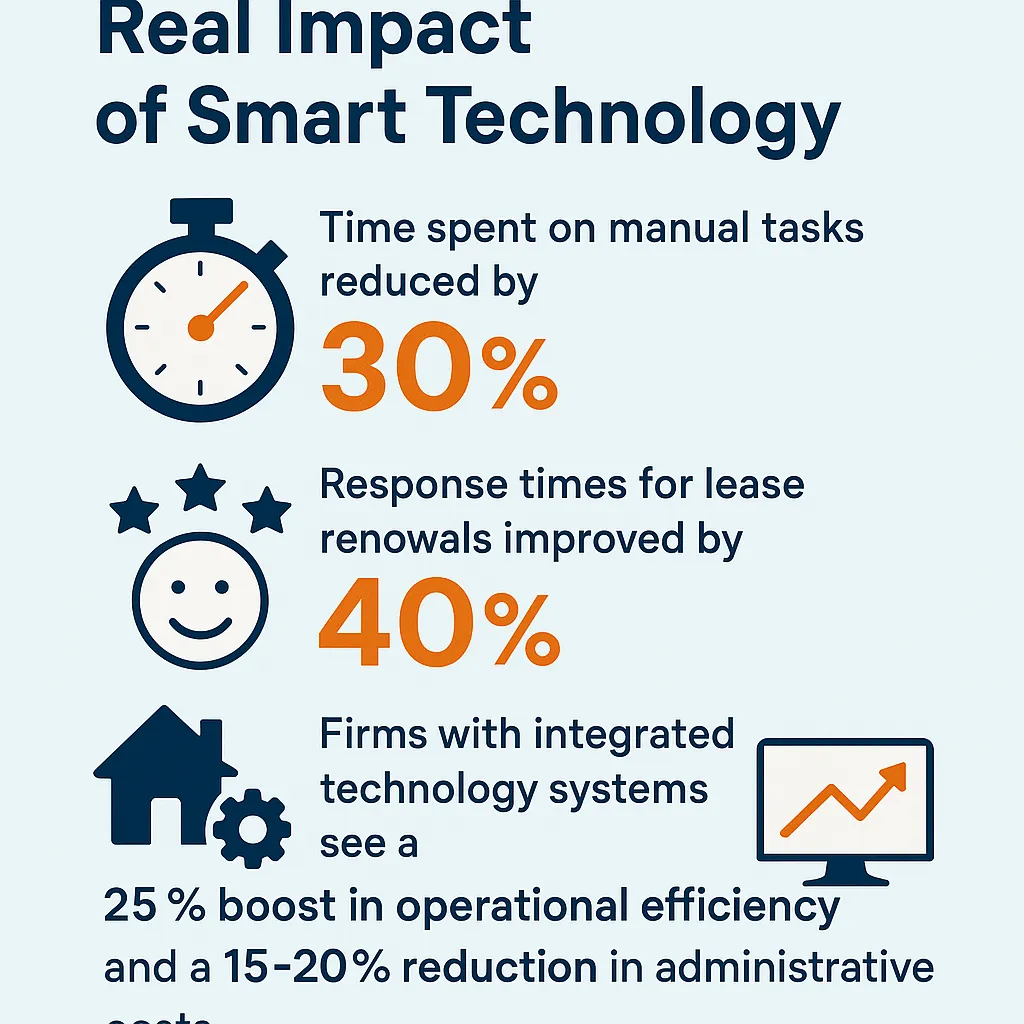
Real Impact of Smart Technology
A property management firm in Dallas, TX, adopted AppFolio to manage maintenance, lease renewals, rent collection, and vendor coordination. After six months:
Firms with integrated technology systems see a 25% boost in operational efficiency and a 15–20% reduction in administrative costs, according to the National Association of Residential Property Managers (NARPM).
Frequently Asked Questions
Q: What are effective ways to enhance real estate processes? A: It automates property tracking, document management, and communication—reducing human error, saving time, and improving service delivery.
Q: What is the most suitable storage solution for real estate documents? A: Cloud services are ideal for digital records; secure off-site storage should be used for sensitive paper-based documents. For example, storage units in Colorado Springs, CO offer secure and organized off-site solutions.
Q: How can I track resources and assets efficiently? A: Utilize platforms with real-time dashboards and inventory tracking features to monitor the performance of assets, equipment, and properties.
Optimize Your Real Estate Business Now
Whether it’s multifamily housing, commercial properties, or an expanding residential portfolio, implementing intelligent resource management solutions is no longer optional—it’s a necessity.
By optimizing your workflow with the right technology, you will:
Reduce time spent on manual tasks
Enhance client satisfaction
Increase operational profitability
Start today by evaluating your current processes and integrating tools that align with your business goals.
Strata ownership is now a part of property ownership in today’s real estate market. Although this is a concept more common in Australia and Canada, strata management is getting more traction in the United States, where increasingly more developments are appearing in this property ownership structure. Learning about strata management will enable property owners, investors, and even real estate professionals to learn how to manage the intricacies of shared living space successfully.
What Is Strata Management?
Strata management refers to the handling or management of property that has been split into individual units or lots, either in a condo, townhome, or apartment complex. In a property that is strata titled, the unit owners will own their units but collectively share ownership of those common areas, such as lobbies, hallways, gardens, and amenities like pools or gyms.
This type of property ownership is overseen by a governing body, typically a homeowners association (HOA) or a strata corporation responsible for overseeing the maintenance and management of the property in compliance with legal and fiscal stipulations. A strata manager (or community association manager in North American terminology) will usually be appointed to manage the day-to-day activities in the name of the strata committee or board.
Responsibilities of a Strata Manager
Strata managers play a pivotal role in maintaining the value and functionality of strata-titled properties are achieved. Their core responsibilities typically include:
Financial Management
Managing the collection of strata fees or assessments from unit owners;
Preparing the budgets and supervising their management;
Payment of invoices and application of service contracts; and
Organizing reserve funds for anticipated repairs and capital improvements.
Maintenance and Repairs
Coordinating regular upkeep of common areas
Engaging, hiring, and overseeing contractors and service providers
Dealing with repairs of emergencies and addressing any maintenance concerns as they arise
Legal and Administrative Duties
Ensuring compliance with state and local laws, bylaws, and strata rules.
Accurately recording documents related to meetings, correspondence, and decisions.
Insuring common property.
Helping in dispute resolution for owners.
Communication and Governance
Coordination of meetings such as Annual General Meetings (AGMs)
Writing up reports and notices for owners
Advising the strata board or HOA on legal and operational matters.
Benefits of Effective Strata Management
In essence, a strata manager indeed has a huge impact on property values, community satisfaction, and legal compliance. Good maintenance and financial stability create an attractive property for potential buyers and renters who may enhance its market value.
Furthermore, good communication among the management, board, and owners builds a soothing atmosphere. Strata managers can solve maintenance and administrative problems before minor disputes or repairs become major issues.
Challenges in Strata Management
Despite its benefits, strata management comes with its own set of challenges. Conflicts between owners, budgeting disputes, and non-compliance with community rules can create friction. Additionally, poor management practices can lead to deteriorating property conditions, legal liabilities, and falling property values.
For this reason, choosing a qualified and experienced strata manager is essential. Property owners should look for professionals who are licensed (where required), insured, and knowledgeable about local real estate regulations and community governance.
Modern Strata Management and Technology
Technology is revolutionizing the way strata management is conducted. Property management software now allows for real-time communication between residents and managers, streamlined maintenance requests, online payment of strata fees, and access to important documents via digital portals. These tools boost transparency and efficiency, building trust and engagement within the community.
Strata Management vs. Traditional Property Management
Both strata and traditional property managers are involved in property management, but their roles vary significantly. Traditional property managers usually focus on single-ownership properties (like a landlord renting out apartments), while strata managers work on behalf of a collective group of owners in a shared property structure.
This difference is crucial for investors who may have units in both strata and non-strata developments. The more an investor understands the differences in management styles, the better they can align expectations and effectively monitor their assets.
Strata Solutions That Work
Strata management is an important feature in a more modern aspect of real estate, especially in densely populated areas where individuals have a tendency to reside communally. Whether you are a resident owner, an investor, or simply a member of the board, knowing the basics about strata will help you make judgment calls that could affect your investment in real estate and help you participate in a healthy community.
Urbanization and connectivity of communities make it imperative for property owners to have the right strata management team in place. Call today to see how professional strata management can assist you in achieving an everlasting legacy.