Choosing between Phoenix and California feels like a contest between two very different types of American Dreams. California was the land of opportunity for so long but now Greater Phoenix has become a serious alternative for movers who want lower housing costs, lower state income taxes, and a fast-growing desert metro. Whether you want a lower cost of living, a career in tech, or a specific climate, picking between these two regions requires a hard look at the math and the daily reality.
The Cost of Living Divide
Money is the biggest factor driving this debate. California is home to some of the highest housing costs and one of the highest top personal income tax rates in the U.S.
Housing costs: The median home price in Phoenix is typically lower than in many major metro areas across the U.S.. In contrast, California median home prices often double or triple that of Phoenix, especially in coastal cities like San Diego, Los Angeles, and San Francisco.
State taxes: Arizona recently shifted to a flat income tax of roughly 2.5%, making it one of the most tax-friendly states in the West. California has a progressive personal income tax system, with rates up to 12.3%, plus an additional 1% tax on taxable income over $1 million.
Climate: Dry Heat Versus Diverse Microclimates
While both regions are known for sunshine, the actual feel of that weather is very different.
The Phoenix low desert: Phoenix gets roughly 300 days of sunshine a year. However, the summers are intense, with temperatures frequently exceeding 110 degrees. The winters are arguably the best in the country, offering mild, jacket-weather days from November through April.
California microclimates: California offers everything from mild coastal areas and foggy northern regions to inland valleys, mountains, and desert communities. Coastal Southern California is known for mild weather, while inland Southern California can get much hotter.
The Job Market and Economy
Both economies have diversified, but in different ways:
Phoenix has grown in semiconductors, logistics, finance, health care, and business services. It is currently one of the fastest-growing job markets in the country, with generally less congestion than Los Angeles or the Bay Area, though Phoenix is still car-dependent and traffic is increasing.
California remains a much larger economy with major strength in tech, entertainment, aerospace, agriculture, and trade. While the job market is deep in several major industries, but competition is fierce and living near the biggest job hubs can be very expensive.
Lifestyle and Recreation
Your choice may ultimately come down to what you want to do on a Saturday morning.
Outdoor access: If you love hiking, Phoenix offers world-class trails like Camelback Mountain and Piestewa Peak right in the middle of the city. However, California offers direct access to the Pacific coast. If surfing, sailing, or being within a two-hour drive of both a beach and a ski resort is a priority, California wins.
Traffic and infrastructure: Phoenix was built on a grid system, making it relatively easy to navigate, though traffic is increasing. California major metros are notorious for some of the worst traffic congestion in the world.
Making the Move
Many people find that their priorities change as they enter different stages of life. Younger professionals may prioritize California’s major career hubs, while families and retirees often find themselves moving from Phoenix to California (or vice versa) to seek a better balance between their income and quality of life.
Summary Comparison Table
Feature
Phoenix, AZ
California
Housing cost
Lower than major coastal California markets
High in coastal metros; varies widely inland
State income tax
Flat 2.5% individual income tax
Progressive, with much higher top rates
Climate
Hot desert summers, mild winters
Highly varied: coast, valleys, mountains, desert
Job market
Strong in semiconductors, logistics, finance, health care, and business services
Very deep in tech, entertainment, aerospace, agriculture, trade, and more
Traffic
Car-dependent; congestion increasing
Heavy in major metros, especially LA and parts of the Bay Area
Public transit
Limited but expanding
Stronger in some metros, weak in others
The Bottom Line
If your priority is affordability, ease of navigation, and a booming job market, Phoenix is likely your winner. If your priority is geographic diversity, world-class cultural institutions, and proximity to the ocean, California remains the gold standard, provided your budget can handle the premium.
Both regions offer a high quality of life and the unique beauty of the American West. Choose the place that actually fits your daily routine and your wallet.
Selling a home means putting your property under a microscope, and buyers know exactly where to look. Plumbing issues are high on their list because repairs can get expensive fast.
A pre-listing inspection is one of the smartest moves a seller can make in the competitive Arizona real estate market. The U.S. Environmental Protection Agency reports that household leaks waste nearly 1 trillion gallons of water nationwide each year, with about 10 percent of homes losing 90 gallons or more daily.
That kind of waste shows up on bills, leaves stains, and gets flagged during walkthroughs. If your home has hidden issues, buyers and their inspectors will usually find them. It is much smarter to find them yourself first.
Having a professional plumber check things out before you list can help keep a deal from falling apart over a problem you did not know was there.
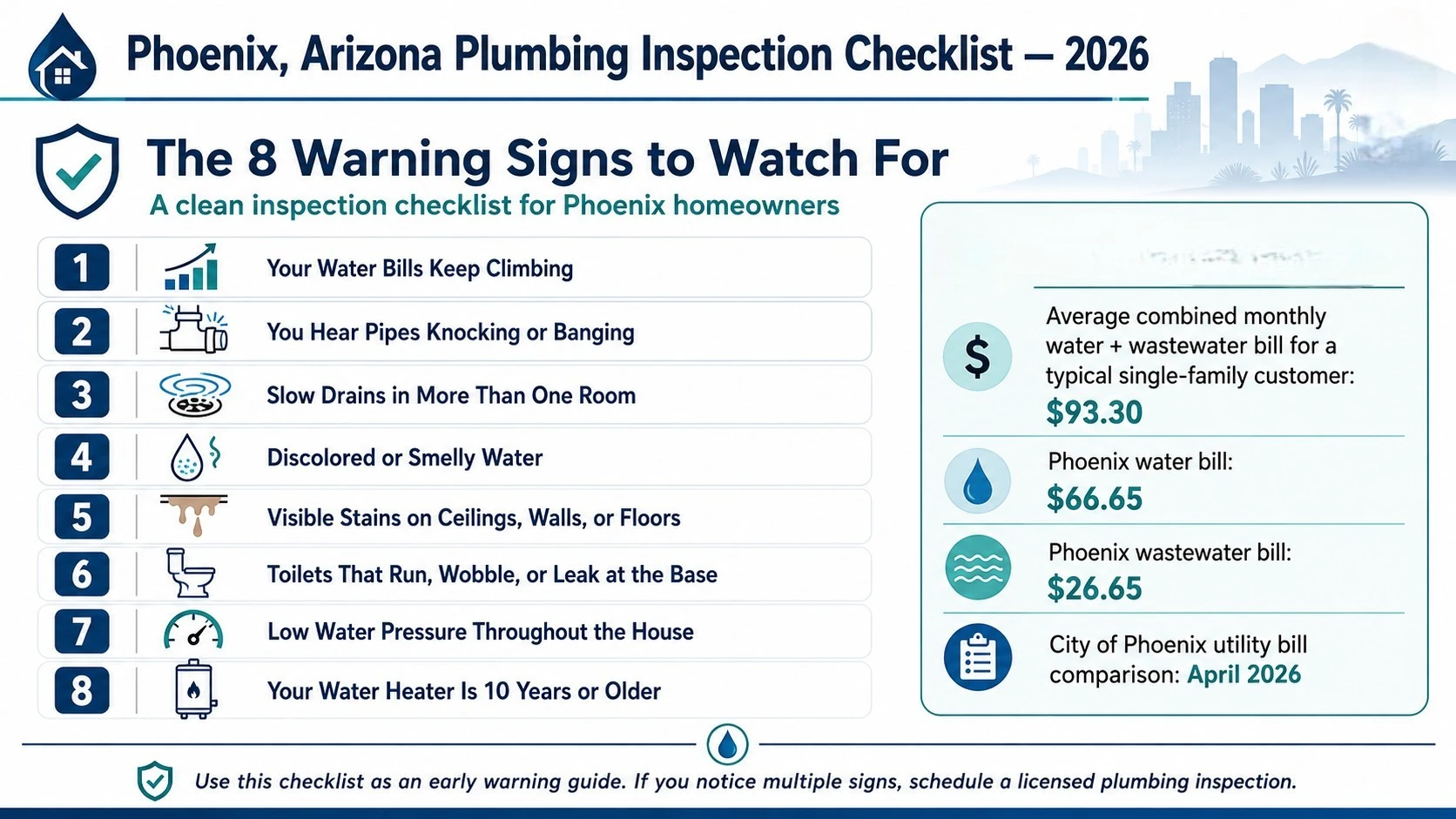
The 8 Warning Signs to Watch For
Here are eight signs that your home needs a professional plumbing inspection before that “For Sale” sign goes up.
1. Your Water Bills Keep Climbing
If your water bill has been creeping up over the past year without any change in your habits, something is off. A hidden leak inside your walls or under the floors could be to blame.
Even a slow drip behind a bathroom vanity adds up. Buyers reviewing utility records often spot the trend, so it is best to address it now before showings begin.
2. You Hear Pipes Knocking or Banging
Pipes should stay quiet. When they rattle, knock, or hammer after you turn off a faucet, that usually points to pressure issues or loose fittings. If you ignore it, the noise will only get worse, and the joints can eventually fail.
A plumber can pinpoint whether it is a pressure regulator problem or something more serious deeper in the line.
3. Slow Drains in More Than One Room
A single slow drain might just need a snake. But if your kitchen sink, bathroom tub, and laundry drain all run slowly, the issue likely sits deeper in the main line. In places like Phoenix, thirsty tree roots often break into pipes seeking water, causing major backups. Grease buildup or aging pipes can also cause this.
Inspectors hired by buyers will catch it almost immediately during their walkthrough.
4. Discolored or Smelly Water
Brown or rust-tinted water points to corrosion inside galvanized pipes or a deteriorating water heater, while a sulfur smell can mean bacteria growth or anode rod problems.
Either way, rusty or smelly water will make buyers think twice fast. A pre-listing inspection helps you fix it before anyone turns on a tap.
5. Visible Stains on Ceilings, Walls, or Floors
Water stains on your ceiling or warped baseboards are clear signs of a past or current leak. Even if the leak stopped, the stain still raises questions.
Buyers will assume the worst, often worrying about mold behind the drywall. A plumber and possibly a moisture specialist can confirm whether the issue is active or already resolved.
6. Toilets That Run, Wobble, or Leak at the Base
A toilet that runs constantly wastes water and signals a worn flapper or fill valve. A wobbly toilet usually means a failed wax ring or a rotting subfloor underneath. Both are major red flags during inspections.
The EPA notes that an old flapper alone can silently waste thousands of gallons yearly, and no buyer wants to inherit that problem.
7. Low Water Pressure Throughout the House
Weak pressure in just one fixture is usually a clogged aerator. But when every tap trickles, the cause sits deeper. Arizona is known for its hard water, and mineral buildup inside old pipes is a very common culprit.
A failing pressure regulator or municipal supply problems could also be at fault. Buyers will test showers and faucets, and weak pressure gives them an easy reason to negotiate the price down.
8. Your Water Heater Is 10 Years or Older
Most standard tank water heaters last between 8 and 12 years. If yours is getting close to that range, expect questions during showings.
Rust around the tank base, popping sounds, or lukewarm showers all point to the end of its lifespan. Replacing it before listing, or at least getting it inspected, helps buyers feel more confident and can protect your asking price.
Why a Pre-Listing Inspection Pays for Itself
Some sellers skip the inspection because they assume buyers will hire their own. But waiting puts you on the defensive. When the buyer’s inspector finds problems, you lose leverage, and repairs done under deadline pressure almost always cost more.
Catching issues before prospective buyers set foot in the home keeps you in control of both the timeline and the budget.
Here is what you gain by going first:
You keep more negotiating power. You decide what to repair, what to disclose, and how to price the home. Buyers cannot use surprise findings to chip away at your asking price.
You can lower repair costs. When you are not racing the clock, you can compare quotes from two or three plumbers instead of accepting the first available one.
Your inspection paperwork looks stronger. Listings paired with recent inspection paperwork and repair receipts feel more trustworthy from the very first showing.
Closing is less stressful. Fewer surprises during the buyer’s inspection means fewer renegotiations, repair credits, and delays before closing.
Buyers can make stronger offers. When they see documented work, they are more willing to submit serious offers without padding for unknown risks.
You avoid emergency rush fees. Same-day plumbing calls and rush jobs cost significantly more than scheduled visits.
A few hundred dollars spent on a plumber’s review can lead to thousands more at closing, plus far less back-and-forth during escrow. It is the kind of investment that quietly protects every other dollar in the transaction.
What a Plumbing Inspection Usually Covers
A licensed plumber checks the parts of your home that buyers and their inspectors will scrutinize most closely. The goal is to catch anything that could slow down or derail the sale, from minor drips to major structural concerns hiding behind walls or underground.
Here is what a standard inspection typically includes:
Supply lines and main shut-off. The plumber checks for corrosion, leaks, and pressure problems along the lines that bring water into your home.
Drain and waste system. Sinks, tubs, and floor drains are tested for proper flow and venting. Slow drains often hint at deeper clogs in the main line.
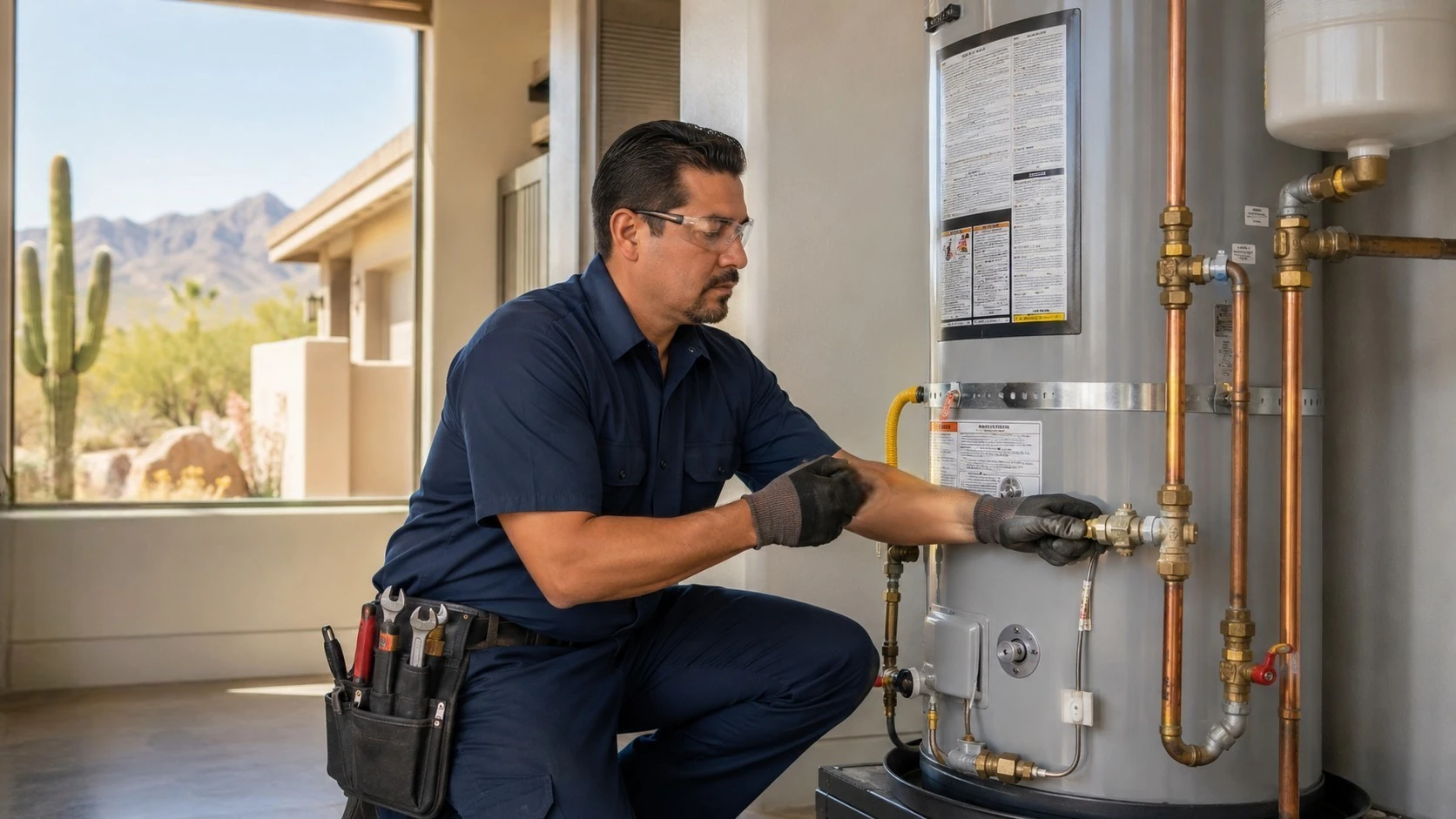
Water heater evaluation. Age, sediment buildup, anode rod condition, temperature settings, and signs of rust around the base all get reviewed. This is especially important for water heaters stored in hot Phoenix garages.
Fixtures and faucets. Toilets, showerheads, and sinks are tested for leaks, weak pressure, running water, and worn seals.
Visible piping inspection. The plumber inspects exposed pipes in basements, crawl spaces, and utility rooms for corrosion, sagging, or improper repairs.
Sewer line camera scope. Many plumbers run a small camera through the main sewer line to catch root intrusion, cracks, bellies, or blockages no visual check would reveal.
Code compliance review. Older homes often have fittings or materials that no longer meet current plumbing codes, and these can come up during the buyer’s inspection.
Written report with photos. You will receive a document showing what passed, what failed, and what needs monitoring, often with images attached.
If something turns up, you have options. Small repairs can often be done the same day. Bigger issues, like a sewer line replacement, give you time to plan. You can fix it, disclose it, or adjust your asking price accordingly. The goal is to have full information before you’re forced to react to a buyer’s findings during negotiations.
How to Prepare for the Inspection
A little prep work helps the plumber move efficiently and gives you a more accurate report. The easier it is for them to access fixtures and equipment, the more thorough the review will be. Spend an hour or two getting your home ready before the appointment.
Before the plumber arrives:
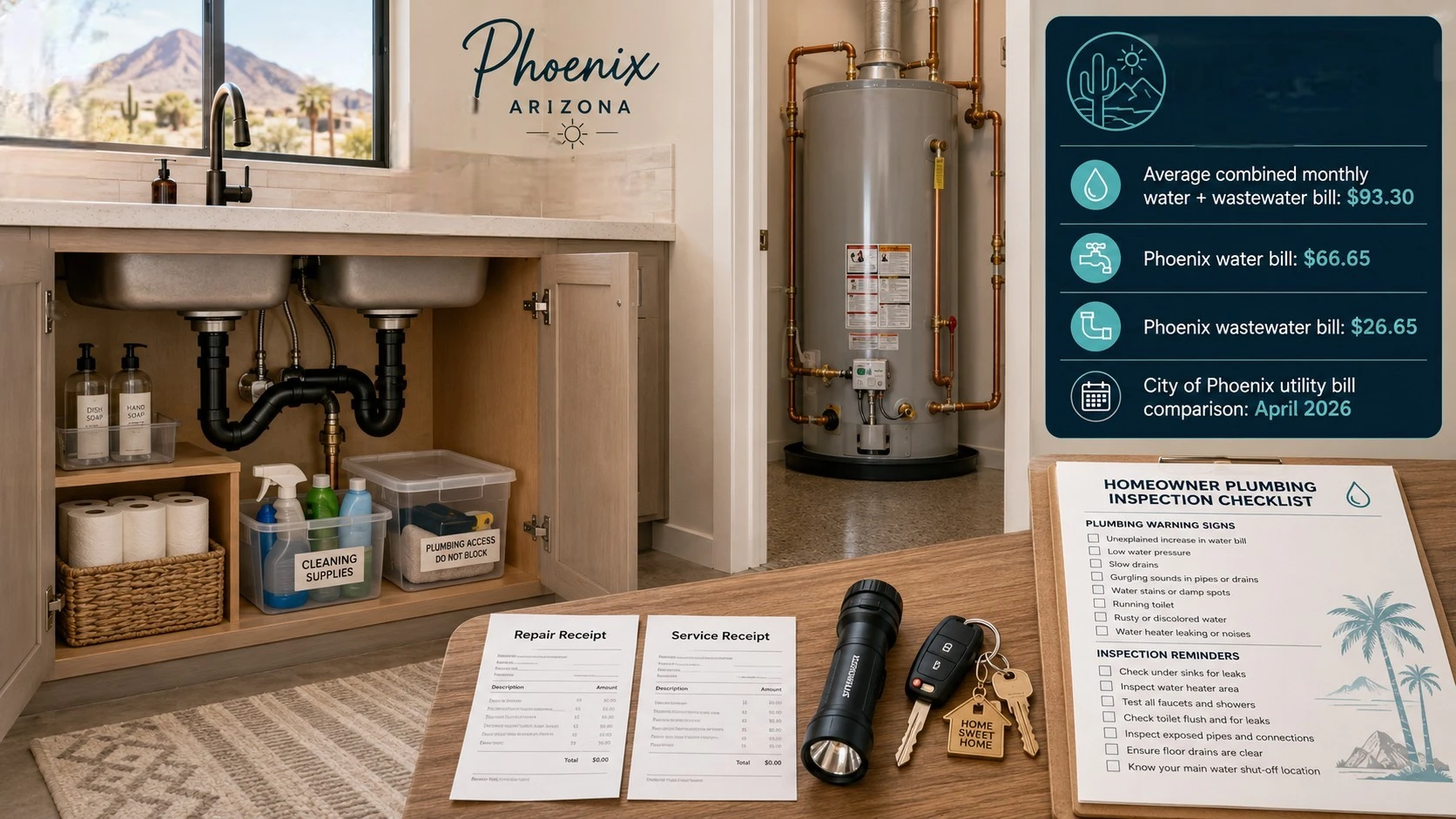
Clear out the cabinets under every sink so they can see supply lines and drain connections.
Move boxes, laundry baskets, or storage bins away from the water heater and main shut-off valve.
Locate the sewer cleanout, which is often outside near the foundation, and make sure it is not buried under mulch or covered by furniture.
Gather receipts from past plumbing work, water heater installations, or repiping projects. These build a paper trail that buyers appreciate.
Write down any concerns you have noticed, like slow drains, knocking pipes, or fluctuating hot water.
Make sure pets are secured and the plumber has clear paths to basements, crawl spaces, and outdoor spigots.
Walk through the home yourself first:
Run every faucet for at least 30 seconds and watch for discoloration or weak flow.
Flush every toilet and listen for hissing or running after the tank refills.
Check each tub and shower for slow drainage or pooling water.
Look under sinks with a flashlight for moisture, water stains, or warped wood.
Test the laundry hookups and check the washing machine hoses for cracks or bulges.
Note any odd smells near drains, especially sulfur or sewer gas.
A plumber works faster when they know what concerns you, and you get a more useful report when both of you are on the same page from the start. Think of this prep as giving yourself the cleanest possible inspection process. The more they see, the fewer surprises buyers will find later.
The Takeaway for Sellers
Selling a home goes a lot smoother when surprises stay out of the picture. Plumbing problems sit near the top of every buyer’s worry list, right alongside roofs and foundations. By spotting these eight signs early and bringing in a pro for an inspection, you protect your sale price, your timeline, and your peace of mind.
Take a slow walk through your Arizona home this week. Listen for odd sounds, check under sinks, and run every fixture. If something feels off, it probably is. Schedule that inspection before the listing photos go up, and you will thank yourself when buyers start making serious offers with fewer demands.
Over the past decade, Phoenix has quietly transformed from a seasonal snowbird retreat into a year-round standout for luxury vacation rentals. Driven by a strong local economy, expanding infrastructure, and over 300 days of sunshine, the market now consistently attracts high-net-worth tourists, traveling executives, and upscale travelers.
For real estate investors, this shift presents a unique opportunity to capitalize on a region with solid property fundamentals, not just seasonal tourism swings.
Year-Round Tourism And A Warm Climate
Unlike markets that rely heavily on summer or winter spikes, Phoenix benefits from sustained, year-round demand. The warm desert climate naturally draws travelers from colder regions during the winter, helping push premium nightly rates higher.
Spring and fall maintain this momentum, bringing in visitors for golf tournaments, wellness retreats, and outdoor recreation. This steady flow of visitors can support strong occupancy rates and more predictable revenue for property owners.
A Strong Real Estate Market For Investors
As a real estate market, Phoenix delivers steady appreciation alongside conditions that work well for investors. Compared to saturated, high-barrier coastal cities like Los Angeles or Miami, the Valley offers a much more accessible entry point for luxury investments.
The combination of reasonable acquisition costs and strong yield potential appeals to both new and institutional investors looking to scale their portfolios.
Population And Economic Growth
Expanding corporate relocations and a growing local population further support property values. With more professionals moving to the area for lifestyle upgrades and employment, the need for high-end, short-term accommodations continues to grow.
Together, corporate travel and luxury tourism create a resilient investment environment built for long-term stability.
The Appeal To High-End Travelers
Today’s affluent travelers prioritize privacy, space, and experiential stays over traditional hotel suites. Phoenix delivers that, offering a wide range of homes with modern architecture and dramatic desert backdrops.
High-end guests expect premium amenities, including resort-style pools, expansive outdoor kitchens, and seamless indoor-outdoor living spaces. Homes built around this lifestyle tend to see more frequent bookings and stronger nightly rates.
Strategic Location And Accessibility
Easy access plays a major role in the area’s global appeal. Phoenix Sky Harbor International Airport provides strong flight connections to major domestic and international hubs, encouraging repeat visits and frequent weekend getaways.
The city’s proximity to upscale destinations like Scottsdale and Sedona also positions it as an ideal home base for trips around Arizona, driving further lodging demand.
Why Lifestyle And Experience Matter
For many travelers, the stay matters as much as the destination, and Phoenix strikes an ideal balance between high-energy activity and desert tranquility. The area appeals to different types of guests, offering vibrant dining districts, luxury retail, championship golf courses, and premier spa facilities.
By attracting everyone from corporate retreats to couples and families, property owners can diversify their marketing approach and avoid leaning on just one type of traveler.
Learning From Successful Luxury Rentals
Success in luxury Phoenix vacation rentals requires a clear understanding of what performs well right now. Top-tier listings in Phoenix set a high standard, heavily emphasizing open-air layouts, distinctive design, and highly curated guest experiences.
Investors who study and adopt these standards can quickly position their properties to compete effectively at the top end of the market.
A Favorable Regulatory Environment
While many major metropolitan areas have tightened short-term rental restrictions, Phoenix maintains a relatively favorable regulatory landscape for income properties.
The rules in place are manageable, allowing operators to scale their businesses with less red tape. Still, staying compliant with local zoning guidelines remains crucial to protecting the investment over the long term.
Using Technology To Manage Rentals
Managing a luxury portfolio is now much easier with technology. Property management systems, dynamic pricing software, and smart home automation allow investors to run operations efficiently from anywhere.
Features like keyless entry, smart climate control, and integrated security not only simplify turnover but also improve the guest experience. Using data-driven pricing helps owners adjust rates around real-time market demand and local events.
Long-Term Growth And Future Outlook
The outlook for Phoenix as a luxury rental hub remains strong. Ongoing municipal investments in urban development and tourism infrastructure continue to boost the city’s profile. As remote work makes longer stays more common, travelers increasingly seek spacious, premium properties that can accommodate both business and leisure with ease.
Ultimately, Phoenix provides a rare blend of high demand, solid real estate fundamentals, and exceptional lifestyle appeal. Thriving in this market means going beyond simply buying a house; it requires delivering a hospitality-driven experience that meets the expectations of today’s luxury guests. For investors committed to quality design and strategic location, the Phoenix market presents a strong long-term opportunity.
If you’ve ever wrestled with a garage door that sticks, squeaks, or refuses to budge, you already know how frustrating things can get.
A broken or poorly functioning garage door can throw off your schedule and pose a real danger to people and property. Despite that, many homeowners still overlook routine maintenance until something breaks. Waiting usually leads to pricey garage door repairs or, worse, injuries.
So, how often should you actually service your garage door, and what should this service include?
Why Regular Garage Door Maintenance Matters
According to the U.S. Consumer Product Safety Commission, over 20,000 people in the U.S. are treated in emergency rooms each year due to garage door injuries. Many of these injuries involve doors that were not properly maintained.
Modern overhead doors rely on torsion or extension springs, cables, rollers, tracks, electronics, and sensors working in sync. If just one part slips out of alignment, the door can jam, drop, or fail to detect obstacles. Taking care of your garage door now keeps your family safe and saves you money in the long run.
How Often to Service Your Garage Door
Most pros suggest checking and servicing your garage door at least twice a year, ideally in spring and fall. These seasons are best because temperature changes can affect the metal parts and the door’s balance. Cold temperatures can stiffen grease, while the intense Phoenix heat and dust can dry out lubricants.
However, if your garage sees a lot of traffic, opening and closing more than ten times per day, getting the doors inspected every few months can help ensure things run smoothly year-round.
What a Basic Maintenance Service Includes
When you’re choosing a garage door company for service, check that their standard maintenance covers these key tasks:
Check springs and cables for rust, fraying, or wear.
Inspect rollers and tracks for smooth movement and proper alignment.
Test safety features like the auto-reverse system.
Lubricate moving parts with silicone-based oil.
How Much Do Garage Door Services Cost in Phoenix?
2025 HomeAdvisor data shows that most garage door repairs cost between $150 and $400, while major problems like spring failures or opener issues can climb past $500.
Routine maintenance typically runs around $100 to $150 and includes lubrication, inspections, and small adjustments. Regular upkeep extends the lifespan of a garage door to roughly 15 to 20 years, while neglected doors tend to fail much sooner. Spending a little on routine service protects both your budget and your safety.
Common Garage Door Issues
Even with routine service, problems can still pop up. Knowing what to watch for helps you respond quickly and avoid bigger headaches down the road.
Broken Springs. Springs do the heavy lifting on a garage door, which is why they wear out over time. Before they give out, you’ll often notice hints such as rust on the coils, a small gap that wasn’t there before, or a door that suddenly feels harder to lift. When a spring actually breaks, the door can slam shut or refuse to budge at all. This isn’t a DIY job. A trained tech should handle that repair every time.
Frayed or SnappedCables. Over time, garage door cables can fray or weaken, especially with the dry desert heat taking a toll on moving parts. If a cable snaps, the door can drop unevenly, jam, or jump off the tracks. Catching cable wear early is the easiest way to avoid this serious safety risk, which is why regular checks matter so much.
Misaligned or Bent Tracks. A small bend or misalignment in the tracks can cause your garage door to jerk and rattle or stop halfway. If the track gap widens too much, the rollers can pop out completely. Clearing debris and checking alignment during routine service prevents most track-related failures.
Worn Rollers. Garage door rollers are usually made of steel or nylon. Steel rollers are sturdy but noisy, while nylon rollers run quieter and produce less vibration. Both types wear down over time and need lubrication to prevent binding. When rollers degrade, the door strains, causing the opener to work harder than it should.
Opener Malfunctions. The opener acts as the control center for your garage door. So, when it starts acting up, you might notice slow response times, sudden stops, or flashing lights that point to sensor issues.
Sometimes it’s a simple fix, like adjusting the limit switches or realigning the sensors. Other times, however, the electronics inside fail, and the opener needs to be replaced.
DIY Garage Door Maintenance vs. Professional Service
There are a few tasks homeowners can handle without much risk: lubricating rollers, tightening loose bolts, clearing debris from the tracks, and testing the auto-reverse feature. These small habits help the system run more smoothly and reduce wear.
But other tasks carry real hazards. Springs and cables are under immense tension, and improper handling can cause serious injuries.
Hiring a professional for periodic maintenance often costs less in the long run. It reduces emergency repairs, keeps parts from failing prematurely, and extends the lifespan of the entire system.
Stay Ahead of Garage Door Problems
How often should you service your garage door? Twice yearly works for most homes. If your door opens and closes all day long for kids, bikes, errands, and deliveries, quarterly checks are even better.
Also, keep an eye and ear out for loud squeaks, jerky movement, loose cables, or malfunctioning openers. When something feels off, a quick professional service visit can spot hidden issues before they turn into a full breakdown.
Figuring out which personal injury lawyer to hire can feel like a huge hassle. Not all attorneys work the same way. Some get stuck pushing paper instead of paying attention to you. The best Phoenix injury lawyers will plan your case, keep pressure on the insurer, and fight for you in and out of court.
It’s easy to just go with a lawyer based only on years in practice or how close the office is, but that doesn’t tell the whole story. Those details matter. Still, the best lawyers share other qualities that show they’re on another level.
Here, we’ll explore 10 qualities of a top personal injury lawyer in Phoenix, so you can make a confident decision and choose someone who will genuinely fight on your behalf.
1. Exceptional Client Advocacy
Fighting for you isn’t just arguing in court. It starts with listening to you. A top lawyer makes sure your story is the foundation for the case, from the first demand letter to the last offer. When you feel powerless, they step in and make sure your voice is heard. Technical skill isn’t enough without this focus on the client.
2. Proactive Case Management
Great lawyers don’t wait for problems. They get ahead of them. In Arizona, you generally only have two years to file a lawsuit, so a good lawyer moves fast. They stay on top of deadlines, gather your medical records, track down witnesses, and make sure insurance coverage is sorted out early. Doing that groundwork keeps your case organized, cuts down your stress, and usually leads to a stronger outcome.
3. Creative Problem-Solving
Injury cases don’t follow a script, so good lawyers know how to pivot. If a record is missing or an insurance company questions your injuries, they’ll dig up other ways to prove it.
This might include photos, crash data, or expert opinions. Small strategic changes can make a huge difference in a case, but a lawyer who just sits back almost never wins.
4. Extensive Network of Experts
Top attorneys have a team. They work with doctors, accident reconstruction specialists, economists, and investigators who make your claim stronger. You may not see the whole network, but you’ll see the results in clearer evidence and higher-quality reports.
5. Clear and Honest Fee Practices
Money worries shouldn’t get in the way of your recovery. A quality Phoenix injury lawyer explains contingency fees in plain English. They will walk you through case costs and get your approval before spending. Most work on a contingency, which means you don’t pay attorney fees unless they win. There are no surprise charges, and you know how the fee works if the case settles or goes to trial.
6. Client Education
Legal terms can get confusing, so a good lawyer breaks everything down in plain English. They’ll walk you through the timeline, what to expect, and the options on the table, before you have to make any big decisions.
Regular updates build trust and keep you in control, and informed clients avoid costly mistakes. Informed clients also avoid costly mistakes.
7. Reputation for Integrity
Honesty and ethics matter in every case. Lawyers who keep their word earn respect from judges, juries, and insurance adjusters, which can quietly improve offers and negotiations. You want someone who evaluates your case fairly and gives straight answers, not empty promises.
8. Technologically Savvy
Modern cases move faster when technology is used well. Secure client portals, e-signatures, digital medical records, and organized case software cut errors and missed deadlines. The point is not flashy gadgets, it is protecting your claim and your privacy.
9. Advanced Negotiation Skills
Insurance companies are trained to pay out as little as possible, and a strong lawyer knows how to push back. This is extra important in Arizona, where the state-minimum insurance requirement is only $25,000 for bodily injury, so good lawyers have to hunt for other coverage. They dig into the numbers, challenge lowball offers, and are ready to file suit if talks stall. Their power comes from being truly ready for trial, not just saying it. A single mistake in negotiation can cost thousands. This is why you need someone who bargains hard and builds value with evidence.
10. Community Connection and Local Insight
Local knowledge matters in Phoenix. Lawyers who know the Maricopa County courts, the usual defense tactics, and local medical providers understand how cases move here. They also must be experts on Arizona’s ‘pure comparative fault’ rule, which impacts how blame is divided and how much you can recover. Those insights can shape strategy and speed up results. That gives you a real edge.
Don’t Settle, Hire the Right Personal Injury Lawyer Today
Hiring a lawyer isn’t just something to check off a list. It’s a decision that can change your recovery. The right Phoenix injury attorney combines legal skill with a real desire to fight for you, integrity, and care. They walk you through the process, negotiate with confidence, and fight for the compensation you deserve.
Do not leave your future to chance. Reach out to a trusted Phoenix personal injury lawyer today for clear guidance, steady support, and strong advocacy.