Tag: Ownership Costs

  • How Homebuyers Can Make Smarter Moves in a Competitive Housing Market

    Photo by RDNE Stock project: pexels.com

    House hunting in a hot market can feel like you’re already behind before you even walk through the door. Well-priced homes can draw multiple offers quickly, and buyers often feel pressured to make a major financial decision on a tight deadline.

    But strong real estate decisions rarely come from chasing the crowd. They come from knowing your numbers, your market, and your limits before the right property shows up. Instead of focusing only on winning the offer, focus on buying a home that fits your life and still makes sense after closing.
    1. Look Past the National Housing Headlines

    Real estate is local, sometimes down to a few blocks. National headlines can help explain the broader market, but they won’t tell you what is happening in one school zone, subdivision, or condo building. One neighborhood may have tight inventory and rising prices, while a similar area nearby may be sitting longer and seeing price cuts.

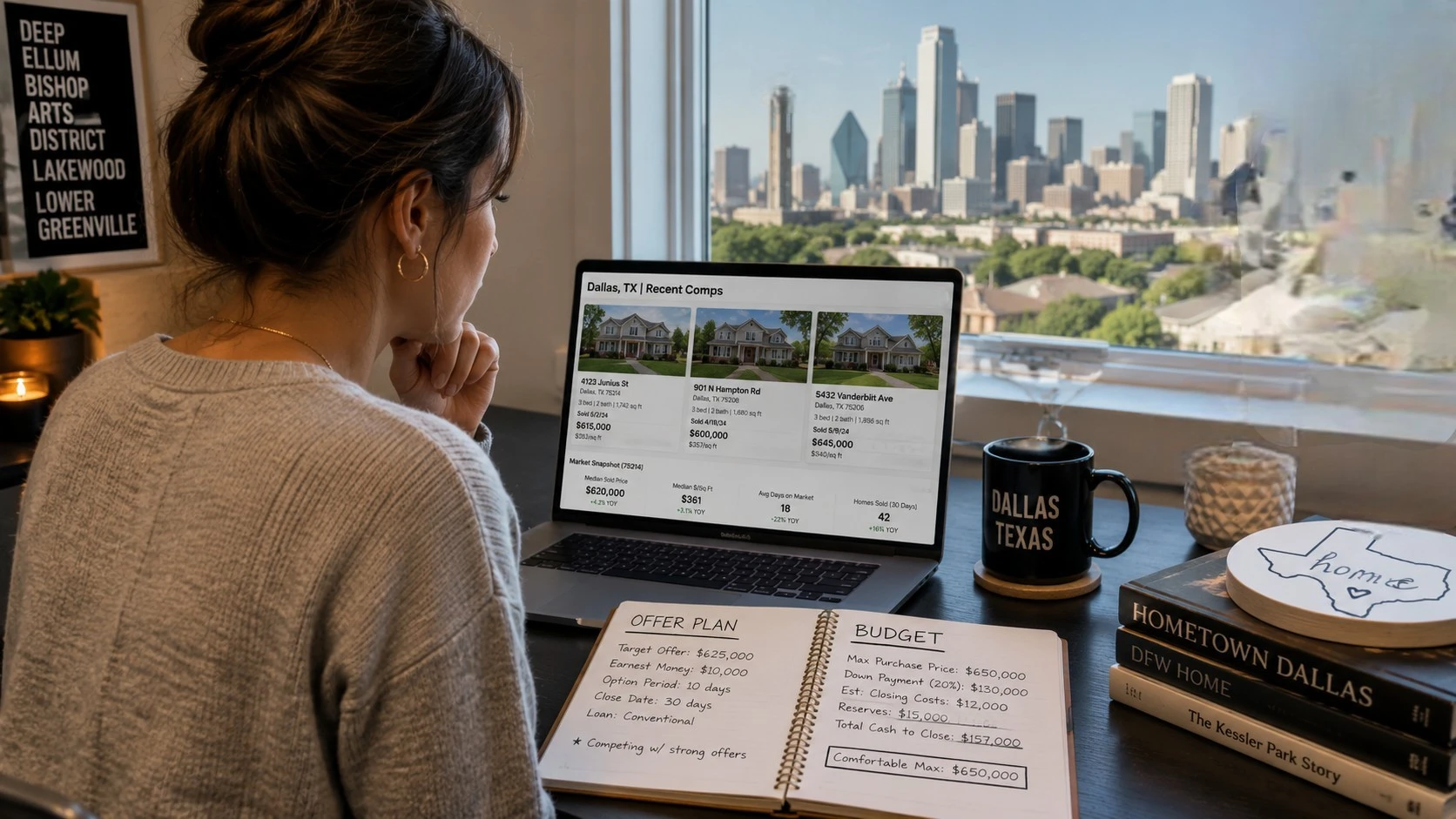
    Before you write an offer, study the recent comps. Look at days on market, list-to-sale price ratios, price reductions, and how many comparable homes are available. Also pay attention to local factors such as school boundaries, planned roadwork, zoning changes, flood risk, and access to transit. Two homes that look similar online can perform very differently over time because of location details buyers may not notice at first.

    2. Don’t Confuse Staging with Value

    A beautifully staged home is meant to make you feel at home the second you walk in. That is the point. But expensive furniture, designer lighting, and fresh paint are not the same thing as long-term value.

    Look closely at the things that are expensive or impossible to change: the lot, the street, the floor plan, the natural light, the roof, the mechanical systems, and the overall condition. A polished home on a noisy road may not be a better buy than a dated home on a quieter, more desirable block. You can update finishes later. You cannot move the house to a better lot.

    3. Know Your Non-Negotiables Before You Tour

    In a fast market, buyers who know their priorities have a real edge. Before your first open house, split your wish list into three groups: must-haves, flexible items, and nice-to-haves.

    Your budget ceiling, commute range, number of bedrooms, and school or neighborhood requirements may belong in the must-have category. Flooring, paint colors, landscaping, and light fixtures are usually flexible. Lifestyle extras, such as a wine room, gym, pool, or guest suite, should be treated as bonuses unless they truly affect how you live day to day. Clear priorities help you move quickly without letting pressure make the decision for you.

    4. Understand the Full Cost of Ownership

    The purchase price is only one part of the cost. Higher-end homes can come with higher taxes, insurance, utilities, maintenance, and HOA fees. Those costs matter just as much as your mortgage payment.

    Before raising your offer, run the full monthly number. Include property taxes, homeowners insurance, HOA dues, utilities, landscaping, pool service, repairs, and reserves for major systems. An older HVAC system, aging roof, large yard, or oversized pool can turn an already expensive home into a much tighter monthly commitment. A smart offer is not just the one that wins. It is the one you can comfortably carry.

    5. Buy for the Way You Actually Live

    A home can be a strong investment, but it still has to work for your daily life. Think honestly about how you use space. Do you entertain often? Do you need a quiet home office? Do you want separation between guest rooms and primary living areas? Do you need outdoor space, storage, or easy access to medical, fitness, or wellness services?

    Personal comfort matters, too. For example, someone looking for a hand and foot sweating treatment may place more value on reliable climate control, strong ventilation, shaded outdoor areas, or a private wellness space than on cosmetic upgrades. The right home should support the way you live now, not just the lifestyle you picture on a perfect weekend.

    6. Keep a Second Option in Mind

    During a bidding war, it is easy to convince yourself that one home is the only one that will work. Usually, it isn’t.

    Step back before you stretch too far. Could a nearby neighborhood offer better value? Would a smaller home leave room in the budget for renovations? Would a less flashy property in a better location be a smarter long-term move? Having another path keeps you from treating one address like your only shot.

    7. Set Your Limits Before the Offer Deadline

    Offer deadlines can make buyers act fast, but fast should not mean reckless. Before the seller sets a cutoff time, decide your highest price, your preferred terms, and which contingencies you are not willing to waive.

    Know your walk-away number before emotions get involved. That number should account for the appraisal, inspection findings, repairs, closing costs, and the cash you still need after closing. A clear limit makes it much easier to stay calm when counteroffers start moving quickly.

    8. Watch Out for the Winner’s Curse

    Winning a bidding war feels good until the numbers settle in. If the deal drains your emergency fund, forces you to waive protections you are not comfortable waiving, or leaves no room for repairs and normal life, the win may not be worth it.

    The goal is not to beat every other buyer at any cost. The goal is to buy a home that protects your finances and still feels good to live in after the excitement wears off.

    9. Make Preparation Your Advantage

    Preparation gives you leverage. Keep your pre-approval current, understand your financing, and have your agent walk you through recent comps before you tour. Know which inspectors, lenders, and insurance contacts you would call if you had to move quickly.

    A competitive market rewards buyers who can act with confidence instead of panic. When you understand the local numbers, your own budget, and the trade-offs you are willing to make, you can write a strong offer without losing sight of the bigger picture.

  • Rent vs. Buy a Trailer: A Complete Cost Guide

    The decision to rent or buy a trailer is all about your specific needs and budget. It’s a choice between the quick convenience of renting and the long-term value of owning. To make the right call, you’ll need to think about your current project, whether it’s a move, a vacation, or hauling gear and weigh that against your long‑term plans and budget.

    The Case for Renting: Flexibility with Minimal Commitment

    Renting makes a ton of sense for short-term or one-off needs. You don’t need much cash upfront, and you get quick access to the exact equipment you need. You can handle a job without committing to the responsibilities that come with ownership.

    An enclosed cargo trailer typically runs about $80–$130 per day. Weekly rentals often offer a lower daily rate for longer projects.

    But the perks go way beyond the initial rental fee. Renting means you’re not on the hook for most of the ongoing costs. Renters don’t have to worry about maintenance schedules, mechanical repairs, or figuring out long-term storage. The rental company handles all of that and the associated costs.

    Here’s what that no‑stress approach looks like in practice.

    • You’re not responsible for upkeep or repairs. All maintenance and repairs are the problem of the rental provider. You’ll never get a bill for technical issues, like a blown tire or a light burning out.
    • You don’t have to worry about storage. Trailers require a lot of space. Renting completely gets rid of the need for a dedicated driveway spot or the monthly expense of a storage unit.
    • You get total flexibility. This model gives you the freedom to match the trailer perfectly to the task at hand. You could select a small utility trailer for a weekend project one month and a large enclosed trailer for a cross-country move the next.

    Furthermore, this model even serves as a valuable “try before you buy” opportunity. Renting a specific model, such as an enclosed trailer rental for a major move, provides hands-on experience to help you decide if its features and size justify a future purchase, allowing you to make a more informed investment down the road.

    The Case for Buying: An Investment in Long‑Term Convenience

    On the flip side, buying a trailer requires a larger upfront investment, though prices vary widely, from under $1,000 for a small used utility trailer to $4,500–$9,000 for a basic new enclosed trailer, with premium models topping $100,000.

    This purchase is a wise investment for people who will use it often. Ownership ensures availability right away without requiring a reservation. This long-term convenience can save you a lot of money over time.

    Of course, the purchase price is just part of the overall cost. Prospective owners must also factor in ongoing costs like insurance, registration fees, and routine maintenance.

    You’ll also need a place to store it, a legal parking spot at home or a rented storage space/lot if you don’t have adequate room.

    If you can manage those responsibilities, the benefits are solid.

    • It’s always ready to go. The trailer is always available, enabling spontaneous trips or projects without any need for advance rental agreements or concerns about seasonal availability.
    • You can customize it. Ownership gives you the freedom to modify the unit to your exact specifications. You can install custom shelving and lighting in a cargo trailer, add specialized hitches, or upgrade a travel trailer’s interior, creating a tool that is perfectly tailored to your specific requirements.
    • You can make money with it. A trailer is a tangible asset that can earn you money. When you’re not using it, you can rent it to other individuals through various platforms, which turns idle equipment into a source of revenue that helps offset the costs of ownership.

    You may customize your trailer with shelves, racks, or wiring to meet your specific requirements, whether for business or a hobby. Plus, it can generate money. Renting it out while you’re not using it can create an income stream that directly contributes to its upkeep.

    A Practical Cost Comparison: Renting vs. Buying a Trailer

    Let’s break down the math. If you rent a 6×12 enclosed cargo trailer for 10 days a year at about $100/day, that’s $1,000 per year—$5,000 over five years. And at the end, you don’t own anything.

    Purchasing the same trailer for $7,000 comes with additional annual costs. Insurance, registration, and maintenance may add roughly $450 per year. Over five years, this brings the total cost to about $9,250. However, the trailer retains value. Let’s say it has a resale value of $4,000 after five years. That makes the net five‑year ownership cost about $5,250, roughly $1,050 per year.

    So, you can see that buying becomes financially a better deal over a five-to-six-year horizon. Frequent use makes this break-even point come even faster.

    This analysis highlights two critical questions for any prospective buyer.

    • First, you must project your actual usage frequency.
    • Second, you must determine if your budget can handle the big initial investment and ongoing expenses for insurance, maintenance, and storage.

    Conclusion

    At the end of the day, the right choice comes from looking at your own needs and running the numbers. This analytical procedure determines the best course of action for a person’s unique situation and goals.

    Renting offers a low-commitment option that meets occasional requirements. In contrast, buying is a long-term commitment that provides regular users with complete operational autonomy.

    Ultimately, it comes down to how often you’ll use it, what your budget can support, and which option is most convenient.

  • 5 Factors To Consider Before Buying Luxury Real Estate

    Buying a luxury property takes more than just money, it requires thoughtful financial planning and strategy. Start by evaluating your financial health: look at your liquidity, debt-to-income ratio, credit score, and long-term investment goals. Create a clear budget that accounts for ongoing costs like maintenance fees, property taxes, and potential market fluctuations.

    You’ll need the right information, the right approach, and the right mindset. Location, architectural quality, and ownership costs are only part of the picture.

    The real question is whether the property fits your life, your goals, and your financial future. If you’re thinking about stepping into the luxury market, here’s what you need to look at before you buy.

    1. Location Will Always Be First

    If you’re buying luxury real estate, the first thing you should think about is location, because that’s where value starts and ends. Properties in established, high-demand neighborhoods almost always perform better over time. That’s true whether you’re looking at beachfront estates, urban penthouses, or gated suburban communities. You’ll want to pay attention to school zones, access to shopping and dining, proximity to private clubs or marinas, and even future zoning plans.

    These details affect your daily living, but they also impact resale potential and long-term appreciation. When you invest in the right location, you’re not just buying a property, you’re buying into a lifestyle that holds its value.

    2. Style, Layout, and Long-Term Livability

    Luxury doesn’t look the same for everyone, which is why the type of property you buy needs to match your lifestyle. Some buyers want privacy and land. Others want convenience and top-tier services. You might prefer a modern condo with concierge service, or maybe you’re after a classic estate with space for guests.

    Either way, look past the surface-level design. Is the layout practical? Does the flow of the home fit your daily routine? Are the materials built to last? You’ll want to look for details like high ceilings, large windows, quality flooring, and craftsmanship that shows in every corner. These aren’t just aesthetic choices, they directly impact comfort, value, and long-term satisfaction.

    3. Amenities That Actually Fit Your Life

    It’s easy to get swept up in features like smart home systems, imported stone kitchens, wine cellars, or outdoor pools, but are they actually useful to you? Luxury amenities should match how you live, not just what looks good on paper.

    If you entertain often, look at indoor-outdoor spaces, chef-grade kitchens, and guest accommodations. If you travel, prioritize built-in security systems and low-maintenance exteriors.

    Every feature adds to the cost, not just at closing but every year in upkeep and insurance. Choose amenities that you’ll enjoy and use, because you’re not just buying extras, you’re buying responsibilities, too.

    4. Know the Market Before You Jump In

    Before you make an offer, get familiar with local market conditions, because not all luxury markets move the same way. Prices in high-end neighborhoods can shift quickly based on inventory, economic trends, or development nearby. Work with a top realtor who helps in finding luxury homes and specializes in the high-end market.

    They’ll provide data on comparable sales, time on market, and price history. Look at how values have moved in the last 3 to 5 years. Is the area still growing? Are nearby properties being renovated or torn down? That kind of detail tells you whether the market is stable or just peaking.

    The more you know before you buy, the more confident you’ll be when the market changes.

    5. Understand the Full Cost of Ownership

    Luxury comes with a price beyond the mortgage and it adds up fast if you’re not ready for it. You’ll want to factor in property taxes, insurance, maintenance, utilities, and in some cases, homeowner association fees. Some homes may also require full-time staff or management services, particularly if it’s a second home.

    Ask for a breakdown of annual costs before you close, and review it with your financial advisor. If you’re paying cash, consider how this property fits into your overall investment portfolio.

    If you’re financing, make sure you’re prepared for higher requirements from the lender. A luxury property can be a powerful asset, but only if it’s handled with the right financial strategy from the start.

    Final Thoughts

    Buying luxury real estate is about more than prestige. It’s about choosing a home that works for you now and protects your investment in the long run.

    When you focus on location, lifestyle, value, and total cost, you’ll avoid expensive mistakes and make a decision you’ll be happy with for years to come. Whether you’re upgrading your main residence or looking for a second home, every smart luxury buyer starts with the same rule: know what you’re buying, and why.