Crescent Real Estate has closed a new $241.5 million investment fund to target commercial property deals, leaning heavily into high-end office real estate even as fundraising across private markets remains under pressure.
The Fort Worth based firm’s latest investment vehicle, GP Invitation Fund IV, came in just under its $250 million target, according to the Dallas Business Journal. A federal securities filing shows the fund was structured for a $250 million offering and had reported $207.36 million sold to 43 investors as of Dec. 19, 2025. This suggests the bulk of the capital was in place heading into year-end, as regulatory disclosures often lag behind final closes.
The timing is significant. Global private equity fundraising fell for a third straight year in 2025, sliding 12.7% to $480.29 billion from $551.16 billion in 2024, according to S&P Global Market Intelligence. Additionally, fewer funds launched in 2025 than the year prior.
A concentrated bet on “flight towards quality” assets
While Crescent’s mandate is broad which involves spanning office, hospitality, and multifamily sectors, its recent moves show where it sees the clearest upside being trophy office space in prime submarkets.
The firm reports a portfolio totaling more than $16 billion in investments, including 67 million square feet of office space, 10,100 multifamily units, and 9,300 hotel keys with these figures based on its existing portfolio as of February 2025.
That scale is now being deployed within a very specific geography
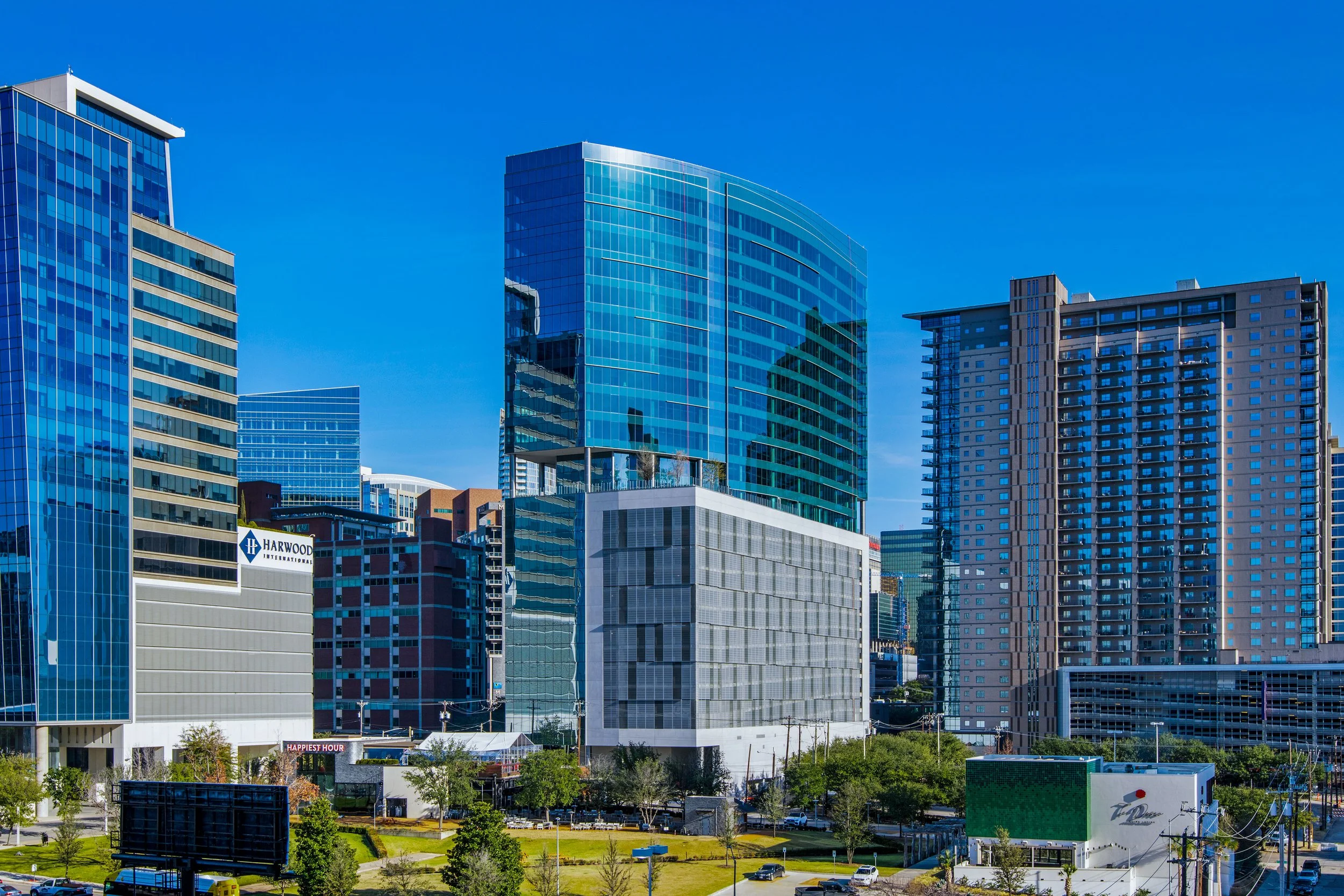
In Uptown Dallas, Crescent has been snapping up marquee office towers. In late 2025, the company bought the 19 story office building at 2100 McKinney Avenue which is an Uptown property with prominent CBRE signage acquired using $170.4 million in financing, according to The Real Deal’s review of deed records. The deal closed Dec. 17.
A few months earlier, Crescent acquired Texas Capital Center at 2000 McKinney Avenue representing one of the biggest office trades in the Dallas and Fort Worth market in 2025. The 21 story, roughly 457,000 square foot tower is anchored by Texas Capital Bank, which has a lease running through 2040.
Fort Worth is becoming a new office hub taking shape as Crescent is also building at home, where in April 2025, the firm broke ground on “Crescent Offices West,” a 170,000-square-foot office building at its Fort Worth campus that it says will be anchored by JPMorganChase and open in 2027.
That project isn’t just a real estate play because it’s part of a broader shift in how business districts form in fast growing Sun Belt metros. When a major employer anchors a high-end building outside a traditional downtown core, it acts as a magnet for other tenants, restaurants, and services.
For city leaders, that’s a win if it expands the tax base however it also raises hard questions about what happens to older office stock and legacy central business districts.
The policy backdrop: interest rates, downtown strategy, and what comes next
Here’s the bigger picture noting that commercial real estate doesn’t move in a vacuum. The Federal Reserve’s pandemic era low rate environment helped fuel dealmaking and fundraising, and the higher rate era that followed has reshaped the math by compressing values, tightening lending, and making investors far pickier.
That’s where public policy quietly enters the story as follows.
Monetary policy sets the cost of capital. Higher rates don’t just slow transactions but they also create market dislocation thereby offering windows where well capitalized buyers can negotiate better pricing especially on assets that still have strong tenants and long leases.
Local policy determines whether downtowns rebound or stagnate. Cities can influence office outcomes through zoning flexibility, permitting speed, transit access, and incentives for conversions of obsolete buildings. If capital flows mainly to “best in class” properties in prime districts, the policy challenge becomes managing the obsolete inventory meaning aging buildings that can no longer compete on amenities, efficiency, or location.
Economic development becomes a tug of war. Fort Worth and Dallas like many large metros are competing submarkets inside one regional economy. When investment and leasing momentum cluster in specific nodes such as Uptown Dallas or the Cultural District area in Fort Worth then public sector decisions around infrastructure and placemaking can accelerate that clustering.
None of that guarantees Crescent’s strategy will pay off. But it explains why a firm can be bullish on trophy office while much of the broader office market still looks shaky since the office sector is increasingly bifurcated meaning it is split between premium buildings with strong tenancy prospects, and everything else.
For Crescent, Fund IV signals that its investors believe this divergence is real furthermore that the firm can keep finding deals on the right side of it.