Tag: Market Shifts

  • Rental Income Looked Reliable Until the Property Sat Empty for Three Months

    Rental properties can look very steady from the outside. Rent comes in every month, the mortgage gets paid, and the owner has something left over after expenses. For many investors, that simple rhythm is the whole appeal of buying rental real estate.

    But that rhythm can break quickly.

    A property that sits empty for a few weeks is one thing. A property that sits empty for three months is different. By then, the missing rent is no longer a small gap in the budget. It becomes a real test of how strong the investment actually is.

    Stable Rent Can Make Risk Easy to Ignore

    When a tenant pays on time every month, it is easy for rental income to start feeling automatic. Owners may begin to plan around that money as if it will always be there.

    That is where the problem starts.

    A rental property may be stable, but it is not guaranteed. Tenants move. Neighborhood demand changes. New apartments open nearby. A competing landlord drops the rent or offers a move-in special. Even a clean, well-kept property can sit longer than expected when the local market shifts.

    This is why experienced owners leave room in the budget for vacancy. They do not assume every month will be perfect. Some investors also compare rental income with other income-producing strategies, such as using covered calls to generate income, to understand how different types of cash flow behave when conditions change.

    The point is simple: reliable income is not the same as guaranteed income.

    The Bills Keep Coming Even When Rent Stops

    A vacant property does not pause your expenses. The mortgage still has to be paid. So do property taxes, insurance, utilities, lawn care, repairs, HOA dues, and basic maintenance.

    That is what makes vacancy so expensive. The income disappears, but the carrying costs stay in place.

    Owners who counted on full occupancy can end up paying those costs from personal savings. One missed month may be annoying. Two months can hurt. Three months can force uncomfortable decisions, especially if the owner has other debts or limited cash reserves.

    After going through that once, most investors look at future deals differently. They stop focusing only on projected rent and start asking harder questions: How long could I cover this property with no tenant? What would I do if the market slowed down? Is the rent estimate realistic, or just optimistic?

    Local Market Changes Can Sneak Up on You

    A rental can perform well for years before the market changes. That shift is not always dramatic at first. Maybe showings slow down. Maybe applicants are less qualified. Maybe similar homes nearby start cutting rent.

    Small signs like that are easy to dismiss, especially when a property has been reliable in the past. But by the time a vacancy stretches into months, other landlords may already be adjusting. They may have updated photos, offered flexible lease terms, lowered deposits, or made small upgrades that make their units more attractive.

    Owners who pay attention to nearby listings usually have a better chance of responding early. Watching asking rents, days on market, listing photos, and tenant feedback can tell you a lot before the property sits empty too long.

    Cash Reserves Give You Better Options

    Vacancy is stressful, but it is much easier to handle when the owner has cash set aside. A reserve fund gives you room to make calm decisions instead of desperate ones.

    That flexibility matters. You can refresh the property, improve the listing, adjust the rent, or wait for a stronger tenant instead of accepting the first weak application that comes in.

    Without reserves, the pressure builds fast. Owners may accept poor lease terms, skip needed repairs, or lower their standards just to get rent coming in again. That may solve the short-term vacancy problem, but it can create a bigger problem later.

    A rental property does not need to be perfect every month to be a good investment. But the owner does need enough breathing room to get through the months that are not perfect.

    Rental Income Needs a Backup Plan

    Real estate can be a strong source of income, but the stability does not come from the property alone. It comes from the way the owner plans around risk.

    That means buying carefully, keeping enough cash on hand, watching the local market, and being honest about vacancy. An empty unit is not a rare disaster. It is part of owning rental property, and it needs to be built into the numbers from the beginning.

    A property sitting empty for three months teaches that lesson quickly. The investment may still be solid, but the income is only reliable when the plan can survive a rough stretch.

    The owners who last are not the ones who assume rent will arrive every month without fail. They are the ones who prepare for the month it does not.

  • The Real Estate Barbell: Balancing Midwest Cash Flow with High-End Texas Speakeasies

    Dallas-Fort Worth real estate has a math problem right now.

    Prices are still high. Interest rates have forced everyone to rethink their spreadsheets. For years, you could buy a property in Collin or Denton county, hold it, and let sheer appreciation do the heavy lifting. That era is taking a breather. Today, real estate professionals and private investors are staring at a completely different landscape. Margins are painfully thin if you are trying to find cash-flowing rentals anywhere near the Metroplex.

    So, what is the smart money doing? Two things. They are sending their capital out of state to find actual yield, and they are upgrading their local luxury properties with highly specific, niche amenities to justify top-tier asking prices.

    Let’s break down both sides of this strategy.

    The Out-of-State Yield Chase

    There is a growing trend of “geographic arbitrage” happening in the Texas investment community. When a basic three-bedroom house in a Dallas suburb costs half a million dollars but barely rents for enough to cover the mortgage, investors start looking at maps.

    A lot of that Texas equity is quietly flowing straight to Michigan.

    Metro Detroit is currently offering the exact kind of numbers that DFW used to offer a decade ago. It comes down to the rent-to-price ratio. You can acquire solid, brick properties in the Midwest for a fraction of what they cost down south. The entry point is low enough that the monthly rent actually generates positive cash flow right out of the gate. Areas around Wayne and Oakland counties are seeing a massive influx of revitalization, making them prime targets for investors who want both immediate income and long-term upside.

    But dropping money into a market 1,200 miles away requires a bulletproof ground game. You cannot manage a Detroit rehab project from a coffee shop in Highland Park. This is why local partnerships are the entire foundation of out-of-state investing.

    For Texas investors looking to buy homes in metro Detroit and surrounding areas, relying on established local teams like seebhomes.com is non-negotiable. An out-of-town buyer simply doesn’t know which specific block in Ferndale or Royal Oak is hot and which one is a liability. Having a local acquisition partner strips the risk out of the equation. They find the undervalued assets, handle the hyper-local nuances, and allow the investor to focus on scaling their portfolio rather than unclogging drains.

    The DFW Luxury Market: End of the Open Concept

    While the rental money heads north, the big money staying in DFW is being spent on drastically changing the interior of the modern home.

    If you want to move a high-end property in today’s market, you have to realize that buyers are exhausted by the “giant white box” aesthetic. The open concept is out. People want walls again. They want dedicated spaces. After years of doing everything at home, working, working out, entertaining, the demand for highly specialized, private rooms has skyrocketed.

    Enter the “Home Speakeasy.”

    We are seeing a massive shift toward dark, moody, masculine spaces in luxury listings. Think walnut paneling, leather seating, and low lighting. It is a dedicated executive lounge meant for winding down, and it is becoming the ultimate flex for a multi-million dollar listing.

    The Cabinet Humidor as a Status Symbol

    You can’t just put a leather couch in a spare room and call it a speakeasy. The space needs a focal point. For a certain demographic of high-net-worth buyers, that focal point is premium cigar storage.

    A tiny wooden box on a desk doesn’t impress anyone anymore. High-end buyers are looking for built-in, climate-controlled environments. A freestanding or built-in cabinet humidor has become a massive selling feature. It instantly communicates a specific lifestyle.

    When a potential buyer tours a home and walks into a study featuring a massive, electronic humidor cabinet from a specialty retailer like yourelegantbar.com, the perceived value of the house shifts. It isn’t just a house anymore; it is a private club. These cabinets regulate moisture and temperature automatically, preserving high-value collections perfectly. Sourcing a high-quality unit from yourelegantbar.com and staging it properly can be the exact detail that makes a property unforgettable in a sea of identical luxury listings.

    The Invisible Amenity

    There is an obvious elephant in the room when you talk about indoor smoking lounges: the smell.

    Historically, real estate agents would panic at the thought of a homeowner smoking indoors because it ruined resale value. But the technology has completely solved this issue, and savvy sellers are using it to their advantage.

    You simply cannot build a high-end lounge without professional-grade ventilation. Modern home speakeasies are now being equipped with heavy-duty air purifiers designed specifically to scrub the air of smoke, odors, and volatile organic compounds (VOCs).

    By installing a high-velocity air purifier, which you can also find through specialists like yourelegantbar.com, homeowners get to enjoy their space without compromising the rest of the house. From a real estate marketing perspective, this is a massive win. You get to advertise a “fully ventilated, pristine-air lounge.” The buyer gets the luxury of the speakeasy without the lingering consequences. In an era where indoor air quality is a massive priority for families, having top-tier filtration tech is a massive green flag for buyers during an inspection.

    Final Thoughts

    The playbook is actually pretty simple, even if it feels unconventional.

    Stop forcing the numbers in markets that are tapped out. Look to places where the rent-to-price ratios actually make sense, and use local experts to secure those assets. At the same time, if you are holding luxury real estate, stop upgrading the same things everyone else is upgrading. Give buyers an experience. Give them a dedicated space with premium amenities that they didn’t even know they wanted until they saw it.

    That’s how you win in a transitioning market.

  • The App That Could End Zillow’s Reign in Dallas

    The App That Could End Zillow’s Reign in Dallas

    For years, if you wanted to buy or sell a house in Dallas, Zillow was the first place you opened. The site has massive reach, pulls in nearly every listing, and gives you an instant home value estimate with just a click. In many ways, it set the rules for how real estate gets done in Dallas.

    But anyone who’s spent time on the platform knows it isn’t perfect. Home values can feel off, the leads agents receive don’t always pan out, and sellers question whether a national site really understands the street-level details that matter in Dallas. The scale is impressive, but the personal connection is missing, and people here are starting to notice.

    That gap is sparking new questions. What if a different app came along that actually knew the Dallas market block by block, built more trust with buyers, and delivered stronger results for sellers? If that happened, Dallas could be the first place where Zillow finally meets real competition.

    It won’t flip overnight, but you can already hear the talk picking up.

    Why Zillow Leads in Dallas

    In Dallas, Zillow has become shorthand for house hunting. When buyers start looking, the first instinct is to scroll through the app before calling an agent. Sellers see it as the quickest way to put eyes on their property, and agents know that being off Zillow means missing out. It’s worked its way into the local process so deeply that most people don’t even think twice about it.

    The features have a lot to do with that. The Zestimate gives buyers a ballpark number, even if it’s not exact. The coverage stretches across nearly every neighborhood, and the brand is so well-known that it feels like the natural first step. In a fast-growing city like Dallas, convenience counts, and Zillow has delivered that consistently.

    All of this—visibility, data, and habit—has made Zillow the default marketplace. But Dallas is a market that changes quickly, and even the most trusted platforms can lose ground when people start looking for something better.

    The Cracks in Zillow’s Model

    Even with its reach, Zillow has weak spots that stand out in Dallas. The best-known example is the Zestimate. Many buyers treat the number as gospel, but agents in the city will tell you it can swing tens of thousands of dollars in either direction.

    Another challenge is scale. Zillow was built for the whole country, not for one city with dozens of distinct neighborhoods. A historic Craftsman in Munger Place doesn’t belong in the same category as a new-build in Frisco, yet the platform tends to flatten those differences. Buyers lose the context they need, and sellers struggle to highlight what makes their home stand out in its own corner of Dallas.

    Agents feel it too. Zillow does generate plenty of leads, but many of them never turn into real clients. Realtors often spend hours chasing names that lead nowhere, time that could have been spent serving real buyers and sellers.

    These gaps don’t erase Zillow’s presence in Dallas, but they do leave room for something more local, more accurate, and more efficient to take hold.

    Enter the Challenger App

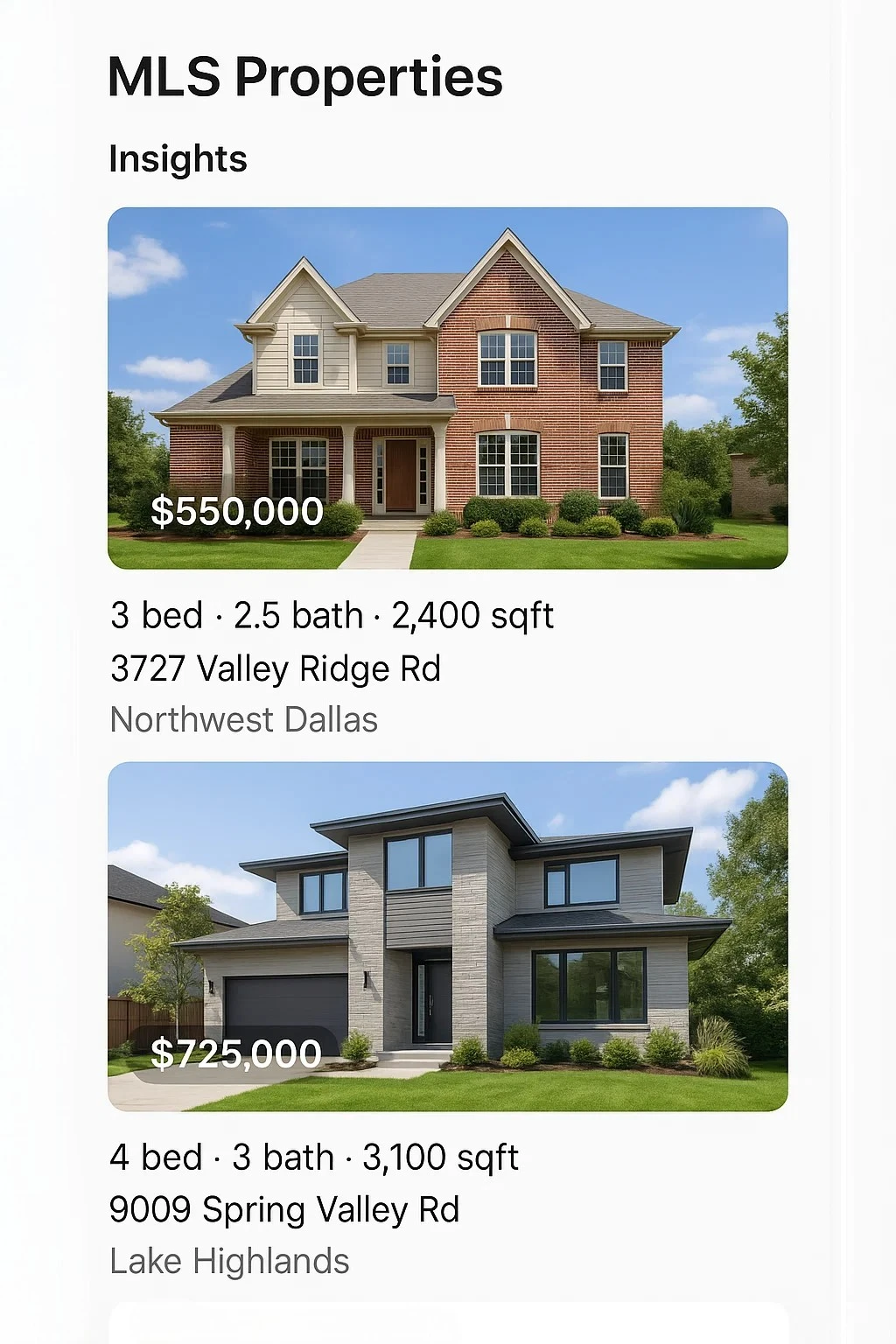
    A new group of platforms is starting to emerge in Dallas, designed with a different approach than Zillow. Instead of focusing only on national scale, these apps emphasize sharper pricing tools, neighborhood-level insight, and features that fit the way people in Dallas actually shop for homes. What a young professional wants in Oak Lawn looks very different from what a family needs in Plano. One-size-fits-all models rarely capture that.

    The new wave of apps uses sharper valuation methods, integrates data from local MLS sources, and offers cleaner, more intuitive design. That means buyers can compare homes with more useful context, and agents have a better shot at connecting with serious clients instead of casual browsers.

    Such innovation reflects the growing role of a real estate app development company working directly with Dallas professionals to create tools that feel native to the city. The focus is not on replacing Zillow overnight but on building platforms that reflect the unique character of Dallas neighborhoods and provide more reliable support to buyers, sellers, and agents.

    How It Outshines Zillow

    When you put a Dallas app side by side with Zillow, the differences show up fast. Zillow gives you reach, but accuracy often slips. A lot of buyers see the Zestimate and think it’s set in stone, but agents know it can miss the mark by quite a bit. Local apps lean on MLS data and add context from the neighborhoods themselves, so the numbers line up better with what homes are really selling for. That keeps buyers from chasing inflated prices and helps agents argue their case with facts that hold up at the table.

    The layout is another place where things split. Zillow can feel busy, such as ads, pop-ups, and extra prompts everywhere. The newer Dallas apps keep it simple. You scroll, you look at the house, and that’s it. Agents also get more space to show off a property without fighting for attention.

    Source: appverticals.com

    Zillow isn’t going away. It would be misleading to suggest that an app like Zillow has no strengths, but its broad focus creates limitations that local competitors are eager to improve upon. And in a city like Dallas, that wide lens often misses the details that matter. Smaller, focused platforms can be quicker, clearer, and easier to trust.

    The Dallas Factor

    Dallas has become one of the hottest housing markets in the U.S., and that makes it the perfect testing ground for new real estate tech. People are moving in fast, demand keeps climbing, and the choices are broad—starter homes in East Dallas, bigger lots in the suburbs, new developments in Frisco. One app can’t treat those the same way and expect buyers to be satisfied.

    Prices, schools, and even the feel of a block can swing wildly from one part of the city to the next. An app that knows the difference between Oak Cliff and Highland Park or between a historic home and a new build, will always beat a one-size-fits-all search tool.

    Realtors here are also willing to try new options. They want leads that don’t waste their time, and they’re open to platforms that give them more control. That openness is one reason Dallas could be the first place where a serious Zillow competitor really takes off.

    Global Perspective

    Other cities are seeing the same shift toward local platforms, each shaped by its own market. In London, rental apps dominate. In Singapore, the push is for more transparency in deals. Toronto leans on tools for a diverse buyer base.

    In Dubai, where international investors are a big part of the market, it’s common to see a mobile app development company in Dubai step in with tools that make it easy to browse and buy from anywhere.

    Sydney, Berlin, and other cities show the same pattern: the tech adapts to what the local market demands. Sometimes that’s regulation, sometimes it’s rapid growth, sometimes it’s investor pressure. Dallas is now in that mix. The city has the chance to build its own version, tools that actually match its neighborhoods and the way people here buy and sell.

    What This Means for Realtors and Buyers

    For Dallas agents, the new wave of apps feels like a chance to get back to what matters. Instead of chasing dozens of names that never turn into clients, they can work with platforms built to deliver quality leads. That means more time sitting down with real buyers and sellers, and less time sorting through forms that go nowhere.

    Buyers get the benefit of clarity. When home values are pulled from MLS data and backed up by what’s actually selling in Oak Cliff, Plano, or Frisco, you can make decisions with more confidence. You’re not stuck guessing whether a Zestimate is off by $40,000. Instead, you can focus on what really matters, like commute times on I-635, the schools in Richardson, or how a home in East Dallas might hold its value.

    Sellers gain from the same shift. When buyers walk in better informed and agents have stronger tools, homes get priced in line with the market and shown with context that highlights their real worth. Negotiations move faster, and fewer deals stall over mismatched expectations.

    It won’t flip the Dallas market overnight, but these changes point toward a future where tech fits the city instead of forcing the city into a one-size-fits-all box.

    What’s Next?

    Zillow isn’t disappearing tomorrow. Everyone knows the name, and plenty of buyers will still open the app when they start their search. But Dallas is different right now. The city is growing fast more than 150,000 people moved into the metro area in just the last couple of years and buyers are demanding tools that reflect that pace.

    What’s likely to happen is a slow handoff. Realtors will keep Zillow on the table, but they’ll start sliding local apps in front of clients who want something sharper. Buyers will try them out because they’re tired of generic numbers that don’t match what they hear from their agent. If those apps keep delivering results such as cleaner valuations, better listings, and stronger leads, then trust will build naturally.

    The tools themselves are also catching up. MLS-backed pricing, maps that break down neighborhoods street by street, even filters that show things like walkability or commute times, these are features being tested in other markets, and they’re not far from Dallas.

    Real estate here won’t flip overnight. But if you look at the way buyers, sellers, and agents are moving, you can already see the ground shifting.