Tag: Irrigation Systems

  • 5 Irrigation Upgrades That Protect Your DFW Home’s Foundation

    I dig in North Texas clay for a living. After a decade in the business, I can tell you: our soil doesn’t care about your house. It swells when it rains and cracks open when it dries. A 2025 study found that over 70% of Dallas-Fort Worth is sinking, the highest among 28 major U.S. cities.

    About 20% of DFW homes have foundation problems, and Texas foundations fail at 10 times the national average. If you are considering purchasing a home in DFW, it is essential to recognize that foundation issues pose a significant risk in the local real estate market and often serve as the primary obstacle to closing a sale. Unrepaired foundation damage can reduce a home’s value by 10 to 25 percent, which is up to $94,000 on a median-priced DFW property valued at $375,000.

    Before finalizing a purchase, it is important to understand how specific home services, particularly irrigation solutions that stabilize soil moisture, can affect a home’s foundation condition and long-term value. The way I explain it to homeowners: we can’t keep the soil dry; it’s North Texas, it’s going to rain. So we have to keep it wet. Equally wet. And not at the surface, but two, three, four feet down, where your foundation actually sits. Your sprinkler system is one of the best tools for that, and with expansive clay, consistency is the whole game.

    1. Foundation Drip Line: Year-Round Insurance

    A drip line around the foundation perimeter keeps soil moisture stable (not wet, but stable). The goal is to stop the shrink-swell cycle that causes slab cracks.

    Many homes have builder-grade drip systems, but most are installed wrong: too close to the house, too shallow, or exposed. Check yours: tubing should be 12 to 18 inches from the foundation and buried 4 to 6 inches deep. A quick measurement now can save you trouble later.

    The real win is that a dedicated drip zone lets you water your foundation without running your whole sprinkler system. Most DFW systems only have turf and bed zones, and to push moisture deep enough in clay, you need cycle-and-soak passes that run your entire yard. When drought restrictions hit, you can’t keep up.

    But foundation drip is exempt from most North Texas twice-weekly restrictions. Under NTMWD rules, you can water your foundation for up to 2 hours on any day, even during Stage 3. A drip system runs $2,000 to $2,500 to install, depending on your home’s perimeter (that includes adding a dedicated valve and zone to your existing system). A typical DFW foundation repair runs $3,000 to $7,500. Full underpinning: $75,000 to $125,000. Spend $2,500 now or $75,000 later. Prevention is smart money.

    2. A Smart Controller

    Most homeowners set their controller once and never touch it again. Same schedule in May as in August. Foundation repair companies report 20 to 30% spikes in service calls during dry years (CBS Texas), and that’s what happens when systems can’t adapt.

    smart controller like Rachio or Hunter Hydrawise pulls local weather data and automatically adjusts your schedule. When it’s 105 and bone dry, your foundation zone runs longer. After a week of rain, it backs off. For foundation protection, that automatic consistency might be the single most valuable upgrade you can make.

    3. Soil Moisture Sensors

    Here’s something I see constantly: the south side of a house is bone dry, and the north side is saturated. There’s a big pecan tree on one corner pulling 150 to 250 gallons of water a day out of the soil. The homeowner has no idea because, on the surface, the lawn looks fine. That differential is what actually breaks foundations: one side shrinking while the other expands.

    Sensors placed at multiple points around the foundation, three or four feet deep, show you what’s really happening at the foundation level. Without the data, you’re guessing.

    4. Surface Drainage

    Keeping the soil moist is important, but water that pools near the foundation is equally damaging. That’s where drainage comes in. It’s not technically irrigation, but it’s a service often offered by the same irrigation and landscape companies, and it has to work hand in hand with your watering system. When water is allowed to sit within a few feet of the slab, it can spread underneath the foundation and cause the clay to expand and lift unevenly. That’s called heaving, and it creates the same cracks and structural stress as drying out.

    We want the soil evenly wet. Pooling or ponding near the foundation is the opposite. The first piece is proper grading. The dirt around your home needs to be sloped away from the foundation so water flows off naturally rather than pooling against the slab.

    Surface drains and French drains are the two most common solutions after that. Both are designed to collect water and move it away from the house fast, before it has a chance to soak in and cause heaving.

    5. A Flow Meter

    I’ve dug up drip lines where a dog chewed through the tubing six months earlier. The homeowner had no idea; they just knew their water bill had crept up. Meanwhile, that break was dumping all the pressure in one spot, and the rest of the line was getting nothing. Half the foundation had been drying out for half a year.

    A flow meter on your foundation drip zone catches that kind of damage fast. Pair it with a smart controller, and you’ll get an alert on your phone before the problem becomes a crack in your wall.

    What to Take Away If You’re Buying

    Standard homeowner insurance in Texas does not cover foundation damage from soil movement. If you’re buying a DFW home, ask about the irrigation system during your inspection. Is there a foundation drip zone? Is the controller smart or manual? Does water pool anywhere near the house after it rains?

    If you already own your home, an irrigation audit with a foundation moisture assessment can tell you a lot about whether your system is actually doing its job. Regular preventive home checks are the cheapest foundation insurance you can buy. A lot cheaper than finding out the hard way.

    About the Author

    Brandon is the owner of Better Earth Solutions, LLC, a licensed irrigation and sprinkler repair company serving the Dallas-Fort Worth metroplex. He holds a TCEQ Irrigation License (#LI0023963), is a Texas Certified Landscape Irrigation Auditor (TxCLIA) through Texas A&M AgriLife Extension, a TDA-licensed Commercial Pesticide Applicator (#0947069), and a certified Rachio Pro installer. He is also a member of the Texas Irrigation Association.

    Brandon got into irrigation the way many people in the trades do: he grew up in it. His dad was a licensed irrigator and nursery owner, and Brandon learned the business working alongside him before going out on his own.

    He’s done everything from residential repairs to maintaining large commercial systems at places like Capital One headquarters and Willow Bend Mall while working at Landcare. Today, he focuses on residential irrigation: sprinkler repairs, smart controller installations, foundation watering systems, and irrigation audits. He primarily works in Garland, Plano, Richardson, Wylie, Rockwall, and surrounding cities.

    When he’s not digging in North Texas clay, Brandon is usually keeping up with his three kids and their various activities: DeMolay, JROTC, Student Council, and football. You can learn more about Better Earth Solutions at callbetterearth.com.
  • Solar-Powered Water Pump for Irrigation: The Definitive Guide

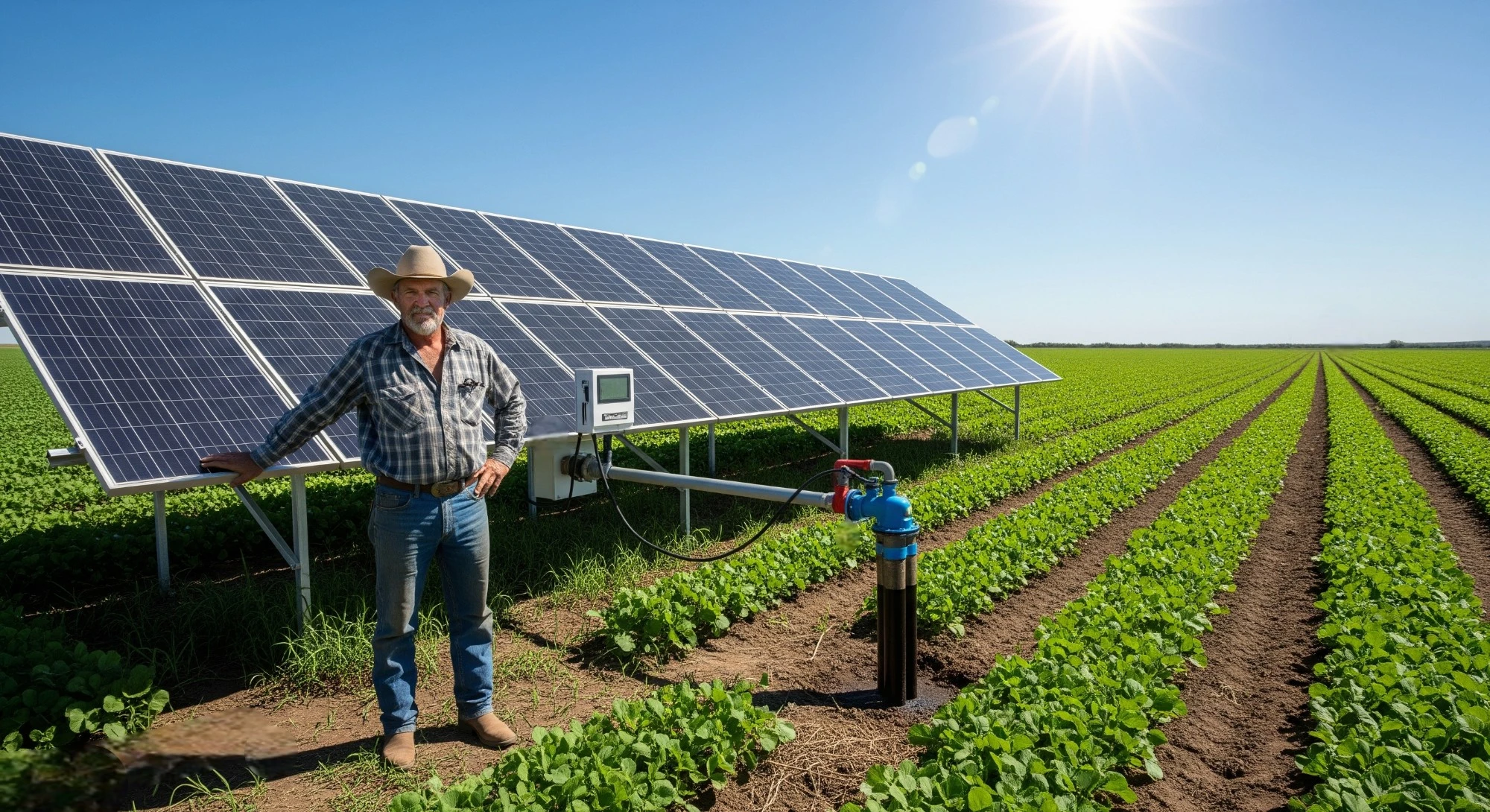
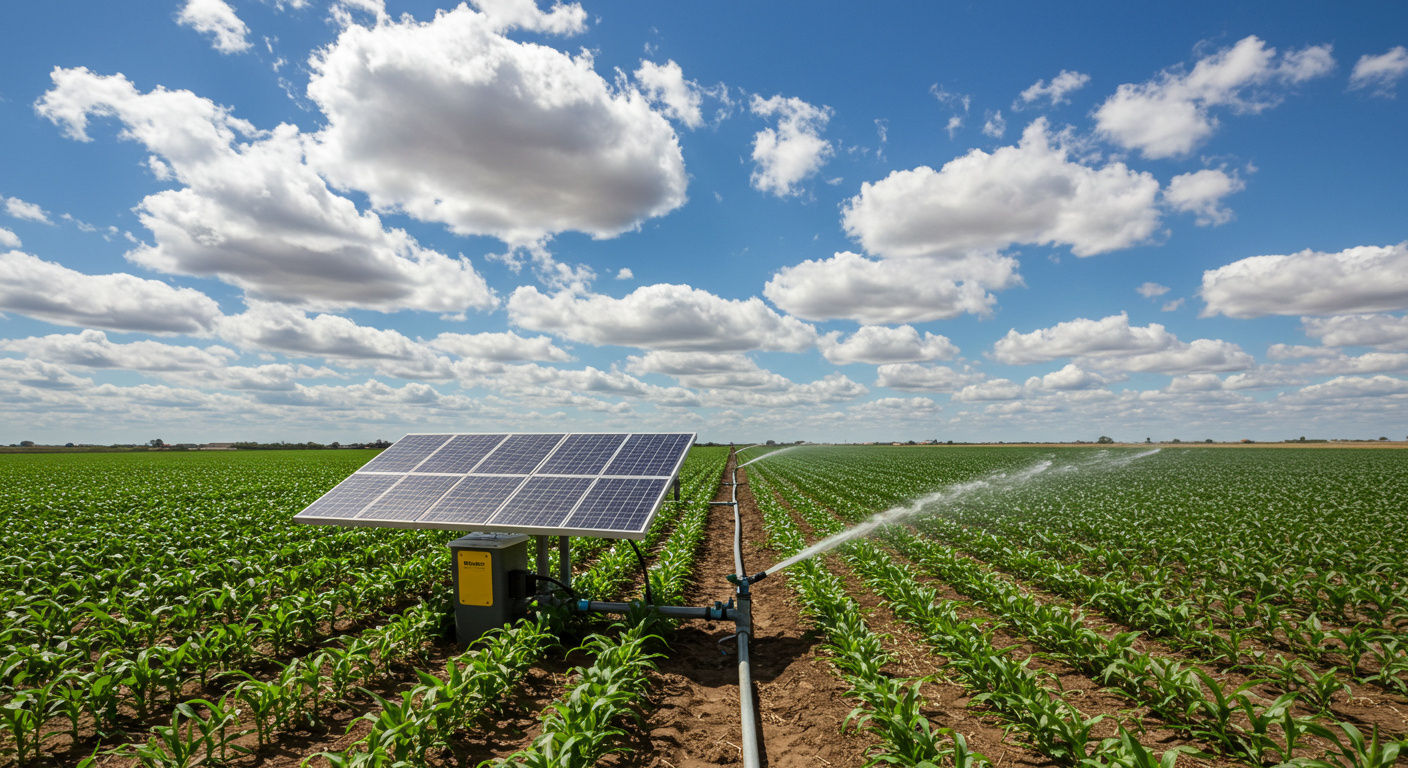
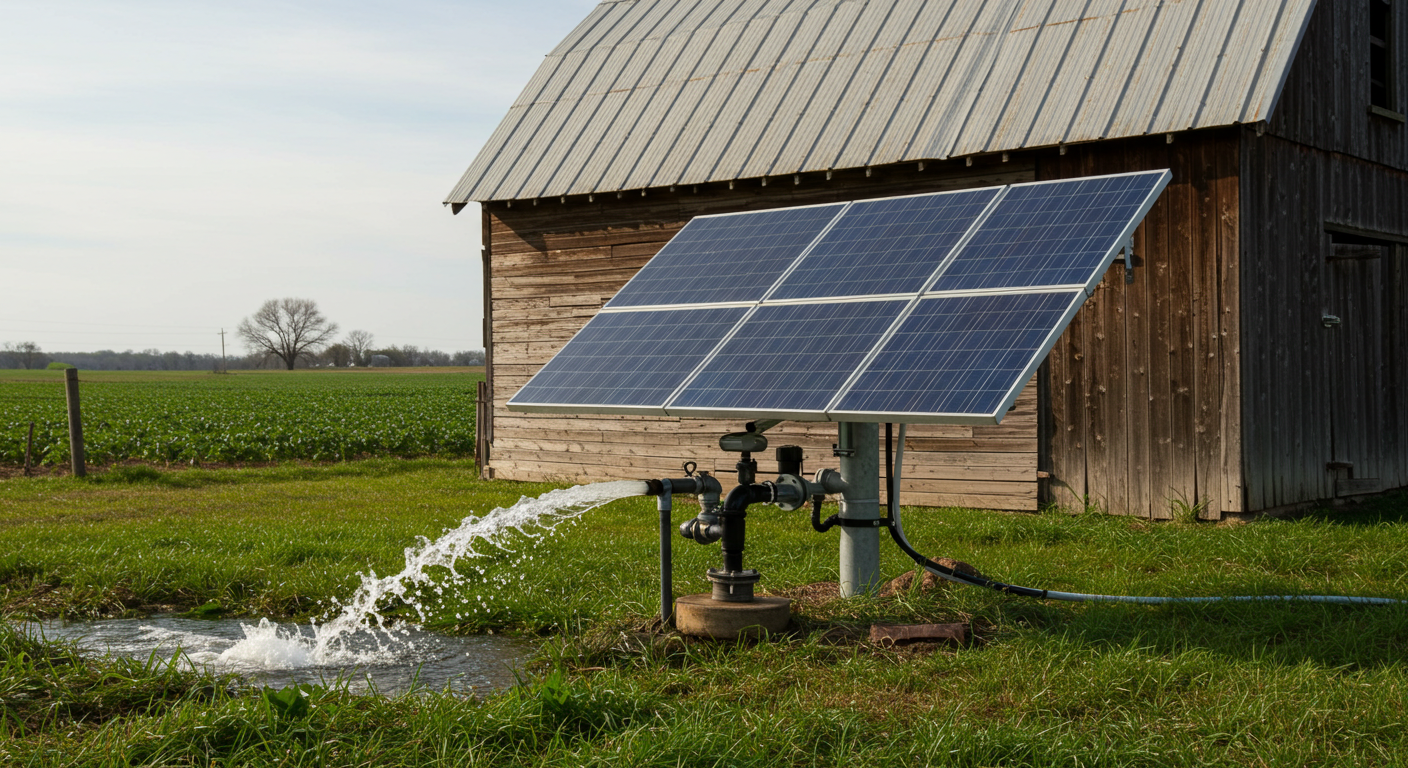
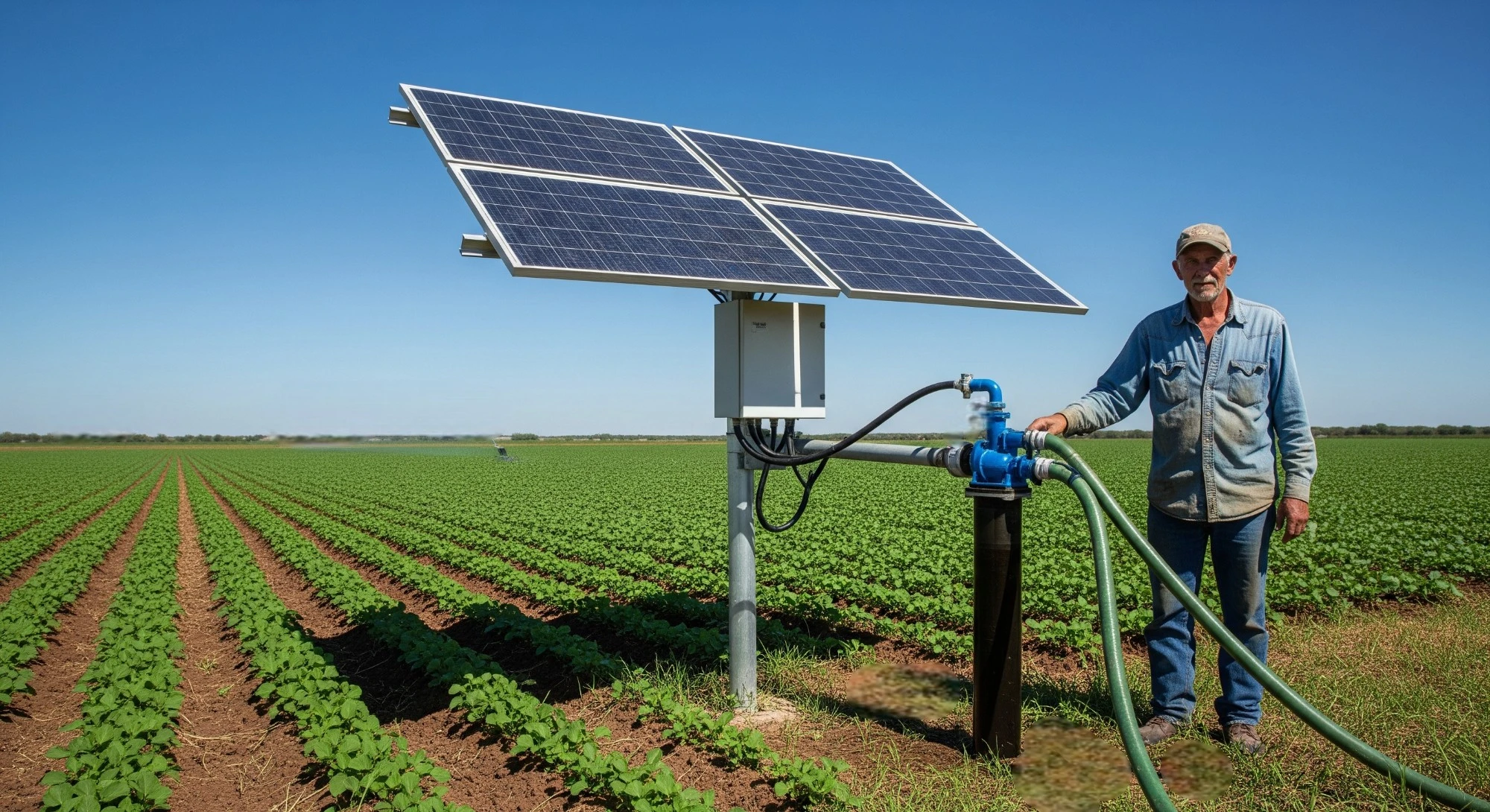
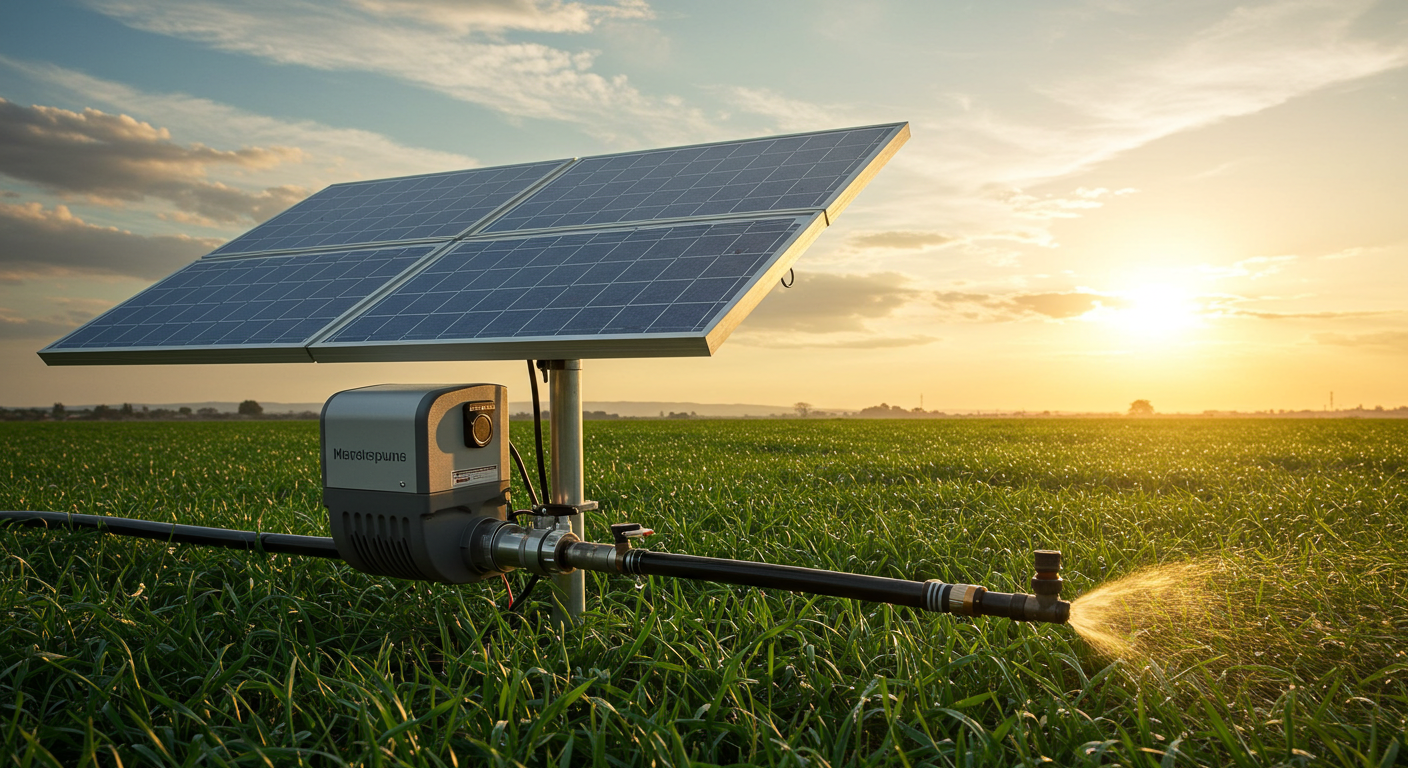
    A solar-powered water pump provides a steady water supply without the need for grid electricity or diesel fuel. Solar panels convert sunlight into electricity, which powers pumps that move water from wells, ponds, or other sources. Operating costs can drop as low as two cents per thousand gallons, saving farms significantly over time. It also fits naturally into daytime watering schedules, since solar output tends to peak when crops need water most.

    These systems now cover everything from small garden beds to wide-acre farms. Daily water output can reach between 500 and more than 10,000 gallons, depending on system size and setup. With proper upkeep, these systems run reliably for decades, making them a strong choice for both off-grid locations and rural operations.

    How Solar-Powered Water Pumps Work for Irrigation

    Solar irrigation systems work by converting sunlight into electricity that powers water pumps to deliver water from your source to where it’s needed. Here’s how the complete system operates:

    Basic System Operation

    Solar pumps follow the sun. Here’s when they work hardest and why that matters.

    Solar Panel Array: Solar panels convert sunlight into DC electricity that powers the water pump. The solar array size determines how much water you can pump daily – larger arrays pump more water and can operate pumps with higher horsepower requirements.

    Pump Controller: Most solar water pump systems include a pump controller that regulates power flow from solar panels to the pump.

    Water Delivery: The pump moves water from your source (well, pond, stream) through pipes or hoses to irrigation areas. Many systems include storage tanks that fill during sunny periods and provide water during cloudy times or for evening irrigation.

    System Components and Integration

    Every solar-powered pump relies on a few core parts. Get these right, and the rest falls into place.

    • A solar panel array (typically 12V, 24V, or 48V systems).
    • A surface or submersible pump.
    • An MPPT pump controller.
    • An optional storage tank for water pressure and timing.
    • Pipes and lines to distribute water where it’s needed.

    For complete irrigation solutions, a quality solar-powered water pump system includes all necessary components designed to work together efficiently.

    Most solar pumps turn on automatically when sunlight hits the panels and shut off as light fades. The strongest output usually happens from late morning to mid-afternoon. Around 60 to 80 percent of daily water volume is delivered between 10 AM and 4 PM, when solar power is at its peak.

    According to the International Water Management Institute, “Solar-powered irrigation systems can reduce pumping costs by 70-90% compared to diesel generators while providing more reliable water access in remote areas.”

    Water Storage and Distribution

    Some setups store water, others send it straight to the field. Both work, depending on the flow. Storage tanks make it possible to collect water during sunny hours and use it whenever needed. They also help maintain steady pressure for sprinkler systems or drip irrigation, so the pump doesn’t need to stay on the entire time. This setup adds flexibility and reduces wear on equipment.

    In some cases, water is pumped straight to the fields without storage. That works best for flood irrigation or when watering times naturally line up with solar production during the day.

    Types of Solar Water Pumps for Irrigation Systems

    Choosing the right pump type depends on your water source depth, daily water needs, and irrigation system requirements:

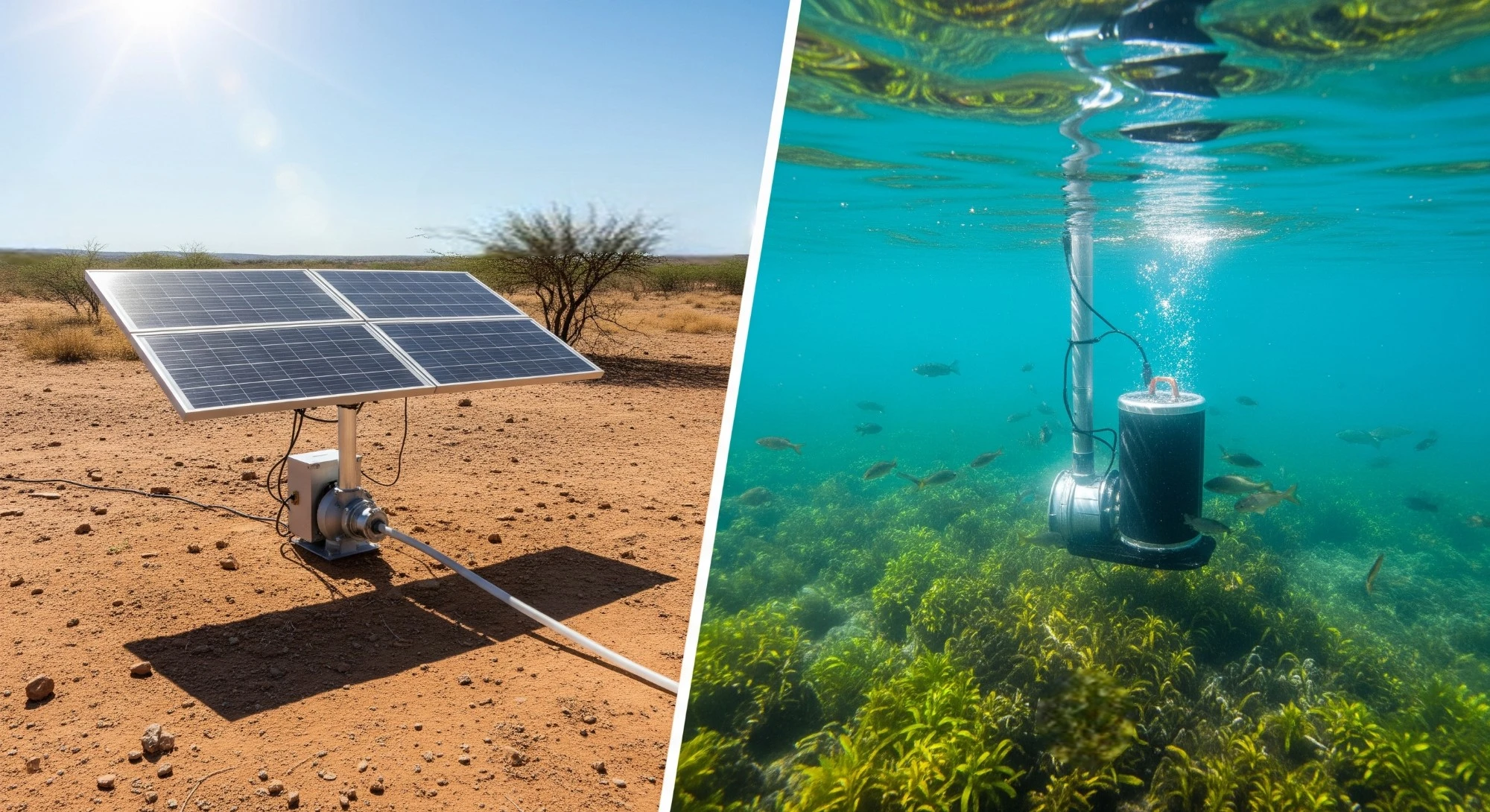
    Surface Pumps vs Submersible Pumps

    Pump TypeBest ForWater SourceAdvantagesDisadvantages
    Surface PumpsShallow wells, ponds, streams0-25 feet deepEasy maintenance, lower costLimited suction depth
    Submersible PumpsDeep wells25-500+ feet deepHigher pressure, more reliableHarder to service, higher cost

    Solar Well Pump Systems

    • Shallow Well Pumps: Surface-mounted solar well pumps work great for wells up to 25 feet deep. These pumps are easier to install and maintain since all components stay above ground.
    • Deep Well Solar Pumps: Submersible solar well pumps handle deep wells from 50 to 500+ feet. These systems can deliver higher water pressure and flow rates needed for larger irrigation projects.
    • Solar Well Pump Kits: Complete solar well pump kits include everything needed for installation – solar panels, pump, controller, and mounting hardware. Kits simplify system design and ensure component compatibility.

    Getting the Right Flow

    • Gallons Per Minute (GPM): Solar irrigation pumps range from 1-2 GPM for small gardens to 20+ GPM for large agricultural applications. Higher GPM pumps need more solar panel wattage and larger controllers.
    • Daily Water Output: Calculate daily pumping capacity by multiplying the GPM rating by hours of peak sun. A 5 GPM pump with 6 hours of peak sun delivers about 1,800 gallons daily.
    • Pressure Requirements: Consider water pressure needs for your irrigation system. Drip irrigation needs 15-30 PSI, while sprinkler systems typically require 30-60 PSI for proper operation.

    Popular Solar Pump Applications

    Agricultural Irrigation: Large-scale crop irrigation using solar pumps ranging from 1-20 HP for fields from 10 to 500+ acres.

    Livestock Watering: Smaller solar pump systems (0.5-3 HP) provide reliable water for cattle, sheep, and other livestock in remote pastures.

    Garden and Residential: Small solar pump kits (100-500 watts) for garden irrigation, pond circulation, and residential water features.

    Pool Circulation: Solar pool pumps provide energy-efficient circulation and filtration for swimming pools, reducing electric bills significantly.

    Benefits of Solar Irrigation Pump Systems

    Cutting fuel costs is just the start. Over time, a well-planned solar irrigation system can return more than it costs to install.

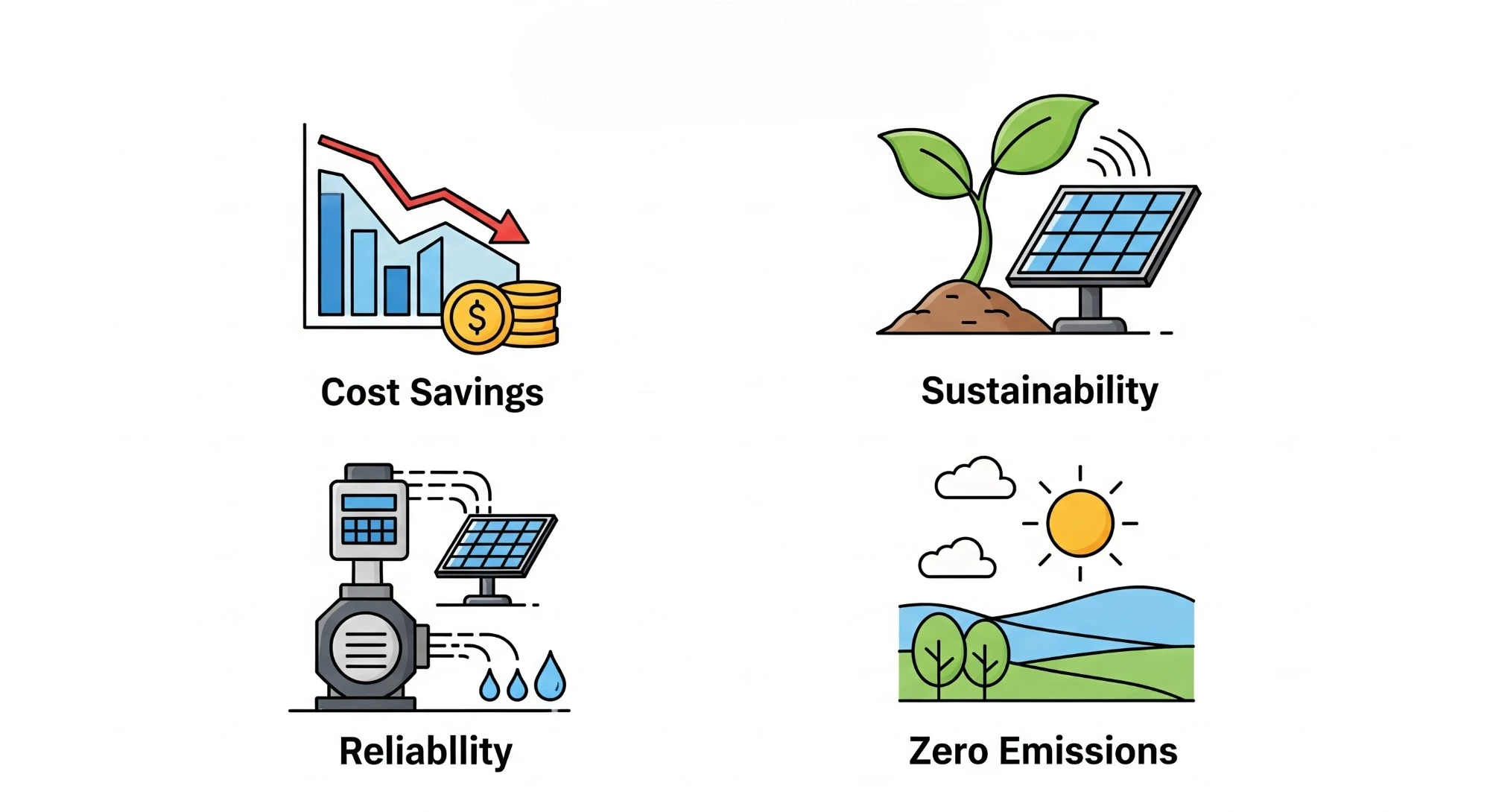
    1. Cost Savings and Economics

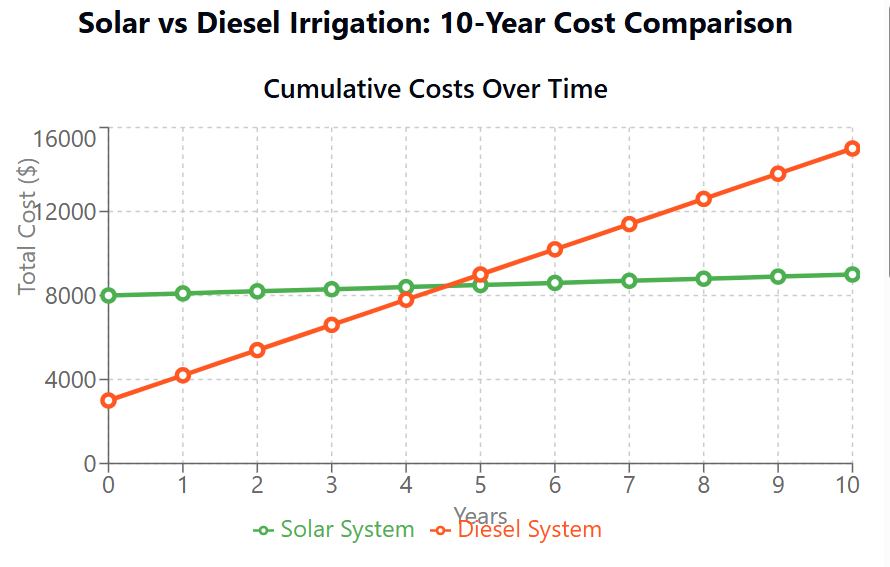
    • Fuel Cost Elimination: Solar pumps eliminate diesel fuel costs that can range from $0.10-$0.30 per 1,000 gallons pumped. Over 20 years, fuel savings often exceed the initial system cost.
    • Low Operating Costs: After installation, solar water pump systems operate essentially free. No fuel purchases, minimal maintenance, and a 25+ year system life provide an excellent return on investment.
    • Grid Independence: Solar irrigation systems work in remote places without power lines. This opens up land use possibilities and eliminates monthly electric bills for irrigation.

    The Food and Agriculture Organization reports that “Solar-powered irrigation can reduce water pumping costs by up to 95% compared to diesel systems while improving food security in rural areas.”

    2. Environmental and Sustainability Benefits

    • Zero Emissions: Solar water pumps produce no emissions during operation, unlike diesel generators that contribute to air pollution and greenhouse gases.
    • Renewable Energy: Solar pumps use renewable energy that’s available anywhere with adequate sunlight. This supports sustainable agriculture and reduces dependence on fossil fuels.
    • Water Conservation: Many farmers using solar irrigation become more conscious of water use since they’re pumping with “free” solar energy. This often leads to more efficient irrigation practices.

    3. Reliability and Performance

    • Weather Independence: Solar pumps work reliably in most weather conditions. Even partly cloudy days provide enough power for pumping, and battery backup systems handle extended cloudy periods.
    • Low Maintenance: Solar irrigation systems have few moving parts and require minimal maintenance. Annual cleaning of solar panels and periodic pump inspection typically handle most maintenance needs.
    • Long Lifespan: Quality solar panels last 25+ years, pumps typically run 10-20 years, and controllers last 15+ years. This longevity provides decades of reliable water delivery.

    Installation and System Components

    Proper installation should ensure that your solar irrigation system runs perfectly:

    Solar Panel Array Sizing

    Wattage Requirements: Calculate solar panel needs based on pump power requirements and daily water goals. Most irrigation pumps need 100-2,000 watts of solar panels, depending on pump size and duty cycle.

    Panel Configuration: Solar panels can be wired in series (higher voltage) or parallel (higher current) depending on pump controller requirements. Most modern controllers accept wide voltage ranges for flexible panel configuration.

    Mounting Options: Ground-mounted systems are easier to install and maintain but require more space. Pole-mounted arrays save space and can be adjusted seasonally for optimal sun exposure.

    Pump Controllers and MPPT Technology

    Controller Functions: Solar pump controllers regulate power flow, protect pumps from damage, and often include features like dry-run protection, automatic start/stop, and system monitoring.

    MPPT Benefits: Maximum Power Point Tracking controllers extract 15-30% more power from solar panels compared to basic controllers. This increased efficiency means smaller solar arrays can power larger pumps.

    System Protection: Quality controllers protect against overvoltage, undervoltage, motor overload, and dry running. These features extend pump life and prevent costly damage.

    Storage and Distribution Systems

    Storage Tank Sizing: Size storage tanks for 1-3 days of irrigation water needs. Larger tanks provide more flexibility but cost more and require stronger support structures.

    Irrigation Distribution: Connect storage tanks to drip irrigation, sprinkler systems, or flood irrigation depending on crop needs. Include pressure tanks or booster pumps if needed for adequate water pressure.

    System Controls: Add timers, pressure switches, and float switches to automate irrigation scheduling and protect pumps from running dry.

    How to Choose the Right Solar Water Pump System for You

    Choosing the best solar irrigation system requires matching the pump capacity to your specific water needs and conditions:

    Long-Term Reliability and Maintenance

    1. Component Quality: Invest in quality components from reputable manufacturers. Cheap pumps or controllers often fail prematurely and cost more in the long term through replacements and lost productivity. For reliable solar irrigation equipment, The Solar Store provides quality pumps, controllers, and complete system packages all in one place, simplifying the process of getting the right setup for your irrigation needs.
    2. Maintenance Planning: Plan for routine maintenance, including annual solar panel cleaning, pump inspection, and controller checks. Budget for pump replacement every 10-15 years.
    3. System Monitoring: Consider systems with remote monitoring capabilities that alert you to problems via smartphone apps. Early problem detection prevents crop loss and expensive repairs.

    Sizing for Your Water Requirements

    1. Calculate Daily Water Needs: Determine the number of gallons per day your crops, livestock, or irrigation system require. Factor in seasonal variations and peak demand periods.
    2. Well and Water Source Assessment: Measure well depth, static water level, and recovery rate. Test water sources for flow capacity and seasonal variations that affect pump sizing.
    3. Solar Resource Evaluation: Use tools like NREL’s solar maps to assess your location’s solar resource. Areas with 4-6+ hours of peak sun daily work best for solar irrigation.

    System Costs and Return on Investment

    1. Initial Investment: Complete solar irrigation systems typically cost $3,000-$15,000+ depending on pump size, solar array, and installation complexity. Larger systems often provide better cost per gallon pumped.
    2. Payback Period: Most solar irrigation systems pay for themselves within 3-7 years through eliminated fuel costs. Systems in areas with expensive diesel fuel or high electric rates pay back faster.
    3. Financing Options: Many areas offer grants, rebates, or low-interest loans for renewable energy irrigation systems. Research local incentives before purchasing equipment.

    What Makes Solar Pumps Worth It

    Solar-powered irrigation provides a reliable way to move water where it’s needed without relying on the grid or paying for diesel. It’s a good fit for places where the sun shines and water demand rises during the day.

    The technology has come far. It now supports everything from small gardens to full-scale farms. With the right setup, a system like this can run for decades with little maintenance and nearly no running cost.

    Consider solar irrigation if you need reliable water in remote locations, for cutting energy bills, or for switching to a cleaner, more sustainable water solution.

    Frequently Asked Questions

    1. How much water can a solar-powered pump deliver daily? Solar pump output depends on pump size and solar array capacity. Small systems pump 500-2,000 gallons daily, while larger agricultural systems can pump 10,000+ gallons per day.
    2. Do solar water pumps work on cloudy days? Yes, solar pumps work on cloudy days but at reduced capacity. Most systems pump 20-40% of normal output on overcast days. Battery backup systems provide full pumping during extended cloudy periods.
    3. How much does a solar irrigation system cost? Complete solar irrigation systems cost $3,000-$15,000+ depending on pump size, solar array, and installation requirements. Small garden systems start around $1,500 while large agricultural systems can exceed $25,000.
    4. What maintenance do solar water pumps require? Solar pumps need minimal maintenance – annual solar panel cleaning, periodic pump inspection, and controller checks. Most pumps run 10-20 years before needing replacement.
    5. Can solar pumps provide enough pressure for sprinkler irrigation? Yes, properly sized solar pumps can provide 60+ PSI needed for sprinkler systems. Submersible pumps typically provide higher pressure than surface pumps.