Tag: Home Prices

  • Will We See a Cooler Dallas Housing Market in 2026?

    The Dallas housing market, which appreciated rapidly over the past few years, is finally showing some early signs of cooling. While the fundamentals that fueled that growth remain strong (rising population, job creation, and business expansion), the market appears to be moving toward a more balanced state. This could be good news for prospective buyers, who may see more opportunities in 2026.

    Why Dallas Prices Rose So Fast

    So how did we get here? Why did housing prices in Dallas shoot up so quickly?

    Over the last decade, Dallas-Fort Worth (DFW) has been one of the fastest-growing markets in the country. Reports show that home values soared 19.6% in 2021 and 22.4% in 2022.

    A combination of factors drove this increase. For one, rapid population growth, as both companies and individuals relocated to the region, boosted demand. More companies mean more job opportunities, particularly in the fields of tech, logistics, finance, and healthcare, which have been growing rapidly in DFW for years. There’s also the issue of tight supply and construction delays, which often mean bidding wars and price hikes well above historical norms.

    In short, the conditions in DFW created a highly competitive environment that made buying particularly challenging for first-time buyers, even for those with strong finances. But that explosive growth started to wane in 2023 through 2025, and it looks like that trend will continue into 2026.

    Current Indicators Pointing to Market Moderation

    If we take a look at Dallas housing market trends, all indicators point to the market entering a cooler, more stable phase.

    Here are a few:

    • Slower price growth. Data from Movoto shows that the median sale price in DFW has stabilized in recent months at around $425,000. Compared with the massive increases in the early 2020s, this is a much more reasonable rate of growth.
    • Homes are also sitting longer on the market, 65 days on average, compared with 54 days at the same time last year. Longer listing times indicate that buyers are no longer rushing to beat rising prices, which means sellers will have to set more realistic expectations when it comes to home prices in Dallas.
    • More inventory is coming to market, with additional active listings and new construction. An increase in supply gives buyers more choices, which tips negotiations in their favor.
    • It’s important to note that “cooler” Dallas home prices don’t mean a downturn or a crash, they simply indicate the market is shifting from an overheated seller’s market toward a more balanced market.

    What’s Influencing Dallas Home Prices in 2026?

    With that in mind, what are the key factors that will influence the housing market heading into 2026?

    First, mortgage rates: as of this writing they are still high but easing. Higher interest rates from 2023 to 2025 reduced the affordability of Dallas housing, and thus buyer demand. But many analysts expect rate cuts in 2026, which will improve borrowing power, bring more buyers back into the market, while still supporting moderate price growth. Until then, however, affordability is likely to remain a problem for first-time buyers.

    There’s also the reality of more homes and new construction coming onto the DFW housing market. After years of underbuilding, the construction industry in DFW is finally catching up, with many new developments and active listings coming online. More supply means fewer bidding wars, more realistic pricing, and more negotiation room for buyers.

    Dallas remains one of the country’s most economically prosperous metropolitan areas, with the tech and engineering sectors, financial services, healthcare, biotech, and logistics. It’s likely that job growth and in-migration will remain strong, which means demand for housing will stay elevated.

    What to Expect in the Dallas Market in 2026

    With all that in mind, based on current trends, what can we expect for 2026?

    The most likely outcome is moderate, rather than explosive, growth. Prices will likely continue to rise, but slowly, perhaps low to mid-single-digit appreciation. It’s also possible that newly developed suburbs may see small price declines or softer negotiation terms, especially if inventory climbs faster than projected buyer demand.

    This all adds up to better conditions for buyers, while sellers will need to temper expectations. These conditions will give buyers more negotiating power, more listings to choose from, and more room to breathe when it comes to decision-making. Meanwhile, sellers will need to price their homes competitively, invest time in staging and repairs, focus on good presentation when showing homes, and avoid assuming their listings will go under contract instantly.

    It’s unlikely that Dallas will see a crash in 2026, but signs point toward a cooler, more predictable housing market. The future of Dallas housing is stable, even if it’s no longer red‑hot.

  • Understanding Supply and Demand in Your Local Real Estate Market

    Understanding Supply and Demand in Your Local Real Estate Market

    Every housing market runs on the same two forces: supply and demand. They’re what push prices up or down, decide how fast homes sell, and influence whether it feels like a buyer’s market or a seller’s market. Once you get a handle on how these forces play out where you live, you’ll be in a much better spot to make the right move, whether you’re a homebuyer, seller, or real estate professional, understanding local market dynamics helps you make smarter decisions.

    Right now in 2025, the U.S. housing market is shifting toward balance. Listings are climbing, price growth has cooled, and buyers have more options than they did in the past couple of years. For sellers, it means setting the right price and standing out matters more than ever. For buyers, it opens the door to better choices and more negotiating power.

    Analyzing Local Market Dynamics

    The easiest way to look at supply and demand is to think about it in plain terms. Supply is the number of homes for sale. Demand is how many people want to buy and how much they can afford. When buyers outnumber listings, sellers usually get multiple offers and higher prices. When there are plenty of homes sitting on the market, buyers have the upper hand and can push harder on price.

    The numbers from mid-2025 tell the story. By July, inventory had gone up for 21 months in a row — almost 29% higher than the year before. Homes were also staying on the market about five days longer. That’s a big change from the fast-paced market of the last few years and shows things are shifting toward balance. Still, some regions like the South, Northeast, and Midwest are seeing more sales compared to a year ago.

    You don’t need to be an expert to track this. Your local MLS or national sites like Realtor.com make it easy to see how many homes are listed, what the median price looks like, and how long homes are sitting before they sell.

    Right now, many listings are sitting on the market without offers, and price growth has slowed to about 1% year over year. For buyers, that means more time and more choices. For sellers, it means pricing your home right and making sure it stands out.

    Key Economic Factors Influencing Supply and Demand

    What happens in your local economy plays a huge role in housing. When jobs are growing, new businesses are opening, or big projects are underway, more people move in and demand for homes goes up. When the economy slows, buyers can get nervous and hold back.

    Mortgage rates also carry a lot of weight. This year, they’re not exactly cheap, but they’ve leveled off. A 15-year loan sits around 5.5%. That steadiness matters. Buyers may stretch their budgets, but they can at least plan without rates jumping week to week.

    Other signs are worth tracking. Builder confidence slipped this year, hinting that fewer new homes could hit the market. Rental households are also growing faster than owner-occupied ones, showing that some people are choosing flexibility over long-term commitment.

    Then there are the local shifts you notice close to home. A new highway interchange, a big employer setting up shop, or even new schools can drive fresh demand. On the flip side, more “price reduced” signs or delistings in your neighborhood are usually a sign that sellers are testing the market and not finding enough takers.

    Leveraging Digital Tools for Market Insights

    You don’t have to rely only on monthly reports to know what’s going on in your market. Digital tools give you a way to check the pulse almost in real time.

    Start with housing sites. Zillow, Realtor.com, and Redfin all have dashboards that update daily. You can see how many homes are on the market, how prices are trending, and even how long houses are sitting before they sell. Google’s search data is another quick tool, if more people in your area are searching “homes for sale,” demand is picking up.

    Social media platforms (Facebook, Instagram, and LinkedIn) can tell a story as well. Local Facebook groups often buzz when a new subdivision breaks ground. Instagram posts can show which neighborhoods buyers are excited about. On LinkedIn, agents share quick market takes that give you a feel for how competitive things are. If you share your own updates, maybe a short note about price cuts in your town or photos of a growing neighborhood, people start seeing you as someone in the know.

    Even online ads give away clues. When searches in your zip code spike, it usually means more buyers are circling. Paying attention to those patterns helps you spot shifts before they’re obvious in the headlines.

    Mastering Supply and Demand for Success

    There isn’t a single formula that works for every market, but keeping tabs on supply and demand gives you a big advantage. Growth is just slower around 3% or less nationwide, which means balance is the theme.

    For buyers, that balance shows up as more choices and a little more breathing room. You don’t always have to rush an offer the first weekend a house hits the market. For sellers, it’s about staying realistic. Pricing competitively and making your home stand out online matters more now than it did a couple of years ago.

    The key is to check in often. Watch the data from housing sites, pay attention to what’s happening in your own neighborhood, and lean on digital tools and community input to see where interest is heating up. Mix those pieces together and you’ll have a clearer picture of where things are heading. That way, whether you’re buying, selling, or helping others, you’ll be making decisions based on what’s really happening not just headlines.

  • How Real Estate Agents Help You Get Better Home Prices in Spokane

    How Real Estate Agents Help You Get Better Home Prices in Spokane

    Planning to buy or sell a home is likely one of the most significant milestones many experience. This isn’t an easy process for most. Clearly, though, if you have real estate agents on hand, it can increase your likelihood of being successful at this task. Their knowledge and experience usually help buyers and sellers get better home prices. 

    In this article, you will learn all about how these professionals work and what they offer.

    Market Knowledge

    Real estate agents have a good and deep knowledge of local markets. Knowing this helps them determine the value of the property. They provide this expert insight by observing what has sold recently and what is currently on the market. Their expertise also allows them to charge rates on par with their profession or negotiate a better deal. Having this information helps buyers and sellers to make financially safe decisions. Real estate agents in Spokane could also be cited who created a benchmark in the real estate industry worldwide.

    Skilled Negotiators

    Negotiating is essential in real estate deals. An agent has experience and negotiation skills. They know how to present an offer and counteroffer. They fight for the best possible terms for their clients. Prices may be favourable for buyers and more rewarding for sellers.

    This makes a difference in the final sale prices, as it is said that in negotiation, the best deal is the one where no one is unsatisfied.

    Access to Resources

    Agents have a whole variety of resources available to them. They use extensive databases that let you know the properties and other market moves. This gives them the ability to pinpoint potential opportunities with speed. Also, they have professionals in their network, like inspectors and appraisers. These connections can help facilitate the purchase or sale. These resources aid clients in gaining an edge in their competitive markets.

    Understanding Buyer Behavior

    Of course, buyer behavior is also vital in real estate. Agents study what factors influence buyers’ decisions about particular properties. They also use this knowledge when staging homes. They help make properties more attractive by really focusing on the highlights. This benefits sellers through higher and quicker sales. Meanwhile, sellers are advised of a fair price based on current demand.

    Legal Expertise

    Real estate transactions utilize complicated legal documents. Clients fill out this paperwork, and agents help guide them through it. They guarantee that all contracts can be fulfilled accurately and promptly. This ensures that expensive errors or delays are averted. Because of their knowledge of property law and regulations and requirements involved, you can rest assured.

    Clients can turn their attention to other parts of the transaction confident that expert agents are handling legal issues.

    Marketing Strategies

    Good marketing can make a big difference when it comes to the price of a home. Real estate agents create plans that capitalize on the features of a home. They employ professional photography, virtual tours, and descriptive listings. These approaches also help improve exposure and bring in more potential buyers. This translates to multiple offers and competitive pricing for sellers. Having clarity on the property’s worth, sellers gain an edge.

    Time and Convenience

    Home buying is a time-consuming process. Agents deal with several areas that would otherwise be the client’s responsibility. They schedule showings, communication, and negotiations. That convenience gives buyers and sellers the time to focus on other priorities. Clients do not have to rush their decisions and will save time.

    Emotional Support

    Buying or selling a home can be an emotional time. This is where real estate agents step in and help. Having them reaffirm is a big help in helping clients feel they made the right decision. That emotional support, so often taken for granted, is priceless. Having someone to help you along makes the journey an easier and enriching experience.

    Conclusion

    There are many advantages to hiring a real estate agent, including the benefits of Market Knowledge, Negotiation Skills, and Resources to Get Better Home Prices. They deal with legal stuff, create marketing plans, and serve as invaluable resources.

    Buyers and sellers can rely on their expertise to make the transactions smoother. In the end, partnering with a real estate agent not only increases the chances of securing a better price but also guarantees a smoother and fruitful experience every step of the way.

  • Creston B.C. First-Time Home Buyer Guide

    Image Source: property24.com

    Creston is a small town in the Kootenay region, known for its farmland, orchards, and mountain views, and it’s quickly becoming known as a place where you can actually afford to own a home.

    Still, even in a smaller market, buying your first place comes with plenty of questions.

    How much house can you afford?

    What programs are available to you?

    And what should you expect when it’s time to sign the papers?

    This guide for first-time buyers in Creston covers the local real estate snapshot, a step-by-step breakdown of the buying process, and the provincial and federal programs designed to help you.

    Creston Real Estate Market Snapshot

    While Creston’s market is smaller than urban centers like Kelowna or Vancouver, it follows the same broader patterns seen across the province:

    • Provincial price trends: Across British Columbia, the average residential price was down more than 4% year-over-year as of June 2025. That adjustment has provided breathing room for buyers.
    • Forecasted recovery: Analysts expect a rebound in 2026, with sales activity increasing after a softer 2025.
    • Stabilized inventory: After years of tight supply, B.C. has seen more listings come onto the market. Buyers in Creston are benefiting from more options than they had a few years ago.
    • Regional variation: Areas outside the Lower Mainland, including the Kootenays, are showing stabilization. For Creston, this suggests modest price growth in the near future, especially in neighborhoods with strong demand.

    In Creston specifically, single-family homes often sell in the $400,000–$500,000 range, with acreages and larger properties priced higher. Compared to B.C.’s provincial average (around $970,000 in 2025), this keeps Creston within reach for many first-time buyers.

    Most listings are detached homes, but you’ll also see acreages and smaller townhomes depending on the area, giving buyers a mix of options from rural lots to in-town properties.

    Step-by-Step Guide to Buying Your First Home in B.C.

    Here’s a closer look at the major steps you’ll go through as a first-time buyer in Creston, from getting your finances in order to closing day

    1. Assess Your Finances

    Start by looking closely at what you can afford. Calculate your debt-to-income ratio to see how much of your monthly income can realistically go toward housing. In Canada, the minimum down payment is 5% on homes under $500,000. For homes priced between $500,000 and $1.5 million, you’ll need 5% of the first $500,000 plus 10% on the remainder.

    Check your credit score early. A stronger score means a better chance of securing a mortgage at a competitive rate, which can save you thousands over time.

    Don’t forget to plan for closing costs, usually 2% to 4% of the purchase price in B.C., which cover legal fees, insurance, and adjustments at the time of purchase

    2. Get Mortgage Pre-Approval

    Meet with a lender or mortgage broker for a pre-approval. This not only tells you what you can borrow, but also signals to sellers that you’re a serious buyer. First-time buyers in 2025 can also benefit from the 30-year amortization option, which spreads payments out longer and lowers monthly costs.

    While variable-rate mortgages may look attractive at first, many new buyers prefer the stability of a fixed-rate loan, especially in a changing interest rate environment.

    Image Source: news.csu.edu.au

    In Creston, many buyers also work with local credit unions, which can sometimes provide flexible terms compared to big national banks.

    3. Secure a Realtor

    Work with a realtor who knows Creston well. A local agent can help you find the right neighborhood, connect you with inspectors and lawyers, and guide you through negotiations. In B.C., the buyer typically doesn’t pay their agent directly, the fee usually comes from the seller’s proceeds.

    An experienced Creston realtor can also help with rural property details like septic systems, well water, and farm zoning, important factors that aren’t always obvious to first-time buyers

    4. Find and Make an Offer

    As you view homes, make a clear list of your needs versus wants. Needs are essentials like location, number of bedrooms, or yard size. Wants are features like a finished basement or mountain views.

    Once you’ve found a property, your realtor will help craft an offer that’s competitive and fair. Negotiations are common, and your agent will be key in balancing your budget with the seller’s expectations.

    5. Complete the Purchase

    Once your offer is accepted, there are still a few important steps to take before you officially become a homeowner

    • Home inspection: After your offer is accepted, book a professional inspection. It may reveal repairs or issues you’ll want to know about before closing.
    • Finalize your mortgage: Provide your lender with updated documents, including proof of income and assets.
    • Close the deal: In B.C., this step is known as completion day. You’ll meet with a lawyer or notary to sign final documents, transfer the title, and officially receive your keys. Possession day usually follows shortly after completion day, this is when you actually move in and take physical control of the property.

    First-Time Buyer Programs in B.C. and Canada

    Image Source: npr.org

    Several programs can help stretch your budget and lower upfront costs:

    • First Home Savings Account (FHSA): Contribute up to $8,000 per year (lifetime maximum $40,000). Contributions are tax-deductible, and withdrawals for a first home are tax-free. Couples can double this benefit to $80,000.
    • Home Buyers’ Plan (HBP): Withdraw up to $60,000 from your RRSP tax-free to put toward your down payment. Couples can combine for $120,000, repayable over 15 years.
    • First-Time Home Buyers’ Tax Credit (HBTC): A non-refundable credit worth up to $1,500, helping with legal fees and closing costs.
    • B.C. First-Time Home Buyers’ Program: Provides a full or partial exemption from the Property Transfer Tax (PTT). On a $450,000 Creston home, that could save you more than $7,000. The maximum rebate in 2025 is $8,000.
    • 30-Year Amortization: Newly available for insured mortgages for first-time buyers, this longer term lowers monthly payments, making budgeting easier.

    The Bottom Line

    For first-time buyers in Creston, affordable home prices and more inventory on the market mean you don’t have to rush your decision. Most single-family homes here still sell in the $400,000–$500,000 range, and many fall under the provincial price cap for first-time buyer tax exemptions. That puts programs like the Property Transfer Tax rebate and the RRSP Home Buyers’ Plan within reach for local buyers.

    Instead of feeling pressured, you can take the time to compare neighborhoods from houses close to downtown Creston to acreages in Erickson or West Creston and match them with a budget that works for you. With financing options and incentives available, the path to homeownership here is clearer than in larger B.C. markets.

  • Making $50K? You Can’t Even Access 9% of Homes for Sale

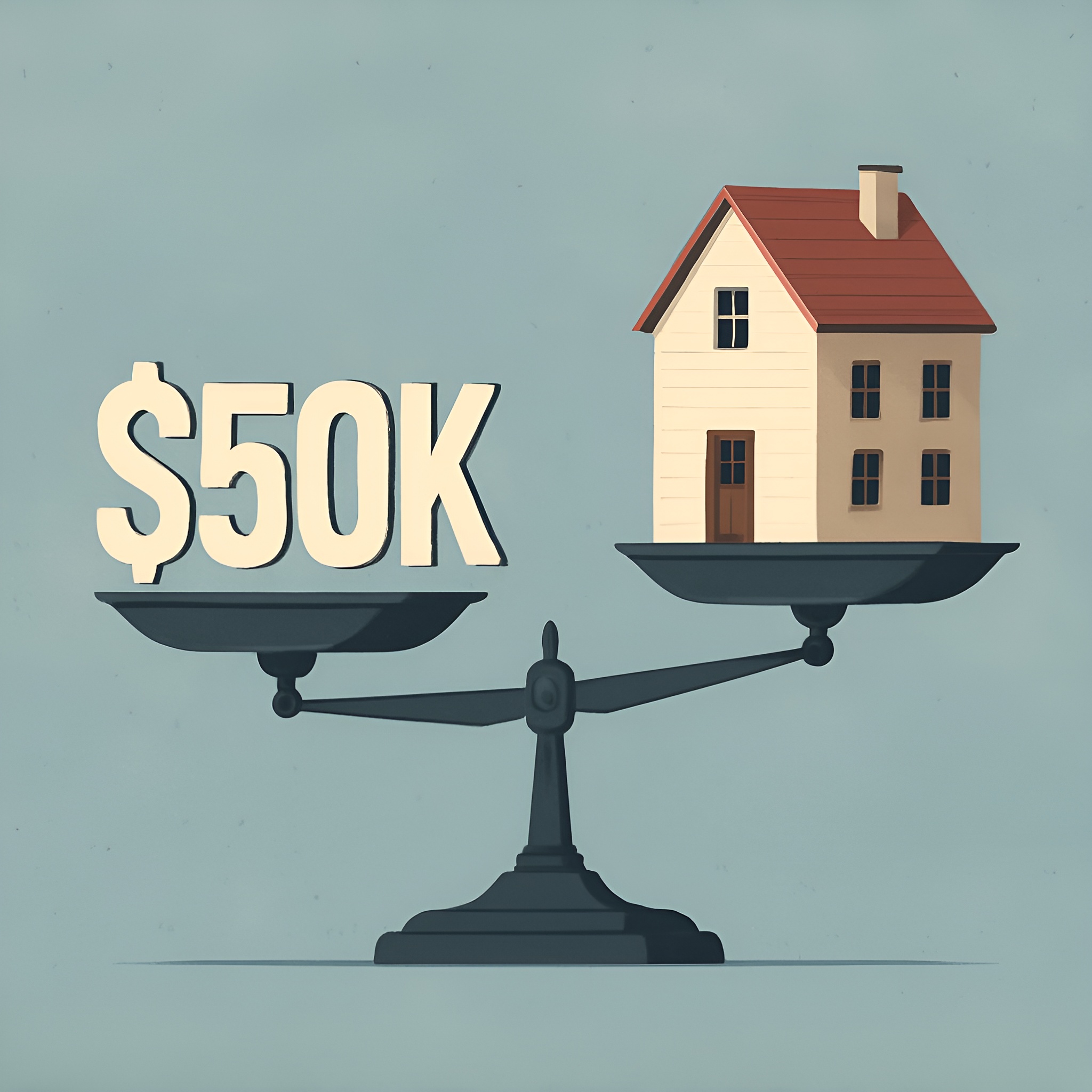
    Many Americans still can’t afford to buy a home. Home sales are up nearly 20% from a year ago, but overall sales remain well below pre-pandemic levels—underscoring the nation’s ongoing affordability crisis.

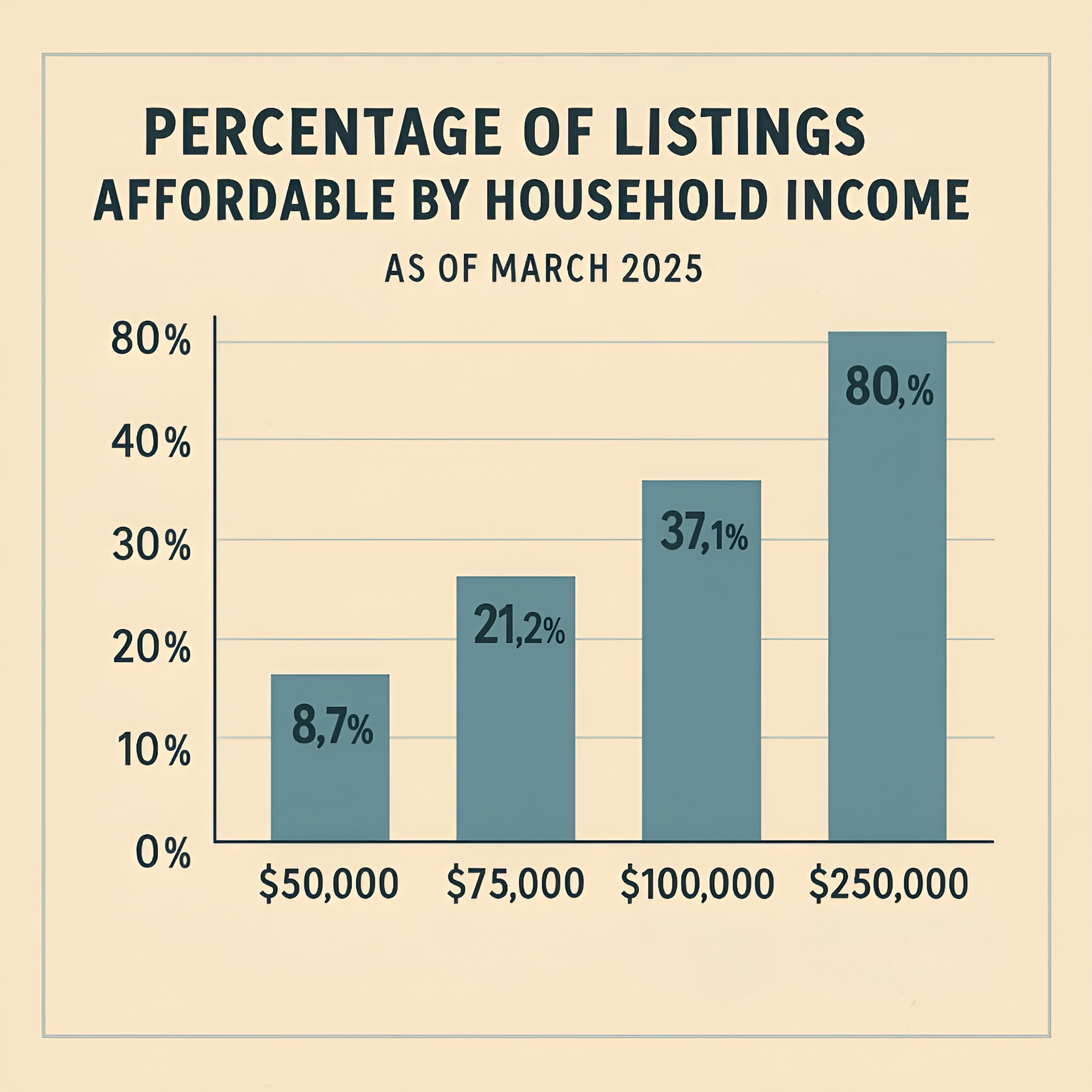
    As of March 2025, lower-income households earning $50,000 annually could afford just 8.7% of available listings—down from 9.4% a year prior. The market would need an additional 367,000 homes priced below $170,000 to achieve a balanced supply.

    Households earning $75,000 a year could afford just 21.2% of homes on the market, up slightly from 20.8% in March 2024. Despite this marginal improvement, the affordability gap continues to widen. Before the pandemic, this group could afford nearly 49% of homes for sale. To reach a balanced market, they would need access to 48.1% of listings, which means about 416,000 more homes priced up to $255,000 are needed.

    Meanwhile, households earning $100,000 or more can afford 37.1% of listings, up slightly from 36.9% a year ago. However, this remains far below the 64.7% they could afford in 2019. Achieving equilibrium would require about 364,000 additional homes priced below $340,000.

    In contrast, households earning $250,000 or more can afford at least 80% of homes for sale, highlighting a sharp disparity in affordability among income groups.

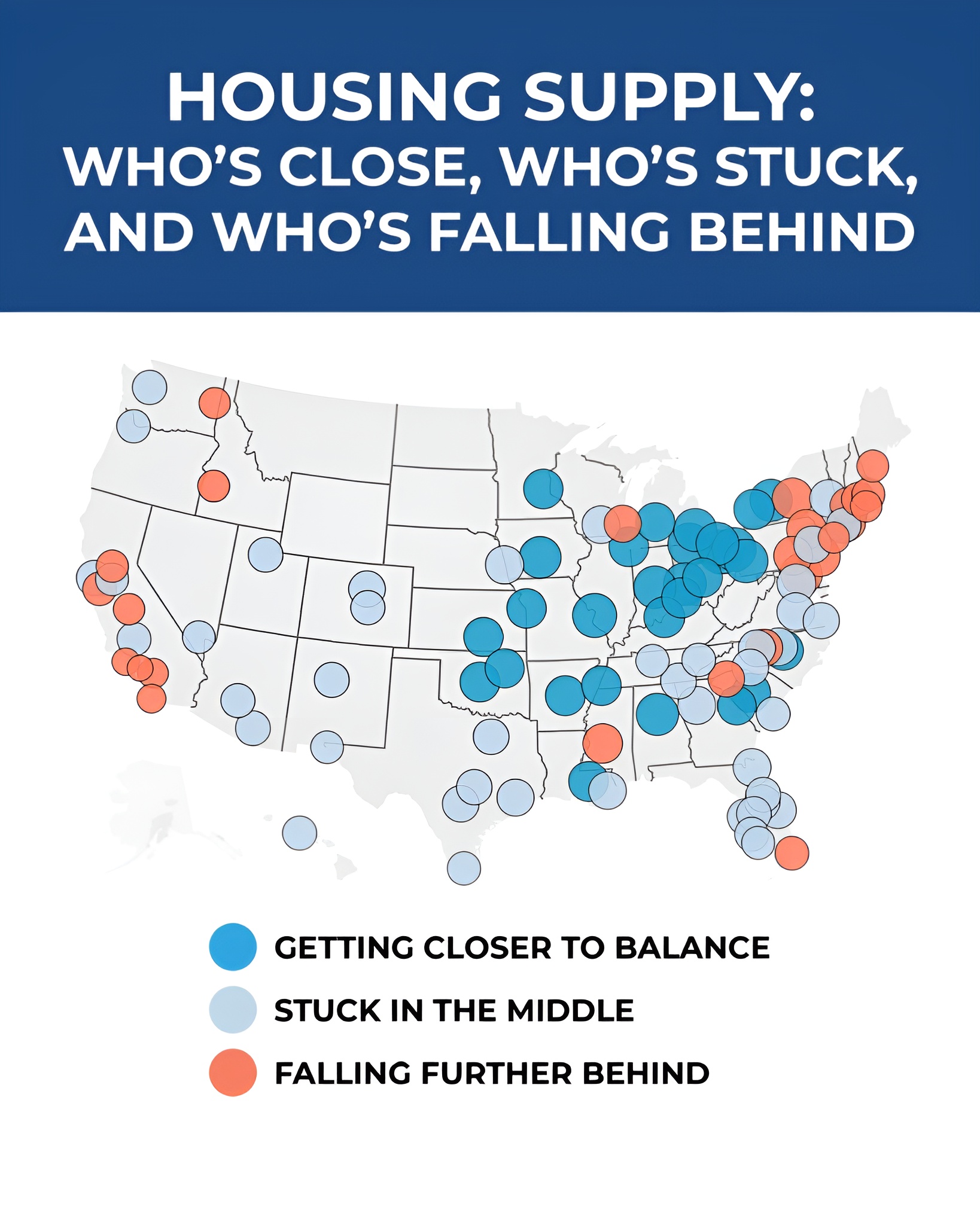
    Nationally, the number of homes for sale increased nearly 20% from March 2024 to March 2025. While this is a positive sign, total inventory remains well below pre-pandemic levels. About 30% of the nation’s 100 largest metropolitan areas now fall into the “Areas Getting Closer to Balance” category, where housing affordability has improved for all income levels. Cities including Akron (Ohio), St. Louis (Missouri), Youngstown (Ohio), Pittsburgh (Pennsylvania), Raleigh (North Carolina), Des Moines (Iowa), and Grand Rapids (Michigan) are beginning to see more balanced markets.

    Meanwhile, 44% of metropolitan areas are categorized as “Areas Stuck in the Middle,” where supply and demand remain out of sync. Some cities, such as Seattle and Washington, D.C., are making progress, with affordability increasing by 4 percentage points, but the gap remains significant.

    Likewise, Austin, Texas; Salt Lake City, Utah; and Denver, Colorado, have all made significant progress, with average affordability gains of 20 percentage points. San Francisco, California, has already surpassed pre-pandemic affordability levels.

    Alarmingly, 26% of metropolitan areas are now classified as “Areas Falling Further Behind,” meaning affordability in these regions is getting worse. Major cities like Los Angeles and San Diego, California; New York, New York; and Spokane, Washington, are among the hardest hit by the shortage of affordable housing.

    Source: NAR.realtor

    At the state level, Iowa, Ohio, Indiana, Illinois, and West Virginia continue to lead in housing market balance. In these states, households earning $75,000 still have access to more than 45% of available homes. By contrast, states such as Montana, Idaho, California, and Massachusetts—despite increasing inventory—still face significant challenges in achieving market balance.

    The housing market is at a turning point, with more homes coming onto the market and middle-income earners beginning to see an increase in supply. However, the gap remains wide—especially for first-time homebuyers. Meanwhile, Danielle Hale, chief economist at Realtor.com, notes that although the number of affordable homes is rising, progress has been uneven and is largely concentrated in the Midwest and South.

    Homeownership is increasingly out of reach for low- and middle-income households. Building smaller, more affordable homes could help narrow the gap. While some regions are showing signs of improvement, the national housing market still needs time to achieve true parity and affordability for all income groups.