Tag: Home Loans

  • Home Renovation Loans: Financing Your Dream Home Upgrades

    Renovating your home makes it more comfortable and increases its value, but home improvements aren’t cheap. If you don’t have enough cash on hand, a home renovation loan might be the solution to get the project done.

    In this guide, we’ll break down what home renovation loans are, cover the different types available, and walk you through how to choose and apply for the best option for your needs.

    What Is a Home Renovation Loan?

    A home renovation loan is a broad term for financing that pays for upgrades, repairs, or remodeling in your home. Simply put, it’s money you borrow specifically to improve your house. This could mean anything from renovating a kitchen or bathroom to adding a new room or fixing an urgent problem like a leaky roof.

    Home renovation loans come in many forms. In some cases, it might be a regular personal loan, while other times it’s a secured loan that uses your home as collateral. The defining feature is that the funds are meant for home improvement. Because “home renovation loan” covers a lot of ground, it can actually refer to several financing products, like these:

    • Purchase or Renovation Mortgages: These are home loans or mortgages that include extra money for renovations. For example, For example, a renovation mortgage lets you buy (or refinance) a house and roll the renovation costs into one loan. Government-backed programs like the FHA 203(k) loan or Fannie Mae’s HomeStyle loan fall into this category.
    • Home Equity Loans or HELOCs: If you already own a home and have built up equity, you can borrow against that equity. A home equity loan gives you a lump sum, while a home equity line of credit, known as a HELOC, works like a credit line you can draw from as needed. These use your home as collateral.
    • Cash-Out Refinance: This replaces your existing mortgage with a new, larger mortgage so you can take out the difference in cash. The cash can then fund your renovation.
    • Personal Loans: These are unsecured loans often marketed as home improvement loans that you can use for almost any purpose, including home upgrades. They don’t require home equity or collateral, so your income and credit score are the main factors for approval.
    • Government Loans or Subsidies: In addition to FHA loans, certain government programs can help with specific renovations, such as VA renovation loans for eligible veterans or HUD Title I loans for home improvements. These often have special requirements or limits.

    No matter the type, the borrowed funds help you get your project started faster. You’ll receive the money either in a lump sum or in stages and then repay it over time with interest, just like any other loan. Some renovation loans even keep the funds in an escrow account to pay contractors directly, making sure the money is used for the intended repairs or upgrades.

    Why Consider a Renovation Loan?

    Borrowing makes the most sense when the renovation is urgent, like a critical repair, or when the improvements are likely to increase your home’s value in the long run. For example, fixing a safety issue or modernizing an outdated kitchen could boost your property’s value and your quality of life. It’s wise, however, to keep project costs in check. You generally don’t want to borrow more than the value added to your home.

    Key Things To Look For

    Before signing anything, compare these key features:

    • Loan Type: Note if it’s secured, like home equity or a refinance, or unsecured, like a personal loan.
    • Interest Rate: Find out if it’s fixed or variable. Secured loans tend to have lower rates.
    • Repayment Term: Longer terms mean lower monthly payments but more total interest.
    • Fees: Origination, appraisal, or closing costs can add up.
    • Collateral Risk: Using home equity means your property backs the loan.

    Looking at these details helps you find the balance between affordability and flexibility.

    Pros and Cons of Home Renovation Loan Options

    How to Choose the Right Loan

    Your best option depends on equity, credit, and project size.

    • If you have little or no equity, a personal loan or FHA 203(k) may be your best bet.
    • If you have a good amount of equity, home equity loans or a cash-out refinance can offer lower rates.
    • If you’re not sure about the total cost, a HELOC lets you draw funds as you go.

    Always compare APR, fees, and repayment terms from several lenders. Even a 1% rate difference can save thousands over time.

    How to Apply for a Home Renovation Loan

    1. Plan your project. Gather cost estimates and timelines.
    2. Check your credit and budget. A score of 670+ helps secure better rates.
    3. Compare lenders. Look at banks, credit unions, and online lenders.
    4. Prepare documents. Proof of income, tax returns, and contractor quotes may be required.
    5. Submit your application. Expect a credit check and possible appraisal.
    6. Close and fund. You’ll receive the money or access to a credit line once approved.
    7. Keep receipts and contracts. Lenders might need proof the funds were used for home improvements.

    How Interest Rates Are Determined

    Rates depend on a few key factors:

    • Loan type. Secured loans are generally cheaper.
    • Credit score. Better credit usually means a lower rate.
    • The current interest rate environment.
    • Loan term. Shorter loans often carry lower rates.

    As of late 2025, personal loan APRs average 12% to 14%, while home-equity products range from 6% to 9%, depending on credit and collateral strength.

    FAQs

    1. How much can I borrow for a home renovation?
      Most lenders let you borrow up to 80% to 90% of your home’s value, minus your mortgage balance, depending on credit score, income, and renovation costs.
    2. Can I qualify for a renovation loan with bad credit?
      Yes, FHA 203(k) loans and some personal loan providers accept lower credit scores, though you may face higher interest rates or stricter terms based on risk.
    3. Are renovation loan interest rates fixed or variable?
      It depends on the loan type. Home equity loans typically have fixed rates, while HELOCs and some renovation mortgages use variable rates that fluctuate with the market.
    4. Do I need equity to get a home renovation loan?
      Not always. Personal loans and FHA 203(k) renovation mortgages allow homeowners with little or no equity to finance upgrades using income and credit score for approval.
    5. Are the interest payments tax-deductible?
      They can be, but only if the loan funds are used for substantial improvements to your primary home. Always confirm eligibility with a qualified tax advisor.

    The Bottom Line

    Home renovation loans let you improve your space now and pay later, balancing comfort and long-term value. Compare options carefully, make sure you can handle the payments, and pick what fits your project.

    Truss Financial Group offers tailored home renovation loan solutions for U.S. homeowners, helping you finance upgrades confidently and efficiently. Explore your options with their team to start transforming your home today.

  • A First-Time Buyer’s Guide to Home Loan Options in North Carolina

    Image by tkoch from Pixabay.com

    First-time homebuyers in North Carolina have access to a range of programs that can help lower the upfront cost of buying a home. These include down payment assistance, tax credits, and low-interest mortgage options. Most conventional loans require a credit score of at least 620, while North Carolina-specific programs may require a minimum of 640.

    Here’s a breakdown of conventional loans and key programs available to NC buyers.

    What Is a Conventional Loan?

    A conventional loan is a mortgage offered by private lenders—such as banks, credit unions, or mortgage companies, without direct government backing. Conventional loans can come with either fixed or variable interest rates.

    You might use a conventional loan for a new house in a suburban area if you have strong credit and a solid down payment.

    Although they’re not government-issued, some conventional loans are backed by agencies like Fannie Mae or Freddie Mac. These loans usually require higher credit scores and down payments compared to government-insured options.

    Government-backed loans include:

    • FHA loans: Lower down payments and more flexible credit requirements.
    • VA loans: No down payment required, available to eligible veterans and service members.
    • USDA loans: Also no down payment, for qualifying rural buyers.

    Home Prices and Down Payments in North Carolina

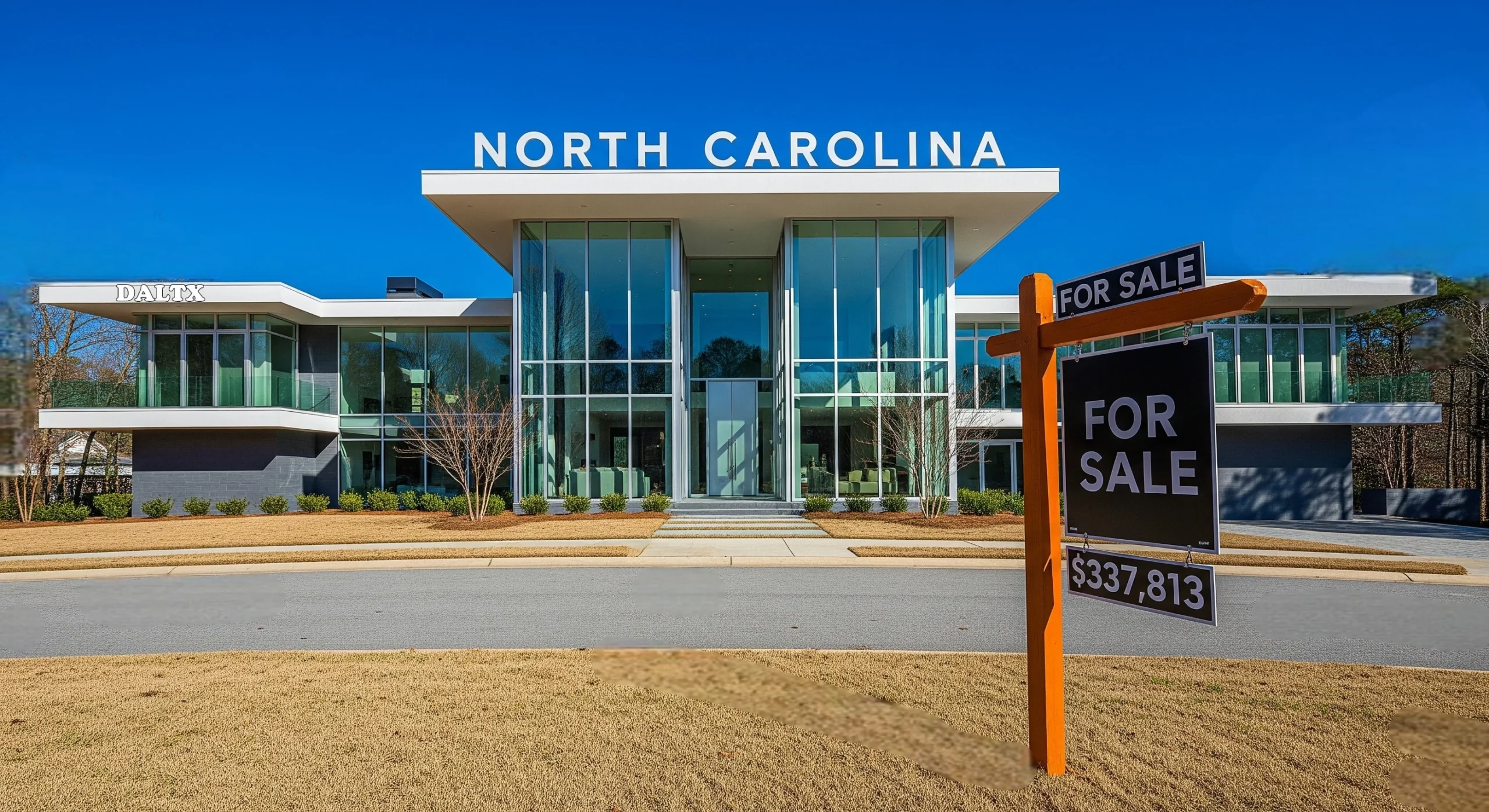
    As of July 2025, the median home price in North Carolina was $337,813, up around 22% from 2021, according to Zillow. That means a 5% down payment on a median-priced home would be approximately $16,890. Programs that reduce upfront costs can make a big difference.

    Home Repair Assistance Programs in North Carolina

    North Carolina offers several home repair and rehabilitation programs for low-income residents. These include the Urgent Repair Program (URP) and the Essential Single-Family Rehabilitation (ESFR) program, which provide forgivable loans for critical home repairs.

    • URP: Offers up to $10,000–$12,000 in assistance for emergency repairs. Applicants must have income at or below 50% of the area median income.
    • ESFR: Provides up to $40,000 for major home rehabilitations. Available to households earning up to 80% of the area median income. Loans are forgivable over 5–20 years.

    Support for Teachers, Veterans, and First Responders

    While North Carolina doesn’t offer a dedicated state-run program exclusively for public servants, eligible homebuyers in these professions can still access benefits through programs like the NC Home Advantage Mortgage. Additionally, national initiatives like Homes for Heroes offer average savings of around $2,400 when using participating real estate professionals.

    NC Home Advantage Mortgage Program

    North Carolina’s Home Advantage Mortgage, offered by the North Carolina Housing Finance Agency (NCHFA), provides fixed-rate loans to qualifying buyers. Borrowers may also receive down payment assistance of up to 3% of the loan amount, structured as a forgivable second mortgage if the buyer remains in the home for 15 years.

    First-time buyers may also apply for a Mortgage Credit Certificate (MCC), which can reduce federal income taxes by up to $2,000 per year. MCC credits are based on 30% of mortgage interest for existing homes and 50% for new construction.

    Eligibility requirements include:

    • Completion of a homebuyer education course for those using down payment assistance.
    • A minimum credit score of 640 (660 for manufactured homes).
    • Income limits up to $140,000 depending on location.

    Takeaway

    For first-time buyers in North Carolina, exploring programs from the North Carolina Housing Finance Agency can significantly reduce the upfront costs of purchasing a home. Whether through down payment assistance, competitive fixed-rate mortgages, or tax credits like the Mortgage Credit Certificate, there are tools designed to make homeownership more accessible.

    To get started, check your credit score and household income against the eligibility requirements, complete a HUD-approved homebuyer education course if required, and compare available options to find the best fit for your financial goals.

  • Why You Should Get an FHA Loan in Texas

    If you’re planning to buy a home in Texas but worry about your credit score, savings, or past financial setbacks, an FHA loan might be the perfect solution. Backed by the Federal Housing Administration, these loans are built to help people with moderate incomes and less-than-perfect credit finally become homeowners. In this guide, we’ll break down why FHA loans are a smart move for Texans—and how to qualify.

    What Is an FHA Loan?

    An FHA loan is a type of government-backed mortgage insured by the Federal Housing Administration, which operates under the U.S. Department of Housing and Urban Development. FHA loans are made by FHA-approved lenders and are particularly sought after by first-time homebuyers but are available for repeat homebuyers as well.

    Unlike conventional loans, FHA loans have lenient conditions, and are therefore appropriate for those who cannot qualify for the more stringent terms of the usual mortgage programs.

    Top Benefits of an FHA Loan in Texas

    1. Low Down Payment – As Low as 3.5%

    Saving for a large down payment can be a huge barrier for buyers. FHA loans require only 3.5% down if your credit score is at least 580. Even with a credit score between 500–579, you may still qualify with a 10% down payment.

    2. Easier Credit Qualification

    FHA loans are designed for low credit score borrowers. They require only a 580 credit score in 2025 for the lowest down payment category. There are lenders that approve loans for borrowers with credit scores as low as 500 under specific conditions.

    3. Higher Debt-to-Income (DTI) Ratios Allowed

    Texas FHA lenders are more flexible, allowing a debt-to-income (DTI) ratio of up to 57%, compared to the 45–50% cap on most conventional loans. That makes it easier for borrowers who already have things like student loans or car payments.

    4. No Minimum Income Requirement

    There’s no official minimum income required. You just need to show a stable income over the past two years, with documentation such as tax returns, pay stubs, or W-2s (Wage and Tax Statement).

    5. Flexible Sources for Down Payment

    Your down payment funds may come from your personal savings, down payment assistance programs, or from financial gifts from family members or friends. Just keep in mind: financial gifts over $19,000 for an individual ($38,000 for a couple) could be taxable to the donor in 2025.

    Texas-Specific Down Payment Assistance Programs

    Texas offers several down payment assistance programs for first-time and repeat homebuyers:

    • Texas Homebuyer Program: Offers up to 5% of your first mortgage amount in assistance, usable for down payment or closing costs.
    • Pathway to Homeownership: Through New American Funding, eligible buyers may receive up to $6,000 in assistance.
    • Local Programs: Many cities and counties in Texas offer their own DPAs—check with your local housing office or HUD for details.

    FHA Loan Property Options in Texas

    FHA loans in Texas can be used for a wide range of property types, including:

    • Single-family homes
    • 2–4 unit properties (duplex, triplex, fourplex)
    • Condos and townhomes
    • Manufactured homes
    • Fixer-uppers (with FHA 203(k) loans)

    The property must be your primary residence—FHA loans are not for vacation homes or rentals.

    FHA 203(k) Loans: Buy & Renovate in One

    Want to buy a fixer-upper? FHA 203(k) loans roll the purchase price and renovation costs into a single loan. Two types are available:

    • Limited 203(k) – Up to $35,000 in repairs (no structural changes)
    • Standard 203(k) – Includes major renovations, accessibility upgrades, or structural repairs

    Great for buyers looking to build equity or customize their homes.

    FHA Streamline Refinance: Lower Your Rate

    Already have an FHA loan? The FHA Streamline Refinance can help you lower your interest rate without:

    • A new appraisal
    • Income verification
    • Employment checks
    • Credit review

    It’s a fast, easy way to lock in better terms when rates drop.

    Mortgage Insurance: What You Need to Know

    All FHA loans require Mortgage Insurance Premiums (MIP):

    • Upfront MIP: 1.75% of the loan amount, paid at closing or rolled into the loan.
    • Annual MIP: Paid monthly as part of your mortgage payment.

    MIP is required for the life of the loan if your down payment is below 10%. If you put down 10% or more, you may be eligible to remove MIP after 11 years.

    FHA Loan Requirements in Texas (2025)

    To qualify, you’ll generally need:

    • Credit score of 580+ for 3.5% down (or 500–579 for 10% down)
    • Verifiable, consistent income for the past 2 years
    • Primary residence (not a rental or investment)
    • DTI ratio under 57% (most lenders prefer ≤43%)
    • Home inspection that meets FHA standards
    • Mortgage insurance Premiums (MIP)
    • Down payment of 3.5%–10%, depending on your credit score

    FHA Loan Limits in Texas

    Loan limits vary by county and are adjusted annually. In 2025:

    • Most Texas counties: $524,225 for single-family homes
    • High-cost areas (e.g., Austin, Dallas, San Antonio): Up to $571,550
    • 4-unit properties: Up to $1,099,150

    Check your specific county’s limit on the HUD or FHA websites.

    How to Apply for an FHA Loan in Texas

    Follow these steps:

    1. Check your credit score and start improving it if needed
    2. Set your budget with an online FHA mortgage calculator
    3. Gather documents: tax returns, W-2s, bank statements, ID, debt info
    4. Research DPA programs in your area
    5. Contact an FHA-approved lender like New American Funding

    FHA loans are the most flexible and affordable mortgages available to Texas homebuyers—especially first-time homebuyers and those with low credit scores. With low down payment requirements, relaxed DTI limits, and access to state-sponsored assistance programs, an FHA loan in Texas may be your ticket to homeownership.