Tag: Home buying tips

  • Turning Military Service Into Multi-Unit Property Ownership

    Turning Military Service Into Multi-Unit Property Ownership

    When veterans return from service, many find themselves navigating a new battlefield, which is the challenge of civilian life. One of the most empowering transitions a veteran can make is moving from renting to owning, and for those with a vision for financial stability and long-term wealth, purchasing a multi-unit property can be a powerful step. What many veterans don’t realize is that they may be able to take that step with no money down.

    Owning a multi-unit property isn’t just about having a place to call home. It’s also about creating a passive income stream and taking charge of your financial future. For veterans, the opportunities are even better than for most people.

    Just like an individual took advantage of a purchasing a duplex, living in one unit and then years later, having the property quadruple in value.

    The VA Loan Advantage – More Than Just a Single Family Home
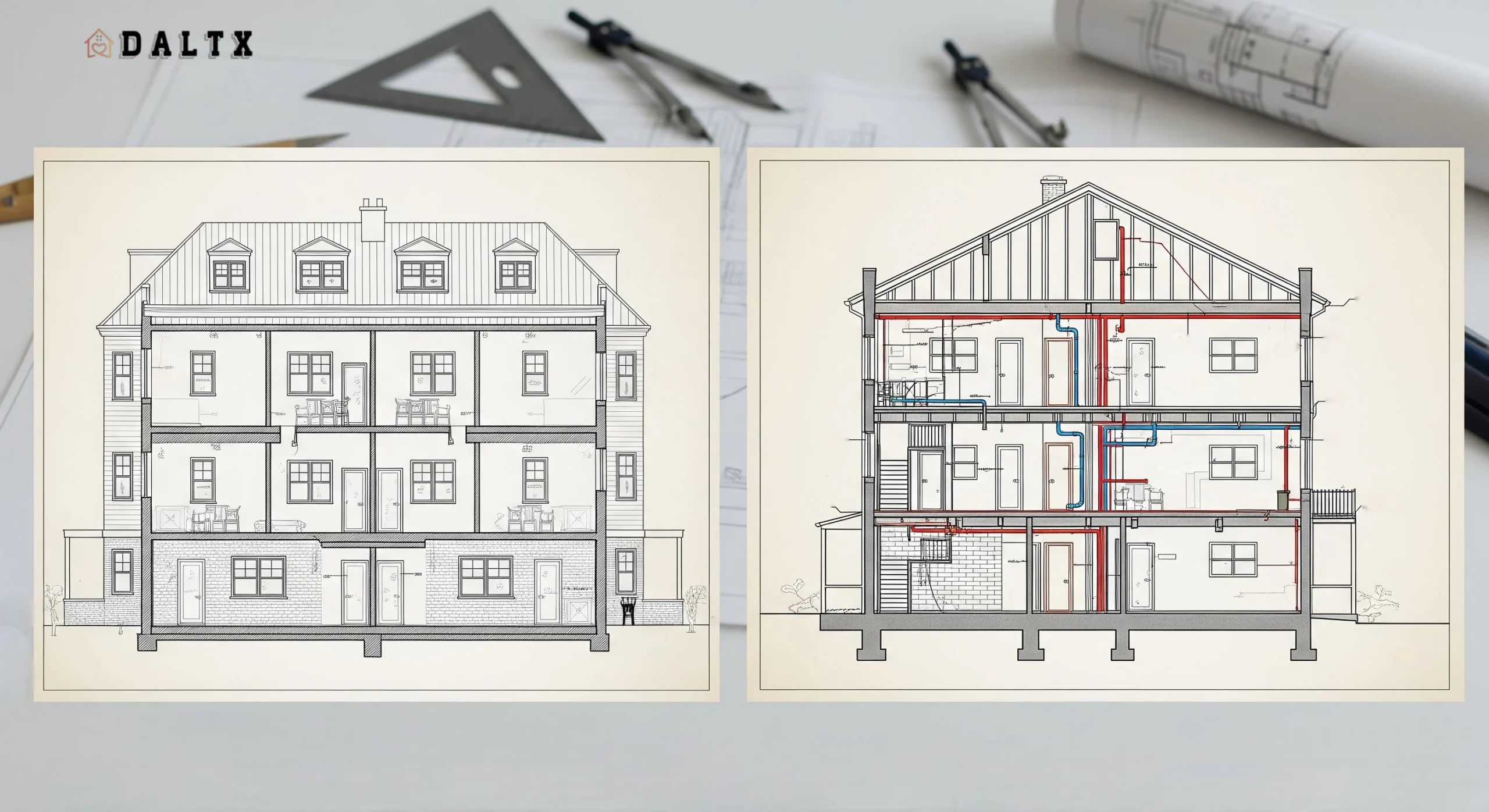
    The U.S. Department of Veterans Affairs (VA) loan is one of the most powerful tools available to eligible service members, veterans, and some surviving spouses. The hallmark of the VA loan is the ability to purchase a home with a zero-down payment and no private mortgage insurance (PMI). One point that’s often overlooked is that the VA loan isn’t just for single-family homes.

    Many are unaware that VA loans can be used to purchase properties with up to four residential units, as long as the veteran intends to live in one of them. That opens the door to acquiring a duplex, triplex, or even a fourplex with no down payment required.

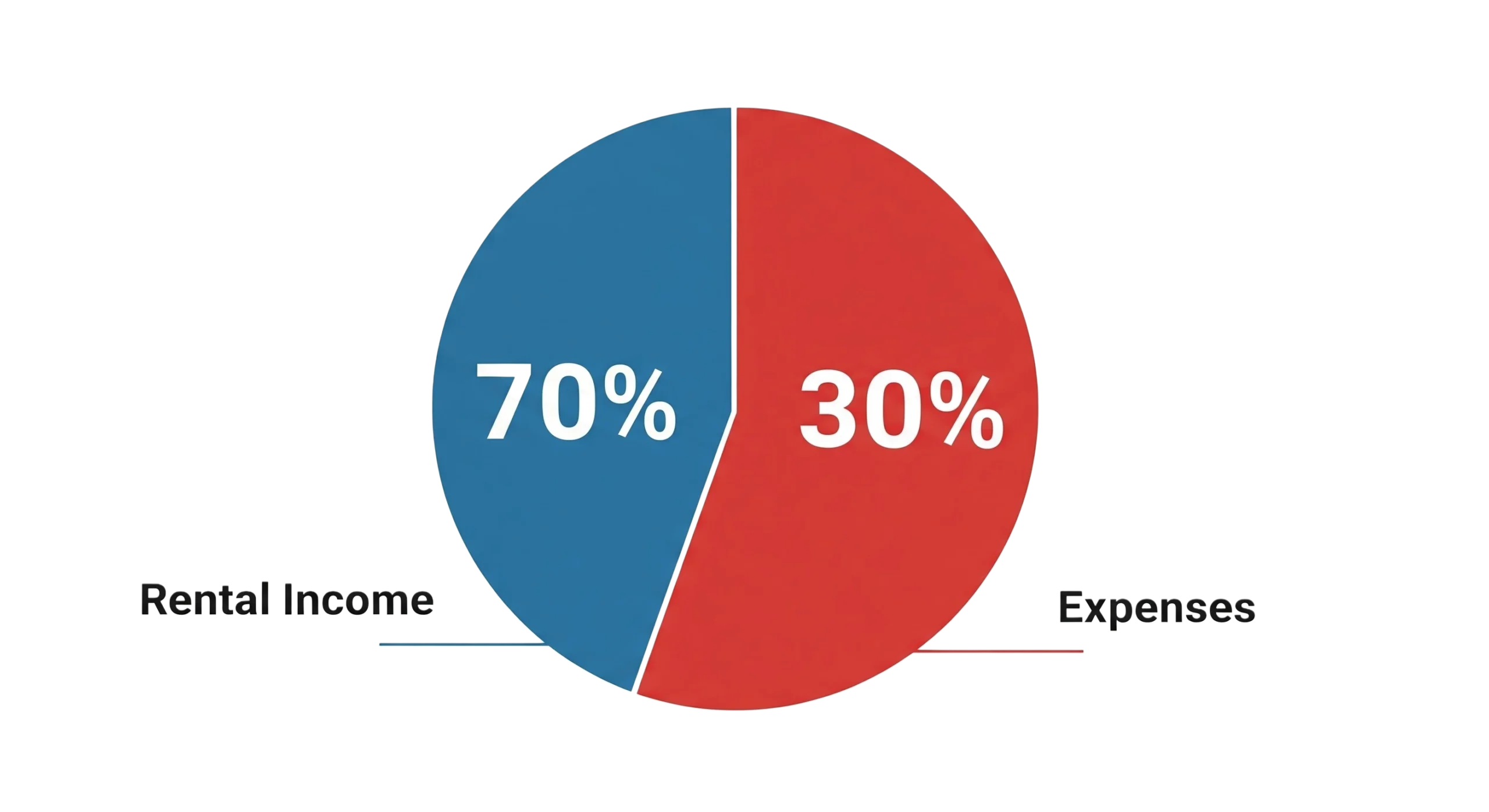
    Think about what that means in practice. A veteran could purchase a fourplex, live in one unit, and rent out the other three. The rental income from those units could potentially cover the mortgage, taxes, insurance, and even provide additional cash flow. It’s a classic real-estate investing strategy called “house hacking,” and the VA loan makes it uniquely accessible to veterans without needing to first accumulate tens of thousands of dollars in savings.

    Requirements and Realities

    Of course, there are still rules and requirements. The property’s gotta be your primary residence, meaning you’ll need to live in one of the units for at least a year. It also has to pass the VA appraisal for safety, livability, and resale value.

    Another important consideration is debt-to-income ratio (DTI). While the VA is generally flexible compared to conventional lenders, a veteran’s DTI still needs to be within acceptable limits.

    If you’re purchasing a multi-unit property and can show that it will generate rental income, that income can be used to help qualify for the loan. VA guidelines allow a portion of the projected rental income from the other units to be counted toward your income, which may help you qualify for a larger loan amount.

    This gives veterans a strong foundation for entering the world of real estate investing, allowing them to live affordably while building equity in a property that also generates income.

    Already Own a Home? There’s Another Path
    What about veterans who already own a primary residence? 

    This is where alternative financing options come into play. One of the most relevant tools for veterans (or anyone) looking to grow their real estate portfolio is the Debt Service Coverage Ratio (DSCR) loan.

    Unlike traditional mortgages that focus on tax returns, pay stubs, and employment history, a DSCR loan looks at the property’s income potential. If the projected rent covers the monthly mortgage (usually a DSCR of 1.0 or higher), you’re in business, even without W-2 income.

    For veterans who already have a home but want to build a rental portfolio, this can be a game changer. It opens the door to buying single-family rentals or multifamily properties without jumping through all the hoops of conventional lending. That’s especially valuable for vets who are retired, self-employed, or relying on pension income.

    Building Wealth with a Mission

    For many veterans, there’s a desire not just to live securely but to thrive. That starts with financial freedom. Real estate is one of the most proven vehicles for building long-term wealth, and veterans have a serious head start thanks to the VA loan.
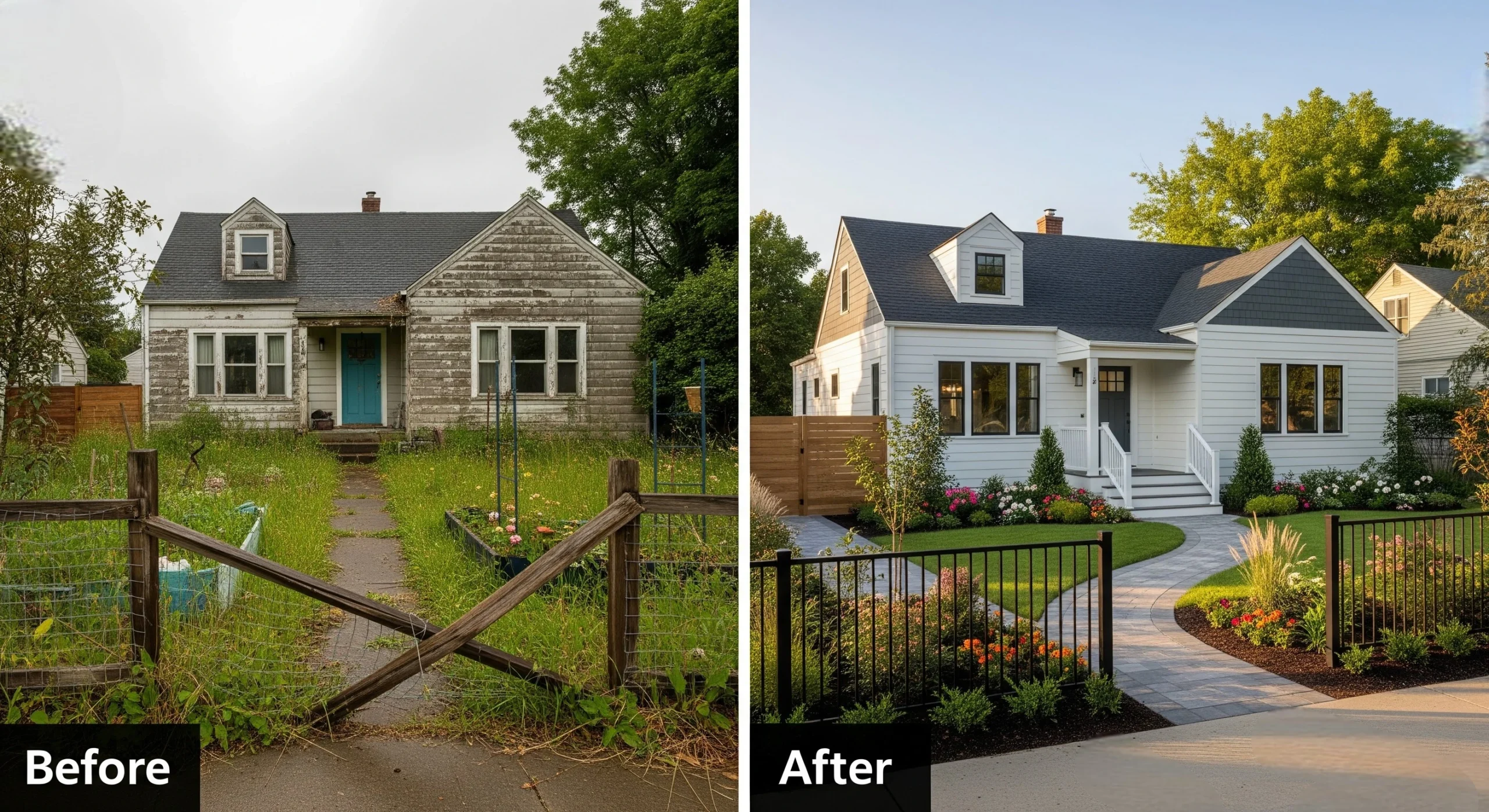
    Imagine a scenario where a veteran purchases a four-unit property with no down payment. They move into one apartment, rent out the other three, and within a few years have built up equity, improved the property, and perhaps even used the income to fund another investment. Thanks to the VA loan, and later shifting into DSCR or other investor-friendly financing, that same veteran can move from simply living in the property to owning a portfolio of them over time.

    Points to Keep in Mind

    • Do your homework on the local rental market. Not all multi-unit properties are good investments.
    • Partner with a lender and real estate agent who understand VA loans and DSCR loans. Experience matters.
    • Factor in maintenance and vacancies. Even with multiple units, there will be unexpected costs and income gaps.
    • Get preapproved early so you understand your borrowing power and what properties make sense for your situation.
    Veterans have given so much through their service. It’s only fitting that they have access to tools that help them create stable, prosperous futures. Whether it’s buying a fourplex to live in with no money down or leveraging rental income through a DSCR loan for an investment property, the pathway to real estate success is wide open.

    The first step is recognizing that these opportunities exist and then taking action. With the right strategy and support, real estate can become more than a dream for veterans, and turn into a reality that pays dividends for decades to come.


  • Top 5 Things Buyers Overlook During Property Tours

    Top 5 Things Buyers Overlook During Property Tours

    Walking through a home is one of the most important steps when you’re thinking about buying. It’s the first real chance to step inside, look around, and picture yourself living there.

    A lot of buyers get caught up in what looks nice, such as a bright living room, shiny new countertops, or a classic detail that adds charm. Those features can be appealing, but focusing only on them might cause you to miss bigger issues that could affect your day-to-day life after you move in.

    Whether this is your first purchase or you’ve been through the process before, the best way to approach a property tour is by looking past the surface. Taking time to check details you don’t always notice can help you avoid costly surprises later.

    To help you navigate the market with more confidence, here are five common things buyers tend to overlook when viewing a property.

    1. Water Pressure and Plumbing

    When you walk through the house, take a moment to test the water. Turn on the faucets in both the kitchen and bathrooms and see if the flow comes out steady and with good pressure. These small actions can save you from moving into a house where everyday routines become a hassle.

    Don’t skip a quick look under the sinks and around the base of toilets. Warped wood, dark stains, or a soft floor can signal slow leaks or past water damage. Even if the rest of the home looks updated, plumbing problems can lead to unexpected bills, and you’ll want to know what you’re walking into before making an offer.

    2. Parking and Permits

    Parking is easy to overlook, but it affects daily life more than many buyers realize. If the home comes with a designated space, check how close it is to the property and whether it feels safe at night. If parking is on the street, find out if you’ll need a resident permit, how much it costs, and whether the city limits how many permits you can get.

    Think about guests as well. A house with no visitor parking can make family gatherings or weekend get-togethers stressful. The best way to see the real situation is to visit the street at different times of day. Midday might look wide open, but evenings or weekends could be a very different story when everyone’s cars are parked.

    3. Neighborhood and Noise Levels

    The time of day you view a property can give you the wrong impression of how quiet it really is. Many showings happen during calm hours, but the atmosphere could be very different when school lets out or when the local bar fills up on a Friday night.

    Do voices carry easily from next door? Is the street busier than it looks on paper? If you’re interested in the home, schedule another visit at a different time of day. Even sitting in your car for twenty minutes during rush hour can give you a clear sense of the noise you’d live with on a daily basis.

    4. Storage That Actually Works

    Big rooms can be appealing, but without enough storage, a house can quickly feel crowded. Think about where you’ll keep the basics like coats and cleaning supplies, as well as bulkier items like holiday decorations, luggage, or sports gear.

    Open every built-in cabinet and closet to see how much space they truly offer. Look for a pantry, a linen closet, or a basement that adds usable storage. If the property has an attic, check whether it’s finished with flooring and a safe way to access it. Don’t forget to factor in outdoor options too — a garage, shed, or even a secure side yard can make everyday living much easier.

    5. Building Management and Fees

    For apartments and managed developments, the building’s overall administration is an important, yet often overlooked, area. In managed buildings, buyers should also ask about service charges, long-term maintenance plans, and block management arrangements. These charges cover the upkeep of common areas, buildings insurance, and sometimes include a contribution to a reserve fund for major future works like a roof replacement. 

    It’s a smart move to look at the service charge history from the past few years. You’ll see if the fees have been climbing and whether any major work has been scheduled. Good management makes a big difference: hallways stay clean, repairs get handled on time, and the building as a whole holds its value. Knowing how the fees are used not only helps you plan your budget, it also tells you whether the property you’re buying into is being taken care of for the long run.

    By looking past the surface details and paying attention to how the home really functions, you’ll get a clearer sense of what living there would be like day to day. These five areas often slip through the cracks during a showing, but giving them some extra attention can help you avoid surprises and move forward with more confidence in your decision.

  • Creston B.C. First-Time Home Buyer Guide

    Image Source: property24.com

    Creston is a small town in the Kootenay region, known for its farmland, orchards, and mountain views, and it’s quickly becoming known as a place where you can actually afford to own a home.

    Still, even in a smaller market, buying your first place comes with plenty of questions.

    How much house can you afford?

    What programs are available to you?

    And what should you expect when it’s time to sign the papers?

    This guide for first-time buyers in Creston covers the local real estate snapshot, a step-by-step breakdown of the buying process, and the provincial and federal programs designed to help you.

    Creston Real Estate Market Snapshot

    While Creston’s market is smaller than urban centers like Kelowna or Vancouver, it follows the same broader patterns seen across the province:

    • Provincial price trends: Across British Columbia, the average residential price was down more than 4% year-over-year as of June 2025. That adjustment has provided breathing room for buyers.
    • Forecasted recovery: Analysts expect a rebound in 2026, with sales activity increasing after a softer 2025.
    • Stabilized inventory: After years of tight supply, B.C. has seen more listings come onto the market. Buyers in Creston are benefiting from more options than they had a few years ago.
    • Regional variation: Areas outside the Lower Mainland, including the Kootenays, are showing stabilization. For Creston, this suggests modest price growth in the near future, especially in neighborhoods with strong demand.

    In Creston specifically, single-family homes often sell in the $400,000–$500,000 range, with acreages and larger properties priced higher. Compared to B.C.’s provincial average (around $970,000 in 2025), this keeps Creston within reach for many first-time buyers.

    Most listings are detached homes, but you’ll also see acreages and smaller townhomes depending on the area, giving buyers a mix of options from rural lots to in-town properties.

    Step-by-Step Guide to Buying Your First Home in B.C.

    Here’s a closer look at the major steps you’ll go through as a first-time buyer in Creston, from getting your finances in order to closing day

    1. Assess Your Finances

    Start by looking closely at what you can afford. Calculate your debt-to-income ratio to see how much of your monthly income can realistically go toward housing. In Canada, the minimum down payment is 5% on homes under $500,000. For homes priced between $500,000 and $1.5 million, you’ll need 5% of the first $500,000 plus 10% on the remainder.

    Check your credit score early. A stronger score means a better chance of securing a mortgage at a competitive rate, which can save you thousands over time.

    Don’t forget to plan for closing costs, usually 2% to 4% of the purchase price in B.C., which cover legal fees, insurance, and adjustments at the time of purchase

    2. Get Mortgage Pre-Approval

    Meet with a lender or mortgage broker for a pre-approval. This not only tells you what you can borrow, but also signals to sellers that you’re a serious buyer. First-time buyers in 2025 can also benefit from the 30-year amortization option, which spreads payments out longer and lowers monthly costs.

    While variable-rate mortgages may look attractive at first, many new buyers prefer the stability of a fixed-rate loan, especially in a changing interest rate environment.

    Image Source: news.csu.edu.au

    In Creston, many buyers also work with local credit unions, which can sometimes provide flexible terms compared to big national banks.

    3. Secure a Realtor

    Work with a realtor who knows Creston well. A local agent can help you find the right neighborhood, connect you with inspectors and lawyers, and guide you through negotiations. In B.C., the buyer typically doesn’t pay their agent directly, the fee usually comes from the seller’s proceeds.

    An experienced Creston realtor can also help with rural property details like septic systems, well water, and farm zoning, important factors that aren’t always obvious to first-time buyers

    4. Find and Make an Offer

    As you view homes, make a clear list of your needs versus wants. Needs are essentials like location, number of bedrooms, or yard size. Wants are features like a finished basement or mountain views.

    Once you’ve found a property, your realtor will help craft an offer that’s competitive and fair. Negotiations are common, and your agent will be key in balancing your budget with the seller’s expectations.

    5. Complete the Purchase

    Once your offer is accepted, there are still a few important steps to take before you officially become a homeowner

    • Home inspection: After your offer is accepted, book a professional inspection. It may reveal repairs or issues you’ll want to know about before closing.
    • Finalize your mortgage: Provide your lender with updated documents, including proof of income and assets.
    • Close the deal: In B.C., this step is known as completion day. You’ll meet with a lawyer or notary to sign final documents, transfer the title, and officially receive your keys. Possession day usually follows shortly after completion day, this is when you actually move in and take physical control of the property.

    First-Time Buyer Programs in B.C. and Canada

    Image Source: npr.org

    Several programs can help stretch your budget and lower upfront costs:

    • First Home Savings Account (FHSA): Contribute up to $8,000 per year (lifetime maximum $40,000). Contributions are tax-deductible, and withdrawals for a first home are tax-free. Couples can double this benefit to $80,000.
    • Home Buyers’ Plan (HBP): Withdraw up to $60,000 from your RRSP tax-free to put toward your down payment. Couples can combine for $120,000, repayable over 15 years.
    • First-Time Home Buyers’ Tax Credit (HBTC): A non-refundable credit worth up to $1,500, helping with legal fees and closing costs.
    • B.C. First-Time Home Buyers’ Program: Provides a full or partial exemption from the Property Transfer Tax (PTT). On a $450,000 Creston home, that could save you more than $7,000. The maximum rebate in 2025 is $8,000.
    • 30-Year Amortization: Newly available for insured mortgages for first-time buyers, this longer term lowers monthly payments, making budgeting easier.

    The Bottom Line

    For first-time buyers in Creston, affordable home prices and more inventory on the market mean you don’t have to rush your decision. Most single-family homes here still sell in the $400,000–$500,000 range, and many fall under the provincial price cap for first-time buyer tax exemptions. That puts programs like the Property Transfer Tax rebate and the RRSP Home Buyers’ Plan within reach for local buyers.

    Instead of feeling pressured, you can take the time to compare neighborhoods from houses close to downtown Creston to acreages in Erickson or West Creston and match them with a budget that works for you. With financing options and incentives available, the path to homeownership here is clearer than in larger B.C. markets.

  • Smart Payment Solutions for Modern Homebuyers in Texas

    Buying a home in Texas today looks very different from just a few years ago. With rising home prices, shorter sales cycles, and a tech-savvy generation of buyers entering the market, traditional payment methods are no longer meeting the demands of modern buyers. This article explores the smart payment tools that are changing how Texans buy homes.

    Why Payment Flexibility Matters in the Texas Market

    Homebuyers in Texas already have access to a wide range of payment options. They range from conventional bank loans and mobile escrow transfers to emerging tools such as digital wallets and cryptocurrency.

    For example, you can withdraw crypto at a ByteFederal ATM, making it easier to access digital funds for transactions.

    Below are the key reasons payment flexibility plays such a critical role in the current Texas housing landscape.

    Rising Property Values and Buyer Expectations

    Home prices across Texas have increased significantly over the past few years, with major cities like Austin, Dallas, and San Antonio experiencing some of the steepest spikes due to high demand, limited inventory, and ongoing population growth. This growth puts pressure on buyers to access larger sums quickly, whether for earnest money, down payments, or closing costs. Flexible payment options help buyers move quickly when needed.

    Supporting Diverse Buyer Profiles

    Texas attracts diverse homebuyers, from first-time homeowners to remote tech workers and out-of-state investors. Each group brings its own financial situation and preferences. Some may rely on government-backed loans or down payment assistance programs, while others may use crypto assets, private lending, or digital banking platforms. Flexible payment systems cater to these diverse profiles, enabling buyers to engage with the market in ways that reflect their resources and financial planning strategies.

    Key Technologies and Tools Powering Smarter Homebuyer Payments

    Escrow Payment Portals

    Title companies or escrow services manage these online systems. They allow buyers to transfer earnest money, down payments, or closing funds directly to an escrow account. Instead of writing checks or initiating manual wires through a bank branch, buyers can log into a secure portal, confirm transaction details, and complete payments from home. 

    These platforms also provide payment confirmations and clear timeframes, reducing the risk of delays or miscommunication between agents, lenders, and closing teams. In a state like Texas, where transactions often move quickly, being able to send funds immediately while maintaining proper documentation helps keep the deal on track.

    Mobile Wire Transfer Services

    Mobile wire transfer services enable buyers to complete time-sensitive payments without being tied to a physical bank location. These tools are often offered through mobile banking apps or fintech platforms and support the transfer of large amounts, like closing funds or final balances within a matter of hours. In competitive Texas markets where sellers may accept backup offers, a delay in payment can jeopardize a buyer’s position.

    Mobile wire services provide real-time tracking and fraud prevention features such as identity verification and two-factor authentication. Buyers can also initiate transfers outside of banking hours or while traveling, which adds convenience and helps them meet strict contract deadlines. This level of accessibility is helpful in fast-paced urban centers like Austin or Dallas.

    Digital Wallet Payments

    Homebuyers can pay for smaller transaction-related costs, such as home inspections, property appraisals, or service deposits for things like pest control, surveys, or staging using digital wallets. Apps like Apple Pay, Google Pay, PayPal, and Zelle enable immediate fund transfers using only a phone number or email.

    For homebuyers in Texas working with multiple service providers, the ability to pay securely and quickly improves communication and prevents administrative delays. These tools play a key role in managing the supporting costs of the purchase process, although they are unsuitable for escrow or closing payments due to transaction size limits.

    Cryptocurrency Payment Gateways

    Homebuyers who hold cryptocurrency can use specialized payment gateways to convert digital assets into U.S. dollars and transfer the funds to a title company or escrow provider. It’s a practical way to use crypto for real estate without going through the usual liquidation steps.

    In some cases, sellers may accept cryptocurrency directly, depending on the transaction structure and compliance requirements. These gateways often include features such as identity verification, transaction tracking, and secure currency conversion, helping buyers complete payments safely.

    Multi-Source Payment Platforms

    Homebuyers can combine funds from several accounts or payment methods into a single transaction. For instance, they can pull from checking accounts, savings, credit cards, or digital wallets instead of relying on one bank account or waiting for transfers between financial institutions. 

    The platform pulls everything together and sends the full payment to the escrow company or title office. This solution helps buyers who face bank transfer limits or need to make large payments within a short timeframe.

    Real-Time Payment (RTP) Networks

    These networks allow banks to transfer money instantly between accounts, even outside normal business hours. RTP ensures the funds move and settle within seconds unlike traditional wire transfers or ACH payments that may take hours or days. For buyers working with tight contract timelines or late-day deadlines, this speed and certainty can prevent last-minute disruptions and keep the transaction on track.

    Conclusion

    Smart payment solutions are helping homebuyers in Texas complete real estate transactions more efficiently and with fewer delays. These solutions give buyers more control over how they send, schedule, and confirm payments during the transaction process. With faster transfers and more flexible options, buyers can meet deadlines without unnecessary delays. These systems also reduce the risk of fraud and confusion during high-value transactions.

  • What to Consider Before Buying Waterfront Property in Canada

    Source: istockphoto.com

    Purchasing waterfront property is a dream for many people. Whether you’re looking for a peaceful lakehouse retreat, an oceanfront retirement getaway, or a riverside investment opportunity, owning a home by the water comes with undeniable appeal. But buying waterfront real estate is far more complex than purchasing a standard residential property. From legal considerations to environmental factors and lifestyle fit, it’s important to know what you’re getting into.

    This guide breaks down the key things to consider before buying waterfront property, with a practical approach that helps you make an informed and confident decision.

    1. Understand the Type of Waterfront Property

    The first step is to clearly understand the type of waterfront you’re buying. Not all waterfronts are created equal, and each has its own set of pros, cons, and considerations.

    • Oceanfront properties offer stunning views and beach access, but can come with high maintenance due to salt corrosion, risk of hurricanes, and rising sea levels.
    • Lakefront properties often provide calm waters for boating or swimming, but can have issues with algae blooms or restrictions on motorized watercraft.
    • Riverfront homes may offer scenic tranquility, but you’ll want to understand the river’s flow, floodplain boundaries, and bank erosion risks.

    When buying, be clear whether the property offers actual direct access or just a view. There is a major difference between “waterfront,” “water view,” and “water access.” For accurate assessments and to ensure you’re purchasing a title that includes the rights you assume, consult with an expert real estate agent familiar with waterfront regulations in your area.

    2. Research Local Regulations and Restrictions

    Source: istockphoto.com

    Owning property next to a body of water usually comes with extra regulations, often at the municipal, provincial, or federal level. Buyers must do their due diligence to understand:

    • Zoning laws: Can you build a dock? Are there building height restrictions? Can the property be used for short-term rentals?
    • Environmental regulations: There may be restrictions on what you can build or renovate due to wetland protection, wildlife conservation, or shoreline buffer zones.
    • Riparian rights: These refer to the legal rights of landowners whose property abuts a body of water. They may include access, usage, or water withdrawal rights, but they vary by province.
    • Floodplain mapping and insurance requirements: Is the property located in a high-risk flood zone? You may be required to purchase flood insurance or adhere to specific building codes.

    It’s also wise to contact local conservation authorities or planning offices to clarify what you can and cannot do on the property, especially if you intend to make modifications like tree removal, shoreline stabilization, or installing a dock.

    3. Check the Shoreline and Water Quality

    When viewing a waterfront home, it’s easy to get caught up in the view and serenity. But take a closer look at the shoreline and water quality.

    • Shoreline condition: Is the shore rocky, sandy, or muddy? Is it eroding? Stable shorelines are better for long-term property value and safety.
    • Water level fluctuations: In many regions, lakes and rivers may have seasonal highs and lows. Drastic changes can affect usability and aesthetics.
    • Access to the water: Is there a natural slope, or will you need stairs or a path? Steep or unstable banks may be expensive to manage or improve.
    • Water quality: Ask about historical data regarding algae blooms, bacteria, or contamination. Water that looks clean might not be safe for swimming or fishing.
    • Boating restrictions: Some lakes restrict motorboats, jet skis, or impose noise limits, while others may allow full recreation. Ensure the water usage suits your lifestyle goals.

    Local conservation authority reports, Ministry of Environment data, or resident associations can often provide this information.

    4. Infrastructure, Utilities, and Access

    Waterfront properties are sometimes in rural or less-developed areas, which can bring complications related to infrastructure.

    • Road access: Is the road publicly maintained or private? In the winter, will it be plowed?
    • Internet and cell service: Many waterfront homes suffer from weak signals. Confirm availability of high-speed internet or mobile coverage.
    • Sewer and septic: Many waterfront homes use septic systems. Ask for inspection records and ensure they meet modern environmental standards. Improper septic systems can harm both your property value and the ecosystem.
    • Water supply: Is the home on a municipal waterline, a well, or a lake water system? Each has its own testing, filtration, and maintenance requirements.
    • Power and heating: Off-grid or seasonal cottages may rely on propane, generators, or solar. Be prepared for additional maintenance or costs.

    Ensuring year-round usability may require investing in updates or improvements, so it’s essential to factor those into your budget.

    5. Seasonal and Maintenance Considerations

    Source: istockphoto.com

    Waterfront homes often require more upkeep than standard homes, especially when exposed to fluctuating weather conditions and humidity.

    • Salt air and moisture: For coastal properties, salt can corrode metal and deteriorate paint and finishes faster.
    • Pests: Mice, insects, and birds are common visitors in cottages left vacant for months.
    • Storm preparation: Homes near water may require storm shutters, sump pumps, or backup generators.
    • Landscaping: Vegetation near shorelines is often protected or difficult to maintain. You may need native plants or erosion-prevention landscaping.

    Also, if the property is intended for vacation use, consider the logistics of property management, off-season maintenance, and security.

    6. Financing and Insurance Challenges

    Financing waterfront property can be more complicated than financing traditional homes. Some banks may be more cautious due to risks associated with flooding, remote location, or seasonal use.

    • Mortgage pre-approval: Ensure your lender understands the type of property you’re buying and whether it is classified as seasonal or year-round.
    • Flood insurance: Many waterfront properties require a separate flood policy, particularly if located in designated floodplains. Premiums can be high, so get quotes early.
    • Property taxes: Waterfront properties tend to carry higher assessed values, which leads to higher annual taxes.
    • Appraisal: Lenders will likely need a formal appraisal to determine current market value, and this can be tricky for waterfront homes with unique features or limited comparables.

    Work with a lender experienced in waterfront financing to avoid surprises.

    7. Lifestyle Fit and Long-Term Goals

    Finally, make sure the property aligns with your goals and lifestyle. Waterfront living isn’t just a financial investment; it’s a lifestyle decision.

    Ask yourself:

    • Do you want to use the property year-round or seasonally?
    • Are you comfortable with the additional maintenance and costs?
    • Will you eventually retire there, or is this a short-term investment?
    • Does the water body support your hobbies (e.g., fishing, canoeing, paddleboarding)?
    • Will noise, tourism, or boating activity disrupt your peace?

    If the property is intended for rental income, consider occupancy rates, local tourism appeal, and licensing requirements for short-term rentals.

    Summary

    Waterfront property can offer unparalleled lifestyle and financial value, but it comes with its share of complexity. The key is to approach the process with diligence, clarity, and realistic expectations. Involving professionals such as home inspectors, conservation officers, and legal advisors is crucial. Most importantly, ensure that your property not only meets legal and structural criteria but also truly suits your long-term goals and lifestyle vision.

  • A First-Time Buyer’s Guide to Home Loan Options in North Carolina

    Image by tkoch from Pixabay.com

    First-time homebuyers in North Carolina have access to a range of programs that can help lower the upfront cost of buying a home. These include down payment assistance, tax credits, and low-interest mortgage options. Most conventional loans require a credit score of at least 620, while North Carolina-specific programs may require a minimum of 640.

    Here’s a breakdown of conventional loans and key programs available to NC buyers.

    What Is a Conventional Loan?

    A conventional loan is a mortgage offered by private lenders—such as banks, credit unions, or mortgage companies, without direct government backing. Conventional loans can come with either fixed or variable interest rates.

    You might use a conventional loan for a new house in a suburban area if you have strong credit and a solid down payment.

    Although they’re not government-issued, some conventional loans are backed by agencies like Fannie Mae or Freddie Mac. These loans usually require higher credit scores and down payments compared to government-insured options.

    Government-backed loans include:

    • FHA loans: Lower down payments and more flexible credit requirements.
    • VA loans: No down payment required, available to eligible veterans and service members.
    • USDA loans: Also no down payment, for qualifying rural buyers.

    Home Prices and Down Payments in North Carolina

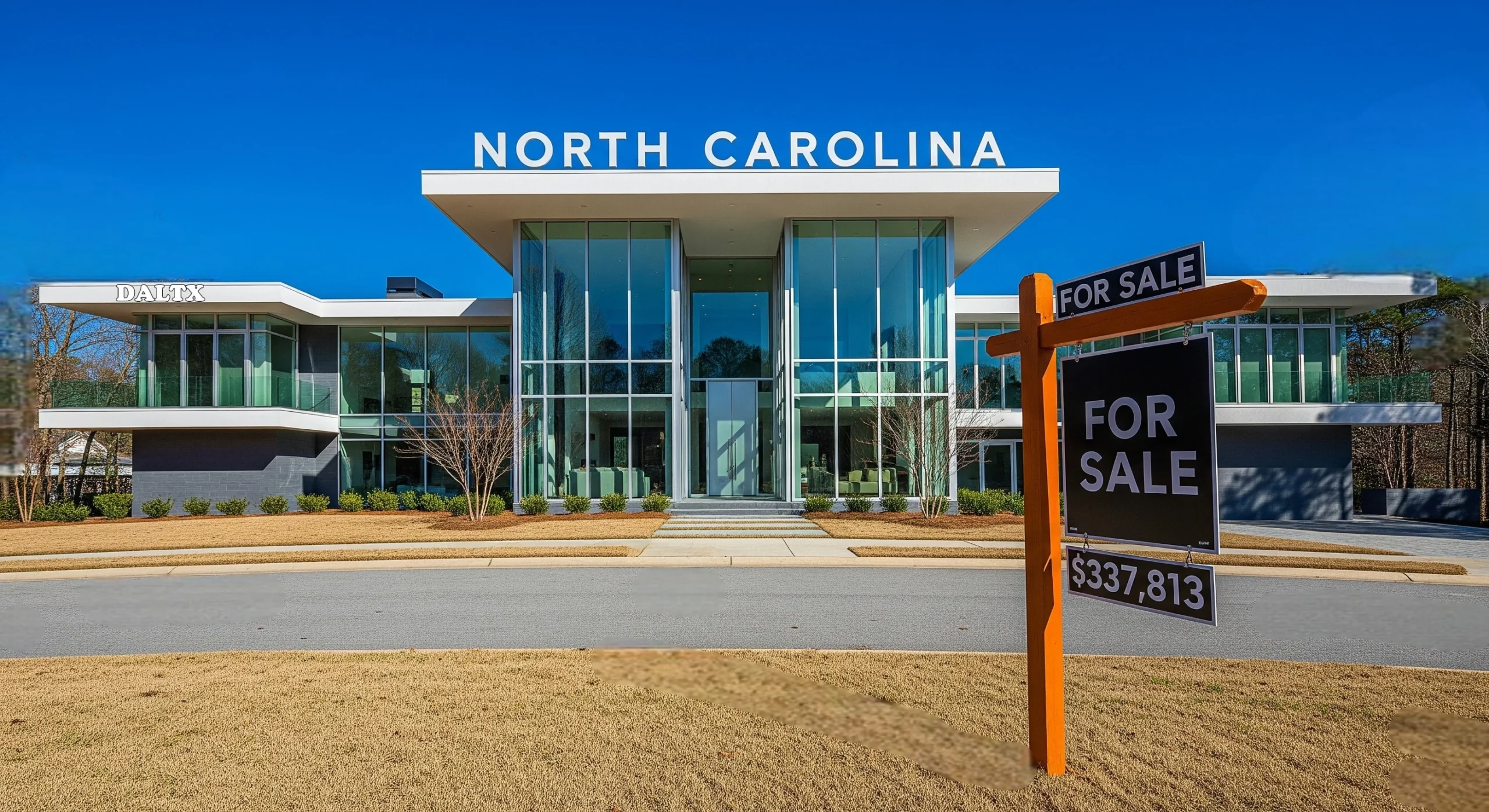
    As of July 2025, the median home price in North Carolina was $337,813, up around 22% from 2021, according to Zillow. That means a 5% down payment on a median-priced home would be approximately $16,890. Programs that reduce upfront costs can make a big difference.

    Home Repair Assistance Programs in North Carolina

    North Carolina offers several home repair and rehabilitation programs for low-income residents. These include the Urgent Repair Program (URP) and the Essential Single-Family Rehabilitation (ESFR) program, which provide forgivable loans for critical home repairs.

    • URP: Offers up to $10,000–$12,000 in assistance for emergency repairs. Applicants must have income at or below 50% of the area median income.
    • ESFR: Provides up to $40,000 for major home rehabilitations. Available to households earning up to 80% of the area median income. Loans are forgivable over 5–20 years.

    Support for Teachers, Veterans, and First Responders

    While North Carolina doesn’t offer a dedicated state-run program exclusively for public servants, eligible homebuyers in these professions can still access benefits through programs like the NC Home Advantage Mortgage. Additionally, national initiatives like Homes for Heroes offer average savings of around $2,400 when using participating real estate professionals.

    NC Home Advantage Mortgage Program

    North Carolina’s Home Advantage Mortgage, offered by the North Carolina Housing Finance Agency (NCHFA), provides fixed-rate loans to qualifying buyers. Borrowers may also receive down payment assistance of up to 3% of the loan amount, structured as a forgivable second mortgage if the buyer remains in the home for 15 years.

    First-time buyers may also apply for a Mortgage Credit Certificate (MCC), which can reduce federal income taxes by up to $2,000 per year. MCC credits are based on 30% of mortgage interest for existing homes and 50% for new construction.

    Eligibility requirements include:

    • Completion of a homebuyer education course for those using down payment assistance.
    • A minimum credit score of 640 (660 for manufactured homes).
    • Income limits up to $140,000 depending on location.

    Takeaway

    For first-time buyers in North Carolina, exploring programs from the North Carolina Housing Finance Agency can significantly reduce the upfront costs of purchasing a home. Whether through down payment assistance, competitive fixed-rate mortgages, or tax credits like the Mortgage Credit Certificate, there are tools designed to make homeownership more accessible.

    To get started, check your credit score and household income against the eligibility requirements, complete a HUD-approved homebuyer education course if required, and compare available options to find the best fit for your financial goals.
  • 5 Smart Electricity Tips for Buying a Home in Dallas

    In deregulated cities like Dallas, electricity is not automatically bundled with your home purchase. Buyers must choose their own provider and that decision can impact long-term costs. Here are five practical tips to simplify the process and avoid common mistakes.

    1. Know How Deregulation Works in Dallas

    Texas has one of the largest deregulated electricity markets in the U.S., and Dallas is part of it. This means new homeowners aren’t automatically assigned a utility provider. Instead, they must choose from dozens of Retail Electric Providers (REPs).

    Plans vary widely by provider, contract length, usage requirements, and fees. Choosing without research can result in costly surprises. According to the U.S. Energy Information Administration, the average residential electricity rate in Texas was 16.00 cents per kilowatt-hour as of 2023, but actual costs depend heavily on the fine print.

    If you’re buying a home with solar or a smart thermostat, check whether your electricity plan includes net metering, if applicable. Not all REPs offer credits for surplus solar energy, and policies vary widely.

    2. Use Transparent Comparison Tools

    Avoid relying on broker-backed comparison sites that prioritize commission-based plans. Instead, use tools that break down actual monthly bill estimates, delivery charges, and usage tiers.

    One example is Gatby, a free electricity marketplace built specifically for Texas. It allows users to compare providers without creating an account and focuses on real costs rather than teaser rates.

    We also recommend checking the Power to Choose website, operated by the Public Utility Commission of Texas, for a neutral view of available plans. While the interface isn’t flashy, it’s an official resource that lets you filter by contract length, pricing type, and customer reviews.

    3. Set Up Utilities Before Move-In

    Schedule service activation at least 48 hours before your move. While same-day setups are sometimes possible, delays are common during peak moving periods.

    To avoid issues, select a service start date one day before your official move-in. This ensures power is on when you arrive and prevents disruptions during unloading or setup.

    Don’t forget to confirm if your new home’s breaker box or smart meter needs resetting after service activation—especially if the home was vacant. Property inspectors often leave systems off, which can cause confusion when utilities are first turned on.

    4. Review Contract Details Carefully

    Many electricity plans offer perks like “free nights and weekends,” but often with trade-offs, such as elevated daytime rates, variable pricing, or long-term commitments.

    Key things to verify:

    • Are there early termination fees?
    • Does the plan include tiered pricing based on usage?
    • Is there a minimum usage penalty that could affect smaller households?
    • If you’re planning to move again soon, look for a month-to-month or short-term plan with no cancellation fee.

    For investment properties or short-term rentals, consider fixed-rate plans that offer price stability across peak seasons. This makes budgeting easier, especially during high-consumption months like July and August, when cooling costs in Dallas can surge.

    5. Automate Plan Renewals to Avoid Price Spikes

    Electricity rates in Texas fluctuate with market demand. When your promotional rate expires, many providers roll customers into higher variable-rate plans.

    Some marketplaces, offer “Autopilot” features that automatically re-shop your contract and notify you before your rate expires. This can help you avoid overpaying and eliminate the hassle of manually tracking contract terms.

    You can also set calendar reminders 45 to 60 days before your plan ends, giving yourself time to evaluate new offers and switch if needed. For multi-property owners, consider creating a spreadsheet to track start dates, renewal deadlines, and REP contact info.

    Final Thoughts

    Dallas homeowners need to make an active choice about their electricity plan. By understanding how deregulation works, using transparent comparison tools, and planning ahead, you can avoid costly surprises and streamline your utility setup. It only takes a few hours to compare plans, but the savings can last for years.

    For more tips on Dallas homeownership, check out this helpful guide to staying safe with electricity.

    Author Bio:

    Cate Burrow is a Growth Associate at Gatby, a Texas-based electricity marketplace helping renters and homeowners compare providers and save on their monthly bills. Originally from Houston and a graduate of the University of Texas, Cate works directly with real estate professionals, property managers, and affiliate partners across the state to improve the electricity setup experience for new movers. At Gatby, she leads initiatives related to social media, affiliate outreach, paid advertising, and enterprise sales.

    Cate’s expertise lies in helping consumers and housing professionals navigate Texas’ deregulated electricity market—ensuring that residents don’t fall into high-cost or unclear plans. She regularly collaborates with real estate professionals through Gatby’s affiliate program, offering them a no-cost way to support their clients while earning additional income for each successful electricity enrollment.

    With a deep understanding of the moving experience, Cate frequently contributes educational content focused on reducing friction for buyers and renters when it comes to utilities. Her mission is to make energy shopping simpler, more transparent, and financially beneficial for all parties involved.

    You can connect with Cate on LinkedIn.

  • 5 Red Flags Homebuyers Should Never Ignore

    Graphic concept of a man with a phone, house, magnifying glass, and key
    Source: freepik.com

    So, you finally found a house you love. It checks all the boxes, from the location to the layout. But slow down! Don’t rush into closing the sale. Your excitement could soon turn into regret once you find out the problems that were not immediately evident during the first visit.

    For many people, the home-buying process is often emotional. It could be love at first sight, as if you were destined to live there. However, logic should not be secondary. Thorough inspection is critical. Most importantly, you must know how to spot red flags before they give you a nightmare. Read on and learn about the signs worth your attention.

    1. Structural Problems

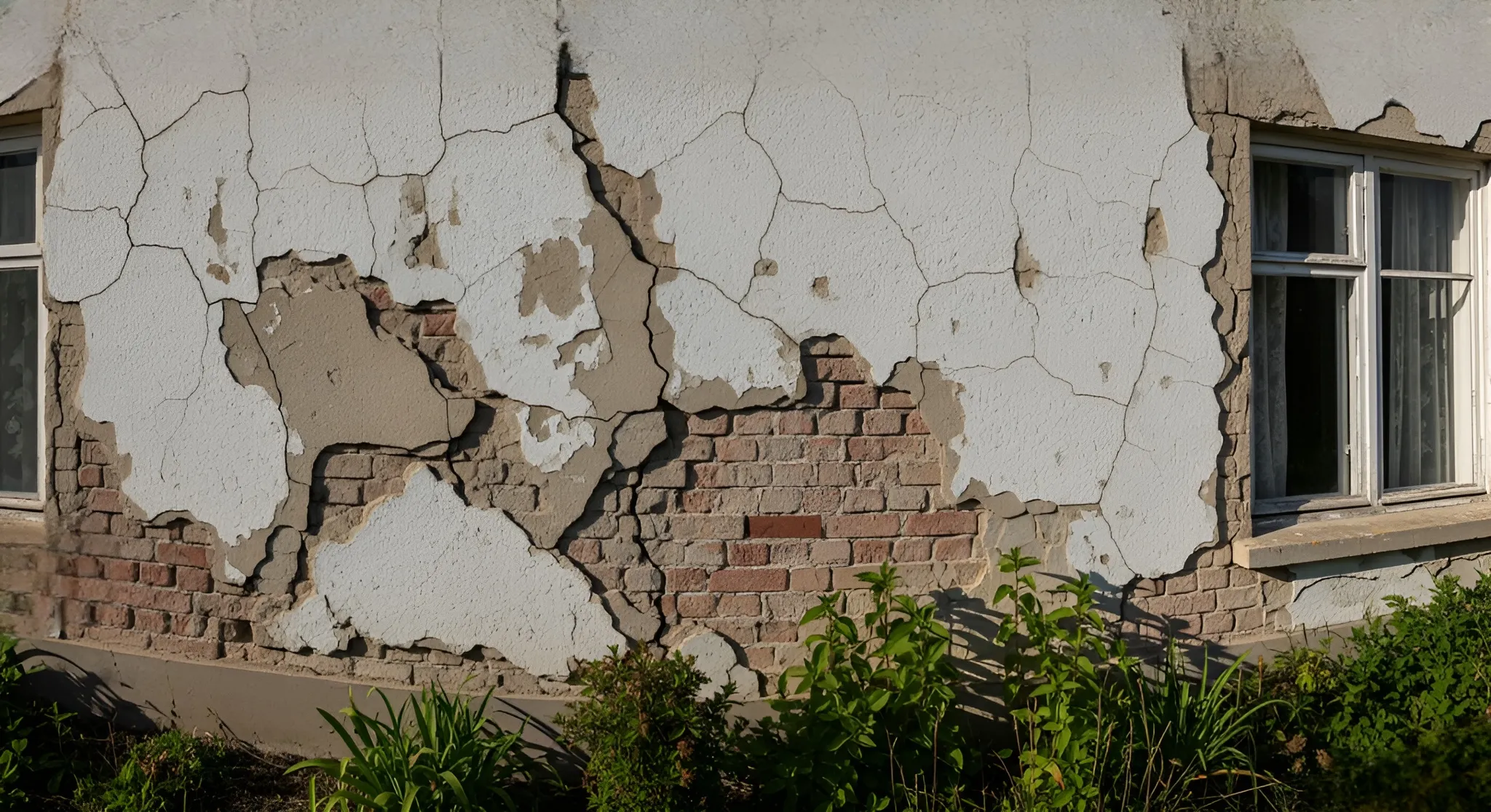
    A strong foundation is the backbone of a durable house. Visible wall cracks are among the most serious. They can be indicative of damage that the previous homeowner failed to address. Worse, if the house is brand new, it could signal poor construction that resulted in structural deterioration even before someone has lived in it. 

    Uneven floors are also clear signs of structural issues. Structural settling, excess water, ground shifting, poor construction, and normal wear are among the most common culprits. It’s worth looking at the materials used and seeing if they’re the ones to be blamed. 

    Don’t ignore the roof. Many people don’t have the time to inspect the roof because of its height, but that should never be the case. A small issue can quickly escalate when triggered by external factors, such as a storm or strong wind. 

    What To Do:

    Hire a licensed engineer for a professional assessment. This way, you can have an accurate picture of the severity of the damage. They can identify if the issues are simple cosmetic problems or if they compromise the overall structural integrity of the house. If repairs are necessary, request proof of permits for previous foundation repairs and demand that the seller fix them before closing the sale.

    2. Lingering Foul Odor

    An unusual smell is one of the most obvious indicators of a looming problem. Mold and mildew growth can be evident, which is reflective of humidity control problems. Molds contain allergens, irritants, and toxic compounds, which can compromise your health. Unaddressed, they also speed up property damage and affect the overall quality of life. 

    The strange smell could also originate from some parts of the house that were poorly constructed. A smell from sewage shows a plumbing problem. It could contain methane, a flammable gas that may leak. There can also be burnt electrical components, which represent fire hazards. 

    What To Do:

    Demand a professional mold inspection before moving in. Insist that the seller follow a certified mold remediation protocol to guarantee safe removal. Request air quality tests for peace of mind. For other areas, trace the root cause of the smell and address the issue. Be transparent with the seller, so you won’t have to suffer. 

    3. Outdated Electrical Systems

    Electrical inspection is non-negotiable before closing the sale. Wires are often hidden from plain sight, making it difficult to assess their quality with just a glimpse. Worse, many people don’t have the technical knowledge to determine what kinds of wiring follow existing regulations. They may look fine from the outside, but they can already be harboring fire hazards inside. 

    These problems are more common in older homes. For example, those built before the 1980s may still be using a knob-and-tube wiring or aluminum system. These wires lack grounding and are prone to degradation, making them dangerous. 

    Watch out for common signs of electrical issues, such as flickering lights, uneven temperature, and warm outlets. It could be because the system is unable to handle the current electrical load or simply because it’s too old. 

    What To Do:

    Checking and fixing electricals is one thing better left in the hands of experts. Hire an electrician to inspect outlets, wires and panels. Request a full rewiring if the system is unsafe. If the seller disagrees, leave. If only minor upgrades are needed, such as replacing a single outlet, you can request a seller credit instead. 

    4. Water Stains on Ceilings and Walls

    Water spots on the ceiling and wall can be an eyesore. They unintentionally draw attention. Even if they have already dried, it doesn’t mean they can be ignored. They can signal water damage, which can worsen the longer they are unaddressed. Here are some culprits to look at: 

    • Roof Damage: A leaking roof is most likely the source of the problem. Rainwater may seep into the house, especially after heavy rains. 
    • Malfunctioning HVAC: An AC drip pan may crack. Air ducts might burst. Drainage issues and incorrect installation are also potential suspects. 
    • Pipe Leaks: A bathroom upstairs may also be the problem. Water and sewers may have been outdated or damaged. 
    • Humidity and Condensation: The inability of built-in home systems to manage temperature fluctuations can cause moist air and water stains. 

    What To Do:

    A quick paint job can be an easy fix. However, this works only if the problem is cosmetic. Otherwise, the stain will reappear soon. Identify the main source of the leak and fix the problem, such as by replacing broken pipes or repairing a damaged roof.

    5. A Neighborhood That’s Too Quiet

    A too-busy community may be excessive for some. You may prefer to live in a quieter area, which is generally perceived as more peaceful. That’s true, but it can also be a problem. If the neighborhood is too quiet, there are a few possibilities to consider: 

    • Lack of buyers interested in living in the area 
    • Poor business activity, which could signal economic decline 
    • Likelihood of crimes because of having few watchful eyes 
    • Absence of essential facilities, such as supermarkets, schools, and restaurants nearby 

    What To Do:

    Invest in thorough research. Ask around from other people living in the area, so you can have a general picture of what life there will look like. Utilize online resources to pull critical data, such as crime rates and economic growth. Read recent news articles to see if developments are being planned. 

    Wrapping Up 

    A relaxing bedroom, chic bathroom, functional living space, lush garden, and strategic location may instantly pull you into a house for sale. On the surface, it looks like a dream, especially if it falls within your budget. Upon deeper inspection, however, a house may reveal red flags that can be indicative of poor quality. From visible stains on the ceiling to musty odor coming from mold, keep an eye out for different factors that may shatter the life you imagined.

  • Knoxville Real Estate Market Insights and Tips for Buyers and Sellers

    In Knoxville Tennessee real estate, understanding market conditions is very important. Buyers should consider data such as the ratio of available homes to prospective buyers and take enough time to make a decision that fits their needs and budget. While negotiating, buyers can offer 10–20% below the asking price and support it with logical reasoning to open negotiation.

    Sellers need proactive strategies like appealing advertisements, use of high-quality photos, and effective property promotions to entice buyers. Sellers must also learn to counter low bids appropriately with realistic counter-offers to help preserve the property’s value. With the proper strategy and according to market trends, the chances of successful property transactions in Knoxville will be much higher.

    What Makes Knoxville an Attractive Real Estate Market?

    Knoxville attracts buyers and investors with its affordable living costs compared to most major U.S. cities. Specifically, housing is often 20-25% less expensive than the national average. Surrounded by beautiful landscapes and offering convenient access to hiking trails and national parks, the city has become a favorite for those who enjoy the outdoors.

    In addition, Knoxville’s friendly environment and full range of amenities encourage many people to settle there. Due to the high demand, the trend of home prices has skyrocketed significantly, with the average listing price increasing by about 83% in the past five years has made Knoxville one of the fastest-growing cities in America.

    Moreover, steady economic growth and increasing job opportunities across industries such as technology and education are driving demand for housing from both consumers and investors.

    With its affordable cost of living, potential for real estate value growth, and high quality of life, Knoxville is an incredibly promising real estate market.

    Tips for Homebuyers in Knoxville

    1. Get Pre-Approved Before You Start Searching

    Make mortgage pre-approval your priority before looking into homes or joining open houses. As a result, it reveals your exact buying power and lets sellers know you are sincerely interested. Getting pre-approved is essential to stay competitive in a market with many buyers.

    2. Explore Different Neighborhoods

    Every neighborhood in Knoxville has its particular features. People who value urban living with easy access to dining and entertainment should look at Downtown Knoxville, but for families after good schools and calm streets, Hardin Valley or West Hills are better choices. Take the time to look at several neighborhoods before deciding where to settle.

    3. Partner with a Local Real Estate Agent

    A local real estate professional can explain market quirks in Knoxville, show you hidden listings or off-market properties, and negotiate on your behalf. Having an agent who understands the market allows you to better manage competitive offers and make informed choices about a home’s value.

    Tips for Sellers in Knoxville

    1. Price It Right from the Start

    Overpricing your home can result in your property not selling, but underpricing it can cost you money in the long run. Consult with your agent to ensure your home’s asking price is accurate, using data from similar home sales.

    2. Boost Curb Appeal and Stage Your Home

    First impressions matter. Enhance your home’s look with simple landscaping improvements, touch up your front door with new paint, and make sure the entryway is clean and inviting. Make sure that clutter is gone inside your home, and think about staging to help buyers see themselves living there. Upgrades as simple as new lighting or a coat of paint might result in a higher return on your investment.

    3. Time Your Sale Strategically

    Even though homes are sold all year long, the spring and early summer months experience the highest demand in Knoxville. If you put your home on the market when demand is strongest, you are more likely to close a deal rapidly and at a higher price. Your agent’s expertise in local trends will help you optimize the timing for selling your house.

    Knoxville Real Estate Market Trends

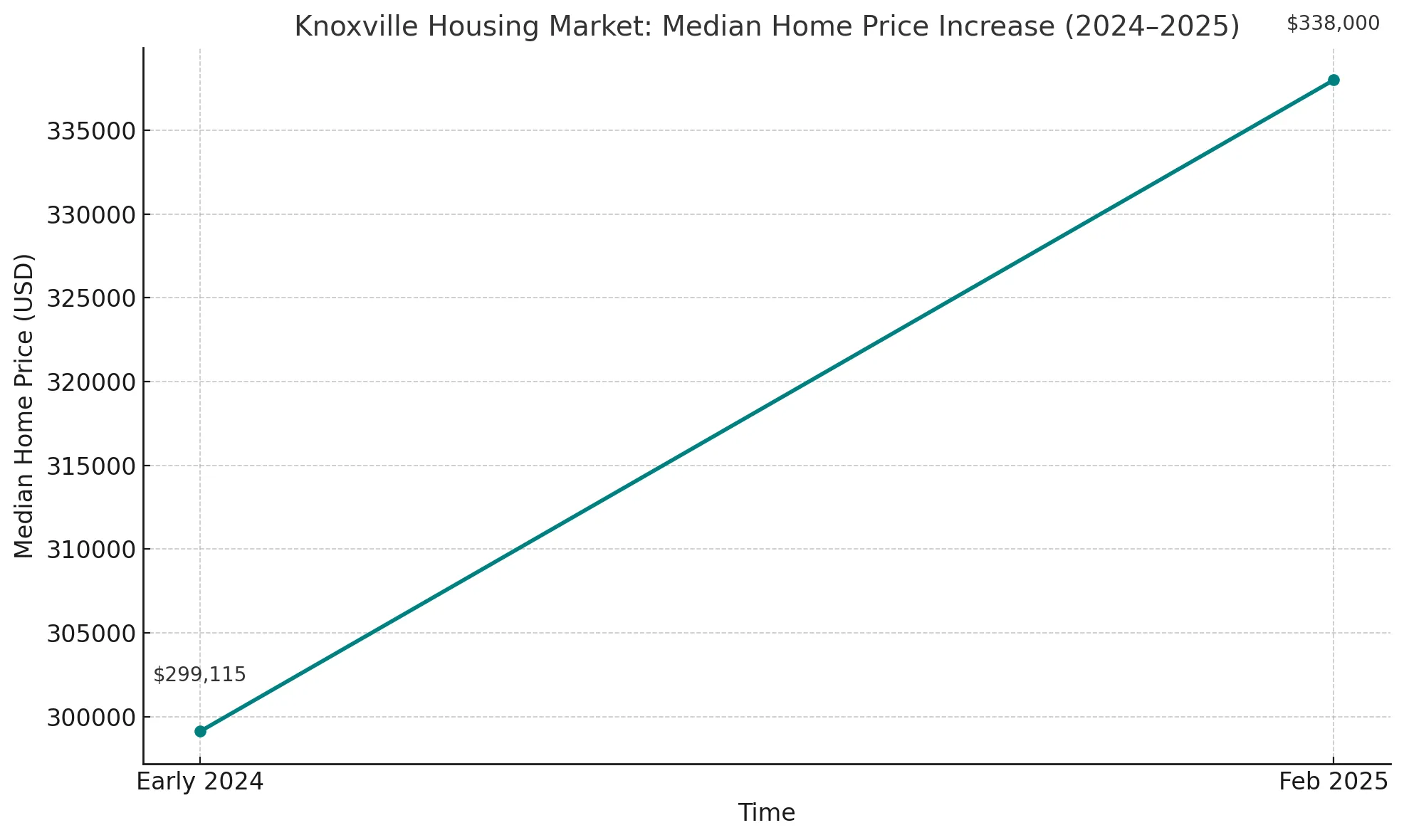
    In 2025, Knoxville’s housing market is seeing a strong surge in prices. Between early 2024 and February 2025, home prices jumped about 13%, bringing the median price up to $338,000. On average, homes spend 69 days on the market. Demand remains high, fueled by low interest rates and the growing popularity of remote work, which is attracting buyers from both inside and outside the city. Healthy job growth and an improved quality of life are also driving up property values. New developments are underway to help ease the shortage.

    Common Mistakes to Correct

    Both sellers and buyers must be wary of the following common pitfalls:

    • Skipping a home inspection: Even in a hot market, always opt for a thorough inspection. It can save you thousands down the road.
    • Being too emotional:  Selling a home you love or buying your dream property can lead to emotional decisions. Try to stay objective and lean on your agent for advice.
    • Overlooking closing costs: Buyers and sellers often forget about closing fees, which can be substantial. Factor these into your budget from the start.

    Working with the Right Professionals

    Having an agent is essential, but your real estate experience involves others, too. Pick professionals for your team who offer the following services:

    • A knowledgeable mortgage broker
    • A trustworthy home inspector
    • An experienced title company or a trusted real estate attorney for your transaction.

    They work together to help protect your interests and guaranteeing an easier transaction process.

    Conclusion

    There are many advantages to investing in Knoxville’s real estate market, but those advantages are realized only through careful and strategic decision-making. If you want a positive experience, whether you are purchasing or selling, researching market trends, selecting the correct advisors, and organizing your efforts are essential.

    You should consider Knoxville a top choice as you explore Tennessee real estate, thanks to its economy, community atmosphere, and growth potential. When you are guided correctly and put in the effort to prepare, you’ll be set up for a successful and rewarding experience in this rapidly developing city.

  • Survey Reveals: TV Shows Have Homebuyers Expecting Open Houses With Popcorn and Plot Twists

    DALLAS, TX — The National Association of REALTORS® (NAR) Research Group just released a new report based on their 2025 survey. It looks at how home staging is affecting real estate deals from both the buyer’s and seller’s point of view. The study also digs into how TV shows are shaping what buyers expect, along with other trends in the home buying process. The findings come from 1,266 REALTORS® who responded out of nearly 50,000 surveyed, giving a response rate of just 2.5% and a margin of error of ±2.75%.

    For years, home staging has been touted as a secret weapon for sellers. Now, hard numbers back up its reputation. According to NAR’s findings, a striking 60% of buyers’ agents said staging affects most buyers’ perceptions of a home “most of the time,” while an additional 26% said it sways buyers, albeit not always. Only a small minority 12% believed staging had no impact at all.

    Staging isn’t just about pretty pillows and fresh flowers,” explained Dr. Jessica Lautz, NAR’s Deputy Chief Economist. “It’s about helping people see themselves living in that space. Our research shows 83% of buyers’ agents agree—it makes it easier for buyers to visualize a property as their future home.”

    Source: nar.realtor

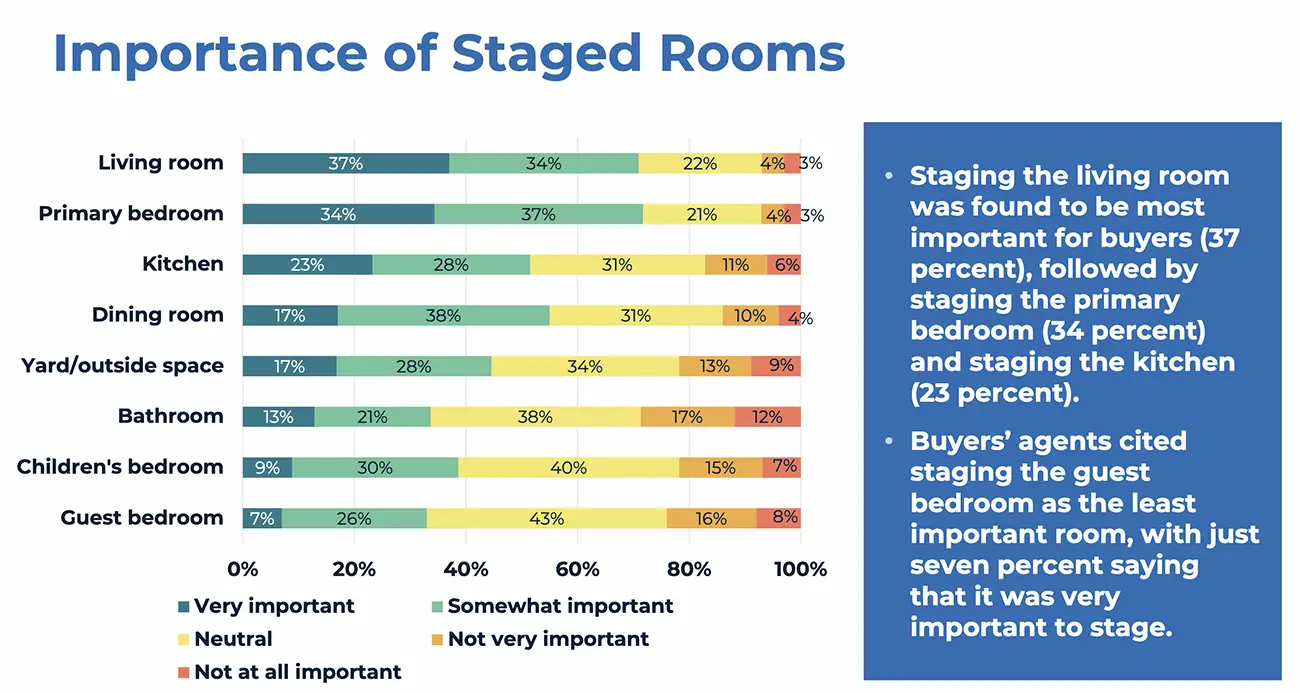
    When it comes to which rooms matter most, the hierarchy is clear. The living room tops the list, with 37% of agents calling it the most important space to stage, followed by the primary bedroom (34%) and the kitchen (23%). Guest bedrooms and children’s rooms, by contrast, barely register.

    The impact is financial too. 17% of buyers’ agents reported that staging nudged offers up by 1–5% compared to similar unstaged homes. While 41% saw no effect on price, the potential upside is enough to keep sellers investing.

    On the seller’s side, the commitment to staging varies. Just 21% of sellers’ agents said they stage every listing, while 10% reserve staging for hard-to-sell homes. A majority—51%—prefer to recommend decluttering or minor repairs rather than full-scale staging. For those who do stage, the median spend is $1,500 with a professional service, but drops to $500 when agents roll up their own sleeves.

    Quality of design and price are the top factors when picking a staging company,” noted Brandi Snowden, NAR’s Director of Member and Consumer Survey Research. “It’s a business decision, not just an aesthetic one.”

    Staging can even help homes sell faster. Thirty percent of sellers’ agents noted a slight decrease in days on market for staged homes, and 19% reported a significant drop. Only a handful (4%) saw staging actually slow down a sale.

    TV Shows and Family: The New Influencers

    But it’s not just fresh paint and throw blankets shaping buyer behavior. The media—especially home-buying TV shows—now wields outsized influence. Nearly half (48%) of agents said their clients expected homes to look “like they were staged on TV,” and 58% reported buyers were disappointed when reality fell short.

    “TV has set a standard that’s often unattainable,” admitted one survey respondent. “Buyers come in with expectations that just don’t match the real world.” In fact, 73% of agents said TV shows had impacted their business by setting unrealistic or heightened expectations.

    Yet, despite the media’s sway, 77% of agents say they aren’t influenced to stage homes exactly as seen on TV. “We have to balance what sells with what’s feasible,” said another agent. “Not every home can—or should—look like a set.”

    Family dynamics also play a growing role. A median of 23% of buyers brought non-purchasing family members to viewings, and 40% consulted family during the process, even if relatives wouldn’t live in the home. “It’s a multigenerational decision for many,” Lautz observed.

    Buyers are also coming to the table with clear ideas—79% know where they want to live, and 76% have an ideal home in mind before starting their search. But the process itself remains daunting: 42% expect it to be difficult, and 38% find it even harder than they imagined.

    Other Noteworthy Findings:

    • 27% of agents report that more buyers are planning to flip homes, and 42% say there’s an increase in those looking to remodel.
    • 61% of buyers don’t have a set number of homes in mind, but for those who do, the median is eight in-person showings and 20 virtual tours.
    • 55% of agents say buyers’ expectations around how many homes they’ll see before buying are aligned with market realities.

    Staging remains a powerful tool—especially for the living room, bedroom, and kitchen—but today’s buyers are also guided by television, family, and a growing desire for customization. For REALTORS®, the challenge is clear: bridge the gap between fantasy and reality, one open house at a time.