Tag: home buying

  • Why Buying a House in 2026 Requires a Wider Lens

    Image Source: unsplash.com

    Buying a home in 2026 is different than it was just a few years ago. While everyone is focused on mortgage rates and cosmetic upgrades, the real financial impact comes from elsewhere. Insurance costs, tax assessments, and local policy changes are now the deciding factors in what you’ll really pay and what that asset is worth five years from now.

    Climate risks impact insurance costs. Tax structures and infrastructure demands affect monthly payments. Local zoning decisions can change entire neighborhoods. A house may look perfect during a showing, but the infrastructure behind it matters just as much.

    Water lines, risk maps, development plans, and policy changes all carry long-term consequences. Smart buyers look beyond surface appeal and ask the hard questions.

    Before you make an offer this year, consider these four practical realities that could determine whether your purchase remains secure and a good long-term investment.

    Climate Risk Is Now a Pricing Factor

    For years, climate risk was an afterthought in real estate decisions. Buyers focused on location, schools, and square footage, while environmental exposure felt distant. That is changing fast as new data impacts home values.

    A recent CNBC report paints a tough picture. By 2055, climate change could cut nearly $1.47 trillion from total U.S. home values. The impact isn’t limited to beachfront properties. About 84 percent of homes nationwide are expected to see at least some decline in value as climate risks become more visible.

    This shift is already underway. Properties in wildfire-prone regions, coastal flood zones, and areas facing extreme heat are seeing insurance premiums rise sharply. In some markets, insurers have pulled out entirely. This forces homeowners into much more expensive coverage options.

    What this means for buyers is that climate exposure is now a financial factor, not just an environmental one. Two similar homes can carry very different long-term costs depending on flood history, fire risk, and storm frequency.

    Don’t even think about making an offer until you’ve checked the flood maps and secured a firm insurance quote. If premiums are sky-high or coverage is limited, consider that a major warning sign. Expensive or unstable coverage can make the home harder to sell down the road.

    Aging Water Infrastructure

    Drinking water infrastructure, particularly aging pipes, is a critical factor in older cities and suburbs. Across the United States, much of the water system was built decades ago and is now approaching or exceeding its intended lifespan. Experts warn that aging pipes, insufficient funding for maintenance, and old lead service lines continue to pose risks to public health.

    Lead contamination remains a real issue in older neighborhoods. Replacing service lines is expensive, and responsibility sometimes falls partly on homeowners. Breaks in aging mains can also cause service interruptions and emergency repairs that impact entire blocks.

    Recent local reporting in Nashville highlighted ongoing efforts by Metro Water Services to identify and replace remaining lead water lines. That example illustrates how cities are grappling with infrastructure built generations ago.

    In areas undergoing upgrades, homeowners may consider options such as water filter installation in Nashville as a better safeguard. Similar protective measures may also be explored in other cities while replacement programs move forward.

    On the other hand, before purchasing, review the city’s annual water quality report and ask about the age of the neighborhood water mains. Confirm whether the property has a lead service line and whether replacement is scheduled. Infrastructure reliability directly affects both health and property value.

    Older Homes vs. New Builds in a Tight Market

    Dallas home with overlays of insurance, tax, climate risk, water infrastructure, and zoning factors affecting 2026 buyers

    New residential construction has not kept pace with buyer demand. As reported by National Mortgage Professional, builders are not launching enough new projects.

    On top of that, ongoing affordability pressures are keeping many potential buyers on the sidelines. As a result, shoppers are increasingly turning toward older homes, not necessarily by preference, but by necessity.

    The data shows that existing homes, particularly those built decades ago, now make up a growing share of transactions. Inventory in the new build segment remains limited. Higher construction costs and elevated mortgage rates have pushed many newly built homes out of reach for a large number of households.

    Older homes often offer established neighborhoods, larger lots, and central locations that newer developments cannot always match. At the same time, they may carry aging systems, outdated wiring, or plumbing that requires significant upgrades.

    The bottom line is that in today’s low-inventory market, age alone should not guide your decision. Careful inspection and realistic budgeting matter more than ever.

    Zoning Changes and Future Development

    Housing shortages are forcing policymakers to reconsider long-standing zoning rules. As reported by HousingWire, Texas offers a clear example of this shift. Like other parts of the Southeast, the state has experienced a major population surge.

    U.S. Census data shows that between 2023 and 2024, Texas recorded the highest absolute population growth in the country. That rapid expansion has intensified pressure on housing supply and affordability.

    In response, lawmakers and local officials are exploring zoning reforms that allow greater density. These changes include permitting duplexes, smaller lot sizes, and alternative housing types in areas once reserved for single-family homes. The idea is to unlock more supply without waiting for large-scale suburban expansion.

    Zoning changes aren’t just paperwork, they hit your wallet. Sure, more density usually drives up property values and brings in better amenities. But it also changes the vibe of a street overnight. Don’t fly blind: pull the city’s master plan and check pending proposals before you commit. You don’t want a four-story complex popping up next door right after you move in.

    FAQs

    What is the biggest challenge in real estate right now?

    The biggest challenge is affordability. Home prices, insurance premiums, property taxes, and borrowing costs have risen faster than incomes in many regions. This gap limits access for first-time buyers and increases financial strain for existing homeowners.

    What does rezoning mean for homeowners?

    Rezoning refers to a shift in how a piece of land is legally classified by local government. Zoning determines what can be built on a property like single-family homes, duplexes, or apartments. When zoning changes, the permitted use of that land changes as well.

    How old is most US water infrastructure?

    Much of the United States drinking water infrastructure was constructed in the late 19th and mid-20th centuries. Many pipes still in operation today are between 50 and 100 years old, and some systems in older cities are even older.

    At the end of the day, buying a home in 2026 demands doing your homework. The decision stretches far beyond layout and location. A home’s long-term value now depends on factors that are easy to overlook but carry real consequences over time.

    Homes do not exist in a bubble. Local regulations, city infrastructure, and regional growth all play a huge role in future property values.

    The strongest purchases are made by those who examine the full context, not just the listing details. Careful research today reduces unpleasant surprises tomorrow. In this market, doing your research isn’t just extra work. It is the foundation of a solid investment.

  • Common Fears First-Time Homebuyers Face in Sydney

    Buying a house is a huge decision that entails a lot of due diligence. In fact, looking at a residential property for sale in Sydney is just a small part of the process of the homebuying process, which is why it’s also not uncommon to experience these common fears if you’re a first-time homebuyer.

    You’re worried you won’t be able to afford a home

    The average price of a house in Australia is at $1.045 million, according to the latest date from the Australian Bureau of Statistics. That number sounds like a lot, and unfortunately, not everyone can afford it, especially in a tough economy. But this is why buying a house is a decision that you don’t make overnight.

    It’s something that you think about, save up for and really do your homework on before you make a move. Buying a house is one of the biggest purchases that you’ll ever make in your life, and that thought could be overwhelming. But if you have the right plan, you can definitely afford your first home over time.

    You’re worried about taking on debt

    The truth is, only a handful of people buy their houses in cash outright. Even the richest people still choose to buy their house with a loan because it gives them time to pay off the price instead of making one huge purchase, which could drain their savings. Now, there’s nothing wrong with taking on a mortgage if you don’t have the means to pay in cash.

    You just need to make sure that you can afford the monthly payments without destroying the rest of your budget. This is also why you should only purchase a property when you’re already financially stable, because you won’t have a hard time sticking to your budget while making payments.

    You’re worried about choosing the wrong home

    Buying a home isn’t easy. You need to consider a lot of things before you can make that final decision, and even then, you might still choose the wrong property. Now if you want to avoid this mistake, it’s very important that you know what you want in a house first. You’ll have a lot of options once you start looking, so you need the right direction to avoid getting sidetracked from what matters most to you. Never rush the homebuying process.

    Take as much time as you need and don’t look for a house when you’re not in the right headspace. Do your research, compare prices, look at different options and work with the pros to ensure that you land on a property that fits your exact needs.

    You feel anxious about commitment

    Buying a property is a long-term commitment. After all, you’re spending a lot of your money on a house that you plan to live in for years to come. As a first-time buyer, it’s normal to feel anxious about commitment, which is why it’s also very important to take your time. Trust your instincts, but don’t second-guess yourself.

    There is no perfect time to buy a house. If you feel like it’s the right time to commit to a property, then by all means go for it.

    You’re afraid you’re paying more than the home is worth

    There are many properties out there that you can buy. Some are affordable, and some are way out of your budget. Now it’s not easy to commit to paying such a huge amount of money, even if you’re buying the cheapest house on the lot.

    You’ve worked hard for your money, after all. But if you’re afraid that you could be paying more than a home is worth, you can take comfort in the fact that each home is carefully appraised and inspected before it goes on the market.

    This is also why it pays to work with professionals like us who have a strong inventory of residential properties that are fairly priced. We don’t sugarcoat things because we know how important buying a house is for clients. So if you’re looking for a property that offers the right value, get in touch with us.

  • What Every Homebuyer Should Know About Working With a Mortgage Broker

    Buying a home is likely the biggest financial decision you will ever make. The excitement of finding your dream property can quickly turn to stress when you realize how complicated the financing process actually is.

    Most buyers spend hours researching neighborhoods, school districts, and property features. Yet many spend surprisingly little time understanding their mortgage options. This oversight can cost thousands of dollars over the life of a loan.

    Working with the right professionals makes all the difference. A skilled mortgage broker can navigate the lending landscape on your behalf, potentially saving you both money and headaches along the way.

    Understanding the Role of a Mortgage Broker

    Mortgage brokers act as intermediaries between you and potential lenders. Unlike bank loan officers who can only offer their institution’s products, brokers have access to multiple lenders and loan programs.

    This access translates into options. Different lenders specialize in different borrower profiles. Some excel with first-time buyers, others with self-employed individuals, and still others with investment property financing.

    A broker’s job is to match your unique situation with the most appropriate lending solution. They evaluate your financial picture, understand your goals, and then shop the market on your behalf.

    The relationship works similarly to how a real estate agent represents you in property transactions. You benefit from their expertise, relationships, and market knowledge without having to develop these yourself.

    Why More Buyers Are Choosing Brokers

    The mortgage industry has grown increasingly complex. New loan products emerge regularly, and qualification requirements vary significantly between lenders.

    Trying to navigate this landscape alone is like exploring a foreign city without a map. You might eventually find your destination, but you will waste time and probably miss better routes along the way.

    When you work with a Go mortgage broker instead of going directly to a single bank, you gain access to wholesale rates that are often unavailable to individual consumers. Brokers leverage their volume relationships to negotiate better terms.

    The time savings alone justify working with a professional. Instead of completing multiple applications and gathering documents repeatedly, you work with one broker who handles distribution to various lenders.

    Communication also tends to get a lot easier. A good broker keeps you informed throughout the process, translating industry jargon into plain language and setting realistic expectations.

    What to Look for in a Mortgage Professional

    Not all brokers offer the same value. Experience matters, but so does specialization and communication style. Finding the right fit requires some homework.

    Start by asking about their lender relationships. A broker with access to dozens of lenders offers more options than one working with just a handful. More options generally mean better chances of finding ideal terms for your situation.

    Image Source: freepik.com

    Inquire about their experience with borrowers like you. First-time buyers have different needs than seasoned investors. Self-employed applicants face unique documentation challenges. You want someone who has successfully navigated situations similar to yours.

    Check reviews and ask for references. Past client experiences reveal how brokers handle challenges, communicate during stressful moments, and deliver on their promises.

    Transparency about fees should be non-negotiable. Reputable brokers explain exactly how they are compensated and disclose any potential conflicts of interest upfront.

    The Importance of Local Market Knowledge

    Real estate markets vary dramatically from one area to another. Property values, buyer competition, and lending conditions all differ based on location.

    Brokers with strong local presence understand these nuances. They know which lenders perform well in specific markets and which ones tend to cause delays or complications.

    This localized expertise extends to relationships with other professionals. You might consider a well-connected Mortgage Broker Hawthorn, for example, would have established connections with local real estate agents, attorneys, and appraisers.

    These relationships smooth the transaction process. When professionals know and trust each other, communication flows better and problems get resolved faster.

    Local brokers also understand regional economic factors that affect lending decisions. Employment trends, development plans, and market cycles all influence how lenders evaluate properties in specific areas.

    Timing Your Mortgage Application

    When you apply for financing matters more than most buyers realize. Interest rates fluctuate daily, and your personal financial situation can change quickly.

    Getting pre-approved before seriously shopping gives you several advantages. You know exactly what you can afford, sellers take your offers more seriously, and you can move quickly when the right property appears.

    Pre-approval also reveals any issues with your credit profile or documentation. Discovering problems early leaves time to address them before they derail a purchase.

    Image Source: freepik.com

    However, pre-approval letters typically expire after 60 to 90 days. If your home search extends longer, you may need to refresh your approval and potentially lock in different terms.

    Work with your broker to develop a timeline that aligns with your search plans. They can advise on rate lock strategies and help you understand market conditions.

    Common Mistakes to Avoid

    Many homebuyers undermine their own mortgage applications without realizing it. Simple mistakes can delay closings or result in less favorable terms.

    Avoid major purchases before closing. That new car or furniture set might seem exciting, but the additional debt affects your qualification ratios. Wait until after closing to make big purchases.

    Do not change jobs during the mortgage process unless absolutely necessary. Lenders want to see stable employment history. Even a lateral move to a similar position can complicate verification.

    Keep cash deposits traceable. Large deposits that cannot be documented raise red flags for underwriters. If someone gives you money for a down payment, work with your broker to handle it properly.

    Stay responsive to document requests. Delays in providing paperwork slow down the entire process. When your broker or lender asks for something, prioritize getting it to them quickly.

    Building Long-Term Relationships

    The best mortgage professionals think beyond single transactions. They want to help you build wealth through strategic real estate decisions over time.

    As your circumstances evolve, your financing needs will change too. Growing families need different homes than young professionals. Investors seek different terms than primary residence buyers.

    A broker who understands your long-term goals can advise on refinancing opportunities, investment property financing, and equity strategies. For instance, For instance, working with a mortgage broker East Tamaki could provide ongoing guidance as your portfolio expands.

    These relationships also pay dividends through referrals. When friends and family need mortgage help, you can confidently point them toward someone you trust.

    Stay in touch with your broker even after closing. Market conditions change, and opportunities to improve your position may arise. A quick annual check-in keeps the relationship going and keeps you informed.

    Questions to Ask Before Committing

    Before selecting a mortgage professional, conduct thorough interviews. The answers reveal both competence and compatibility.

    Ask how they will communicate with you throughout the process. Some buyers prefer frequent updates while others want to hear only about major developments. Make sure styles match.

    Inquire about their typical timeline from application to closing. Experienced brokers can provide realistic estimates based on current market conditions and your specific situation.

    Request a breakdown of all costs involved. Beyond the interest rate, understand origination fees, discount points, and third-party charges. The lowest rate does not always mean the lowest total cost.

    Ask what happens if problems arise. Every transaction hits bumps. How the broker handles challenges reveals their true value.

    Making Your Decision

    Choosing the right mortgage broker sets the tone for your entire home buying experience. Take this decision seriously, but do not let it paralyze you.

    Trust your instincts about communication and professionalism. You will be sharing sensitive financial information and relying on this person during stressful moments. Comfort and confidence matter.

    Compare multiple options before committing. Even a brief conversation with two or three brokers helps you get a feel for what good service looks like.

    Remember that the cheapest option is not always the best value. Expertise, responsiveness, and problem-solving ability often prove more valuable than small fee differences.

    Moving Forward With Confidence

    The mortgage process does not have to be overwhelming. With the right professional guidance, it becomes manageable and even educational.

    Take time to understand your options before jumping in. Knowledge empowers you to ask better questions and recognize good advice when you hear it.

    Your home purchase deserves the same careful attention to financing that you give to choosing the property itself. Both decisions affect your financial future for years to come.

    The right broker makes this journey smoother, more successful, and far less stressful. Start your search today and take the first step toward your new home.

  • Tips for Buying a Luxury Home in Essex County, NJ

    Purchasing high-end real estate is very different from purchasing a standard home. The stakes are higher, systems are more complex, and the expectations are greater. Whether you’re looking for a waterfront villa, a modern smart home, a penthouse with a view, or a spacious private estate, the process requires careful planning. Here is how to find a luxury home that matches your lifestyle and long-term goals.

    Define What ‘Luxury’ Means in Your Market

    Luxury looks different depending on the location. A high-end home in Dallas will offer very different features from one in New Jersey. Before starting your search, understand what “luxury” typically includes in your target market. Common features include:

    • Premium materials like marble, quartz, and hardwood
    • Smart home technology and energy-efficient systems
    • Large square footage or open layouts
    • Resort-style outdoor areas
    • Secure gated entrances
    • Top-tier school districts or exclusive neighborhoods

    Knowing the market helps you spot genuine value instead of paying for features that don’t justify the price.

    Study the Market Before Making Any Decisions

    Luxury real estate operates differently from the general market. Inventory can shift quickly, and certain areas stay competitive year-round. You need to track recent sales, pricing trends, and upcoming developments.

    Since you are targeting New Jersey, working with a real estate agent in Essex County, NJ can give you access to off-market homes, neighborhood insights, and proper pricing guidance.

    The more you know about current demand, the better prepared you’ll be when the right property becomes available.

    Get Your Financials Organized Early

    Luxury homes often come with stricter lending requirements. Even all-cash buyers benefit from organizing documentation early, since high-value transactions tend to involve more verification. Prepare ahead by:

    • Checking your credit health
    • Reviewing recent tax returns
    • Gathering proof of income
    • Getting pre-approved for a jumbo loan, if needed
    • Speaking with lenders who handle high-value properties

    Being financially ready puts you in a stronger negotiating position and speeds up the offer process.

    Focus on Long-Term Value

    Not every expensive property will hold its value. When buying luxury real estate, the lifestyle and long-term potential matter just as much as the home’s features. Ask yourself:

    • Is the area stable and in demand?
    • Are the schools strong, even if you don’t need them?
    • Is the neighborhood improving or declining?
    • Will the home’s style stay appealing over time?
    • Is the location convenient for your lifestyle?

    A luxury home in a strong area is far more likely to appreciate.

    Inspect Craftsmanship Closely

    A luxury home should feel solid, well-built, and thoughtfully finished. Stunning photos can hide rushed workmanship, so take your time during walk-throughs. Pay attention to:

    • Cabinet quality and hardware
    • Flooring transitions
    • Window construction and seals
    • Finish consistency
    • Water pressure and plumbing
    • Insulation and noise control

    If something feels cheaply done, it often signals deeper issues.

    Use an Inspector Experienced With Luxury Homes

    Not every inspector understands how to evaluate high-end features, and luxury homes often include advanced systems that require specialized knowledge. An experienced inspector will know how to assess:

    • Smart home automation
    • High-end kitchen appliances
    • Spa features, steam rooms, or saunas
    • Custom HVAC setups
    • Wine storage
    • Pools, outdoor kitchens, and terraces

    The right inspector can protect you from expensive surprises later.

    You Have to Be Patient

    Luxury home buying isn’t usually a quick process. Inventory is lower, and the perfect property might take time to hit the market. Rushing into a property you’re unsure about often leads to regret. Patience helps you wait for:

    • The right location
    • A layout that truly fits your lifestyle
    • A property with long-term value
    • A price that aligns with the market

    In the luxury tier, patience pays off.

    Think About How You Actually Live

    luxury home should feel effortless, not overwhelming. Focus on the lifestyle you want rather than just size or features. For example:

    • If you entertain often, focus on kitchens and outdoor spaces.
    • If you work from home, prioritize office space and privacy.
    • If you value peace, choose a quieter neighborhood over a busier one.
    • If convenience matters, consider proximity to key amenities.

    Luxury should make your daily life easier, not more complicated.

    Having the Purchase in Mind, But Not Rushing it

    Buying a luxury property is exciting, but it requires preparation, patience, and a clear understanding of what you want. With the right research, professional support, and attention to detail, you can find a home that feels both impressive and practical for your lifestyle.

  • VA One-Time Close Construction Loan in Houston

    With the VA OTC Construction Loan benefit, qualified active-duty and military Veterans can apply for a home mortgage loan to finance the construction of a new home. The VA One-Time Close (OTC) Construction Loan process is designed to simplify and expedite the home construction process for eligible Veterans by combining the financing for the lot, the construction phase, and the permanent mortgage into a single loan and a single closing.

    Here is what you can expect from conversion to permanent loan, when Security America Mortgage is your lender:

    Phase 1: Qualification & Pre-Approval

    The initial steps are to determine the Veteran’s eligibility and ensure the builder and project qualify.

    StepSummarySecurity America Mortgage Focus
    ApplicationFocus on submitting the initial mortgage application.Expediting the pre-qualification process.
    Provide COEThe Veteran’s Certificate of Eligibility (COE) shows their VA home loan entitlement.Determine the Veteran’s entitlement to VA benefits.
    Borrower QualificationReview of the borrower’s financial situation, including income, credit score (typically 620+ FICO), and DTI ratio, to determine the maximum loan amount.Utilizing automatic underwriting to expedite the pre-qualification process.
    Builder AcceptanceThe builder must meet VA standards and be approved by the lender.Approving the builder based on the lender’s experience and financial stability requirements, using clear checklists and guidelines.
    Contract & BudgetBorrower and builder establish a contract including the project budget plan (cost for lot purchase and/or cost to build the home).Reviewing and approving all signed contracts and plans.

    Phase 2: The Single Closing

    This is the important point of the “One-Time Close.”

    ProcessDescriptionSecurity America Mortgage Focus
    Appraisal & ValuationYour home’s value is appraised by a VA-approved professional based on the finished value (after construction). The VA issues a Notice of Value (NOV).There is no cost to apply.
    Loan UnderwritingThe lender reviews all documents (COE, contract, plans, title, borrower financials) and issues the final loan commitment.Locking-in the construction loan permanent terms (rate, term, payment) prior to construction start.
    ClosingThe borrower executes a single set of closing documentation for both the construction and permanent loans. The VA funding fee is charged at closing.Originating the loan and ensuring construction draws are disbursed from escrow.

    Phase 3: Construction and Permanent Loan Terms

    Following closing, the home is built, and the loan automatically converts from a construction loan to a permanent mortgage.

    StepDescriptionSecurity America Mortgage Focus
    Loan DrawsLoan proceeds are disbursed to the builder in scheduled draws as construction advances (e.g., foundation, roof on), paid through an escrow account.Accessing and monitoring the builder’s progress at each point of completion before any funds are released.
    Construction Period PaymentsThe borrower is not required to make principal & in many cases interest payments on the construction loan during this time period (though they may choose to).Managing the escrow and draw process to facilitate timely withdrawals and allocations.
    Final Completion & ConversionOnce construction is complete, a final inspection confirms all work complies with VA standards and the approved plans. There is no second closing.Ensuring a smooth transition to the permanent mortgage terms without modification to the final loan amount based on the Loan-to-Value (LTV).

    The Advantages of Security America Mortgage Program:

    • One-Time Close: Pay once– saving you money and the headaches of a second closing.
    • Rate Lock: The long-term rate is locked in at the initial closing, so you’ll know what your permanent payment will be.
    • Rate Change Option: Security America Mortgage can offer a velocity change rate if market conditions improve during the construction period, potentially allowing you to secure a lower interest rate without refinancing (this is subject to current lending guidelines).

    Why Veterans Like This Program

    • Streamlining: One loan, one closing, one transaction.
    • VA Benefit Eligible: Access to Veteran-friendly terms and cost savings associated with the VA benefit.
    • Predictability: The final price tag is established upfront with a pre-approved builder and a fixed-price contract (subject to builder contract terms).
    • Personalized Service: As a Veteran, you receive custom underwriting and dedicated service from an experienced lender like Security America Mortgage.

    Next Steps

    If you’re a Veteran that wants to build the house of your dreams:

    • Contact Security America Mortgage to verify you qualify and select a builder.
    • Choose a VA-Approved Builder and finalize your Plans, Budget, & Contract.
    • Submit your COE, plans, and builder for approval as required by lender.
    • Close once, and proceed with construction knowing the permanent financing is ready.

    Ready to take the next step?

    Call 1855GoVANow and their team can introduce you to a trusted loan officer at Security America Mortgage who specializes in VA One-Time Close Construction Loans.

    Let’s build your home and secure your future.

  • The Value of Experience: Why Seasoned Edmonton Real Estate Agents Make Smarter Negotiators

    Image Source: freepik.com

    Buying or selling a property in Edmonton, Alberta, Canada often represents one of the largest financial decisions people make. In a market influenced by fluctuating interest rates, shifting inventory levels, and changing buyer behaviour, negotiation is the skill that separates an average real estate transaction from an exceptional one. Seasoned agents bring years of field experience, market intelligence, and negotiation strategies that directly impact their clients’ success.

    In markets like Edmonton, Alberta, and across Canada, clients who work with experienced real estate professionals often achieve better selling prices, smoother transactions, and stronger contractual terms. This article explores why experience in real estate translates to sharper negotiation skills and how homebuyers and sellers can benefit from it.

    Understanding Negotiation in Real Estate

    Image Source: freepik.com

    Negotiation in real estate goes beyond price haggling. It includes managing timelines, conditions, inspection outcomes, and legal terms that protect client interests. The best agents understand that a negotiation is both a financial and psychological process.

    In North America, the National Association of Realtors (NAR) reports that roughly 86% of buyers use a real estate agent during their purchase. In Canada, the Canadian Real Estate Association (CREA) notes a similar trend. This shows how critical professional negotiation has become, especially when multiple offers, fast sales cycles, and limited inventory dominate major cities such as Edmonton, Toronto, and Vancouver.

    The negotiation process requires data interpretation, communication finesse, and tactical empathy, the ability to understand the other party’s motivations while maintaining a firm stance on client priorities.

    The Role of Market Insight and Experience

    Market insight is not something learned overnight. It comes from years of observing patterns in housing data, mortgage rate shifts, and community trends. An experienced real estate agent understands how to read market indicators and interpret what they mean for negotiation timing.

    For example, in a seller’s market, an experienced agent knows that setting a competitive price and creating urgency can trigger multiple offers, often pushing the price above asking. Conversely, in a buyer’s market, they use knowledge of local price adjustments to negotiate favourable terms such as closing cost credits or home repair allowances.

    In the U.S., agents in competitive states like California or Texas often rely on years of comparative analysis to guide their clients toward realistic offers.

    In Alberta, especially in Edmonton, experienced agents understand how local factors, such as new construction in south Edmonton or demand for established neighbourhoods—shape pricing, competition, and negotiation strategy.

    Experience helps agents balance logic and emotion, a skill that is critical when buyers fall in love with a property or when sellers’ sentimental attachment leads them to overvalue their home.

    Strategic Communication: The Core of Smarter Negotiation

    The ability to communicate persuasively and respectfully defines a skilled negotiator. Experienced agents know how to read tone, body language, and verbal cues to identify what motivates the other party.

    They use strategic questioning to uncover priorities—for example, a seller may want a quick closing, while a buyer may value a longer inspection period. With that information, seasoned agents structure offers that appeal to both sides while protecting their client’s position.

    Communication also extends to how information is presented. A professional agent organizes data-driven facts, comparable sales, and financial justifications into clear proposals. This reduces emotional friction and supports logical agreement.

    In cross-border real estate, such as transactions involving Canadians buying U.S. vacation homes or Americans relocating to Canadian cities, skilled communication becomes essential for managing differing regulations, financing options, and cultural nuances in business negotiation.

    Risk Management and Problem Solving

    Experience teaches agents how to anticipate and manage risks. Unexpected issues such as inspection findings, financing delays, or title discrepancies can disrupt deals. A newer agent may react defensively or rely heavily on others for guidance, while a seasoned one anticipates these problems early.

    For instance, when a home inspection uncovers major repair needs, experienced negotiators know how to reframe the issue. They can present repair estimates, leverage market data, and request fair concessions without losing goodwill.

    In both U.S. and Canadian transactions, documentation and disclosure laws vary by state and province. Agents familiar with these legal frameworks protect their clients from noncompliance penalties or overlooked contract clauses.

    Moreover, negotiation does not stop at the accepted offer. Skilled professionals maintain oversight until closing, ensuring lenders, lawyers, and inspectors stay aligned on deadlines. This prevents deal collapses, a common issue among less experienced agents.

    The Psychological Edge of Experience

    Negotiation is as much psychological as it is financial. Experienced agents understand human behaviour, knowing when to apply pressure, when to pause, and when to concede to secure long-term gain.

    They build trust with the opposing party, which can influence decision-making. Research from Harvard’s Program on Negotiation suggests that trust between negotiators increases the likelihood of reaching mutually beneficial agreements. Seasoned real estate professionals use this to their advantage by fostering respect and reliability from the first conversation.

    Their confidence also helps clients feel calm and informed. In stressful negotiations, emotions often lead to poor decisions, overbidding, overpricing, or walking away prematurely. A veteran agent provides steady guidance, ensuring decisions are rational and data-backed.

    Real-World Examples of Experienced Negotiation

    1. Multiple Offer Situations: In Toronto or Austin, where competition is fierce, an experienced agent might recommend pre-inspections or flexible closing dates to strengthen offers without raising the price excessively.
    2. Investment Property Purchases: In markets such as Alberta or Vancouver, seasoned agents use financial projections and rental yield analysis to negotiate fair purchase prices aligned with investment goals.
    3. Cross-Border Transactions: Agents familiar with U.S.-Canada property transfers anticipate currency fluctuations, tax implications, and residency rules, using that insight to negotiate appropriate contract terms.
    4. Family Home Purchases in Edmonton: In Edmonton, Alberta, where some neighbourhoods see strong demand and quick sales, seasoned agents help buyers structure competitive offers using strategies such as flexible possession dates or cleaner conditions. All without pushing the price far beyond market value.

    These examples show that negotiation success is not random; it’s strategic and shaped by cumulative learning.

    How Clients Can Evaluate an Agent’s Experience

    1. Ask for Track Record: Review transaction history, types of properties handled, and local area familiarity.
    2. Request Negotiation Examples: Skilled agents can share anonymized stories demonstrating how they improved outcomes for clients.
    3. Verify Credentials: Look for NAR membership in the U.S. or CREA and provincial real estate council registrations in Canada.
    4. Evaluate Communication Style: Professional tone, responsiveness, and clear explanations often reflect negotiation competency.
    Image Source: freepik.com

    Choosing an agent with a proven negotiation background can mean thousands of dollars in price advantage or reduced transaction stress.

    Experience in real estate is not just a measure of time but of accumulated strategy, knowledge, and adaptability. A seasoned agent negotiates from a position of understanding market cycles, client psychology, and transactional risks.

    In both the United States and Canada, where housing markets continue to evolve rapidly, working with an experienced professional can mean the difference between an average deal and an exceptional one. For buyers and sellers in Edmonton, Alberta, Canada, choosing a seasoned local real estate agent ensures that every negotiation reflects both up-to-date market data and deep neighbourhood knowledge.

    Clients who value expertise, preparation, and precision will always find that the right negotiator brings not just confidence but measurable financial results.

  • 5 Mistakes to Avoid When Buying Your First Luxury Home

    Photo by Mike Bird on pexels.com

    Purchasing a luxury home is more than just a financial investment; it is the realization of a personal aspiration. However, first-time luxury buyers often make mistakes that could have been avoided with prior planning. Overlooking critical details, such as ongoing maintenance costs and lifestyle compatibility, can lead to surprising pitfalls and significant financial losses. This article outlines five mistakes to avoid when buying your first luxury property.

    1. Ignoring Adequate Market Research

    Many first-time buyers assume that a high price tag automatically guarantees a wise investment. However, the luxury market is very nuanced and highly specific to each geographical area. Effective research must include comparable property values (comps) and neighborhood dynamics. Without this, buyers risk overpaying or finding that the asset does not appreciate as expected.

    When doing research, also consider your hobbies and interests. For instance, La Quinta Country Club is a perfect fit for golfers. A community that reflects your personality ensures long-term satisfaction.

    2. Overlooking Hidden Costs

    Beyond the purchase price, ongoing costs can catch unprepared buyers off guard. HOA dues, property taxes, specialized insurance, and other pool-related expenditures add up rapidly to tens of thousands of dollars annually. Security systems and landscaping also contribute to these expenditures.

    Homeowners may often underestimate interior remodeling and finishes. A minimal look, detailed high-quality finishes, custom cabinetry, or smart home systems can easily add up to total costs in the hundreds of thousands. A financial planner and local experts who will provide a more realistic picture of what the total costs of ownership could be are always worth consulting.

    3. Focusing Solely on Aesthetics

    Behind a glamorous facade, there may be issues like outdated or faulty wiring, leaky plumbing, or foundation problems. First-time buyers should thoroughly research the property and schedule professional inspections before closing.

    What locks ideal in the picture representation may not fit into such family dynamics or meet community needs. Evaluating a property for support of long-term living allows you to make sure it will be both comfortable and satisfactory beyond what’s seen in its looks.

    4. Ignore Resale Value

    Even if you plan to stay in your luxury home for many years, resale value should still be part of your decision. Highly personalized features or very unusual design choices can shrink the pool of future buyers and hurt your eventual sale price. Look for flexible layouts and timeless finishes that will appeal to a wide range of buyers.

    Location is also a critical factor. This is especially true when it comes to established and acknowledged learning institutions, business centers, and recreational amenities, which increase desirability as well as the resale value.

    5. Skipping Expert Counsel

    Experienced real estate agents, attorneys, and financial advisors who specialize in the luxury market can help you navigate negotiations and uncover potential risks. They make sure all legal and financial requirements are handled correctly, which can save you money and stress.

    An expert’s knowledge specifically on the target areas concerned is valuable, since they can inform homebuyers on various significant aspects. This ranges from pricing plans to lifestyle factors that common real estate agents frequently overlook to local trends.

    Endnote

    Buying your first luxury property is absolutely a major milestone, but avoiding common mistakes is key to making it a smart long‑term investment. Doing thorough research, understanding all of the hidden costs, and working closely with trusted specialists are essential steps. With enough time and preparation, you can find a luxury home you’ll truly love for many years to come.

  • 4 Tips for Renting the Ideal Vacation Home in Corolla, NC

    If you’re planning a long family vacation, you don’t need to go abroad to get that much-needed reset. Look for local destinations that offer amenities and features on par with any high-end resort. You can easily find a vacation home right here in Corolla, NC. that still feels like you’ve traveled miles away.

    All it takes is a bit of planning. You don’t want to risk signing a lease for a beachfront home that doesn’t live up to your expectations. A little preparation and knowledge will help reduce stress and save money, so keep reading to learn more about renting the ideal vacation home.

    1. Start Planning Early

    Just like planning a trip abroad, spending your vacation at a rental home nearby still takes some prep. Give yourself at least six months to explore different destinations and figure out what matters most to you. If you’re planning to browse rental homes in Corolla, NC, choose the season that’ll get you the best deal. By starting your search early, you can look up possible listings at affordable rates before prices jump.

    Save time by hitting up friends or family in the area, they’ll give you the real scoop on what it’s like. They might even know someone renting out a place that fits what you’re after. You can also reach out to local agents or property managers who handle vacation homes in your price range with the features you want. However you go about it, use that prep time to check out your options and make sure the place feels right before you book.

    2. Check Out the Property and the Area

    Don’t trust everything you see in online listings, photos can make any place look better than it really is. A comparatively lower rental rate could reel you in, but there are always trade-offs for really low prices. You’ll need to go below the surface and find out if the vacation home matches your family’s needs and justifies its listing rate.

    If the spot’s less than a couple hours from home, request a tour with the owner or listing agent handling the property. As you do so, make sure to focus on the interior and take note of the home’s highlights. You might also want to set aside time to scan the area for other vacation rentals you may have overlooked or that weren’t listed online. Take advantage of this extra time to assess the surrounding neighborhood, especially in terms of safety, security, things to do, and what’s nearby.

    3. Read the Terms Before Signing

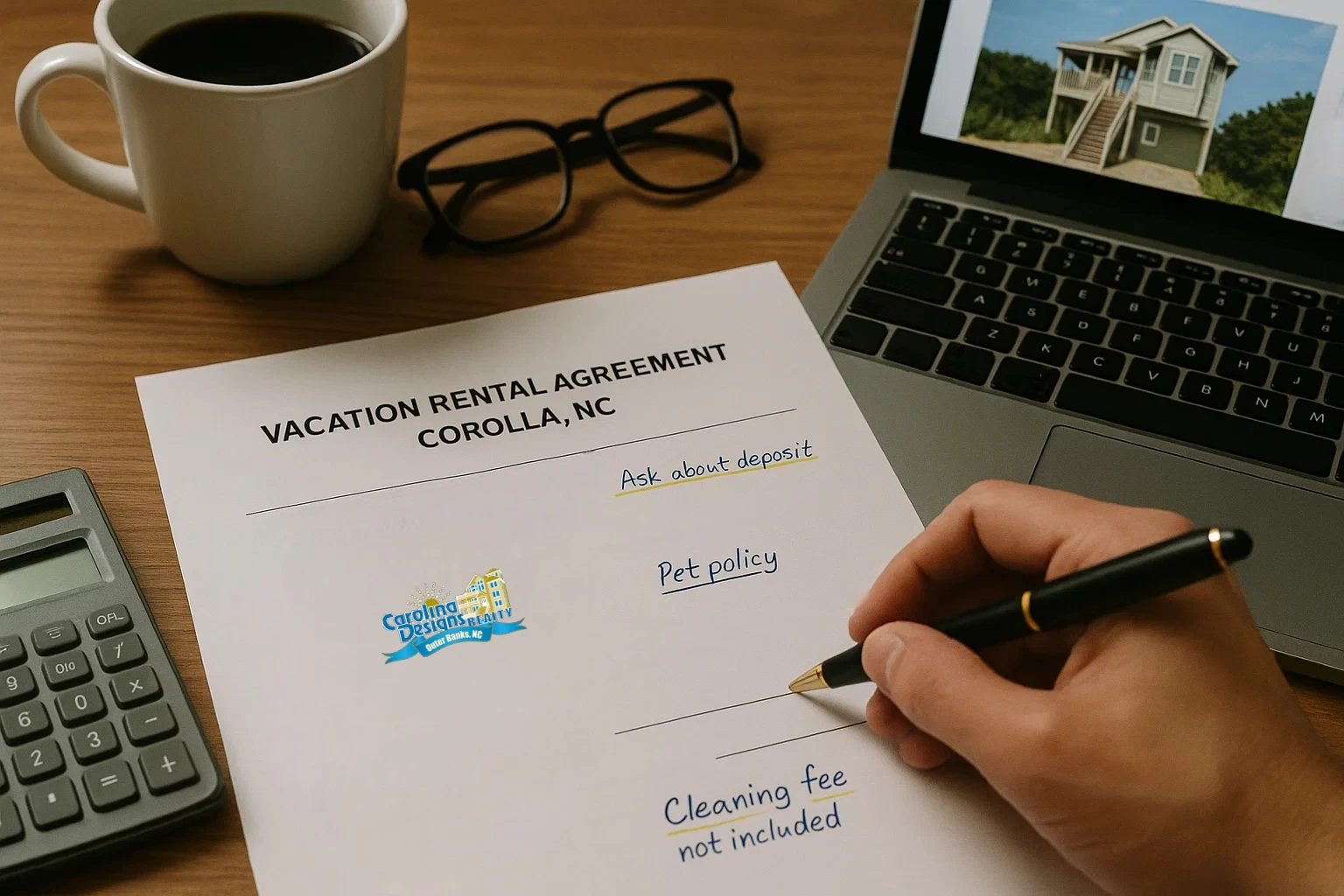
    Even if everything looks good, take a little time to go over the rental agreement carefully and check for details that warrant a second look. You should know that the rate you saw on the listing doesn’t include other fees. You may have to pay separate charges for cleaning and the use of amenities such as a jacuzzi. Some vacation rentals might charge extra if you’re bringing a pet.

    Before you sign anything, make sure you understand every term and ask about anything that seems unclear or flexible if there are details that could be negotiated. Some owners might offer a better rate, especially if you’re renting within weeks during the off-season. If the conversation goes well, you might even get them to lower the deposit and waive other charges.

    4. Inspect the Place Before You Settle In

    Don’t assume the rental’s move-in ready. There could be issues you may have overlooked during your initial tour, and you will need to let the owner know about them. You don’t know for certain if the property is in the same condition as when you first visited, so it’s important to thoroughly check the home from the inside and out before settling down.

    If you don’t let the owner know right away, the issue might end up being your responsibility. When you arrive at the vacation home, check for cracks, leaks, and other issues that must be patched up. Snap a few photos and send them over to the owner. That way, you’ll have evidence that you didn’t cause these damages in case the owner disputes it.

    Endnote

    Renting a vacation home can be a great alternative to going on an expensive overseas vacation. You just have to keep the tips above in mind so you’ll get the full getaway experience without even leaving the country..

  • Real Estate: Definition, Types, How It Works, Investment, and Key Terms

    Real estate touches almost every part of our lives, from where we sleep, to how local schools get funded, to where businesses decide to grow. If you’re thinking about buying a home, adding a rental to your portfolio, or just trying to make sense of all the jargon, this guide breaks down the basics in plain English.

    We’ll walk through what real estate really is, the main types of properties, how a deal actually goes from offer to closing, some popular ways to invest (both hands-on and hands-off), and a quick glossary of terms you’ll run into again and again.

    What Is “Real Estate,” Exactly?

    Real estate refers to land and anything permanently attached to it including homes, buildings, improvements, and the rights that come with ownership.

    In everyday use, you’ll hear “real estate” and “real property” used interchangeably. (That’s different from personal property, like your car or furniture, which isn’t affixed to land.)

    Ownership typically includes a “bundle of rights,” such as the right to use, lease, sell, or improve the property within the limits of law and zoning. Those rights have value; how much value depends on location, local demand, condition, allowed uses, and broader economic forces like interest rates.

    Etymology & First Use:

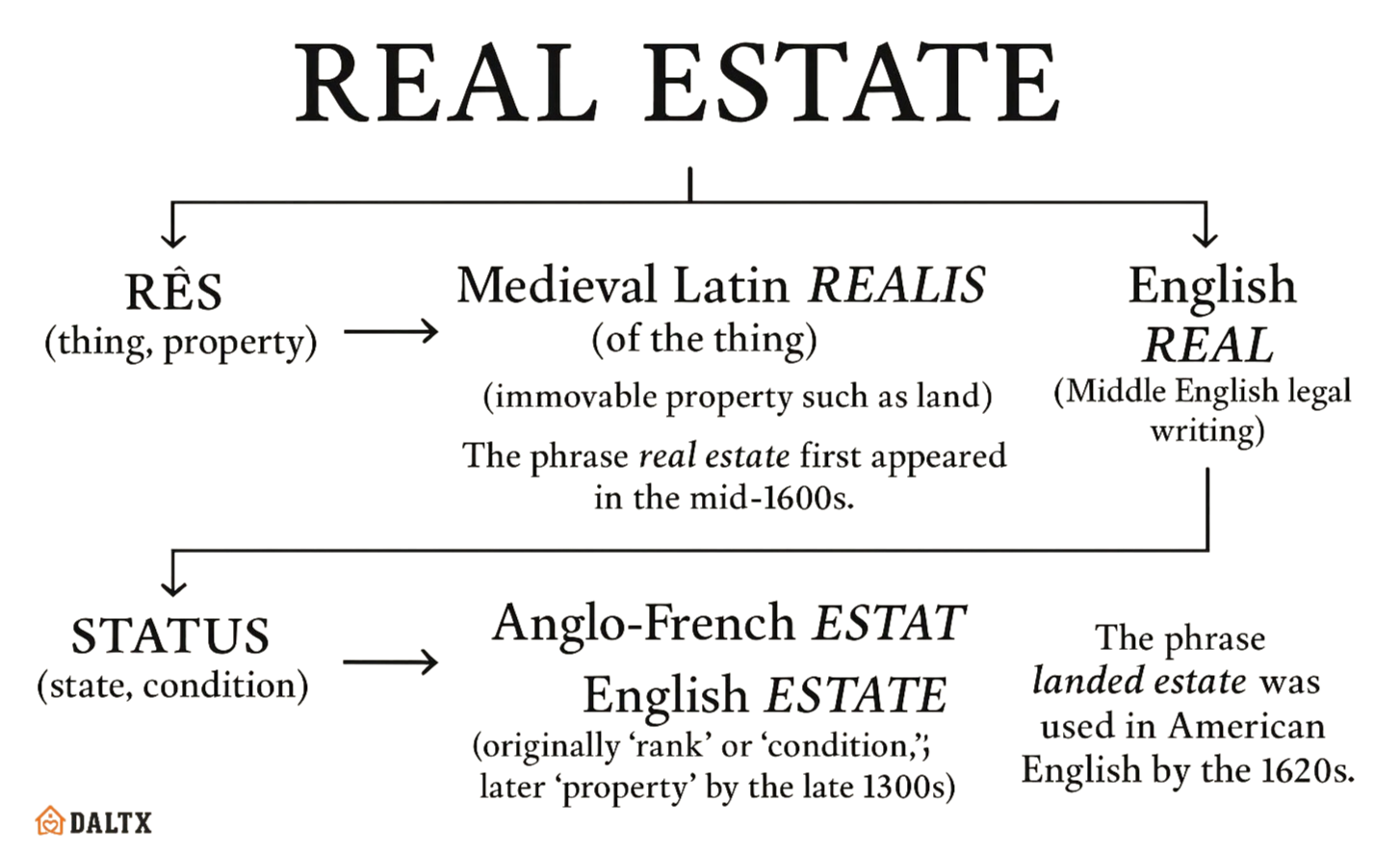
    • Real” comes from the Medieval Latin realis (“of the thing”), which itself comes from the Latin rēs (“thing” or “property”). In English legal writing dating back to Middle English, real referred to “things” in the legal sense, especially immovable property like land, as opposed to personal (movable) goods. The exact phrase real estate first appeared around the mid-1600s.1
    • Estate” comes from the Anglo-French estat, which comes from the Latin status meaning “state” or “condition.” In English, it originally meant “rank” or “condition,” and by the late 1300s, it also came to mean “property.” The phrase “landed estate” was already used in American English by the 1620s.2

    The earliest recorded use of “real estate” dates back to the mid-1600s. Merriam-Webster lists its first known use around 1642, while the Online Etymology Dictionary traces it to the 1660s. Either way, the term clearly entered English in the 1600s and has kept its legal tone ever since.3

    The Main Types of Real Estate

    Understanding the different categories helps you compare apples to apples when buying, investing, or analyzing the market.

    • Residential: Includes single-family homes, townhomes, condos, duplexes, triplexes, fourplexes, and manufactured homes.
    • Commercial: Covers offices, retail spaces, hotels, and other properties that mainly generate business income.
    • Industrial: Includes warehouses, distribution centers, manufacturing facilities, and flex spaces.
    • Land: Refers to raw land, infill lots, farmland, and parcels set aside for future development.
    • Special purpose & mixed‑use: Properties like self-storage facilities, medical and educational buildings, or developments that combine residential, retail, and office spaces.

    How Real Estate Really Works

    To understand real estate, it helps to start with what actually drives value in the market.

    What Actually Drives Property Value

    Three big levers influence property values:

    1. Location & land use: Zoning, school districts, commute times, and neighborhood amenities.
    2. Supply and demand: How many homes are for sale or lease versus the number of qualified buyers or tenants.
    3. Money & macroeconomics: Mortgage rates, employment, local growth, insurance costs, and property taxes.

    Who’s Involved When You Buy a Home

    • You and the seller
    • Real estate agents/brokers representing each side
    • A lender (if you’re financing) and an appraiser
    • A home inspector and sometimes specialists (e.g., roof, sewer)
    • A title/escrow company or real estate attorney (varies by countries and state)

    The Step-by-Step Purchase Timeline

    1. Budget and preapproval
      Get preapproved to understand how much home you can afford and to make your offer stronger.
    2. Home search & pricing
      Your agent will use comparable sales (comps) and a Comparative Market Analysis (CMA) to help you decide on a fair offer price.
    3. Offer, earnest money & contingencies
      Your written offer usually includes an earnest money deposit (typically around 1–3% of the purchase price) and contingencies for financing, appraisal, and inspection. The home inspection contingency gives you time to inspect the property and renegotiate or cancel if serious issues surface. This window is usually 7–10 days, as agreed in the contract.
    4. Appraisal & underwriting
      The lender orders an appraisal to confirm the property’s value. Meanwhile, underwriters review your income, assets, debts, and details about the property before final approval.
    5. Title search & escrow (two meanings)
      • Escrow in the transaction: A neutral third party holds funds and documents and coordinates closing once the title is cleared.
      • Escrow account for taxes/insurance: After you buy the home, many lenders collect part of your annual property taxes and homeowners insurance with each mortgage payment, then pay those bills for you. Some borrowers who qualify can request an escrow waiver and handle those lump-sum payments themselves, though eligibility, fees, and rules vary by lender, loan type, state law, and borrower profile.
    6. Closing
      You’ll sign the final documents, pay your closing costs and down payment, and get the keys once the transaction is officially recorded.

    Paying for Your Home and the Help That May Be Available

    • Conventional, FHA, VA, USDA and other mortgages are common choices. Some lenders and programs allow down payment assistance (DPA) through grants or second‑mortgage options (forgivable, deferred, or low‑interest), or matched‑savings programs, to help cover your down payment and/or closing costs. Many programs look for a minimum credit score (often ~620), income limits, and completion of a home buyer education course; specifics differ by state and program.
    • After you build equity, some owners tap a home equity line of credit (HELOC) for renovations or debt consolidation. Many HELOCs offer a draw period followed by a repayment period, and some lenders provide options to fix the rate on a portion of what you draw, useful when rates are rising. Remember: your home is collateral, so borrow carefully.

    Real Estate as an Investment

    Real estate can provide cash flow, appreciation, and potential tax benefits, but it also comes with market, maintenance, and regulatory risks.

    Here are common ways Americans invest, from hands‑on to fully passive.

    Hands-On Ways to Invest

    • Buy‑and‑hold rentals (single‑family or small multifamily)
      You purchase a property and rent it to long‑term tenants. Key metrics:
      • Net Operating Income (NOI) = rent & other income − operating expenses (excluding mortgage).
      • Cap rate = NOI ÷ purchase price.
      • Cash‑on‑cash return = annual pre‑tax cash flow ÷ total cash invested.
        Quick example: If rent is $2,200/month, annual gross rent is $26,400. After a 5% vacancy allowance ($1,320) and $8,000 in annual expenses, NOI is $17,080. On a $280,000 purchase, the cap rate is about 6.1%.
        If you buy a property with tenants in place, you’ll step into landlord duties immediately and must honor existing leases and local landlord‑tenant laws; rent control or “just cause” rules in some areas may limit rent increases or eviction without cause.
    • Short‑term rentals (STRs) / Airbnb
      STRs can earn a higher nightly rate than long‑term leases, but occupancy is less predictable and operating costs (furnishings, utilities, cleanings, property management) are higher. Expect more day‑to‑day involvement and be sure you understand local STR rules before you buy.
    • House hacking
      Live in one unit and rent out the others (or rooms) to offset the mortgage. It’s a popular on‑ramp to investing.
    • Fix‑and‑flip / BRRRR (Buy, Rehab, Rent, Refinance, Repeat)
      You add value through renovations. Success hinges on accurate ARV (after‑repair value) estimates, rehab budgets, holding cost assumptions, and a realistic timeline.
    • Foreclosures and REOs
      You can buy at auction (generally as‑is and often cash‑heavy) or purchase bank‑owned (REO) homes through agents after they don’t sell at auction. Preforeclosures and short sales are additional paths, though lender approvals can lengthen timelines. With any distressed property, insist on a careful inspection when possible and budget for repairs.
    • Tax lien investing
      Instead of buying the house, you may purchase a tax lien certificate when an owner falls behind on property taxes. The investor pays the delinquent taxes and then collects repayment (plus interest/penalties) from the owner, or in rare cases, by foreclosing if the owner doesn’t redeem in time. Rules, rates, and timelines vary widely by state, and due diligence is critical.
    • Partnerships and small syndications
      Partnering lets you combine cash, credit, skills, and time. It can also split profits and introduce differences in work styles, so set roles and expectations in writing. You’ll find potential partners via local investor clubs, online communities, crowdfunding platforms, and your professional network.

    More Passive or Low-Maintenance Options

    • REITs (Real Estate Investment Trusts)
      Public or private companies that own or finance real estate; investors buy shares and receive dividends.
    • MBS (Mortgage‑Backed Securities)
      Bonds backed by pools of mortgages; investors earn from borrowers’ payments. Like all bonds, MBS carry interest‑rate and credit risks.
    • Crowdfunding & real estate funds
      Platforms pool investor capital into specific projects or portfolios; read the fine print on fees, lockups, and sponsor track records.

    Financing and Managing Risk as an Investor

    • Financing: Investment properties often require larger down payments and stronger reserves than primary homes. If you’re buying a personal residence, down payment assistance may help you bridge the gap; confirm that your lender works with the program you’re targeting and review whether funds are a grant or a second loan (forgivable, deferred, or amortizing).
    • Due diligence: Use inspections, rent rolls, service records, and a title review to avoid surprises. If you waive the inspection contingency (common in auctions), build in a bigger repair budget.
    • Landlord‑tenant law & leases: Honor current leases when you buy a property with tenants; understand notice periods, just‑cause rules, and local limits on rent increases. Plan for vacancy and CapEx.
    • Operations & sustainability: Strategic “green” upgrades like energy-efficient HVAC systems, better insulation, solar, and water‑saving fixtures, can lower expenses and may qualify for energy‑efficient mortgage options or tax credits, depending on your loan and location.
    • Cash management: Decide whether to keep an escrow account for taxes/insurance or request an escrow waiver (if eligible) and save for those bills yourself; weigh convenience versus control and any waiver fees.
    • Capital for improvements: Some owners tap a HELOC to fund renovations; compare fixed‑rate locks versus variable draws and confirm fees and conversion rules before you borrow.

    Common Terms Every Buyer, Seller, and Investor Should Know

    [table id=3 /]

    Smart Upgrades: Sustainability and Resilience

    Green upgrades aren’t just about doing the right thing; they can also improve comfort and cut operating costs. Owners frequently pursue solar panels, high‑efficiency HVAC, better insulation/windows, or water‑saving systems.

    Depending on your loan type and where you live, energy‑efficient mortgage options and federal/state incentives may help pay for qualifying improvements.

    Bottom Line

    Learn the process, set a budget, and surround yourself with pros like your agent, lender, and inspector. If you’re planning to invest, it’s also smart to have a dependable contractor and property manager on your side. Go for the type of property and investment style that fit your timeline, how much risk you’re okay with, and what you want for cash flow.

    Once you’ve got a solid plan and you actually understand terms like escrow, contingencies, and NOI, you’ll feel way more confident making decisions in today’s housing market.

    1. Source: etymonline ↩︎
    2. Source: etymonline ↩︎
    3. Source: Merriam-Webster ↩︎
  • Why Ottawa Homebuyers Shouldn’t Skip a Plumbing Inspection Before Closing

    Why Ottawa Homebuyers Shouldn’t Skip a Plumbing Inspection Before Closing

    Buying a house is a big deal, it shapes your future and your finances. You’ve got to figure out the money, nail down the deal, and make sure to schedule a home inspection. One more check you’ll definitely want at the very top of your list is a dedicated plumbing inspection.

    It helps you understand exactly what you’re buying and what it may cost to maintain over time.

    What Lives Behind The Walls Matters

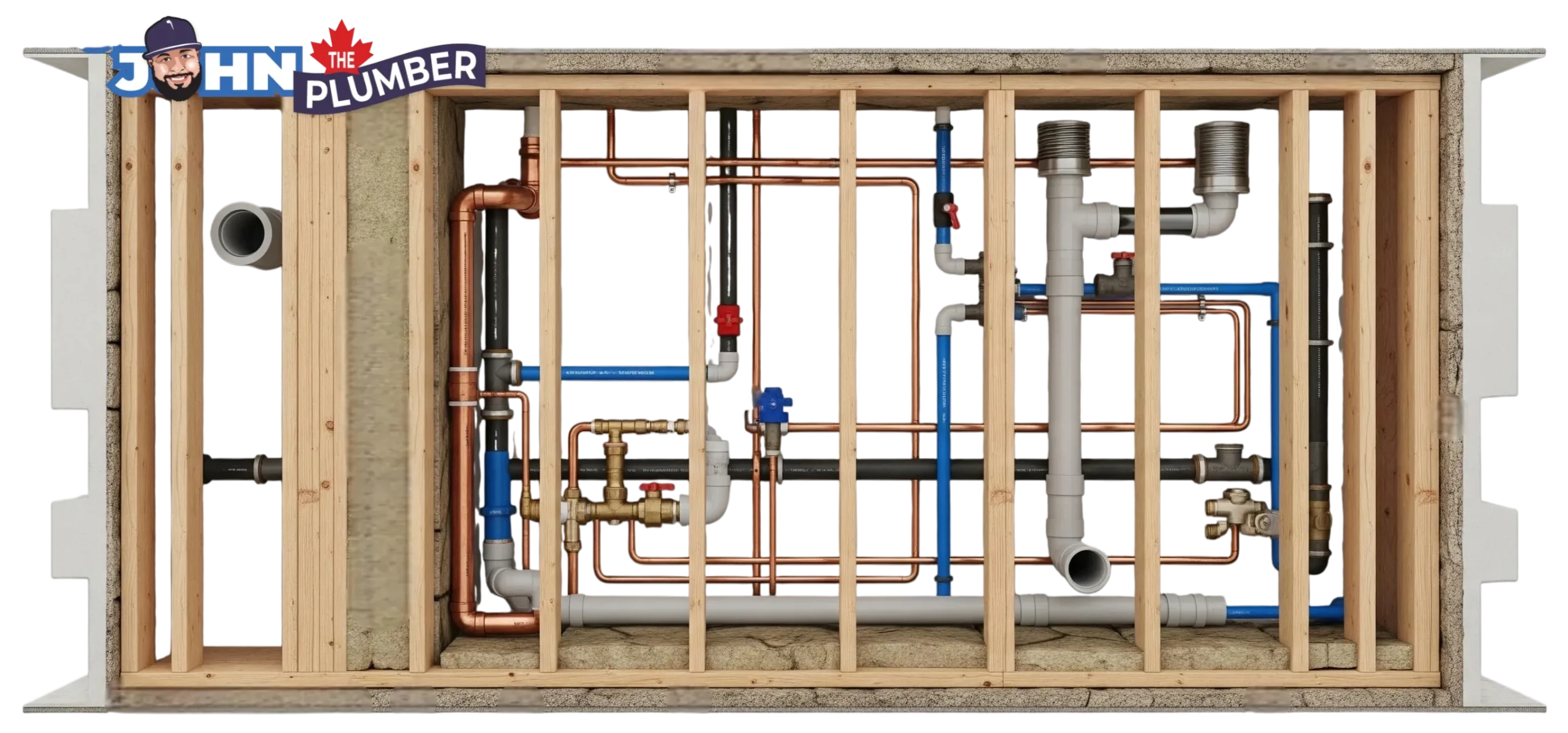
    Plumbing stays out of sight, yet it affects how a house feels day to day and how it holds value over the years. Even a small leak can stain ceilings, soften floors, and invite mold. Taking a closer look before closing helps you avoid the kind of surprise that shows up the week you move in. If the report turns up issues, you can budget and plan ahead instead of scrambling later.

    Quick Clues You Can Spot on a Showing

    You don’t need to be a pro to notice red flags that deserve a closer look. Pay attention to:

    • Low or inconsistent water pressure when two fixtures run at once.
    • Slow or noisy drains.
    • Rusty or brown water when the tap first turns on.
    • Sewer or musty odors in bathrooms or the laundry area.
    • Fresh ceiling patches or stained baseboards near kitchens and baths.

    Make a note of what you spot so a licensed plumber can zero in on those areas during your inspection period.

    What A Licensed Pro Checks That A Generalist May Not

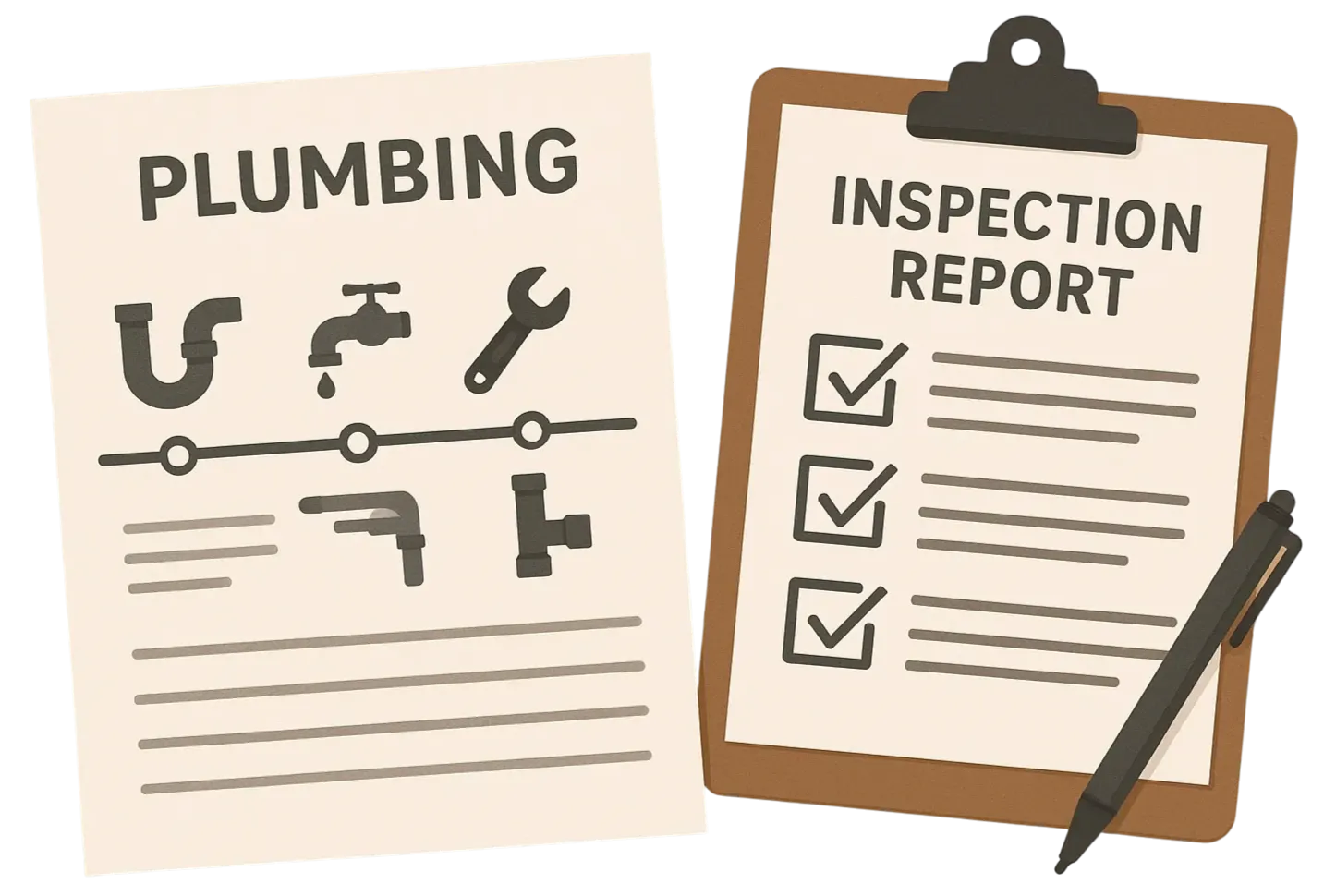
    A general home inspection gives you a helpful overview, then a qualified plumber goes deeper with specialized tools for the job. Expect camera scoping of the main sewer line, pressure and leak testing on visible supply lines and fixtures, a read on water heater age and capacity, and a check that traps, shutoffs, and cleanouts are present and accessible.

    In basements or low areas, the plumber makes sure the sump pump is running right and draining the way it should, a simple check that can spare you from messy, costly backups. You’ll leave the inspection with clear notes on what’s urgent, what’s recommended soon, and what can wait.

    Why Timing And Paperwork Work In Your Favor

    Your inspection contingency sets a firm deadline to review results and decide on repairs, credits, or next steps. The clock usually runs seven to ten days from the time your offer is accepted, so it’s smart to schedule the plumbing scope right away.

    If the report is clean, you keep moving forward. If issues show up, you can request repairs with invoices from a licensed contractor, ask for a price reduction, or take a seller credit at closing. For major findings, you have the right to cancel within the contingency window.

    When you close, keep the report and photos with your documents, they give you a clear record of the home’s condition.

    How A Plumbing Report Strengthens Your Negotiation

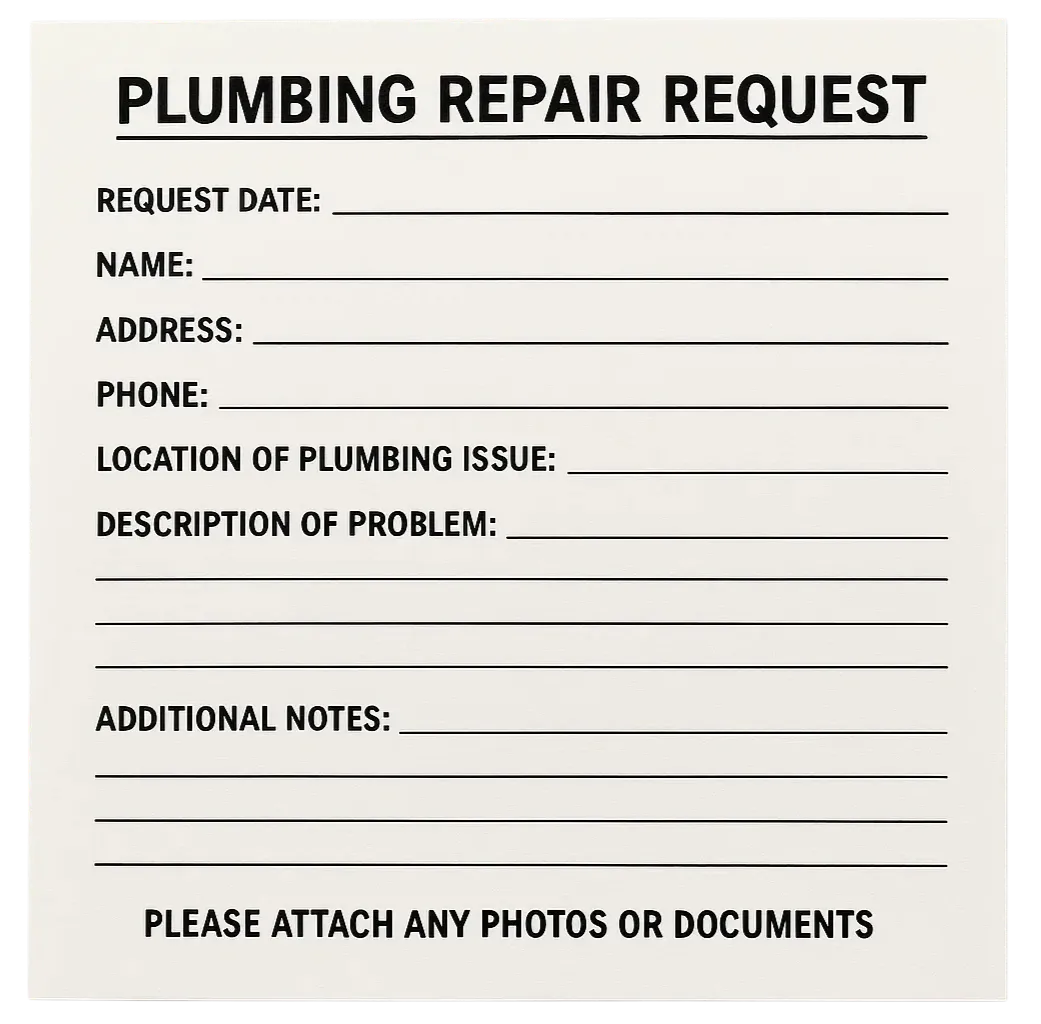
    A clear written summary with photos is easy for a seller to understand and for your agent to present. You can request specific repairs, a closing credit, or a price adjustment based on the documented findings. This approach is common and helps keep the deal moving. If the seller completes the work, you can confirm it during your final walk-through and make sure everything matches what was agreed to in writing.

    During the visit, ask the plumber about realistic replacement timelines for the water heater, which valves may need attention, and where the main shutoff is located. A quick lesson on that shutoff can save you stress if you ever need to stop a leak in a hurry.

    If there’s a sump pump, make sure it cycles, that the discharge drains to the right spot, and that a backup plan is in place. These small questions can make a big difference once you move in.

    First-Time Buyer Tip

    If you are choosing between cosmetic updates and system upgrades, put the plumbing work first. Fresh paint can wait. Replacing a failing water heater or clearing a compromised sewer line belongs at the top of the list. That approach keeps monthly costs steady and helps you enjoy the home sooner.

    Book the plumbing scope along with the general inspection, share your red flags with the plumber, review results right away, and submit any repair requests within your contingency period.

    On closing week, confirm completion during the walk-through, then save every invoice, estimate, and report for future planning. This simple routine keeps the process smooth from offer to keys.

    The Bottom Line

    Plumbing rarely calls attention to itself when everything is working, yet it shapes how you live in the home every day. By working with an expert plumbing specialist, you get a dedicated inspection that gives you clarity before you commit, protects your budget, and strengthens your negotiation position. That’s real peace of mind and it starts with the parts of the house you can’t see.