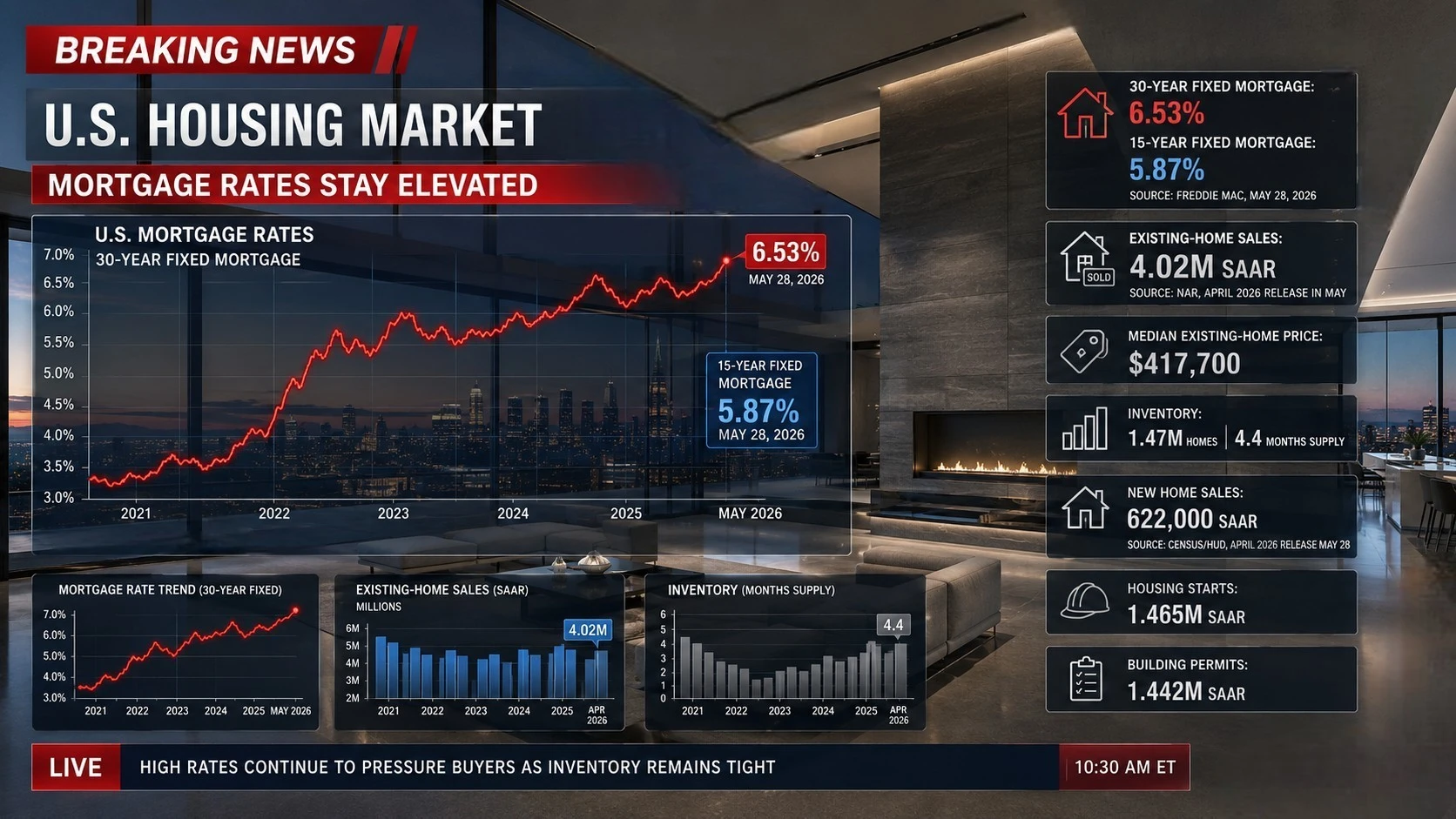
Mortgage rates have climbed to their highest level in nine months, adding fresh pressure to an already strained U.S. housing market. The average rate on a 30-year fixed mortgage rose to 6.53% as of May 28, 2026, while the average 15-year fixed rate increased to 5.87%.
The pressure is starting to show up in mortgage demand, especially among homeowners looking to refinance. Mortgage applications fell 8.5% in the week ending May 22, as the average contract rate for a standard 30-year fixed loan rose to 6.65%. Refinance applications dropped 18%, while purchase applications slipped just 0.4%, suggesting buyers have pulled back only slightly even as borrowing costs have moved higher.
Inflation remains one of the main forces keeping mortgage rates elevated. The Consumer Price Index rose 3.8% in the 12 months ending in April, with energy prices up 17.9% and gasoline prices surging 28.4%.
The current economic uncertainty is being fueled by the U.S.-Israeli military operation against Iran launched on February 28, 2026. The U.S. Energy Information Administration said global oil markets are facing heightened volatility because of the de facto closure of the Strait of Hormuz, a key transit route that carried nearly 20% of global oil supply before the conflict.
That leaves the Federal Reserve in a difficult position. In April, policymakers kept the federal funds rate target range at 3.5% to 3.75% and reiterated their commitment to bringing inflation back to the Fed’s 2% goal.
For the housing market, the Fed’s stance cuts both ways. Higher interest rates can help slow inflation, but they also make monthly mortgage payments more expensive and push some would-be buyers to the sidelines. Lower rates would improve affordability and could bring more buyers back into the market, but they could also risk adding more fuel to inflation.
The latest housing data points to a market under pressure, but not one in free fall. Existing-home sales rose just 0.2% in April. Inventory increased to 1.47 million homes, equal to a 4.4-month supply, while the median existing-home sales price rose 0.9% from a year earlier to $417,700.
Listings are also building. Realtor.com reported that active listings rose 4.6% year over year in April, while the national median list price fell 1.4% to $425,000. Price cuts are becoming more common as well, with 16.7% of active listings seeing reductions. Those cuts were more widespread in the South and West than in the Midwest and Northeast.
Redfin’s data showed a similar pattern. The brokerage reported that 35.4% of U.S. home sellers cut their asking prices in April. In San Antonio, Austin, Phoenix, and Dallas, more than half of sellers lowered their prices.
Concerns about a housing market crash have not gone away, but the current data still do not suggest a repeat of 2008. ATTOM reported that 42,430 U.S. properties had a foreclosure filing in April, up 18% from a year earlier. Even so, foreclosure activity remained well below pre-pandemic levels.
Homeowner equity is also cooling, though it remains relatively strong at the national level. In the first quarter, 43.3% of mortgaged homes were equity-rich, while 3.2% were seriously underwater, meaning the loan balance was at least 25% higher than the property’s estimated market value.
Taken together, the data points to a housing market that is becoming more fragile, especially in parts of the South and West where inventory is rising and price cuts are spreading. But for now, the stress looks more like a gradual correction than the start of a nationwide collapse.
A property’s true value goes far beyond the asking price and a fresh coat of paint. In the DFW market, two properties with the exact same square footage and finishes can perform very differently over time. Why? Because location, ownership rights, zoning, and future development all dictate a property’s long-term worth.
A high-priced property might actually be a bargain if it offers serious commercial upside, redevelopment opportunities, or sits in a rapidly growing neighborhood. On the flip side, an affordable home often hides costly repairs, drainage issues, title concerns, or restrictive HOA rules.
Smart buyers look beyond the photos. They study legal documents, operating costs, neighborhood trends, and future usability before making an offer. Whether you are buying a family home or a commercial investment, this guide explains the hidden factors that actually drive real estate value in North Texas.
What Does Hidden Property Value Actually Mean?
Hidden property value boils down to a property’s real-world usefulness and long-term upside. It includes legal rights, location quality, future development potential, and the flexibility to use the property how you want.
In the Metroplex, hidden value often comes from zoning flexibility, nearby growth, parking access, rental potential, and road visibility. A property near expanding retail or employment corridors will naturally appreciate faster than one in a stagnant area.
But hidden value can also work against you. Foundation damage, flood risk, old plumbing, unclear title history, or strict deed restrictions can kill your investment, even if the building looks attractive during a showing.
The Hidden Value Factors That Matter Most
These are the specific details that make or break your future resale value, ownership flexibility, income potential, and long-term operating costs:
Buyers who review these areas early make better financial decisions and avoid costly surprises at the closing table.
Listing Price vs. True Property Value: What Is the Difference?
The listing price is just a number the seller wants, while the true property value reflects what the property is realistically worth over time. The difference matters because visible upgrades do not always equal strong long-term value.
A remodeled kitchen or fresh paint may look great, but foundation problems, zoning restrictions, or high operating costs will quickly drain your equity. Meanwhile, an outdated property in a fast-growing corridor may hold massive untapped value.
Here’s a quick comparison:
Listing Price
True Property Value
Based on what the seller wants or expects
Based on the property’s real long-term worth
Often influenced by appearance and market positioning
Looks deeper at condition, ownership rights, and actual risks
Rarely accounts for hidden issues
Includes hidden risks that could affect value
Works as a starting point for negotiation
Should guide your final offer
Legal and Ownership Details You Can’t Ignore
Always review the title history, easements, deed restrictions, liens, and HOA rules before committing to any property. These legal details control what you actually own and what you are legally allowed to do with it.
An easement may limit where you can build an addition. HOA rules may restrict rentals (like Airbnb), parking, fencing, or running a business out of the property. Older properties may also carry outdated surveys or unresolved permits.
Important documents to request include:
Title commitment
Seller disclosures
Property survey
HOA documents
Permit history
Easement records
Tax history
Zoning confirmation (for commercial use)
What Are Mineral Rights and Why Do They Matter in Texas?
Mineral rights are property rights connected to underground resources like oil and gas. In Texas, it is very common for these rights to be separated from surface ownership. This means you might own the house, but someone else owns the rights to the resources underneath it.
This matters because mineral ownership can affect long-term property value and future financial opportunities. Always confirm whether any mineral interests are included in the sale and whether previous leases or reservations exist.
Understanding mineral rights value helps explain why some Texas properties hold value beyond the surface land itself.
How Easements, HOA Rules, and Deed Restrictions Affect Value
These rules directly impact your property value by limiting your flexibility. Some restrictions protect neighborhood quality, while others can become a massive headache.
A utility easement may block future construction plans. HOA rules may limit rentals, parking, landscaping, or exterior changes. Deed restrictions may prevent commercial use or specific renovations.
Never assume you can freely modify a property without reading the fine print first.
Why Location is More Than Just a Zip Code
Location creates value by driving convenience, resale demand, safety, and future growth. In Dallas, location quality almost always trumps cosmetic upgrades.
Properties near strong job centers, retail growth, highways, schools, or transit access hold stronger long-term value. Commercial properties with good visibility naturally attract more business traffic and future redevelopment interest.
Buyers should evaluate:
Commute patterns
Flood and drainage history
School district quality
Nearby retail and grocery access
Future development projects
Walkability and traffic flow
Noise from highways or nightlife
A property’s surroundings often shape its future value more than the building itself.
Spotting Commercial and Mixed-Use Potential
If you are looking at real estate from an investment standpoint, commercial potential is a huge factor. It is the ability of a property to support business activity, mixed-use conversion, rental income, or future redevelopment. Many transitional neighborhoods continue to shift toward mixed residential and commercial zoning.
Depending on local laws, a property may support retail, office, café, medical, or foodservice use. Even residential buyers should pay attention to nearby commercial activity because it affects traffic, convenience, taxes, and resale value.
The most important issue is permitted use. A building may look ideal for a storefront, but it might still require zoning approval, parking upgrades, or utility improvements before you can open for business.
The Value of Signage and Street Visibility
For commercial buyers, street visibility increases property value because businesses thrive on customer exposure and traffic. Retail, restaurant, and service-based properties command higher prices when they sit on busy corridors with clear frontage.
Visibility depends on road traffic, signage placement, lighting, and nearby intersections. However, always confirm local permit and zoning rules before assuming large signs or illuminated displays are allowed.
Existing Infrastructure: Kitchens and Foodservice
Kitchen or foodservice potential matters hugely when a property could support a restaurant, café, bakery, ghost kitchen, or catering operation.
Foodservice properties require heavy-duty plumbing, ventilation, electrical capacity, refrigeration space, and fire safety systems. A building with these systems already installed saves buyers tens of thousands of dollars in renovation costs.
When reviewing restaurant layouts and equipment needs, information about commercial kitchen equipment helps buyers understand how infrastructure affects long-term business value.
Hidden Costs That Destroy Your Budget
Renovation and operating costs can significantly change the true cost of ownership. A property with a low purchase price may still require major spending after closing.
The biggest cost factors include:
Roof and foundation repairs
HVAC replacement
Plumbing and electrical upgrades
Insurance premiums
Property taxes
Utility costs
Permit and compliance expenses
Drainage correction work
Commercial properties may also require ADA improvements, grease traps, parking changes, or fire safety upgrades. You need to estimate these costs before negotiating the final price.
How to Spot Hidden Value Before You Buy
Auditing hidden property value means reviewing the legal, structural, financial, and future-use details before purchasing.
Follow these six key steps:
Review the listing carefully for missing details or vague descriptions.
Check title history, easements, and ownership records.
Confirm zoning and permitted use.
Hire inspectors to evaluate the structure and systems.
Estimate repair, tax, insurance, and utility costs.
These questions often reveal problems that are impossible to spot during a property showing.
Red Flags That Turn Value Into Risk
Hidden value becomes hidden risk when attractive features are outweighed by structural problems, legal restrictions, or unrealistic renovation assumptions.
The biggest warning signs include:
Unclear ownership or title history
Major foundation movement
Flood or drainage issues
Restrictive zoning rules
High insurance costs
Unrealistic renovation estimates
Always be skeptical when properties are heavily discounted without a clear explanation.
The Bottom Line
You should look beyond the listing price because true property value depends on far more than appearance. Ownership rights, zoning, location quality, operating costs, and future use all shape long-term value.
A property with strong fundamentals will easily outperform a more attractive home in a weaker location. At the same time, hidden repairs or legal restrictions can quickly turn a cheap property into an expensive nightmare.
The smartest buyers treat every property as both a functional space and a long-term financial asset.
Buying or selling a property in Edmonton, Alberta, Canada often represents one of the largest financial decisions people make. In a market influenced by fluctuating interest rates, shifting inventory levels, and changing buyer behaviour, negotiation is the skill that separates an average real estate transaction from an exceptional one. Seasoned agents bring years of field experience, market intelligence, and negotiation strategies that directly impact their clients’ success.
In markets like Edmonton, Alberta, and across Canada, clients who work with experienced real estate professionals often achieve better selling prices, smoother transactions, and stronger contractual terms. This article explores why experience in real estate translates to sharper negotiation skills and how homebuyers and sellers can benefit from it.
Understanding Negotiation in Real Estate
Image Source: freepik.com
Negotiation in real estate goes beyond price haggling. It includes managing timelines, conditions, inspection outcomes, and legal terms that protect client interests. The best agents understand that a negotiation is both a financial and psychological process.
In North America, the National Association of Realtors (NAR) reports that roughly 86% of buyers use a real estate agent during their purchase. In Canada, the Canadian Real Estate Association (CREA) notes a similar trend. This shows how critical professional negotiation has become, especially when multiple offers, fast sales cycles, and limited inventory dominate major cities such as Edmonton, Toronto, and Vancouver.
The negotiation process requires data interpretation, communication finesse, and tactical empathy, the ability to understand the other party’s motivations while maintaining a firm stance on client priorities.
The Role of Market Insight and Experience
Market insight is not something learned overnight. It comes from years of observing patterns in housing data, mortgage rate shifts, and community trends. An experienced real estate agent understands how to read market indicators and interpret what they mean for negotiation timing.
For example, in a seller’s market, an experienced agent knows that setting a competitive price and creating urgency can trigger multiple offers, often pushing the price above asking. Conversely, in a buyer’s market, they use knowledge of local price adjustments to negotiate favourable terms such as closing cost credits or home repair allowances.
In the U.S., agents in competitive states like California or Texas often rely on years of comparative analysis to guide their clients toward realistic offers.
In Alberta, especially in Edmonton, experienced agents understand how local factors, such as new construction in south Edmonton or demand for established neighbourhoods—shape pricing, competition, and negotiation strategy.
Experience helps agents balance logic and emotion, a skill that is critical when buyers fall in love with a property or when sellers’ sentimental attachment leads them to overvalue their home.
Strategic Communication: The Core of Smarter Negotiation
The ability to communicate persuasively and respectfully defines a skilled negotiator. Experienced agents know how to read tone, body language, and verbal cues to identify what motivates the other party.
They use strategic questioning to uncover priorities—for example, a seller may want a quick closing, while a buyer may value a longer inspection period. With that information, seasoned agents structure offers that appeal to both sides while protecting their client’s position.
Communication also extends to how information is presented. A professional agent organizes data-driven facts, comparable sales, and financial justifications into clear proposals. This reduces emotional friction and supports logical agreement.
In cross-border real estate, such as transactions involving Canadians buying U.S. vacation homes or Americans relocating to Canadian cities, skilled communication becomes essential for managing differing regulations, financing options, and cultural nuances in business negotiation.
Risk Management and Problem Solving
Experience teaches agents how to anticipate and manage risks. Unexpected issues such as inspection findings, financing delays, or title discrepancies can disrupt deals. A newer agent may react defensively or rely heavily on others for guidance, while a seasoned one anticipates these problems early.
For instance, when a home inspection uncovers major repair needs, experienced negotiators know how to reframe the issue. They can present repair estimates, leverage market data, and request fair concessions without losing goodwill.
In both U.S. and Canadian transactions, documentation and disclosure laws vary by state and province. Agents familiar with these legal frameworks protect their clients from noncompliance penalties or overlooked contract clauses.
Moreover, negotiation does not stop at the accepted offer. Skilled professionals maintain oversight until closing, ensuring lenders, lawyers, and inspectors stay aligned on deadlines. This prevents deal collapses, a common issue among less experienced agents.
The Psychological Edge of Experience
Negotiation is as much psychological as it is financial. Experienced agents understand human behaviour, knowing when to apply pressure, when to pause, and when to concede to secure long-term gain.
They build trust with the opposing party, which can influence decision-making. Research from Harvard’s Program on Negotiation suggests that trust between negotiators increases the likelihood of reaching mutually beneficial agreements. Seasoned real estate professionals use this to their advantage by fostering respect and reliability from the first conversation.
Their confidence also helps clients feel calm and informed. In stressful negotiations, emotions often lead to poor decisions, overbidding, overpricing, or walking away prematurely. A veteran agent provides steady guidance, ensuring decisions are rational and data-backed.
Real-World Examples of Experienced Negotiation
Multiple Offer Situations: In Toronto or Austin, where competition is fierce, an experienced agent might recommend pre-inspections or flexible closing dates to strengthen offers without raising the price excessively.
Investment Property Purchases: In markets such as Alberta or Vancouver, seasoned agents use financial projections and rental yield analysis to negotiate fair purchase prices aligned with investment goals.
Cross-Border Transactions: Agents familiar with U.S.-Canada property transfers anticipate currency fluctuations, tax implications, and residency rules, using that insight to negotiate appropriate contract terms.
Family Home Purchases in Edmonton: In Edmonton, Alberta, where some neighbourhoods see strong demand and quick sales, seasoned agents help buyers structure competitive offers using strategies such as flexible possession dates or cleaner conditions. All without pushing the price far beyond market value.
These examples show that negotiation success is not random; it’s strategic and shaped by cumulative learning.
How Clients Can Evaluate an Agent’s Experience
Ask for Track Record: Review transaction history, types of properties handled, and local area familiarity.
Request Negotiation Examples: Skilled agents can share anonymized stories demonstrating how they improved outcomes for clients.
Verify Credentials: Look for NAR membership in the U.S. or CREA and provincial real estate council registrations in Canada.
Evaluate Communication Style: Professional tone, responsiveness, and clear explanations often reflect negotiation competency.
Image Source: freepik.com
Choosing an agent with a proven negotiation background can mean thousands of dollars in price advantage or reduced transaction stress.
Experience in real estate is not just a measure of time but of accumulated strategy, knowledge, and adaptability. A seasoned agent negotiates from a position of understanding market cycles, client psychology, and transactional risks.
In both the United States and Canada, where housing markets continue to evolve rapidly, working with an experienced professional can mean the difference between an average deal and an exceptional one. For buyers and sellers in Edmonton, Alberta, Canada, choosing a seasoned local real estate agent ensures that every negotiation reflects both up-to-date market data and deep neighbourhood knowledge.
Clients who value expertise, preparation, and precision will always find that the right negotiator brings not just confidence but measurable financial results.
When it comes to liveability, Melbourne often claims a leading position worldwide. Whether you want to buy your first home, invest in property, or simply buy for the lifestyle, the property in Melbourne offers some of the most diverse and exciting opportunities.
From hip inner-city flats to spacious suburban houses, real estate in Melbourne surely has something to offer everybody. Thanks to its culture, convenience, and growth outlook, it ranks high among Australia’s prime property markets.
Melbourne’s Lifestyle Advantage
A lot goes into explaining why the Melbourne property market is so attractive, and lifestyle is at the heart of it. The city offers a lifestyle that combines work, social life, and culture. From the best coffee, laneway dinners, and art galleries to prestigious sporting events, it has everything to offer.
Property buyers are not just buying a home; they are buying a way of life. Suburbs such as Carlton and Fitzroy have that vibrant bohemian feel, whereas South Yarra and Toorak offer luxury living and high-end shopping. Families tend to prefer leafy suburbs such as Camberwell or Glen Waverley, where you get community spirit, plus excellent schools and amenities.
The Growth of Melbourne’s Property Market
Melbourne real estate has shown consistent and robust growth throughout the past decade. Prices do fluctuate at times, but the long-term outlook remains positive. Demand is spurred on by population growth, job opportunities, and overseas migration.
This is why investors are interested in Melbourne:
Strong population growth – powered by both local and global migration.
Varied real estate offerings – from modern CBD apartments to suburban family homes.
High rental demand – especially near universities and transport hubs.
Infrastructure Development – Ongoing investments in transportation, education, and healthcare enhance the value of real estate.
Such demands in time make Melbourne real estate a tempting investment for the long term.
Suburbs to Watch in Melbourne
The suburbs in Melbourne are varied, each with its own evolving character and opportunities. Some areas of interest now include:
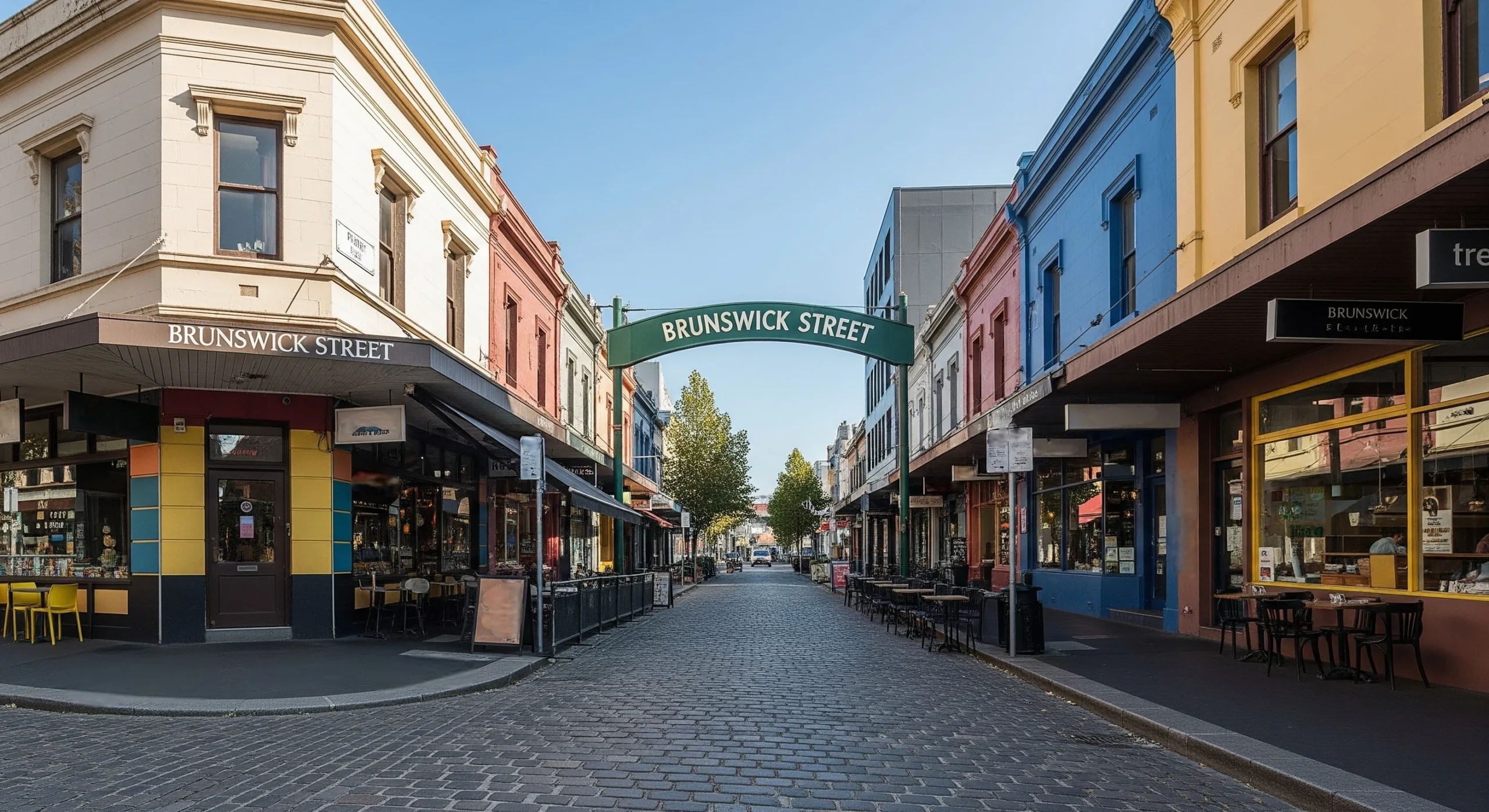
Brunswick has traditionally been considered ethnically diverse, café-focused, and proximate to the CBD.
Docklands blends sleek residential living with waterside charm and plenty of entertainment.
Geelong, part of Greater Melbourne, is an up-and-coming hub with cheaper options than in the heart of the city.
Richmond continues to be a favourite haunt for the young professionals for its nightlife, eateries, and simply being near the city.
The suburbs above reflect the range available within the Melbourne real estate market, offering buyers the options to find what best fits their lifestyles and budgets.
Challenges in the Melbourne Market
The reality of buying in Melbourne is that there are some difficulties. With prices rising rapidly, first-time buyers were in many cases priced out of the market, especially in famous suburbs. Even so, the competition can be intense, as auctions tend to drive prices well over expectations.
That said, provided one does their homework, opportunities are still there. Those who look past the standard older inner-city suburbs often find hidden gems, which offer both lifestyle and investment value. Going with experienced agents and keeping an eye on market movements will help smooth the path.
The Future of Melbourne Real Estate
From the perspective of the future, the real estate market of Melbourne still shows great promise. Large infrastructure projects are underway, including new transport services and a new wave of housing developments. These are expected to drive up prices in certain precincts.
Of course, the city’s standing as a cultural and economic haven would keep the demand going, from local buyers as well as foreigners.
Sustainability has started gaining momentum, with homebuyers searching for energy-efficient homes, solar panels, and sustainable building designs. Developers and homeowners who adopt these trends will likely be rewarded in the near future.
Lifestyle Meets Investment
Melbourne is unique thanks to a property market that balances lifestyle with investment opportunities. Buyers are purchasing more than bricks and mortar, they’re buying into a city that offers education, healthcare, entertainment, and employment all in one package. This combination continues to make Melbourne real estate among the most appealing markets in all of Australia.
Unlocking Growth in Melbourne
First-time buyers, builders, and even those looking to upgrade have plenty of options in the Melbourne property market. The mixture of lifestyle, culture, and strong long-term growth prospects makes it compelling for any consideration for properties in Australia.
There are plenty of opportunities in Melbourne real estate today, so now is the moment to act. Contact a reliable local agent: your first step toward staking your claim in one of Australia’s most upbeat property markets.