In the first quarter, new developments in Dubai’s housing market made up nearly three-quarters (73%) of all residential sales, as buyers faced a tight supply of move-in-ready homes in established neighborhoods.
For American readers, “off-plan” is Dubai’s term for pre-construction property. Buyers commit before the home is complete, usually based on floor plans, project documents, renderings, and the developer’s construction timeline. That can feel unfamiliar at first, but in Dubai, the model has become a major part of the market because it gives buyers a more accessible way to enter real estate ownership.
The appeal is especially clear for first-time investors. Instead of paying a large amount upfront for a completed home, buyers can often secure an off-plan unit with a smaller booking amount and pay the balance in stages during construction. For those with a longer timeline, that structure can make Dubai property feel more achievable.
Dubai’s First-Time Home Buyer Program has also added momentum. The program has helped more than 2,000 residents buy their first home within six months, generating more than AED3.25 billion in residential property sales.
Lower Upfront Costs and Easier Entry
The biggest obstacle for first-time investors is often the cash needed on day one. Move-in ready homes usually require a larger down payment, agency fees, and Dubai Land Department registration costs. DLD has stated that property registration fees equal 4% of the property’s value, so buyers should plan for that cost unless a developer promotion covers it.
In contrast, choosing to buy off-plan property in Dubai can feel much more manageable because many developers offer booking amounts around 5% to 10%, followed by staged payments during construction. Some payment plans spread the balance across several years, while others use structures such as 60/40, where a large portion is paid closer to completion.
These plans do not remove the cost of buying. They simply change the timing. For first-time investors who do not want to tie up a large amount of cash immediately, that timing can make a major difference.
Developers may also offer incentives such as waived or partially covered DLD fees, post-handover payment plans, or limited-time launch pricing. Buyers still need to read the Sale and Purchase Agreement carefully, but these incentives are one reason off-plan properties often feel more accessible than older homes on the resale market.
Potential for Capital Growth Before Handover
First-time investors are often looking for long-term growth, not just immediate rental income. Buying early in a project can give them access to launch pricing before construction advances and before the wider community becomes more established.
If the project, developer, and location are strong, that early entry point can create room for capital appreciation by the time the home is delivered. This is one of the main reasons off-plan property appeals to buyers who are comfortable waiting for completion.
That said, appreciation is not guaranteed. Dubai’s market is active, but it is also cyclical. New supply can put pressure on prices in certain segments, especially in apartment-heavy areas where many similar units are delivered at the same time.
The payment structure itself can also help first-time buyers build discipline. Rather than getting hit with a massive mortgage right out of the gate, you make staggered payments while the home is being built. It’s a much less stressful way to get a foot in the door and start building equity.
Stronger Buyer Protection Through Escrow Rules
One common concern with off-plan property is whether the developer will finish the project and use buyer funds properly. Dubai’s escrow framework is designed to reduce that risk.
Developers selling off-plan units are required to open a separate escrow account for the project with an approved financial institution. Buyer payments are deposited into that project account and allocated for construction-related costs under DLD and RERA oversight.
This gives buyers more protection than a market where developer funds are not separated by project. It does not eliminate every risk, but it does create a more transparent system for how money is collected and used.
Buyers can also check project information through Dubai REST and other DLD services. These tools may show details such as completion percentage, project photos, escrow account information, and payments due. For first-time investors, that level of visibility can make the off-plan process easier to understand.
Newer Buildings, Better Features, and Fewer Early Repairs
New construction also appeals to first-time investors because it usually comes with the features today’s renters and buyers expect. Many newer Dubai projects include smart-home systems, modern gyms, coworking areas, improved security, upgraded lobbies, and stronger community amenities.
While older homes in high-demand, established neighborhoods remain solid investments, they often need a modern facelift to compete with newer inventory.
There is also the maintenance angle. New builds usually come backed by builder warranties, sparing you from the unexpected repair bills that often plague older homes. You’ll still want to read the fine print in your purchase contract to know exactly what’s covered, for how long, and how to report any issues after move-in.
For first-time investors, this matters. A newer property can be easier to rent, easier to manage, and less likely to require immediate renovation.
Residency and Visa Benefits
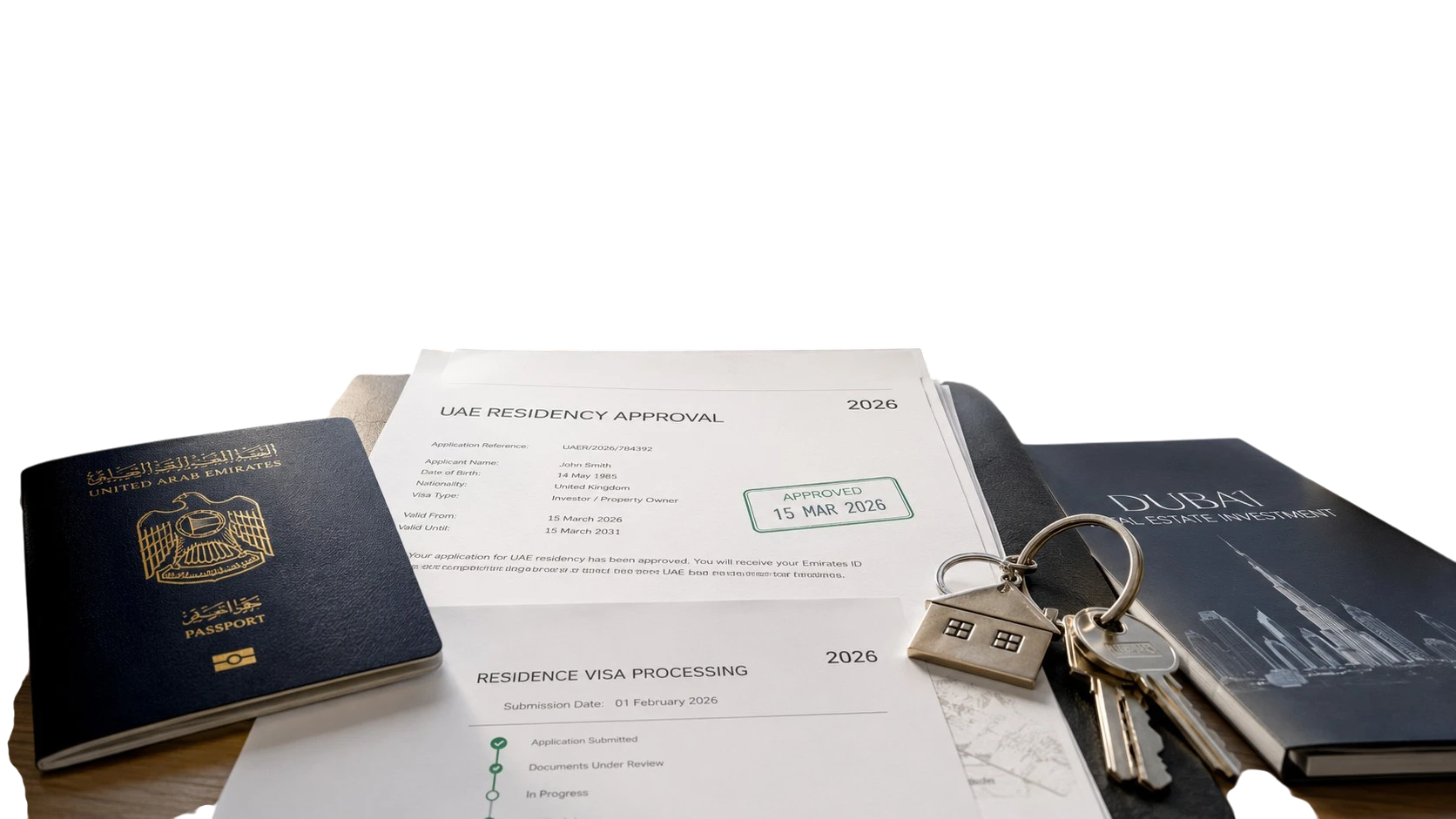
Through the government’s Taskeen program, eligible investors can secure a residency visa simply by owning property. It’s a massive draw if you’re looking to establish a long-term home base or business presence in the UAE, rather than just holding an investment on paper.
Buyers should not confuse this with the 10-year Golden Visa. DLD lists the Golden Visa property requirement at AED2 million or more. So, the residency benefit is real, but the type of visa matters, and buyers should confirm the latest rules before purchasing.
Top Neighborhoods for First-Time Off-Plan Buyers
Jumeirah Village Circle continues to be the best neighborhood for value-driven investors. It offers a large supply of apartments, good access to major roads, and a strong tenant base of young professionals and families. For buyers focused on rental yield, JVC is often one of the first areas worth comparing.
Dubai South is another area getting attention because of its long-term infrastructure story. The planned expansion of Al Maktoum International Airport and the continued development around Expo City make the area a major growth corridor. The upside is long-term potential; the tradeoff is that investors need patience as the area continues to mature.
Arjan and Majan may work for buyers looking for lower entry points in growing communities. These areas are still developing, but that is part of the appeal for investors who want to enter before prices fully reflect future infrastructure and demand.
Dubai Creek Harbour is a more premium option. It usually requires a higher budget, but it offers waterfront positioning, master-planned development, and strong lifestyle appeal. For buyers who can afford the entry point, it may offer a more polished long-term hold than some lower-cost districts.
A Smart Entry Point, If Buyers Do Their Homework
The main advantages of pre-construction are straightforward and include lower upfront costs, flexible payment plans, newer builds, developer incentives, and regulated escrow protections. The risks are also clear, such as construction delays, oversupply in some areas, weaker resale liquidity before handover, and projects that look better in marketing materials than they do on paper.
For new investors, the right move is not simply to buy off-plan. It is to buy carefully. That means checking the developer’s track record, reviewing the escrow status, understanding the payment plan, comparing nearby completed projects, and being realistic about rental demand after handover.
Done properly, off-plan property can be a strong first step into Dubai’s market. It gives buyers a way to start smaller, pay over time, and position themselves in a city that continues to attract residents, businesses, and global capital.