Tag: Dallas Agents

  • What Dallas Agents Wish They’d Known Before Taking the Texas Real Estate Exam

    Ask agents around the DFW area about their licensing exam, and you’ll usually hear the same regret. Most wish they knew what the test actually focused on before they sat down for it.

    Candidates who don’t pass usually say something similar, just with more frustration. A few things tend to catch Dallas-area candidates off guard, but most of these mistakes are completely avoidable.

    The Exam Structure Matters More Than You Think
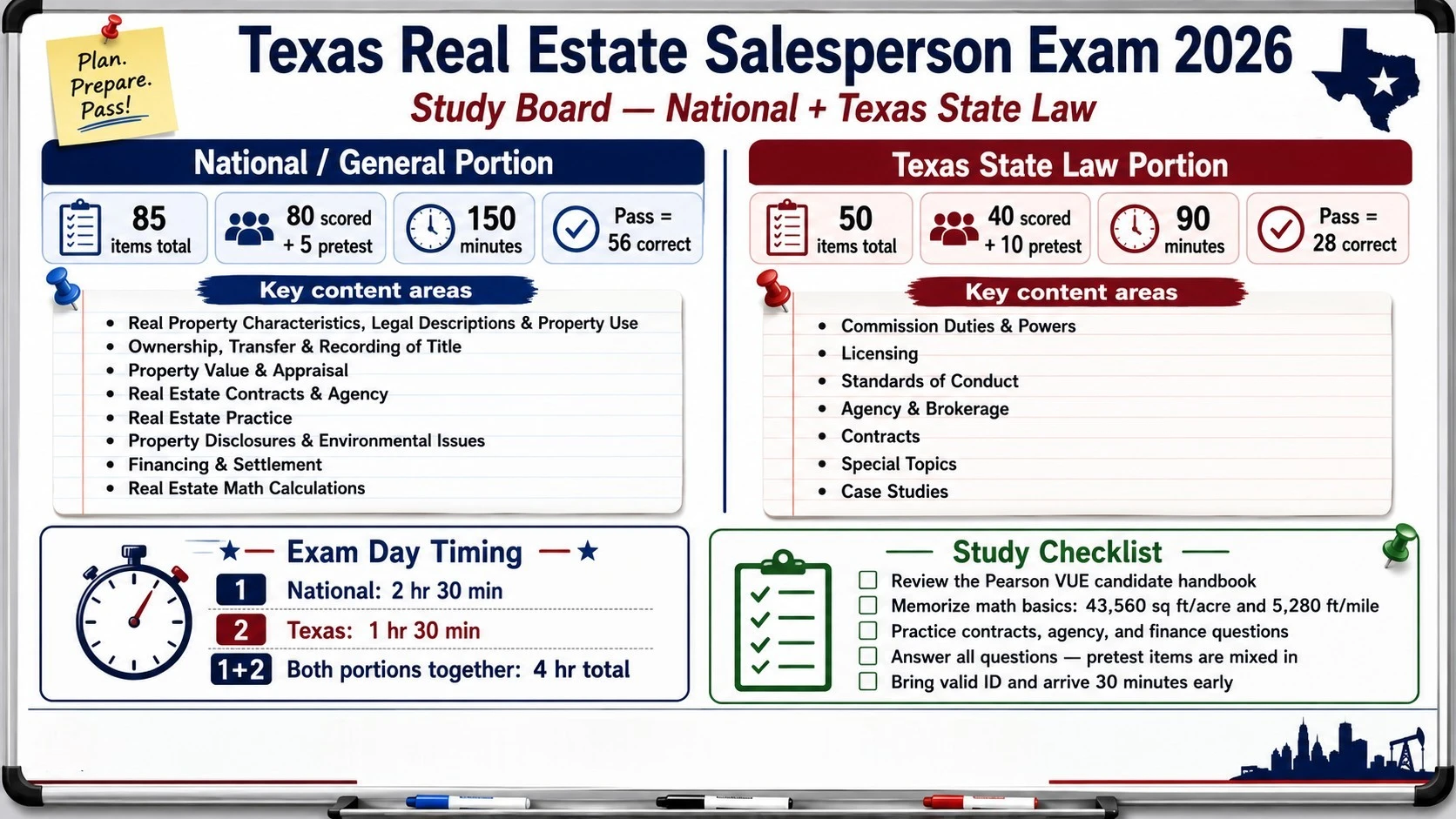
    The Texas real estate exam has 135 questions, including two scored sections. You will take an 80-question national portion and a 40-question state-specific portion. Fifteen unscored pretest questions are mixed in with no way to tell which ones they are. You have 240 minutes to finish.

    The part that trips people up is that you must pass both sections independently. The national portion requires 56 correct out of 80, which is 70 percent, and the state portion requires 28 correct out of 40, also 70 percent. Ace the national section but miss the state section and you still fail the whole exam. The painful version is passing the national section comfortably, then missing the Texas section by one or two questions because you barely reviewed TREC disciplinary authority. Before you build a study calendar, confirm the current score thresholds and section weightings so you know how much room you have for mistakes.

    A common mistake is spending most of your study time on national content and treating the Texas-specific material as an afterthought. That’s backwards. The state portion covers TREC rules, the Texas Real Estate License Act, and the Canons of Professional Ethics. These are the topics some pre-license courses move through quickly in the last week.

    If the national content feels comfortable, I’d spend my final week almost entirely on Texas-specific rules and math drills.

    Contract Math Is Where Dallas Candidates Lose Points
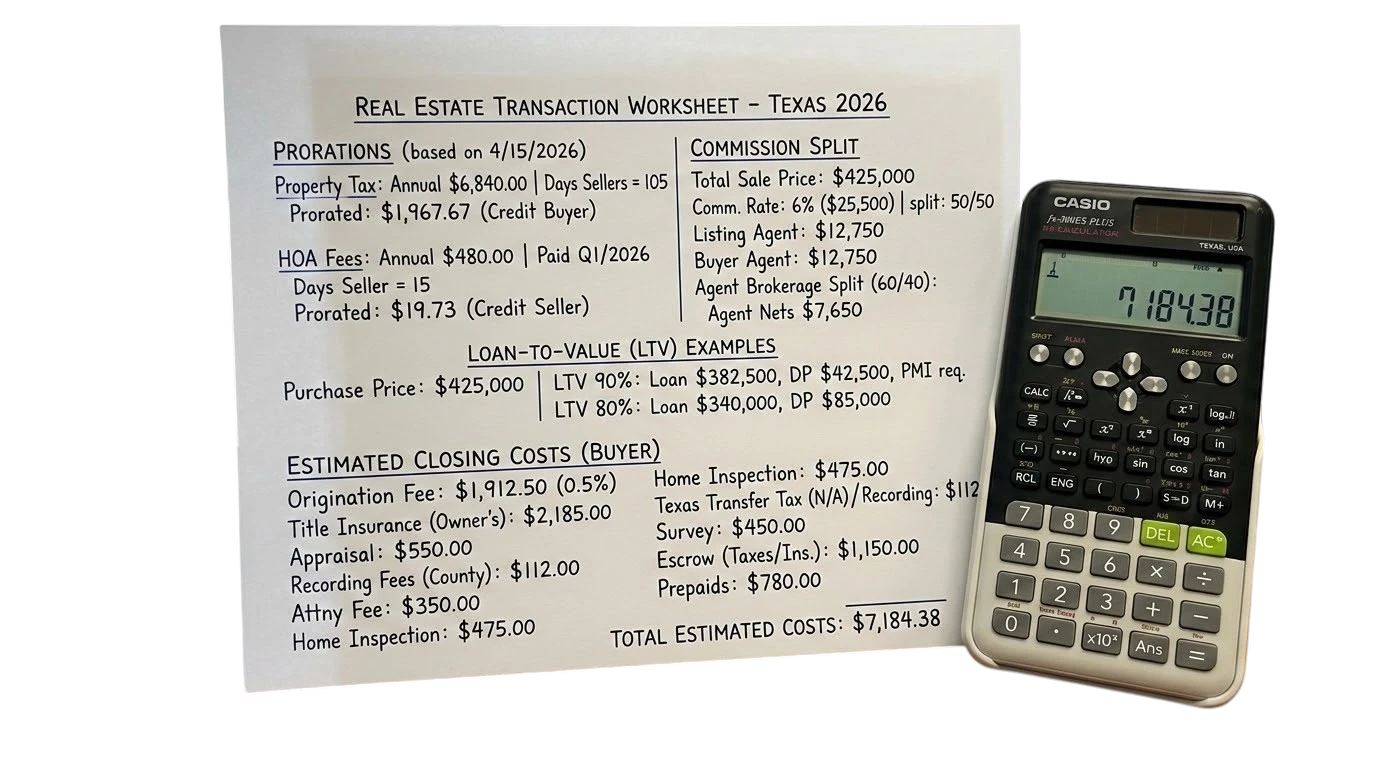
    Expect questions on prorations, commission splits, loan-to-value ratios, and closing costs. The math itself isn’t hard, but the problem is doing it under time pressure.

    Most candidates memorize formulas but don’t practice them under pressure. On exam day, with your calculator and the clock running, math questions can eat up too much time if the setups don’t feel automatic. Drill them until you stop having to think about which number goes where. Among the Dallas-area prep options, the ones that give you the most timed practice questions are worth more than the ones with the prettiest study guides.

    The Texas Section Rewards Precision
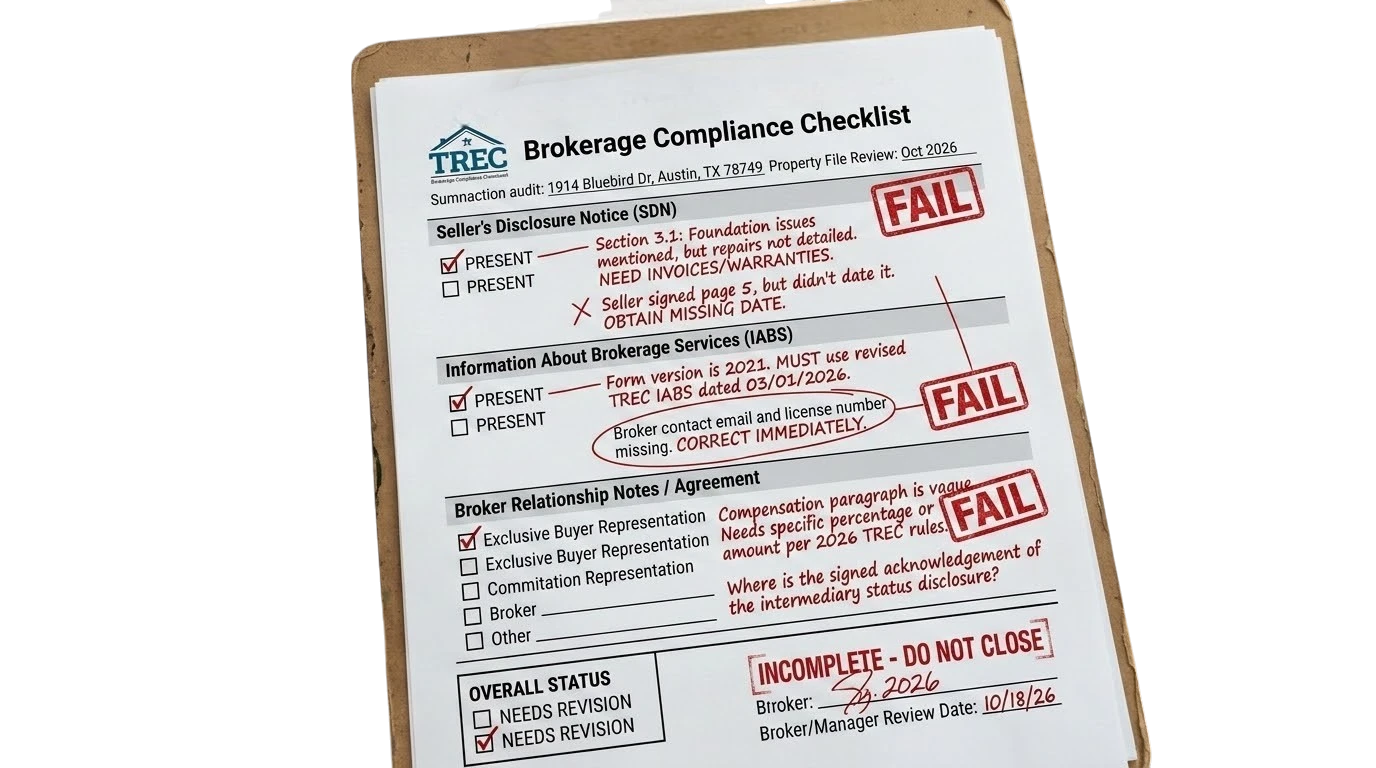
    Texas state exam questions lean heavily on three main areas. The big ones are TREC regulatory authority, the broker-salesperson relationship, and property condition disclosures. Anyone who’s been around real estate in DFW has seen the Seller’s Disclosure Notice and the IABS form. The exam expects you to know exactly when those forms are required, who provides them, and what happens if they’re not delivered on time.

    The surprise is in the edge cases. The test may ask not just when an IABS is required, but also when it is explicitly not required. Topics such as the line between a property manager and a broker, or the difference between a listing agent’s duties and a buyer’s agent’s duties under TRELA, show up more often than people expect.

    Take a Diagnostic Before You Build a Study Plan
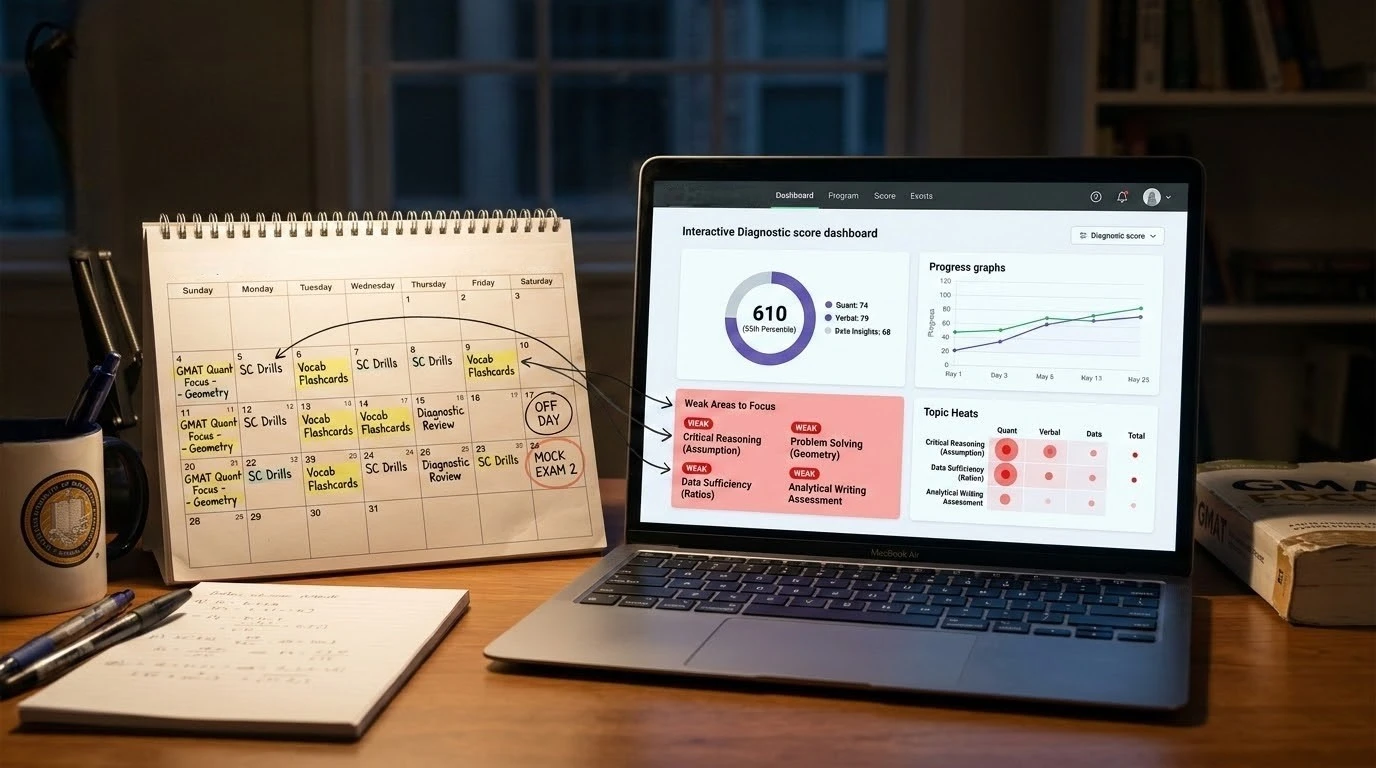
    Before spending three weeks grinding through flashcards, take a diagnostic to see where you actually stand. Most people have a skewed sense of what they truly know. You might find that you are solid on agency law but shaky on environmental hazards and land-use controls, or the other way around.

    A diagnostic shows which content areas need the most work and gives you a better reality check. If you are scoring 55 percent on practice questions, you are probably not two days away from being ready. At 72 percent, focus the remaining time on weak domains instead of re-reading material you already know.

    DFW-Specific Logistics That Matter
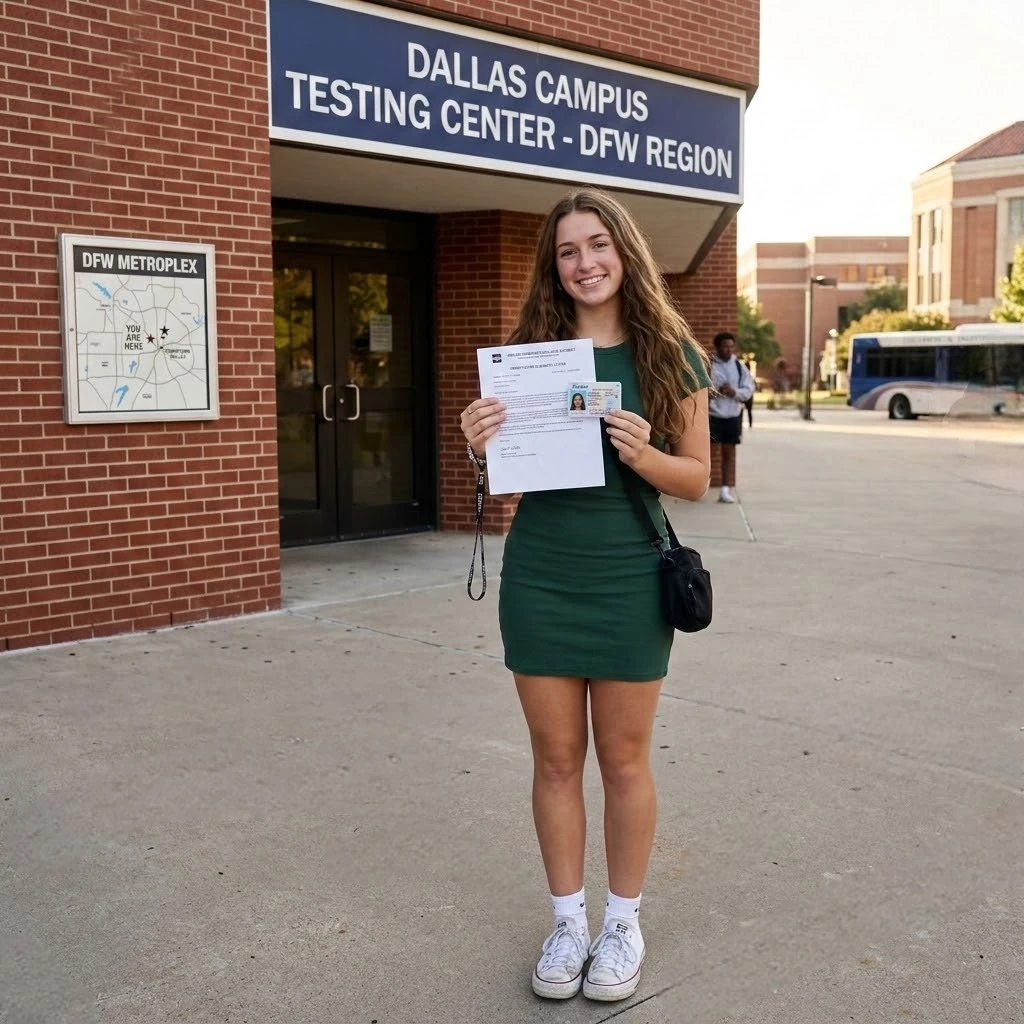
    Schedule the exam early. If you finish your coursework on a Friday, don’t assume you’ll be testing the following Monday. Check appointment availability as soon as your eligibility clears. The Pearson VUE testing centers around Dallas fill up faster than candidates expect. The gap between finishing 180 hours of coursework and being able to sit for the test can stretch into weeks during spring and early summer when course cohorts are wrapping up.

    Bring your TREC eligibility letter and two forms of valid ID. The check-in process can be slower than it looks online, particularly if there’s a group testing at the same time. Give yourself an extra time cushion. It’s easy to show up flustered after rushing through the parking lot, which is not the headspace you want to be in before question one.

    The Bottom Line

    The Texas exam is passable. It’s not designed to be a trick, but it does reward targeted preparation, especially on the state material that most study programs underemphasize. Treat exam prep the way you’d treat a listing presentation. Know the material cold, anticipate the hard questions, and walk in with a plan. The work after the license is its own challenge because building a book of business and lead generation are where most new agents struggle next.

    For deeper review, use a Texas exam resource library to review the areas you keep missing, then work backward from there.

    Author Bio:

    Madeline Gaynor is the founder of Ardelia Exam Mastery; a US exam preparation platform built for candidates who need to pass professional licensing exams on their next attempt. Ardelia covers real estate licensing in Texas with more states coming soon, as well as food handler certification, and US citizenship civics tests.

    The platform uses adaptive practice technology that identifies each candidate’s weakest topic areas and focuses study time where it matters most, rather than forcing everyone through the same generic curriculum.

    Ardelia Exam Mastery is independently operated and not affiliated with any licensing body, testing provider, or pre-license education company. All content is verified against official candidate handbooks and licensing authority publications. Madeline can be reached at hello@ardeliaexam.co. Website: https://www.ardeliaexam.co.
  • Real Estate Advertising Strategies for DFW Agents

    The DFW market has more active agents than at any point in the last decade, and the ones winning listings aren’t the most experienced. They’re the most visible.

    This guide covers the paid advertising strategies that generate real leads in Dallas: what each channel costs, what it takes to make it work, and the specific copy angles that convert in this market.

    Why Most Dallas Real Estate Ads Fail Before Anyone Sees Them

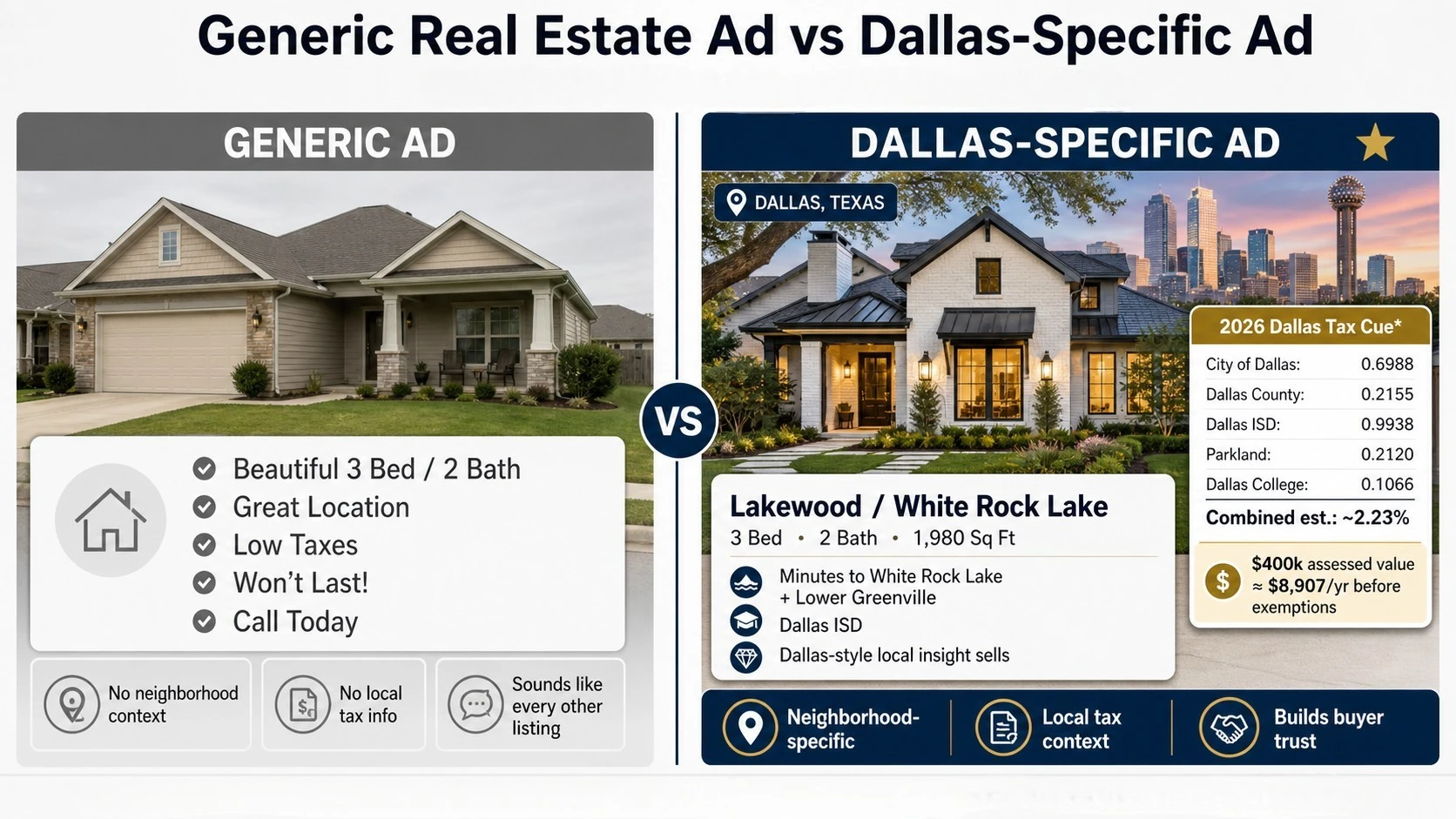
    The problem usually isn’t the channel. It’s that most agents run generic ads with no specific offer, no Dallas context, and no reason for a buyer or seller to respond over anyone else.

    Your Dallas real estate expert. Call me today.” That copy is running on thousands of ads right now. It performs accordingly.

    Ads that generate leads in this market are specific. They name neighborhoods, reference what’s actually happening in the DFW market, and speak to the concerns Dallas buyers and sellers already have such as:

    1. Property taxes
    2. School district boundaries
    3. Commute corridors
    4. Appraisal caps

    Browsing real estate ad strategies from agents who get this right makes the difference between generic and specific immediately obvious.

    Google Search Ads To Reaching Buyers and Sellers at the Moment They Decide

    Google Search Ads are the highest-intent channel available to Dallas agents.

    The person clicking your ad has already decided they need help and is actively looking for someone to call. Real estate search ads average a click-through rate of around 8.4% and a conversion rate of 2.9% to 3.3% per WordStream’s 2025 benchmarks.

    If you’re new to the channel, understanding real estate PPC basics before you spend a dollar will save you from the most expensive beginner mistakes.

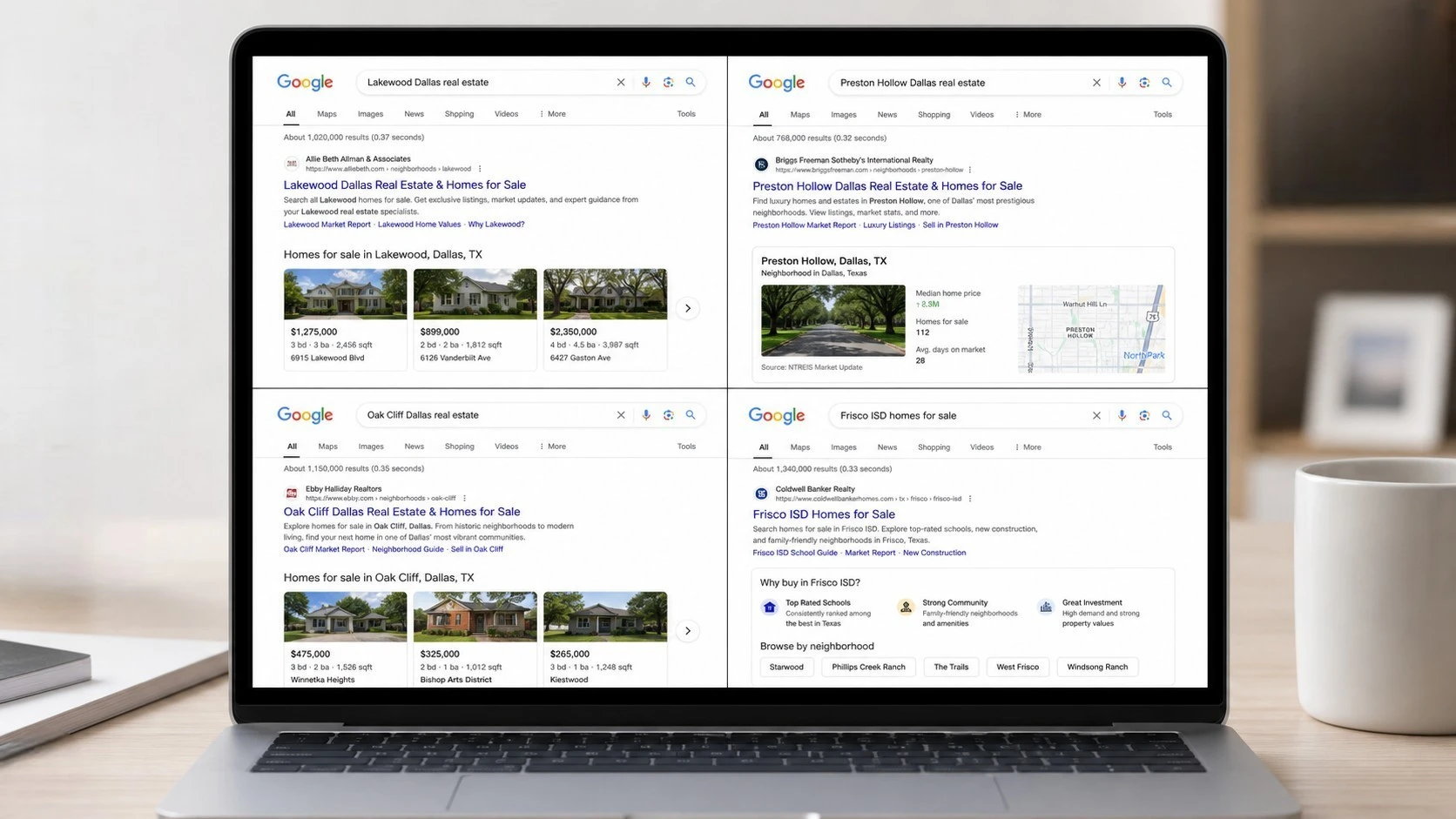
    Start by skipping broad terms like “Dallas real estate agent”, as you’ll be competing with everyone and their grandma.

    Focus on neighborhood-level, intent-specific terms instead such as

    • homes for sale in Lakewood Dallas
    • listing agent Preston Hollow
    • sell my house Oak Cliff
    • homes for sale Frisco ISD
    • relocating to Dallas homes for sale

    That last category deserves its own campaign. DFW absorbs a significant volume of corporate relocations annually, driven by companies like Toyota, Liberty Mutual, and State Farm pulling talent into Plano, Frisco, and the Park Cities. Relocation buyers have strong intent and face very little agent competition in search results.

    How To Structure Ad Copy For Google Ads

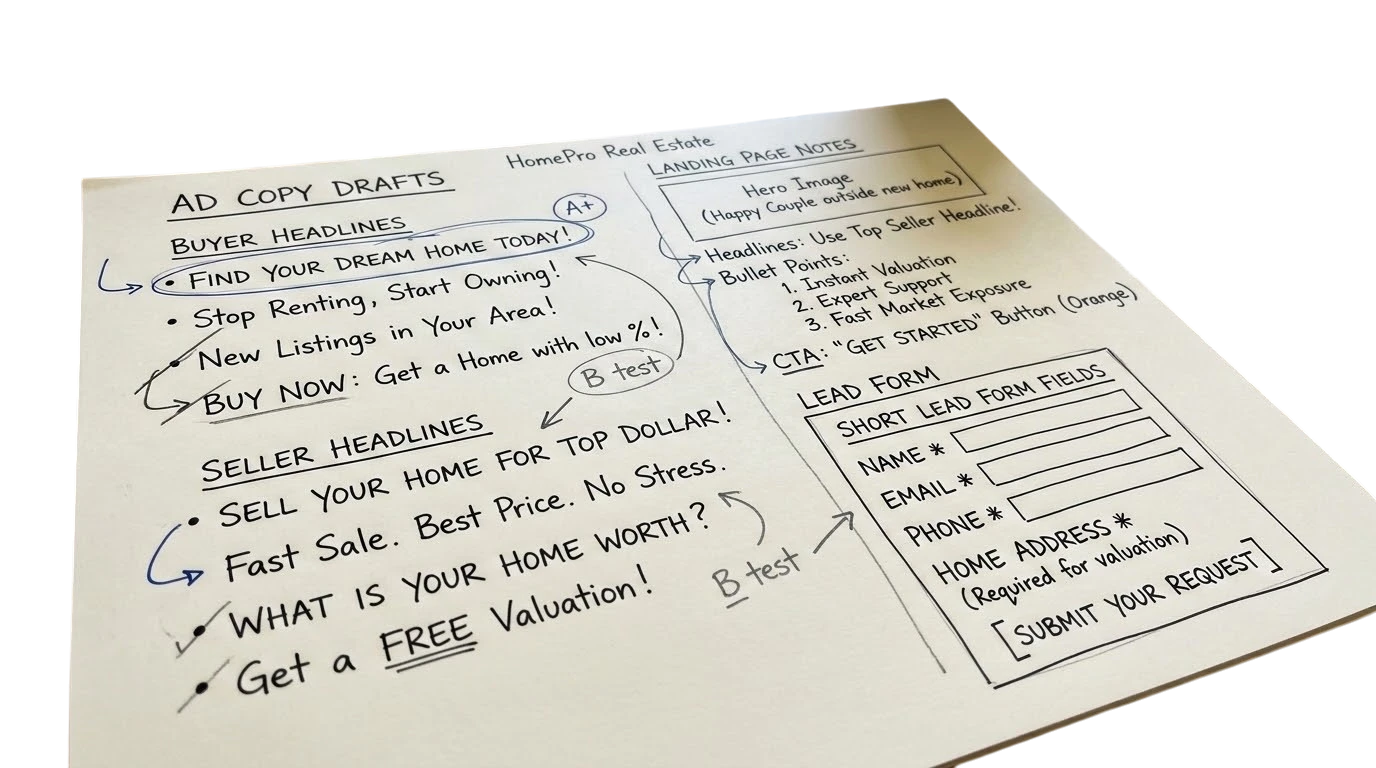
    Lead with what the buyer or seller actually wants to know:

    For buyer campaigns:Lakewood Listings Before They Hit Zillow” or “Relocating to DFW? Skip the Wrong Neighborhoods

    For seller campaigns:What’s Your Oak Cliff Home Worth in 2026?” or “Your 2026 Appraisal Just Came In. Here’s What It Means for Your Sale Price.”

    The description line has one job: tell them what happens after they click. “Get a free home valuation in 60 seconds, no commitment” outperforms “Contact us today for all your real estate needs” every time. Send traffic to a dedicated landing page built for that specific campaign.

    1. A buyer campaign gets a neighborhood search page.
    2. A seller campaign gets a valuation form with three fields: name, phone, email.

    Keep the form short, because every additional field reduces completions.

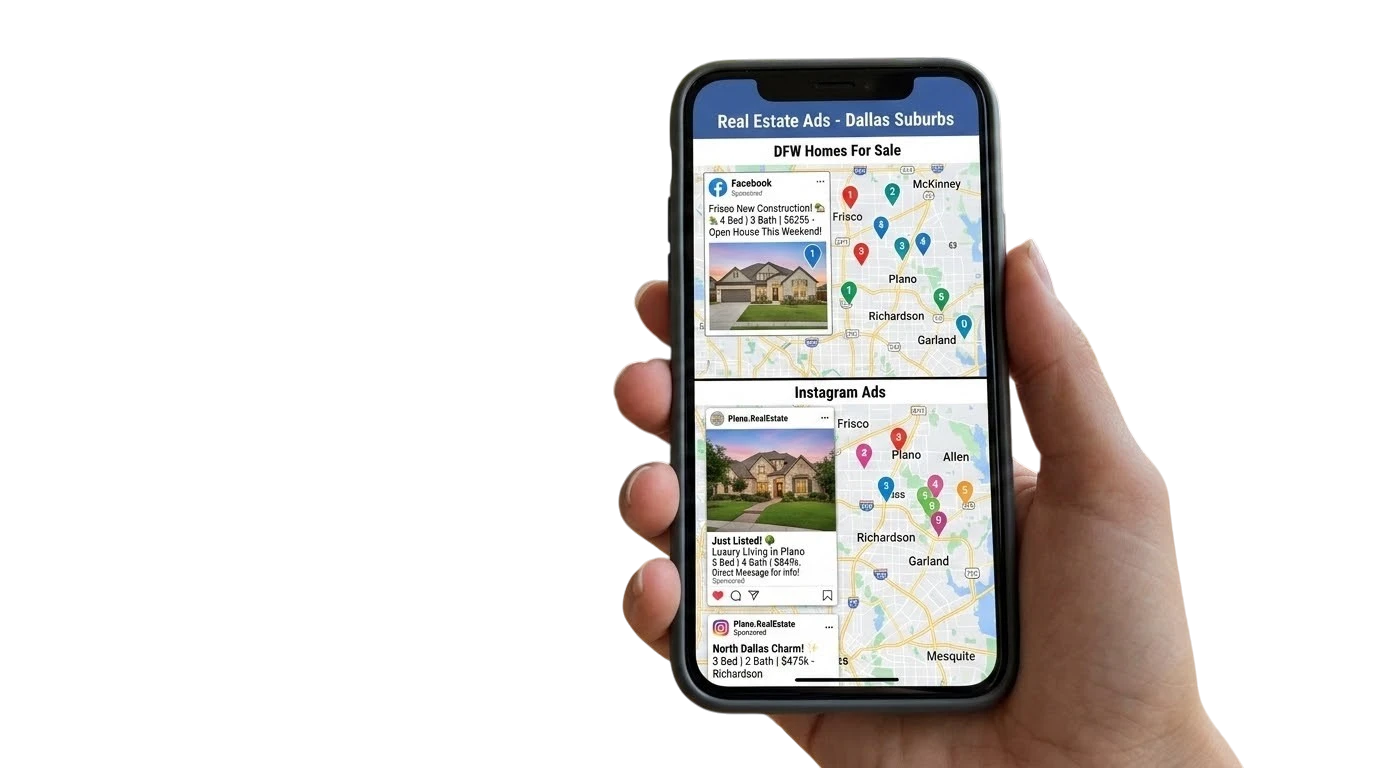
    Facebook and Instagram Ads: Building Pipeline by Neighborhood

    Facebook and Instagram work differently from search.

    Instead of intercepting someone already looking, you’re reaching people in the right life stage before they’ve started their search, which makes the platform useful for building pipelines rather than capturing immediate intent.

    At an average cost of $16 to $25 per lead depending on targeting and time of year, it’s one of the most economical ways to fill that pipeline in Dallas.

    1. Lead ads: Work best for seller campaigns. The user submits their contact details without leaving the platform, and the offer is straightforward: find out what your home is worth.
    2. Traffic ads: Work better for buyer leads, driving clicks to a specific neighborhood or listing page where visitors can browse and engage.

    Boosted posts rarely generate leads worth tracking. The Facebook ad mistakes realtors make most often go well beyond boosting, and knowing them before you launch saves real money.

    How To Structure Ad Copy For Facebook Ads

    Copy that converts gives readers information they didn’t already have.

    Three frameworks that work in DFW:

    1. The market update hook:Plano homeowners: homes in your zip code are sitting 23 days longer than last spring. Here’s what that means for your sale price.” Local, current, and implies you have data they don’t.
    2. The appraisal hook:Your 2026 Dallas County appraisal is in. If your assessed value went up, here’s what that means for your net proceeds.” Timed to something the homeowner already received in the mail.
    3. The ISD angle:Homes zoned to Frisco ISD are still commanding premiums. Here’s what’s available under $550k.” School district boundaries drive a significant share of DFW buying decisions, and ads that reference specific districts intercept buyers mid-research.

    Dallas-Specific Angles Most Agents Aren’t Using

    Every generic advertising article covers the channels. Few explain the Dallas-specific hooks that separate agents who get leads from agents who burn through budget running the same campaigns as everyone else.

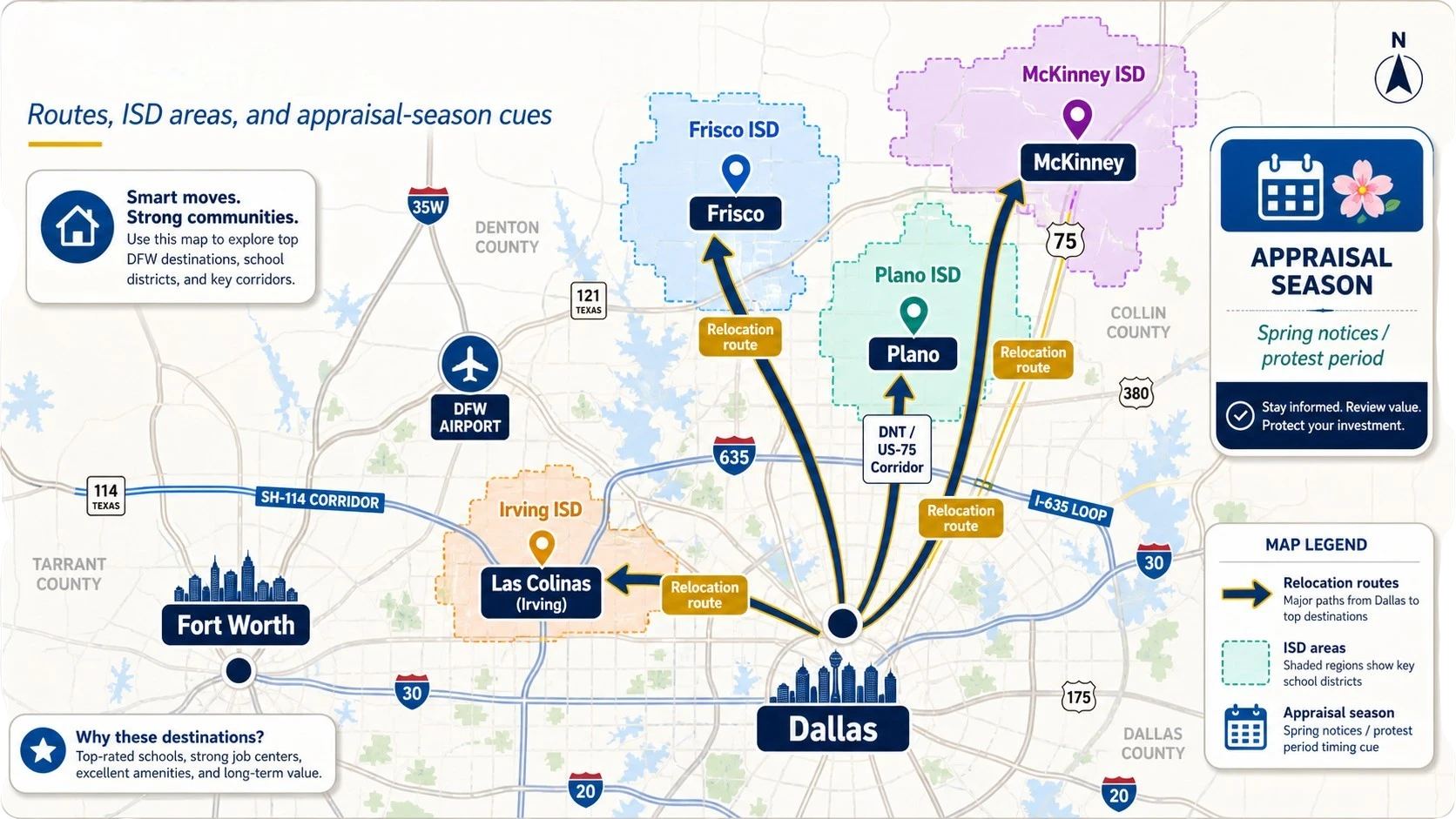
    Corporate relocation: Q4 and Q1 are peak relocation seasons as companies onboard new hires. Run ads from October through February targeting relocation-adjacent searches and audiences along the Dallas North Tollway toward Plano and Frisco, US 75 toward Allen and McKinney, and Las Colinas for international transfers.

    ISD deadline: Families with school-age children try to close before August, and the decision cycle peaks from January through May. Ads referencing specific ISD names during this window reach buyers already comparing districts who haven’t committed to an agent yet.

    Appraisal season: Dallas County mails appraisal notices in April. Running seller ads during this window on both Google and Facebook puts you in front of homeowners already thinking about their property’s value. Bidding on “protest Dallas County appraisal” and running ads that connect assessed value to actual sale price captures attention at exactly the right moment.

    Retargeting: Convert the Visitors You Already Paid For

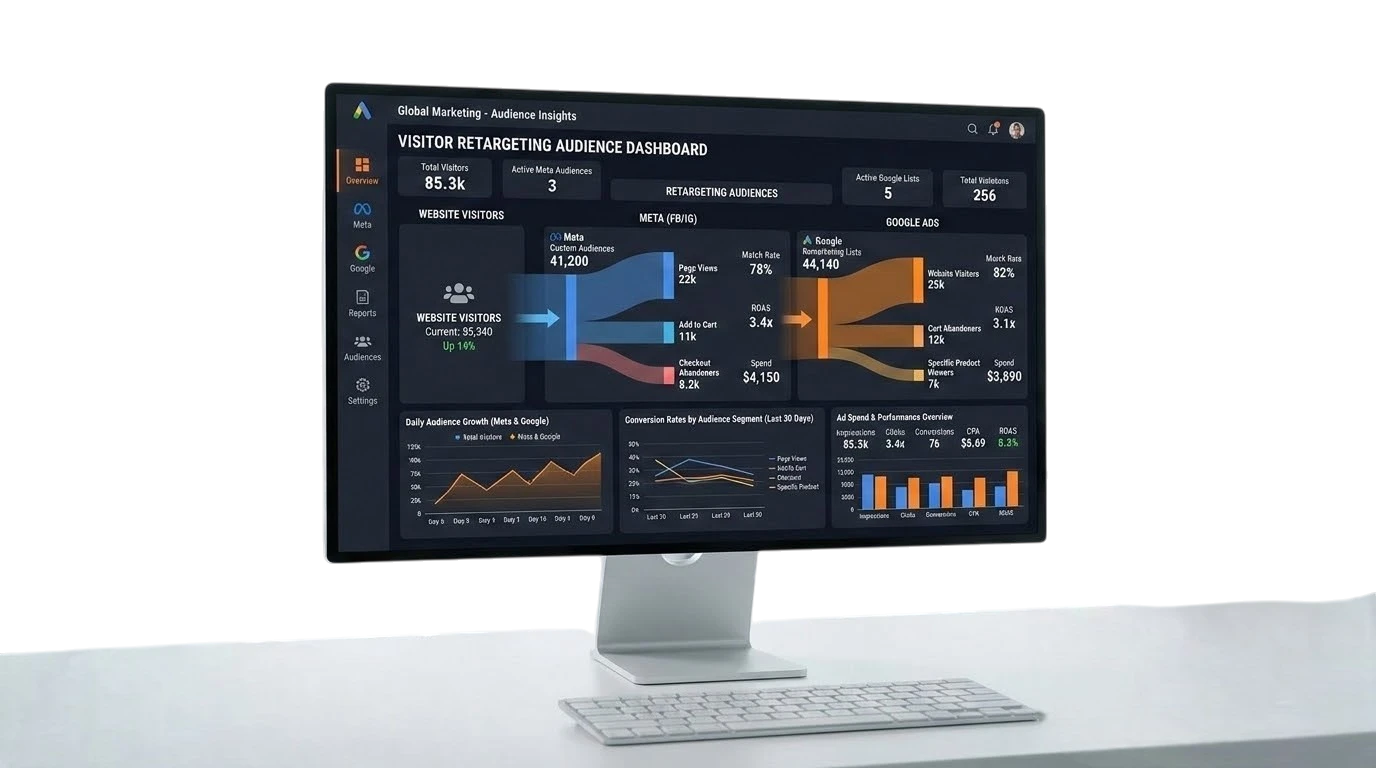
    Someone clicks your ad, browses listings, and leaves without making contact. Without retargeting, that visit is lost. With it, they continue seeing your ads on Facebook, Instagram, and Google for the next 30 days.

    Retargeted visitors are 70% more likely to convert, and because the audience is small, the cost is minimal compared to cold prospecting.

    Install the Meta Pixel and Google Tag on your website before you run your first paid campaign. Creating a custom audience of visitors from the last 30 days takes about five minutes once the Pixel is live.

    Then run a softer offer to that audience:

    • A free market report
    • A valuation tool
    • A curated neighborhood update

    The messaging should feel like a helpful follow-up rather than a fresh pitch. Something like “Still thinking about homes in Lakewood? Here’s what just hit the market this week” works because it’s useful and specific, not because it’s clever.

    Most Dallas agents skip retargeting entirely because it feels like a secondary tactic. That’s exactly why the opportunity is still there. You’ve already paid to bring those visitors to your site, and retargeting is the most cost-efficient way to get a second chance with them.

    Putting It Together

    Start with one paid channel.

    For buyer leads fast, run Google Search Ads in two or three Dallas neighborhoods with dedicated landing pages for each. For seller leads at a lower cost per lead, start with Facebook lead ads targeting homeowners in one zip code. Add retargeting in month two once your Pixel has enough data to build a meaningful audience.

    The agents who get the most out of paid advertising in Dallas aren’t necessarily spending the most. They’re advertising consistently over time.

    A campaign that runs every month for six months will outperform a larger budget that runs for six weeks and gets paused when things get busy. Staying visible in a competitive market is itself a competitive advantage, and the agents who treat advertising as an ongoing expense rather than a periodic experiment are the ones who benefit from it most.

  • Best Real Estate Exam Prep Options for Dallas Aspiring Agents (2026 Review)

    Image Source: wikipedia.org

    As an aspiring agent, the first challenge you’ll face is passing the real estate exam. In any state, the exam can be difficult, but in Texas and especially in one of the nation’s most competitive markets, Dallas–Fort Worth, it is daunting.

    Students often turn to exam prep platforms for study guides, study strategies, and mock exams. But with so many options out there, choosing the right one can make the difference between passing the exam on your first try or having to retake it.

    Here are the best exam prep platforms for Dallas-based real estate agents to help you make the right choice for your needs.

    What Makes the Texas Real Estate Exam Challenging

    The Texas Real Estate Exam is considered difficult for aspiring agents. Most candidates agree that the difficulty comes from the combination of national and Texas-specific content, the complexity of the material, and the pressure of time.

    The exam is divided into two sections: the National portion and the Texas-specific portion. Each comes with its own challenges, and certain topics require a deep understanding and application to do well.

    The National portion of the Texas Real Estate Exam tests candidates on broad real estate principles that apply across the United States. While this may seem general, the content still demands a thorough understanding. Topics like contracts and agency are particularly hard because candidates need to understand all the nuances and relationships involved.

    The Texas-specific portion of the exam brings its own set of challenges and places a heavy emphasis on Texas rules and regulations. Texas has its own real estate laws that differ from federal laws and practices seen in other states. Key areas of focus include disclosures and property rights. For example, the Seller’s Disclosure Notice in Texas is unique, and agents must know it well.

    On top of all that material you need to memorize, the Texas Real Estate Exam is notorious for its time pressure. The limited time to answer all the questions tends to cause anxiety, especially given the complexity of the topics. In fact, many candidates fail not for lack of knowledge, but for poor time management during the exam.

    Knowing all this, it’s easy to understand why exam prep platforms have become a crucial resource for many. These platforms provide focused content reviews, practice tests, and detailed explanations to help candidates tackle each section of the Texas Real Estate Exam confidently.

    What to Look for in a Real Estate Exam Prep Platform

    A solid exam prep platform doesn’t just provide content. It also helps you build the skills and confidence you’ll need. When selecting a real estate exam prep platform, it’s essential to evaluate the factors that can make a difference in your preparation.

    Here’s what to look for when choosing the right resource to set yourself up for success.

    • Realistic Exam Simulations: Time management is crucial during the real estate exam, and practicing under timed conditions will help you get used to the pressure.
    • Topic-by-Topic Practice: This approach allows you to target specific areas where you may need improvement instead of just taking broad practice exams.
    • Question Volume and Explanation Quality: A platform with a high volume of questions ensures that you have enough practice material. However, it’s not just about quantity. The quality of the explanations matters just as much.
    • Progress Tracking and Readiness Indicators: Look for platforms that offer readiness indicators. These features typically highlight your weak areas and suggest targeted exercises to help you improve.
    • Study Formats: If you struggle with math, look for platforms that offer specific math help tools that break down complex calculations into simple steps. Also, incorporating audio and video resources can be a great way to reinforce concepts, particularly for those who benefit from hearing explanations or visual demonstrations.
    • Free Practice or Trial Access: This gives you a chance to evaluate whether the platform suits your learning style and provides enough support for your needs. Free access to practice tests or sample materials can help you decide whether it’s worth investing in the full program.

    By keeping these factors in mind, you’ll be able to make an informed decision and find the best platform for your exam preparation needs. This understanding sets the stage to recognize which platforms truly stand out in helping you achieve exam success.

    Best Real Estate Exam Prep Platforms for Dallas Agents

    Reunion Tower – Image Source: waynekirk.com

    1. Lexawise — Best Value for Quality and Price

    What we love about Lexawise is that it offers realistic practice exams that simulate actual exam conditions and question formats, complete with a calculator and timer to match the real exam. Plus, it has separate practice tests for each topic covered in the Texas exam and the national portion. This allows students to focus on specific areas and build confidence before taking the full test. Best of all, all plans include these essential features, so students pay only for the time they need, not for extras they won’t use.

    We chose it as our favorite for Texas agents because Lexawise stands out with its massive question bank of over 4,800 practice questions. It offers more than most competitors, ensuring thorough preparation. It also features a mobile app, which is ideal for studying on the go.

    Lexawise also includes a math guide and a summary eBook, which are incredibly helpful for mastering real estate formulas and terminology. If you’re someone who learns best through visuals, it also has videos and audio lessons that reinforce key concepts.

    Another key reason we favor Lexawise is its progress tracking system. It shows how you’re performing across exam topics and helps you clearly identify when you’re truly ready for the exam. All these features make it the most complete and flexible choice for Texas agents.

    2. CompuCram

    What we like about CompuCram is that it offers an all-in-one system with vocabulary tools, interactive practice tests, and simulated exams that help students reinforce key concepts and get comfortable with the real exam format. It includes flashcards, timed exams, and detailed explanations, allowing students to track their progress easily.

    However, some users feel the interface could be more modern, and the answer explanations could be more detailed and contextual for a deeper understanding.

    3. The CE Shop

    We like that The CE Shop stands out for its comprehensive initial assessment, which helps students identify their strengths and weaknesses before diving into their studies. This tailored approach ensures that students focus on their weakest areas, making their study time more efficient. The platform also covers all the major topics of the real estate exam thoroughly and provides detailed lessons and ample practice questions.

    However, an area of improvement would be to add realistic exam simulations to the practice tests, such as timed exams with on-screen calculators or more in-depth scenario-based questions to help students better prepare for the actual testing conditions.

    4. PrepAgent

    PrepAgent is particularly known for its live webinars and personalized tutoring sessions, which set it apart from many other platforms. These features allow students to get real-time support and interact with instructors, ensuring a more tailored learning experience.

    The live webinars cover key topics in detail, while one-on-one tutoring sessions provide the opportunity to address specific areas of difficulty. However, one area for improvement would be more practice questions, as the platform could offer a larger question bank for students to test their knowledge and gain more exam-like experience.

    5. Colibri Real Estate

    Colibri Real Estate offers state-specific exam prep and positions it around practice exams and mastering common exam topics, with audio playback for review. They also offer a free practice exam so students can try the style before purchasing.

    One common complaint, based on user feedback, is that some learners find the prep can feel repetitive and not always as close to the real exam’s wording and level of detail as they’d like.

    How to Use Exam Prep Platforms Effectively

    No matter which platform you choose, there are proven strategies you can follow to maximize your study time and boost your chances of passing.

    • Start with Topic-Based Practice: Break the exam into manageable sections, such as contracts, agency, disclosures, and math calculations. This focused approach allows you to tackle individual concepts one at a time instead of overwhelming yourself with random questions.
    • Track Mistakes and Patterns: Constantly revisiting your mistakes and understanding why you got something wrong is key to improving your overall knowledge. Most exam prep platforms will highlight these wrong questions for further review.
    • Mix Short Drills with Full Simulated Exams: The key here is balance. Short drills help you build knowledge incrementally, while full simulations prepare you for the endurance needed on exam day.
    • Use Math Guides and Definitions Consistently: Math guides can help you break down complex formulas and calculations to make them easier to understand. Similarly, don’t overlook definitions, as their precise meanings are often tested on the exam.
    • Avoid Cramming and Focus on Readiness Indicators: Cramming is not effective and can lead to unnecessary stress. Instead, focus on readiness indicators to gauge your performance across various sections and give you a sense of when you’ve mastered the material.

    By following these strategies, you’ll improve your retention, gain confidence, and enter the exam room well-prepared, whether or not you decide to purchase a specific prep platform. These tips are universal and can be applied across different study resources for a more efficient and effective study experience.

    Conclusion

    The right exam prep platform can make a significant difference in how well you perform on the Texas real estate exam. While no one solution fits all, finding a platform that aligns with your learning style, schedule, and preparation needs is key.

    Choose wisely, and step into your exam day with confidence, knowing you’ve prepared thoroughly.