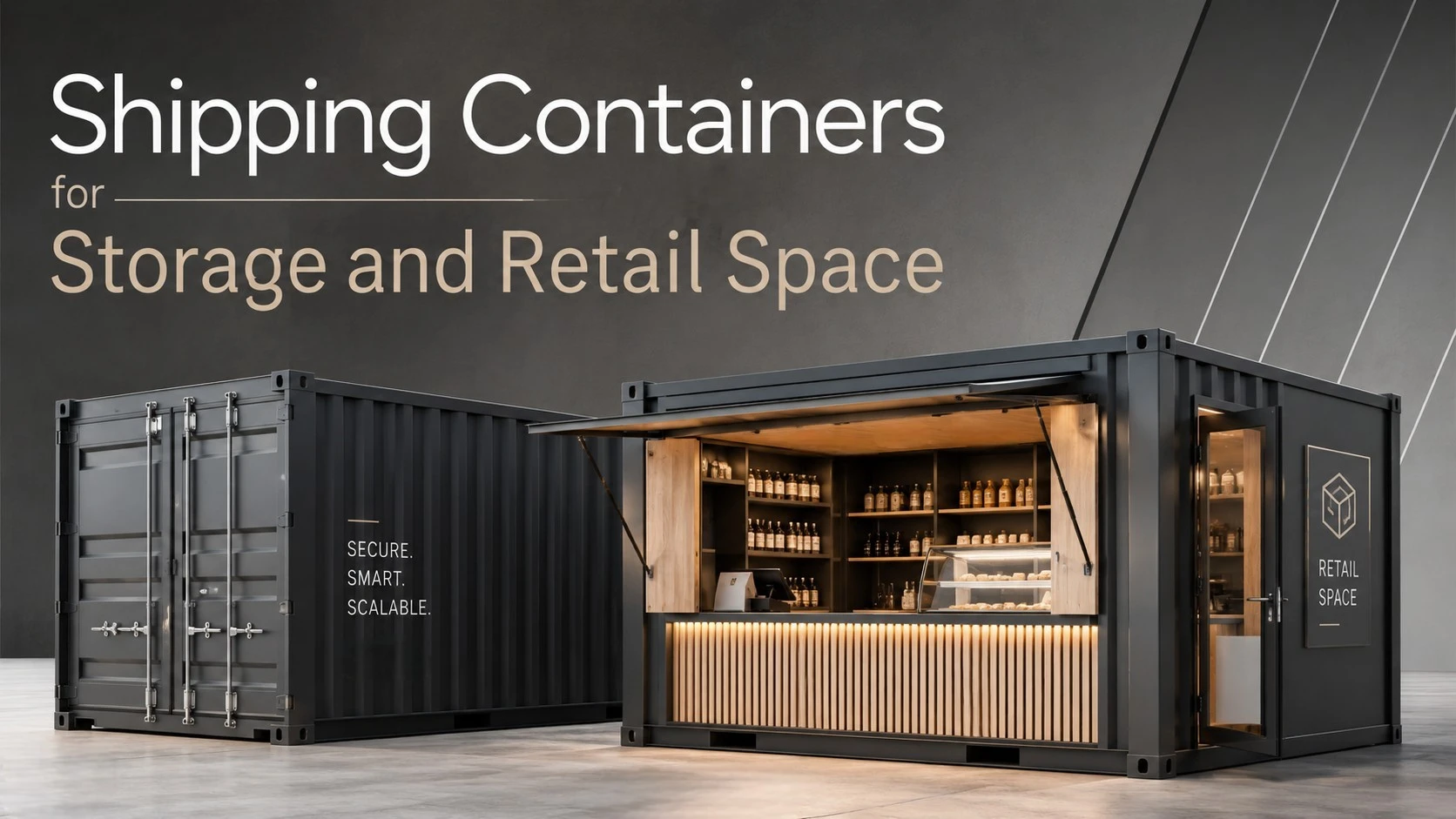
For many small business owners, space becomes a challenge long before they expect it. Inventory grows quickly during busy seasons, equipment takes over every inch of the storeroom, and commercial rent continues to rise in many markets. As businesses look for ways to expand without driving up overhead costs, shipping containers have become an increasingly practical option for both storage and retail space.
Once just used to move goods across the ocean, shipping containers are now being repurposed as on-site storage, pop-up shops, mobile workspaces, and hybrid business facilities. They offer something many small businesses need which is flexibility without the financial pressure of traditional commercial real estate investments.
A Practical Solution for Storage
Storage is one of the first challenges many businesses face as they expand. Contractors need additional space for tools and materials while retailers need room for overstock, and landscaping companies need somewhere to keep seasonal equipment.
Shipping containers solve those problems by providing storage that is secure, durable, and relatively affordable. With simple upgrades like shelving, lighting, or ventilation, they can easily be adapted to fit specific operational needs.
Many business owners also appreciate the convenience of having storage directly on-site. Instead of driving to an off-site warehouse or storage facility, employees can quickly access tools, inventory, or equipment throughout the workday, helping improve efficiency and reduce downtime.
Lower Costs and Increased Flexibility
One reason shipping containers have become so popular among small businesses is cost control. Expanding into larger commercial space often requires significant upfront investment and long-term lease commitments. For businesses still growing or testing new markets, that level of financial commitment can create unnecessary risk.
Containers offer small businesses a more flexible alternative. Purchasing a used or new one trip shipping container is generally far less expensive than leasing additional retail or warehouse space, and even customized retail-ready units usually cost less than a traditional commercial buildout.
Using Shipping Containers as Retail Space
Beyond storage, though, containers are increasingly being used as retail and customer-facing spaces. Coffee shops, boutiques, salons, breweries, and specialty retailers have all embraced shipping container-based solutions.
Part of the appeal is financial, but shipping containers also offer a distinct visual presence that helps businesses stand out. A well-designed container storefront naturally attracts customer attention in ways that many traditional retail spaces don’t.
Pop-up shops are one of the most common examples. Shipping containers can be converted into compact retail units with windows, lighting, branding, and climate control, then placed in high-traffic areas such as downtown districts, outdoor markets, festivals, or mixed-use developments.
For small businesses, this creates opportunities that might otherwise be out of reach financially. A clothing brand can test a new neighborhood before signing a lease, just as a coffee business can establish a presence near office buildings or event venues, and retailers can participate in seasonal markets using a consistent and recognizable setup.
Shipping containers also work well for hybrid business models that combine online sales with physical retail. Some businesses use part of the container as a showroom while the remaining space stores inventory for local fulfillment and shipping. This setup allows owners to maintain a physical presence without the expense of a large storefront.
Faster Timelines Than Traditional Construction
Speed is another major advantage of using shipping containers for retail expansion. Traditional construction projects can take months once permitting, contractors, and materials are factored in. Shipping containers dramatically shorten that timeline because the primary structure already exists.
For businesses responding to seasonal demand or short-term opportunities, that speed matters. A company can move quickly on a high-traffic location or event opportunity without dealing with a lengthy construction timeline.
Branding and Customer Experience
Exterior paint, signage, landscaping, lighting, and large windows can transform a shipping container into a polished and inviting storefront. Interior finishes help create a space that feels intentional rather than temporary.
For many small businesses, the containers become part of the brand itself. Their unique appearance often attracts customer attention and creates opportunities for social media visibility, especially in busy retail environments where standing out is increasingly important.
Key Things to Consider
Shipping containers are flexible, but they aren’t without their challenges. Local zoning laws and permitting requirements vary significantly depending on the municipality and intended use.
Storage applications are generally easier to approve than customer-facing retail spaces, which may require additional inspections related to accessibility, safety, and occupancy. Before investing in a shipping container project, business owners should check local regulations and confirm site requirements.
Climate control is another important factor. Steel containers heat up quickly in warm weather and can become quite cold in winter conditions without proper insulation and ventilation.
Working with experienced shipping container suppliers or fabricators can help businesses predict and prevent common issues.
A Flexible Path to Growth
Shipping containers aren’t a perfect solution for every business, but they address many of the challenges small companies face when trying to grow responsibly. They provide affordable storage, adaptable retail space, and a lower-risk path to expansion in an increasingly expensive commercial real estate market.
For some businesses, shipping containers remain a behind-the-scenes operational tool while for others, they become a visible part of the brand experience. In both cases, the value comes from flexibility and cost control.
As more businesses look for ways to operate efficiently without overcommitting financially, shipping containers are likely to remain a practical option for storage, retail expansion, and long-term growth.