Tag: city council

  • Major Development, Infrastructure Votes on Agenda in Dallas-Fort Worth

    Major development and infrastructure decisions are on the agenda in both Fort Worth and Dallas on Tuesday, highlighting the region’s ongoing expansion. In Fort Worth, the City Council will consider an agreement for a massive 858-acre master-planned community, while Dallas transportation officials are holding a public meeting on the redesign of a 3-mile corridor in West Oak Cliff.

    The Fort Worth vote, scheduled for 10 a.m. at City Hall, centers on the Shelton Ranch property located just outside city limits in its extraterritorial jurisdiction. Developer Green Brick Partners is seeking an agreement to build infrastructure for a community that, according to city documents, would allocate 505 acres for homes, 45 acres for apartments, and additional space for schools, parks, and commercial use. Under the proposal, the developer would form a municipal utility district to finance infrastructure, while the city would serve as the retail provider of water and sewer services. The item is currently on the consent agenda, suggesting it could be approved with minimal discussion.
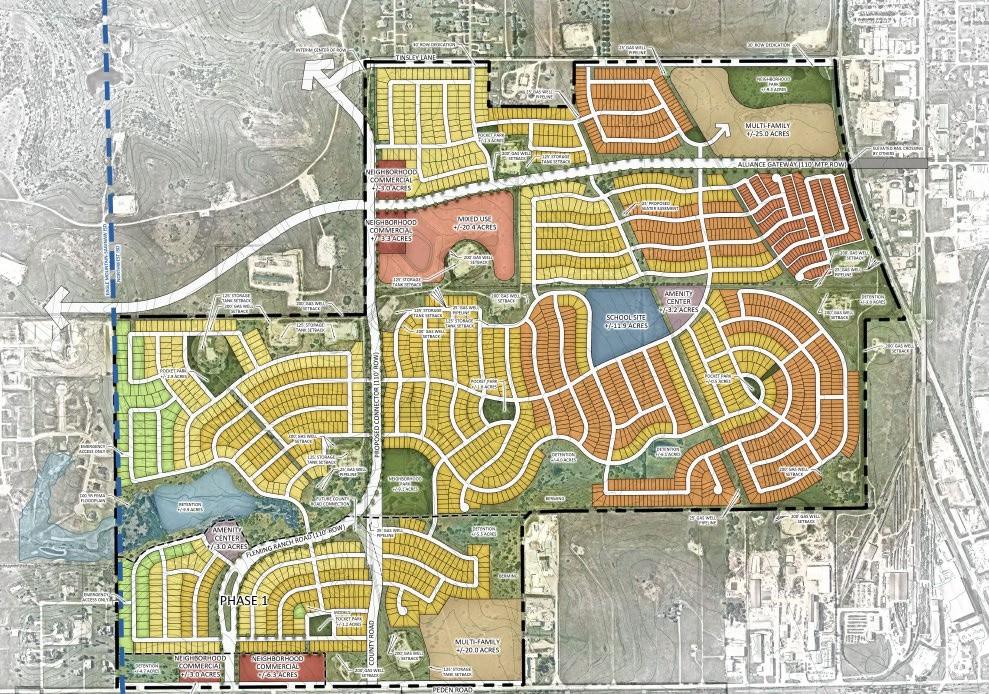
    Shelton Ranch master plan (878 acres, Green Brick Partners) within Fort Worth’s ETJ.

    Fort Worth officials are also set to vote on a revised funding structure for the Evans and Rosedale Urban Village project in the Historic Southside. The development, led by Milwaukee-based Royal Capital Group, is planned to include 184 residential units and commercial space. The new agreement would see the Fort Worth Housing Finance Corp. take ownership of the land. It also includes a $2.5 million forgivable loan from the Department of Housing and Urban Development and $7 million in Tax Increment Financing district funds, which would be allocated to the developer over two phases.

    Meanwhile, in Dallas, city staff will present new details and take public feedback on upgrades to a three-mile stretch of West Davis Street in West Oak Cliff. The project is in early design and focuses on safer walking and biking, with possible additions like landscaping and better sidewalk lighting.

    Residents are invited to review “preferred options for potential roadway alignments” at a meeting scheduled for 5:30 p.m. at Saint Cecilia Catholic School. This transportation project is a component of the city’s broader West Oak Cliff Area Plan, which Dallas City Council approved in 2022 to improve quality of life and help existing residents remain in the district. A timeline for construction has not yet been established as the city continues to gather public input.
  • Two Companies to Invest $49.4 Million in Denton, Create 222 New Jobs

    DENTON, Texas — In a move set to reshape Denton’s economic landscape, two major companies have announced plans to invest a combined $49.4 million in the city, a commitment that could bring more than 200 new jobs to the area.

    At the center of the plan is U.S. Cold Storage, a New Jersey-based company that distributes refrigerated goods for clients like Kraft and Butterball. The company plans to expand its existing facility on Jim Christal Road by 100,000 square feet, bringing its total investment in the area to $34.9 million. According to city records, the expansion would create 172 new jobs, with average salaries of just over $57,000.

    Denton officials are offering significant incentives to make that happen: a property tax abatement of 60 percent over eight years, and a sales tax rebate on construction materials, for a combined value of $1.07 million. In return, the city expects $1.4 million in new revenue, along with additional gains for Denton County and the local school district.

    Just down the road, Mayday Manufacturing, an aerospace parts manufacturer established in 1966, is planning a $14.5 million expansion at 3100 Jim Christal Road. The company, which was acquired by Esco Technologies in 2016 (NYSE: ESE), says the project is expected to create 50 new jobs with an average annual wage of $54,020, bringing its total Denton workforce to 450. Mayday has applied for a 60 percent property tax abatement over 10 years and a Chapter 380 economic development grant of up to $577,944. The Denton Economic Development Corporation Board has recommended approval, and city officials expect the incentives to pay off within four years.

    City analysts project that both investments would pay off in under a decade. But neither company has publicly commented on the plans, raising questions about transparency and public benefit ahead of a June 3 City Council vote.

    For Denton, the stakes go beyond job numbers. The decision reflects a broader challenge: how to attract and retain major employers without overcommitting public funds, and how to ensure that growth reaches the communities that need it most.

  • Jury to Decide Fate of $200 Million Pepper Square Redevelopment Amid Neighborhood Legal Battle

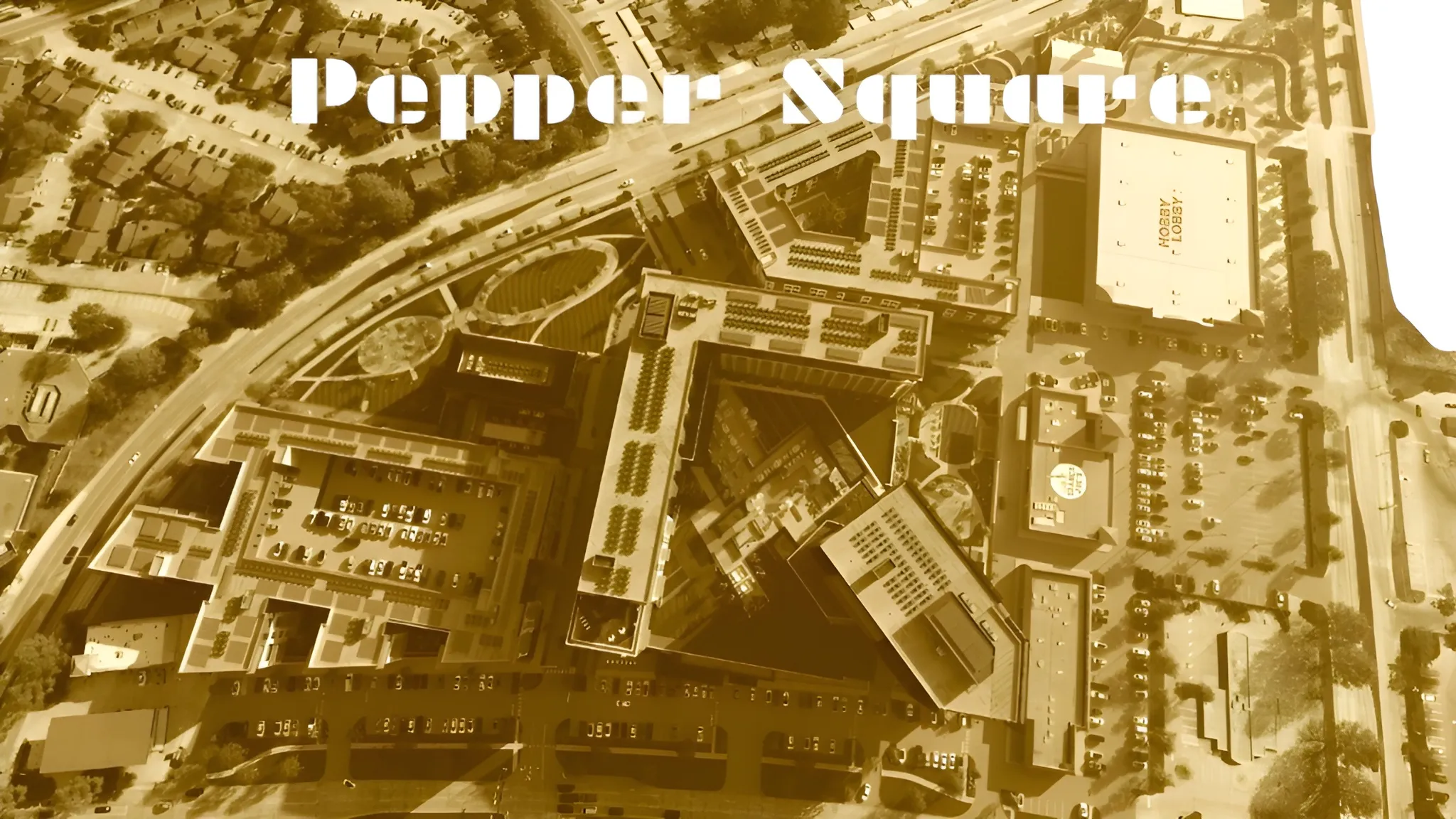
    DALLAS — A high-stakes legal showdown is set for October as a North Dallas neighborhood association takes its fight against the $200 million Pepper Square redevelopment to a jury, marking a pivotal moment in a long-running dispute over the future of the 15.5-acre site at Preston and Belt Line Roads.

    On Friday, Judge Martin Hoffman of the 68th District Court scheduled a jury trial for October 6, granting the Save Pepper Square Neighborhood Association its day in court to challenge the city’s approval of the controversial rezoning. At the heart of the lawsuit: allegations of “illegal spot zoning” and accusations that Dallas city officials are disregarding their own comprehensive land use plans.

    “We’re very happy,” said Matt Bach, who leads the neighborhood association. “I think we’ve always had a strong argument, and the case had its merits, but you never know what the judge is going to think. Now, a jury of our peers will have the chance to weigh in.”

    The legal wrangling has put the brakes on Henry S. Miller Co.’s ambitious plans to transform the aging strip center into a mixed-use hub featuring nearly 900 apartments and at least 35,000 square feet of retail. While supporters tout the project as a much-needed revitalization for a dated commercial corner, neighbors have repeatedly voiced concerns about density, traffic, and the erosion of their suburban character.

    Despite the Dallas City Council’s vote in March to rezone the property, the neighborhood association swiftly mobilized—raising more than $75,000 to bankroll legal efforts and securing a temporary restraining order last month that halted any groundbreaking. The group contends that the rezoning constitutes “spot zoning,” a practice where a small parcel is singled out for a use inconsistent with the surrounding area, which is generally prohibited under Texas law.

    “It’s about the fact that what Henry S. Miller is trying to build does not fit with the character of our neighborhood,” Bach explained. “We’re not against development, but this is about following the rules and respecting the community.”

    Some community leaders, including former District 11 Councilman Lee Kleinman, have called for Pepper Square to be designated as a Planned Development District to ensure more robust community engagement and tailored zoning regulations.

    Under a tentative agreement approved by Judge Hoffman, the developer has agreed not to begin construction until after the October trial, while the neighborhood association has pledged not to seek further injunctions in the interim. Both sides say the arrangement is reasonable, if only a temporary truce.

    “We think there is a case for spot zoning, and the court allowing this trial is going to let us prove it—and let a jury hear it,” said Austin Smith, lead attorney for the association and a partner at Steckler Wayne & Love PLLC. “We’re preparing for trial and confident in our position.”

    For now, the fate of Pepper Square hangs in the balance. As legal teams prepare for a fall courtroom battle, the case has become a flashpoint in Dallas’ ongoing debate over growth, zoning, and neighborhood preservation.

    “We’re confident a jury will see this for what it is,” Bach said. “This is about more than just one project—it’s about the future of our community.”