Tag: Cash Reserves

  • Key Risks and Advantages of Buying Foreclosure Real Estate

    Image Source: shutterstock.com

    The first thing people notice about a foreclosure is the price. Fair enough. The second thing, if they’re honest, is the fantasy. Cheap house, quick cleanup, instant equity, and maybe a nice flip story to tell later. But while that fantasy is powerful, it also gets buyers into trouble.

    If you’re looking at foreclosed homes, start with facts, not emotions. A lot of people use ForeclosureHub to see what’s actually on the market, what stage the property is in, and whether the deal even exists outside a catchy listing headline. That part matters more than most buyers think.

    Foreclosures can be a smart buy, but they can also turn into slow, expensive messes. The line between them is usually the boring stuff like title work, repair estimates, local comps, and whether you’re buying with enough cash left over to survive bad surprises.

    Why Buyers Chase Foreclosures in the First Place

    A foreclosure often enters the market because the lender wants the property off their books. There’s no owner repainting the kitchen and baking cookies before showings. There’s no sentimental pricing and no family arguing over whether granddad’s old place is worth more because of the memories. That can create room for a buyer who’s paying attention.

    In the best-case scenario, you buy below market value, fix what needs fixing, and either move in with equity already built in or rent it out at numbers that actually work. That last part is huge right now. Plenty of standard listings look fine until you run the math and realize the rent won’t support the payment, taxes, insurance, and repairs. A foreclosure, bought right, can give you breathing room.

    There’s another advantage people don’t talk about enough. Distressed properties scare casual buyers away. Many don’t want to deal with repairs or uncertainty. Some hear the word “foreclosure” and assume every deal is cursed. That hesitation can reduce competition, especially on rougher homes.

    But remember, this is not free money. It never was.

    The Real Advantages of Buying a Foreclosure

    A lower basis can change everything When investors talk about a good buy, they’re usually talking about basis. What you’re all-in for, not just the purchase price. If a foreclosure lets you come in lower than a comparable traditional sale, your options improve fast.

    You may have:

    That’s the ideal situation, and it happens, just not automatically.

    Lenders are usually less emotional than traditional sellers

    Banks can be frustrating, slow, and weirdly rigid, but they’re not sentimental. They’re not rejecting your offer because they feel your family isn’t the right fit for the home. If the numbers, terms, and timing work, the deal can move. The process is often more mechanical, which some buyers actually prefer.

    Value can be created, not just hoped for

    A foreclosure with ugly paint, dated flooring, and neglected landscaping might look awful to a first-time buyer. To someone experienced, that can be a great opportunity. Cosmetic distress is where money can be made. Structural distress is where money disappears. That distinction matters more than the listing discount.

    Where the Risks Start Sneaking In

    Here’s the part that wipes out a lot of great deals. Buyers focus on the discount and stop asking important questions about the home’s true condition, who still has a claim against it, and whether it can be properly inspected. They also forget to check if anyone is still living there or what it will actually cost to make the property financeable, rentable, or livable. Those are the questions that separate a smart purchase from a financial migraine.

    ‘As-Is’ Really Means As-Is

    Foreclosures are often sold as-is. People hear that and think they might just need to replace some carpet. In reality, as-is can mean anything from needs paint to the plumbing was stripped and the basement has been wet for eight months. It can mean the seller won’t fix a single item, won’t offer credits, and may not know much about the home in the first place. That’s not a reason to walk away every time, but it is a reason to get serious.

    Hidden damage is common, and not always visible

    Vacant homes age badly and quickly. A tiny roof leak becomes interior damage. A broken window becomes moisture, pests, mold, and vandalism. A property that sat without utilities can have HVAC, plumbing, or appliance issues that only show up later. Photos rarely tell the whole truth, and sometimes they tell almost none of it. This is where foreclosure buyers get themselves in trouble by estimating repairs from a phone screen. That habit is expensive.

    Title problems can outlive the previous owner

    A cheap house with a messy title isn’t cheap. It’s a problem. Depending on the state and the foreclosure process, you could be dealing with unpaid property taxes, HOA balances, junior liens, judgments, or old contractor claims. Some of these get wiped out, while others don’t. You need to know which is which before closing, not after. if you skip title work because you’re trying to save money, you’re buying blind.

    Occupancy can become its own project

    Some foreclosure properties are vacant, which is great, but others are not. The former owner or a tenant might still be living there. Maybe someone’s cousin, who no one mentioned, has been staying in the back room for months. Taking possession isn’t always a clean process, and legal removal takes time. Time costs money. If your whole plan depends on getting keys and starting renovations the next morning, you’re assuming too much.

    Not Every Foreclosure Deal Works the Same Way

    This part gets glossed over online, but it matters a lot.

    Pre-foreclosure

    This is the stage before the auction, when the owner is behind but still technically in control. These deals can offer better access and more normal negotiation. They can also be emotionally complicated, because you’re dealing with a distressed seller under pressure.

    Auction property

    This is where people get starry-eyed and sometimes wiped out. At auction, you may need cash, fast deposits, and a willingness to buy with limited access. You might not be able to inspect the interior, and title issues are often less clear than you’d like. The discount can be real, but so is the risk.

    REO, or bank-owned property

    If the property doesn’t sell at auction, it often becomes bank-owned. This is usually the most accessible version for everyday buyers because it tends to look more like a traditional sale. You might get inside and have the chance to inspect it. You still need to read every line of the bank addendum because those contracts are written to protect the seller, not the buyer.

    Red Flags That Should Slow You Down

    You don’t need to walk away from every deal, but you do need to slow down when the warning signs pile up.

    Watch closely if you see:

    • no interior access or very limited access
    • an unusually low price with vague listing details
    • evidence of long vacancy
    • unpaid HOA fees or tax delinquency
    • visible water damage, foundation movement, or missing systems
    • a seller pushing speed while giving little documentation

    One red flag isn’t always a dealbreaker, but several usually mean trouble.

    A Smarter Way to Approach Buying a Foreclosure

    What to do before you commit:

    1. Figure out the foreclosure stage first. Pre-foreclosure, auction, and REO are different animals.
    2. Run real comps, not wishful ones. Use sold data from the immediate area.
    3. Get a repair number from someone who actually swings a hammer.
    4. Order title work early when possible, and ask direct questions about liens, taxes, and HOA balances.
    5. Budget for delays. Not hypothetical delays, but actual delays.
    6. Leave yourself a cash cushion, because the first estimate is rarely the last number.

    That’s not glamorous advice, but it’s the stuff that keeps a good buy from becoming a regret.

    So, Is Buying a Foreclosure Worth It?

    Sometimes, absolutely. Foreclosures can give disciplined buyers a real edge. You can get a better entry price, higher upside, less competition, and stronger long-term returns if the property is in the right area and the numbers make sense. But the keyword there is disciplined. If you’re buying on emotion, assuming the house is probably fine, or counting on everything to go smoothly, you’re doing it wrong. Foreclosures reward patience, cash reserves, local knowledge, and a strong stomach for details. They punish shortcuts.

  • The 620 Credit Score Wall Has Fallen: What This Means for Dallas Homebuyers in 2026

    By: Lendersa Admin

    Imagine showing up to a velvet-rope club in Uptown—the kind where the bouncer has famously turned away anyone wearing sneakers for the last twenty years. Then, one random Saturday, he just shrugs and waves a guy in flip-flops right through the door.

    That is essentially what just happened in the mortgage world, and it is shaking up the Dallas housing market.

    In a move that has left lenders from Frisco to Fort Worth with their jaws on the floor, Fannie Mae officially retracted its long-standing 620 minimum credit score requirement for Desktop Underwriter (DU) submissions back on November 16, 2025. The hard deck is gone. The “Great Wall of 620” has fallen.

    But this isn’t just dry policy talk for industry insiders. This is about real families, real money, and the difference between paying 6% interest and getting gouged at 12%.

    If you’ve been trying to buy in DFW but felt locked out by a three-digit number, pay attention. We’re going to look at three specific scenarios—based on the new guidelines—of Dallas borrowers who would have been rejected in October 2025 but are getting the keys to their homes this January.

    The “Oops” That Wasn’t an Oops

    For years, the rule was simple: If your FICO score was 619, the computer said “No.” It didn’t matter if you had a million dollars sitting in a bank account in Preston Hollow; the algorithm was allergic to anything under 620.

    As of late 2025, that logic has been deleted. Fannie Mae’s AI now looks at the whole picture rather than obsessing over a single score. This brings them in line with Freddie Mac, creating a new world where “compensating factors” rule the day.

    Lenders in the Metroplex are already reporting approvals for scores in the high 400s. Yes, you read that right. Loans that were “dead on arrival” 90 days ago are suddenly breathing again.

    Case Study #1: The “Cash-Rich, Credit-Ghost”

    The Buyer: Alex, a 29-year-old freelance software developer looking for a condo in Deep Ellum.

    • Income: $140,000/year (steady for 3 years).
    • Credit Score: 580.
    • The Problem: Alex hates debt. No credit cards, no car note, just one old $50 medical bill he forgot about.
    • Savings: $60,000 in the bank.

    The Old World (Oct 2025): Alex walks into a lender’s office. The loan officer sees the 580 and says, “Sorry, Alex. Fannie Mae requires a 620. You’re a ‘Ghost.’ Come back when you’ve opened three credit cards and waited a year.”

    • Alex’s Only Option: A Hard Money Loan at 10.5% with a massive 25% down payment. He can’t afford the cash to close. He keeps renting.

    The New World (Jan 2026): Alex uses a tool like LENDERSA® to find a lender utilizing the new Fannie Mae guidelines. The AI sees his 580 score but digs deeper into the “Holistic” view:

    • Income Stability: Strong freelance history.
    • Reserves: That $60k cash is a massive “compensating factor.”
    • DTI: 0%. He has no monthly debts.

    The Verdict: APPROVED for a Conventional Loan.

    • Rate: 7.6% (Higher than prime, but way lower than hard money).
    • Down Payment: 5% ($20,000).
    • The Win: Alex buys the condo. He keeps $40k of his savings for renovations and furniture.

    Case Study #2: The “Life Happened” Family

    The Buyers: The Robinsons, a couple looking to downsize to Plano to be closer to grandkids.

    • Combined Income: $110,000.
    • Credit Score: 604.
    • The Problem: Two years ago, a medical emergency caused them to miss three mortgage payments. They maxed out cards to pay hospital bills. They have since recovered and been on time for 18 months.

    The Old World (Oct 2025): The 604 score triggers an automatic “Refer/Ineligible.” The Loan Officer says, “I see you’ve recovered, but the computer won’t let me pass a 604. Wait another 12 months.” They are stuck in their current house or forced to sell and rent, losing equity.

    The New World (Jan 2026): The new system analyzes their file using Trended Data:

    • Behavior: The AI sees that for the last 18 months, they have paid more than the minimum on their cards. It recognizes the “medical event” as an anomaly, not a habit.
    • Equity: They are putting 20% down from the sale of their old house.
    • Reserves: They have 6 months of mortgage payments saved up.

    The Verdict: APPROVED for a Conventional Fixed-Rate Mortgage.

    • The Win: They avoid the “subprime” market entirely because their current financial behavior outweighs their past score. They move directly into their new Plano home.

    Case Study #3: The Investor with “Too Many Irons in the Fire”

    The Buyer: Jessica, a real estate investor eyeing a fixer-upper in Oak Cliff.

    • Credit Score: 615.
    • The Problem: High utilization. She uses personal credit cards to renovate her flips. She pays them off when a house sells, but right now, her balances are high, tanking her score.

    The Old World (Oct 2025): Jessica knows the drill. A 615 score bans her from conventional investment loans.

    • Jessica’s Option: Hard Money Loan at 11.9% with 3 points upfront ($12k fee on a $400k loan) and a stressful 12-month balloon payment.

    The New World (Jan 2026): Jessica scans for lenders using the new guidelines. The system flags her rental income history as stellar.

    • Context: The system sees she pays these high balances off regularly (Trended Data). It understands she isn’t “broke”; she is leveraging capital.
    • Cash Flow: The Oak Cliff property will be cash-flow positive immediately.

    The Verdict: APPROVED for a Conventional Investment Loan.

    • Rate: 7.9%.
    • Savings: She saves the $12,000 in upfront points and gets a 30-year fixed rate, avoiding the balloon payment stress.
    The graph below illustrates the cumulative cost difference over the first year between a conventional loan (6% interest) and a hard money loan (11% interest + 3 points upfront).
    Key Takeaway: By qualifying for a conventional loan instead of hard money, a borrower saves approximately $37,222 in just the first 12 months on a $400,000 loan. This massive saving comes from avoiding the high upfront “points” fees and the significantly lower monthly payments.

    About Moshon Reuveni

    Moshon Reuveni is a distinguished real estate professional and industry veteran with nearly five decades of experience in the property and financial sectors. Based in the Greater Los Angeles area, he has established himself as a knowledgeable authority in hard money lending, real estate investment, and complex property transactions. Since obtaining his real estate license in 1976, Moshon has navigated the fluctuating landscapes of the market, building a reputation for integrity, strategic insight, and a client-focused approach.

    Currently serving as President of his firm, Moshon is a key figure associated with Lendersa, a premier platform connecting borrowers with a vast network of private money lenders. His work focuses on streamlining the lending process and empowering investors to secure the capital they need efficiently. He is a forward-thinking leader who actively explores the intersection of technology and finance; his recent insights include an analysis of how artificial intelligence is reshaping the sector in his article, “AI Enters Hard Money Lending.”

    Throughout his extensive career, Moshon has facilitated countless residential and commercial transactions, leveraging his deep understanding of market dynamics to guide clients toward profitable outcomes. His expertise extends beyond traditional brokerage to include specialized knowledge in private equity and alternative financing solutions. A dedicated advocate for professional development and industry innovation, Moshon continues to share his wealth of knowledge through his writings and professional engagements.

    For more information about his work in hard-money lending, visit lendersa.com. You can also connect with Moshon and view his professional background on LinkedIn.

  • Should You Flip Homes in 2025 or Hold for the Long Term?

    Image Source: Freepik.com

    The housing market in the United States and Canada continues to shift with interest rates, local job growth, and supply constraints. If you’re eyeing 2025, the big decision is whether you should flip for quicker profits or hold for steady appreciation and rental income. Both strategies can work. The right call depends on where you buy, how you finance the deal, and how much risk you’re comfortable taking.

    This guide provides a practical approach, backed by facts and insights you can apply directly.

    The Market Backdrop to Plan Around

    You are likely to see a market that is still tight on inventory in many metros, with rates that have eased off peak levels but are not back to the ultra-low era. In the U.S., migration toward affordable, job-rich metros has stayed strong. In Canada, demand remains firm in cities that offer more value than the priciest cores. Think of this moment as a “quality-of-buy” market. The better your entry price, renovation scope, and financing plan, the better your outcome.

    Before you choose a lane, narrow your focus to specific neighborhoods. Submarkets inside the same metro can behave very differently. Blocks with new employers, transit improvements, or school upgrades can outperform nearby areas that do not have those catalysts.

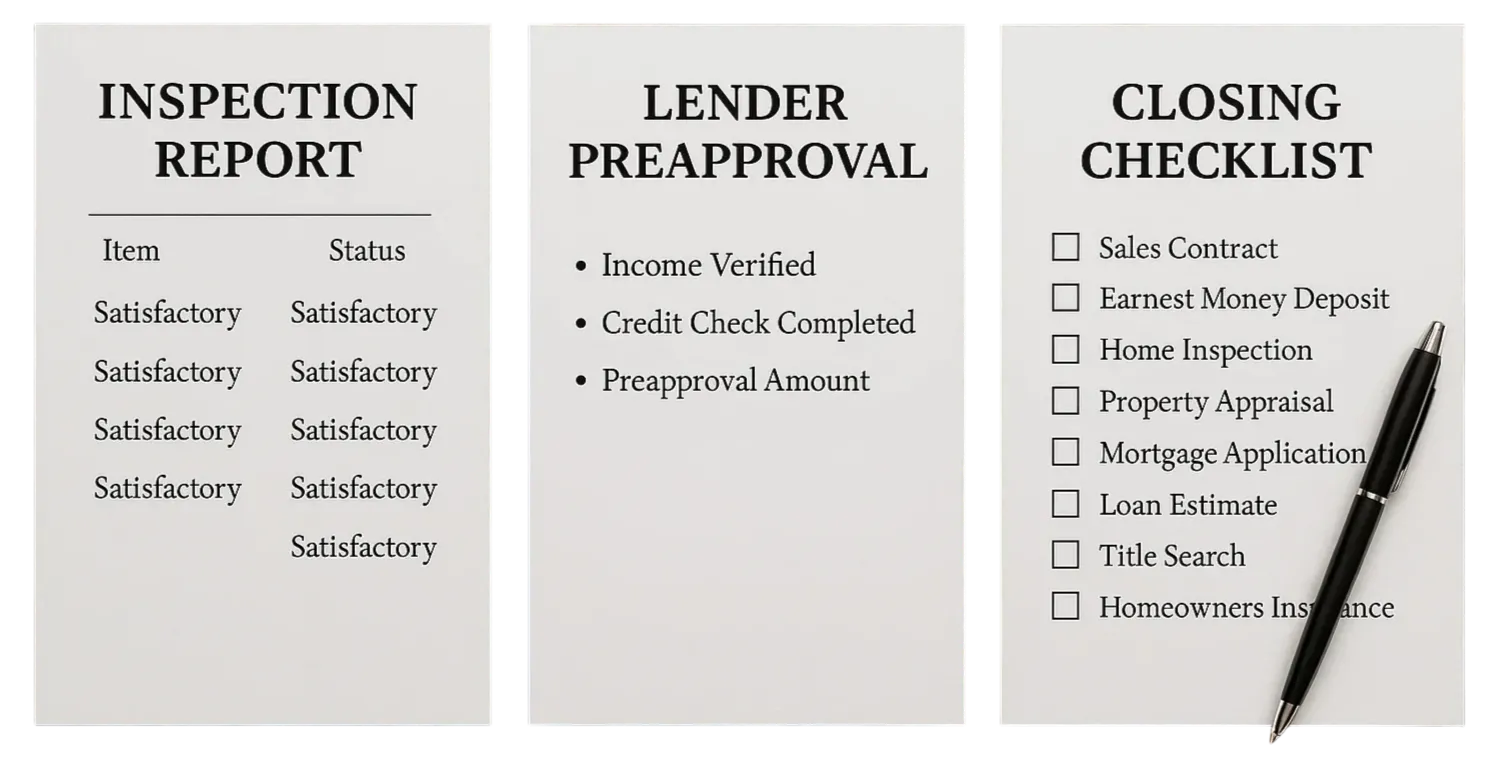
    As you evaluate targets, build a closing checklist early. Line up your Closing Disclosure, title documents, and insurance proof so you can move quickly when a good deal appears. That prep work reduces last-minute friction and helps you avoid delays at the table.

    Flipping in 2025: Risks, Rewards, and Realities

    Flips win when you buy right, keep the renovation tight, and sell into solid demand. It sounds simple enough, yet in 2025 pulling it off will take sharper project management.

    • Costs and Timing:
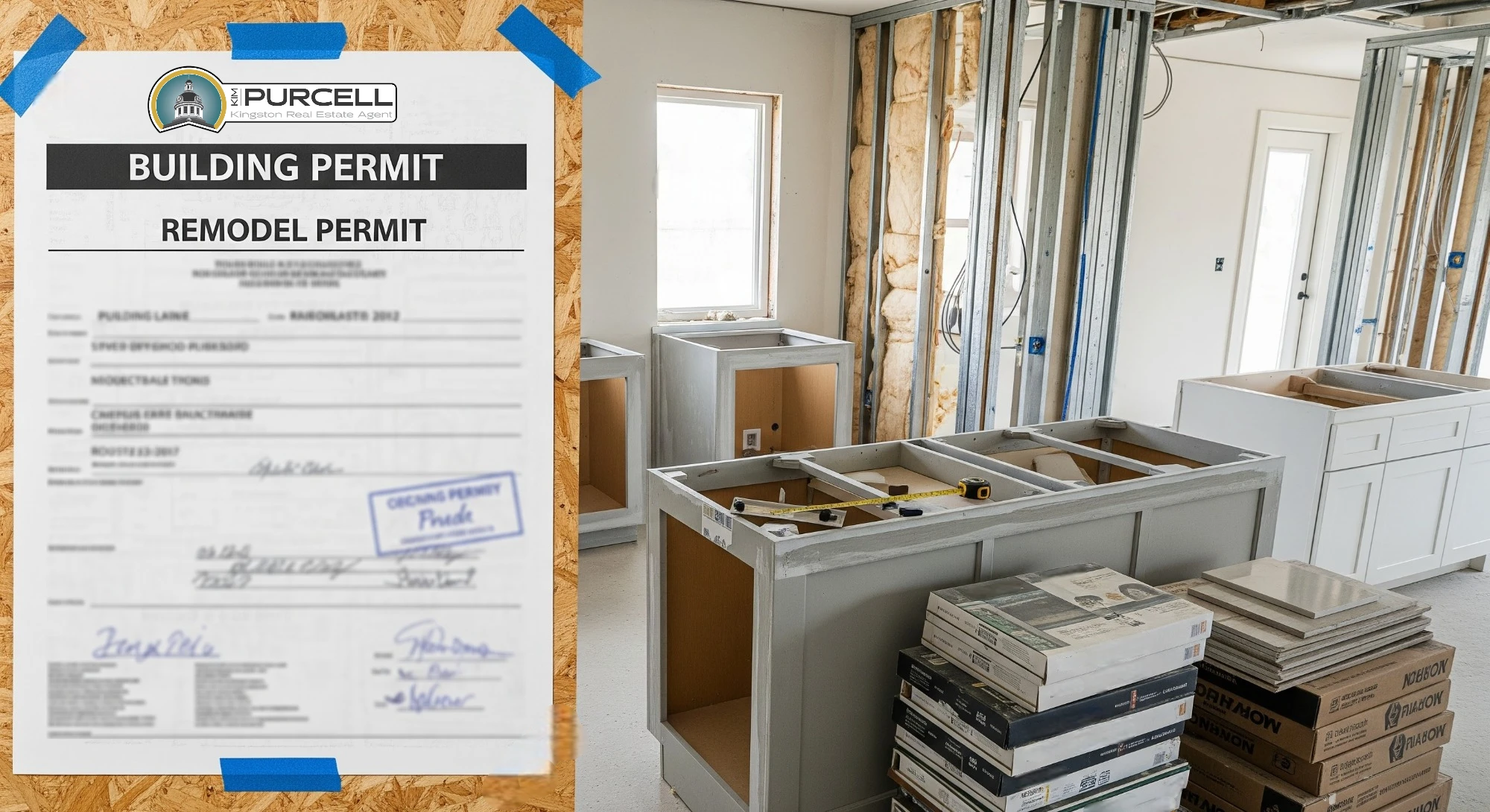
      Material and labor costs remain elevated in many markets, and permit backlogs can push timelines. Build a conservative budget and timeline. Add a 10 to 15 percent cushion for surprises so carrying costs do not eat your spread.
    • Block-Level Demand:
      Look for neighborhoods with rising household formation, healthy resale comps, and a clear ceiling price you can hit after improvements. Walk the street at different times of day and talk with property managers and contractors about days on market and buyer must-haves.
    • What to Renovate:
      Aim for repairs that unlock buyer confidence and appraisal value. Kitchens, bathrooms, major systems, and curb appeal usually carry more weight than purely cosmetic upgrades.

    If you’re writing an offer, protect your downside with a clean inspection playbook. Order a full home inspection right away and be ready to negotiate repairs or credits if issues pop up. Working with a top real estate agent can sharpen your terms and further protect you, especially on repair credits, appraisal gaps, and timeline risks.

    Image Source: pexels.com

    In a competitive situation, you might shorten the inspection window instead of waiving it outright so you still preserve an exit if a major defect appears. Most buyers work within a 7- to 10-day inspection period, and sellers often respond within a few days after that.

    Flips can still pencil if you buy with enough spread, control scope, and move decisively. The biggest risks are timeline slippage, change orders, and a softer resale window that stretches your holding costs.

    The Long Hold: Build Wealth Through Time, Rent, and Discipline

    A long-term hold combines gradual appreciation with rental income that helps cover the mortgage, taxes, insurance, and maintenance. If you prefer steadier returns and less day-to-day project risk, this lane often fits better.

    • Durable rental demand:
      Affordability pressures keep many would-be buyers in the rental pool, which supports occupancy and rent growth in the right neighborhoods.
    • Tax treatment:
      In the U.S., long-term capital gains rates are generally lower than short-term rates. In Canada, principal residence rules and other planning strategies can reduce taxes when used appropriately. Consult a licensed tax professional to structure ownership appropriately for your situation.
    • Compounding effects:
      Each rent check helps amortize your loan while the property can appreciate over time. Renovations you make are less about a quick retail pop and more about reducing future capex and vacancy.

    Your operating checklist matters here too. Keep clean records, budget for repairs, and schedule regular inspections so small issues do not become expensive emergencies. When you eventually sell, you will still go through the same closing process buyers face today, including document prep, insurance verification, and a final walk-through that confirms property condition.

    Flip Now or Hold Longer: How to Make the Call

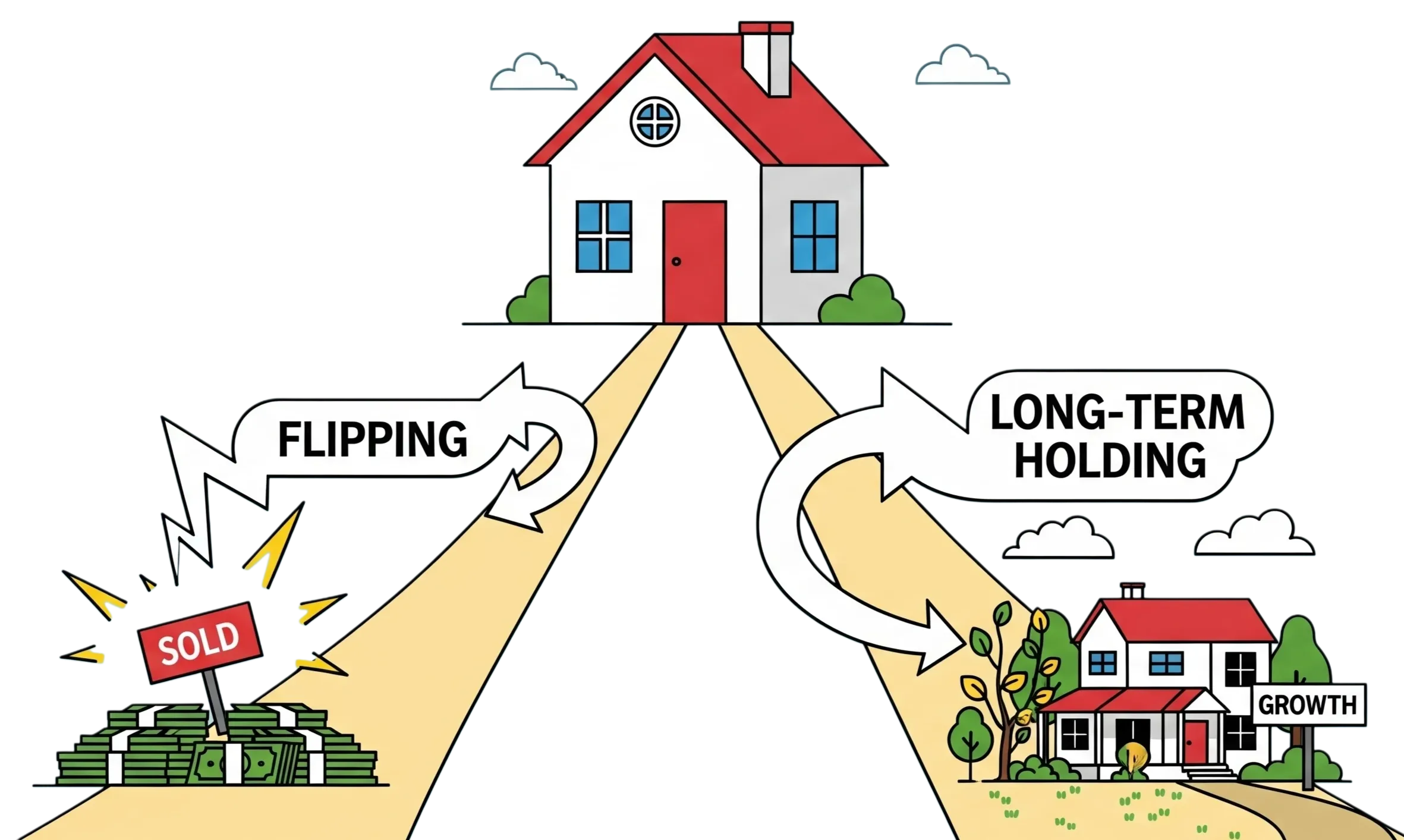
    Use side-by-side projections so you can compare cash today against total return over time. Here’s a simple way to frame it for a property you can buy at a fair price in a growth corridor.

    Flip scenario

    • Purchase at a discount.
    • Tight, value-adding renovation.
    • Clear exit comps within the next few months.
    • Short-term, higher-rate financing that magnifies carrying costs.
    • Execution risk is higher, but cash comes back faster.

    Hold scenario

    • Buy in a school district or job node that renters value.
    • Stabilize with a targeted refresh that reduces repairs over the next five years.
    • Traditional mortgage that a good rent can help service.
    • Returns build through cash flow, principal paydown, and appreciation.
    Image Source: pexels.com

    Run the numbers both ways, then stress-test them with longer days on market, a lower resale price, or a small rate increase. If you cannot absorb a slower sale or a vacant month, the flip may be too tight. If the cash flow barely covers the mortgage at conservative rents, the hold may need a better buy price.

    As you negotiate, keep your inspection contingency and timelines front and center so you can exit or renegotiate if a major issue is uncovered. If the inspection reveals structural or safety problems, you can push for repairs, credits, or decide to walk away without risking your earnest money when the contingency is properly drafted and timed.

    Practical Steps to Take

    • Research the submarket, not just the metro. Track sales on the blocks where you plan to buy. Drive the area, talk to neighbors, and note any public works or new retail.
    • Get your financing buttoned up early. Preapproval shows strength and keeps closing on schedule. Strong files help you avoid last-minute document chases and let you lock a rate within your lender’s timeline.
    • Build a reliable team. For flips, you want a contractor who can price scope quickly, an inspector who finds deal-breakers fast, and an agent who understands investor comps. For holds, add a property manager and a tax pro.
    • Use your inspection period wisely. Order the general inspection first, then add pest and, where relevant, radon testing. Review results promptly so you can negotiate repairs, credits, or price. Keep your deadlines tight enough to stay competitive but long enough to make a smart call.
    • Prepare for closing day like a pro. Bring your ID, confirm your Closing Disclosure matches the final paperwork, and have proof of homeowners insurance ready. Verify wire details with your title company over a trusted phone number before you send funds. Finish with a thorough final walk-through so the property you receive matches the contract and any agreed repairs.
    • Keep liquidity. Whether you are flipping or holding, a cash reserve keeps you flexible if a repair runs over budget or a unit sits vacant longer than expected.

    So, What Should You Do?

    There is no universal play here. If you have renovation experience, a dependable crew, and the appetite for hands-on work, a well-bought flip can deliver quick profits. If you prefer steadier growth and less project volatility, a long-term hold can build wealth through cash flow and time in the market. Many investors blend both approaches by flipping to generate capital and then rolling profits into solid long-term rentals.

    Whichever path you choose, let your neighborhood data, your financing terms, and a disciplined closing and inspection plan drive the decision. That combination gives you the best odds of walking out of closing confident—and set up for the results you want.