Category: International Real Estate

  • Why First-Time Investors Choose Dubai Pre-Construction Over Existing Homes

    In the first quarter, new developments in Dubai’s housing market made up nearly three-quarters (73%) of all residential sales, as buyers faced a tight supply of move-in-ready homes in established neighborhoods.

    For American readers, “off-plan” is Dubai’s term for pre-construction property. Buyers commit before the home is complete, usually based on floor plans, project documents, renderings, and the developer’s construction timeline. That can feel unfamiliar at first, but in Dubai, the model has become a major part of the market because it gives buyers a more accessible way to enter real estate ownership.

    The appeal is especially clear for first-time investors. Instead of paying a large amount upfront for a completed home, buyers can often secure an off-plan unit with a smaller booking amount and pay the balance in stages during construction. For those with a longer timeline, that structure can make Dubai property feel more achievable.

    Dubai’s First-Time Home Buyer Program has also added momentum. The program has helped more than 2,000 residents buy their first home within six months, generating more than AED3.25 billion in residential property sales.

    Lower Upfront Costs and Easier Entry

    The biggest obstacle for first-time investors is often the cash needed on day one. Move-in ready homes usually require a larger down payment, agency fees, and Dubai Land Department registration costs. DLD has stated that property registration fees equal 4% of the property’s value, so buyers should plan for that cost unless a developer promotion covers it.

    In contrast, choosing to buy off-plan property in Dubai can feel much more manageable because many developers offer booking amounts around 5% to 10%, followed by staged payments during construction. Some payment plans spread the balance across several years, while others use structures such as 60/40, where a large portion is paid closer to completion.

    These plans do not remove the cost of buying. They simply change the timing. For first-time investors who do not want to tie up a large amount of cash immediately, that timing can make a major difference.

    Developers may also offer incentives such as waived or partially covered DLD fees, post-handover payment plans, or limited-time launch pricing. Buyers still need to read the Sale and Purchase Agreement carefully, but these incentives are one reason off-plan properties often feel more accessible than older homes on the resale market.

    Potential for Capital Growth Before Handover

    First-time investors are often looking for long-term growth, not just immediate rental income. Buying early in a project can give them access to launch pricing before construction advances and before the wider community becomes more established.

    If the project, developer, and location are strong, that early entry point can create room for capital appreciation by the time the home is delivered. This is one of the main reasons off-plan property appeals to buyers who are comfortable waiting for completion.

    That said, appreciation is not guaranteed. Dubai’s market is active, but it is also cyclical. New supply can put pressure on prices in certain segments, especially in apartment-heavy areas where many similar units are delivered at the same time.

    The payment structure itself can also help first-time buyers build discipline. Rather than getting hit with a massive mortgage right out of the gate, you make staggered payments while the home is being built. It’s a much less stressful way to get a foot in the door and start building equity.

    Stronger Buyer Protection Through Escrow Rules

    One common concern with off-plan property is whether the developer will finish the project and use buyer funds properly. Dubai’s escrow framework is designed to reduce that risk.

    Developers selling off-plan units are required to open a separate escrow account for the project with an approved financial institution. Buyer payments are deposited into that project account and allocated for construction-related costs under DLD and RERA oversight.

    This gives buyers more protection than a market where developer funds are not separated by project. It does not eliminate every risk, but it does create a more transparent system for how money is collected and used.

    Buyers can also check project information through Dubai REST and other DLD services. These tools may show details such as completion percentage, project photos, escrow account information, and payments due. For first-time investors, that level of visibility can make the off-plan process easier to understand.

    Newer Buildings, Better Features, and Fewer Early Repairs

    New construction also appeals to first-time investors because it usually comes with the features today’s renters and buyers expect. Many newer Dubai projects include smart-home systems, modern gyms, coworking areas, improved security, upgraded lobbies, and stronger community amenities.

    While older homes in high-demand, established neighborhoods remain solid investments, they often need a modern facelift to compete with newer inventory.

    There is also the maintenance angle. New builds usually come backed by builder warranties, sparing you from the unexpected repair bills that often plague older homes. You’ll still want to read the fine print in your purchase contract to know exactly what’s covered, for how long, and how to report any issues after move-in.

    For first-time investors, this matters. A newer property can be easier to rent, easier to manage, and less likely to require immediate renovation.

    Residency and Visa Benefits

    Through the government’s Taskeen program, eligible investors can secure a residency visa simply by owning property. It’s a massive draw if you’re looking to establish a long-term home base or business presence in the UAE, rather than just holding an investment on paper.

    Buyers should not confuse this with the 10-year Golden Visa. DLD lists the Golden Visa property requirement at AED2 million or more. So, the residency benefit is real, but the type of visa matters, and buyers should confirm the latest rules before purchasing.

    Top Neighborhoods for First-Time Off-Plan Buyers

    Jumeirah Village Circle continues to be the best neighborhood for value-driven investors. It offers a large supply of apartments, good access to major roads, and a strong tenant base of young professionals and families. For buyers focused on rental yield, JVC is often one of the first areas worth comparing.

    Dubai South is another area getting attention because of its long-term infrastructure story. The planned expansion of Al Maktoum International Airport and the continued development around Expo City make the area a major growth corridor. The upside is long-term potential; the tradeoff is that investors need patience as the area continues to mature.

    Arjan and Majan may work for buyers looking for lower entry points in growing communities. These areas are still developing, but that is part of the appeal for investors who want to enter before prices fully reflect future infrastructure and demand.

    Dubai Creek Harbour is a more premium option. It usually requires a higher budget, but it offers waterfront positioning, master-planned development, and strong lifestyle appeal. For buyers who can afford the entry point, it may offer a more polished long-term hold than some lower-cost districts.

    A Smart Entry Point, If Buyers Do Their Homework

    The main advantages of pre-construction are straightforward and include lower upfront costs, flexible payment plans, newer builds, developer incentives, and regulated escrow protections. The risks are also clear, such as construction delays, oversupply in some areas, weaker resale liquidity before handover, and projects that look better in marketing materials than they do on paper.

    For new investors, the right move is not simply to buy off-plan. It is to buy carefully. That means checking the developer’s track record, reviewing the escrow status, understanding the payment plan, comparing nearby completed projects, and being realistic about rental demand after handover.

    Done properly, off-plan property can be a strong first step into Dubai’s market. It gives buyers a way to start smaller, pay over time, and position themselves in a city that continues to attract residents, businesses, and global capital.


  • The Investor’s Guide to Understanding UAE Real Estate Developer Credentials

    Image Source: Realtor.com

    Purchasing property in the United Arab Emirates requires careful due diligence to ensure a secure investment. Buyers must look beyond attractive marketing materials and examine the foundational reliability of the companies building these projects. A thorough understanding of UAE real estate developer credentials protects capital and provides peace of mind. Verifying a developer involves checking their licensing, financial stability, and historical performance.

    This guide provides a comprehensive off-plan investor checklist to help buyers assess potential property investments. It covers essential steps to verify developer UAE credentials across key emirates like Dubai and Abu Dhabi. From understanding project escrow accounts to analyzing sales agreements, investors will learn exactly what to look for before signing a contract. By following these steps, purchasers can confidently navigate the market and identify trustworthy partners. The goal is to separate reliable builders from those with high-risk profiles.

    Understanding Regulatory Credentials and Registrations

    The first step in a Dubai developer check, or Abu Dhabi verification, involves confirming official licensing. Developers must hold a valid trade license and be registered with the respective emirate’s land authority. In Dubai, this means checking the Dubai Land Department and the Real Estate Regulatory Agency registries. In Abu Dhabi, the Department of Municipalities and Transport oversees these registrations. Buyers can easily access official mobile applications to confirm that a company is legally permitted to build and sell property.

    Escrow and segregated account requirements form the backbone of property regulation in the country. Developers cannot simply collect buyer funds and use them for other business expenses. The law mandates that all payments for off-plan properties go directly into a project-specific escrow account. This ensures the money is only used for construction costs related to that specific development. Investors should always ask for official documentation proving the project is registered with the regulatory body and has an active escrow account.

    Delivery Track Record: A Sign of Reliability

    A strong developer delivery record serves as one of the most reliable indicators of future performance. Investors must analyze the ratio of completed projects compared to ongoing developments. Established real estate developers in UAE with a proven history of successful handovers present a significantly lower risk. Companies like Lead Development have demonstrated this reliability by delivering thousands of units across multiple high-end projects. Reviewing past completion dates helps buyers set realistic expectations for new off-plan purchases.

    It is equally important to investigate any history of project delays or legal disputes. While minor delays can occur in major construction projects, a pattern of severely missed deadlines is a major warning sign. Buyers should search for public records of litigation or formal complaints lodged against the developer. Regulatory authorities sometimes publish dispute data or issue fines for non-compliance. A clean track record indicates strong project management and a commitment to customer satisfaction.

    Financial Strength of the Developer

    Financial transparency reveals the true capacity of a builder to complete a massive project. Investors should look for developers that publish audited financial statements or maintain open financial records. These documents show the cash reserves, outstanding debt, and overall financial health of the business. A developer with solid liquidity is far less likely to stall construction if market conditions fluctuate. Healthy balance sheets provide a buffer against unexpected increases in material costs or labor shortages.

    Additional financial strength often comes from parent company affiliations and institutional support. Developers backed by large conglomerates or sovereign wealth funds offer an extra layer of security. Bank financing and credit ratings also provide valuable insight into how financial institutions view the company. If major banks are willing to fund the developer, it generally indicates a rigorous internal vetting process has already taken place. This external validation helps retail investors feel more confident in their purchasing decisions.

    Escrow and Buyer-Protection Mechanisms

    Project escrow accounts function as the primary safety net for off-plan property buyers. When an investor transfers a payment, the funds enter an escrow account that Dubai or Abu Dhabi regulators closely monitor. The developer can only access these funds after reaching specific, verified construction milestones. This system prevents builders from using money from a new project to fund an older, struggling development. The bank managing the account acts as a neutral third party to enforce these strict disbursement rules.

    Buyers must ensure they receive proper documentation proving this escrow registration. A standard purchase should generate an official registration certificate, such as an Oqood document in Dubai. This paperwork legally ties the buyer’s payments to the specific property and the designated account. Investors should never transfer funds directly to a corporate bank account. Verifying the escrow details safeguards investor interests and guarantees legal recourse if the project faces unexpected hurdles.

    Sales & Purchase Agreement (SPA) Features

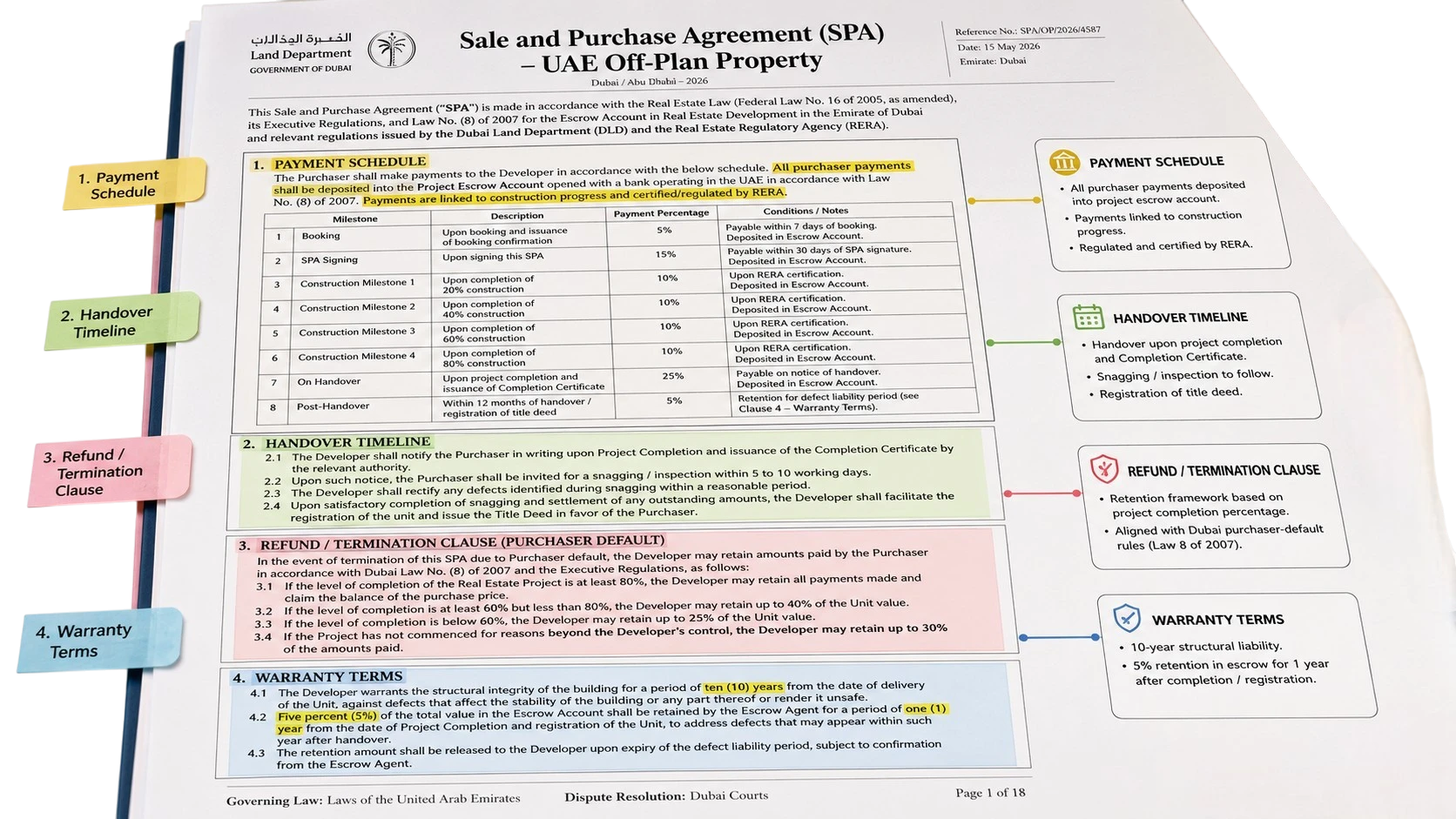
    The Sales and Purchase Agreement dictates the legal relationship between the buyer and the developer. Understanding SPA clauses in the UAE is critical for recognizing the protections available to the purchaser. The document must clearly outline the payment schedule, the handover timeline, and the specific property details. Investors need to review the conditions under which they can request a refund or terminate the agreement. A balanced contract will protect both parties rather than heavily favoring the builder.

    Key clauses to evaluate include delay penalties and warranty terms. If the developer fails to deliver the property on time, the agreement should specify the financial compensation owed to the buyer. The contract must also define force majeure events, which are unavoidable circumstances that excuse delays. Once the property is complete, the handover definition and the subsequent defect liability period become crucial. Standard warranties typically cover structural defects for ten years and minor defects for one year.

    Third-Party Partners and Quality Assurance

    The quality of a real estate project relies heavily on the third-party partners involved in its creation. Reputable contractors, architects, and engineering consultants indicate a high-quality development. Developers who consistently work with top-tier construction firms demonstrate a commitment to excellence. Buyers can research these partner companies to review their past projects and overall industry standing. A strong partnership network reduces the likelihood of structural issues or poor finishing work.

    Indicators of capacity are just as important as indicators of quality. A contractor must have the workforce and equipment necessary to handle the specific scale of the development. If a developer hires a small, unknown contractor for a massive skyscraper, it could signal cost-cutting measures. Investors should ask for a list of the main contractors and consultants attached to the project. This transparency shows that the developer is confident in the team they have assembled.

    Land Title and Approvals

    Verifying land ownership is a fundamental step before committing to an off-plan property. The developer must provide proof of land title to show they have the legal right to build on the plot. Sometimes developers purchase land on payment plans, meaning they do not hold the full title immediately. Investors should ask for documentation from the land department confirming the ownership status. This prevents situations where a project is delayed because of land dispute issues.

    Planning approvals and master developer permits must also be secured before construction begins. The local municipality must approve the architectural designs and ensure they meet city planning regulations. Once the project finishes, the municipality issues a completion certificate to verify that the building is safe for occupancy. Buyers should ask to see the initial building permits during the sales process. This confirms that the project is officially sanctioned and less likely to face regulatory roadblocks.

    After-Sales and Service Charge Governance

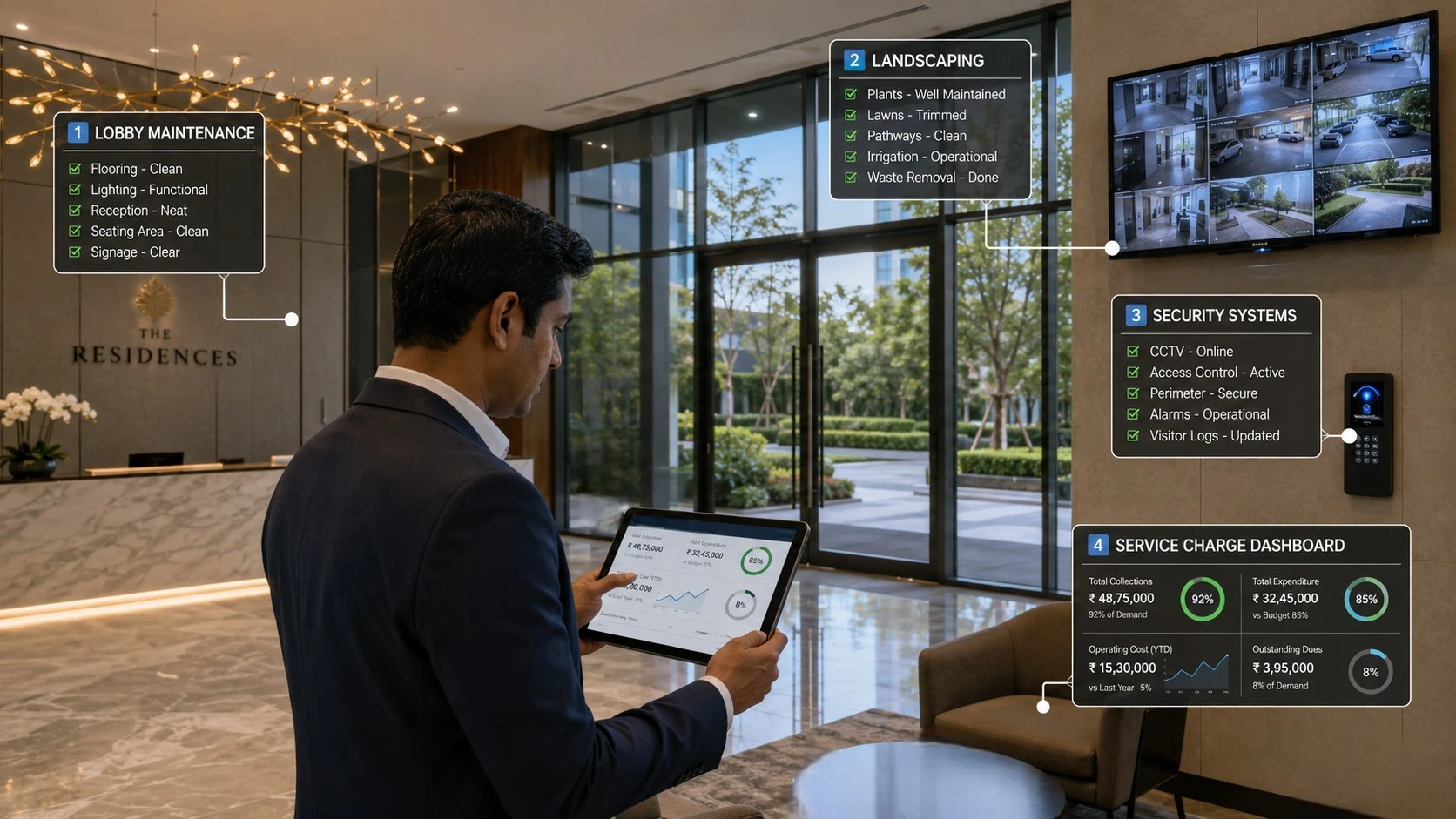
    The financial obligations of property ownership continue long after the initial purchase. Investors must consider the service charge UAE regulations to understand the long-term costs of maintaining the asset. These charges cover the upkeep of common areas, security, landscaping, and building insurance. In Dubai, the Mollak system provides a transparent framework for how these fees are collected and utilized. Abu Dhabi has also updated its jointly owned property regulations to improve governance and protect homeowners.

    Facility management companies typically handle the day-to-day operations of the building. Buyers should inquire about the anticipated service charge ranges before signing a contract. Comparing these estimates against similar properties in the area helps identify any inflated costs. A well-managed building preserves the value of the property and ensures a high quality of life for residents. Transparent service charge governance prevents unexpected financial burdens from cutting into rental yields.

    Reputation and Market Signals

    A developer’s reputation provides valuable context that official documents may not fully capture. Industry awards and memberships in professional associations reflect peer recognition and adherence to high standards. Consistent recognition for sustainability or architectural innovation indicates a forward-thinking company. Investors should also seek out broker feedback to gauge how the market views the developer. Experienced brokers know which companies consistently deliver on their promises and which ones struggle.

    Resident reviews and social media sentiment offer unfiltered perspectives on the living experience. Buyers can visit completed projects to speak with current owners about their satisfaction levels. Online forums and community groups often highlight common post-handover issues or ongoing maintenance problems. While a few negative reviews are normal, a consistent pattern of complaints is a clear red flag. Gathering these market signals helps investors form a well-rounded opinion of the developer’s credibility.

    Recent Regulatory Changes and Investor Impact

    The regulatory landscape governing property development is constantly evolving to improve market security. Recent updates to escrow laws and licensing requirements have introduced stricter controls on developer activities. For example, Abu Dhabi recently mandated that developers must complete at least twenty percent of a project before accessing escrow funds. Similarly, authorities in Dubai have issued significant fines to companies violating financial regulations. These proactive measures highlight the government’s commitment to maintaining a safe investment environment.

    New off-plan protection measures give buyers stronger legal standing if a project stalls. Regulations now outline clearer processes for project cancellation and the refunding of investor capital. Authorities conduct regular audits of escrow accounts to ensure compliance with the latest laws. These changes ultimately reduce the risk associated with buying unbuilt property. Investors who stay informed about these legal updates are better equipped to protect their financial interests.
    Securing Property Investments Through Diligence

    Understanding developer credentials is a mandatory step for anyone entering the property market. Buyers must verify trade licenses, scrutinize delivery records, and insist on escrow account confirmations. Careful review of the sales agreement and third-party partnerships further mitigates investment risk. Evaluating service charge governance and market reputation ensures the asset remains profitable long after handover. While the regulatory environment provides strong protections, individual diligence remains the best defense against financial loss.

    Taking the time to perform these checks transforms a speculative purchase into a calculated investment. Buyers should utilize official government portals and consult with legal professionals to validate all documents. The most successful investors prioritize facts and verifiable data over glossy sales presentations. By maintaining a strict verification process, purchasers can build a secure and highly rewarding property portfolio. This disciplined approach guarantees peace of mind and long-term financial stability.

  • Abu Dhabi vs. Dubai: Where to Invest in a Villa in 2026

    Choosing between a villa in Dubai or Abu Dhabi in 2026? It all comes down to your game plan. Dubai is the go-to if you want an easy exit strategy later on and want to tap into that massive Airbnb crowd. Abu Dhabi, though, gives you way more house for your money, less stress about overbuilding, and makes for a rock-solid, buy-and-hold investment. Definitely weigh your options before writing that check.

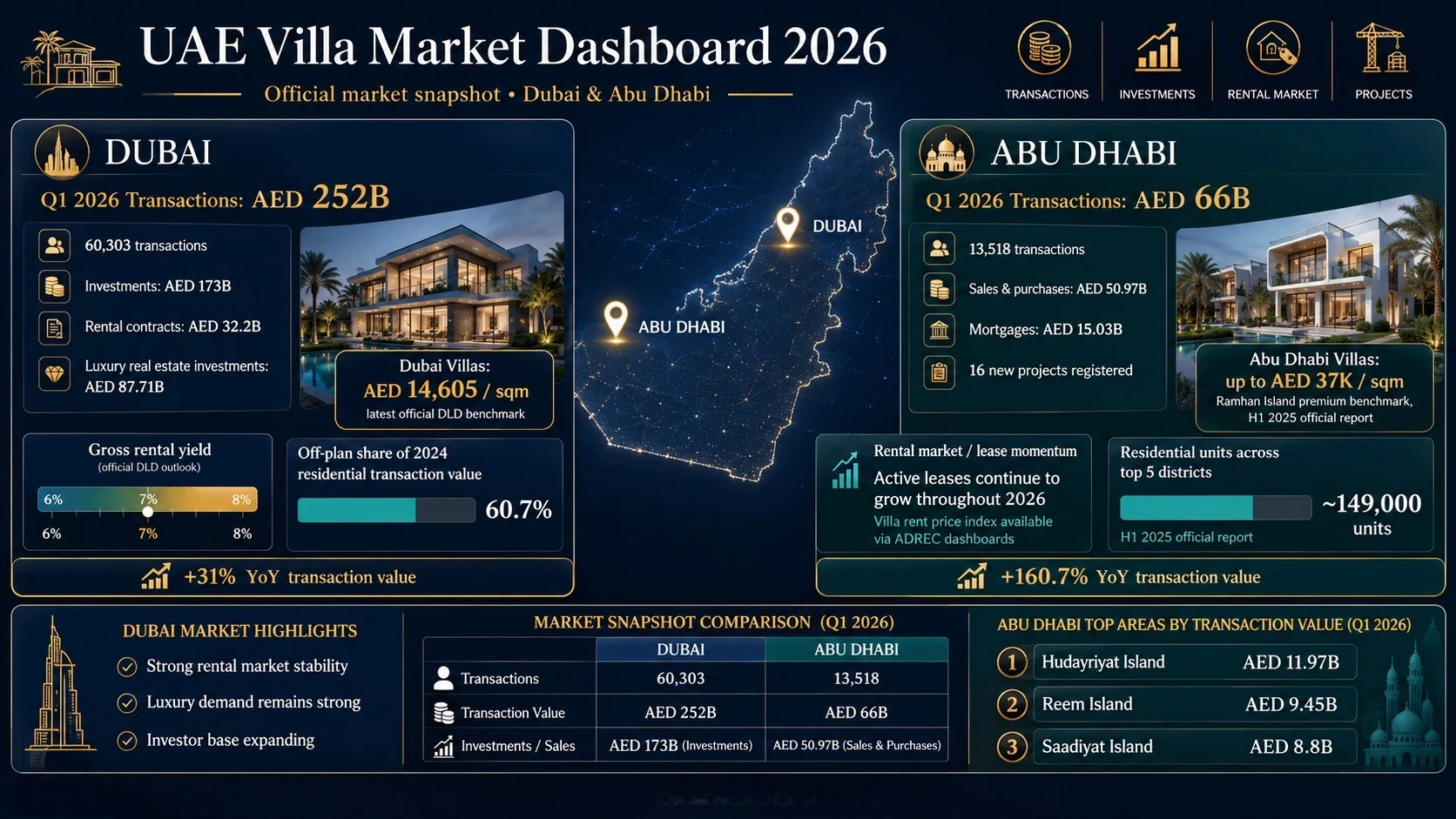
    Dubai recorded more than 45,000 home sales just in the first quarter of 2026, and Abu Dhabi is breaking records, too. Both markets are hot, but they play by different rules right now.

    Quick Cash vs. Long-Term Growth

    Basically, UAE buyers fall into two camps. If your main focus is keeping your property rented out constantly, flipping it easily when you’re ready, and keeping your cash moving—Dubai is the place you want to look at first. If you want a family home, more space for the budget, and a steadier hold strategy, Abu Dhabi deserves a serious look.

    Both cities offer strong infrastructure, but their real estate cycles do not move in lockstep. The real question is whether you are prioritizing rental income and exit flexibility, or long-term equity growth and lifestyle value.

    Looking toward 2026, Dubai is facing a larger delivery pipeline after a heavy launch cycle, although construction delays may soften the timing of actual handovers. CBRE notes that after more than 35,000 units were delivered in 2025, Dubai’s 2026 completion pipeline is expected to rise sharply, while logistics and construction-cost pressures may delay some new supply.

    That matters because more inventory can create localized pressure on rents and pricing. Abu Dhabi’s pipeline is smaller by comparison and more back-loaded, with villas representing a smaller share of upcoming supply. That may help support pricing in select.

    Market Snapshot: Pricing, Yields, and Supply

    Villas in Dubai are still way more expensive because everyone wants to live there. The demand is massive, and it’s much easier to sell your place quickly if you ever need to. On the flip side, Abu Dhabi is catching the eye of buyers looking for a solid deal. When it comes down to square footage, neighborhood vibes, and overall lifestyle, your dollar just stretches a lot further there.

    That said, the gap depends heavily on the exact community, developer, property age, and whether the unit is ready or off-plan.

    Gross rental yields vary widely by community. Dubai’s villa market can deliver strong income in high-demand areas, but yields are not uniform and can be squeezed by higher entry prices, service charges, and new supply. In early 2026, rent prices in Dubai started to cool down. CBRE noted that villa rents have basically stayed the same recently.

    Abu Dhabi’s villa yields can also be competitive. Bayut’s H1 2025 data showed villa ROIs of 6.34% in Al Reef, 6.17% in Al Raha Gardens, and 6.09% in Al Raha Beach.

    The 2026 supply picture is the key swing factor. Dubai has more inventory risk because of its larger development cycle, while Abu Dhabi’s delivery pace appears more controlled. Cavendish Maxwell estimated that Abu Dhabi’s actual 2026 completions may land closer to 6,500–9,000 units, below the headline projection of around 15,900 units.

    That kind of supply discipline can help limit near-term imbalance, although it does not.

    Abu Dhabi’s Premier Villa Communities

    Saadiyat Island

    Saadiyat is Abu Dhabi’s prime luxury villa destination, especially for buyers who want waterfront living, cultural proximity, and a prestige address. It is not the cheapest entry point, but it works for buyers who care about scarcity, lifestyle, and long-term capital preservation.

    Yas Island

    Yas is the lifestyle-driven option. It offers access to major entertainment, retail, hospitality, and family-focused attractions, while still often pricing below comparable Dubai trophy locations. For buyers who want a mix of end-user appeal and investment logic, Yas is one of Abu Dhabi’s most important communities to watch.

    Abu Dhabi’s 2026 supply pipeline is also heavily concentrated in Yas, Reem, and Saadiyat, which makes project selection especially important.

    Jubail Island

    Jubail Island is another remarkable community that blends luxury homes with protected natural surroundings. This neighborhood spans 4,000 hectares of mangrove forests and coastal estuaries. Residents enjoy a nature-oriented lifestyle with facilities like a beach club, marinas, and expansive parks. If you plan to buy villas in Abu Dhabi, Jubail Island provides a unique sanctuary just minutes from the city center. It is an ideal location for those who value wellness and serene living environments.

    Dubai’s High-Demand Villa Locations

    Dubai Hills Estate

    Dubai Hills remains one of Dubai’s strongest family-focused villa communities. It has a major park, Dubai Hills Mall, and an 18-hole championship golf course, all of which support tenant demand and resale appeal. Bayut’s 2025 rental data also ranked Dubai Hills Estate as the top choice for luxury villa rentals in Dubai.

    Arabian Ranches and Tilal Al Ghaf

    These are both hugely popular, family-friendly neighborhoods that expats absolutely love, whether they’re renting or looking for a place to call their own. Arabian Ranches is well-established with a proven track record, so you know exactly what you’re getting. Tilal Al Ghaf might be the new kid on the block, but it’s already making waves thanks to its awesome layout, great schools, and killer amenities.

    If you’re a landlord, don’t just get blinded by the high rental price tag. You should find reliable tenants who actually want to renew their leases, while keeping an eye on everyday upkeep and those sneaky HOA-style fees.

    Matching the Market to Your Strategy

    If your model depends on rental income and a faster exit, Dubai is still the more liquid market. It has a larger buyer pool, a deeper rental base, and stronger visibility with international investors. But buyers should avoid assuming that every Dubai villa will outperform. With more supply coming through, performance is likely to become more community-specific and more dependent on developer quality, handover timing, and realistic pricing.

    If you’re moving with your family or you’re a buy-and-hold investor, Abu Dhabi might just be the smarter play. Villa prices there jumped 12.2% year-over-year in 2025, mostly driven by low inventory and real homebuyers actually wanting to settle down. Meanwhile, citywide rents ticked up about 5.5%. Sure, it’s not a crazy rent spike, but it points to a rock-solid market without all the wild flipping hype.

    Luxury buyers have strong options in both emirates. Dubai dominates global visibility with areas like Palm Jumeirah, Emirates Hills, and Jumeirah Bay. Abu Dhabi counters with quieter, lower-density waterfront communities such as Saadiyat and Jubail.

    You definitely get way more room for your budget in Abu Dhabi’s average and upper-tier neighborhoods. But if you want to be able to flip it or sell it fast later, Dubai is the way to go.

    Smart Moves Before You Sign

    Do not skip the due diligence. Compare the master developer’s delivery record, escrow protections, realistic handover dates, service charges, and resale data for the exact sub-community. If you are buying off-plan, do not model returns on the advertised handover date alone; build in a delay buffer.

    Closing costs are a major difference. Dubai’s property sale registration fee is widely treated as a 4% cost of the property value, while DARI lists Abu Dhabi freehold ownership sale fees at 2% of the sale price. That difference can materially change your net ROI, especially on higher-ticket villas.

    Visa planning also matters. The UAE’s Golden Visa route for real estate investors currently requires property ownership valued at no less than AED 2 million. Before you sign, confirm the latest eligibility rules, whether the specific property qualifies, and what documents are required through official channels or a qualified advisor.

    Finally, walk the neighborhood before you buy. Visit at different times of day, check school routes, traffic, nearby construction, and actual community occupancy. Hire a local broker who knows the micro-market, then ask for a Comparative Market Analysis for the exact street, villa type, plot size, and handover status.

    That keeps emotion out of the deal and protects your downside.

    Making Your Final Decision

    Dubai offers liquidity, rental depth, and a larger international buyer pool. Meanwhile Abu Dhabi offers a strong lifestyle case, comparatively lower entry points in many segments, and a more measured supply profile.

    Run the comps, price in the 2026 supply pipeline, and calculate your full transaction costs before making a move. If you strip out the hype and focus on net returns, liquidity, and livability, you will be in a much stronger position to choose the right villa market for 2026.

  • How Dubai Community Management Protects Property Value

    The real estate market in the UAE continues to attract investors from all over the world. Buyers and tenants have high expectations for the places they choose to live and work.

    A stunning building design is only the first step in creating a successful development. Professional Dubai community management is essential to maintain these high standards over time. It transforms a simple collection of buildings into a great neighborhood where people actually want to live.

    Property owners must look beyond basic administration to see real financial returns. A well-managed development preserves property value while creating a positive daily experience for its residents. Proactive maintenance and excellent service keep properties in demand in a crowded market.

    This guide explains exactly how expert management operations directly influence your long-term investment outcomes. You will discover practical ways to protect your property value while keeping your residents happy.

    What Community Management Does

    The Core Functions of Effective Management

    A successful property relies on a complex network of daily operations to function correctly. Community managers take full responsibility for overseeing these critical moving parts. They handle budget coordination, safety compliance, and the strict oversight of vendors.

    This disciplined approach ensures that all shared facilities remain clean, safe, and fully operational. By controlling these daily tasks, managers uphold the original vision of the property developer.

    Keeping Operations Smooth and Residents Satisfied

    Operational control goes hand in hand with keeping residents happy. Managers coordinate regular maintenance schedules so that minor issues are resolved before they cause major disruptions.

    They also supervise security teams and cleaning staff to guarantee a consistently high standard of living. When operations run smoothly, residents feel comfortable and secure in their homes. This reliable service builds a strong foundation for a peaceful, stable community.

    How Effective Community Management Protects Property Value

    Maintaining the Property Through Proactive Care

    Buildings naturally experience wear and tear as time passes. Professional managers prevent this gradual decline by implementing strict proactive maintenance programs. They conduct regular quality checks on all common areas, elevators, and landscaping features.

    Catching small defects early saves owners from facing massive repair bills down the line. This careful preservation directly protects the physical condition and financial worth of the property.

    Boosting Market Perception and Reducing Vacancy Risks

    A well-maintained building naturally attracts more interest from potential tenants. First impressions matter greatly when prospective renters visit a residential community. If they see clean lobbies and functioning amenities, they are much more likely to sign a lease.

    Consistent upkeep eliminates the negative perception associated with neglected properties. High demand keeps vacancy rates low and stabilizes the rental income for property investors.

    How It Improves the Resident Experience

    Creating a Stable and Well-Run Community Environment

    People want to live in places where they feel their needs are promptly addressed. A dedicated management team provides this stability through responsive, hospitality-led resident support. Maintenance requests are handled quickly and efficiently by trusted vendors.

    Clear communication channels ensure that residents always know about upcoming maintenance or community updates. This level of reliability makes daily life easier for the people living there.

    Building Trust and Belonging Through Engagement

    A strong community requires more than functional elevators and clean hallways. Managers actively create a sense of belonging by organizing local events and resident initiatives. These shared experiences allow neighbors to connect and build meaningful relationships with one another.

    When residents feel connected to their surroundings, they develop a deep trust in the management team. This loyalty often leads to longer leases and a much more vibrant neighborhood atmosphere.

    Why This Matters in Dubai’s Competitive Market

    Standing Out Through Quality of Life and Service Levels

    Renters and buyers in this region have access to countless residential options. They frequently compare different developments based on the overall quality of life and available amenities. A community that offers exceptional service levels will easily stand out from its competitors.

    Residents are often willing to pay a premium for properties that offer a superior living experience. Excellent management gives your building a distinct competitive advantage that attracts high-quality tenants.

    The Financial Impact of Superior Community Management

    The connection between resident satisfaction and financial performance is clear. Happy residents are far less likely to move out at the end of their lease. High retention rates significantly reduce the marketing and turnover costs associated with finding new tenants.

    Well-maintained properties also command higher resale values on the open market. Ultimately, investing in top-tier management operations translates directly into greater long-term profitability.

    Investing in Quality Management for Long-Term Success

    Protecting your real estate investment requires a strategic approach to daily property operations. Professional oversight ensures that your building remains a highly desirable place to live and work. Prioritizing resident satisfaction and proactive maintenance will secure your property’s position in the market.

    The experts at Strata Global specialize in delivering hospitality-led management that protects your asset value. Reach out to their team today to elevate your community standards and maximize your investment returns.

  • 3 Key Differences Between Return-of-Premium and No-Income-Proof Term Plans in India

    Most people shopping for term insurance in India end up confused by two specific policies: return-of-premium plans and term plans without income proof.

    They sound like they belong in the same conversation, but they actually serve completely different buyers.

    Understanding what separates them can save a lot of time and help you avoid choosing the wrong coverage.

    The Basics of Both Plan Types:

    A term plan with return of premium, commonly called TROP, works like a regular term plan with one major addition: if you outlive the policy term, the insurer refunds the base premiums you paid, usually excluding taxes, rider premiums, and any extra charges, depending on the policy terms. This keeps your family protected the entire time, while also giving you money back if you survive the policy term.

    A term plan without proof of income is designed for people who cannot provide standard income documents such as salary slips, Form 16, or income tax returns. This category often includes freelancers, daily wage workers, small informal business owners, and homemakers. These buyers have genuine insurance needs but fall outside the documentation requirements of standard plans.

    Both are valid products built for entirely different situations.

    Difference 1: What Problem Each Plan Actually Solves

    A return-of-premium term plan solves an emotional problem more than a financial one. The most common complaint about regular term insurance is paying premiums for 25 or 30 years and getting nothing back if you survive. Logically, the protection was there the whole time, but many people still feel like their money was wasted.

    TROP addresses that concern directly by returning those premiums at the end while keeping the family covered throughout the policy term. For someone who struggles with the idea of paying for something and receiving nothing in return, this structure makes it much easier to stay committed to the policy.

    A term plan without proof of income solves a documentation problem.

    Standard term plans require income proof because insurers use it to assess:

    • whether the premium is affordable for the applicant
    • what coverage amount is proportionate to their income
    • whether the application carries any risk of over-insurance.

    For salaried individuals, this is straightforward. Salary slips, Form 16, or three years of ITR usually meet these documentation requirements. But a large section of India’s working population does not fit that box.

    A carpenter earning ₹40,000 a month in cash, a private tutor with irregular income, or a small trader with no formal accounts still needs life insurance. Standard plans create a documentation barrier, while a term plan without income proof may be approved with alternative financial documents such as bank statements, CA-certified statements, asset proofs, credit history, or other insurer-approved documents.

    Difference 2: The Cost Structure Is Completely Different

    A return-of-premium term plan costs significantly more than a basic term plan. For the same coverage amount, age, and policy length, a TROP plan can cost significantly more than a plain term plan, sometimes 40% to 100% more or even higher, depending on the insurer, age, coverage amount, and policy term. On a ₹1 crore policy for a 30-year-old with a 30-year term, the difference can be an extra ₹600 to ₹900 every month.

    Over 30 years, that extra outflow adds up considerably. If that premium difference were invested in a mutual fund SIP instead, the amount built over the same period would likely exceed the total premium refund by a wide margin.

    TROP makes sense for buyers who know they will not separately invest the difference and value a guaranteed return over a potential one.

    A term plan without proof of income does not follow the standard premium structure in the same way. Premiums are assessed individually based on the coverage requested and the alternative documents submitted. In many cases, these plans offer lower coverage amounts because income cannot be verified with the same precision.

    The premium is not necessarily higher, but the available coverage limit is often lower than what is offered to a formally employed person with similar earning capacity.

    Difference 3: Who Should Actually Buy Each One

    This is the most important distinction and the one most buying guides rush past.

    A return-of-premium term plan suits:

    • Buyers who find it difficult to pay premiums for decades without any maturity benefit
    • Disciplined earners who want life coverage and a savings element combined into one product
    • Anyone who has already maxed out other investment avenues and values the TROP refund as a guaranteed and predictable return
    • Buyers who prefer simplicity over managing separate investments alongside a plain term plan

    A term plan without income proof suits:

    • Freelancers and self-employed individuals without regular documentation
    • Daily wage workers or those in the informal economy
    • Small business owners without formal profit and loss statements
    • Homemakers who want independent coverage and can show some financial standing through bank statements
    • Anyone who needs life coverage but faces difficulty with the documentation stage of standard plans

    One important detail about no-income-proof policies is that the absence of standard documents does not mean skipping financial verification entirely. Insurers still need some form of financial trail to complete underwriting.

    Bank statements showing regular transactions, asset declarations, and similar alternatives are typically accepted. The flexibility is in what documents qualify, not in removing the verification step altogether.

    Making the Right Choice for Your Situation

    If stable income and proper documents are available, the choice between a plain term plan and a TROP comes down to whether a guaranteed premium refund is worth paying 60% to 100% more every year for the same coverage.

    If standard income documents are unavailable or income is earned outside the formal economy, a standard term plan may not be accessible. For many buyers, a plan without proof of income is the only route to getting covered at all.

    Knowing which problem actually needs solving points you toward the right policy.

  • How to Build a Profitable Long-Distance Real Estate Portfolio From Dallas

    The Dallas-Fort Worth housing market has seen major growth over the past decade. For many homeowners, that boom has created a lot of equity. But as local prices stabilize and competition remains tough, many Dallas residents are looking for ways to grow their wealth outside North Texas.

    Investing beyond your backyard can help reduce risk and open the door to new opportunities. Just as many locals buy out-of-state vacation homes, smart investors are taking it a step further. They’re building long-distance real estate portfolios across state lines—and even overseas—to strengthen their long-term finances.

    Why You Need Local Experts in Markets You Don’t Know

    While the financial benefits of branching out are clear, buying property thousands of miles away comes with real challenges. You can’t just drive down the street to inspect a foundation, get a feel for the neighborhood, or interview a property manager in person. That distance makes it essential to have trusted professionals on the ground.

    For example, if you’re targeting a strong overseas market like Australia, navigating local property laws, state stamp duties, and neighborhood-level market trends requires specialized knowledge. In these situations, partnering with a dedicated investment buyers agent is crucial.

    Unlike a traditional real estate agent who represents the seller, a buyer’s agent works strictly for you. They can help find strong off-market deals, evaluate property conditions, and negotiate the best purchase price. This helps protect your money and lower your risk, even when you’re investing from the other side of the world.

    Why Dallas Investors Are Looking Outside Texas

    Relying on a single metro area leaves your wealth exposed to local economic shifts, property tax hikes, and regulatory changes. Expanding your search lets you tap into markets with different economic cycles, better rental yields, and strong appreciation potential.

    According to the National Association of Realtors, buying property abroad is a growing strategy for U.S. buyers looking to diversify. By investing internationally—whether in a growing Australian city or another stable global market—you can hedge against domestic economic shifts while securing high-quality physical assets.

    How to Launch Your Long-Distance Strategy

    Building a profitable long-distance portfolio doesn’t happen by accident. It requires a shift from a hands-on landlord approach to a more strategic, business-minded approach. If you’re ready to use your Dallas equity for out-of-state or international assets, follow these steps:

    • Define your investment goals: Decide whether you want high rental yields for monthly cash flow or long-term appreciation in premium neighborhoods. Your main goal will shape which cities you target.
    • Build a reliable team: Long-distance investing is a team sport. Before making offers, build a network of local tax advisors, property managers, and real estate attorneys who understand local laws.
    • Do your own homework: While local representation is vital, you still need to research the market yourself. Use 3D virtual tours, neighborhood mapping tools, and digital listings to get familiar with the target area from your Texas home.
    • Organize financing early: Securing a mortgage for an out-of-state or international property is very different from buying a local Dallas home. Speak with specialized lenders early to understand currency exchange risks, down payment requirements, and interest rates before you shop.

    Managing Your Portfolio From Afar

    Once you buy a long-distance property, keeping it profitable depends on strong communication. Set up regular check-ins with your property manager to review tenant satisfaction, routine maintenance, and monthly income statements.

    Treat your out-of-state and international investments with the same level of care as your local Dallas properties. By building a reliable network of experts and staying informed on market trends, you can build lasting wealth well beyond the borders of the Lone Star State.

  • Evaluating Distressed Properties in Tuscaloosa

    Cash home buyers in major cities have it relatively easy. There’s a constant flow of comparable sales, a deep bench of contractors, and enough buyer demand that almost any flipped or rented property will move. But once you step outside those metros and look at local Alabama markets, the math changes in ways that catch a lot of investors off guard.

    Cities like Tuscaloosa aren’t sleepy markets, but they aren’t Dallas, either. Buying distressed property here requires a different evaluation process. The cash buyers who make money consistently in these areas have learned to adjust their approach.

    Here’s what actually happens when an experienced buyer pulls up to a tired single-family home.

    Finding the Right After-Repair Value (ARV)

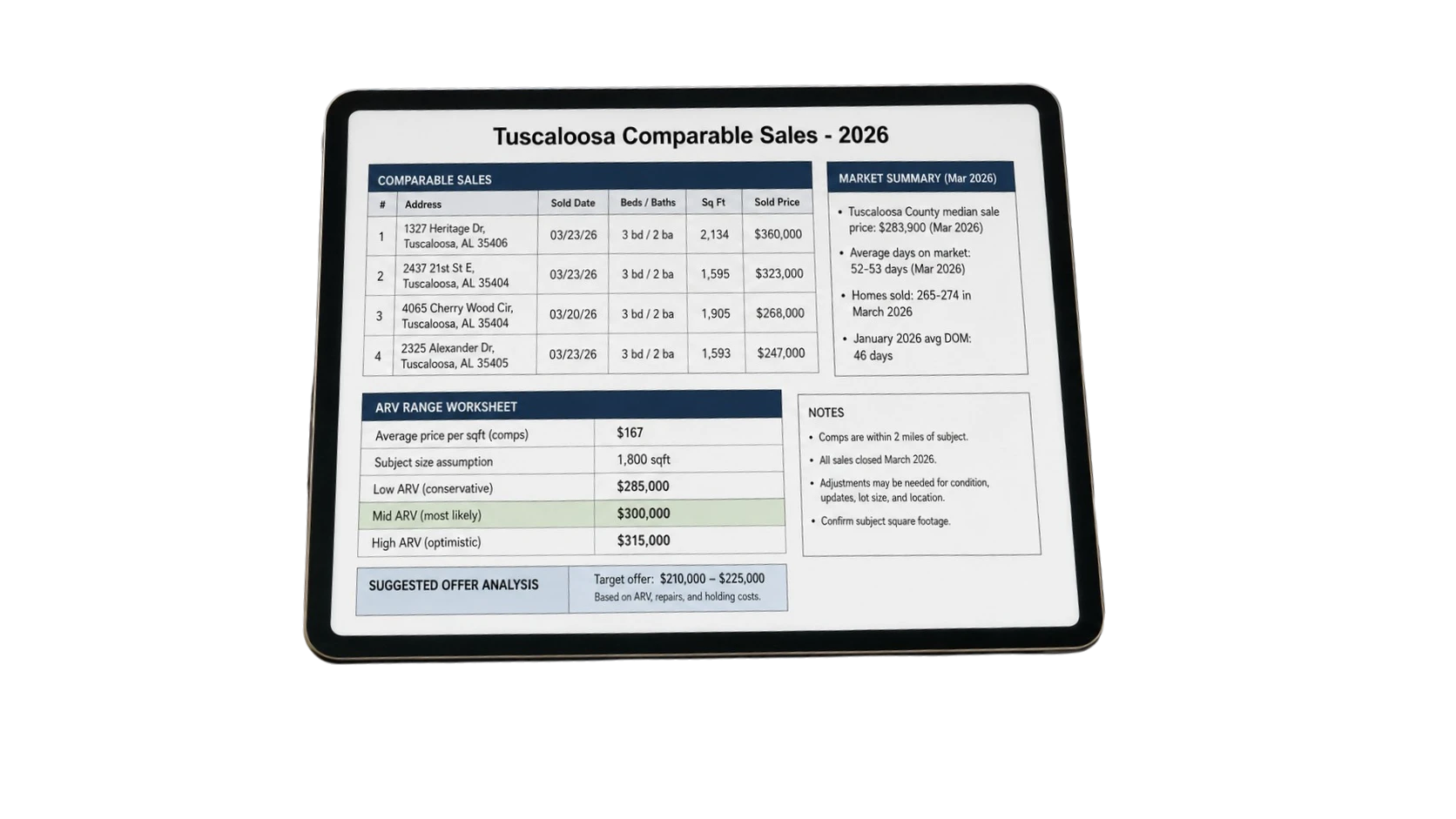
    you can pull six or eight closed sales within half a mile that perfectly match the subject property’s bed count, bath count, square footage, and condition. In a local market, you might find two—and one of them likely sold to a relative for $40,000 under market value.

    This is the first place inexperienced buyers go wrong. They treat thin comp sets the same way they treat a stack of clean Atlanta data, leading to an after-repair value that is wishful thinking at best.

    Seasoned cash buyers learn to expand their search radius carefully. They weigh comps by recency rather than just proximity and discount sales that look like outliers. They also pay close attention to days on market (DOM) for renovated properties. A flipped house in Tuscaloosa or Northport that sat for 110 days tells a very different story than the exact same house selling in 18 days.

    The buyers who consistently profit in these markets use a range rather than a point estimate. Instead of insisting a house will sell for $185,000 after repairs, they set a realistic range of $170,000 to $195,000, and build their offer off the bottom of that range. That cushion is what keeps them from getting burned when a deal goes sideways.

    Estimating Repairs with Local Alabama Contractors

    In a city like Houston or Dallas, an investor can call 50 different contractors and get a roof bid by tomorrow. In Tuscaloosa, you might know three reliable general contractors, and two of them are booked for the next four months.

    That limited labor pool affects two big things:

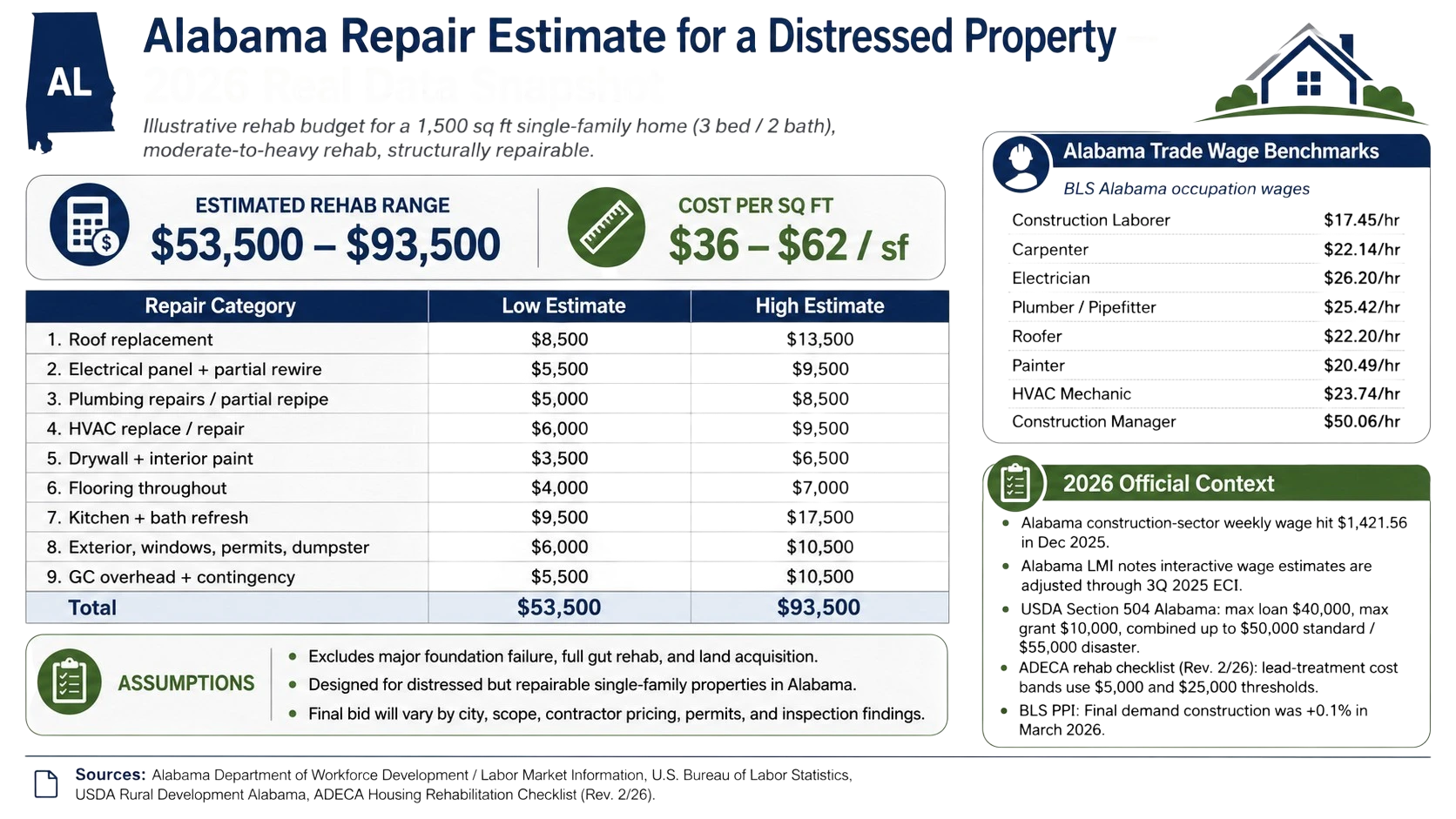
    • Costs: Repair costs in local markets aren’t always cheaper than in major metros. Material prices are roughly the same everywhere, and labor in tight Alabama markets can actually run higher because there isn’t as much competition.
    • Timelines: Project schedules stretch out. A renovation that takes six weeks in Birmingham might take 14 in a surrounding neighborhood because subcontractors only show up on Tuesdays and Thursdays.

    Smart cash buyers build padding into both of these numbers. They estimate repairs on the high side, add a 15% to 20% contingency for surprises, and factor extra months of holding costs into their underwriting. A cheap-looking deal that pencils at $25,000 in repairs and a two-month hold often morphs into a $38,000 project and a five-month hold, until the spread is gone.

    Experienced buyers also walk the property differently. They don’t just check for visible cosmetic issues. They crawl under the house, inspect the electrical panel, look for signs of water intrusion in the attic, and test whether the HVAC actually cycles.

    How Local Demand Patterns Drive the Offer

    A distressed property in a major metro almost always has an exit strategy. Worst case, you wholesale it. Second worst, you rent it. The market is deep enough that something will work.

    Outside major metros, exit strategies are narrower and heavily dependent on micro-conditions. A three-bedroom ranch in the college town of Tuscaloosa has a very different buyer pool than the same house 30 miles away in a county seat with a declining population.

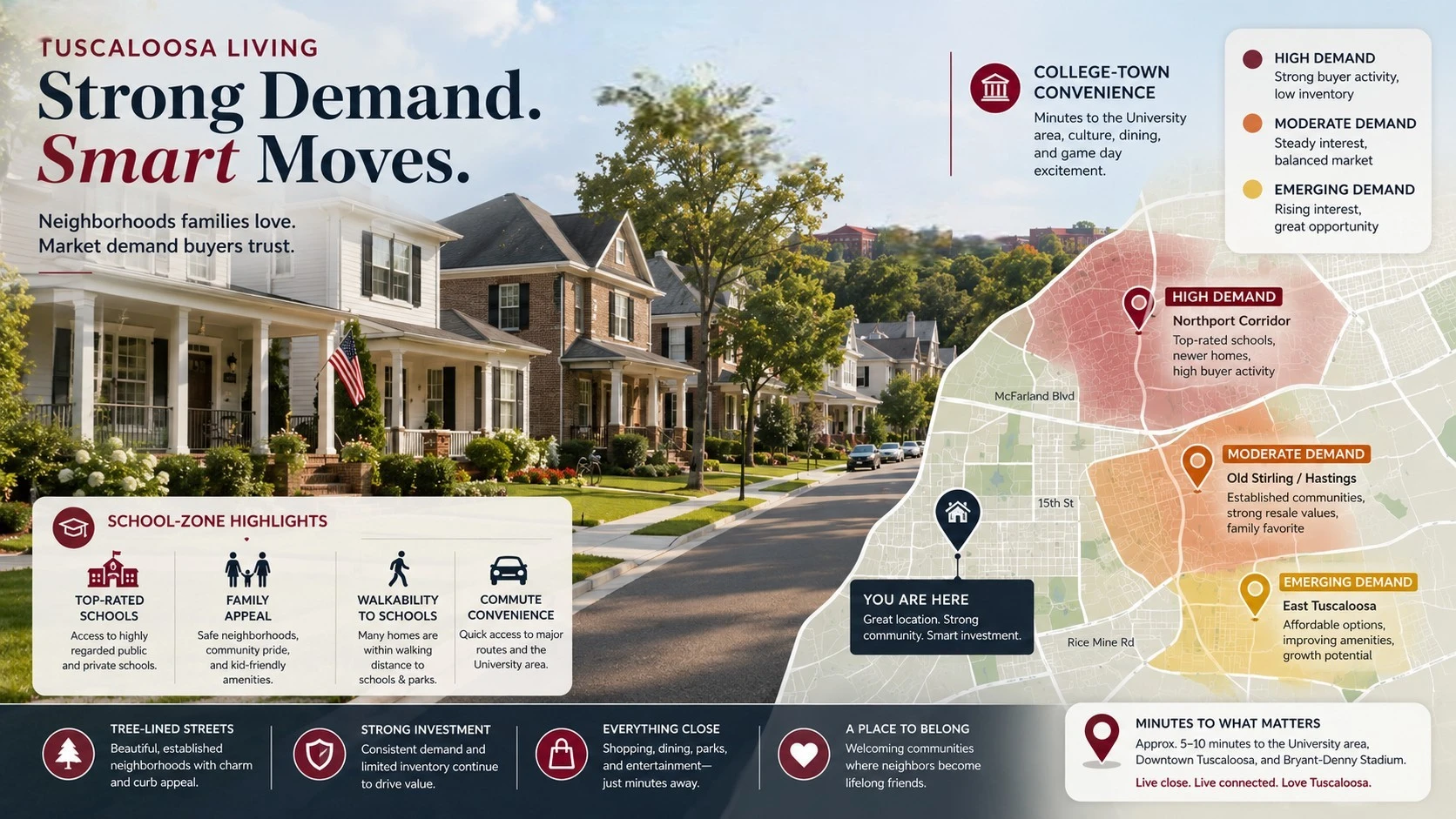
    Companies like the cash home buyers in Tuscaloosa who actually live and work in these markets understand which neighborhoods are appreciating because of university expansion, which subdivisions appeal to young families relocating for jobs, and which streets have buyer demand that simply doesn’t exist two blocks over.

    That kind of local pattern recognition is hard to replicate from a spreadsheet. It’s exactly why out-of-state investors attempting to buy remotely in Alabama often underperform compared to local buyers, who know that a single elementary school redistricting decision can swing property values 15% on a specific street.

    When evaluating a distressed property, smart buyers ask: Who is the realistic end buyer, and how many of them exist in this specific submarket right now? If the target is an FHA buyer between $180,000 and $220,000 with decent credit, investors need to know if that buyer pool is shrinking or growing. If it’s shrinking, the offer comes down, regardless of what the comps say.

    Pricing in Local Market Risks

    The biggest difference between metro and non-metro evaluations comes down to how cash buyers handle risk. In a deep market, if your renovation runs long or the buyer pool softens, you drop the price by 2% and the property still sells. In a local market, those same conditions can mean the property sits untouched for six months.

    Experienced buyers price this risk upfront. They run their numbers with a bigger downside case, model what happens if they are forced to rent the property for a year, and only move forward if the deal still works under those stressed assumptions. As a result, their offers are often a lower percentage of the asking value than what a comparable metro buyer might offer. This isn’t out of greed; it’s because the downside scenarios are genuinely more painful.

    Insurance and tax situations carry more weight here, too. A fire-damaged home in Tuscaloosa County might face higher future insurance costs or be hard to insure at all. A property in a flood-prone neighborhood near the Black Warrior River might require flood insurance that cuts into rental returns. These aren’t necessarily deal-killers, but they must be priced into the initial offer rather than discovered after closing.

    Selling Your Tuscaloosa Home for Cash

    Cash buyers who consistently win outside major metros aren’t smarter than their big-city counterparts, they are just more disciplined about acknowledging what they don’t know and pricing accordingly. They rely on conservative ARV ranges, padded repair estimates, realistic timelines, and risk-adjusted offers that reflect the realities of narrower exit options.

    For homeowners selling distressed property in Tuscaloosa, that matters. The cash offer you receive isn’t arbitrary. It comes from a specific calculation around comps, repairs, holding costs, and the real difficulty of moving the property after the work is done. Understanding that math helps you evaluate whether a specific offer is fair, a lowball, or actually pretty reasonable given the risks the buyer is taking on.

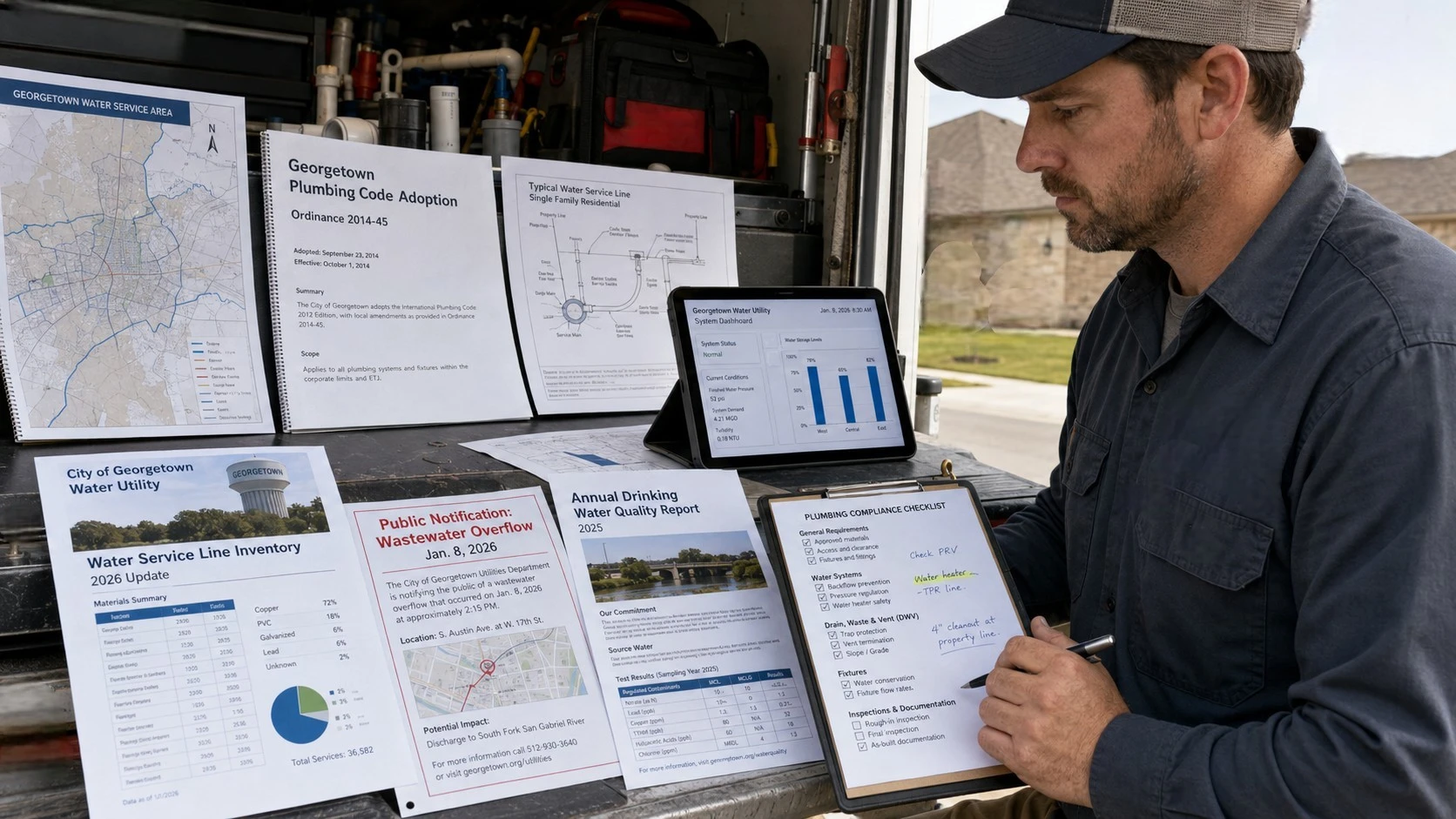
  • How Plumbing Services Can Improve Property Value in Georgetown

    In Georgetown’s competitive real estate market, the difference between a property that sells quickly and one that lingers often comes down to details most buyers never see until something goes wrong. Plumbing systems, hidden behind walls and beneath floors, are one of the most overlooked factors in a home’s value and appeal.

    Good plumbing does more than prevent costly leaks. It shows buyers that a property has been cared for, helps avoid surprises during the inspection, and eases concerns about aging systems. For Georgetown homeowners and investors, maintaining your plumbing isn’t just about avoiding problems. It’s about giving your property an edge in a market where buyers have options.

    Here is how local plumbing professionals can help you protect and increase your home’s value, from routine upkeep to upgrades that can deliver a solid return on investment.

    Why Local Georgetown Plumbing Expertise Matters

    Georgetown’s location in Central Texas brings specific plumbing challenges that require local knowledge. The area’s hard water, with its high mineral content from the Edwards Aquifer, can accelerate fixture wear and tear and pipe scaling. Seasonal temperature swings, while mild compared with northern climates, still cause pipes to expand and contract, adding stress to plumbing connections.

    Local plumbers offer several clear advantages:

    • Local code knowledge: Georgetown follows specific amendments to the International Plumbing Code, and local plumbers navigate these requirements daily, ensuring work passes inspection without delays.
    • Water quality expertise: Understanding how Central Texas water chemistry affects different pipe materials and fixtures allows for better material selection and preventive maintenance.
    • Faster response times: When a water heater fails or a pipe bursts, every hour matters. Local contractors can typically respond within hours instead of days, minimizing water damage and repair costs.
    • Community accountability: In a community the size of Georgetown, reputation matters. Local plumbers maintain quality standards because their business depends on community trust.

    Core Services That Protect Your Property Value

    Professional plumbing services in Georgetown go well beyond emergency repairs. The services that can do the most for your home’s value include:

    • Leak detection and repair: Modern leak detection technology can find hidden water loss before it causes structural damage. Even minor leaks can waste thousands of gallons a year and create conditions for mold growth that can derail a home sale.
    • Repiping and updating infrastructure: Properties built before 1990 often contain galvanized steel pipes prone to corrosion, or polybutylene pipes known for premature failure. Updating your system with PEX or copper removes these risks.
    • Drain system maintenance: Professional hydro-jetting removes accumulated scale and debris that can slow drainage and create backup risks. This preventive service extends the life of your system and helps prevent emergencies during showings or inspections.
    • Water heater upgrades: Whether you’re repairing an existing unit or upgrading to a tankless system, proper water heater maintenance ensures consistent performance while reducing energy costs, a selling point increasingly important to buyers.

    These services address the kinds of risk factors that professional home inspectors flag during real estate transactions. Properties with documented maintenance records and recent upgrades can give sellers stronger leverage in negotiations.

    The Maintenance Advantage: Prevention Is Key

    The National Association of Home Builders estimates that plumbing systems have varying lifespans depending on materials and maintenance quality. Regular professional maintenance can extend those timelines while providing documentation that reassures buyers and appraisers.

    Routine maintenance offers practical benefits:

    • Cost savings: Annual inspections typically cost $150 to $300 but can identify issues that would cost thousands to repair after failure. The return on investment becomes obvious when a $200 inspection prevents a $5,000 water damage claim.
    • System longevity: Properly maintained water heaters often last 12 to 15 years versus 8 to 10 for neglected units. Similar extensions apply to fixtures, pipes, and drainage systems.
    • Sustained efficiency: Scale buildup and small leaks can reduce system efficiency by 15% to 30% over time. Regular maintenance helps preserve performance and keeps utility costs predictable.
    • Lower insurance rates: Some insurers may offer premium reductions for properties with documented maintenance programs, and your claims history directly affects both insurability and rates.
    • Better negotiation leverage: Sellers with maintenance records negotiate from a stronger position, while buyers facing deferred maintenance typically demand concessions or walk away entirely.

    For Georgetown property owners, building a relationship with a reliable service provider—whether through Quality Cooling Heating & Plumbing’s plumbing division, creates a documented maintenance history that adds credibility during real estate transactions.

    High-Impact Upgrades: Kitchens and Bathrooms

    Real estate professionals consistently identify kitchens and bathrooms as the rooms that most influence buyer decisions and property values. While cosmetic updates catch the eye, the underlying plumbing determines whether those updates function reliably.

    Smart plumbing upgrades in these spaces include:

    • Modernizing fixtures: Replacing builder-grade faucets, showerheads, and sinks with mid-range contemporary fixtures typically costs $800 to $2,000 per bathroom but can return 70% to 100% of your investment while making spaces feel updated.
    • Water efficiency: Low-flow toilets, aerated faucets, and efficient showerheads reduce water use by 30% to 50% without sacrificing performance. These upgrades appeal to environmentally conscious buyers and reduce operating costs.
    • Supply line replacement: Upgrading from old galvanized lines or deteriorated copper supply lines to PEX eliminates corrosion risks and improves water pressure, a common complaint in older Georgetown homes.
    • Smart home integrations: Leak detection systems, automatic shutoff valves, and smart water monitors provide both convenience and protection. These systems appeal to tech-savvy buyers and can reduce insurance premiums.

    According to Remodeling Magazine’s Cost vs. Value Report, bathroom remodels that include plumbing updates can return 60% to 70% of their cost in increased home value, with higher returns in competitive markets like Georgetown where buyer expectations run high.

    How to Choose the Right Plumbing Contractor

    The quality of plumbing work directly affects both immediate functionality and long-term property value. Selecting a contractor requires more diligence than simply comparing quotes.

    When hiring a plumber, look for:

    • Licensing and insurance: Texas requires plumbers to be licensed, and reputable contractors carry both liability insurance and workers’ compensation coverage. Ask for proof and verify coverage directly with insurers.
    • Specialized experience: General plumbing skills are not the same as expertise in specific areas like repiping, water heater installation, or fixture upgrades. Match the contractor’s experience to your project requirements.
    • Quality references: Request references from projects similar in scope and age. Recent reviews matter more than volume, and patterns in feedback reveal more than individual complaints.
    • Transparent estimates: A detailed written estimate that itemizes materials, labor, and timelines demonstrates professionalism. Vague quotes or pressure for immediate decisions signal potential problems.
    • Clear communication: Contractors who respond promptly, explain options clearly, and document agreements in writing typically deliver better outcomes than those who rely on verbal understandings.

    For property owners planning renovations or addressing deferred maintenance, investing time in contractor selection pays off through better work quality, fewer scheduling issues, and stronger final results.

    Practical Maintenance Tips for Property Owners

    While complex plumbing work requires professional expertise, property owners can handle routine maintenance tasks that prevent common problems and extend the life of their system.

    Effective DIY maintenance includes:

    • Drain care: Monthly treatments with enzyme-based cleaners can help prevent buildup without the pipe damage caused by chemical drain cleaners. For slow drains, a baking soda-and-vinegar treatment followed by hot water can often clear minor clogs.
    • Faucet repairs: Dripping faucets waste water and signal worn washers or cartridges. Most faucet repairs require only basic tools and replacement parts available at hardware stores.
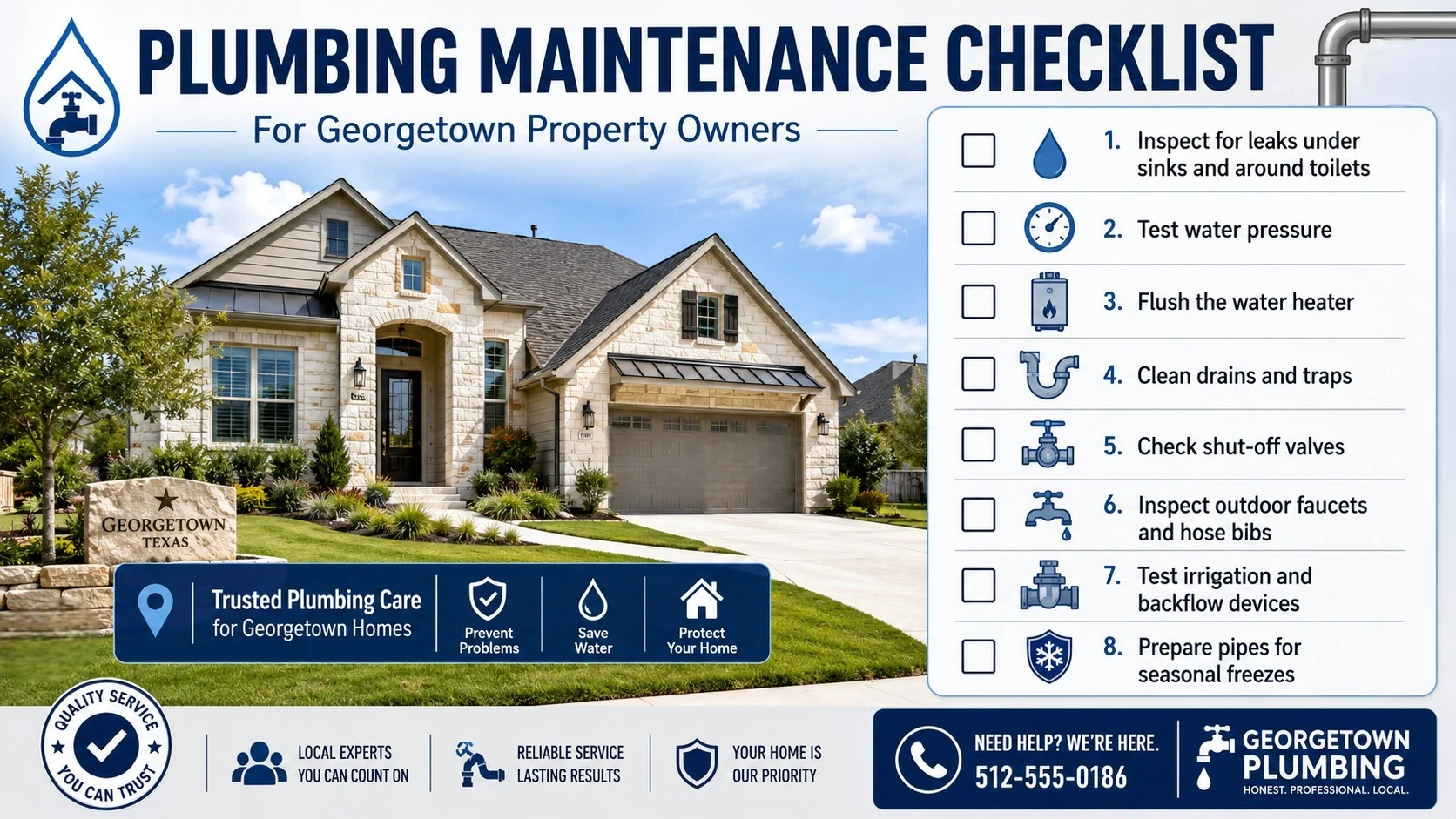
    • Toilet maintenance: Running toilets typically need a flapper replacement, a simple fix that stops water waste. Testing with food coloring in the tank reveals leaks that are not obvious right away. To learn more, check out this detailed checklist.
    • Aerator cleaning: Mineral deposits reduce water pressure and flow. Removing and soaking aerators in vinegar dissolves buildup and restores performance.
    • Water heater flushing: Annual sediment flushing extends a water heater’s life and maintains efficiency. This straightforward process requires only a garden hose and basic instructions.

    These maintenance tasks, while simple, demonstrate property care and prevent minor issues from escalating into expensive repairs.

    Plumbing Is an Investment

    Georgetown’s real estate market rewards properties that combine aesthetic appeal with functional reliability. Plumbing systems, while largely invisible, are a significant component of that reliability equation.

    Professional plumbing services deliver value in a few key ways. They prevent major leaks that damage property and disrupt sales, create documentation that reassures buyers and appraisers, and enable upgrades that make daily life better. They also help maintain an efficient system, reducing operating costs, which is a major selling point for value-conscious buyers.

    For property owners focused on long-term value, establishing a relationship with qualified local plumbers isn’t an expense. It’s a strategic investment in asset protection. Whether you’re addressing immediate needs or planning upgrades, professional plumbing services provide the foundation for a property that performs reliably and can command a stronger price in Georgetown’s competitive market.

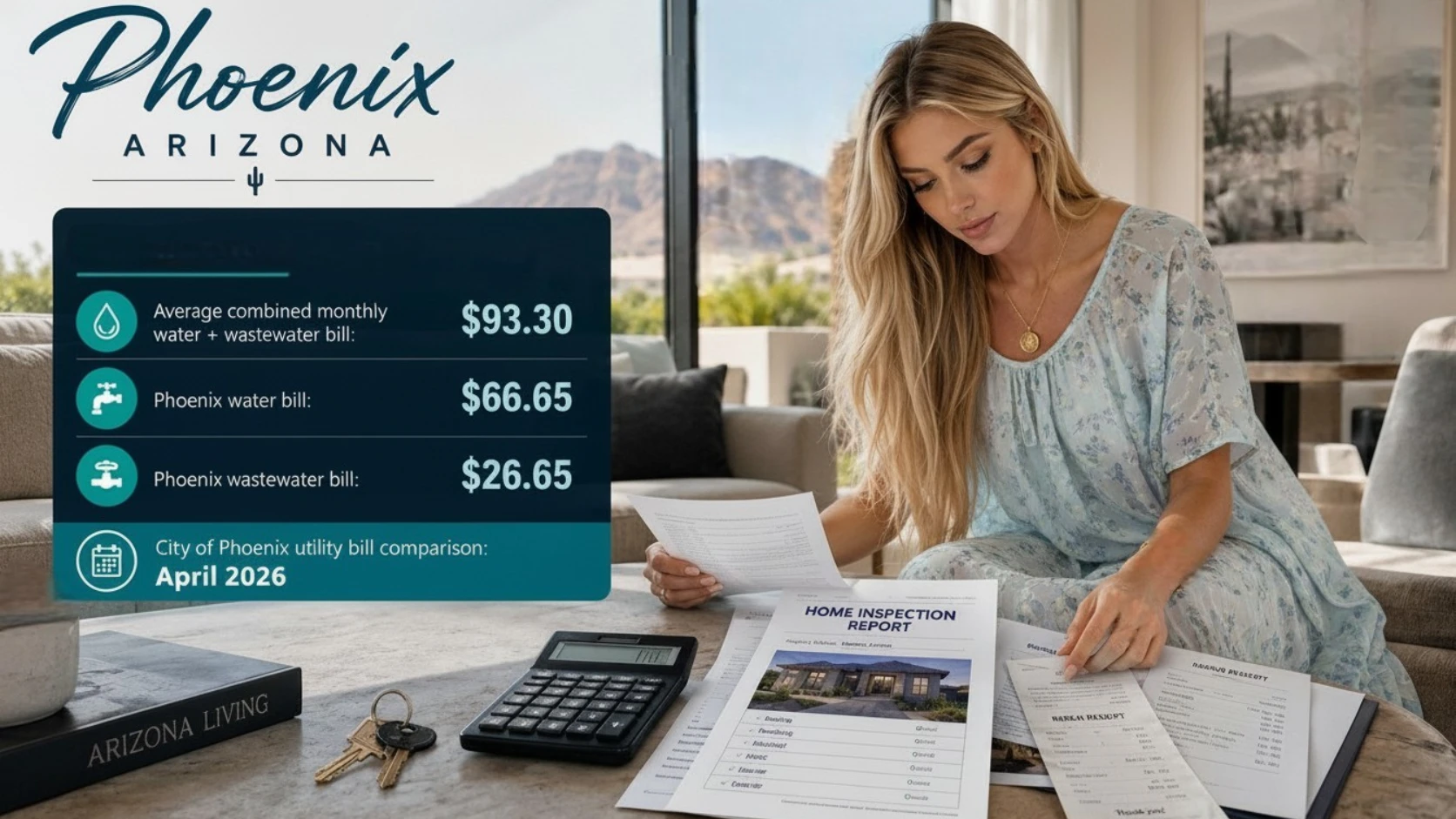
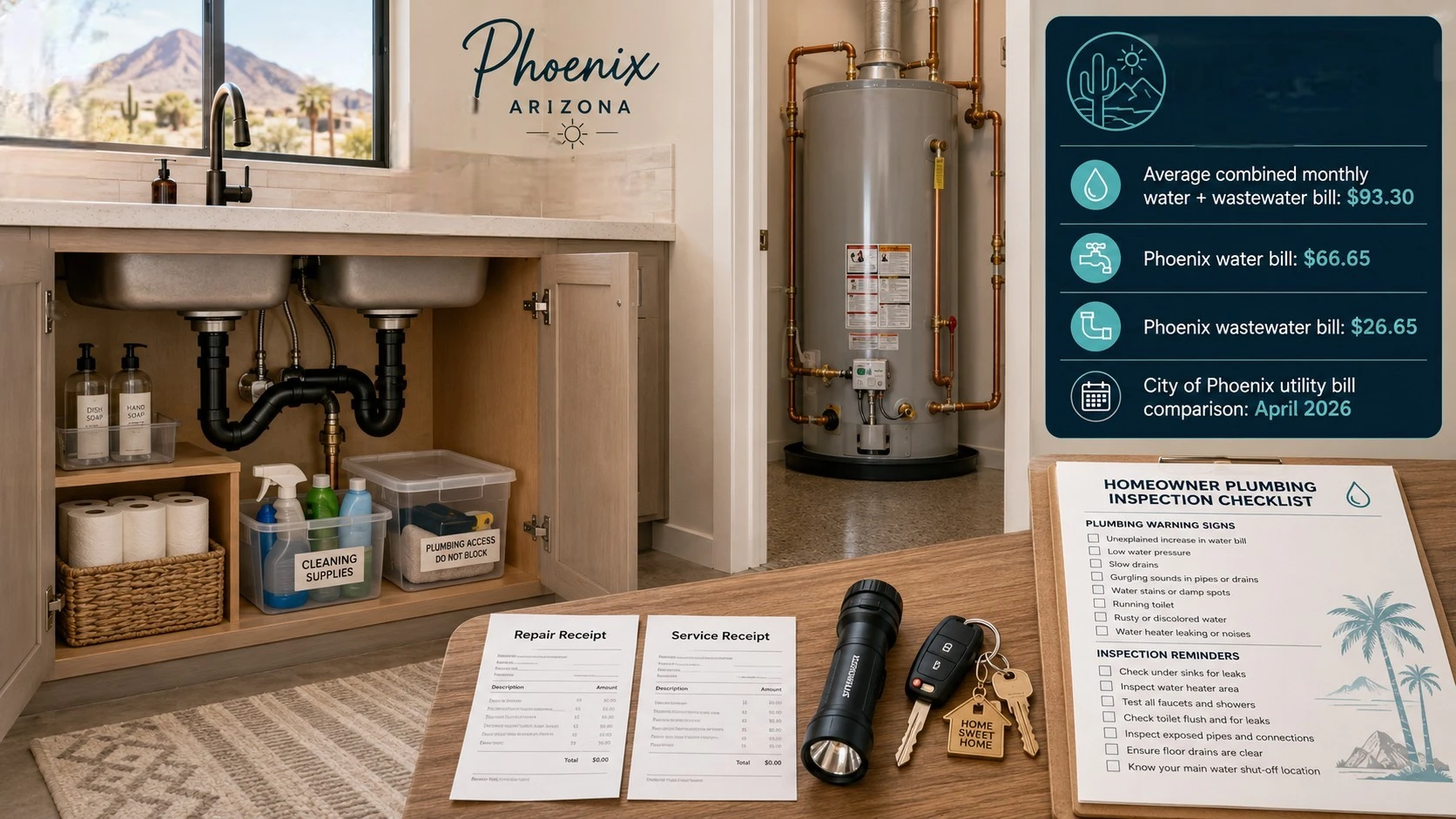
  • Selling Your Phoenix Home? 8 Warning Signs You Need a Plumbing Check Before Listing

    Selling a home means putting your property under a microscope, and buyers know exactly where to look. Plumbing issues are high on their list because repairs can get expensive fast.

    A pre-listing inspection is one of the smartest moves a seller can make in the competitive Arizona real estate market. The U.S. Environmental Protection Agency reports that household leaks waste nearly 1 trillion gallons of water nationwide each year, with about 10 percent of homes losing 90 gallons or more daily.

    That kind of waste shows up on bills, leaves stains, and gets flagged during walkthroughs. If your home has hidden issues, buyers and their inspectors will usually find them. It is much smarter to find them yourself first.

    Having a professional plumber check things out before you list can help keep a deal from falling apart over a problem you did not know was there.

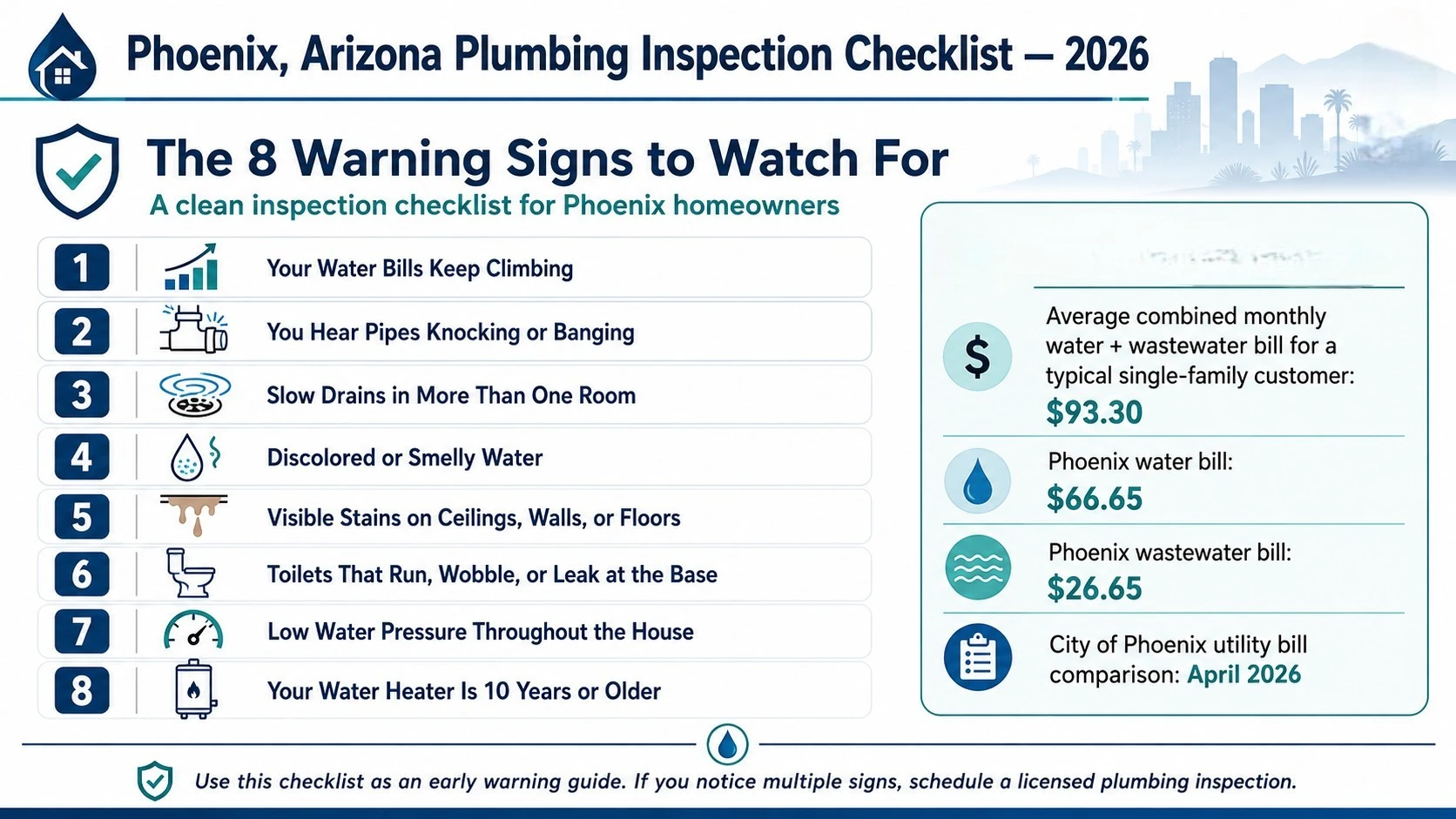
    The 8 Warning Signs to Watch For

    Here are eight signs that your home needs a professional plumbing inspection before that “For Sale” sign goes up.

    1. Your Water Bills Keep Climbing

    If your water bill has been creeping up over the past year without any change in your habits, something is off. A hidden leak inside your walls or under the floors could be to blame.

    Even a slow drip behind a bathroom vanity adds up. Buyers reviewing utility records often spot the trend, so it is best to address it now before showings begin.

    2. You Hear Pipes Knocking or Banging

    Pipes should stay quiet. When they rattle, knock, or hammer after you turn off a faucet, that usually points to pressure issues or loose fittings. If you ignore it, the noise will only get worse, and the joints can eventually fail.

    A plumber can pinpoint whether it is a pressure regulator problem or something more serious deeper in the line.

    3. Slow Drains in More Than One Room

    A single slow drain might just need a snake. But if your kitchen sink, bathroom tub, and laundry drain all run slowly, the issue likely sits deeper in the main line. In places like Phoenix, thirsty tree roots often break into pipes seeking water, causing major backups. Grease buildup or aging pipes can also cause this.

    Inspectors hired by buyers will catch it almost immediately during their walkthrough.

    4. Discolored or Smelly Water

    Brown or rust-tinted water points to corrosion inside galvanized pipes or a deteriorating water heater, while a sulfur smell can mean bacteria growth or anode rod problems.

    Either way, rusty or smelly water will make buyers think twice fast. A pre-listing inspection helps you fix it before anyone turns on a tap.

    5. Visible Stains on Ceilings, Walls, or Floors

    Water stains on your ceiling or warped baseboards are clear signs of a past or current leak. Even if the leak stopped, the stain still raises questions.

    Buyers will assume the worst, often worrying about mold behind the drywall. A plumber and possibly a moisture specialist can confirm whether the issue is active or already resolved.

    6. Toilets That Run, Wobble, or Leak at the Base

    A toilet that runs constantly wastes water and signals a worn flapper or fill valve. A wobbly toilet usually means a failed wax ring or a rotting subfloor underneath. Both are major red flags during inspections.

    The EPA notes that an old flapper alone can silently waste thousands of gallons yearly, and no buyer wants to inherit that problem.

    7. Low Water Pressure Throughout the House

    Weak pressure in just one fixture is usually a clogged aerator. But when every tap trickles, the cause sits deeper. Arizona is known for its hard water, and mineral buildup inside old pipes is a very common culprit.

    A failing pressure regulator or municipal supply problems could also be at fault. Buyers will test showers and faucets, and weak pressure gives them an easy reason to negotiate the price down.

    8. Your Water Heater Is 10 Years or Older

    Most standard tank water heaters last between 8 and 12 years. If yours is getting close to that range, expect questions during showings.

    Rust around the tank base, popping sounds, or lukewarm showers all point to the end of its lifespan. Replacing it before listing, or at least getting it inspected, helps buyers feel more confident and can protect your asking price.

    Why a Pre-Listing Inspection Pays for Itself

    Some sellers skip the inspection because they assume buyers will hire their own. But waiting puts you on the defensive. When the buyer’s inspector finds problems, you lose leverage, and repairs done under deadline pressure almost always cost more.

    Catching issues before prospective buyers set foot in the home keeps you in control of both the timeline and the budget.

    Here is what you gain by going first:

    • You keep more negotiating power. You decide what to repair, what to disclose, and how to price the home. Buyers cannot use surprise findings to chip away at your asking price.
    • You can lower repair costs. When you are not racing the clock, you can compare quotes from two or three plumbers instead of accepting the first available one.
    • Your inspection paperwork looks stronger. Listings paired with recent inspection paperwork and repair receipts feel more trustworthy from the very first showing.
    • Closing is less stressful. Fewer surprises during the buyer’s inspection means fewer renegotiations, repair credits, and delays before closing.
    • Buyers can make stronger offers. When they see documented work, they are more willing to submit serious offers without padding for unknown risks.
    • You avoid emergency rush fees. Same-day plumbing calls and rush jobs cost significantly more than scheduled visits.

    A few hundred dollars spent on a plumber’s review can lead to thousands more at closing, plus far less back-and-forth during escrow. It is the kind of investment that quietly protects every other dollar in the transaction.

    What a Plumbing Inspection Usually Covers

    A licensed plumber checks the parts of your home that buyers and their inspectors will scrutinize most closely. The goal is to catch anything that could slow down or derail the sale, from minor drips to major structural concerns hiding behind walls or underground.

    Here is what a standard inspection typically includes:

    • Supply lines and main shut-off. The plumber checks for corrosion, leaks, and pressure problems along the lines that bring water into your home.
    • Drain and waste system. Sinks, tubs, and floor drains are tested for proper flow and venting. Slow drains often hint at deeper clogs in the main line.
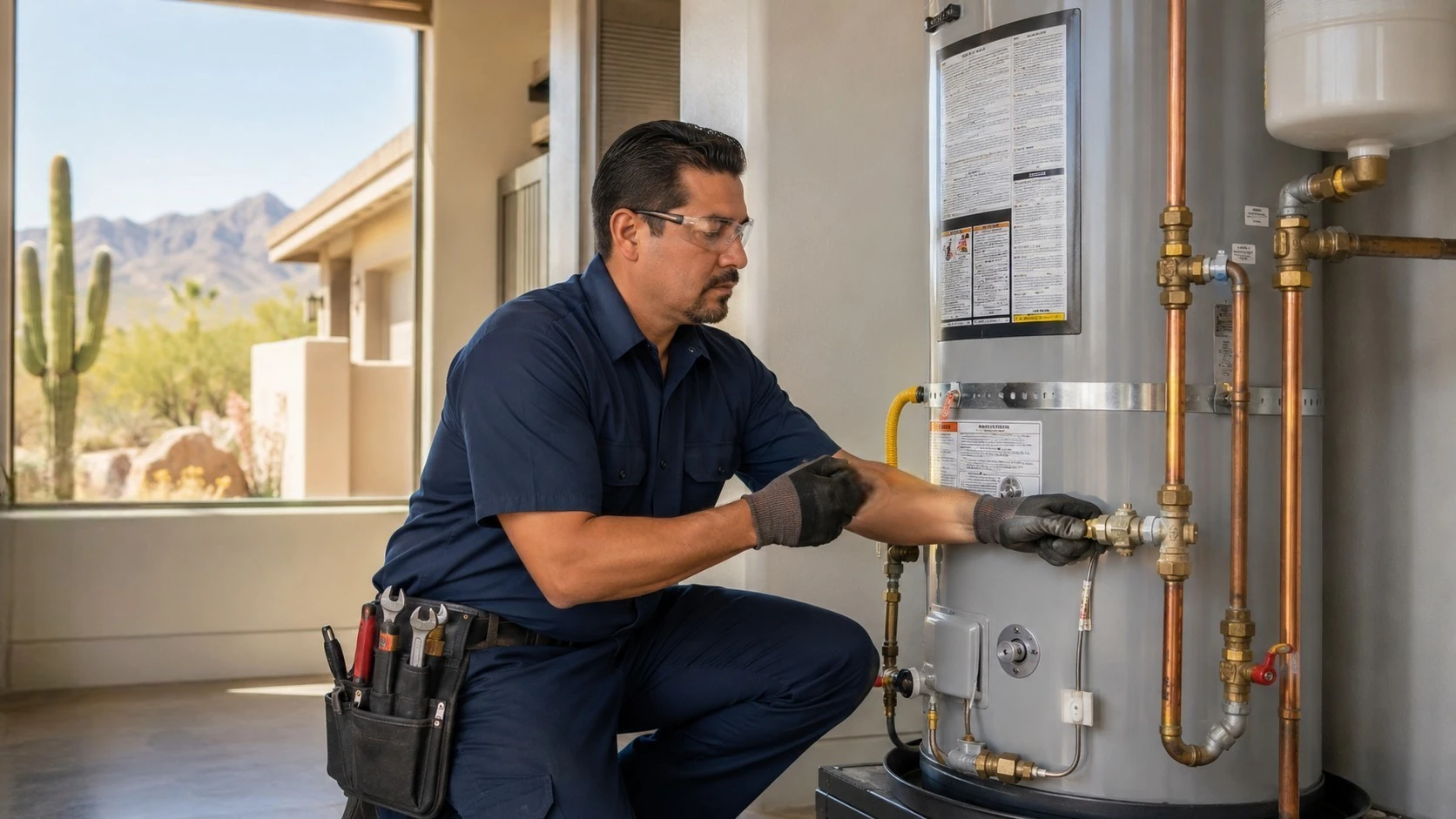
    • Water heater evaluation. Age, sediment buildup, anode rod condition, temperature settings, and signs of rust around the base all get reviewed. This is especially important for water heaters stored in hot Phoenix garages.
    • Fixtures and faucets. Toilets, showerheads, and sinks are tested for leaks, weak pressure, running water, and worn seals.
    • Visible piping inspection. The plumber inspects exposed pipes in basements, crawl spaces, and utility rooms for corrosion, sagging, or improper repairs.
    • Sewer line camera scope. Many plumbers run a small camera through the main sewer line to catch root intrusion, cracks, bellies, or blockages no visual check would reveal.
    • Code compliance review. Older homes often have fittings or materials that no longer meet current plumbing codes, and these can come up during the buyer’s inspection.
    • Written report with photos. You will receive a document showing what passed, what failed, and what needs monitoring, often with images attached.

    If something turns up, you have options. Small repairs can often be done the same day. Bigger issues, like a sewer line replacement, give you time to plan. You can fix it, disclose it, or adjust your asking price accordingly. The goal is to have full information before you’re forced to react to a buyer’s findings during negotiations.

    How to Prepare for the Inspection

    A little prep work helps the plumber move efficiently and gives you a more accurate report. The easier it is for them to access fixtures and equipment, the more thorough the review will be. Spend an hour or two getting your home ready before the appointment.

    Before the plumber arrives:

    • Clear out the cabinets under every sink so they can see supply lines and drain connections.
    • Move boxes, laundry baskets, or storage bins away from the water heater and main shut-off valve.
    • Locate the sewer cleanout, which is often outside near the foundation, and make sure it is not buried under mulch or covered by furniture.
    • Gather receipts from past plumbing work, water heater installations, or repiping projects. These build a paper trail that buyers appreciate.
    • Write down any concerns you have noticed, like slow drains, knocking pipes, or fluctuating hot water.
    • Make sure pets are secured and the plumber has clear paths to basements, crawl spaces, and outdoor spigots.
    • Walk through the home yourself first:
    • Run every faucet for at least 30 seconds and watch for discoloration or weak flow.
    • Flush every toilet and listen for hissing or running after the tank refills.
    • Check each tub and shower for slow drainage or pooling water.
    • Look under sinks with a flashlight for moisture, water stains, or warped wood.
    • Test the laundry hookups and check the washing machine hoses for cracks or bulges.
    • Note any odd smells near drains, especially sulfur or sewer gas.

    A plumber works faster when they know what concerns you, and you get a more useful report when both of you are on the same page from the start. Think of this prep as giving yourself the cleanest possible inspection process. The more they see, the fewer surprises buyers will find later.

    The Takeaway for Sellers

    Selling a home goes a lot smoother when surprises stay out of the picture. Plumbing problems sit near the top of every buyer’s worry list, right alongside roofs and foundations. By spotting these eight signs early and bringing in a pro for an inspection, you protect your sale price, your timeline, and your peace of mind.

    Take a slow walk through your Arizona home this week. Listen for odd sounds, check under sinks, and run every fixture. If something feels off, it probably is. Schedule that inspection before the listing photos go up, and you will thank yourself when buyers start making serious offers with fewer demands.

  • Best Property Valuation Company in Melbourne

    When you’re buying a property in Melbourne, getting the valuation right matters. A good valuation can help you understand what a property is really worth before you make an offer or start bidding at auction.

    But choosing the right valuation company can be tricky. Some firms focus purely on formal reports. Others combine valuation advice with buyer representation. The right choice depends on what you actually need: a document for compliance, or support during the buying process.

    This guide reviews several Melbourne valuation services and explains why Ni Advocacy is one of the best options for buyers who want valuation advice tied directly to negotiation and acquisition strategy.

    Key Takeaways: Melbourne’s Best Valuers and Companies

    • Best for Buyers: For people actively buying property in Melbourne, a buyer’s agency like Ni Advocacy is one of the strongest options to consider. They combine certified valuation work with buyer representation, which can help buyers make more informed offers and avoid overpaying.
    • Best for Compliance: For those who only need a formal report for tax, legal, or finance purposes, an independent valuer like WBP Group is a better fit.
    • The Main Difference: One model gives you a valuation report. The other uses valuation data as part of the buying process.

    Understanding that difference can help you choose the right service for your situation.

    On This Page:

    • Ni Advocacy Review for Buying Property.
    • WBP Group Review for Formal Reports.
    • Melbourne Property Valuers Review for Legal Needs.
    • How to Evaluate a Valuation Company.
    • Frequently Asked Questions.

    1. Ni Advocacy Review: Best Integrated Valuation Company for Buyers — ⭐ 4.9/5

    Ni Advocacy represents the “integrated model.” This service is designed to do more than just tell you what a property is worth. It’s structured to ensure you actually buy it for the best possible price. They combine the data-driven analysis of a Certified Practising Valuer with the strategic execution of a professional real estate buyers advocate.

    What We Like

    • Uses Valuation Data in the Buying Process: The valuation is not just a final document. It helps shape a fact-based buying strategy that can be used when negotiating with selling agents.
    • Turns the Valuation Into a Buying Plan: Many buyers may understand the estimated value of a property but still struggle during negotiation or auction. Ni Advocacy helps turn the valuation into practical steps for purchasing the property.
    • Certified Valuation Work: Real estate assessments are carried out by a Certified Practising Valuer, which adds professional structure and credibility to the process.
    • Helps Buyers Stay Disciplined: The model is designed to reduce emotional decision-making. Having a clear value range before negotiating or bidding can help buyers avoid going beyond what the property is worth.

    What to Consider

    • Not Ideal for Standalone Reports: If you only need a valuation document for tax, legal, or finance purposes and do not need help buying the property, this full-service model may be more than you need.

    How This Service Gives Buyers an Advantage

    An independent report can be useful, but it may not be enough on its own if you are trying to buy in a competitive market. Ni Advocacy acts as the buyer’s representative and uses valuation data to guide the purchase strategy.

    The process starts with a certified assessment to establish a realistic market value. That figure then helps set the buyer’s limit before negotiations or auction day.

    Their advocates can use the findings from the valuation to support an offer, challenge unrealistic price expectations, and keep the buyer focused on the numbers. At auction, this can help buyers bid without getting carried away.

    Most people approach property with 90% emotion and 10% logic. We flip that equation for you by starting with a Certified Valuer’s analysis. This gives you the confidence to bid aggressively when it counts, knowing you’re making a brilliant financial decision for your future.

    Kevin Ni, Managing Director

    2. WBP Group Review: Best for Standalone Valuation Reports — ⭐ 4.5/5

    WBP Group is one of Melbourne’s established independent valuation companies. It follows the traditional valuation model, providing standalone reports for legal, financial, tax, and advisory purposes.

    What We Like

    • Established Reputation: WBP Group has a long-standing presence in the Australian property valuation market.
    • Independent Advice: Their reports are prepared independently, making them useful for legal, financial, and compliance-related situations.
    • Range of Services: The firm provides valuation and advisory services for different property types and purposes.

    What to Consider

    • No Buyer Representation: WBP Group provides the valuation, but buyers still need to handle the negotiation, auction, or purchase process themselves.
    • The Service Ends with the Report: The report may give you useful information, but you still need to decide how to use that information when dealing with selling agents.

    Who It’s Best For

    WBP Group is a good fit for experienced buyers, developers, investors, or anyone who needs a certified valuation for compliance purposes such as Capital Gains Tax, finance, litigation, or accounting.

    If you already know how to handle the purchase process and only need a formal valuation, WBP Group is a solid option.

    3. Melbourne Property Valuers Review: Best for Specialist Valuation Reports — ⭐ 4.4/5

    Melbourne Property Valuers is a specialist firm focused on certified valuation reports. Like WBP Group, they operate under the independent valuation model.

    Their role is to provide a detailed assessment of a property’s market value, often for legal, tax, family law, estate, or finance-related purposes.

    What We Like

    • Certified Valuers: Reports are prepared by qualified valuers and can be used for formal purposes.
    • Useful for Legal and Tax Matters: The firm is experienced in valuation work for matters such as family law, estate planning, and taxation.
    • Practical Report Turnaround: They are known for providing formal reports within a practical timeframe for Melbourne clients.

    What to Consider

    • No Support With the Purchase Process: Their service is focused on valuation reporting, not buyer advocacy or negotiation.
    • Less Useful for Buyers Who Need Strategy: The report can help you understand value, but it does not guide you through the process of securing the property at that price.

    Who It’s Best For

    Melbourne Property Valuers is best suited to people who need a formal valuation for legal, tax, or administrative reasons.

    If you are dividing assets, finalising an estate, preparing documents for the ATO, or dealing with a legal matter, their service is well suited to that purpose.

    How to Evaluate a Valuation Company

    When comparing valuation companies in Melbourne, it helps to look at a few important factors:

    • The Service Model: Does the company only provide a report, or does it also help you use that valuation during the buying process?
    • The Qualifications: Are the assessments completed by Certified Practising Valuers or other appropriately qualified professionals?
    • The Buying Decision: If you are purchasing a property, does the service help you make better decisions before negotiating or bidding?
    • The Independence: Does the company work in your interest, and is the advice free from selling-side pressure?

    Independent valuers are important for formal reports and compliance work. For active buyers, however, an integrated model may be more useful because it connects the valuation to the way you actually buy the property.

    Frequently Asked Questions About Valuations in Melbourne

    What is the main difference between an independent valuer and a buyer’s agency that offers valuation advice?

    The main difference is how the valuation is used.

    An independent valuer provides a formal document stating a property’s value. Their role usually ends once the report is delivered. This is useful for compliance, legal, finance, or tax purposes.

    A buyer’s agency that offers valuation advice, such as Ni Advocacy, uses the valuation as part of the buying strategy. The assessment helps guide the offer, negotiation, and auction limit. This model is better suited to buyers who want support during the purchase process.

    What is a Certified Practising Valuer?

    A Certified Practising Valuer is a qualified property professional who has met recognised standards in the valuation industry. In Australia, many are accredited through the Australian Property Institute.

    For buyers, working with a Certified Practising Valuer means the property’s value is assessed using professional methods, comparable sales, and evidence-based reasoning rather than guesswork or agent price guides.

    Why is a professional valuation better than valuing a property myself?

    A professional valuation is usually more reliable than a DIY estimate because it is based on deeper data and a structured assessment method.

    A Certified Practising Valuer can review comparable sales, assess the condition and quality of the property, consider land size and orientation, and make adjustments based on factors that may not be obvious from online listings.

    Online property portals can be useful for a rough starting point, but they often do not show the full picture. For buyers, relying only on public data can increase the risk of misreading the market or paying too much.

    How is a bank valuation different from a market valuation?

    A bank valuation is prepared for the lender. Its main purpose is to help the bank manage risk and confirm that the property provides enough security for the loan.

    A market valuation is prepared to understand what the property is worth in the current market. For buyers, it can provide a clearer basis for making an offer, setting an auction limit, and avoiding overpayment.