Category: Home Design

  • Color Psychology in Paintings: How Wall Art Shapes Mood and First Impressions

    Two homes can have the same layout, the same flooring, and even the same paint color. Yet they still feel completely different the moment you step inside.

    Often, the difference is on the wall.

    A painting is not just a nice touch. It is an emotional shortcut. Before someone notices your coffee table styling or the quality of your curtains, their brain has already clocked the dominant colors in the room. It makes a snap judgment. Is it calm? Energizing? Cozy? Cold? Luxurious? Playful? Or serious?

    That judgment happens fast. This is one reason wall art can shape first impressions more than people expect. It means paintings can do more than fill space. They can steer the mood of a room on purpose. For home design fans or anyone thinking about resale, it is equally useful. The right painting palette can make a home feel welcoming, modern, and finished without a renovation budget.

    Here is how color psychology in paintings works in interiors and how to choose art that supports the mood you actually want.

    Why Paintings Influence Mood Faster Than Decor

    Home design is full of details, but first impressions happen in a blur. When you enter a room, your brain scans for the big signals like light, layout, and color. Paintings are often one of the largest blocks of color in the space. They are bigger than a vase and louder than a pillow. They are usually placed right in your sightline.

    That is why a painting can override the mood you thought you designed.

    Picture a soft beige room. Now hang a vivid red abstract painting in it. The room suddenly feels more intense, more modern, and maybe even slightly edgy. Swap that out for a hazy blue landscape. It is the same room, but it has a different emotional temperature. One invites conversation. The other invites you to exhale.

    Paintings are mood-setters because they carry color at scale.

    The Two Concepts That Matter Most

    Before picking a color, keep two things in mind.

    1. Visual temperature. Warm colors like reds, oranges, and terracotta tend to feel social and intimate. Cool colors like blues, greens, and cool grays tend to feel calm and spacious. Neither is better. They simply push the energy in different directions.
    2. Saturation and contrast. High saturation reads bold and lively. Low saturation reads refined and airy. High contrast looks dramatic and grabs attention. Low contrast feels cohesive and soothing.

    What Different Color Palettes Communicate

    Color psychology is not a strict rulebook. People’s experiences and culture matter. But in home interiors, certain palettes tend to create predictable impressions. Think of these as design signals rather than strict rules.

    Warm Tones Are Cozy and Social

    Paintings with reds, oranges, warm yellows, rust, and terracotta often make spaces feel more active and welcoming. They bring a sense of closeness. This is why warm-toned art can make large open-concept rooms feel less empty.

    • Where it works best. This palette is great for living rooms, dining areas, kitchens, and entryways.
    • What to watch for. Highly saturated reds can feel aggressive if the rest of the space is already visually loud. If you want warmth without intensity, look for warm tones in a muted, dusty, or earthy version.

    Cool Tones Are Calm and Spacious

    Blues, greens, cool grays, and sea tones tend to create a sense of calm and clarity. They can make a room feel larger and lighter, especially when the painting has soft transitions rather than sharp contrasts.

    • Where it works best. This is ideal for bedrooms, bathrooms, home offices, and modern living spaces.
    • What to watch for. If the room already has cool lighting and cool finishes like gray floors or chrome, too much cool-toned art can make the space feel cold. You should balance it with warm wood, brass, or textiles.

    Neutrals Are Timeless and Flexible

    Neutral paintings include creams, beiges, taupes, black-and-white work, and charcoal sketches. They support a quiet luxury vibe. They work well in homes that rely on texture and material quality like linen, wood grain, plaster walls, and boucle.

    • Where it works best. These work anywhere, especially in staged homes or resale properties.
    • What to watch for. Neutral art can disappear if everything else is neutral too. The fix is texture. Choose pieces with depth, visible brushstrokes, layering, or a strong focal area.

    Earth Tones Are Grounded and Natural

    Earth-tone paintings use clay, sand, olive, ochre, warm browns, muted greens, and stone grays. They feel organic and calming. They often connect modern clean lines with a more lived-in warmth.

    • Where it works best. Try these in living rooms, bedrooms, hallways, and homes with lots of wood.
    • What to watch for. Too much earth tone without contrast can feel flat. Add a little charcoal, deep green, or off-black detail to keep it intentional.

    Jewel Tones Are Luxurious and Dramatic

    Emerald, navy, burgundy, sapphire, and plum feel rich. Even a single jewel-toned painting can make a room feel more upscale, especially when paired with simple furniture and good lighting.

    • Where it works best. These shine in dining rooms, formal living rooms, offices, and boutique-style bedrooms.
    • What to watch for. Jewel tones can dominate a small space. Keep the rest of the palette quiet. You can also choose a painting where jewel tones are accents rather than the whole story.

    Pastels Are Soft and Approachable

    Dusty pink, pale blue, soft lavender, mint, and gentle peach can make a space feel bright, friendly, and relaxed. In modern interiors, pastels work best when they are slightly muted rather than sugary sweet.

    • Where it works best. Use these in bedrooms, nurseries, creative studios, and small apartments that need lightness.
    • What to watch for. Overly sweet pastels can feel juvenile in a luxury context. Pair them with structured frames, darker accents, or more grown-up textures like linen and natural wood.

    Think of your painting as either a focal statement that leads the room or a bridge piece that connects the room’s existing tones. Either approach works. Just do not try to do both on the same wall.

    Room-by-Room Guide to Mood

    Instead of asking what matches your sofa, ask a better question. How do I want this room to feel within five seconds?

    Entryway and Hallway

    Your entryway is a handshake. A painting here should feel inviting and confident. Warm neutrals, gentle earth tones, soft greens, or a balanced abstract with a calm palette work well. If your hallway is narrow, avoid highly contrasting art that acts like a visual stop sign. A calmer palette helps the space flow.

    Living Room

    Living rooms are social, but they are also where people unwind. Paintings with warm undertones often work beautifully here. Think rust, clay, warm beige, or muted gold. This works best when balanced by a few cooler touches like sage or soft blue.

    • If you want the living room to feel lively, choose higher saturation or stronger contrast.
    • If you want it to feel restful, choose softer transitions and muted tones.

    Bedroom

    For most people, bedrooms do best with low-saturation palettes. Think misty blues, dusty greens, warm neutrals, soft charcoal sketches, or gentle abstract work. A painting can still be interesting without being visually demanding. Avoid highly saturated reds or neon tones if sleep is a priority. They tend to keep the room’s energy turned on.

    Home Office

    Offices benefit from colors that support attention without raising stress. Think deep blues, forest greens, earthy neutrals, or structured abstracts with controlled contrast. If you want more creative energy, add a small amount of warmth. Burnt orange or ochre accents can stimulate without overwhelming.

    Dining Area and Kitchen

    These rooms look best with some warmth. A painting with terracotta, warm beige, or golden tones can make a dining space feel more inviting and connected. Even modern spaces look more human with art that has a warm center. If your kitchen is already warm with wood cabinets and warm lighting, you can introduce cooler art for balance. Just keep it soft.

    Bathroom

    Bathrooms tend to work well with cool tones and neutrals because they support a fresh and relaxed feeling. Stick to soft blues, sea greens, and monochrome prints. Keep the composition calm since too much visual busyness can fight the spa effect.

    Practical Tips to Choose the Right Painting

    You do not need a design degree to make this work. A few smart checks will prevent the most common mistakes.

    • Start with the purpose of the room. Put mood first and matching second. Decide what you want the space to do. Do you want to relax, energize, welcome, or focus?
    • Use the painting as the 10% color boost. In many rooms, the painting can act like the accent in the classic 60-30-10 color balance. If your room is neutral-heavy, the painting can provide that intentional pop without needing a dozen accessories.
    • Test in real light. Paintings change dramatically between daylight and evening light. View the piece in both. Step back and check it from the doorway. That is how most people will experience it first.
    • Mind undertones. A warm white wall and a cool gray painting can clash even if they look neutral on their own. Compare the whites and grays in the painting to your walls, floors, and large textiles.
    • Treat the frame as part of the palette. Natural wood frames add warmth. Thin black frames sharpen and modernize. Wide mats add breathing room and sophistication.
    • Go for mass appeal if you are selling. If your goal is first impressions for buyers or renters, soft blues, gentle greens, warm neutrals, and calm abstracts tend to feel universally comfortable. Extremely polarizing colors or aggressive imagery can distract people from imagining themselves in the home.
    • Avoid common sizing mistakes. Art that is too small for the wall, hung too high, or overly busy in a small space can make even a beautiful interior feel off. When in doubt, scale up and simplify.

    Conclusion

    Paintings are not just the finishing touch. They set the tone. Because color is processed quickly, the palette on your wall can shape how a space feels before anyone notices the details you worked so hard on.

    When you choose art with color psychology in mind, you get more control over mood and first impressions. Warm tones invite connection. Cool tones expand the space. Neutrals improve the design.

    The next step is simple. Pick one mood you want the room to deliver. It could be calm, welcoming, energized, or refined. Then choose a painting that makes that mood obvious within five seconds of walking in. When art leads with intention, the whole space feels more finished, more personal, and more memorable.

  • Nightstand Evolution: Why You Need a Smart Nightstand with Wireless Charging

    Picture your typical bedtime routine.

    You crawl into bed, exhausted. You reach for your charging cable, but realize it has fallen behind the nightstand. You lean over, fumbling in the dark, fishing for the wire stuck between the wall and your heavy wooden cabinet. You finally find it, plug your phone in, and leave it sitting on top of a pile of books, receipts, and a glass of water.

    It’s a messy way to end the day.

    For decades, the nightstand has been a basic piece of furniture, just a box with a drawer, designed to hold a lamp and an alarm clock. But our lives have changed. We now go to bed with smartphones, smartwatches, earbuds, and tablets. Our bedside table has turned into a chaotic charging station.

    Meet the smart nightstand. It’s not just another piece of furniture, it’s a simple fix for modern bedside clutter. Here is why the traditional bedside table is on its way out, and why your next upgrade needs to be smart.

    The Forgotten Upgrade

    We live in smart homes. We have thermostats that learn our schedule, doorbells that see visitors, and fridges that tell us when we are out of milk. Yet, surprisingly, the room where we spend one-third of our lives, the bedroom, is often the last place to get a tech update.

    When people look to upgrade their Bedroom Furniture, they usually focus on a comfortable mattress or a larger wardrobe. They rarely think about the nightstand. But the nightstand is arguably the most used piece of furniture you own. It’s the last thing you touch at night and the first thing you reach for in the morning.

    Holding onto an outdated nightstand in a digital world creates unnecessary hassle. It leads to what some call cord clutter, ugly power strips and tangled wires that can make the whole space feel messy. The evolution of bedroom design is moving towards integration, where technology serves us without being seen.

    The Convenience of Drop-and-Charge

    The real upgrade of a modern smart nightstand is wireless charging.

    If you haven’t lived with a wireless charging surface built into your furniture, it’s hard to explain how much it changes your habits.

    It creates a frictionless experience. There is no “plugging in.” You simply drop your phone on the designated spot on the glass or stone top, and it starts charging. Because it’s so easy, it can help you sleep better. You stop looking at your phone sooner. You don’t have that final moment of staring at the screen while trying to find the charging port. You just put it down and close your eyes.

    Leading designs, like those found in Povison’s smart collection, integrate these charging pads seamlessly under tempered glass or sintered stone surfaces. It doesn’t look like a piece of tech, it looks like a nice table. But underneath, it’s keeping your digital life powered.
    Motion Sensor Lighting: Safety Meets Function

    How many times have you stubbed your toe trying to go to the bathroom in the middle of the night? Or blinded yourself, and your partner, by turning on the main bedside lamp just to find a sip of water?

    Smart nightstands are evolving to include built-in ambient lighting. These aren’t just decorative LED strips, they act as motion-activated safety lights.

    Think of it as a built-in nightlight. Sensors at the base of the nightstand detect when your feet hit the floor, automatically triggering a soft, warm glow near the ground. It provides just enough light to navigate the room safely without blasting your eyes with bright light, helping you fall back asleep faster.

    This feature is particularly valuable for elderly family members or parents with young children who might wander in at night. It turns your furniture into a helpful guide.

    Eliminating Visual Noise

    A cluttered space leads to a cluttered mind. Some sleep experts say that a messy bedroom environment can increase cortisol levels and make it harder to fall asleep.

    Traditional nightstands were not designed for the modern load. They don’t have cable management. Smart nightstands fix this with built-in connectivity hubs.

    Besides the wireless top, many models feature USB-A and USB-C ports tucked discreetly on the side. This allows you to charge your Apple Watch or iPad without running cables to the wall outlet. By centralizing power in the furniture, you eliminate the visual noise of cords draping over the edge.

    The result is a calm, minimalist surface. A clear nightstand promotes a clear head, which is the best way to start a good night’s sleep.

    High-Tech That Doesn’t Look Like Tech

    When people hear “smart furniture,” they often imagine something that looks like a spaceship, plastic, shiny, and cold.

    The real trend, however, is blending tech with design. The best smart nightstands today, including styles from Povison, blend technology with high-end, organic materials. You’ll find soft, stitched leather wrapping the drawers to add warmth and texture, or sintered stone tops that make the piece feel substantial and luxurious compared to plastic. Even tempered glass adds a modern, sleek touch that is easy to clean.

    The goal of modern design is to hide the technology. A guest walking into your room shouldn’t know your nightstand is a gadget until they see you charge your phone on it. It preserves the elegance of the bedroom decor while adding 21st-century utility.

    Why It’s Time to Bring Your Bedroom Up to Date

    Furniture is an investment. A good nightstand should last you 5 to 10 years.

    If you buy a standard, non-tech nightstand today, you are buying a product designed for the past. As our reliance on devices grows, the need for accessible power and integrated lighting will only increase.

    Upgrading to a smart nightstand is a small change that pays off every day. It simplifies your nightly routine, cleans up your visual environment, and adds a touch of modern luxury to the most personal room in your house.

  • Designing a Nursery in a Small Home: How to Maximize Comfort Without Sacrificing Space

    Image from Unsplash.com

    Creating a nursery in a small home can feel like a puzzle, one where every piece matters and comfort needs to fit alongside practicality. Many young families in today’s housing market are learning that a beautiful, functional nursery doesn’t require a sprawling room. What it does require is intention: smart furniture choices, thoughtful layouts and a focus on items that truly support daily routines. Even something as simple as choosing a small nursery chair can dramatically change how spacious and welcoming a tiny room feels. With the right approach, a small nursery becomes a cozy, calming space that works seamlessly during the newborn months and beyond.

    Start With the Essentials, Then Build Around Them

    Many parents begin designing a nursery by imagining decor themes or browsing inspiration boards, but the first step in a small space is determining what truly matters. A safe crib, comfortable seating, soft lighting and accessible storage typically form the core of any nursery. When these items are scaled appropriately and placed intentionally, everything else becomes much easier to arrange.

    Instead of filling the room quickly, try stripping the layout down to what you’ll use every day. It creates clarity, but it also prevents the slow accumulation of bulky or unnecessary items. Smaller homes benefit from this kind of discipline, because every inch saved becomes breathing room.

    Choose Compact Furniture That Supports Everyday Routines

    The difference between a cramped nursery and a comfortable one often comes down to scale. Oversized pieces overwhelm tight rooms, while compact or multi-use furniture makes the space feel balanced and intimate. Seating is a perfect example: new parents spend countless hours feeding, rocking and soothing in the same spot. A thoughtfully designed small nursery chair delivers the comfort of a traditional glider without demanding the footprint of one.

    Smaller-scale furniture also tends to support better traffic flow and safer movement, especially during nighttime routines. Interior design resources such as Better Homes & Gardens consistently emphasize that choosing the right scale is the most effective way to visually expand a room, something even more important when designing for a growing family.

    Let Storage Become Part of the Design

    Small nurseries succeed when storage is seamlessly integrated rather than squeezed in. Instead of adding more furniture, consider how to make use of existing surfaces and corners. Wall shelves open up floor space while keeping daily essentials within reach. Under-crib storage drawers can hold extra linens or seasonal clothing. Even the back of a door becomes valuable when used for lightweight organization.

    A well-organized nursery not only makes the room look bigger, but it also reduces the mental load on tired parents. When everything has a place, routines become smoother and the space feels more serene.

    Create Space Through Color and Lighting

    Image from Unsplash

    Color is one of the most underrated tools in a small nursery. Soft, airy tones expand the room visually and offer a calming backdrop for newborn routines. Whites, light grays and muted pastels create an open atmosphere without making the room feel cold or clinical. Paired with warm lighting, table lamps, dimmable fixtures or soft-glow night lights, the space becomes naturally soothing.

    Layered lighting also adds depth, which can make a compact room feel more dimensional. It’s a subtle shift, but it can transform the entire mood of the space.

    [wpchtmlp id=522599]

    Use Layout to Improve Flow, Not Just Fill Corners

    Small rooms benefit from purposeful layout decisions. Instead of pressing everything against the walls, think about how you move through the space during nighttime feedings, diaper changes or morning routines. A clear path from the door to the crib reduces clutter and creates a sense of openness. Seating near a window can offer natural light for daytime bonding, while keeping the dresser close to the changing area improves efficiency.

    Design experts often recommend focusing on ‘reachable zones,’ areas where you can comfortably access what you need without crossing the room. This is especially helpful during late-night routines when convenience matters most.

    Personalize With Meaningful, Minimal Details

    Even the smallest nursery deserves touches that reflect your family’s personality. A simple wall print, a soft rug, a favourite book collection or a single statement mobile can bring warmth without overwhelming the space. In a small room, less often feels like more. Each detail stands out, offering charm without overcrowding.

    And because compact nurseries leave little room for excess decor, parents naturally gravitate toward more intentional choices. The result is a space that feels both intimate and thoughtfully curated.

    A Small Nursery Can Still Feel Spacious, Functional and Warm

    Designing a nursery in a small home isn’t about making compromises. Instead, it’s about choosing elements that work harder and smarter. With the right furniture scale, practical storage solutions, gentle colors and a mindful layout, even the smallest room becomes a welcoming retreat for both parent and child.

    Small spaces don’t limit comfort. In many homes, they amplify it, creating rooms that feel calm, close and deeply personal from the moment you walk through the door.

  • Integrating Revive2 Radiators Into Various Interior Layouts

    Gone are the days when radiators were just functional eyesores. The Revive2 double-panel model proves that heating can be both powerful and stylish, offering strong output from a clean, simple profile. It’s designed to elevate a room’s look without competing with your design.

    As more homeowners and designers seek heating solutions that integrate with the room rather than fight it, the Revive2 hits the mark. Its low profile fits seamlessly into modern spaces yet feels perfectly appropriate in traditionally styled homes.

    Embracing Modern Minimalism

    Minimalist rooms thrive on open space, clean lines, and a soft, neutral palette. The Revive2 double panel radiator has a flat front and compact depth, making it a great match for this aesthetic. It sits quietly in the background, allowing the space to feel calm while maintaining steady, comfortable heat.

    Key features for modern spaces:

    • A sleek profile that slips into tight spots while still looking sharp.
    • Versatile finishes, allowing you to either blend the radiator into the wall or use it as a gentle accent.
    • Compact sizes that maximize floor space in small apartments without sacrificing solid heating power.

    In a modern setting, try placing the radiator under windows or along an open wall. Just be sure to leave a few inches of clearance on all sides for airflow, this keeps the unit efficient and maintains that open, uncluttered layout.

    Vintage Charm in Traditional Homes

    For classic interiors, the goal is to add warmth that feels intentional and integrated. The Revive2’s simple, understated shape doesn’t clash with ornate wood trim, crown molding, or other period details.

    Harmony with traditional features:

    • Blend with the woodwork: Align the unit with existing sills and trim so it reads as a deliberate part of the millwork.
    • Choose warmer tones: Opt for paint or enamel finishes (where available) that echo the home’s historic color palette.
    • Use feature placement: Center the radiator under a piece of art or between built-in shelving to make it look intentional, not like something you tried to hide.

    By letting the radiator coexist with your vintage pieces, you maintain modern comfort while fully respecting the home’s original character.

    Making the Most of Compact Spaces

    Urban layouts and smaller homes demand heaters that work hard without eating up valuable square footage. The Revive2’s double-panel design is ideal for this, delivering impressive output from a very small footprint.

    Smart solutions for small living areas:

    • Utilize overlooked walls: Install radiators in hallways or entryways to free up main living space while warming the home’s core.
    • Pair with multi-purpose furniture: Place furniture near the unit (never touching) so air can circulate and surfaces remain safe.
    • Go vertical: Choose a tall, vertical model instead of mounting a standard unit high on the wall. This ensures heat spreads evenly rather than pooling uselessly at the ceiling.

    In tight layouts, every inch counts. Keep fabric drapes, long curtains, and deep sofas pulled slightly away from the radiator’s face to ensure proper airflow and heating efficiency.

    The Efficiency Aspect

    Energy efficiency is top-of-mind for most homeowners. A modern radiator, especially when paired with smart controls and set to the right water temperature, can significantly cut energy waste while keeping your room perfectly comfortable.

    Energy efficiency benefits:

    • Fast warm-up: The double-panel design and convector fins help rooms reach the target temperature quickly, which means shorter boiler cycles.
    • Durable construction: Quality steel construction extends the unit’s service life, leading to fewer replacements and less waste.
    • System compatibility: When sized correctly, it works efficiently with modern systems, including condensing boilers and low-temperature heat pumps. It also pairs perfectly with smart thermostatic radiator valves (TRVs).
    • Better zoning: Using thermostatic valves allows you to heat only the rooms you’re actually using, dramatically reducing energy consumption.

    Bringing It All Together

    The Revive2 is versatile enough to fit a wide mix of layouts, allowing you to maintain a minimal look, honor traditional details, maximize a small floor plan, or meet efficiency goals. Its clean style and reliable output make it a go-to choice for discerning homeowners and designers alike.

    Tips for successful integration:

    • Plan ahead: Sketch your room layout and get a basic heat-loss estimate. This ensures the size you pick will actually heat the space.
    • Test finishes: View finish samples in your room against your walls, floors, and fabrics to see how the color looks in your specific lighting.
    • Consult a pro: Talk with your heating professional or interior designer about placement, valve choices, and system balancing to guarantee smooth, even heat.
    • Mind your clearances: Leave adequate space above, below, and in front of the unit. Keep furniture at least a few inches away for optimal airflow and safety.
    • Bleed and balance: After installation, make sure the system is bled and balanced so every room warms up evenly and your boiler or heat pump isn’t working harder than necessary.
    • Use smart controls: Pair the unit with a programmable thermostat or smart TRV heads to set schedules and trim energy use automatically.

    With a bit of planning, the right radiator stops being an afterthought and becomes an integral part of your design. The result is steady comfort, a cleaner aesthetic, and more sensible energy use all year round.

  • Why Every Outdoor Space Needs a Touch of Bedroom Comfort

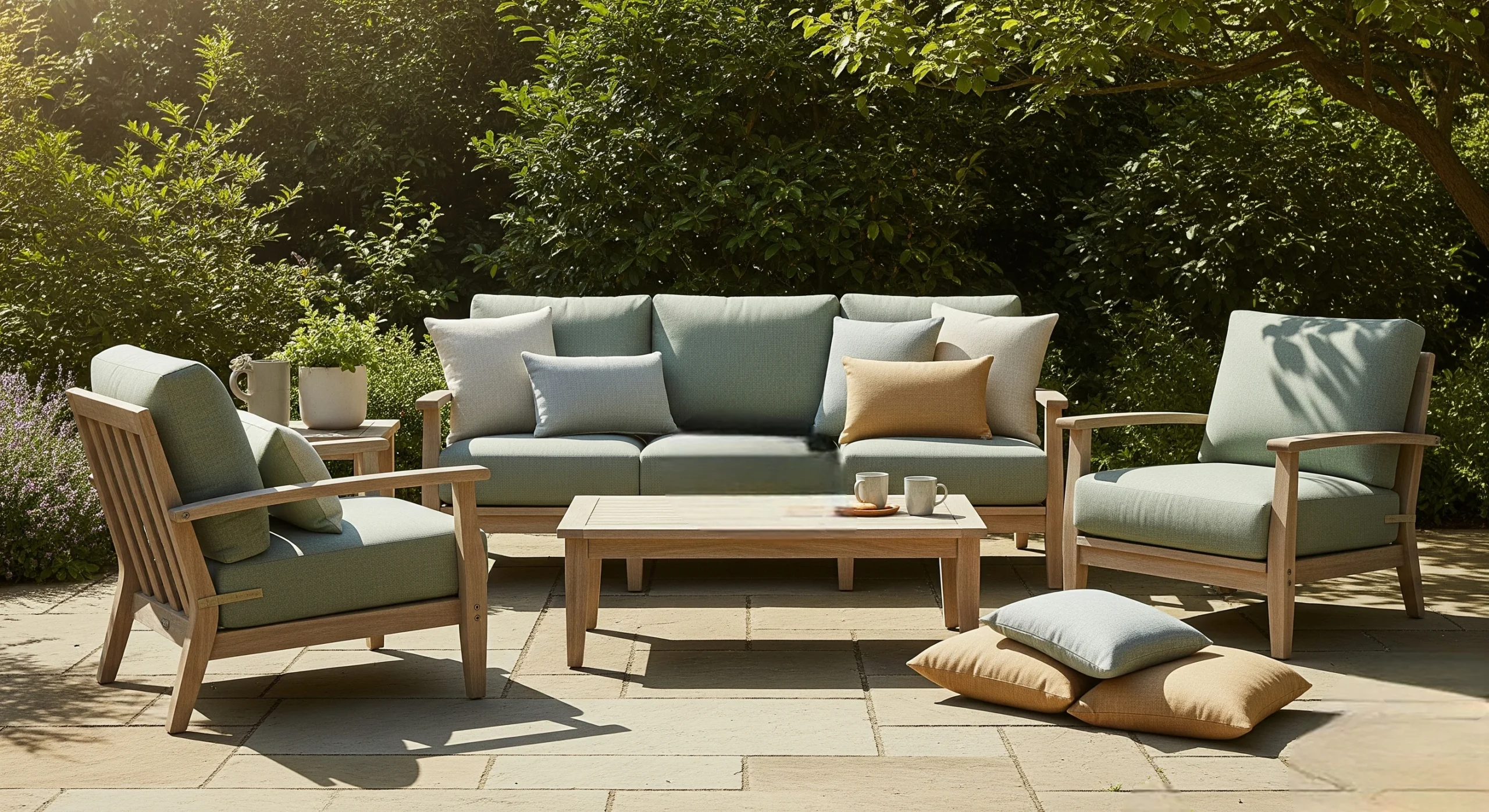
    The line between indoor and outdoor living has become beautifully blurred. Your patio is no longer just a place to park a couple of lawn chairs and call it done. Today’s homeowners are creating outdoor sanctuaries that rival the comfort of their favorite indoor spaces, and they’re bringing bedroom-level coziness to their patios, decks, and gardens.

    Outdoor Living as an Extension of Home

    Outdoor spaces have seriously leveled up in the past few years. Nearly 40% of homeowners upgraded their outdoor areas in 2025, and that trend’s not slowing down anytime soon. People are putting real time and money into turning their backyards into full-on living rooms, dining spots, and even work-from-home zones.

    And it totally makes sense, if you’re dropping serious cash on outdoor furniture, you want to actually use it. But a lot of those sleek patio sets look amazing and still feel like sitting on a park bench. What’s missing? That same cozy, cushy vibe you expect from your bedroom.

    Creating Comfort Through Thoughtful Textiles

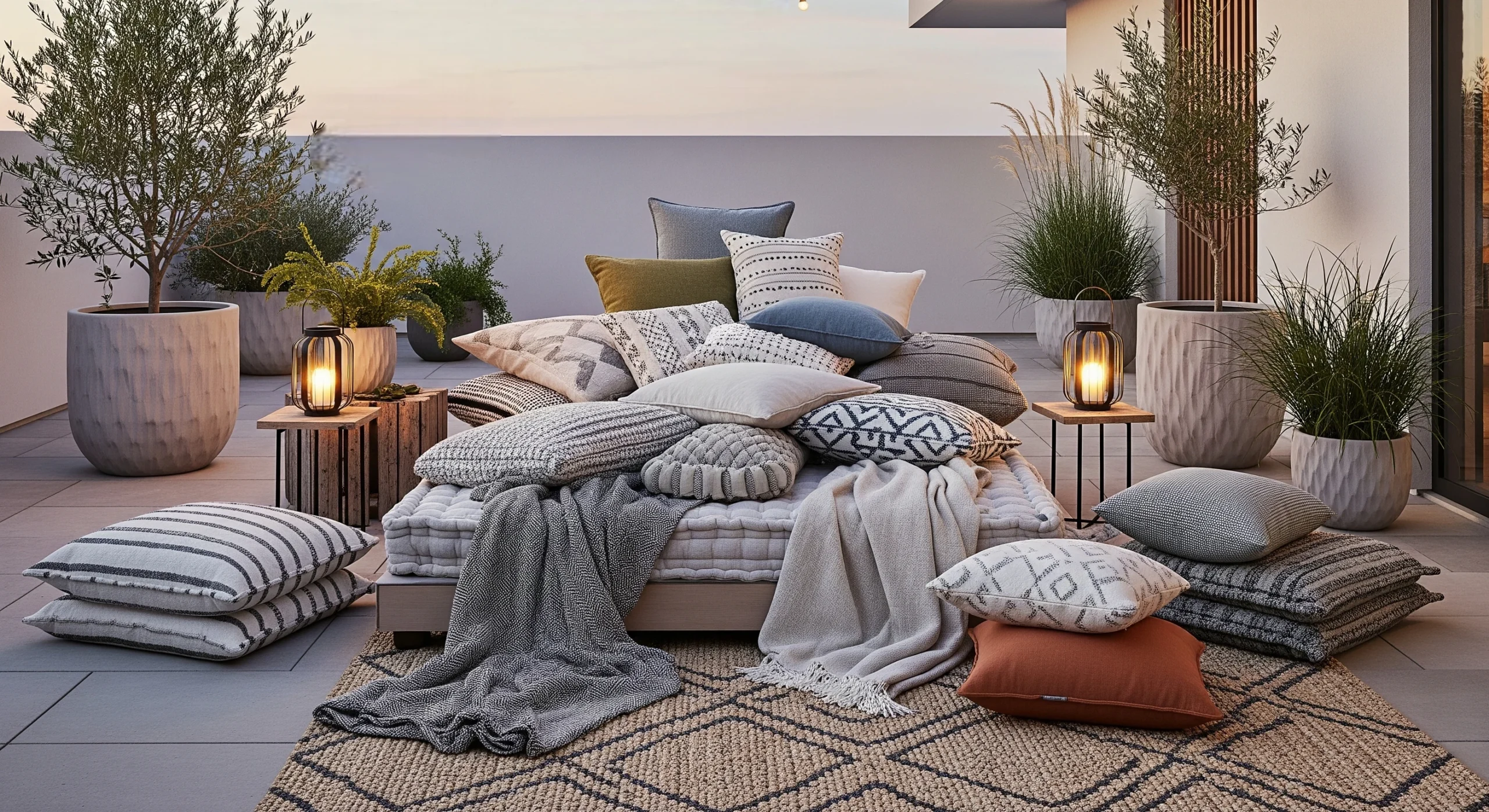
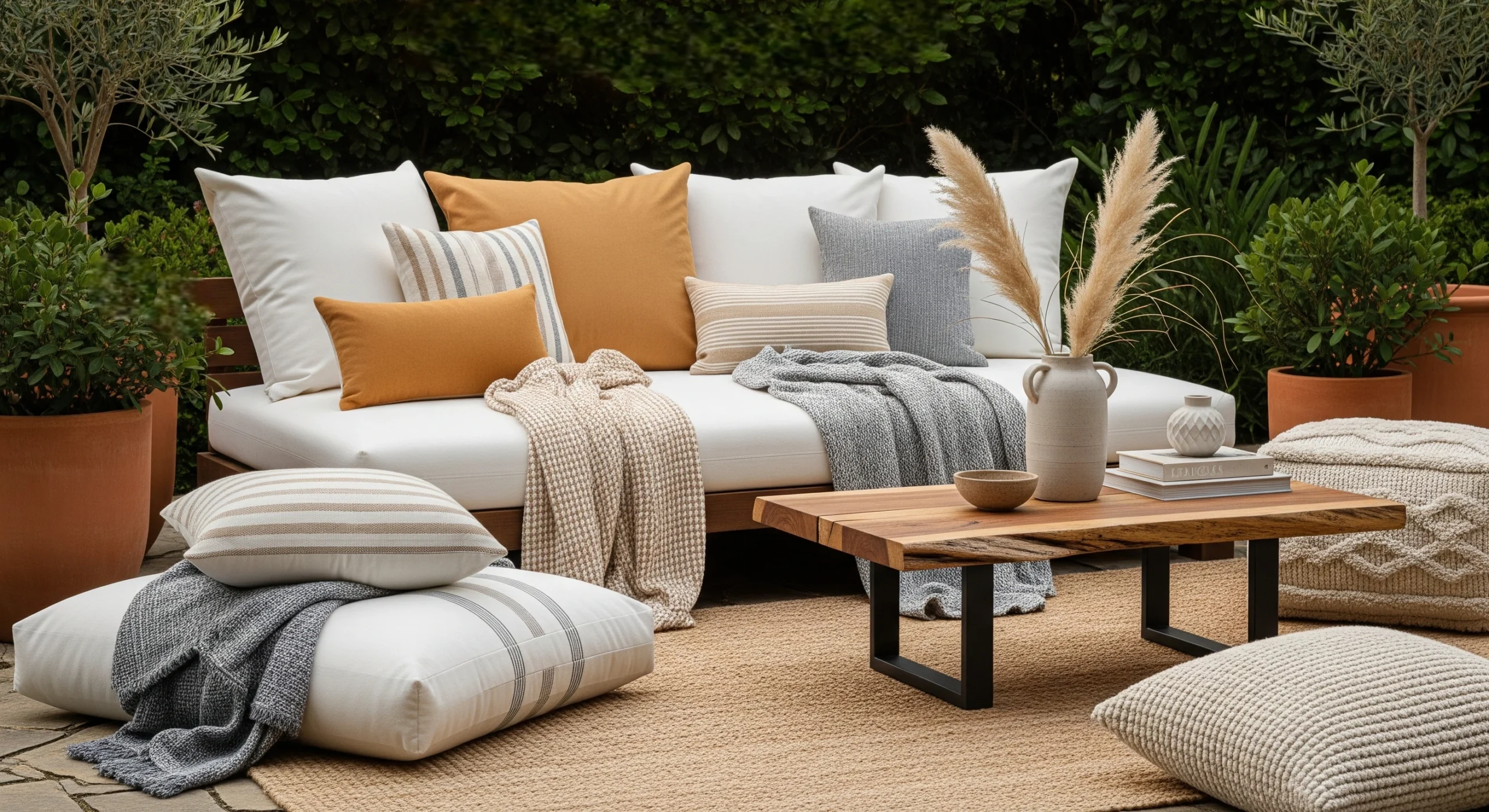
    The secret to making outdoor spaces truly livable is all in the details. Think about what makes your bed irresistible after a long day, like plush pillows, soft blankets, and layers of texture that practically beg you to sink in. Your outdoor space deserves that same treatment.

    Pillows That Actually Make You Want to Sit Down

    Outdoor throw pillows have come a long way from those scratchy, rock-hard cushions your parents used to have. Today’s outdoor textiles balance weather-resistant toughness with actual comfort. Fabrics like performance velvet, outdoor linen, and premium acrylics feel just as good as indoor pillows and still hold up against sun, rain, and heat.

    The key is layering different shapes, sizes and textures. Start with big square pillows, toss in some lumbar ones for lower back support, and finish with round or bolster pillows for a cozy, styled look. Just like your bedroom, variety is what makes it comfy and visually interesting.

    Bringing Bedroom Luxury to Your Patio Furniture

    Think of your patio like your bedroom, the same things that make your bed a dream spot apply outside too. Quality matters if you want your patio to feel like a legit retreat. Good textiles stay soft and stylish season after season, making them totally worth it.

    This goes beyond just pillows. Take premium duvet covers, for example, they show how top-notch fabric can turn an ordinary piece into something special. Brands like Doze Bedding totally get this. They’ve built a reputation for crafting high-quality bedding that turns comfort into an experience. Check out their collection at dozebedding.com to see how premium materials can seriously upgrade any space.

    Practical Considerations for Outdoor Comfort

    Bringing that bedroom-level comfort outside takes a bit of planning. Not every indoor fabric can survive the elements, but you don’t have to give up softness or style.

    Choosing Weather-Resistant Materials

    Outdoor fabrics have gotten super advanced. Look for materials made for the outdoors: solution-dyed acrylics, performance polyesters, or treated natural fibers that can handle sun, moisture, and wear. These fabrics now come in everything from sleek finishes to chunky textures, so you still get the same design freedom you’d have inside.

    UV-resistant fibers keep colors bright, while water-repellent coatings protect against sudden showers. Many even have antimicrobial finishes to fight mildew and odors, keeping your space fresh.

    Maintenance Made Simple

    Outdoor comfort should be effortless. Go for pieces with removable, washable covers so cleanup’s a breeze. Premium outdoor pillows usually have zippered covers that come right off. Throws should be machine washable too, if they’re easy to clean, you’ll actually use them.

    And when bad weather hits, stash your stuff in a weatherproof storage box or bench to keep everything clean and ready to go. That simple step keeps your textiles looking new way longer.

    Design Strategies That Work

    Creating cozy outdoor spaces follows the same basic design rules as your indoor setup.

    Color Coordination and Layering

    Neutrals make a great base outdoors. Then, layer in accent colors that vibe with your landscaping or house. Earthy tones keep things calm and grounded, while pops of color show off your personality. Stick to two or three main colors with some texture variety for a balanced, stylish look.

    Scale and Proportion

    Outdoors, you can go bigger. Oversized pillows and large throws look inviting, not over the top. A casually draped throw or an extra-large cushion instantly gives that “come chill here” energy.

    Making It Work for Your Space

    Every outdoor area’s got its own personality, so your comfort strategy should match.

    Small Patios and Balconies

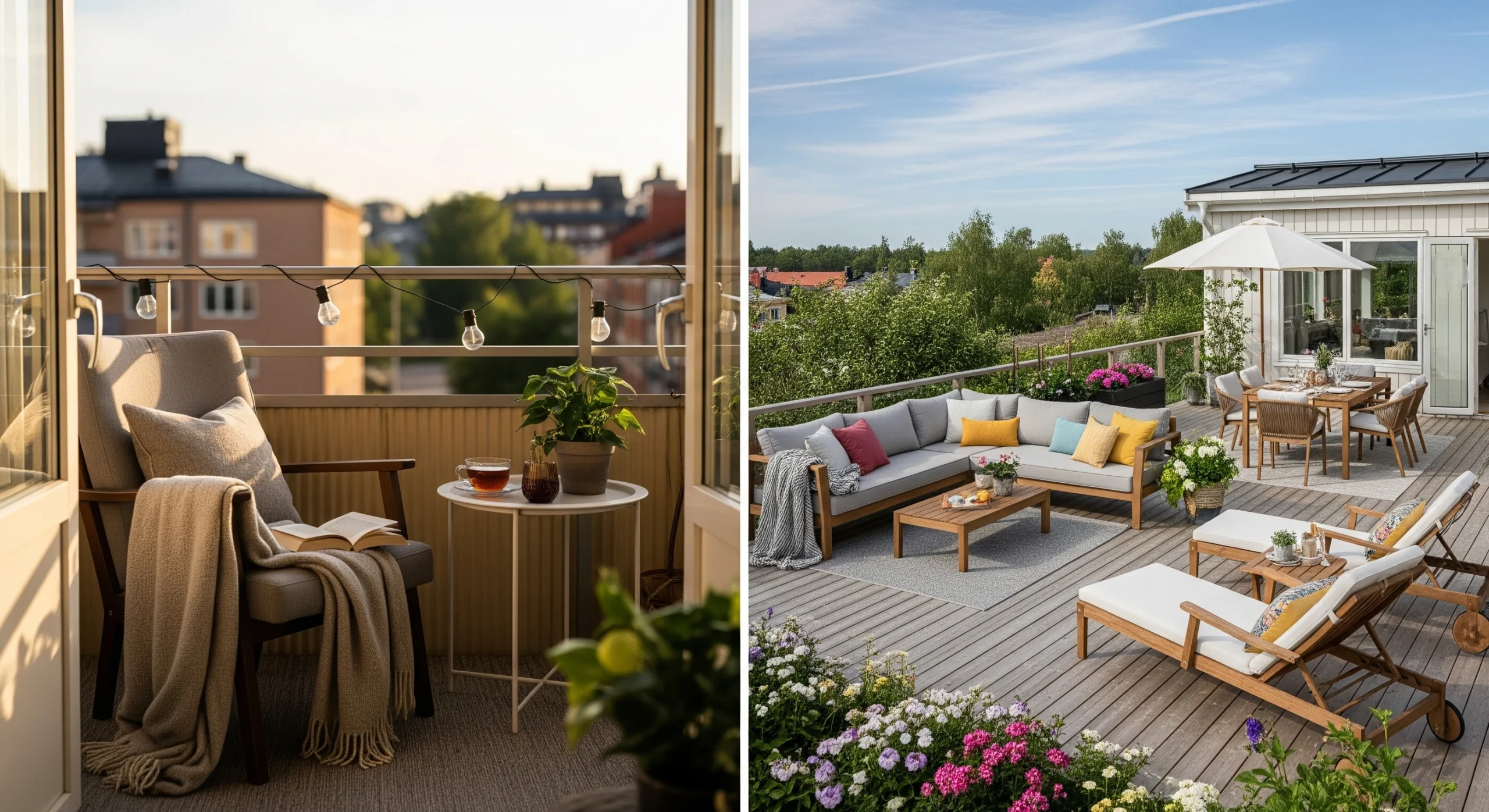
    Limited space doesn’t mean limited comfort. Focus on a few high-quality pieces instead of cramming too much in. One great chair with a soft cushion and throw can make a perfect reading or coffee spot. Add small pillows for color and comfort without clutter.

    Large Decks and Entertaining Spaces

    Bigger setups call for multiple zones. Create a lounge area for relaxing and a dining area with cushioned seating for meals that last all night. Use matching colors or patterns across both to tie the look together.

    Covered Versus Exposed Areas

    Covered patios give you more freedom, you can use slightly fancier fabrics since they’re shielded from sun and rain. For fully open spaces, go for durable, weatherproof options that still feel soft. These days, the difference in look and feel is almost impossible to spot.

    Conclusion

    Bringing that bedroom-level coziness to your outdoor space might be one of the easiest, most rewarding upgrades you can do. You don’t need a massive remodel or a big budget. A few quality pillows, soft throws, and smart fabric choices can totally change how you use your outdoor space. Start small, figure out what makes you actually want to hang out outside, and build from there.

  • Canvas Prints: A Smart Choice for Modern Homes

    Canvas Prints: A Smart Choice for Modern Homes

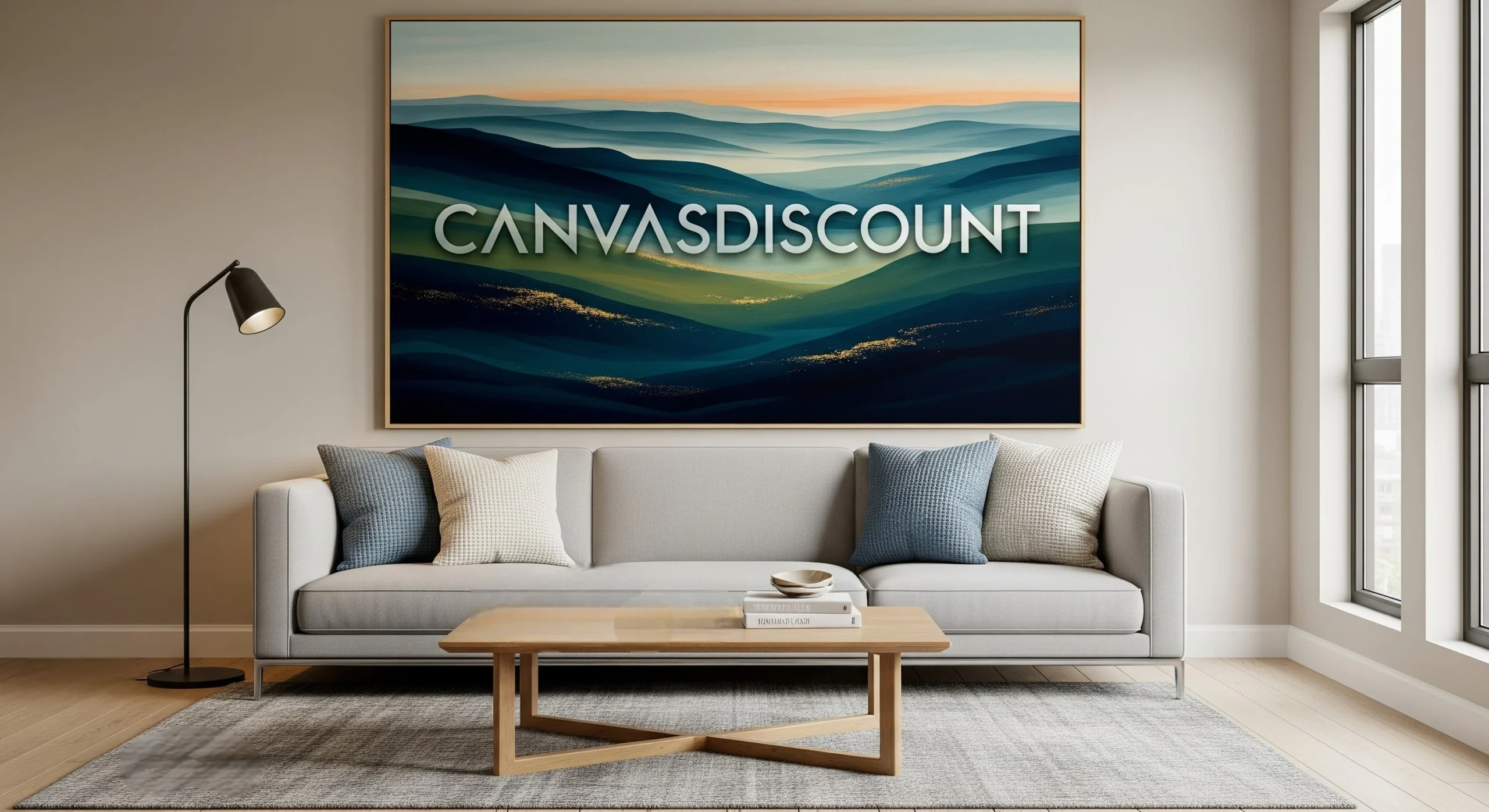
    Decorating a home isn’t just about filling empty walls. It’s about creating a space that reflects personality, memories, and style. Among the many options out there, canvas prints stand out as one of the most effective ways to transform a room. Unlike posters or paper prints, a framed canvas print brings depth, texture, and an elegance that instantly elevates the room.

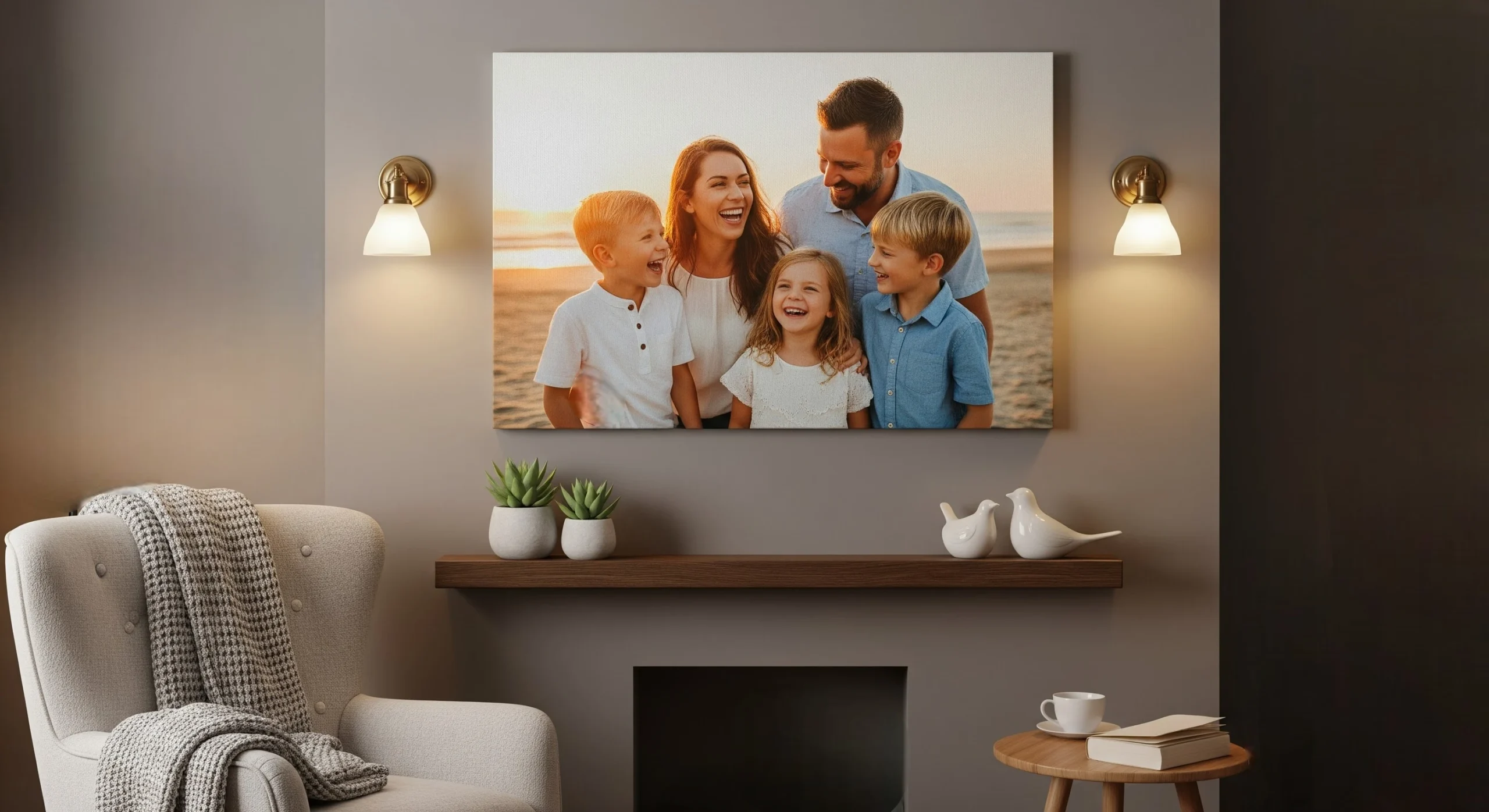
    The appeal of canvas prints lies in their versatility. They fit almost any interior—modern, rustic, or classic. Families often use canvas to showcase wedding photos, portraits, or travel memories. Art lovers also bring in abstract pieces, cityscapes, or even a favorite quote. That mix of durability and customization makes canvas a go-to for anyone who wants a personal yet polished touch at home.

    The Growing Popularity of Canvas Art

    In recent years, canvas art has surged in popularity. Platforms like Instagram and Pinterest have helped drive the trend: when people share rooms anchored by great wall art, others get inspired to try it too. That momentum has fueled demand for high-quality, affordable options.

    Canvas also holds up beautifully. Unlike paper that can fade or tear, canvas is built to last. Colors stay crisp for years, so a favorite image can become part of your home’s story.

    Why Choose CanvasDiscount

    CanvasDiscount is a great choice for consumers who want high-quality canvas prints at unbeatable prices. Backed by a Lowest Price Guarantee, CanvasDiscount is one of the most affordable options on the market.

    Despite the low cost, customers consistently praise the vivid print quality and durable materials. Plus, production takes place solely in the United States of America, making CanvasDiscount ideal for last-minute gifts or home décor. Combined with strong customer service and fast turnaround, CanvasDiscount offers a rare blend of affordability, reliability, and satisfaction that makes it a smart buy.

    For anyone searching for the perfect framed canvas print, CanvasDiscount provides exactly what you need without breaking the bank. Their focus on quality, affordability, and customer happiness makes them a trusted provider for thousands of people across the country.

    Transforming Spaces with Canvas Prints

    Canvas can completely change a room’s look. A plain white wall becomes a focal point with a bold piece. A soft family portrait can make a bedroom feel more personal and cozy. Unlike many types of wall art, canvas delivers a gallery feel that makes a space look curated and current.

    Another plus: it’s easy to make your own. With platforms like CanvasDiscount, you can upload photos, choose a size, and turn favorite moments into wall art. That personal touch is a big reason canvas stands out—it blends emotion with design.

    The Perfect Gift

    Canvas prints aren’t just for your own walls—they make excellent gifts. Birthdays, anniversaries, weddings, housewarmings—custom canvas works for all of them. Instead of something forgettable, you’re giving a piece that feels thoughtful and lasting.

    Picture a newly married couple unwrapping a large canvas of their favorite wedding shot. Or grandparents getting a canvas of the grandkids. These gifts carry real emotional weight. And because everything’s made in the U.S., shipping doesn’t take weeks.

    Fast, Reliable, and Affordable

    One reason buyers return to CanvasDiscount is how simple the process is—from upload to checkout. Turnaround is quick, and pricing stays low without cutting corners on quality. That combination has earned the brand a loyal following.

    Bringing Memories to Life

    Every home has stories to tell, and canvas prints make them visible. A vacation snapshot, a first birthday, a big family gathering—on canvas, these moments become part of the room. Choose a reliable producer like CanvasDiscount and you’re not only decorating your walls—you’re preserving what matters most.

    Canvas goes beyond decoration. It adds a sense of belonging, warmth, and comfort to your space. That emotional connection is why canvas art is much more than a design trend—it’s a timeless choice.

    Final Thoughts

    Canvas prints are more than wall decor; they’re a way to express personality, preserve memories, and add polish to any room. With their durability and ability to work across styles, they’ve become a favorite in homes across the country.

    For the right balance of price, quality, and service, CanvasDiscount stands out. With a lowest-price guarantee, high-quality printing, and responsive support, they make custom canvas accessible. Whether you’re ordering for yourself or gifting someone special, you’ll get lasting value and something you’ll want on the wall for years.

  • Mix-and-Match Magic: Combining Old & New Furniture Without Clashing

    Mix-and-Match Magic: Combining Old & New Furniture Without Clashing

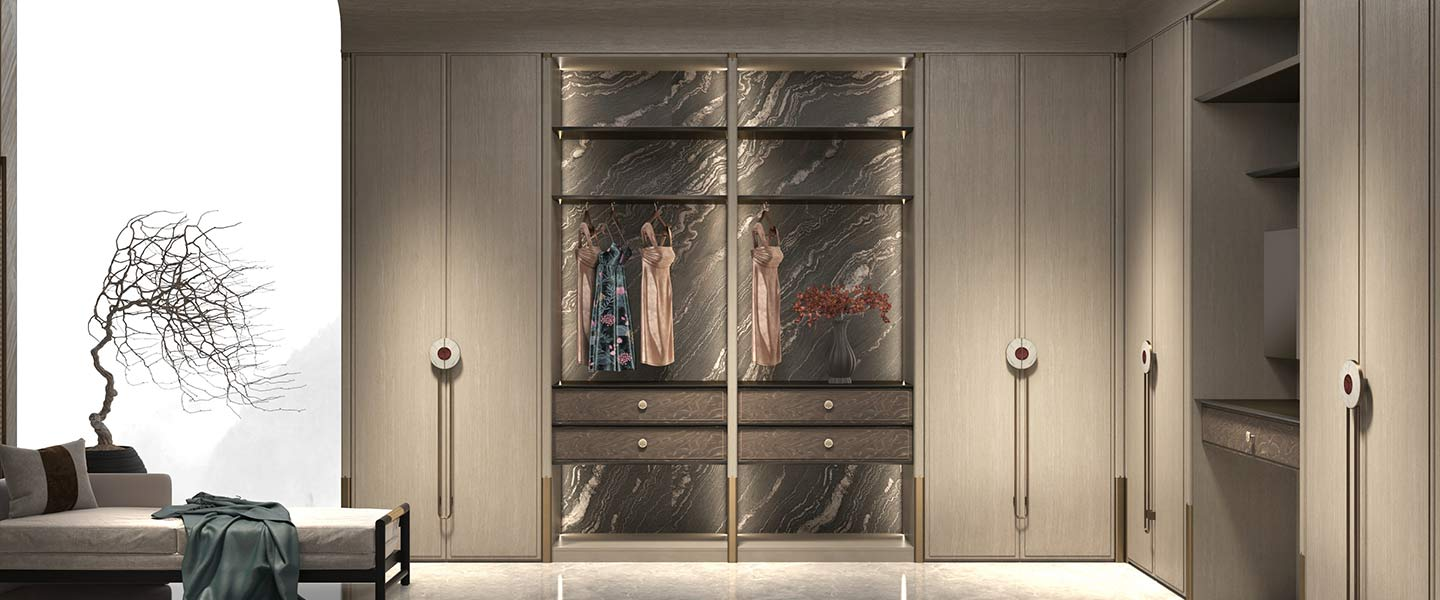
    Image Source: oppein.au

    The deliberate blending of furniture from different eras has evolved from an economic necessity to one of the most sophisticated approaches in contemporary interior design. This curated eclecticism, when executed thoughtfully, creates spaces with depth, personality, and narrative that purely matched collections cannot achieve. The harmonious integration of vintage treasures with contemporary pieces delivers both the character of history and the comfort of modern functionality—a balance increasingly sought by design-conscious homeowners.

    The Underlying Principles of Successful Mixing

    The Unifying Element Strategy

    Successful mix-and-match interiors invariably employ unifying elements that thread visual cohesion through diverse pieces:

    • Consistent color palette connecting disparate styles
    • Repeated materials appearing across different eras
    • Similar proportional relationships despite varied origins
    • Textural themes bridging historical differences
    • Intentional shape echoing between old and new

    In my experience working with collector clients, rooms that successfully blend furniture from multiple periods almost always feature at least two strong unifying elements—typically color and proportion—allowing the eye to register cohesion before difference. A living room I recently completed paired a clean-lined contemporary sofa with an ornate Victorian settee, united through identical fabric tones and proportionally similar seat heights, creating a harmonious conversation between pieces separated by 150 years.

    The 80/20 Style Distribution

    Balanced eclecticism typically follows a dominant-with-accents approach:

    • Establishing a primary style representing approximately 80% of visible furniture
    • Introducing complementary pieces from different eras for the remaining 20%
    • Allowing statement pieces from non-dominant styles to become focal points
    • Creating intentional tension between old and new through careful juxtaposition
    • Maintaining clear design intention rather than random accumulation

    This approach prevents the chaotic feeling that can result from equal representation of multiple styles while still delivering the depth that comes from thoughtful combination.

    Strategic Combination Techniques

    The Common Thread Method

    This technique identifies and emphasizes shared characteristics across different periods:

    • Mid-century and contemporary pieces united through clean lines
    • Traditional and transitional styles connected through similar woods
    • Formal antiques and modern interpretations linked by proportional relationships
    • Rustic elements bridging period differences through consistent materials
    • Industrial and traditional pieces connected through material honesty

    Case studies show that this approach proves particularly successful in open-concept spaces where visual flow between areas becomes essential to the overall experience. The common thread creates subtle continuity even as individual pieces maintain their distinctive character.

    The Intentional Contrast Approach

    This method deliberately highlights differences while creating balanced composition:

    • Pairing geometrically simple contemporary pieces with ornate antiques
    • Juxtaposing light, floating modern furniture with visually heavy traditional pieces
    • Combining richly patterned vintage items with minimal current designs
    • Contrasting matte and glossy finishes across different eras
    • Setting organic, handcrafted elements against precise machine-made forms

    Have you noticed how the most memorable rooms often feature at least one element that deliberately breaks from the expected pattern? This intentional disruption, when handled with confidence, transforms spaces from merely coordinated to genuinely interesting—creating visual energy that fully matched rooms typically lack.

    Application Across Different Spaces

    Living Areas: Conversation Between Eras

    Living spaces offer prime opportunities for meaningful furniture dialogue:

    • Anchor seating in contemporary forms with vintage occasional tables
    • Modern lighting illuminating traditional architectural features
    • Historic case pieces housing current technology
    • Antique decorative elements displayed on clean-lined modern surfaces
    • Contemporary art creating dynamic tension with traditional furniture

    A recent project incorporated a client’s inherited Chippendale chest alongside their minimalist Italian sofa by treating both as sculptural elements within a neutral envelope. The space reads as intentionally curated rather than compromised—elevating both pieces through thoughtful contrast.

    Dining Spaces: Breaking the Suite Mentality

    Dining areas benefit particularly from liberated matching approaches:

    • Host chairs in different styles from side seating
    • Antique tables paired with contemporary seating
    • Vintage buffets or sideboards complementing modern dining tables
    • Traditional chandeliers updated with contemporary bulbs and styling
    • Modern serving pieces displayed in antique china cabinets

    The dining room represents one of the most dramatic transformations in contemporary design thinking, evolving from matching suites to intentionally assembled collections that tell more interesting stories.

    Bedroom Design with Wardrobe: Balancing Function and Character

    Bedroom spaces require careful balance between personal expression and restful cohesion:

    • Contemporary beds paired with vintage nightstands
    • Modern wardrobes complementing traditional architectural details
    • Antique seating or occasional pieces within clean-lined sleep spaces
    • Heritage chests or dressers alongside current lighting
    • Vintage decorative elements displayed against neutral contemporary backgrounds

    I recently completed a bedroom design with wardrobe elements spanning three different eras—a contemporary platform bed, mid-century dresser, and restored antique armoire—united through consistent wood tones and hardware finishes. The client reported that the space feels both personal and cohesive precisely because of these thoughtful combinations.

    Sourcing Strategies for Eclectic Design

    The Global Hunt Approach

    Truly distinctive eclectic spaces benefit from diverse sourcing:

    • Estate sales and auctions for authentic period pieces
    • Mainstream retailers for contemporary foundations
    • Specialty manufacturers for transitional interpretations
    • International markets for distinctive cultural influences
    • Trade-only resources for unique designer pieces

    The China Furniture Fair has emerged as a particularly valuable resource for designers seeking both contemporary pieces and thoughtful reproductions of historical styles—offering quality craftsmanship with pricing that enables more adventurous combinations than solely relying on Western manufacturers.

    The High-Low Integration

    Successful eclectic spaces often incorporate varying investment levels:

    • Anchor pieces representing significant investment
    • Supporting elements at accessible price points
    • Vintage finds valued for character rather than provenance
    • DIY or customized pieces adding personal significance
    • Strategic splurges on items with maximum visual impact

    This approach not only serves budget considerations but often creates more authentic, evolved spaces than those furnished entirely at a single price point.

    Common Pitfalls to Avoid

    The Balance Breakdown

    Unsuccessful mixing typically stems from proportion and balance issues:

    • Scale inconsistencies creating visual disruption
    • Overcrowding with too many statement pieces
    • Insufficient negative space to appreciate distinctive elements
    • Competing focal points creating visual confusion
    • Lack of intentional curation suggesting random accumulation

    In my experience renovating homes with accumulated furnishings, editing often proves more important than adding—removing pieces that fight for attention allows the intentional combinations to shine.

    The Theme Collapse

    Unsuccessful eclectic spaces frequently suffer from insufficient cohesion:

    • Too many divergent styles without connecting elements
    • Jarring color transitions between different pieces
    • Incompatible material palettes creating visual disconnect
    • Stylistic combinations without meaningful dialogue
    • Lacking intentional curation suggesting happenstance rather than design

    The difference between thoughtfully eclectic and simply mismatched often lies in the presence of clear curatorial vision—a consistent thread that allows diverse elements to converse rather than compete.

    The Evolving Approach

    Mix-and-match design continues evolving as new movements emerge and historical pieces find fresh context. The most successful practitioners approach this method not as a trend but as a fundamental design philosophy—one that values authentic character, personal narrative, and the natural evolution of living spaces over time.

    Would you rather inherit a perfectly preserved but sterile period room, or a thoughtfully evolved space telling the story of those who lived there? The answer to this question often reveals our true relationship with the objects that surround us—and explains why the deliberate mixing of furniture from different eras continues resonating with those seeking homes that feel both designed and genuinely lived in.

  • Couches, Coffee Tables & Connectivity: How to Design a Living Room That Works for Everything

    Source: facebook.com

    Living rooms today do more than ever. It’s not just where you relax, it’s also where life happens. One moment you’re in work mode, the next you’re hosting friends, and by evening, it’s time to unwind. A good setup helps you move easily between all those roles.

    Think about how you use your space. Most living rooms today need to support:

    • Working from home
    • Entertaining guests
    • Taking time to unwind

    To make it all flow, the furniture you pick has to look good and do more. A coffee table with storage, a deep sofa that’s nap-ready, or a chair that works for both Zoom calls and reading can go a long way. Space planning matters, too, you’ll want room to move without bumping into things.

    Lighting can make or break the feel of the room. Instead of relying on just one source, combine:

    • Overhead lighting for full-room brightness
    • Floor or table lamps for tasks
    • Accent lighting to create a cozy mood

    Keep your colors in sync with nearby spaces so everything feels connected. And with the right mix of furniture and lighting, your living room becomes more than a room, it becomes a space that works for everything you need it to do.

    The Couch as a Versatile Anchor

    Every living room needs a strong starting point, and for most people, that’s the couch. It’s the one piece that tends to ground the space, both visually and functionally. The right couch doesn’t just pull the room together; it also supports how you actually live day to day.

    If you’re in the market for a new sofa, here are a few things worth thinking about:

    • Comfort that supports your body. If you spend hours working, relaxing, or even napping on the couch, look for options with good lumbar support and cushions that stay comfortable over time.
    • Durable, low-maintenance fabric. Homes with pets or kids will benefit from materials that resist stains and are easy to clean.
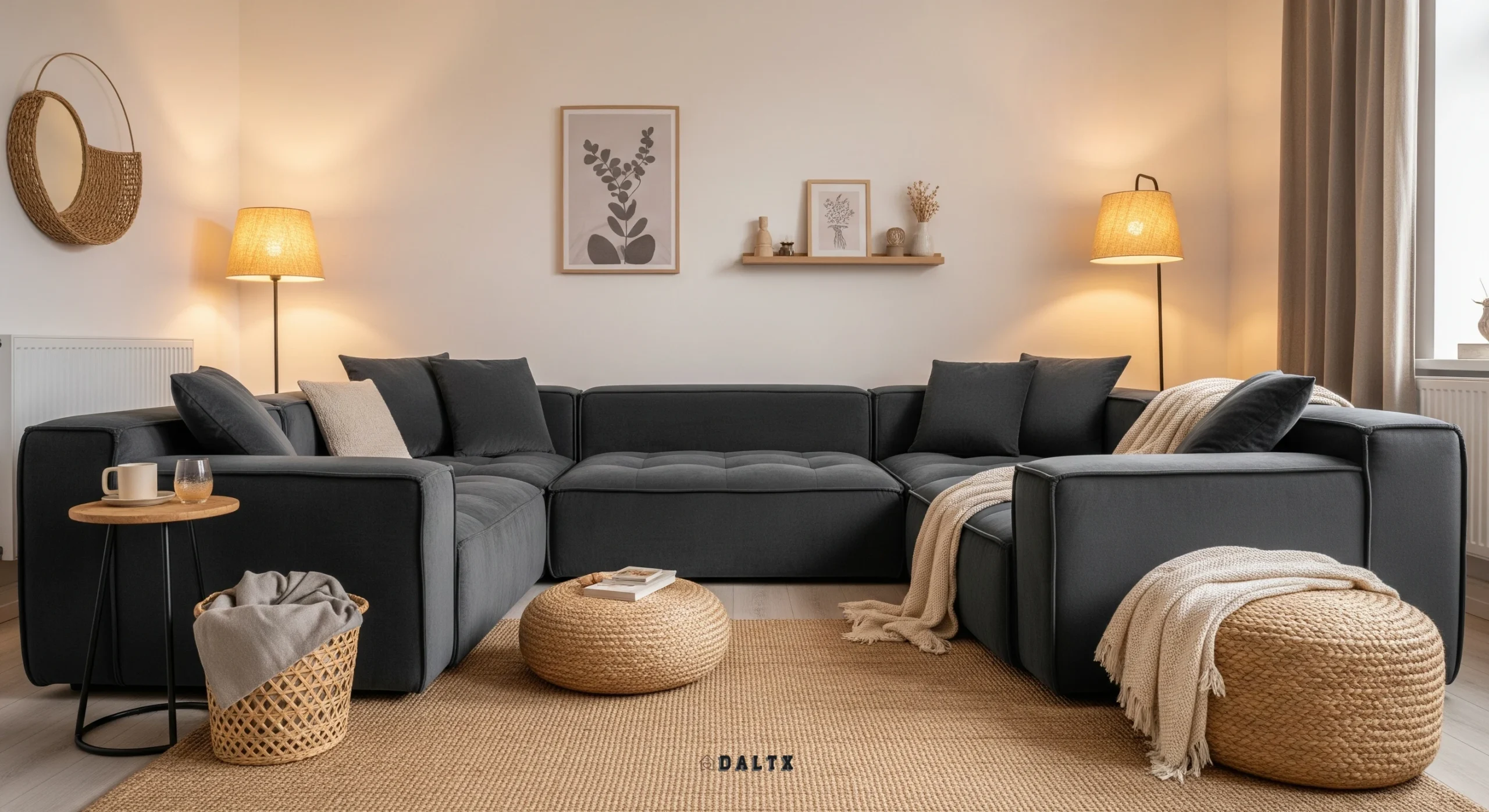
    • Flexibility in form. Modular sectionals can be rearranged depending on what you need, such as movie night, guests, or a quiet work zone.

    Beyond just the couch, you can build out a smart layout with elements like:

    • Area rugs to define different zones and visually tie furniture pieces together
    • Accent chairs that bring symmetry and extra seating without overwhelming the space
    • Visual balance, using larger or darker pieces to anchor one side of the room and lighter elements to offset them

    Facing two sofas toward each other is a simple trick that makes the space feel more social, great for conversation and keeping the layout open. With a thoughtful arrangement, the living room becomes less of a showpiece and more of a space you’ll actually enjoy using every day.

    Coffee Tables That Do More Than Hold Coffee

    A coffee table doesn’t have to be just a spot for remotes and mugs. Today’s designs come with smart features that add real function to your living room, especially if you’re working with limited space.

    One of the most useful upgrades? The lift-top coffee table. These tables aren’t just trendy, they actually make your space work harder. Some models lift up into a mini desk or dining surface, while others come with built-in tech. Features like these can make your setup more efficient without sacrificing style.

    Here’s what to look for if you want a table that does more than just sit pretty:

    • Lift-top designs that convert into work surfaces or dining space
    • Built-in storage underneath the tabletop to hide chargers, remotes, or everyday clutter
    • Power outlets and USB ports to keep devices charged and ready
    • Optional LED lighting that adds a subtle glow and boosts the room’s ambiance
    • Durable construction for long-term use, especially if you’re using the table for work or meals

    The materials you choose also shape the room’s tone:

    • Wood adds warmth and works well in cozy, layered spaces
    • Glass opens up the room visually and pairs well with minimalist styles
    • Metal brings a modern, industrial touch that anchors the space
    Source: lowes.com

    With the right pick, your coffee table can be both functional and a statement piece, something that fits into your day-to-day flow while elevating the entire room.

    Blending Tech with Design

    In a multifunctional living room, tech isn’t just helpful, it’s essential. But that doesn’t mean your space has to feel like a showroom of gadgets. The goal is to integrate technology in a way that feels seamless, not distracting.

    Smart furniture is one of the easiest ways to do that. Whether it’s for work, play, or relaxation, these pieces bring together function and style in ways that traditional furniture simply can’t. Think of items like sleek coffee tables with charging ports, sound systems with integrated audio speakers built right into your media console, designed to blend in, not stand out.

    Smart furniture often includes:

    • Personalized controls for lighting or temperature based on your daily habits
    • Multifunctional design, perfect for making the most of smaller spaces
    • Connectivity with other smart devices, helping you automate tasks throughout the home

    What’s especially appealing is how these pieces combine tech with thoughtful design:

    • Sustainable materials, for homeowners who want beauty with a lower environmental footprint
    • Health-minded features, like adjustable seating or posture-support options
    • Minimalist silhouettes, keeping your space looking clean and modern even as it gets smarter

    With the right approach, you can bring in the tech you need, without giving up the look and feel you love.

    Layout and Lighting That Let Your Space Do More

    The way you arrange your living room can make a big difference in how well it works, especially if the same space needs to function as both a work zone and a place to relax. Simple choices like rug placement, furniture layout, or even the use of open shelving can help visually divide the room without putting up walls.

    Source: medium.com

    As homes get smaller, flexibility becomes more important. Modular furniture and movable pieces give you the freedom to shift the layout depending on what you need, whether it’s a quiet place to focus or room to host friends.

    Lighting plays a huge role in how a room feels and functions. A good setup combines multiple sources, each serving a specific purpose:

    • Task lighting: Focused light where you need it, like at a desk or reading chair
    • Ambient lighting: Soft, all-over lighting to keep the space cozy and calm
    • Smart lighting: Systems that can be scheduled or dimmed automatically to save energy and match your routine

    Beyond the living room itself, shared spaces, like a small fitness area or a rooftop garden, are becoming more common in dense urban settings, offering extra breathing room outside your main living area.

    Looking ahead, homes are expected to keep evolving. Open layouts, kitchen-centered gathering areas, and flexible zones will likely become the new standard. And instead of always building new, sustainable design often means working with what’s already there, such as rethinking, reusing, and reimagining the layout to serve more needs in the same footprint.

    Careful planning of both layout and lighting gives you a space that works now and can easily adapt to whatever comes next.

    Home Security That Works with Your Smart Living Room

    When your living room doubles as your office, studio, or play area, keeping the space secure becomes even more important. Thanks to smart home technology, protecting your home doesn’t mean installing a complicated system, you can now control much of it right from your phone or tablet.

    A smart security setup can even lower your homeowners insurance, depending on the provider. And with features like voice-controlled digital assistants, you can manage locks, lights, and cameras without lifting a finger.

    Here are a few simple ways to make your connected living room safer:

    • Secure your Wi-Fi with strong passwords and encryption
    • Turn on two-factor authentication for apps and smart devices
    • Keep device software updated to fix any known vulnerabilities
    • Choose smart products from brands with a solid track record on privacy and security
    • Separate critical devices like security cams and smart locks onto a guest or secondary network

    You can also take extra steps to protect your personal data:

    • Review app permissions to make sure you’re only sharing what’s needed
    • Monitor device activity for anything unusual, better safe than sorry

    And for full coverage, a smart CCTV system with remote access, like those offered by Sin Chew Alarm, can help you keep an eye on things from anywhere. It’s all about peace of mind, especially when your living room is doing a little bit of everything.

    Appliances That Add Everyday Comfort

    The right home appliances can quietly make a big difference in how the space feels and functions.

    Comfort-focused appliances help by:

    • Improving indoor air quality, so the air you breathe feels clean and fresh
    • Keeping the temperature just right, no matter the season

    Portable air conditioners, for example, are great for moving cool air where you need it most. They’re flexible, easy to relocate, and perfect for homes where seasonal changes require different solutions.

    Here are a few more appliances worth considering:

    • Dehumidifiers: Great for keeping moisture levels in check, which can reduce mold and make rooms feel less sticky during humid months
    • Air purifiers: Ideal if you’re concerned about dust, pollen, or pollutants, especially if you have allergies or pets
    • Smart home appliances: Models with Wi-Fi connectivity let you adjust settings or check status from your phone, making comfort even more convenient

    If you’re looking for water heating, brands like Panasonic offer models known for both reliability and energy efficiency. Whether it’s a quick shower between meetings or a warm soak after a long day, those small moments of comfort add up.

    In the long run, investing in quality home appliances isn’t just about comfort, it can also boost your focus, support your health, and help create a space that’s easier to live in day after day.

    Storage That Disappears into the Design

    In a room that serves multiple purposes, staying organized is key. Clutter not only looks messy, it can also make the space feel smaller and harder to use. Smart storage helps keep things in place without overwhelming the design.

    Some go-to storage solutions include:

    • Murphy beds and convertible tables that tuck away when not in use
    • Expandable shelves and nesting furniture that adjust as your storage needs change
    • Kitchens that fold into cabinetry, hiding appliances and counters behind clean lines

    Hidden storage works well in everyday furniture too:

    • Ottomans with compartments for blankets, remotes, or books
    • Floating shelves and wall-mounted units that use vertical space without crowding the room

    By blending storage into the design, you get a room that feels clean, open, and easy to use, without sacrificing style.

    Smart Home Integration for Seamless Control

    Living smarter doesn’t mean making things more complicated. Today’s smart home features bring convenience and efficiency to your daily routine, all without getting in the way.

    Examples of integrated tech include:

    • Smart lighting systems that adjust automatically based on time of day or your preferences
    • Voice-activated assistants that help manage tasks with a simple command
    • Wi-Fi-enabled appliances for remote control and scheduling of household chores

    To keep things secure and running smoothly:

    • Regularly update your devices’ firmware
    • Choose brands with strong reputations for security
    • Use two-factor authentication and secure Wi-Fi networks
    • Segment devices like security cameras onto a separate network

    As tech improves, features like AI and 5G connectivity will make smart devices faster and even more personalized. You can also tie in solar panels or other renewable systems to reduce your footprint and create a more self-sufficient home.

    Planning for Flexibility and Change

    Life changes and your home should be able to change with it. Whether your family grows, your work shifts, or you just want something fresh, a future-ready living room adapts without needing a full remodel.

    Keep flexibility in mind by:

    • Choosing durable, timeless materials that age well
    • Designing for different life stages, like turning a playroom into a study down the line
    • Maximizing natural light and building in storage that supports daily routines

    Even simple seasonal updates, like changing throw pillows or wall art, can refresh the space without breaking the bank. When your living room is built with flexibility in mind, it keeps working for you no matter how life evolves.

    Conclusion

    A modern living room needs to be more than just nice to look at, it has to work for how you actually live. That means blending comfort, smart design, and everyday function into one space. Whether you’re making video calls, watching movies, or just taking a moment for yourself, the right furniture, layout, lighting, and tech can make all the difference.

    With a little planning and a few smart choices, your living room can become the one spot in your home that does it all and does it well.

    Frequently Asked Questions

    How can I make my living room multifunctional without compromising on style?
    Use flexible pieces like modular sofas and lift-top tables. Break up the space visually with area rugs and lighting. Tech features should be discreet—form should support function.

    What are some tips for integrating smart home technology into my living room?
    Stick to minimalist designs that blend into your decor. Voice assistants and smart plugs make things easier without adding clutter. Look for furniture that includes built-in charging or controls.

    How do I maintain a clutter-free living room in a multifunctional space?
    Opt for hidden storage—ottomans, wall shelves, under-sofa drawers. Keep surfaces clear by assigning everything a home. A quick daily reset can go a long way.

    What kind of lighting is best for a dual-purpose living room?
    Layered lighting works best. Combine task lighting (like desk lamps) with ambient light (overhead or floor lamps) so the space can shift between focused and relaxed modes.

    How can I future-proof my living room design?
    Go modular. Choose durable materials. Make sure your layout allows for easy updates. Use flexible storage, and plan for both current and future needs.

  • Timber Frame Home Kits vs. Custom Builds: What’s Right for You?

    Source: unsplash.com

    It doesn’t always start with a design or a budget. Sometimes, it starts with a question: how much do I really want to control this process?

    You’ve probably seen timber frame home kits before. Maybe in a magazine. There’s something about them. The way the beams stretch across the ceiling. The quiet strength in the structure. It’s a style that feels both old and new at the same time.

    If you’re drawn to that, you’re not alone. But when it comes time to actually build one, you’re faced with a decision that isn’t always simple. Do you go with a pre-designed kit that’s fast and streamlined? Or do you sit down with an architect and build every part of it from scratch?

    It’s not just a matter of preference. It’s about cost, time, involvement and how much of yourself you want to see in the finished home. This article will explore what each option offers. That way, when you’re ready to start building, you’ll have a clear understanding of what best supports your vision and your lifestyle.

    Why Timber Frame Kits Are Catching On

    A timber frame kit gives you all the essential pieces, such as pre-cut beams, structural components, and everything else you need to frame the home. Since it’s all measured and prepared ahead of time, the building process becomes faster, cleaner, and far less stressful for both contractors and homeowners.

    But these kits aren’t just for new builds. More people are starting to blend timber frame elements into homes they already live in. Adding ceiling beams, roof details, or even gable accents can completely change the feel of a space without tearing everything down.

    The numbers back it up too. Recent studies show steady growth in the timber frame home market. It’s estimated at around $562 million this year, and by 2034, that number could hit $1.12 billion. Clearly, more people are drawn to the look, feel, and practicality of timber construction.

    So what’s behind that demand? There are a few solid reasons why more homeowners are going with pre-cut kits.

    Let’s take a closer look.

    Simple, But Far From Basic

    Some building methods promise convenience but leave you with something that feels generic. Timber frame kits aren’t like that. They may be pre-cut and planned, but when you stand inside one, it doesn’t feel like something from a box. The grain, the joints, the way light moves through the frame. It all reminds you that real hands shaped this.

    You don’t lose the craftsmanship. You just skip the mess of figuring it out on-site.

    Compared to custom builds, kits remove a lot of the back-and-forth that tends to slow things down. There’s less guessing, less waste, and fewer headaches on-site. And even though the pieces are pre-engineered, the end result still feels warm, intentional, and handmade.

    Faster Builds, Fewer Delays

    Because most of the framing work happens off-site, you can start building as soon as your permits are ready. That shaves weeks off the timeline, which is a big deal, especially in areas where weather slows everything down.

    Take North Texas, for example. Spring and summer storms are no joke. Just this past May, thunderstorms caused delays across several counties. And with flooding continuing into July, any method that keeps outdoor work to a minimum can save time and stress.

    Clearer Costs, Fewer Surprises

    With timber frame kits, most of the design work is already done. You’re not paying for custom drafts or last-minute revisions. That makes it easier to plan your budget and stick to it.

    Many kits come with either a fixed or closely estimated price. Builders know what materials they’re getting, and because the process is streamlined, the chance of surprise costs goes way down.

    Why Some People Still Choose Custom

    Over the past year, timber frame construction has picked up noticeable momentum. Even with higher interest rates and shifting economic conditions, the industry has held steady and in some regions, it’s grown faster than expected.

    People inside the trade have seen the change up close. More architects are choosing timber frames over concrete or brick builds. Developers are leaning into the look and efficiency of exposed wood structures. And homeowners are asking for homes that don’t just check boxes but reflect the way they actually live.

    That’s where custom builds come in. For those who have a specific vision or unique needs that don’t fit inside a template, going fully custom can be the right move.

    Here’s why many are choosing that route:

    When Your Design Can’t Be Compromised

    Some home visions are simply too specific to fit inside a pre-designed kit. Think of layouts that follow the natural slope of the land, or interiors built around dramatic timber arches. If you’ve got a unique design in mind that relies on precise details and site-specific features, custom is the way to go.

    Adapting to the Land Itself

    The land doesn’t always cooperate. Maybe the lot has a sharp incline, or maybe it sits in a flood zone. In those cases, building isn’t just about putting up walls, it’s about responding to what the land gives you. That includes where the windows go, how the foundation is shaped, and how the frame interacts with the surrounding environment. Kits can’t account for all of that. Custom plans can.

    Being Part of the Process

    A custom timber home is about being part of every step. You’ll work closely with architects, engineers, and builders. There will be decisions to make, plans to revise, and a timeline that moves at a more thoughtful pace. It’s not for everyone. But for those who want to build something truly personal, this approach offers a level of involvement and connection that kits simply don’t match.

    Which Path is Right for You?

    This isn’t just a question about style. It’s bigger than that. It’s about how you want the process to feel, and what kind of home you’ll walk into when it’s all done.

    Maybe you want something clear and structured, a plan that’s already laid out. There’s comfort in that. There’s speed, too. You know what to expect. Fewer decisions, fewer delays. If that sounds like a relief, a kit might be the better fit.

    But maybe you’ve always pictured something different. Something shaped around the way you move through space, the way light hits in the afternoon. That kind of home takes more time. It’s slower. It asks for more from you. But it gives more back.

    There’s also cost to consider. Kits give you a tighter number. What’s in the plan is in the plan, and that makes budgeting simpler. Custom? Well, it depends on how many changes you make. It depends on how much detail matters to you and how far you want to push the design.

    And then there’s the land itself. If you’re building on a steep hill or near water, kits might not work. The frame has to fit the place. Not the other way around.

    Here’s something else worth asking:

    • Will the design you choose continue to serve your needs a decade from now?
    • Will it be easy and cost-effective to maintain?
    • Will it still feel right?

    Some people choose a hybrid path. A little structure, a little freedom. A mix of speed and personal detail. It works. It doesn’t have to be all or nothing.

    Whatever you choose, it’s not just about architecture. It’s about identity. The way your home holds your life. The quiet parts. The busy ones. And all the days in between.

  • How to Create a Room Layout That Maximizes Function and Flow

    You’ve probably walked into a beautifully decorated room that somehow still felt… off. The furniture was gorgeous, sure, but moving around was awkward, and maybe the seating didn’t really invite conversation. That’s a classic mistake: focusing so much on how a space looks that we forget how it’s supposed to work.

    A great room layout is the backbone of good design. It’s what makes a room feel natural to be in. Without it, even the priciest furniture and the most stylish decor can fall flat. You’re not just designing something that photographs well, you’re creating a space that feels right when you live in it, day after day.

    And this is where a lot of people get stuck. You know what you like, but turning that into a floor plan that actually functions? That part’s tough. It doesn’t have to stay that way. Design tools have come a long way, and today, it’s easier than ever to go beyond pretty and build a layout that truly works.

    The Twin Pillars: Understanding Function and Flow

    Before you move a single piece of furniture, it’s worth stepping back and getting clear on two key principles that shape every great room layout: function and flow.

    1. Function: What is this room for?

    It might seem like an obvious question, but it’s one a lot of people skip. Before you decide where anything goes, you need to know exactly how the space will be used. Will the living room be your go-to spot for movie nights? Or is it more of a gathering space for friends and family to sit and talk? Maybe your dining room doubles as a part-time office during the week.

    Be honest about how you live. A setup designed for formal dinner parties won’t work if most of your meals happen on the couch in front of the TV. Once you’re clear on the room’s main purpose, think about the secondary ways you’ll use it too. This kind of clarity becomes your anchor, it helps you figure out what furniture you actually need and where it should go.

    2. Flow: How do people move through the space?

    Flow is about movement. It refers to the natural paths people take when they walk through a room or between rooms. When flow is off, you might not be able to pinpoint why a space feels awkward, but you’ll definitely feel it. Bad flow leads to tight corners, furniture you have to shuffle around, and just a general sense of discomfor

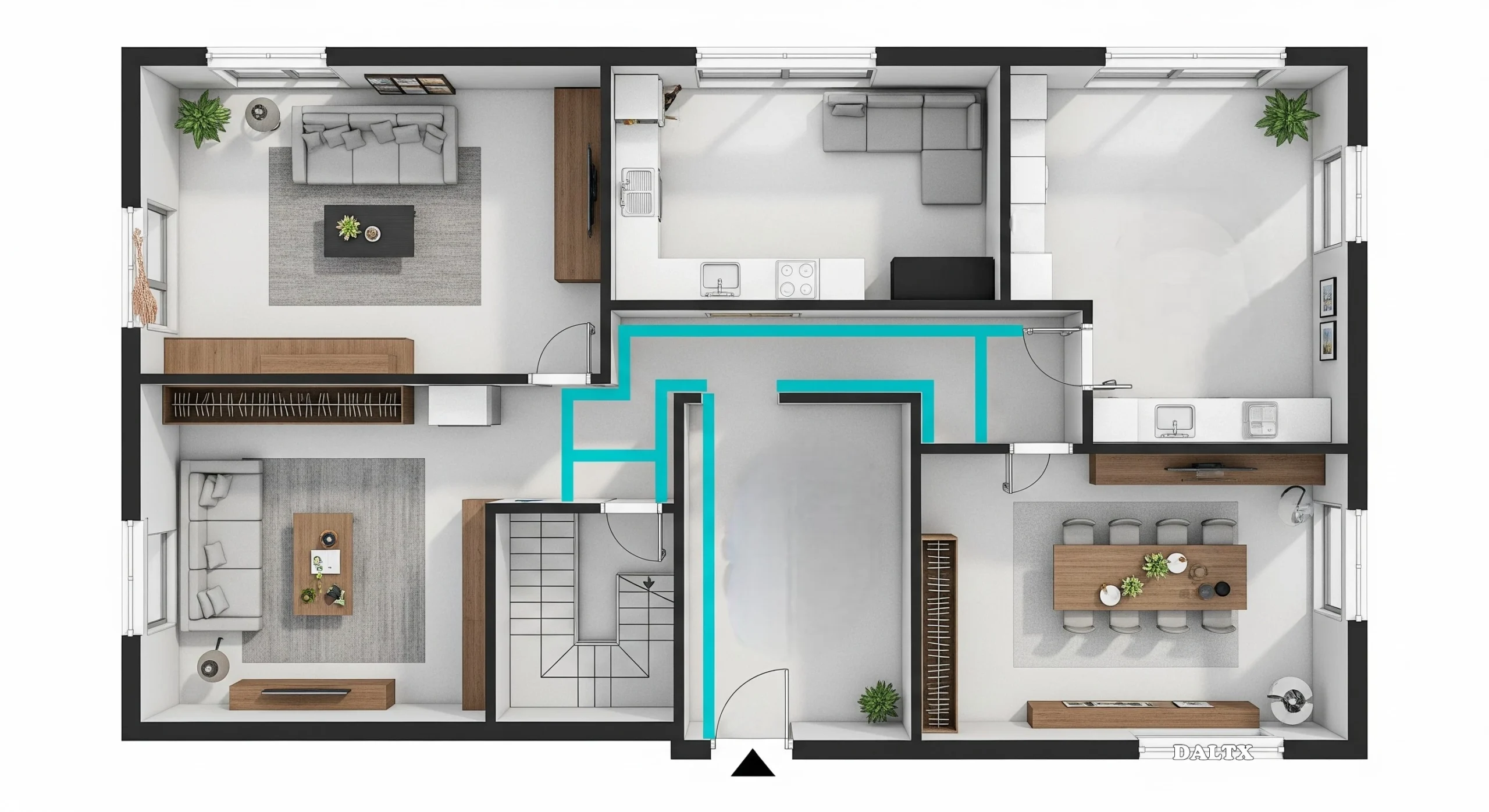
    One of the most common layout mistakes is pushing all the furniture up against the walls. It sounds like it would open up the room, but more often than not, it leaves a dead zone in the middle that doesn’t really serve any purpose. A better approach is to create intentional paths that feel easy to move through. Ideally, your main walkways should be around 24 to 36 inches wide so people can move around comfortably without bumping into anything.

    The Old Way: Guesswork and Costly Mistakes

    Before digital tools became widely available, if you wanted to plan out a room, you’d need a ruler, graph paper, and a lot of patience. People would cut out little paper pieces to stand in for furniture and then slide them around, trying to picture how everything might work in real life. It wasn’t fun and it wasn’t very accurate either.

    It was hard to really see it.

    Drawings are flat. Rooms aren’t. You can sketch where the couch goes, but you can’t feel how tight the walkway gets, or how that table might block the view across the room. That disconnect often leads to mistakes, sometimes expensive ones.

    A piece of furniture might look great on paper. Then it arrives, and suddenly it’s either swallowing the whole room or looks like a dollhouse version of what you had in mind. Judging scale on a page is harder than it sounds.

    If you wanted to try a new setup, you’d basically have to redraw the whole thing. It was time-consuming and honestly pretty frustrating. A lot of people gave up and just went with whatever layout they landed on first. Even if it didn’t feel quite right.

    So what happened? They’d order the wrong sofa. Or realize the space doesn’t work after everything’s already been delivered. Then they’d end up spending more to fix it later.

    Visualizing Your Layout in 3D

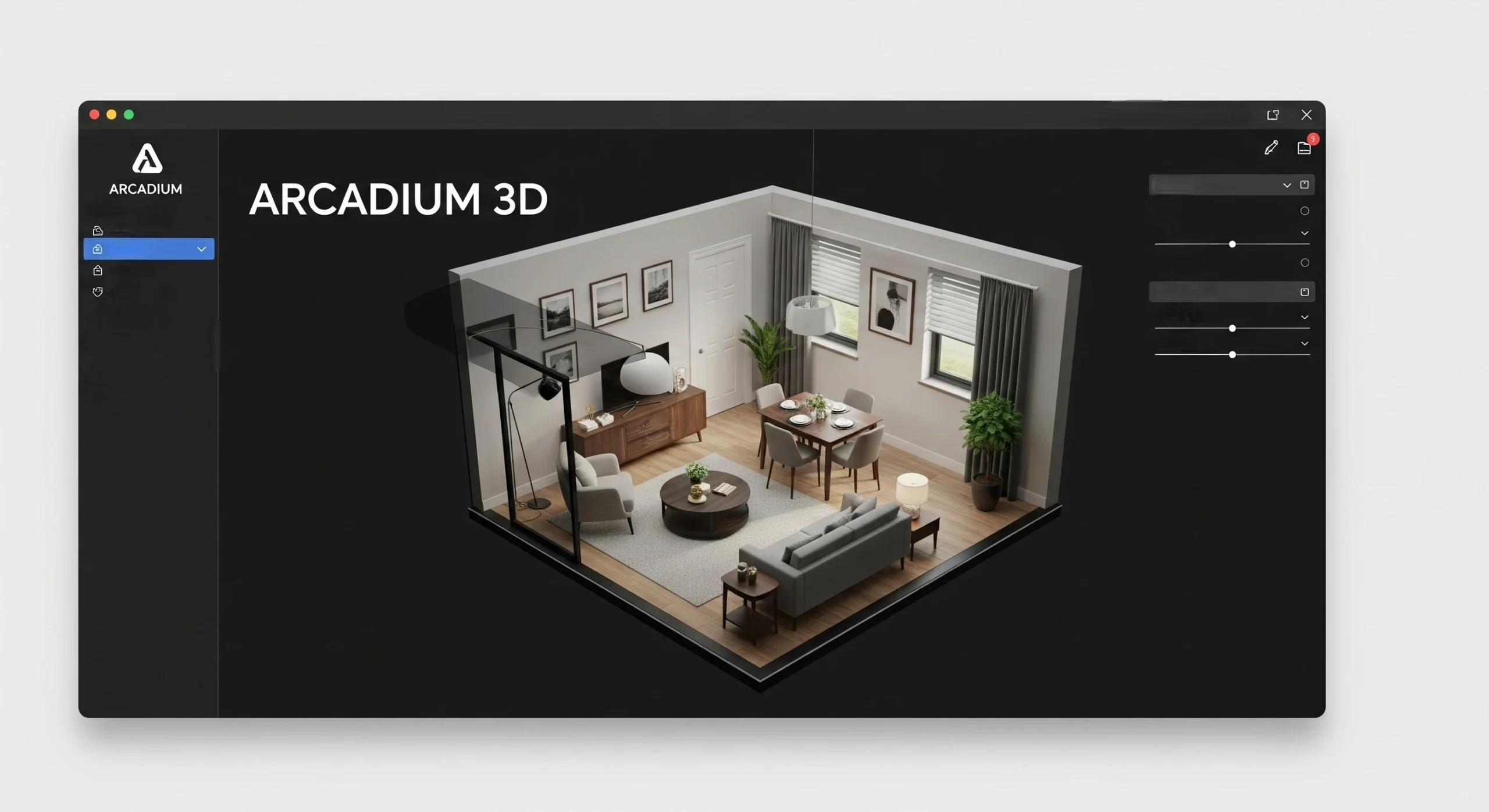
    Technology has completely changed how we plan spaces. Instead of struggling with flat drawings and vague ideas, you can now use 3D tools to build a true-to-scale version of your room and move things around in real time.

    It really is a game-changer. Rather than trying to picture how a layout will feel, you can see it. You can drop in furniture, walk through the room virtually, and try out different setups until something just clicks. You’ll know if a chair blocks the hallway or if the dining table feels too close to the wall, all before buying a single thing.

    What used to require expensive software and design experience is now available to anyone. There are platforms that let you design a room online free, giving you full control to explore different ideas and make changes on the fly. And because you’ve already “lived” in the layout virtually, you can move forward with a lot more confidence. No more surprises when the real furniture shows up.

    A Step-by-Step Guide to a Layout That Works

    Source: arcadium3d.com

    So you’ve got the right tools and a better understanding of function and flow—now what? Here’s how to bring it all together using a 3D design platform to build a layout that feels just right for your space.

    1. Start with a focal point.
      Every well-designed room needs something that draws the eye. It might be a fireplace, a big window with a view, a bold piece of art, or even the TV. Whatever it is, let that be your anchor. Arrange your main seating so it naturally faces the focal point. Doing this sets the tone and helps everything else fall into place.
    2. Make space for conversation.
      Furniture isn’t just for sitting, it sets the stage for connection. Try placing a sofa and two chairs in a loose U-shape or H-shape. The goal is to keep people close enough to talk comfortably without raising their voices. A good rule is to leave about 4 to 12 inches between two chairs so there’s room for a small table, but not so much space that the room feels disconnected.
    3. Let your furniture breathe.
      It’s tempting to push everything against the walls, but you don’t have to. By floating your sofa or chairs just a bit toward the center, you create a more dynamic room. It opens up natural pathways behind the seating, makes conversation areas more defined, and often makes the space feel larger too.
    4. Watch your spacing.
      Little gaps make a big difference. You’ll want to keep your coffee table around 12 to 18 inches from the front of the sofa, that’s close enough to reach, but not so tight that it’s awkward to move around. And when it comes to walkways, try to keep main paths at least a couple of feet wide so moving around feels easy and natural.
    5. Use a digital tool to test and tweak.
      This is where everything starts to click. A platform like Acradium 3d lets you play with different layouts without moving a single piece of real furniture. You can drag and drop items from a huge library, explore the room in 3D, and even take a virtual walk-through to see how things feel. You’ll be able to try out a bunch of versions quickly and land on the one that actually fits your space and the way you live

    Design a Life, Not Just a Room

    It’s easy to get caught up in colors and finishes and finding the perfect coffee table.A good room is about shaping a space that feels like it truly fits into your everyday life, something that flows with your routines, supports what you do, and makes being at home feel just a little easier.

    Think about the way you move through the space. What you do there every day. What makes it easier, what gets in your way, what feels right and what feels off. That’s what layout is really about.

    You don’t have to guess anymore. You don’t have to stand there with a tape measure wondering if the sofa will fit or if you’ll regret placing that chair in the corner. Now you can test things out. You can move furniture around with a few clicks. You can see it. You can feel it before you even make a decision.