Author: gcuen

  • Real Estate: Definition, Types, How It Works, Investment, and Key Terms

    Real estate touches almost every part of our lives, from where we sleep, to how local schools get funded, to where businesses decide to grow. If you’re thinking about buying a home, adding a rental to your portfolio, or just trying to make sense of all the jargon, this guide breaks down the basics in plain English.

    We’ll walk through what real estate really is, the main types of properties, how a deal actually goes from offer to closing, some popular ways to invest (both hands-on and hands-off), and a quick glossary of terms you’ll run into again and again.

    What Is “Real Estate,” Exactly?

    Real estate refers to land and anything permanently attached to it including homes, buildings, improvements, and the rights that come with ownership.

    In everyday use, you’ll hear “real estate” and “real property” used interchangeably. (That’s different from personal property, like your car or furniture, which isn’t affixed to land.)

    Ownership typically includes a “bundle of rights,” such as the right to use, lease, sell, or improve the property within the limits of law and zoning. Those rights have value; how much value depends on location, local demand, condition, allowed uses, and broader economic forces like interest rates.

    Etymology & First Use:
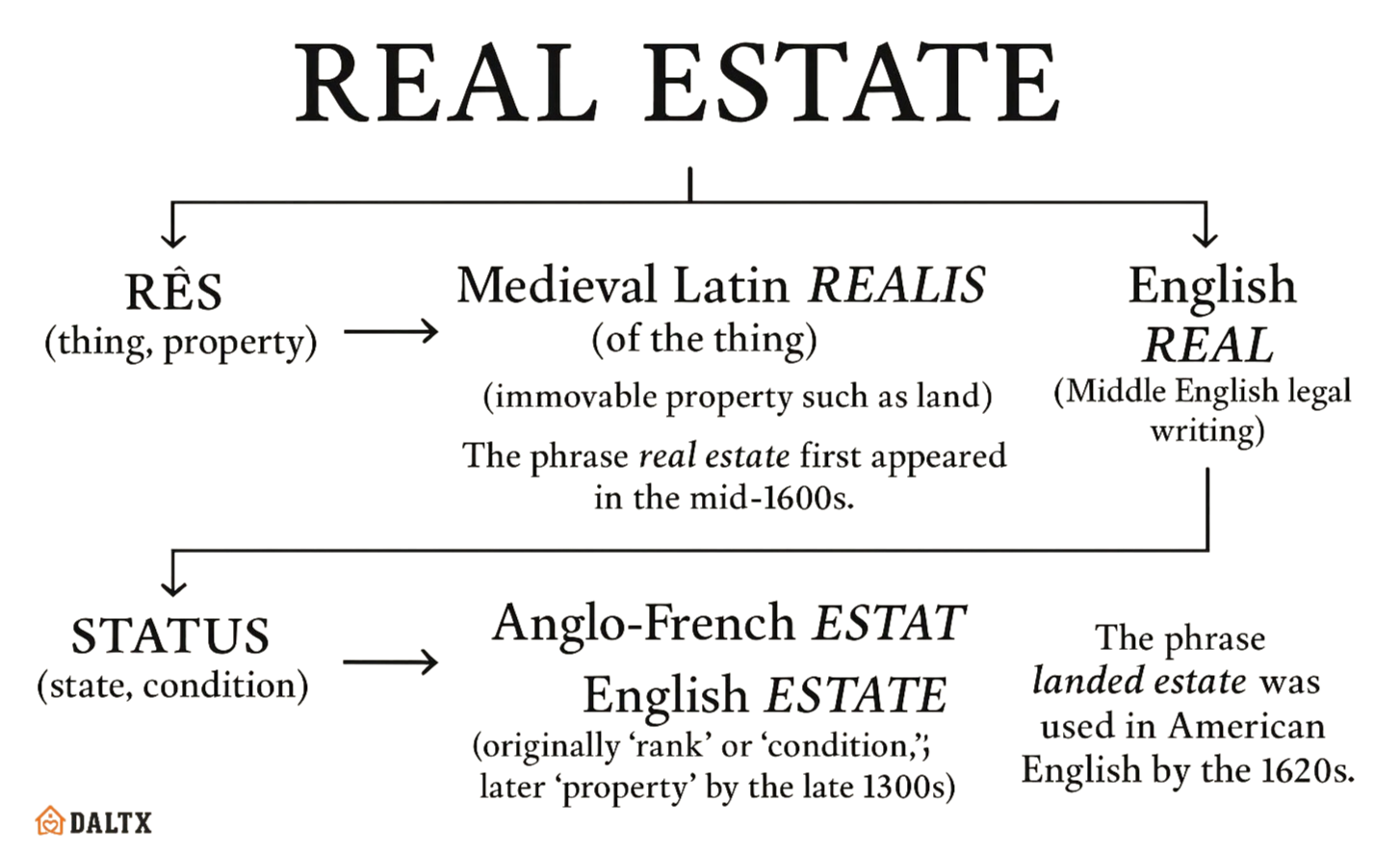
    • Real” comes from the Medieval Latin realis (“of the thing”), which itself comes from the Latin rēs (“thing” or “property”). In English legal writing dating back to Middle English, real referred to “things” in the legal sense, especially immovable property like land, as opposed to personal (movable) goods. The exact phrase real estate first appeared around the mid-1600s.1
    • Estate” comes from the Anglo-French estat, which comes from the Latin status meaning “state” or “condition.” In English, it originally meant “rank” or “condition,” and by the late 1300s, it also came to mean “property.” The phrase “landed estate” was already used in American English by the 1620s.2

    The earliest recorded use of “real estate” dates back to the mid-1600s. Merriam-Webster lists its first known use around 1642, while the Online Etymology Dictionary traces it to the 1660s. Either way, the term clearly entered English in the 1600s and has kept its legal tone ever since.3

    The Main Types of Real Estate

    Understanding the different categories helps you compare apples to apples when buying, investing, or analyzing the market.

    • Residential: Includes single-family homes, townhomes, condos, duplexes, triplexes, fourplexes, and manufactured homes.
    • Commercial: Covers offices, retail spaces, hotels, and other properties that mainly generate business income.
    • Industrial: Includes warehouses, distribution centers, manufacturing facilities, and flex spaces.
    • Land: Refers to raw land, infill lots, farmland, and parcels set aside for future development.
    • Special purpose & mixed‑use: Properties like self-storage facilities, medical and educational buildings, or developments that combine residential, retail, and office spaces.

    How Real Estate Really Works

    To understand real estate, it helps to start with what actually drives value in the market.

    What Actually Drives Property Value

    Three big levers influence property values:

    1. Location & land use: Zoning, school districts, commute times, and neighborhood amenities.
    2. Supply and demand: How many homes are for sale or lease versus the number of qualified buyers or tenants.
    3. Money & macroeconomics: Mortgage rates, employment, local growth, insurance costs, and property taxes.

    Who’s Involved When You Buy a Home

    • You and the seller
    • Real estate agents/brokers representing each side
    • A lender (if you’re financing) and an appraiser
    • A home inspector and sometimes specialists (e.g., roof, sewer)
    • A title/escrow company or real estate attorney (varies by countries and state)

    The Step-by-Step Purchase Timeline

    1. Budget and preapproval
      Get preapproved to understand how much home you can afford and to make your offer stronger.
    2. Home search & pricing
      Your agent will use comparable sales (comps) and a Comparative Market Analysis (CMA) to help you decide on a fair offer price.
    3. Offer, earnest money & contingencies
      Your written offer usually includes an earnest money deposit (typically around 1–3% of the purchase price) and contingencies for financing, appraisal, and inspection. The home inspection contingency gives you time to inspect the property and renegotiate or cancel if serious issues surface. This window is usually 7–10 days, as agreed in the contract.
    4. Appraisal & underwriting
      The lender orders an appraisal to confirm the property’s value. Meanwhile, underwriters review your income, assets, debts, and details about the property before final approval.
    5. Title search & escrow (two meanings)
      • Escrow in the transaction: A neutral third party holds funds and documents and coordinates closing once the title is cleared.
      • Escrow account for taxes/insurance: After you buy the home, many lenders collect part of your annual property taxes and homeowners insurance with each mortgage payment, then pay those bills for you. Some borrowers who qualify can request an escrow waiver and handle those lump-sum payments themselves, though eligibility, fees, and rules vary by lender, loan type, state law, and borrower profile.
    6. Closing
      You’ll sign the final documents, pay your closing costs and down payment, and get the keys once the transaction is officially recorded.

    Paying for Your Home and the Help That May Be Available

    • Conventional, FHA, VA, USDA and other mortgages are common choices. Some lenders and programs allow down payment assistance (DPA) through grants or second‑mortgage options (forgivable, deferred, or low‑interest), or matched‑savings programs, to help cover your down payment and/or closing costs. Many programs look for a minimum credit score (often ~620), income limits, and completion of a home buyer education course; specifics differ by state and program.
    • After you build equity, some owners tap a home equity line of credit (HELOC) for renovations or debt consolidation. Many HELOCs offer a draw period followed by a repayment period, and some lenders provide options to fix the rate on a portion of what you draw, useful when rates are rising. Remember: your home is collateral, so borrow carefully.

    Real Estate as an Investment

    Real estate can provide cash flow, appreciation, and potential tax benefits, but it also comes with market, maintenance, and regulatory risks.

    Here are common ways Americans invest, from hands‑on to fully passive.

    Hands-On Ways to Invest

    • Buy‑and‑hold rentals (single‑family or small multifamily)
      You purchase a property and rent it to long‑term tenants. Key metrics:
      • Net Operating Income (NOI) = rent & other income − operating expenses (excluding mortgage).
      • Cap rate = NOI ÷ purchase price.
      • Cash‑on‑cash return = annual pre‑tax cash flow ÷ total cash invested.
        Quick example: If rent is $2,200/month, annual gross rent is $26,400. After a 5% vacancy allowance ($1,320) and $8,000 in annual expenses, NOI is $17,080. On a $280,000 purchase, the cap rate is about 6.1%.
        If you buy a property with tenants in place, you’ll step into landlord duties immediately and must honor existing leases and local landlord‑tenant laws; rent control or “just cause” rules in some areas may limit rent increases or eviction without cause.
    • Short‑term rentals (STRs) / Airbnb
      STRs can earn a higher nightly rate than long‑term leases, but occupancy is less predictable and operating costs (furnishings, utilities, cleanings, property management) are higher. Expect more day‑to‑day involvement and be sure you understand local STR rules before you buy.
    • House hacking
      Live in one unit and rent out the others (or rooms) to offset the mortgage. It’s a popular on‑ramp to investing.
    • Fix‑and‑flip / BRRRR (Buy, Rehab, Rent, Refinance, Repeat)
      You add value through renovations. Success hinges on accurate ARV (after‑repair value) estimates, rehab budgets, holding cost assumptions, and a realistic timeline.
    • Foreclosures and REOs
      You can buy at auction (generally as‑is and often cash‑heavy) or purchase bank‑owned (REO) homes through agents after they don’t sell at auction. Preforeclosures and short sales are additional paths, though lender approvals can lengthen timelines. With any distressed property, insist on a careful inspection when possible and budget for repairs.
    • Tax lien investing
      Instead of buying the house, you may purchase a tax lien certificate when an owner falls behind on property taxes. The investor pays the delinquent taxes and then collects repayment (plus interest/penalties) from the owner, or in rare cases, by foreclosing if the owner doesn’t redeem in time. Rules, rates, and timelines vary widely by state, and due diligence is critical.
    • Partnerships and small syndications
      Partnering lets you combine cash, credit, skills, and time. It can also split profits and introduce differences in work styles, so set roles and expectations in writing. You’ll find potential partners via local investor clubs, online communities, crowdfunding platforms, and your professional network.

    More Passive or Low-Maintenance Options

    • REITs (Real Estate Investment Trusts)
      Public or private companies that own or finance real estate; investors buy shares and receive dividends.
    • MBS (Mortgage‑Backed Securities)
      Bonds backed by pools of mortgages; investors earn from borrowers’ payments. Like all bonds, MBS carry interest‑rate and credit risks.
    • Crowdfunding & real estate funds
      Platforms pool investor capital into specific projects or portfolios; read the fine print on fees, lockups, and sponsor track records.

    Financing and Managing Risk as an Investor

    • Financing: Investment properties often require larger down payments and stronger reserves than primary homes. If you’re buying a personal residence, down payment assistance may help you bridge the gap; confirm that your lender works with the program you’re targeting and review whether funds are a grant or a second loan (forgivable, deferred, or amortizing).
    • Due diligence: Use inspections, rent rolls, service records, and a title review to avoid surprises. If you waive the inspection contingency (common in auctions), build in a bigger repair budget.
    • Landlord‑tenant law & leases: Honor current leases when you buy a property with tenants; understand notice periods, just‑cause rules, and local limits on rent increases. Plan for vacancy and CapEx.
    • Operations & sustainability: Strategic “green” upgrades like energy-efficient HVAC systems, better insulation, solar, and water‑saving fixtures, can lower expenses and may qualify for energy‑efficient mortgage options or tax credits, depending on your loan and location.
    • Cash management: Decide whether to keep an escrow account for taxes/insurance or request an escrow waiver (if eligible) and save for those bills yourself; weigh convenience versus control and any waiver fees.
    • Capital for improvements: Some owners tap a HELOC to fund renovations; compare fixed‑rate locks versus variable draws and confirm fees and conversion rules before you borrow.

    Common Terms Every Buyer, Seller, and Investor Should Know

    [table id=3 /]

    Smart Upgrades: Sustainability and Resilience

    Green upgrades aren’t just about doing the right thing; they can also improve comfort and cut operating costs. Owners frequently pursue solar panels, high‑efficiency HVAC, better insulation/windows, or water‑saving systems.

    Depending on your loan type and where you live, energy‑efficient mortgage options and federal/state incentives may help pay for qualifying improvements.

    Bottom Line

    Learn the process, set a budget, and surround yourself with pros like your agent, lender, and inspector. If you’re planning to invest, it’s also smart to have a dependable contractor and property manager on your side. Go for the type of property and investment style that fit your timeline, how much risk you’re okay with, and what you want for cash flow.

    Once you’ve got a solid plan and you actually understand terms like escrow, contingencies, and NOI, you’ll feel way more confident making decisions in today’s housing market.

    1. Source: etymonline ↩︎
    2. Source: etymonline ↩︎
    3. Source: Merriam-Webster ↩︎
  • Top 5 Red Flags When Selling Your Home for Cash in Orlando

    If you’re planning to sell your home quickly for cash in Orlando, you’ve probably seen plenty of companies promising an easy, no-hassle process. And while many of those offers are legitimate, not every cash buyer plays by the same rules.

    Image Source: https://valerusre.com

    At Valerus Home Expert (VHE), we focus on ethical wholesaling — connecting sellers with serious buyers ready to close quickly and fairly. But the cash-buying world can still attract some bad actors. To help you protect yourself, here are five common red flags to watch out for when selling your home for cash.

    1) Lack of Transparency About the Process

    In wholesaling, it’s common for the initial contract to be assigned to an end buyer, who then provides the final proof of funds to the title company. That’s a normal part of how things work — but transparency is everything.

    If a company won’t walk you through its process or dodges questions about what happens after you sign, that’s a major concern. A reputable wholesaler like VHE will always explain:

    • How your contract is handled
    • When inspections take place
    • Who finalizes the purchase

    When you know what’s happening every step of the way, you stay informed, protected, and confident.

    2) No Inspection, Unrealistic Promises

    Be cautious of any buyer who says they don’t need an inspection or promises a firm offer without ever seeing the property. That’s a red flag.

    In real-world transactions, even experienced investors need an inspection before closing. Property condition can dramatically impact repair costs and, ultimately, the deal itself. For instance, one of our Orlando properties under contract revealed a foundation issue during inspection — something neither the buyer nor seller could have spotted upfront.

    Honest buyers will always perform proper due diligence and explain any price adjustments clearly. If someone refuses inspection but promises a lightning-fast close, it’s usually too good to be true.

    3) High-Pressure Tactics Without Clarity ≠ A Confident Decision

    If a buyer rushes you to sign without explaining what you’re agreeing to, step back. That’s another red flag.

    Now, to be fair — same-day signings aren’t always a bad thing. At VHE, we often finalize deals the same day, not to pressure sellers but to keep things moving smoothly and protect your deal from unnecessary delays or confusion.

    We take the time to explain every part of the agreement, answer your questions, and make sure you understand the process completely.

    In short: fast signing is fine when it’s done transparently, with full clarity. That’s how professionals keep deals fair and efficient — not rushed or risky.

    4) Hidden Fees or Vague Agreements

    Some buyers advertise “no fees,” only to tack on hidden costs later — closing fees, “marketing” deductions, or repair charges that weren’t mentioned upfront.

    A clean, ethical wholesale deal should be straightforward: agreed price, clear terms, no surprises.

    If you notice vague wording like “subject to partner approval,” or missing details about the buyer’s obligations, don’t sign until everything is clarified.

    At VHE, all agreements are written in plain, easy-to-understand language with zero hidden clauses.

    5) Work Only with Verified Local Pros

    Florida’s real estate market is full of new players trying to flip contracts without local knowledge or proper licensing. Always verify who you’re dealing with — ask for their business registration, local references, and an actual company website.

    VHE operates right here in Orlando, backed by a verified network of local buyers and licensed title partners. We know the neighborhoods, understand the market trends, and structure deals that close smoothly for everyone involved.

    The Bottom Line

    Selling your home for cash can be one of the fastest and easiest ways to move forward — as long as you’re working with the right team.

    When done ethically, wholesaling benefits both sellers and buyers. It creates a win-win where sellers get speed and certainty, and buyers find solid investment opportunities.

    At Valerus Home Expert, our promise is simple: No surprises. No pressure. Just honest offers and transparent deals that work for you.

  • A Simple Guide to Starting Fresh in a New City

    Moving to a new city can feel like an adventure and a leap of faith at the same time.

    You’re boxing up your life, betting on a new chapter, and wondering how it’ll all shake out. Will you like your place? Will the neighborhood fit your routines? Those nerves are normal and they’re easier to handle when you know what’s coming, including the real-world costs.

    For context, local moves often run a few hundred to a few thousand dollars, and long-distance moves can land well into the four figures, so budgeting early helps you steer the process instead of the process steering you.

    Leaving Your Old Place

    Saying goodbye is usually the hardest part. It isn’t just furniture and boxes, you’re leaving your morning coffee spot, your favorite walking route, and the streets you could drive on autopilot. Let yourself feel that. Then give future-you a hand: close the loop on your lease terms, line up utilities shut-offs, and make a short list of what you want your next daily life to look like (parks, commute, gyms, cafés). If money’s tight, it’s worth checking whether your state or city offers any relocation assistance or fee relief so you’re not carrying all of the move on your own.

    Planning Makes It Easier

    A solid plan takes so much of the stress out of moving. Start early, ideally a few weeks before your move date and make a short, practical list of what needs to happen and when. Add packing, cleaning, canceling utilities, and updating your address. Break those big items into bite-size steps so the whole thing doesn’t feel overwhelming. When you check each one off, it gives you a sense of progress and control and that calm feeling you really need during a move.

    You can even use your phone’s reminder app or a moving checklist app to stay on track. The small effort upfront saves you hours of chaos later.

    Packing Step by Step

    Packing doesn’t have to be a marathon. Start with the stuff you rarely touch, like books, décor, and seasonal clothes, and work your way toward the things you use daily. Use sturdy boxes, strong packing tape, and bubble wrap or towels to keep fragile items safe. Write what’s inside and which room it belongs to on each box; that tiny extra detail makes unpacking way easier.

    If you give yourself enough time, you’ll pack at a comfortable pace instead of rushing the night before. A little order now means a smoother landing when you get to your new place.

    Letting Go of Old Things

    A move is the perfect excuse to lighten your load. As you pack, go room by room and ask yourself what still earns a place in your life. If something’s broken, worn out, or no longer fits your style, it’s time to let it go. You can donate gently used clothes or furniture to a local charity, pass extras to friends, or post them online for free pickup. You’ll be surprised how freeing it feels to keep only what you actually want in your new space. Plus, less clutter means fewer boxes to move and more room to breathe once you arrive.

    When you’re on the fence about an item, picture it in your new home. If you can’t see where it fits or you wouldn’t miss it, thank it for the memories and move on. It’s not just decluttering; it’s resetting your environment so your next chapter starts fresh.

    Thinking About the Journey

    The trip to your new city can be its own adventure. Whether you’re driving a few hours or flying across the country, plan the journey so it’s as smooth as possible. If you’re hauling everything yourself, double-check that your car or rental truck is ready for the distance (tires, brakes, and fluids included). For long moves, like moving from Dallas to Los Angeles, professional long-distance movers can be worth every penny for the peace of mind they bring. Many offer tracking so you know exactly where your stuff is on the road.

    If the distance feels overwhelming, don’t try to handle it all alone. Ask friends to ride along, or use a service that pairs you with reliable helpers on both ends. A bit of support can turn a stressful trip into something almost enjoyable. Think of it as the bridge between who you were in your old place and who you’ll become in your new one.

    The First Day in Your New Home

    That first day in a new home always feels a little strange. The space is quiet, the walls echo, and everything feels unfamiliar. Give yourself permission to take it slow. Start by setting up the basics so you can rest and eat comfortably. Make your bed, plug in a few lamps, and unpack your kitchen essentials like plates, cups, and a coffee maker.

    Once you have a place to sleep and something warm to eat, everything else will fall into place more easily. Open a window, play some music, or light a candle. Those little touches can make the space feel like yours right away.

    Exploring the New City

    After you’ve settled in a bit, step outside and just see where your feet take you. No schedule, no checklist. Walk around the block, look at the houses, notice what kind of trees line the streets. You might pass a coffee shop that smells amazing or a park where kids are playing. Go in, grab a drink, sit for a minute, and just watch.

    Pay attention to the little things, like the way people talk, how fast they walk, the feel of the place. Every city has its own vibe, and the only way to really get it is to spend time out there. Don’t push yourself to learn it all at once. Let it come to you. One day you’ll realize you already have a favorite corner, a go-to store, maybe even someone who nods hello when you pass by. That’s when it starts feeling like you belong.

    Meeting New People

    Making friends in a new city takes time, and that’s completely normal. Start with the people around you. Say hi to your neighbors when you see them outside. Talk a little with the folks at your local coffee shop or grocery store. You don’t need to force it, just be open.

    If you like group stuff, look for a class or club that matches what you’re into. Join a gym, take a pottery class, or show up at a weekend market. When you keep showing up in the same places, faces start to become familiar. Before you know it, those quick hellos turn into real conversations. That’s how a city that once felt new starts feeling like home.

    Keeping in Touch with Old Friends

    You’re going to miss your old friends, and that’s okay. Call or text when you feel lonely. Send a photo of your new place or the view from your window. Ask how they’re doing and tell them a little about your day.

    You don’t have to talk all the time to stay close. A simple check-in here and there keeps that bond alive. Hearing a familiar voice or laughing about an old memory can make you feel grounded, even when you’re miles away.

    Dealing With Homesickness

    Feeling homesick is completely normal after a move. Some days it just hits you, even if everything seems fine. When that happens, don’t fight it. Let yourself feel it and take it slow.

    Try to make your new space feel like you. Put up photos of people you care about, play music you love, light a candle that smells familiar. Cook one of your favorite meals, the kind that reminds you of home. Those little things can make a big difference. Over time, the sadness won’t show up as often, and your new place will start to feel a little more comfortable each day.

    Building a New Routine

    Once you’ve unpacked and things start to calm down, try to build a simple rhythm to your days. Wake up at the same time, take a walk, grab coffee, and plan what you want to get done. Visit the same grocery store or café a few times, that’s how familiar faces start to appear.

    Small habits give your days shape and make your surroundings feel less temporary. Before long, you’ll notice you have a favorite route to walk, a spot you like to sit in, and maybe even a barista who knows your order. That’s when you’ll realize your new city isn’t just where you live, it’s starting to feel like home.

    Handling the Big Stuff

    When you’ve got a big move with heavy furniture or way too many boxes, don’t try to be a hero. Moving everything by yourself can wear you out fast. It’s completely fine to get help. If you’re relocating to or from Los Angeles, look for long-distance movers who charge fair prices and actually know how to lift and load things the right way. They do this every day, so they know how to keep your stuff safe.

    Once you let someone else handle the heavy parts, you can breathe a little. You’ll have more energy to focus on settling in and figuring out your new life.

    Enjoying the Change

    Change can feel weird, but it can also be pretty great once you lean into it. Every city has its own look and feel, like the smells from local food stands, the way people talk, the sounds from the streets. Try the food, visit a park or a small museum, walk through the weekend market. Let yourself get lost for a bit.

    You don’t have to love everything right away. Just notice what catches your eye or makes you smile. Over time, those small moments start to add up. One day you’ll realize you’re not just visiting anymore, you’re part of the place.

    Giving Yourself Time

    It takes a while to feel like you belong somewhere new. Some days you’ll wake up feeling great about your decision, and other days you’ll really miss your old life. That’s normal. Go easy on yourself. You don’t have to have everything figured out right away. Make your place cozy, get outside for fresh air, and do small things that help you feel grounded. With time, what feels unfamiliar now will start to feel like it’s yours. One morning, it’ll hit you that you’ve stopped comparing this place to where you came from, you just live here now.

    Looking Back Proudly

    At some point, you’ll think about where you started. The packing, the long trip, that first quiet night surrounded by boxes. You’ll see how much you’ve grown since then. Moving takes courage. You left what was comfortable and started from scratch, and not everyone can do that. You built something new, one small day at a time. That’s something to feel proud of.

    After a while, things just start to feel different. The city doesn’t seem so big anymore. You stop checking maps every time you go out. You recognize the sound of the traffic outside your window. You know where to get a good sandwich and which store stays open late. And somewhere in all of that, it hits you. This isn’t just the place you moved to. This is where you live now.

    And maybe that’s the best part of starting fresh. You find out how strong you are, how much you can adapt, and how a strange place can turn into home just because you gave it time.

  • Why Is Yard Management Software Crucial for Supply Chain Efficiency?

    Image Source: redbeam.com

    If you run a distribution center, a plant, or a 3PL yard, you already know the theme of the day: do more with less and do it faster. Yard management software (YMS) has moved from “nice to have” to “must have” because it tackles the messy middle ground between your gates and your docks, where delays and guesswork quietly drain throughput. Container yard management systems provide the foundation for modern logistics operations, ensuring that every move, trailer, and dock door is optimized for flow and efficiency.. The real question isn’t whether YMS helps; it’s how you pick a system that actually moves the needle for your operation.

    Below, you’ll see what YMS is, who benefits, where it fits in your tech stack, and how it drives measurable results without disrupting the rest of your network.

    Better Visibility and Control

    If you’ve ever tried to manage a busy yard with nothing but spreadsheets or walkie-talkies, you know how messy it can get. Things fall through the cracks, updates get missed, and you end up chasing trailers instead of managing them. Yard management software changes that completely.

    With a digital system, you can see what’s happening in real time. That kind of visibility means you’re not guessing anymore. You can make quick, confident calls because you’re working with live, accurate data instead of relying on someone’s last update.

    Better visibility naturally leads to better control. You’ll know exactly where each trailer is parked, which ones are loaded, and which are ready to pull. When your team has that clarity, workflow improves across the board. Trucks spend less time waiting, docks stay busier, and freight keeps moving. It’s a simple shift, but it makes a huge difference in how efficiently your whole operation runs.

    Increasing Productivity

    Too much of a yard team’s time gets eaten up by routine tasks, such as checking in drivers, updating trailer logs, or tracking arrivals by hand. Yard management software helps cut that wasted time by automating the stuff your team has to do over and over again.

    When check-ins and check-outs happen automatically, trucks spend less time waiting at the gate and more time moving freight. That alone makes a big difference. The faster trailers turn, the faster goods move through your network and that boost in speed ripples across the entire supply chain.

    Another big advantage is planning. Because the system pulls real-time data, it can help you line up arrivals and departures so your yard doesn’t get jammed up. Less congestion means a smoother workflow, fewer delays, and more throughput without adding extra labor. It’s a practical way to squeeze more performance out of the same operation.

    Reducing Costs

    Running a yard is expensive, and sometimes the biggest costs come from small inefficiencies that add up over time. Yard management software helps tighten things up by streamlining how work gets done and cutting the waste you don’t always see.

    Smarter scheduling alone can make a big difference. When you plan arrivals and departures more accurately, you avoid the last-minute rushes that lead to overtime and burnout. Automation takes it even further by preventing the kinds of costly mix-ups that happen when things are tracked by hand, like misplaced trailers, lost shipments, or loads sent to the wrong dock.

    It can lower energy costs as well. According to the U.S. Department of Transportation, proper yard management can reduce fuel consumption by up to 20% in commercial transportation operations. Less idling means less fuel wasted, and over time, that adds up to real money saved. When you look at it across an entire year, those efficiencies don’t just trim costs, they make a noticeable difference to your bottom line.

    Improving Safety and Compliance

    Safety is always a big deal in the yard. There’s constant movement, such as trucks pulling in, trailers backing up, forklifts zipping around and it only takes one moment of confusion for something to go wrong. Yard management software helps you keep things under control by showing, in real time, where every vehicle is and how it’s moving. When you can see what’s happening as it happens, you can step in before a small issue turns into a real problem. It’s one of those tools that makes staying safe feel a lot less reactive and a lot more manageable.

    The same goes for compliance. Most operations have to keep detailed activity records for audits or inspections, and doing that manually can eat up hours. With yard management software, those logs build themselves. Every move, every check-in, every trailer swap gets recorded automatically. That means when it’s time to pull a report, you already have everything you need, like an accurate, time-stamped, and ready to hand over. It’s less paperwork, fewer headaches, and no scrambling to prove you followed the rules.

    Supporting Better Communication

    Anybody who’s worked in a yard knows communication can make or break the day. If people aren’t on the same page, trucks get backed up, crews wait around, and everyone ends up frustrated. Yard management software helps fix that by keeping everyone connected. It gives each department the same live information, so nobody’s guessing or waiting for updates.

    Say a truck hits the gate early, warehouse teams get a heads-up right away, so they’re ready to move when it pulls in. Drivers don’t have to wander around asking where to park or unload because the system tells them exactly where to go. That kind of clarity cuts down on confusion, saves time, and keeps the yard moving the way it should.

    Scalability and Flexibility

    As your business grows, the yard never stays the same. More trucks come through, more trailers to manage, more moving parts every single day. The nice thing about yard management software is that it grows with you. You don’t have to overhaul the system every time things expand, it can handle new sites, a bigger fleet, or extra storage space without slowing down.

    It’s also flexible enough to fit the way you operate. Every industry runs a little differently, and the system can be tuned to match your rules, your workflows, and your team’s habits. That adaptability is what makes it such a long-term tool. When your operation changes, the software shifts right along with it instead of forcing you to start from scratch.

    Better Customer Satisfaction

    When your yard runs the way it should, everything else just works better. Shipments get out faster, deliveries land on time, and customers notice. People remember when you hit your promises, and they’ll come back because they know they can count on you.

    A clean, well-run operation also means fewer mix-ups. You’re not sending the wrong trailer to the wrong dock or scrambling to fix a late load. The right product gets to the right customer, plain and simple. That’s what keeps trust strong, just doing what you said you’d do, every single time.

    Future-Proofing Operations

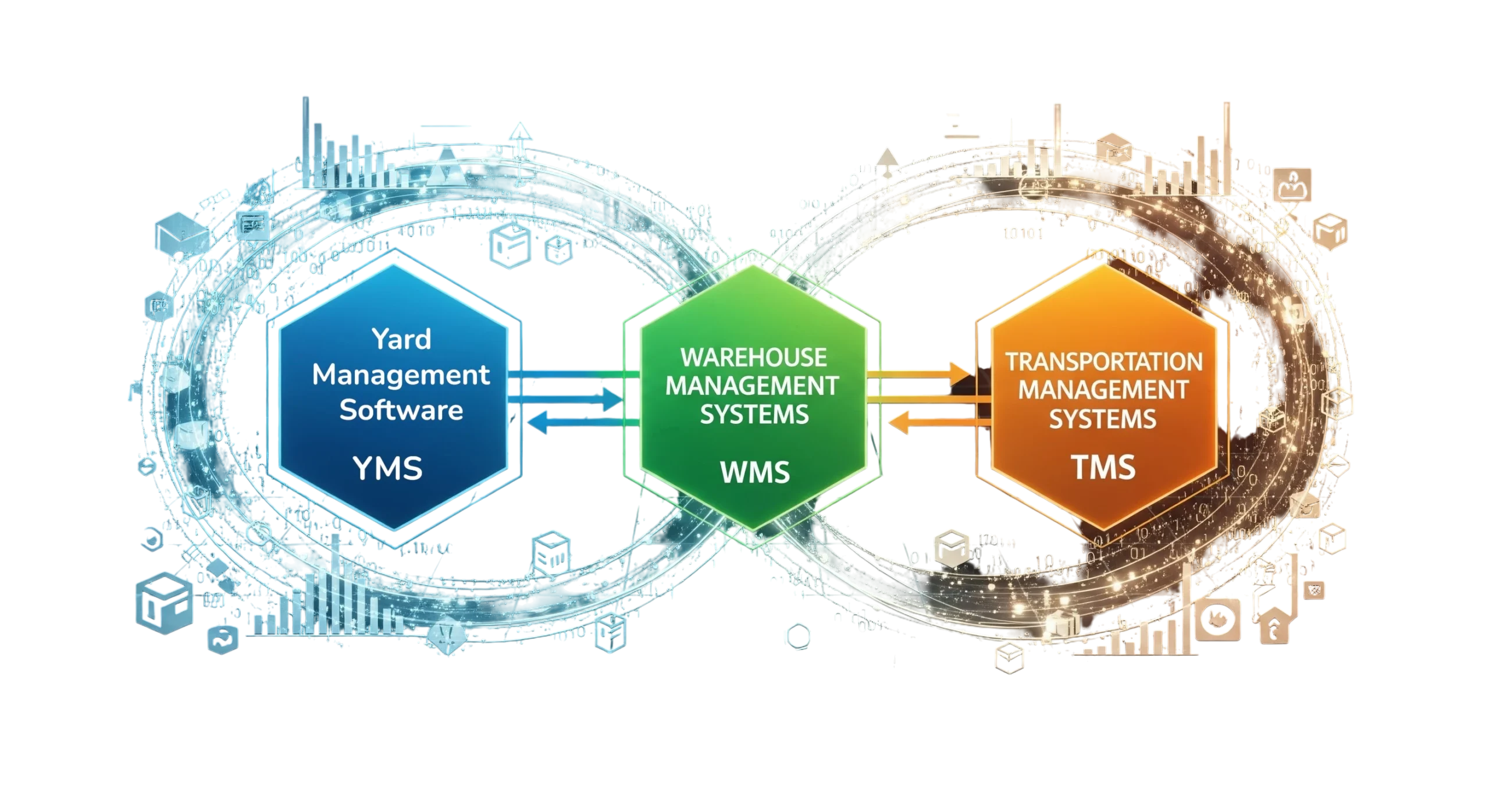
    Supply chains aren’t getting any simpler. Every year, there are more moving parts, more data, and tighter delivery windows. That’s why the tech you use has to keep up. Yard management software lays the groundwork for that, it connects easily with tools like your transportation and warehouse management systems, so information flows instead of getting stuck in silos. When everything talks to each other, you’re not just keeping up with change, you’re staying a step ahead of it.

    The real power comes from the data. Every move in the yard builds a record you can actually use. Over time, that data shows patterns, such as bottlenecks, slow spots, or opportunities you might’ve missed before. It’s what helps you plan smarter, invest better, and make decisions that hold up not just today, but down the road when your operation grows again.

    Conclusion

    Yard management software has become the backbone of modern logistics. When you’ve got the right system in place, everything gets clearer: where your trailers are, what’s moving, what’s stuck, and how to fix it. That visibility leads straight to better productivity, safer yards, smoother communication, and real savings across the board.

    The companies that stay ahead are the ones that keep improving how they run day to day. Yard management software gives them the tools to do exactly that, to keep tightening operations, cutting waste, and delivering on time. In a business where every minute counts, that kind of control isn’t just helpful, it’s how you stay competitive.

  • Property Management Fees in Dallas: What Every Homeowner Should Know

    Property Management Fees in Dallas: What Every Homeowner Should Know

    Photo by Instant Images

    It’s well known that Dallas–Fort Worth has been a hot spot for real estate investors. The region’s strong population growth, more than 20 Fortune 500 companies that call DFW home, and a healthy balance of supply and demand make it a magnet for investors.

    Whether an investor is out of state or a Dallas native, managing your own properties can quickly become a full-time job. Many prefer to pay a management fee so they can focus on family or growing their business.

    What many don’t realize is that not all companies for residential property management in Dallas, TX follow the same fee structure. Some use simple, all-inclusive pricing models, while others advertise low teaser rates that hide extra charges until you see the first monthly statement. Understanding these differences is key to avoiding unpleasant surprises and protecting your investment.

    What Property Managers in Dallas, TX Charge for Full-Service Property Management

    Photo by Instant Images

    There are three major fees property managers in Dallas, TX typically charge for their services. These come from core property management services, legal fees, and additional services.

    Core Fees

    Core fees usually include the Property Management Fee, Renewal Fee, and Tenant Placement Fee.

    Property Management Fees

    Most Dallas property managers charge anywhere from 8% to 12% of one month’s rent. This fee is generally calculated based on the rent collected each month. Some companies instead charge a flat monthly fee, for example, $200 per property — regardless of the rent amount.

    In many cases, property management fees cover full-service management, including property inspections, rent collection, owner and tenant portals, monthly statements, annual 1099s, direct deposits, and maintenance coordination. These services are often included when the fee is a set percentage of rent collected. Managers offering low or flat fees may provide certain services a la carte.

    For instance, many flat-fee property managers charge 10–15% of all maintenance invoices, which can significantly raise overall costs and make future expenses unpredictable.

    Renewal Fees

    Residential leases typically run for 12 months and need to be renewed annually. Most property managers charge a renewal fee for this process. Managers who charge a percentage-based PM fee might add a $100–$250 renewal fee, while flat-fee managers often charge 25–50% of one month’s rent. That difference can noticeably increase annual management costs.

    Tenant Placement Fees

    When a tenant moves out or a manager takes over a vacant unit, there’s work involved in finding a new renter, from marketing and showings to drafting compliant leases. Tenant placement fees usually range from 50% to 100% of one month’s rent. Notice a pattern? Many flat-fee property managers charge the full 100%.

    Additional & Legal Fees

    • Other fees owners can expect often stem from the legal side of property management. These might include costs related to evictions, compliance with government regulations, requested site visits, onboarding, or preventative maintenance. These fees vary widely and are typically passed on to the owner as needed.
      When it comes to maintenance, some property managers partner with outside vendors, while others have in-house repair teams. It’s essential for owners to understand their manager’s setup and vet those maintenance providers carefully.
    • A good property manager won’t just bill you for major repairs, they’ll gather at least three bids from trusted contractors to ensure fair pricing and quality workmanship. Another often-overlooked tool is the maintenance reserve. For example, if your PM holds a $500 reserve, they can authorize repairs or preventive maintenance up to that amount without needing your approval each time.
      Properties constantly need repairs, maybe a tenant punches a hole in the wall, backs into the garage door, or loses the remote. These things happen often and make the owner–property manager relationship all the more worthwhile.

    Why Choosing the Right Dallas Property Management Company Matters

    Image by Copper River Property Management

    Ultimately, fees are only one part of the equation. Owners should choose a property manager who protects their assets and their bottom line.

    As discussed, pricing models vary widely, and hidden costs can sneak up if you’re not careful. A trustworthy Dallas property management company is transparent about its pricing, manages maintenance costs thoughtfully, runs a preventative maintenance program, and works with reliable vendors to save owners money long term.

    One local company that fits this description is Copper River Property Management. Their pricing is clearly stated on their website, with no hidden charges. They prioritize transparency and high-quality customer service.

    Reach out to Copper River Property Management today to schedule a consultation and see how a trusted Dallas property management company can simplify your ownership experience.

    Author Bio

    Anthony Collazos is a US Army veteran and the founder of Copper River Property Management, a Dallas Property Management Company. He started his professional career as a U.S. Army Field Artillery Officer, where he gained leadership, discipline, and problem-solving skills that have been essential throughout his career.

    Over the past decade, he has managed and financed more than $1.5 billion in real estate across the United States, including large multifamily communities and complex commercial projects. In Texas alone, he has overseen the asset and property management of 2,400 multifamily units, with 300 units being in Dallas. Throughout his experience, he has gained extensive real estate expertise and an in-depth knowledge of the Dallas residential real estate market.

    He earned his MBA with a concentration in Real Estate from Southern Methodist University in 2022 and a BBA in Finance from Georgia Southern University in 2011. Anthony is a licensed REALTOR® and a member of National Association of REALTORS, Texas Association of REALTORS, and MetroTex Association of REALTORS. In 2023, Anthony obtained A.CRE’s respected certificate in real estate financial modeling.

    Visit Copper River PM’s website at copperriverpm.com to learn more about the services offered. Copper River Property Management specializes in managing single-family homes, condos, townhomes, and multifamily properties up to 50 units. You can contact him via email at info@copperriverpm.com or by completing the contact form at copperriverpm.com/contact/.

  • Canvas Prints: A Smart Choice for Modern Homes

    Canvas Prints: A Smart Choice for Modern Homes

    Decorating a home isn’t just about filling empty walls. It’s about creating a space that reflects personality, memories, and style. Among the many options out there, canvas prints stand out as one of the most effective ways to transform a room. Unlike posters or paper prints, a framed canvas print brings depth, texture, and an elegance that instantly elevates the room.

    The appeal of canvas prints lies in their versatility. They fit almost any interior—modern, rustic, or classic. Families often use canvas to showcase wedding photos, portraits, or travel memories. Art lovers also bring in abstract pieces, cityscapes, or even a favorite quote. That mix of durability and customization makes canvas a go-to for anyone who wants a personal yet polished touch at home.

    The Growing Popularity of Canvas Art

    In recent years, canvas art has surged in popularity. Platforms like Instagram and Pinterest have helped drive the trend: when people share rooms anchored by great wall art, others get inspired to try it too. That momentum has fueled demand for high-quality, affordable options.

    Canvas also holds up beautifully. Unlike paper that can fade or tear, canvas is built to last. Colors stay crisp for years, so a favorite image can become part of your home’s story.

    Why Choose CanvasDiscount

    CanvasDiscount is a great choice for consumers who want high-quality canvas prints at unbeatable prices. Backed by a Lowest Price Guarantee, CanvasDiscount is one of the most affordable options on the market.

    Despite the low cost, customers consistently praise the vivid print quality and durable materials. Plus, production takes place solely in the United States of America, making CanvasDiscount ideal for last-minute gifts or home décor. Combined with strong customer service and fast turnaround, CanvasDiscount offers a rare blend of affordability, reliability, and satisfaction that makes it a smart buy.

    For anyone searching for the perfect framed canvas print, CanvasDiscount provides exactly what you need without breaking the bank. Their focus on quality, affordability, and customer happiness makes them a trusted provider for thousands of people across the country.

    Transforming Spaces with Canvas Prints

    Canvas can completely change a room’s look. A plain white wall becomes a focal point with a bold piece. A soft family portrait can make a bedroom feel more personal and cozy. Unlike many types of wall art, canvas delivers a gallery feel that makes a space look curated and current.

    Another plus: it’s easy to make your own. With platforms like CanvasDiscount, you can upload photos, choose a size, and turn favorite moments into wall art. That personal touch is a big reason canvas stands out—it blends emotion with design.

    The Perfect Gift

    Canvas prints aren’t just for your own walls—they make excellent gifts. Birthdays, anniversaries, weddings, housewarmings—custom canvas works for all of them. Instead of something forgettable, you’re giving a piece that feels thoughtful and lasting.

    Picture a newly married couple unwrapping a large canvas of their favorite wedding shot. Or grandparents getting a canvas of the grandkids. These gifts carry real emotional weight. And because everything’s made in the U.S., shipping doesn’t take weeks.

    Fast, Reliable, and Affordable

    One reason buyers return to CanvasDiscount is how simple the process is—from upload to checkout. Turnaround is quick, and pricing stays low without cutting corners on quality. That combination has earned the brand a loyal following.

    Bringing Memories to Life

    Every home has stories to tell, and canvas prints make them visible. A vacation snapshot, a first birthday, a big family gathering—on canvas, these moments become part of the room. Choose a reliable producer like CanvasDiscount and you’re not only decorating your walls—you’re preserving what matters most.

    Canvas goes beyond decoration. It adds a sense of belonging, warmth, and comfort to your space. That emotional connection is why canvas art is much more than a design trend—it’s a timeless choice.

    Final Thoughts

    Canvas prints are more than wall decor; they’re a way to express personality, preserve memories, and add polish to any room. With their durability and ability to work across styles, they’ve become a favorite in homes across the country.

    For the right balance of price, quality, and service, CanvasDiscount stands out. With a lowest-price guarantee, high-quality printing, and responsive support, they make custom canvas accessible. Whether you’re ordering for yourself or gifting someone special, you’ll get lasting value and something you’ll want on the wall for years.

  • Essential Differences Between Terrace and Balcony

    Essential Differences Between Terrace and Balcony

    Image Source: bryanmurphybuilder.com

    Terraces and balconies are popular outdoor extensions that Austin homeowners love. Think about having a quiet, solitary time on the balcony with your favorite book while enjoying the twilight. Or, hosting friends and family for a party on the terrace.

    Both are used for entertainment and leisure time, making them one of the most appealing features of a home. However, it is natural to mistake one for the other. Although both are extensions of your home, they have different features. Homeowners need to understand the difference and the purposes of both before constructing either of the two as part of their custom home.

    The following section of the blog will explain the features and the differences between the two, the factors to consider before constructing either of the two as part of your custom home, and how you can optimize these outdoor residential spaces.

    What are the Differences?

    The one similarity between the terrace and the balcony is that both are outdoor parts of your residence. However, both differ in size, location, and construction.

    The term terrace means earth, derived from the Latin word terra. It is a large flat concrete extension next to the top floor of a building or the ground floor, extending into the outdoor areas. However, it can also be a completely separate flat platform in your backyard or front yard. The main feature is open space and not on the same level as the indoor floor it extends from.

    A balcony is attached to any room, and you can have multiple of them in your custom home. It is not open, but enclosed by a railing, walls, and often an overhead cover. Balconies are usually of different sizes but smaller than a terrace. It can be a long and narrow stretch of platform with room for a seating arrangement or a single chair, depending on the size. It is an Italian word first used in the 17th century.

    The Main Differences

    As a custom homeowner, it is essential to understand how the two differ in features. It will not only help you with designing, but also help you understand whether the construction is appropriate for your residence, given the space available.

    Location of the Two

    A terrace can be both attached to your building or completely separate. You can create a raised concrete or tiled platform in the middle of your backyard, or you can keep it attached to your residence for a smooth-flowing structure. Rooftop terraces are an extension of your roof, but remain open spaces with fencing on three sides and a wall on one side.

    On the other hand, a balcony is attached to your rooms with a shade and railing. It can be on the same level as your room or slightly elevated. It is accessible only through the room it is attached to, unlike the terrace, which is accessible from multiple sides.

    Size Differences

    Size is a major characteristic difference between the two. Terraces are spacious and are situated in the garden or on the rooftop. They are used for multiple purposes, such as entertainment, get-togethers, or even rooftop gardening. Thus, a terrace elevates your property’s value, helping increase your property’s value and potential return. Especially in Austin, where eco-conscious living is popular, a rooftop terrace with a garden can be a sensible and sustainable choice.

    Balconies are smaller in area and usually a long or square-shaped extension of your rooms. However, you can have a large-sized balcony for your custom home, but it depends on the size and proportion of your entire property. Normally, you can have a seating arrangement, decorate with plants and planters, or even use it as a workout space while appreciating nature.

    Construction and Décor

    Terraces are often constructed separately, like a building, with materials such as concrete or tiles. On the other hand, balconies are constructed as an extension of the building and supported by pillars.

    However, as both structures are exposed to environmental materials and moisture, it is highly recommended that you use materials that are resistant to moisture, dirt, grime, and mold and mildew. Hiring a custom home builder in Austin, TX, can prove fruitful in this matter.

    Factors to Consider Before Constructing Either of the Two

    Both structures elevate your outdoor visual appeal and aesthetics. However, there are some advantages and disadvantages of each. It is essential to examine which of the two will be most beneficial for your residence.

    Advantages of Having a Terrace in Austin

    One of the most important advantages of having a terrace is its space. Terraces are spacious, allowing you to use them for multiple purposes, from gardening to social gatherings. However, if you have a small backyard or limited space for extension, you need to determine the size carefully to avoid an awkward design.

    On the other hand, terraces are in high demand for homebuyers. Thus, if you have any plans to sell your property in the future, your terrace will elevate its curb appeal.

    Disadvantages of Terrace

    One common concern with a terrace is that it requires a large space. Many properties might have large outdoor areas, but it is still not enough for a separate concrete structure. It might make the outdoors more crowded or overwhelming. Thus, consider the size of your property before investing in terrace construction.

    Another factor that keeps homeowners from building a terrace is the cost. Having a separate construction is undoubtedly expensive, and you must check your budget carefully before starting the work.

    How a Balcony Adds Value to Your Property

    Balconies do not take up much space, while providing convenient access to scenic views. Thus, if you do not have enough space for a terrace, opting for a larger balcony is often a smarter choice.

    Problems Associated with Balconies

    Balconies are best for personal spaces, such as reading alone, a yoga session, or enjoying morning coffee. Although many balconies are large enough to accommodate a small seating arrangement for four to five people, they are not suited for large social gatherings. Another concern with balconies is safety: since they are located above ground level, they can be risky for children. Kids, if left alone, might attempt to climb the railing, increasing the chances of falling. So if you have kids, you may want to reconsider adding a balcony.

    Bottom Line

    Balcony and terrace both enhance the aesthetics and functionality of your residence. However, determining which one to choose for your custom home might be challenging. It is recommended that you hire a custom home specialist in Austin for the best suggestions.

  • Starbucks to close six North Texas stores as corporate cuts ripple nationwide

    Starbucks to close six North Texas stores as corporate cuts ripple nationwide

    Starbucks logo illustration with closed sign overlay

    Dallas, Texas — Starbucks is closing six cafés across Dallas–Fort Worth this weekend, part of a $1 billion restructuring that is eliminating nearly 900 corporate roles and trimming the chain’s U.S. and Canada footprint for the first time in years. The shutdowns take effect after service Saturday, Sept. 27, and follow six consecutive quarters of weak sales.

    The closures hit high-traffic corridors like Greenville Avenue and Mockingbird Station in Dallas, downtown Fort Worth, plus suburban spots in Richardson and Plano. A rural café in Italy, Texas, is also on the list. Workers are being offered transfers or severance packages with extended benefits. Starbucks insists union status played no role in the choices.

    CEO Brian Niccol, in a memo last week, framed the move as a portfolio “reset” designed to weed out underperforming stores and focus investment on cafés that can deliver the brand’s promised “third place” vibe. The company plans to end fiscal 2025 with roughly 18,300 North American stores—about 1% fewer than last year, before resuming growth in 2026. More than 1,000 cafés will be redesigned over the next year to look warmer and less like pickup counters.

    The timing underscores how the brand, long synonymous with reliable growth, is navigating a post-pandemic consumer slowdown. Starbucks has rarely finished a year with fewer outlets, and this cutback signals a shift from sheer expansion to tighter curation. Analysts say the company is betting that fewer, better stores can reignite traffic while avoiding the drag of unprofitable locations.

    For North Texas, the closures are targeted, not a retreat. But they mark the new reality: Starbucks is recalibrating, putting efficiency and experience over ubiquity, and reminding investors and customers alike that the coffee giant is willing to pull back before it pushes forward again.

  • Discover Stress-Free Home Solutions Available In Oviedo

    Discover Stress-Free Home Solutions Available In Oviedo

    Feeling overwhelmed by home-related stress is more common than you think, especially in a growing area like Oviedo. If you’ve been searching for practical ways to tackle everything from maintenance worries to the possibility of selling your home quickly, you’re not alone. 

    Resources like these home solutions in Oviedo can shed light on clear steps for addressing common challenges, making it easier to move forward—whatever your situation may be.

    Streamlining Life Transitions

    Big life changes like moving, downsizing, or renovating can feel overwhelming. In Oviedo, plenty of stress-free solutions are available to help you transition smoothly.

    Expert Guidance at Every Step

    It may surprise you how easily big decisions can become simple with the right team by your side. Local home solutions firms bring trusted experts directly to your doorstep.

    Research and Vetting For Confidence

    Rest easy knowing that these services do the hard work—vetting providers, comparing options, and presenting only the most reliable solutions for your home needs.

    Why Partnerships Matter

    Great partnerships with local and national providers ensure a wide range of services, allowing you to customize your journey from start to finish with confidence.

    Streamlining life transitions isn’t just about convenience—it’s about building trust, gaining peace of mind, and ensuring your Oviedo home fits your changing lifestyle goals.

    Cleaning and Organizing Expertise

    Feeling weighed down by household clutter? In Oviedo, access to expert cleaning and organizing teams can quickly transform your living spaces into inviting, orderly environments.

    • Professional Organizers: Certified pros create customized organization systems so every item finally has a place in your home.
    • Downsizing & Decluttering: Whether you need to clear out a closet or your entire house, specialized teams remove the stress and handle the heavy lifting.
    • Packing and Unpacking: Moving just became easier—stay hands-off while experts safely pack, move, and set up your new place…and even dispose of the boxes.
    • Judgment-Free Approach: No need to feel embarrassed! Organizing pros are trained to offer compassionate, efficient help without judgment—supporting your goals and comfort.
    • Quick Turnaround: Projects that used to take weeks on your own can now be completed by a diligent team in just a day or two.

    If you’re overwhelmed, professional organization services in Oviedo can help reclaim your home, so you’re free to kick up your feet and enjoy your space again.

    Hassle-Free Move-In Solutions

    New to Oviedo and dreading the moving process? There are trustworthy services designed to make move-in day a breeze and ensure your house feels like home from the start.

    Turn-Key Solutions for Homeowners

    Imagine move-in ready services that not only unpack your boxes, but also set up your kitchen, organize your closets, and optimize every room for instant comfort.

    Vetted Moving and Installation Teams

    Local home solution experts partner with experienced movers and installers. This eliminates surprises and ensures your belongings are treated with the utmost care and efficiency.

    Start With Confidence

    These services empower you to make confident decisions and avoid the typical stress associated with relocation, whether you’re buying, renting, or even renovating.

    By leveraging reliable Oviedo-area move-in teams, you’ll spend less time worrying about logistics and more time creating memories in your perfectly set-up home.

    Flexible Home Care Services

    Taking care of yourself or a loved one at home has never been simpler. Oviedo offers innovative and compassionate home care options to suit any stage of life.

    • Personalized Care: From companionship to daily living assistance or medical support, tailored plans mean help is provided on your schedule and terms.
    • Compassionate Caregivers: Carefully trained professionals deliver care with warmth, respect, and dignity, providing peace of mind for both seniors and their families.
    • Family & Friends Compensation: Some programs even let you choose your caregiver—meaning trusted family members or friends can get paid for the care they provide.
    • Fast and Simple Process: Getting started is a breeze. Many agencies only require a quick online application or a phone call to set up your care plan.
    • Support Through Transitions: Whether you need short-term help during recovery or long-term assistance as needs change, flexible home care grows with you.

    With so many flexible options available, you can relax knowing that compassionate, qualified help is always within reach in the Oviedo community.

    Why Consider ADUs?

    Accessory Dwelling Units (ADUs) are gaining popularity in Oviedo, offering smart solutions for homeowners seeking flexibility, extra income, or multi-generational living.

    Increased Housing Options

    ADUs come in many forms—detached backyard cottages, garage conversions, or basement apartments—making it easy to adapt your property to your evolving needs.

    Financial Benefits

    Renting out your ADU can provide steady supplementary income, offsetting mortgage payments, or supporting retirement plans while also increasing property value.

    Supporting Family and Community

    Many families use ADUs for aging parents, adult children, or caregivers, creating inclusive, supportive living situations without sacrificing independence or privacy.

    Minimal Environmental Impact

    Building an ADU uses less land and fewer materials than traditional development, making it an eco-friendly solution for boosting neighborhood housing availability.

    Experience Tiny Home Living

    Curious about downsizing in Oviedo? Tiny homes are an increasingly popular way to simplify your life, reduce bills, and enjoy a cozy, efficient lifestyle.

    • Creative Design: Tiny homes use innovative design techniques to maximize every inch, giving you comfort and style in a smaller footprint.
    • Low Maintenance: Less space means less to clean and maintain—freeing up time for what you really enjoy.
    • Affordability: Lower utility costs, reduced property taxes, and minimal furnishings contribute to a budget-friendly lifestyle.
    • Flexible Locations: Some tiny homes are mobile, letting you make the most of Oviedo’s beautiful scenery and close-knit community.

    Embracing tiny home living can offer a fresh perspective—leading to less clutter, lower expenses, and a deeper appreciation for the essentials of home.

    Finding Professional Home Help

    Professional assistance is easy to find in Oviedo. No matter your need or budget, experts are available to ensure your home remains your sanctuary.

    Home Cleaning Services

    Professional cleaners keep your space sparkling with customized plans, so you can focus on what matters most to you and your family.

    Handyman and Repair Solutions

    From minor fixes to major upgrades, skilled handymen tackle repairs quickly, leaving your home functioning and safe without the stress of DIY.

    Landscaping and Lawn Care

    Outdoor specialists transform yards into beautiful, well-kept extensions of your relaxing home, boosting curb appeal and minimizing chores.

    Whatever your needs, reliable home help is just a phone call away—giving you time to enjoy life in sunny Oviedo with fewer worries and more joy.

    Simple Steps to Get Started

    Ready to take control of your Oviedo home solutions journey? Getting started is easier than you think and can often be handled entirely online or over the phone.

    • Assess Your Needs: Make a quick list of the services that would make the biggest difference in your daily routine.
    • Request Quotes: Many companies let you text or upload photos of your project for personalized estimates—no need for a lengthy phone call.
    • Book Services Online: Enjoy instant appointment scheduling based on your availability, so you avoid endless phone tags.
    • Relax and Let the Pros Handle It: Once you choose a provider, simply sit back while experts carry out your plans with minimal effort on your part.

    With these simple steps, you’ll find yourself enjoying a newly organized, cared-for, and truly hassle-free home environment, perfect for making new memories.

    What Home Care Costs

    Understanding home care expenses is a crucial step for every Oviedo family. Knowing the numbers ensures you find a solution that fits your budget and your needs.

    Hourly Rates Vary

    Home care pricing typically ranges from $24 to $43 per hour, depending on location, level of service, and caregiver expertise. In Florida, rates average near $30 per hour.

    Factors Influencing Cost

    Services that include medical or personal care, or those requiring specialized skills like dementia support, tend to cost more than simple companionship or light housekeeping.

    How to Find Affordable Options

    Flexibility matters. Try adjusting weekly hours, sharing care among family, or investigating local support programs to keep costs manageable without sacrificing quality.

    Making Transitions Easier

    Choosing the right solutions can simplify life changes, whether moving, downsizing, or seeking extra help at home. If selling your property becomes part of your plans, we’ll buy your house fast in Panama City and streamline your next step with confidence.

  • Western Wealth Capital Acquires Park Place Townhomes in Euless, Texas

    Western Wealth Capital Acquires Park Place Townhomes in Euless, Texas

    DALLAS, Texas — Western Wealth Capital (WWC) announces the closing of its 130th real estate acquisition – Park Place Townhomes in Euless, Texas. This is Western Wealth Capital’s 22nd multifamily acquisition in the Dallas-Fort Worth market.

    WWC and its investment partners closed on the 97-unit multifamily community of Park Place Townhomes. The transaction was advantageously purchased off-market with the assistance of Brian Murphy of Newmark Dallas. StepStone Real Estate (“SRE”), the real estate arm of private markets investment firm StepStone Group (Nasdaq: STEP), is a major equity partner in the transaction. Park Place is a follow-on investment into an existing WWC/SRE joint-venture initiated by a broader GP-led portfolio recapitalization in 2024.

    Built in 1980, Park Place Townhomes features spacious two-story units with an average size of 1,116 square feet, offering residents a comfortable and well-designed living experience. As part of the acquisition, WWC assumes a 3.07% fixed-rate mortgage from the previous owner, resulting in an estimated $1.6 million in interest savings over the loan term compared to current market rates. The loan assumption was handled by Katie Runyan of Walker & Dunlop.

    This Dallas-area acquisition strengthens WWC’s presence in the U.S. multifamily housing market and reflects the firm’s disciplined investment approach. Ideally situated between Dallas and Fort Worth, the property is just six minutes from Dallas-Fort Worth International Airport and within close proximity to major employers such as American Airlines headquarters, Lockheed Martin, and AT&T Stadium—all reachable within a 23-minute drive.

    “This acquisition comes at an opportune time in the market cycle,” said Jay O’Connor, Vice President of Acquisitions at WWC. “We’re acquiring this asset at 42% below current replacement cost, which presents a compelling opportunity for equity growth and attractive returns.”

    Doug Mather, WWC’s Chief Investment Officer, echoed this sentiment: “We’re seeing clear buying signals in the market, with property values down 30–40% from their peak, rent growth poised to rebound, and job growth remaining strong. Park Place Townhomes offers a rare chance to invest near the bottom of the market in a highly desirable product located in a prime area.”

    About Western Wealth Capital

    WWC has developed a proven system for investing in multifamily properties in key real estate markets across the U.S. WWC offers investment partners the opportunity to invest in properties with substantial value-add opportunities. Since its inception, WWC has successfully completed more than $6.4 billion in real estate transactions, acquiring 130 multifamily assets representing more than 29,000 total units.

    WWC’s vision is to build wealth for its investment partners with exceptional returns. A people-first approach promotes excellence at every point, with highly efficient operations and a true commitment to our communities. The company’s current portfolio of assets under management includes 35 multifamily rental buildings across five different U.S. metropolitan areas located in the Sun Belt region.