Author: Christina Krik-Bost

  • Moving from Florida to Dallas? Here’s How Your Homestead Benefits Compare

    Image Source: pixabay.com

    Thinking about trading beaches for brisket and moving from Florida to Dallas? You are in good company. Plenty of families make the jump for jobs, schools, and the no‑income‑tax combo both states offer. Before you pack the truck, it pays to get clear on how each state treats your primary residence.

    Florida and Texas both deliver strong homestead perks that lower your property tax bill and shield your home from most creditors, but the rules work a little differently in each place. Understanding those differences can help you plan your budget and avoid paperwork headaches.

    What Florida Offers: The Homestead Exemption You’re Leaving Behind
    Florida’s homestead package does two big things: it cuts your taxable value and limits how fast that value can climb.

    • Exemption amount
      The homestead exemption in Florida provides significant benefits that have likely been reducing your property tax bill for years, and for 2025, it can reduce taxable value by up to $50,722. The first $25,000 applies to all taxing authorities, including schools. The additional $25,722 applies only to non‑school taxes on the portion of assessed value between $50,000 and $75,722. Florida voters approved an annual inflation adjustment to that second slice beginning with 2025, which is why you see the $50,722 total this year.
    • Save Our Homes assessment cap
      Once you have the exemption, Florida’s Save Our Homes rule caps yearly increases in assessed value at the lesser of 3% or CPI, which helps keep long‑term property taxes in check when market values jump. You can also transfer up to $500,000 of your accumulated Save Our Homes benefit to a new Florida homestead if you move within the state and meet the timing rules.
    • Creditor protection
      Florida’s constitution protects unlimited home value from most creditors, subject to acreage limits: up to one‑half acre inside a municipality and 160 acres outside city limits. There are standard exceptions for things like your mortgage, property taxes, and contractor liens.

    If you have owned in Florida for years, that 3% cap likely created real savings over time. Just remember, portability only helps when you move within Florida, not when you move to Dallas.

    What Texas Brings to the Table: Your New Benefits in Dallas

    Texas structures relief differently, and many newcomers feel the savings quickly.

    • Exemption amount
      Every homeowner with a qualified residence homestead gets a $100,000 school district exemption off the top. Cities, counties, and special districts can also adopt local‑option exemptions (up to 20% of value, at least $5,000), which stack on top if offered where you live. Dallas County and local taxing units set these locally, so amounts vary by address.
    • Assessment cap
      Texas limits the appraised value increase on a residence homestead to 10% per year plus the value of new improvements, once your homestead is in place. This is less restrictive than Florida’s 3% cap, but it still prevents large, single‑year spikes from driving your tax bill.
    • Senior or disabled homeowner relief
      Starting the year you turn 65 or if you qualify as disabled, your school district taxes are “capped” at the amount you paid that first qualifying year, subject to adjustments that state law outlines. Many taxing units also offer extra exemptions for seniors and disabled homeowners.
    • Creditor protection and size limits
      Like Florida, Texas protects a homestead from most creditors. The protection is tied to land area rather than value: up to 10 acres in an urban area and up to 100 acres for a single adult or 200 acres for a family in rural areas. Mortgage, tax, and mechanic’s lien obligations remain exceptions.

    Note

    As of October 16, 2025, the statewide school‑tax homestead exemption is $100,000. Texas voters will decide in November 2025 whether to increase it to $140,000 (Proposition 13). Keep an eye on that ballot measure if you are closing late in the year.

    The Key Differences That Matter
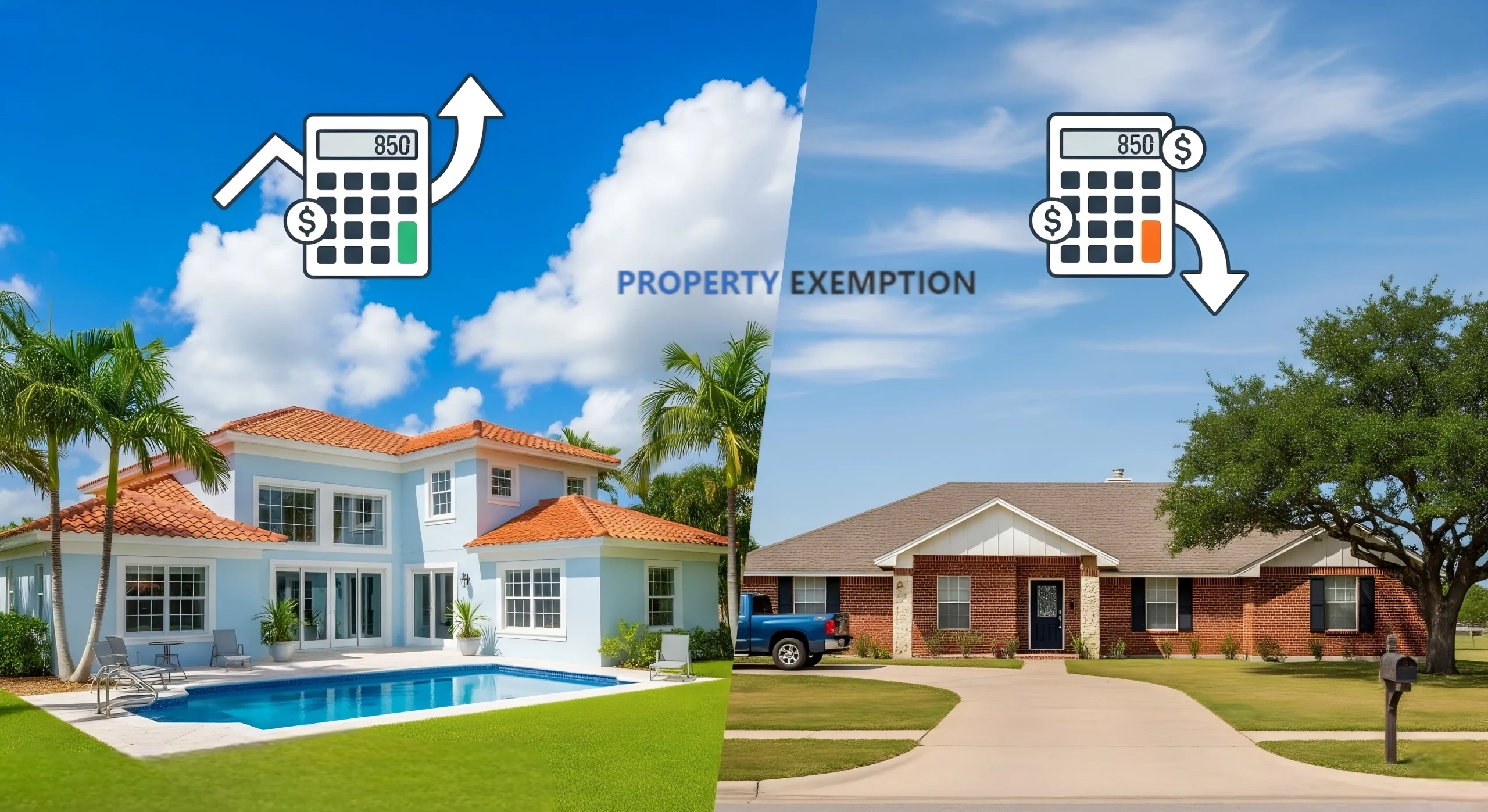
    These two systems are generous, but they reward homeowners in different ways.

    • Assessment caps over time
      Florida’s 3% Save Our Homes cap is tighter than Texas’s 10% cap. If you plan to stay put for a long time, Florida’s cap tends to protect long‑run affordability more strongly as markets appreciate. Texas still caps increases, but the ceiling allows faster catch‑ups to market value.
    • Upfront savings versus long‑term savings
      Texas generally provides larger immediate tax relief through its $100,000 school exemption and any local options. Florida’s relief grows the longer you stay because of the Save Our Homes cap and, if you stay in Florida, portability when you move to another Florida homestead. Texas does not have portability, so each home you buy is reassessed and capped from that new baseline.
    • Creditor protection mechanics
      Both states protect your homestead from most creditors. Florida ties protection to unlimited value with acreage limits. Texas ties protection to acreage with no value limit. Either way, standard exceptions for mortgages, taxes, and authorized liens still apply.

    Making the Move: What You Need to Know

    When you establish your Dallas home as your residence homestead, timing and documents matter.

    • Establish residency the Texas way
      On Texas’s homestead application, the address on your Texas driver’s license or state ID must match the property address. Plan to update your ID quickly after closing. Some appraisal districts may also ask for a vehicle registration receipt or a utility bill that matches the homestead address.
    • Know your filing window
      File your homestead application with the Dallas Central Appraisal District (DCAD) by April 30 for that year’s tax savings. If you miss it, Texas allows late filing in many cases for up to two years after the delinquency date, which is typically February 1 of the following year. Also, Texas law now lets many buyers file in the same year they purchase.
    • Cancel Florida’s homestead
      Once you establish Texas as your permanent home, notify your former Florida county property appraiser to remove the Florida homestead. Claiming homestead in two states is illegal and can trigger penalties. Florida homestead applications and changes are handled at the county level and follow state deadlines.

    A quick checklist for your first month in Texas:

    1. Update your Texas driver’s license with your Dallas address.
    2. File the homestead application with DCAD.
    3. If you are 65 or older or disabled, apply for those additional exemptions and confirm your school tax ceiling.

    The Bottom Line

    Florida and Texas both treat homeowners well. Texas tends to deliver bigger day‑one exemptions, which many movers notice immediately. Florida excels at long‑term assessment limits that compound over time if you stay put. Your actual bill will still depend on your home’s value and local tax rates, but the net result is that many families find Dallas’s overall cost of living and job market compelling even after comparing homestead rules.

    If you are heading to Dallas, set a reminder for the April 30 homestead deadline, get your ID address updated, and file early. A little upfront organization makes sure you capture the Texas savings you are entitled to in your new home.


  • Mold Exposure in New England: Health Risks and When to Call a Professional

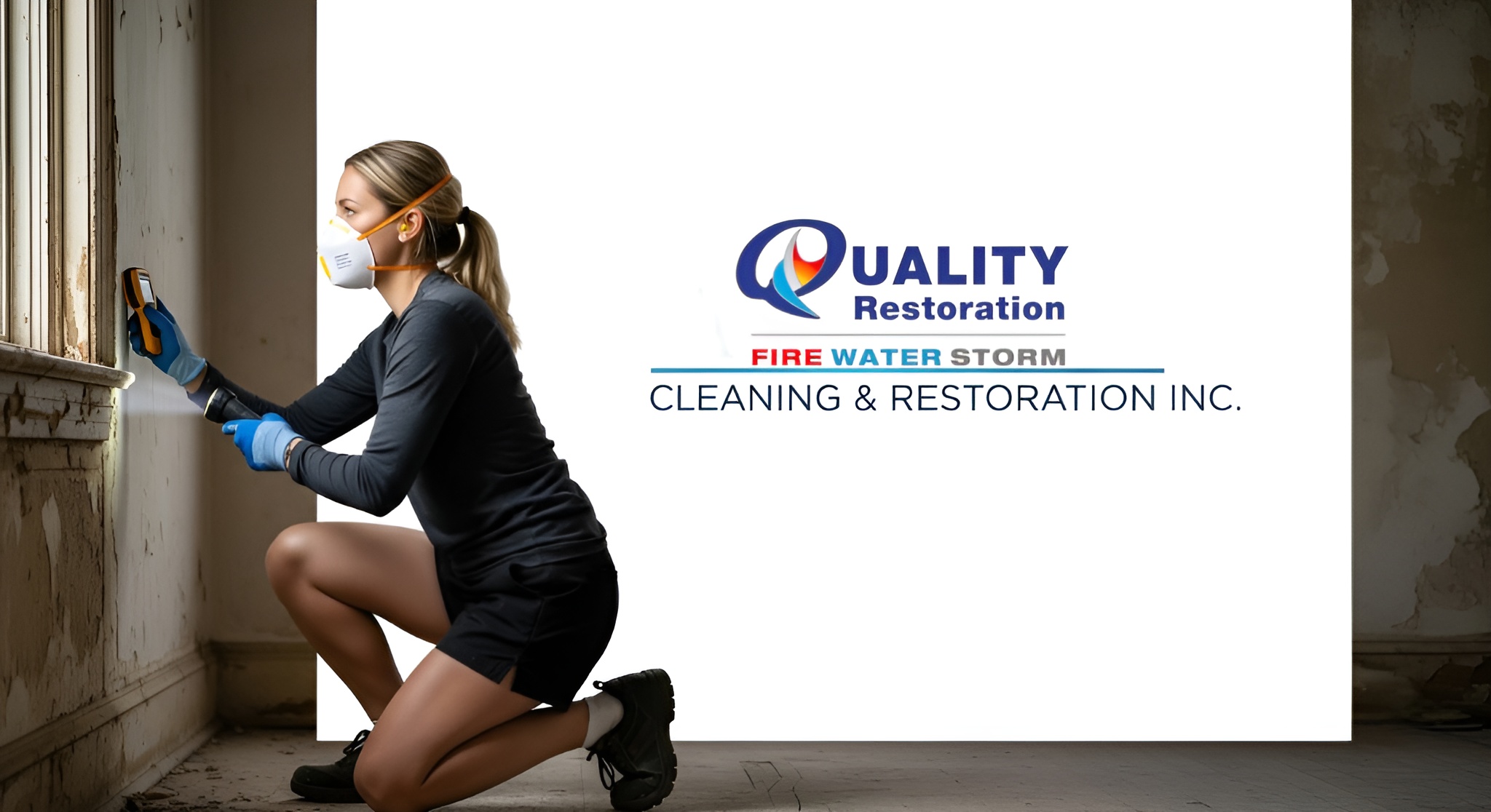
    Mold is a quiet problem with big consequences. It can hide behind walls, under flooring, or in any damp corner, spreading spores and lowering your indoor air quality as it grows. What looks like a small patch today can signal a much larger issue inside building materials tomorrow. Understanding the risks and knowing when to call in mold remediation services, especially in Massachusetts, Connecticut, New Hampshire, Vermont, and Upstate New York, helps protect both your health and your home.

    Understanding Mold and Its Causes

    Mold needs three things: moisture, warmth, and a food source. In houses, the “food” is often drywall, wood framing, carpet, or dust. Common triggers include slow plumbing leaks, roof seepage after a storm, condensation on cold surfaces, flooding, and rooms without good ventilation (think steamy bathrooms or basements).

    Once spores land on a damp surface, colonies can spread quickly, sometimes deeper into materials than you can see on the surface. That’s why simply wiping visible growth often isn’t enough and why underlying moisture problems must be fixed to stop mold from coming back.

    Health Risks Associated with Mold Exposure

    Everyone reacts differently to mold exposure, but prolonged contact can take a real toll. Especially on children, older adults, and anyone with asthma, allergies, or a weakened immune system.

    • Respiratory issues. Mold spores and tiny fragments can irritate airways and trigger coughing, wheezing, shortness of breath, and asthma flare-ups.
    • Allergic reactions. You might start sneezing, get a runny nose or watery eyes, feel congested, or notice your skin getting itchy, and postnasal drip are common in sensitive individuals.
    • Chronic fatigue and headaches. Poor indoor air quality can leave you feeling worn down and headachy.
    • Infections and immune concerns. People with compromised immune systems face higher risks of fungal infections and other respiratory complications.
    • Neurological effects (in severe cases). Toxins from certain species (often referred to as “black mold”) have been linked to problems with concentration, memory, and mood.

    Symptoms often build gradually. By the time you notice a pattern, feeling worse at home and better when you leave—the infestation may already be widespread. If you have health concerns, speak with a medical professional; remediation complements medical care but doesn’t replace it.

    Signs You May Have Mold in Your Home

    Not all mold is obvious. Watch for early clues:

    • A persistent musty odor, especially after rain or in basements, crawl spaces, and bathrooms
    • Dark specks or staining on walls, ceilings, baseboards, window sills, or around HVAC vents
    • Peeling paint, bubbling wallpaper, or warped trim, which often signal trapped moisture
    • Frequent allergy or asthma symptoms that worsen indoors
    • Condensation on windows or cold surfaces
    • Past leaks or flooding that weren’t fully dried within 24–48 hours

    If you’re checking a past leak and the area still smells earthy or damp, assume there’s more going on than meets the eye.

    When to Call a Professional

    Well-meaning DIY can spread spores and drive contamination into clean rooms. Bring in a certified remediation company if any of the following apply:

    • The affected area is larger than about 10 square feet
    • You smell mold but can’t find the source
    • Water damage has been present for more than 48 hours
    • Anyone in the household has ongoing respiratory or allergy symptoms at home
    • You’ve had repeat mold growth despite cleaning
    • Suspected growth is in HVAC systems, crawl spaces, or wall cavities

    What the pros do: They locate hidden moisture with meters or infrared cameras, set up containment and negative air to prevent spread, run HEPA air scrubbers, remove or treat contaminated materials, and most importantly, fix the moisture problem (leaks, ventilation, grading, or humidity) so mold doesn’t return. Reputable firms also provide a clear scope of work and post-remediation verification.

    Don’t Wait to Take Action

    Mold won’t resolve on its own. The longer it stays, the farther it can spread into drywall, insulation, framing, and flooring. Raising both health risks and repair costs. Fast, professional remediation limits damage, restores healthy indoor air, and protects your home’s structure and value. After cleanup, keep humidity in check (ideally 30%–50%), run bathroom and kitchen exhaust fans that vent outdoors, and fix leaks promptly to prevent a repeat.

  • Protecting Property and People: Why The Safety Source Is the Go-To Supplier for PPE & Safety Gear

    Image Source: pexels.com

    In business, team safety is non-negotiable. Whether you’re running a construction site, a manufacturing floor or a busy office, the right personal protective equipment (PPE) and safety gear help prevent injuries, reduce downtime and keep operations moving.

    If you’re looking for one partner to cover PPE and the everyday items your workplace runs on, The Safety Source is built for exactly that.

    A One-Stop Shop for PPE and Everything You Need

    When you’re choosing a safety supplier, breadth matters. The Safety Source focuses on wholesale and bulk safety supplies, so you can stock up in a single order:

    • Core PPE: gloves, respirators and face masks, eye and face protection, earplugs/earmuffs, hard hats and helmets, high‑visibility apparel, safety footwear.
    • Emergency & first aid: ANSI‑style first aid kits, burn care, eyewash stations and refills.
    • Workplace essentials: janitorial products, food service items, and office supplies.

    That range means procurement teams can cut down on vendors, simplify reorders and keep every department, from operations to admin, on the same page.

    Products That Support a Safety Culture

    For safety is not a gadget but a state of mind.

    Eleanor Everet

    Gear is only part of the equation; consistency is the other. The Safety Source’s catalog is built around everyday protection that helps reduce common workplace injuries:

    • Hands & skin: chemical‑resistant, cut‑resistant and disposable gloves matched to task.
    • Head & face: hard hats, face shields and impact‑rated eyewear for jobsites and labs.
    • Hearing: earplugs and earmuffs that make hearing protection a habit, not a hassle.
    • Response: first aid and spill control that keep small incidents small.

    Safety brings first aid to the uninjured.

    F. S. Hughes

    By pairing preventive PPE with responsive supplies, teams are better prepared—helping employers stay aligned with workplace safety requirements and internal policies.

    Bulk Buying Without Compromising Quality

    PPE adds up, especially across multiple locations. The Safety Source leans into best‑price, bulk and wholesale options on popular brands so you can:

    • Stretch the budget: volume pricing that scales as you grow.
    • Standardize SKUs: the same glove or respirator across sites simplifies training and reorders.
    • Avoid stockouts: purchase case quantities so crews aren’t waiting on critical gear.

    The result: value without trading down in quality.

    Brand Your Gear: Logo on PPE & High-Vis

    If your team wears it, you can likely brand it. The Safety Source offers company logo customization on items like:

    • Hard hats and helmets
    • High‑visibility vests and outerwear
    • Select PPE and workwear

    Branded gear does more than look professional—it reinforces your safety program and increases the odds employees wear the right equipment, every time.

    Fewer Vendors, Less Busywork

    Juggling multiple suppliers for PPE, janitorial, food service and office products creates extra approvals, extra invoices and extra chances for a miss. With The Safety Source, you get:

    • Consolidated purchasing for cross‑department needs
    • Streamlined reorders for routine consumables
    • Consistent stock levels with bulk and recurring order options

    That frees up time for the work that actually moves your business forward.

    Why Teams Choose The Safety Source

    In short: variety, value and reliability. Here’s the highlight reel:

    • Extensive Catalog: PPE, first aid, janitorial, food service and office supplies—one cart, one checkout.
    • Competitive Pricing: bulk and wholesale options on top brands.
    • Quality & Consistency: gear designed for daily use across multiple industries.
    • Customization: company‑branded high‑vis and hard hats to strengthen safety culture.
    • Procurement Made Easy: one supplier to reduce complexity and improve efficiency.

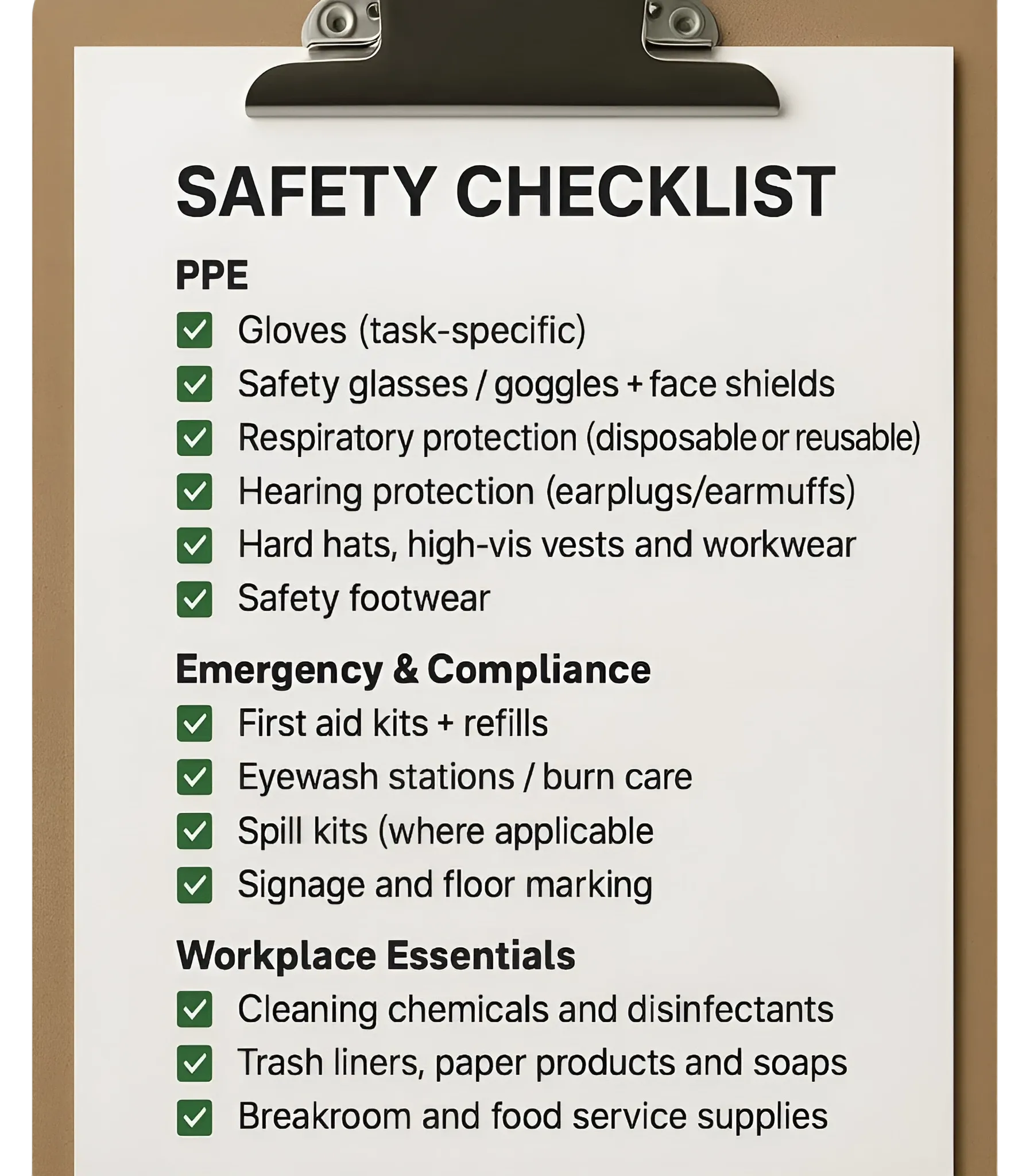
    Quick Checklist: What to Order Next

    Use this as a starting point for your next order:

    PPE

    • Gloves (task‑specific)
    • Safety glasses / goggles + face shields
    • Respiratory protection (disposable or reusable)
    • Hearing protection (earplugs/earmuffs)
    • Hard hats, high‑vis vests and workwear
    • Safety footwear

    Emergency & Compliance

    • First aid kits + refills
    • Eyewash stations / burn care
    • Spill kits (where applicable)
    • Signage and floor marking

    Workplace Essentials

    • Cleaning chemicals and disinfectants
    • Trash liners, paper products and soaps
    • Breakroom and food service supplies
    • Office basics (paper, pens, batteries)

    The Bottom Line

    A safer workplace is a more productive workplace. The Safety Source gives businesses a practical way to protect people and property—high‑quality PPE, smart bulk pricing, logo customization and the convenience of a single, trusted supplier.

    If you’re outfitting a new jobsite, restocking a facility or centralizing vendors, partnering with The Safety Source helps turn safety from a checklist into an everyday habit, exactly where it belongs.

  • 5 Smart Ways to Reach Homeowners Before They List

    In real estate, hard work always beats luck. If you can start a conversation before a For Sale sign goes up, you win more listings and better ones. That kind of head start takes a clear plan you can run every week, not a one‑off push.

    Below are five proven strategies to reach likely sellers before they hit the market, build trust, and position yourself as the first call when they are ready to move.

    1) Use Social Media Ads with Neighborhood Precision

    Platforms like Facebook, Instagram, and TikTok let you dial in on specific ZIP codes and interests so your message shows up where potential sellers already scroll.

    What to run

    • Short vertical videos that explain what is happening in the local market this month.
    • Carousel ads featuring a few recent sales with brief “what this means for your equity” captions.
    • Lead forms that offer a quick home value estimate or a “5‑minute pre‑listing checklist.”

    Tips for better results

    • Speak to one neighborhood at a time and use familiar landmarks.
    • Keep videos under 30 seconds with captions so they work on mute.
    • Test two headlines and two thumbnails each week and keep the winner.

    Sample hook:
    “Thinking about selling in Maple Grove this spring?.”
    “Here is what homes like yours are closing for right now.”

    Reminder: Follow each platform’s housing ad policies and fair housing rules.

    2) Host Simple, Helpful Workshops or Webinars

    Teaching is selling without the pressure. A 45‑minute session on real questions homeowners have can fill your pipeline with warm conversations.

    Topics that draw interest

    • How to prepare your home to sell in 30 days
    • What today’s buyers expect and what to fix first
    • How pricing really works in our area

    Make it friction‑free

    • Offer an in‑person option at a local library plus a live stream for those who prefer to join from home.
    • Provide a one‑page checklist and a link to book a free 15‑minute pricing chat.
    • Send a friendly recap email with answers to unanswered questions.

    3) Level Up Seller Farming with Data

    Traditional farming still works when it is focused. Combine postcards, door-knocking, and neighborhood events with data that helps you prioritize the homes most likely to sell.

    How to work smarter

    • Use homeowner databases and predictive lists to spot life‑event triggers like length of ownership or recent equity growth. Tools like DealJoy.AI can quickly surface these insights, so you know exactly which homes to focus on first.
    • Tailor your message to each micro-segment. For example, long‑time owners may respond to “right‑size without stress,” while recent renovators may want a “maximize your upgrade ROI” angle.
    • Pair targeted mail with matching digital ads so your name shows up in both the mailbox and the feed.

    What to send

    • Quarterly market snapshots for that one neighborhood, not the whole city.
    • “Just listed” and “just sold” proof with a short line on days on market and list‑to‑sale ratio.
    • Invitations to a block‑party coffee cart or document shredding day to meet people face‑to‑face.

    4) Build Trust with Consistent, Useful Touchpoints

    Staying top of mind comes from steady value, not constant selling. Create a simple cadence you can keep up all year.

    A workable 90‑day rhythm

    • Monthly email: market update in plain English, two maintenance tips, and one client story.
    • Quarterly mailer: hyper‑local stats and a seasonal homeowner checklist.
    • Quarterly calls or texts: quick equity check or invite to a neighborhood event.
    • Annual home review: a no‑cost, sit‑down review of value, equity, and timing.

    What to share

    • Local trends explained without jargon, like “inventory is up, which gives sellers more choices for their next home.”
    • Bite‑size tips homeowners actually use, such as “three photos to take before you start decluttering.”

    Always ask for permission to stay in touch and make it easy to opt out. Respect earns replies.

    5) Turn Your Local Network into a Referral Engine

    People trust the pros they already use. Build relationships with businesses that serve homeowners all year.

    Great partners

    • Contractors, landscapers, roofers, stagers, cleaners, and handyman services
    • Accountants and financial planners who discuss moving and downsizing
    • Lenders and closing attorneys who hear about timelines early

    How to structure it

    • Share a simple “Homeowner Help List” featuring vetted local pros.
    • Check in quarterly, pass referrals both ways, and send quick thank‑you notes.
    • Track who referred whom so you can recognize partners appropriately. Follow RESPA and local rules when offering any perks.

    Quick Scripts You Can Use

    • Equity check text: “Hi, Taylor. I just reviewed Maple Grove sales and thought of you. Want a quick update on what your equity looks like now?”
    • Event invite: “We are hosting a free ‘Prep To List In 30 Days’ session next Thursday at the library. Want me to save you a seat or send the replay?”
    • Follow‑up after workshop: “Thanks for joining. If you had 15 minutes to talk timing and next steps for your place, what day works best this week?”

    Weekly Actions Checklist

    • Publish one 30‑second market video per neighborhood you farm.
    • Launch two ad tests and pause the loser by Friday.
    • Send five personal check‑ins to past clients or long‑time owners.
    • Book at least one workshop, open house preview, or neighborhood meetup.
    • Update your “Homeowner Help List” with one new vetted vendor.

    The Bottom Line

    Reaching homeowners before they list is not about chasing leads. It is about planting seeds. Blend targeted advertising, education, focused farming, steady outreach, and a strong referral network. When you deliver value early and often, you become the trusted expert they call when it is time to sell.

  • Buying a Luxury Home in Greece: Key Insights for International Buyers

    Image Source: freepik.com

    For centuries, Greece has captured people’s attention with its ancient history, hospitable climate and friendly culture. In recent years, it has also captured the attention of international property buyers.

    Greece’s luxury real estate market has gone from quiet to seriously interesting. What used to be a small niche has turned into one of Europe’s most talked-about investment scenes. And it’s easy to see why. Maybe it’s a villa tucked into a cliff above the Aegean, a sleek penthouse in Athens, or a beachfront hideaway on Corfu. Either way, you’re getting a lifestyle that blends beauty, value, and long-term potential in a way few places can match.

    Image Source: fusion-consultancy.net

    If you’re considering purchasing a luxury home in Greece, here are some important insights you should know before taking the plunge.

    Why Greece Appeals to Luxury Buyers

    Greece combines lifestyle appeal with a steadily improving economic environment. The Mediterranean climate, relaxed pace of life, and spectacular natural beauty have always been attractive to international buyers, but new factors are also driving demand:

    • Lifestyle and culture:
      Whether island-hopping in the Cyclades or fine dining in Athens, Greece offers a year-round luxury lifestyle that blends modern comfort with cultural depth.
    • Value for money:
      Compared with other European hot spots like the French Riviera, Mallorca, or Italy’s Amalfi Coast, luxury properties in Greece tend to be more affordable on a per square meter basis.
    • Economic recovery:
      After years of financial uncertainty, Greece’s economy and property market are stabilizing, which in turn is boosting buyer confidence.
    • Accessibility:
      Most major cities and islands in Greece are well-connected to international airports, making them a great choice for frequent travelers.

    Prime Locations for Luxury Homes

    While many people know Greece for its glamorous islands, there’s much more to explore.

    • Athens:
      The capital city has been undergoing a significant real estate boom in recent years—thanks in part to the Ellinikon project, one of the largest urban developments in Europe. Neighborhoods like Voula and Glyfada, near the Athens Riviera, attract buyers who want city living combined with spectacular sea and mountain views.
    • The Aegean Islands:
      Islands like Mykonos and Santorini are globally recognized luxury destinations. Their whitewashed villas with infinity pools and cliffside views drive strong rental demand.
    • Crete and Corfu:
      For buyers seeking space and privacy, these islands provide larger estates at more accessible price points, plus rich cultural heritage and true year-round communities.
    • There are also many lesser-known islands and areas in pristine natural settings that offer luxury living at more affordable prices.

    Each location has its own unique character and caters to different preferences: nightlife, city lifestyle, exclusivity, or serenity.

    Image Source: fusion-consultancy.net

    What International Buyers Should Know

    Before making an investment, it’s essential to understand how buying property in Greece works:

    • Foreign ownership:
      Both EU and non-EU citizens can purchase property in most of Greece. Some border areas need extra permits, but the popular luxury spots generally do not.
    • Golden Visa program:
      This is one of Greece’s big draws. Until recently, a €250,000 property was enough for a residency permit. Rules changed in 2024: in many prime areas like Athens, Mykonos, and Santorini, the minimum is €800,000; in other regions, it’s €400,000. The €250,000 option still exists, but only under specific conditions—for example, renovating an older property or converting a commercial building into residential. Always confirm the latest details with an expert before assuming eligibility.
    • Buying costs:
      Beyond the purchase price, set aside 5–8% for taxes and fees, typically including the ~3% transfer tax, plus notary and legal costs.
    • VAT:
      New-builds in Greece normally carry 24% VAT. But this tax has been suspended until the end of 2026, so many buyers currently only pay the ~3% transfer tax.

    Understanding these basics helps avoid surprises during the buying process.

    Market Trends and Opportunities

    • Design and sustainability:
      It’s increasingly standard for luxury homes to include solar panels, smart systems, and higher energy efficiency. That combination lifts property value and improves day-to-day living. With AI-enabled home tech advancing quickly, adoption is speeding up.
    • Short-term rentals:
      Many investors rent out their villas or apartments, making high-value properties both a great place to live and an investment opportunity. That said, Greece has tightened rules in some areas, especially Athens. You’ll see caps and extra taxes in certain zones, so check the specifics with a qualified advisor.
    • Rising international interest:
      Investors from the US, Middle East, and Asia are joining Europeans in viewing Greece as both a lifestyle and financial opportunity. This broadening buyer base supports stable future demand.
    Image Source: fusion-consultancy.net

    Tips for Navigating the Buying Process

    • Get local expertise.
      The Greek market is fragmented. A specialist who knows the luxury segment can save you time and help you avoid pitfalls. For instance, Fusion Consultancy helps international buyers find high-end homes and navigate the legal and practical steps.
    • Conduct legal due diligence.
      hire a local lawyer early to review title, check for debts, and confirm zoning. This is a crucial step to protect your investment.
    • Define your long-term goals.
      Is this mainly a holiday home, a rental investment, or a Golden Visa property? Your answer will shape what and where you should buy. If you’re buying for personal use, imagine daily life there. Is the area well connected? Are there international schools and hospitals nearby? It’s not only about the numbers. Consider the experiences the property will offer..
    • Think about access.
      Some islands are easy in summer but tricky off-season. If you want year-round use, consider ferries, flights, and on-the-ground services.

    Final Thoughts

    Greece’s luxury real estate market is no longer an under-the-radar opportunity. Greece now sits near the top of the Mediterranean wish list, offering real lifestyle upside, a supportive investment backdrop, and approachable entry points, especially heading into 2025. Demand isn’t cooling.

    For international buyers, keep the dream in sight but plan like a pro. Enjoy the sunsets; lean on expert help to make the paperwork and closing just as easy.

    About the Author

    Christina Krik-Bost is a professional whose path brings together business, humanitarian service, and the world of high-end lifestyle industries. Holding a Bachelor in Business Administration and currently pursuing a degree in European Studies in history, literature, and culture, she combines academic curiosity with a strong foundation in strategy, communication, and cultural understanding.

    Her early career centered on business and marketing, where she developed the analytical and creative skills to navigate competitive markets. This expertise was further enriched through humanitarian work in emergency locations, where she learned the importance of resilience, adaptability, and empathy. These experiences shaped a professional who not only understands the value of strategy but also the human side of every interaction.

    Today, she applies this multifaceted background to luxury real estate, yachting, exclusive travel, and event management. Her marketing knowledge allows her to identify and showcase value, while her humanitarian and academic background bring authenticity and cultural depth to her work. She offers more than professional expertise—she provides a people-first, globally informed approach where precision, vision, and meaningful connection converge.

    Follow her work on Instagram at https://www.instagram.com/fusionconsultancynet/